


The Local newsletter is your free, daily guide to life in Colorado. For locals, by locals.
In 1950s suburbia, living in a ranch house with a white picket fence and a dense carpet of Kentucky bluegrass was the middle-class American family ideal. More than seven decades later, many homeowners still cling to the notion that the quintessential yard is a manicured patch of kelly green grass. But with Colorado’s semi-arid climate and intense sun, maintaining a lush lawn requires a lot of water—in fact, irrigation accounts for about 50 percent of single-family homes’ total water usage in Denver.
In the 1980s, Denver Water coined the term xeriscape to encourage local homeowners to replace their parched turfs with naturally low-water plant species. In recent years, the public agency has beefed up its water-wise programming (irrigation audits, low-water planting resources, and incentives for turf removal) in reaction to the megadrought affecting the Colorado River Basin, where most of the city’s water comes from. “We know that residential water use is a relatively small piece of the pie when you look at all the different sectors that are taking from the river,” says Bea Stratton, Denver Water’s landscape transformation program manager. “But it’s important for everyone to do their part in creating a more water-reliable environment. It’s just being a good steward of the resource and the land.”
- This Colorado-Born AI Tool Can Spot Problems With Houses Before Your Inspector Does
- People Are Fleeing Boulder and Summit Counties and Flocking to…Weld?
- This Remote Colorado Canyon Might Be the State’s Most Underrated Backpacking Trip
- Private Equity Ran This Beloved Colorado Mountain Bike Brand Into Bankruptcy. Can Its Founder Save It?
That doesn’t mean you have to live in a home fronted by a barren moonscape, however. “Sometimes people interpret the term xeriscape as ‘zero-scape,’ and they’re picturing a yard full of rocks,” Stratton says. “So now we’re using the term ‘Coloradoscape’ to illustrate a lively, rich environment of color, texture, and diversity.”
Just in time for a summer featuring Denver’s strictest watering limitations since 2013, we’ve rounded up resources to help you transform your turf-covered outdoor spaces and found five mood-board-worthy yards that are setting a new beauty standard for water-wise landscaping.
Jump Ahead:
- Ready To Ditch Your Lawn? Start Here.
- Still Want a Lawn? Try These Water-Saving Grasses.
- Try These 5 Drought-Tolerant Perennials That Thrive in Colorado.
- Design a Xeriscape That Doesn’t Look Like a Rock Pile.
- Bring Pollinators and Birds Back to Your Yard.
- Certify Your Habitat.
- See Xeriscaping in Action in Real Colorado Yards.
Read More: 5 Xeriscaping Myths, Debunked
Ready To Ditch Your Lawn? Start Here.
1. Remove your lawn.
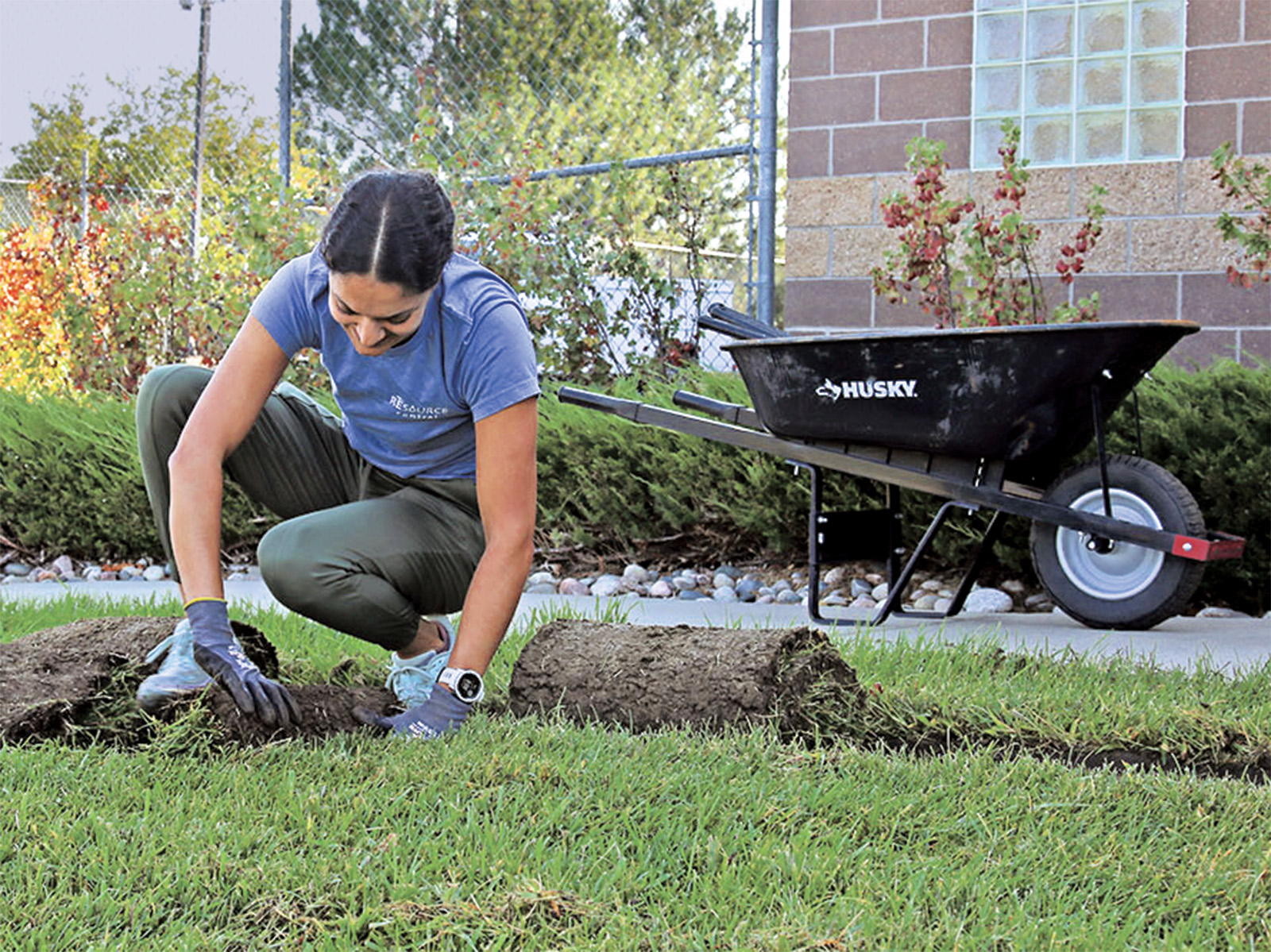
Making the move to a water-wise yard can be costly. Luckily, several water suppliers around Colorado have programs that reward you for converting. Denver Water customers can receive a discount on Resource Central’s lawn removal services, during which professionals detach and haul away unwanted turf to create a clean slate for water-wise gardening projects.
After your application is accepted, you’ll qualify for a reduced rate of $1 per square foot (the typical price is $2.75 per square foot) until you reach $750 in subsidies (roughly 428 square feet). Any remaining square footage costs the full market price. Homeowners within Denver Water’s service area can also request a free bag of native grass seed mix (a blue grama and buffalograss blend) that will cover 500 square feet of sunny yard.

2. Test and improve your soil.
Think of your yard’s soil like a protein shake—the right blend of nutrients and minerals can boost the health and longevity of your plants. But understanding your soil’s existing composition is the first step toward identifying its strengths, amending its weaknesses, and selecting plants best suited for its makeup. At Colorado State University’s Soil, Water, and Plant Testing Laboratory, researchers analyze soil samples from farmers, homeowners, and landscape pros and provide a report with any necessary fertilizer suggestions.
Here’s how it works: Collect a one-pound sample from your lawn, veggie garden, or flower beds and seal it in a plastic bag; fill out a submission form, noting the type of soil test (the most popular tests are S1, for a comprehensive overview of nutrients and minerals, and S11, for an in-depth look at soil texture); and mail or drop off the sample, submission form, and payment ($45 for S1, $30 for S11) to the CSU lab. Within 10 business days, you’ll receive a detailed soil composition report.
3. Plan your layout.
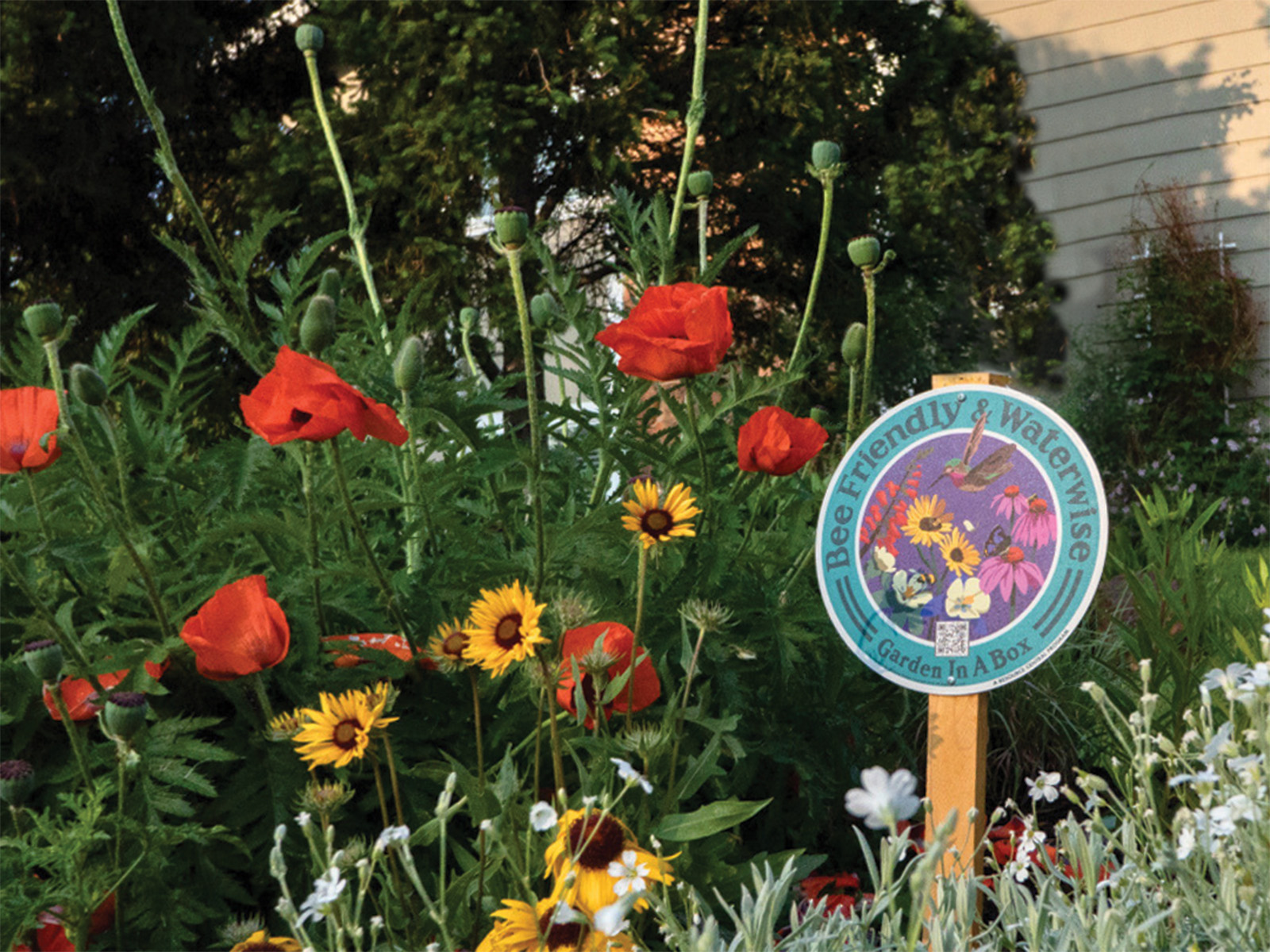
If converting to a low-maintenance landscape feels like a high-maintenance project, consider Resource Central’s Garden In A Box program. Every March and June, the water conservation nonprofit offers a limited number of DIY gardening kits (starting at $132) tailor-made by local gardening professionals for Colorado yards. Complete with a range of four-inch plant starts, plant-by-number design plans, and care instructions, each kit takes the guesswork out of creating a colorful perennial landscape that boosts your home’s curb appeal.
The 2026 collection includes the Butterfly Haven box ($198), which was designed by the Butterfly Pavilion’s community habitats manager, Ashley White, with 29 full-sun plants that butterflies can’t resist, and the Southwest-inspired Sunset & Sage box ($132) with 15 plants selected by Durango-based landscape designer Eva Montane of Columbine Landscapes.
4. Choose the right plants.
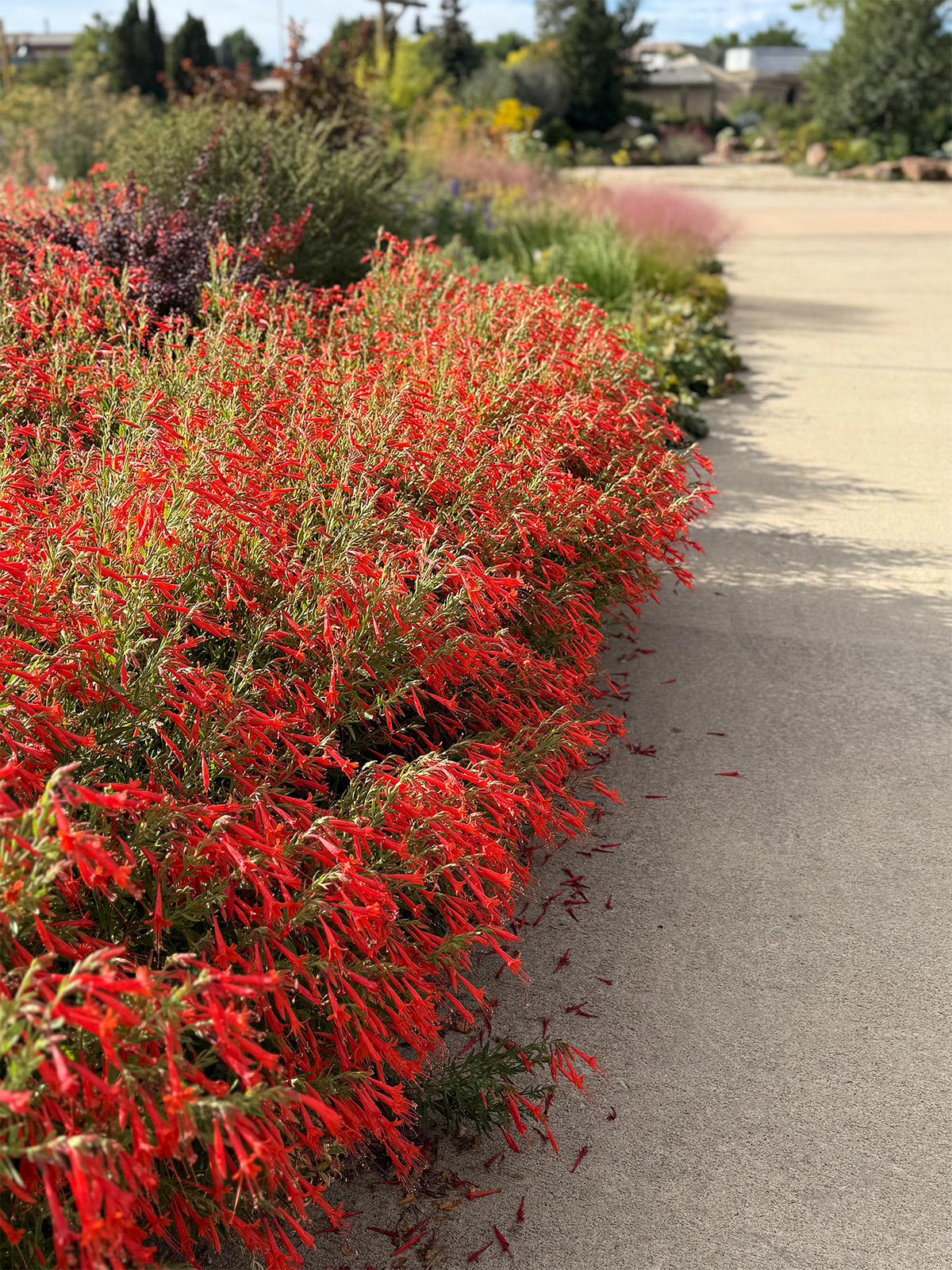
Walking into a garden store without a plan is a surefire way to commit to a cart full of plants that aren’t right for your yard’s conditions. Enter Plant Select: a brand of grasses, shrubs, perennials, and trees proven to thrive in the Rocky Mountain region. Created in 1997, the Plant Select seal of approval signifies that the species has been tested and evaluated by horticulturists (including some from Colorado State University and Denver Botanic Gardens) for its ability to flourish in dry conditions, outlast harsh weather, and attract pollinators.
Many of the 180-plus plants on the list are native to the Western United States, and 46 of them are from Colorado. Each year, resilient, water-wise varieties are added to the roster, including 2026’s fiery-red Unforgettable hummingbird trumpet perennial and Granita pussytoes leafy ground cover.

5. Learn the basics.
Before you try to grow living things, grow your skills with a range of CSU Extension classes and services designed to help all levels of Colorado gardeners. Head to Green School (from $495) for a self-paced course with 14 online lessons that cover Colorado-specific gardening challenges, soil quality and amendment, and landscape pest control. Or sign up for a Lawncheck visit (prices vary), during which a CSU staff member will inspect your struggling lawn and provide custom recommendations for reviving your turf.
Seasoned gardeners can sow their own knowledge by becoming CSU Extension Master Gardeners, trained volunteers who support the success of local home gardens by diagnosing plant problems, teaching classes, tending to community gardens, and more.
Still Want a Lawn? Try These Water-Saving Grasses.
If you just can’t quit the uniform appeal of a turf yard, consider these water-saving grasses that can handle our dry summer heat. “Kentucky bluegrass is a cool-season grass, meaning it greens up in the spring and can go dormant in our really hot summers,” Denver Water’s Bea Stratton says. “It requires 18 to 20 gallons of water per square foot, while native grasses require about six”—a more reasonable amount, given the likely drought restrictions across the metro this summer.
1. Blue Gramma
- Best for: A natural look
The state grass of Colorado, blue grama grows in abundance on the Eastern Plains. Keep it contained to a front or side lawn, as foot traffic will weigh down its delicate leaves, and mow it on a high setting no more than four times a year. Or let it grow up to 24 inches high and watch its eyelashlike seed heads sprout and turn golden in the fall.
2. Dog Tuff
- Best for: Dog owners
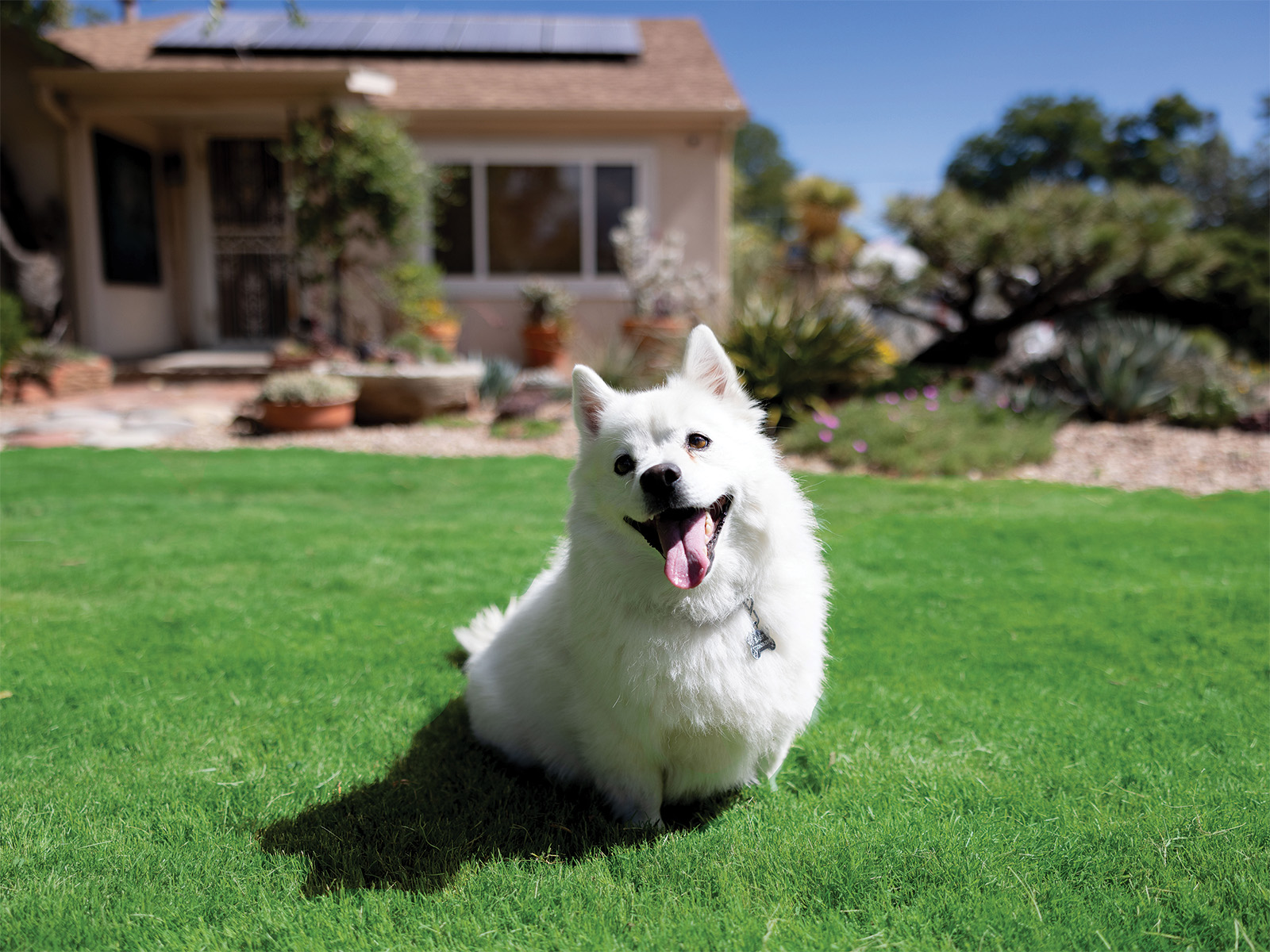
Cultivated by Lakewood-based plant developer Kelly Grummons, this tolerant turf hybrid (pictured) only needs water every couple of weeks once established. A good choice for lawns used for potty and play time, its fine, short blades (up to four inches tall, no mowing required) are durable enough to withstand dog urine while still feeling soft on paws and feet.
3. Buffalograss
- Best for: A classic lawn feel
Unlike many native grasses, this sun-loving variety tolerates a fresh cut, making it an ideal choice for traditional lawn enthusiasts. Buffalograss blades are naturally short (topping out at six inches) and should be trimmed no more than six times per year. Water it once a week from May to October to maintain its green-blue hue.
Try These 5 Drought-Tolerant Perennials That Thrive in Colorado (and Don’t Hate You for Forgetting To Water).
Ryan Harter of Xeric Garden shares five drought-tolerant, flowering perennials that flourish in Colorado’s abundant (and harsh) sunshine to create a Technicolor landscape.
1. Apache Sunset
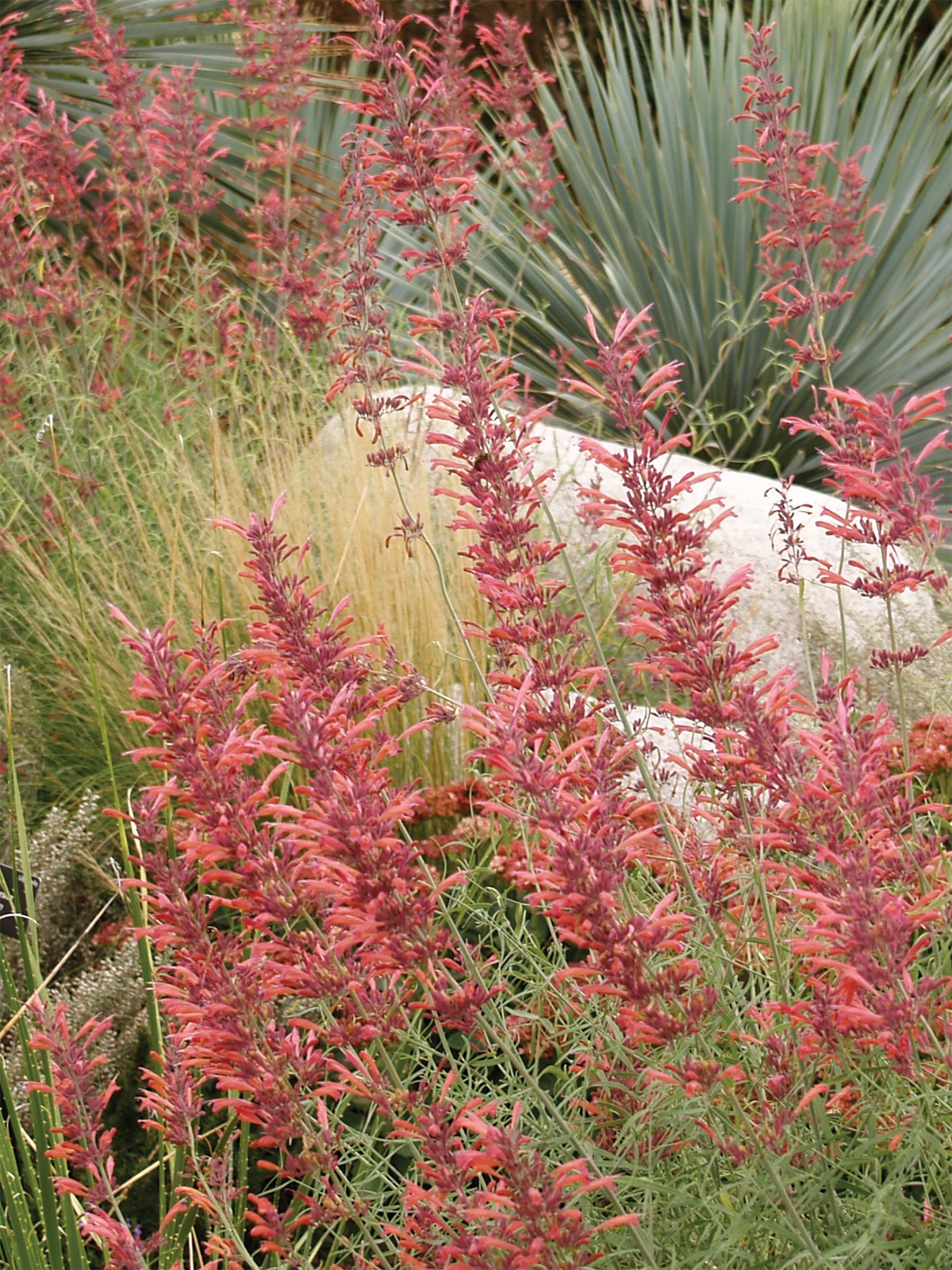
- What: Produces showy spikes of orange and lavender tubular flowers and mint-scented foliage
- Blooms: Late summer to frost
- Care: Cut back to base in spring. Remove flower stalks in fall to prevent reseeding if desired.
- Bonus: Native (Arizona and New Mexico), pollinator magnet
2. Autumn Sapphire Sage
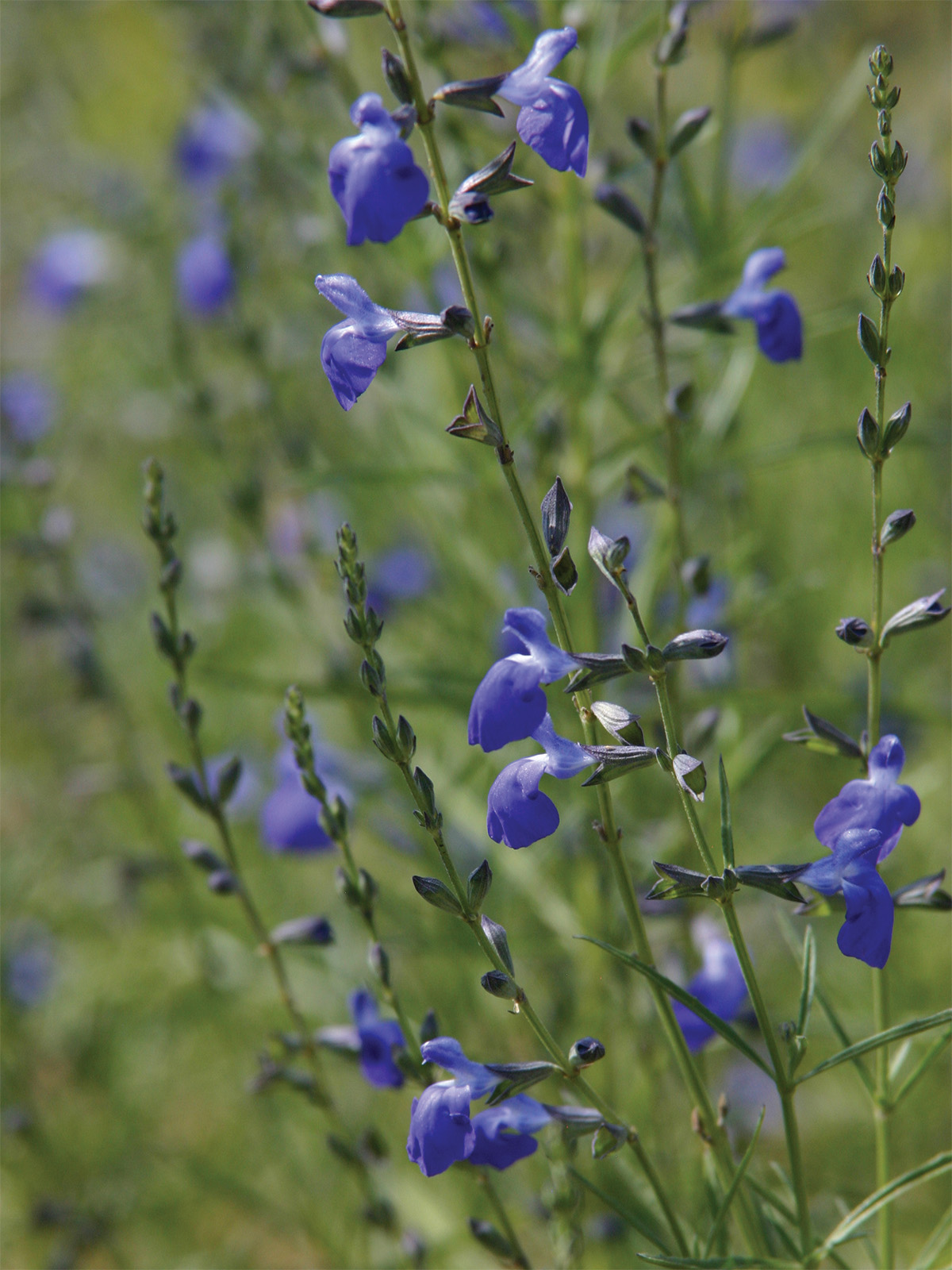
- What: Willowy late-season bloomer with cobalt blue flowers
- Blooms: Late summer to fall
- Care: Remove dead leaves and stems after the plant goes dormant in the fall.
- Bonus: Native (Texas), pollinator magnet
3. Kannah Creek Buckwheat
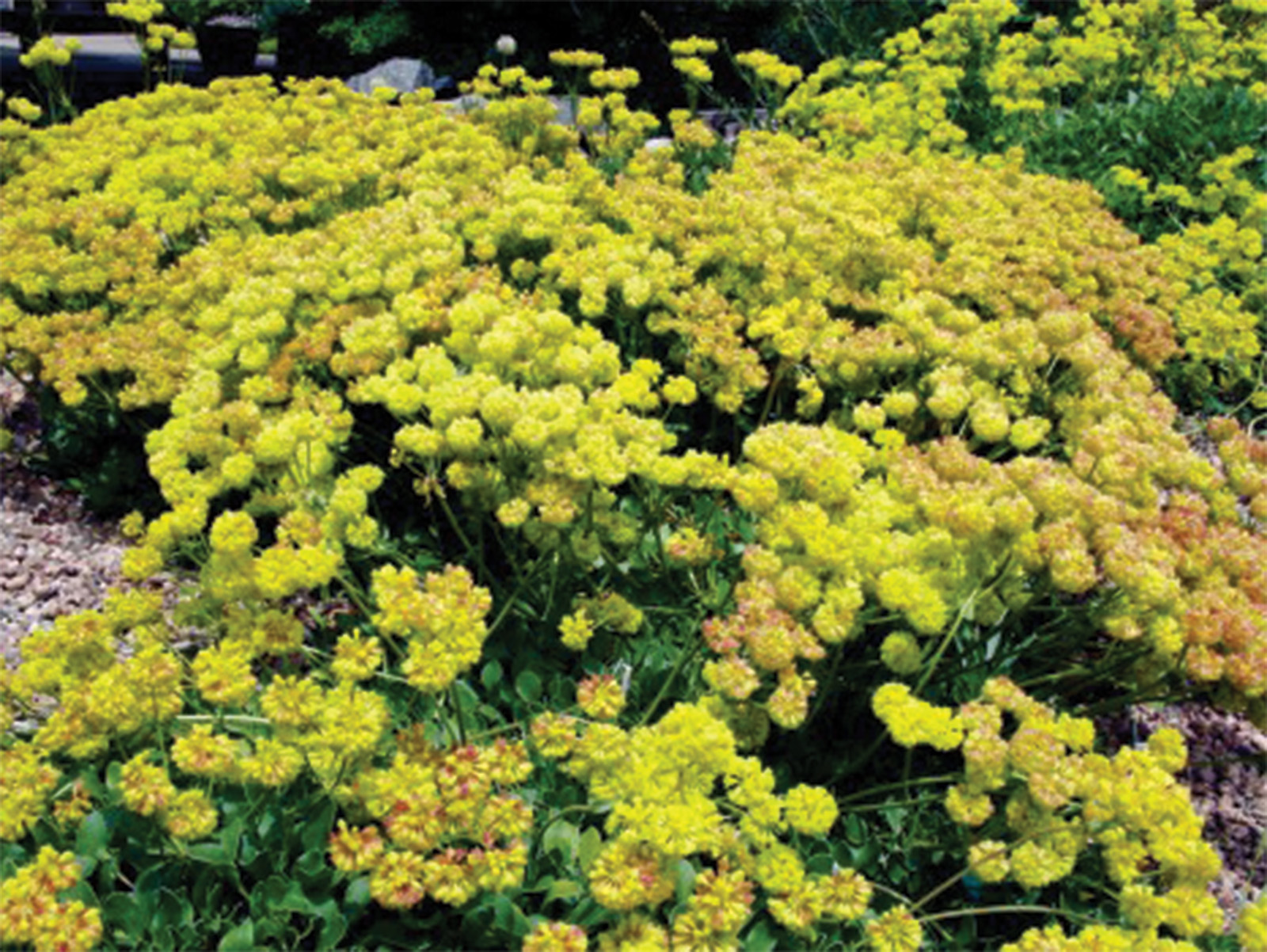
- What: Shrubby evergreen ground cover with masses of small yellow flowers, which turn orange as they age, and green foliage that shifts to a vivid purplish-red in winter
- Blooms: Late spring to summer
- Care: Brush any dead foliage away in spring to tidy up.
- Bonus: Native (western Colorado)
4. Little Trudy Catmint
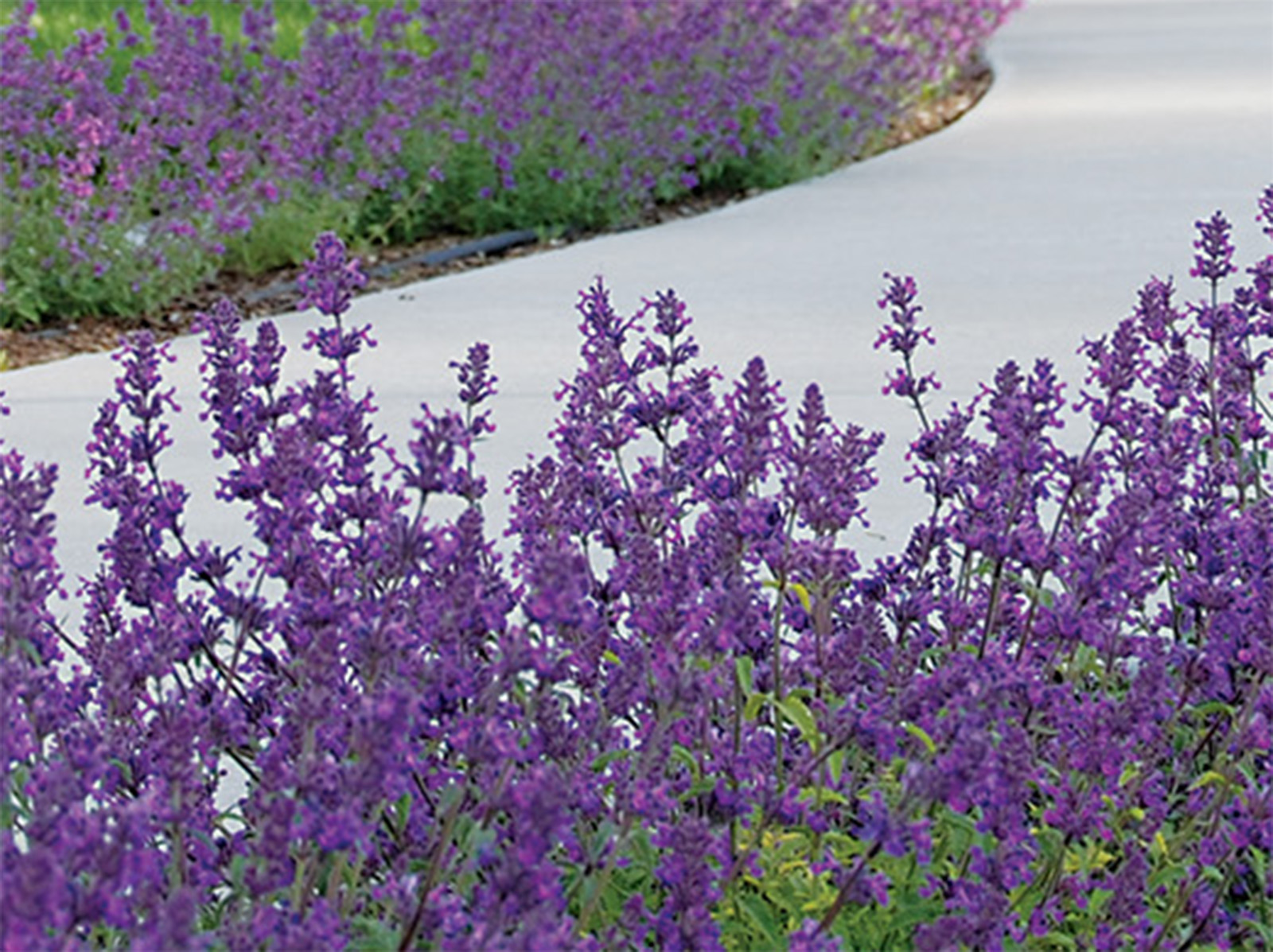
- What: A compact version of catmint, known for lavender blooms and aromatic foliage that felines find irresistible (don’t be surprised if your furry friend naps right next to it); great for creeping along sidewalk or driveway edges
- Blooms: Late spring to summer; late summer to frost
- Care: When blooming becomes sparse in summer, deadhead by removing flower stalks to encourage a second flush of blooms. Cut back old growth to ground level in late fall, after the plant has died.
- Bonus: Pollinator magnet (bees specifically)
5. Chocolate Flower
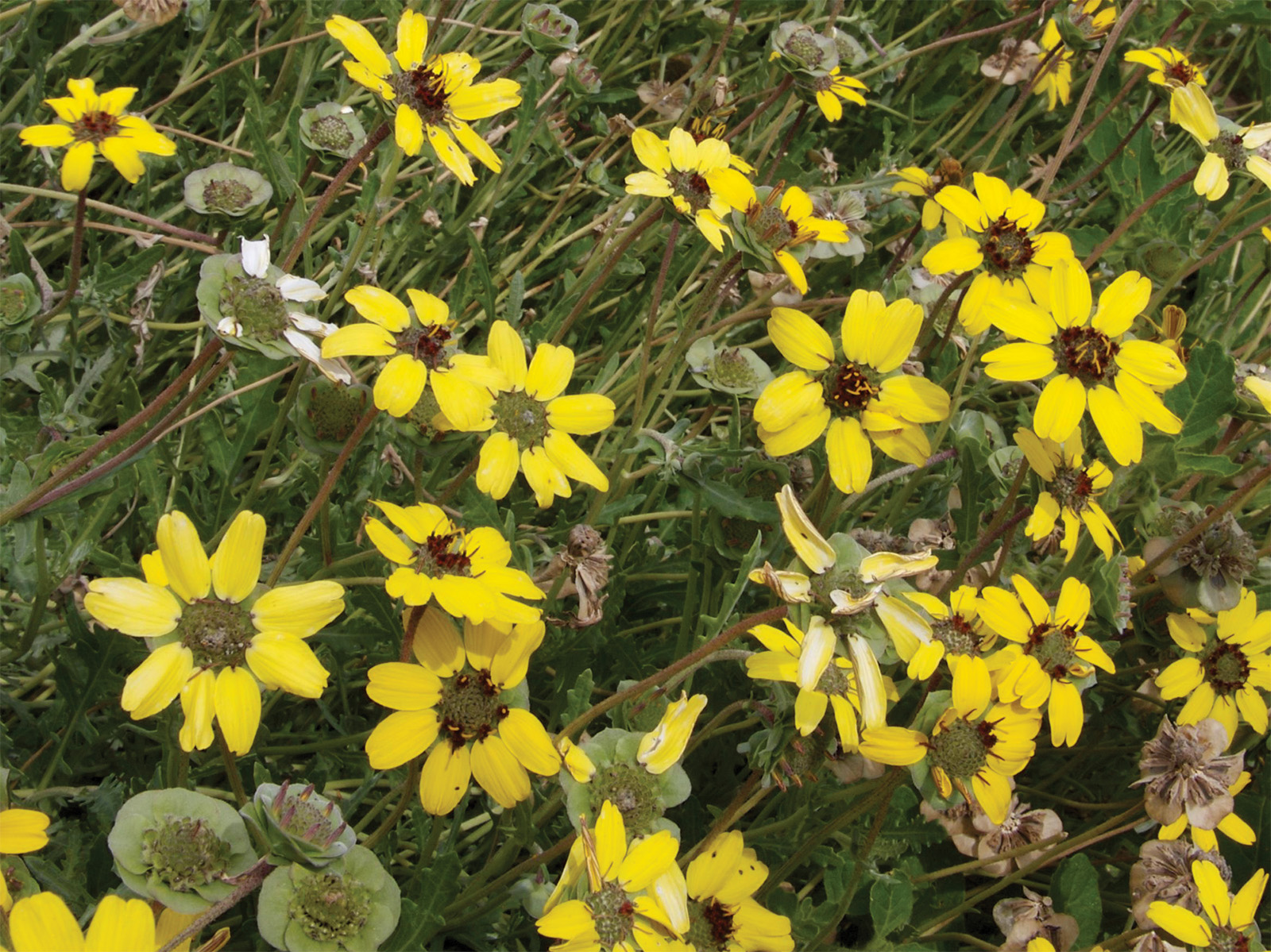
- What: Bright yellow daisylike flowers named for the milk chocolatey scent that they emit in the mornings and evenings
- Blooms: Early summer to frost
- Care: Cut back old growth to ground level in the fall/winter, after it has gone dormant and died back, or in spring before new growth.
- Bonus: Native (southwest Colorado)
Design a Xeriscape That Doesn’t Look Like a Rock Pile.

Before Marissa Sterrett became the manager of Denver Botanic Gardens’ sustainable landscape services program, she spent decades designing Coloradans’ outdoor living spaces. So she understands why people are hesitant to give up their Kentucky bluegrass.
“The fear is that it’s going to look deserty—full of rocks and a couple of yuccas,” Sterrett says. “Also, there’s cost associated with it and not a guarantee of having something beautiful in the end.” We asked her to share her top tips for creating lush, livable, and water-wise spaces. —Jessica LaRusso
Editor’s note: The following conversation has been edited for length and clarity.
5280: How do you avoid a rocky, barren outcome?
Marissa Sterrett: There are two things that are non-negotiables to me. One is aiming for a minimum of 80 percent coverage within 24, or even 12, months. So that’s planning for the trees and shrubs, the structure; adding in the perennials and the grasses for texture; and then tying it all together with ground cover.
The second thing I’m über-passionate about is winter value. We have six months when plants are dormant, so you should plan a garden around what it looks like in the winter. Are there seed heads or evergreen leaves or even just a woody structure to a plant that is still providing interest?
What else should you consider in the initial design?
Negative space. We can’t just have wall-to-wall plants. We need spaces where we can run and walk and sit and observe—and that typically means there will be some lawn areas left. There are tiers of water-use lawns you can transition to. A tall fescue sod uses about 30 percent less water, and then there are prairie blend sods that use 50 percent less water.
Also, pathways and even patio spaces can be built with different gravels or crushed rock, all permeable—so hardscaping can be part of the equation.
How can we balance what’s best for the ecosystem with what looks nice and neat?
Cutting down your garden to a 12- to 18-inch height through the winter will clean it up and leave most of the housing for all of the pollinators that are there for the dormant months. It doesn’t 100 percent satisfy our need to shape and form and cut down, and it won’t satisfy 100 percent of the pollinators, but it actually gets really close to both.
Any other tips?
Utilize inorganic soil amendment—so pea gravel, for instance, or squeegee. It brings air pockets into our soil, which is what our native plants are used to. I know it sounds counterintuitive to basically add little rocks to your soil, but through Denver Botanic Gardens’ research, we have found that it gets our native plants to thrive. That same material can be used as a mulch as well. It reflects the sun and helps keep moisture in the soil, as opposed to a wood fiber or a bark mulch that oftentimes soaks up moisture.
Bring Pollinators and Birds Back to Your Yard.
If you care about wildlife—the bees that pollinate our food, the birds that snap up pesky mosquitoes, the butterflies that remind us how miraculous nature can be—that’s just one more reason to tear up your lawn. “Animals have evolved alongside [native plants] for thousands of years,” says Braelei Hardt, a Colorado-based naturalist with the National Wildlife Federation. “They have relationships with native plants that can’t be replaced by non-native species.” Here, how you can use flora to bring fauna back to your yard. —JL
Birds
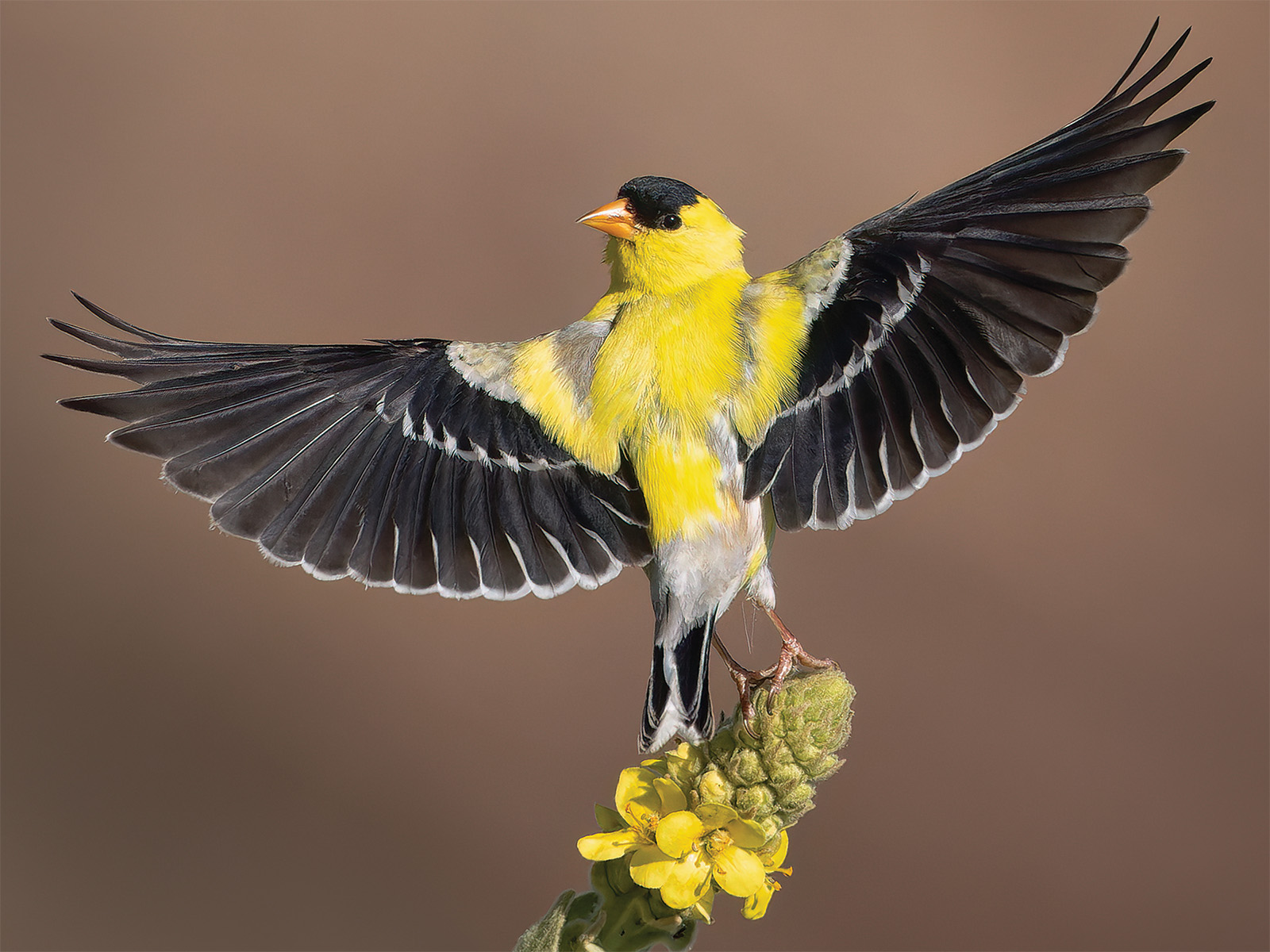
“Bird feeders are great, but 96 percent of our terrestrial birds depend on insects to feed their young,” Hardt says. “For the same reasons of ecological companionship or evolutionary past, insects are drawn to the native plants that they evolved with.” Those tasty bugs attract chickadees, goldfinches, bluebirds, and hummingbirds, which will also come to sip nectar from any red, tube-shaped flowers. Left standing, seed heads from native wildflowers that go dormant in winter, such as purple coneflower, become migration fuel for birds.
Bees
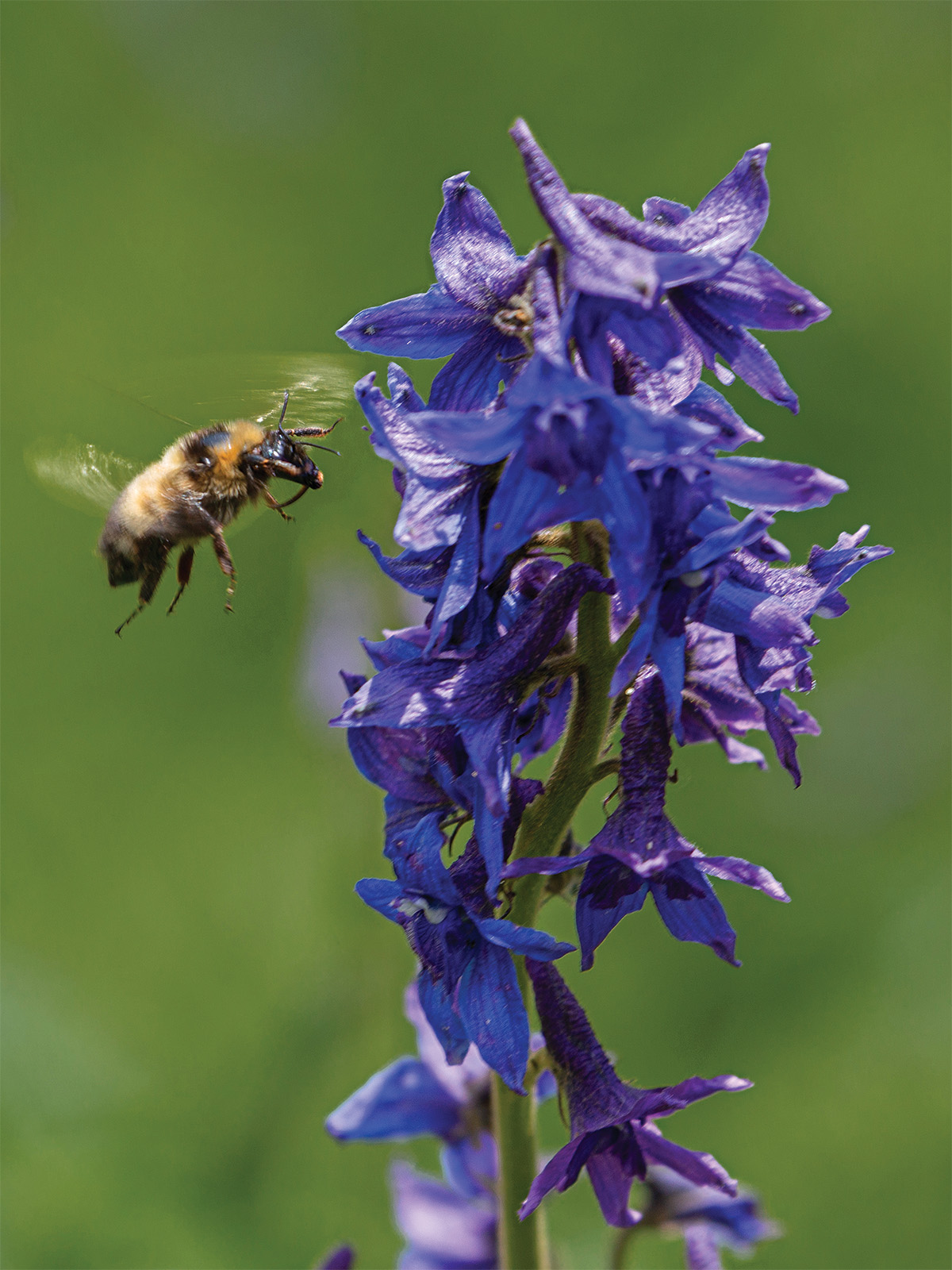
Honeybees aren’t native to Colorado (and are considered domesticated, not wild), but more than a thousand other bee species, most of which are solitary and don’t sting, are. They’ll visit to gather pollen from wildflowers such as goldenrod and Rocky Mountain penstemon, then hibernate in the soil or stems if you leave them out. “They like to have habitat with nice little crawl spaces that can be temperature-regulated,” Hardt says.
Butterflies
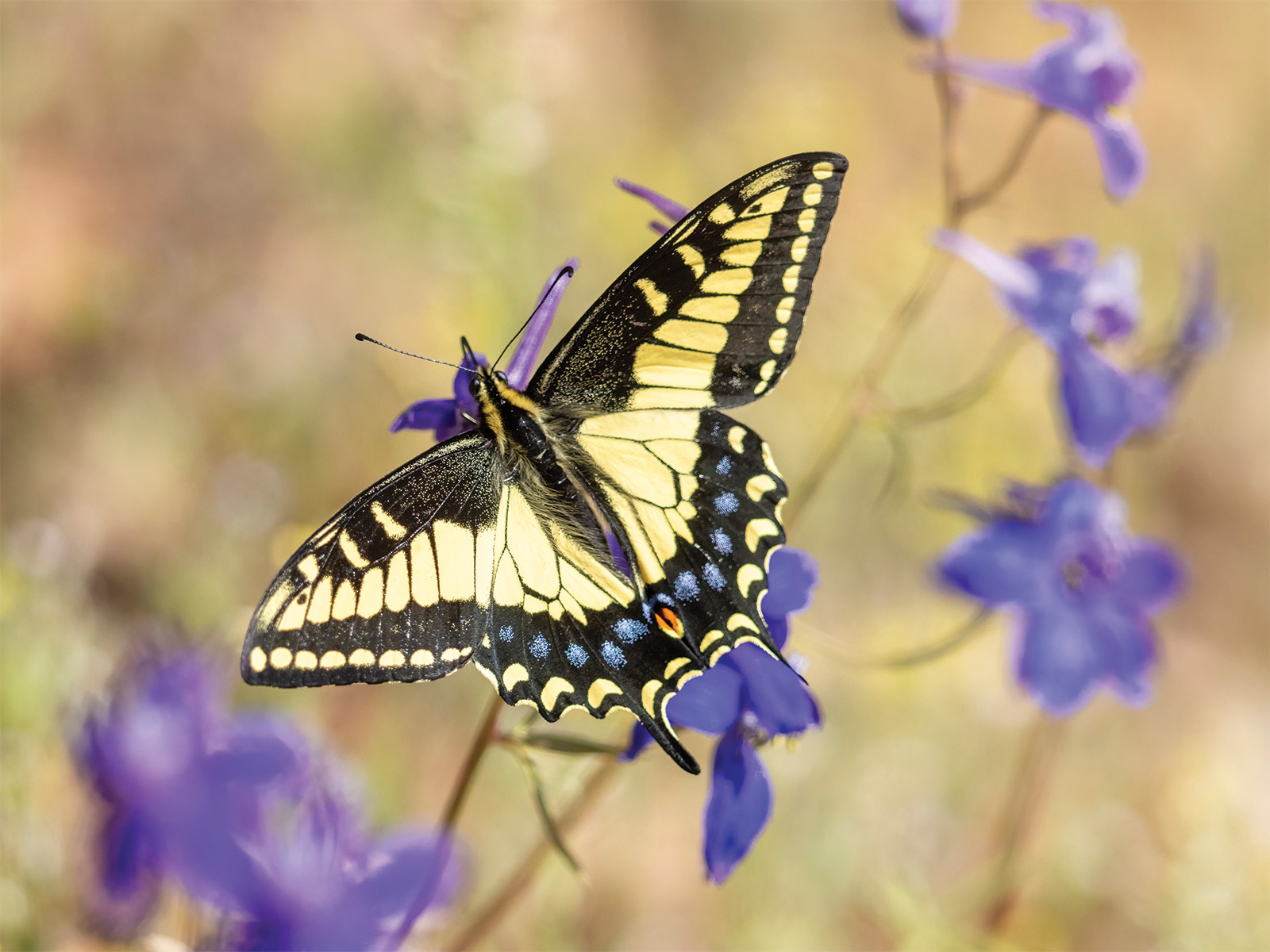
“If you’re going to have one tree, do the Gambel oak,” Hardt says. This small (around 20 to 30 feet tall) native shrub supports hundreds of species of caterpillars that turn into moths and butterflies, including the Colorado hairstreak (our state insect). To bring in Monarchs, sow milkweed, and make sure it’s native; tropical varieties can cause premature death in the migrating butterflies, whose populations are rapidly declining.
Certify Your Habitat.
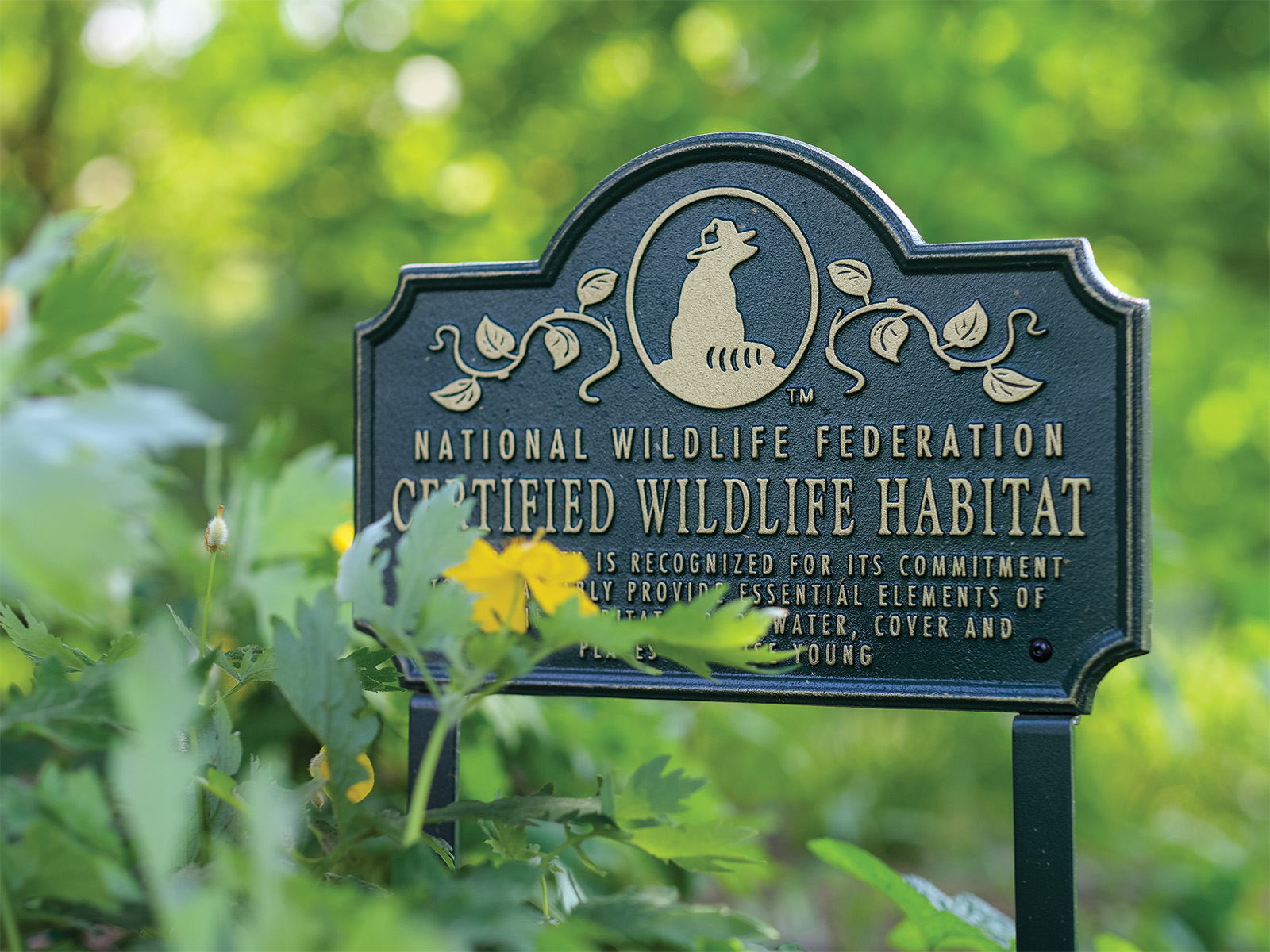
The National Wildlife Federation’s Certified Wildlife Habitat program offers an online checklist ($25) to verify your environs host food, water, cover, places to raise young, and sustainable practices such as limiting chemical pesticides. If you qualify, you can purchase a yard sign touting your certification.
“It’s a nice way to tell your neighbors you have done something good for the planet—and gently nudge them to do the same,” Hardt says.
See Xeriscaping in Action in Real Colorado Yards.
Four Colorado homeowners and one landscape architect rethink what a water-wise yard can look like.
Painting With Plants
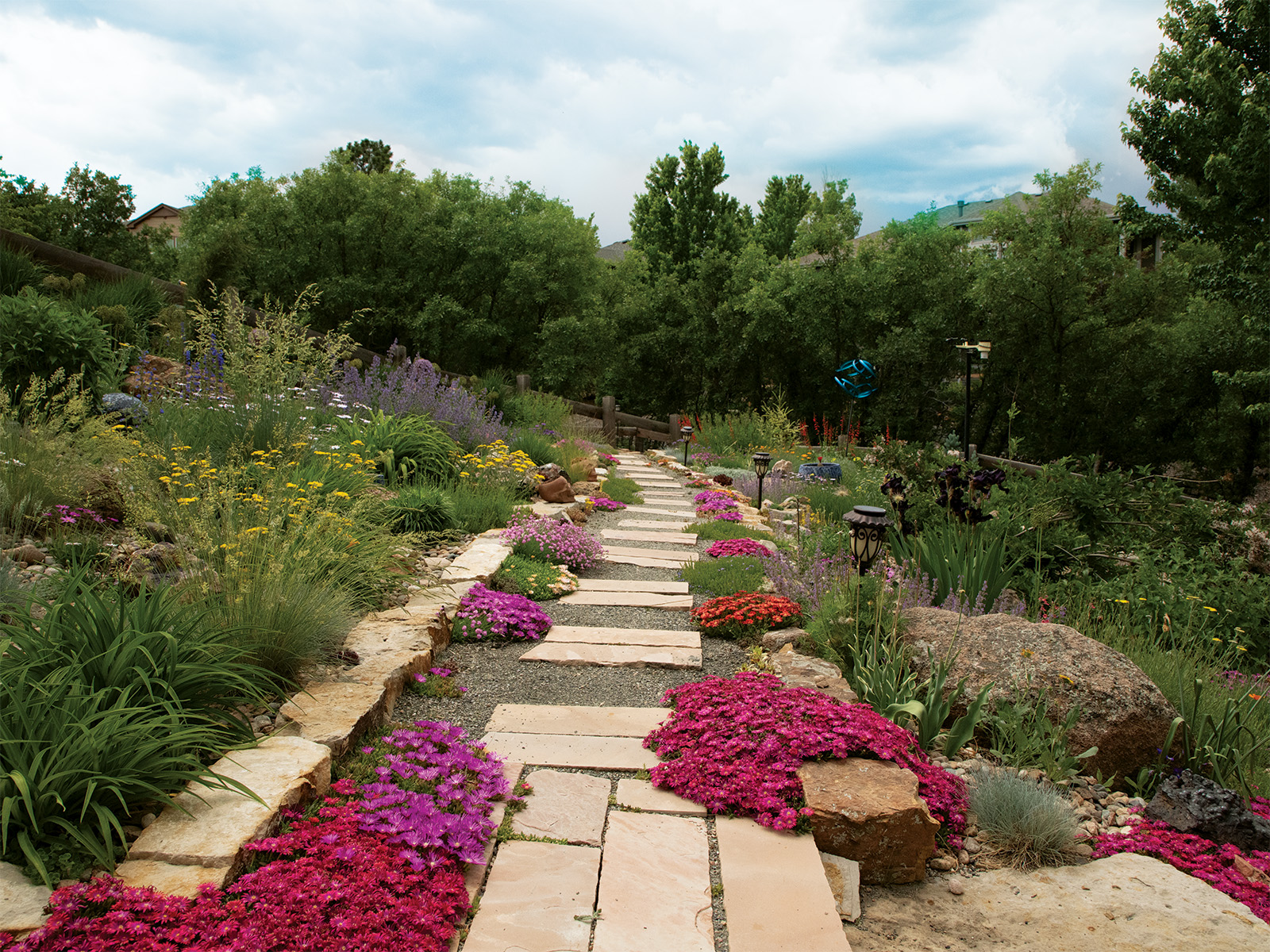
Growing up in Kansas, Ryan Harter spent many mornings helping his mother tend to their small front yard garden. When she died in 2018, five years after Harter moved to Denver, he turned to the soil to process his grief. “I was going through a depression and really connected with her through gardening,” he says.
But Harter wasn’t in Kansas anymore, and Colorado’s dense clay soil and bone-dry climate forced him to relearn everything he knew about cultivating plant life. “In Kansas, I could plant something without needing to water it,” he says. “So there was a dramatic shift in the types of plants I could grow here without needing a ton of irrigation.” He read books by Lauren Springer, who designed some of the native prairie beds at Denver Botanic Gardens; started attending local garden club meetups; stocked up on native and adapted flora; and learned through a lot of trial and error while experimenting in his Aurora yard.
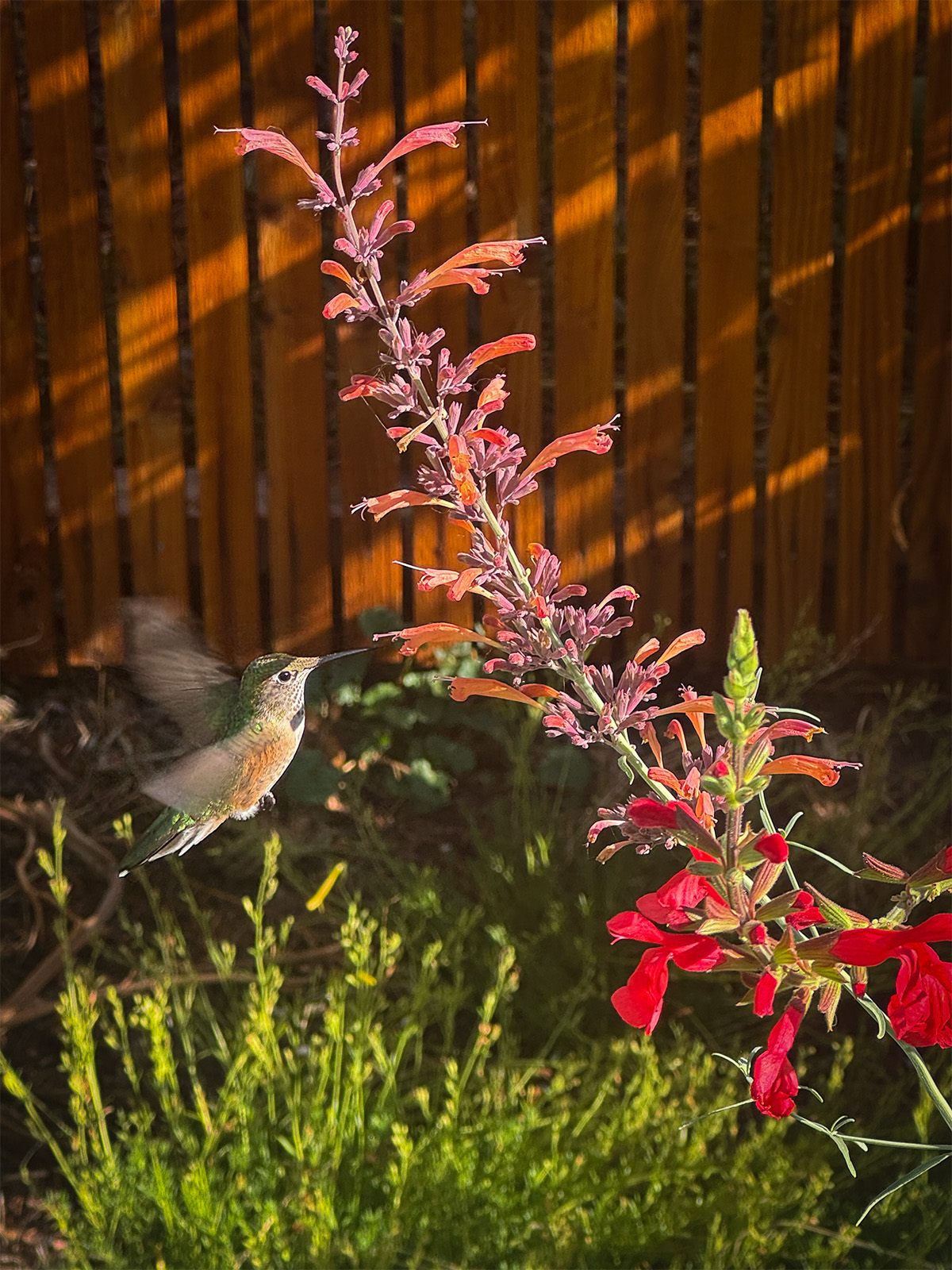
In 2018, Harter and his wife moved to Castle Rock and immediately started scheming a fresh design for their new home’s one-third-acre lot. His plan: Trade the thirsty Kentucky bluegrass lawn and overgrown bushes for a low-water landscape featuring colorful blooms practically year-round. Today, the mature terrain boasts more than 200 plant varieties in a rainbow of vibrant hues. Raspberry ice plants cascade down a stone-paver staircase, purple catmint and salvia sway in the breeze, and hardy succulents provide texture and greenery, even in the winter. “I call it painting with plants,” he says. “I’ve focused on plants that do well in Colorado and have extended bloom times, so you really get this explosion of color.”
Harter’s artful landscape drew the attention of his neighbors, who eventually hired him to xeriscape their own swaths of grass. That organic buzz inspired Harter in 2024 to launch Xeric Garden, through which he offers consulting services and design plans for custom water-wise landscapes. (He also works full-time in corporate telecommunications.)
For every client and in his own yard, Harter’s mission is the same: dramatically cut down on water usage while proving that xeriscaping doesn’t have to be brown and boring. The payoff shows up on the water bill—and in the maintenance calendar. “In July and August, we’re typically irrigating every 10 to 14 days versus every two to three days when you have a lawn,” he says. Instead of constantly watering, he spends time in his garden watching hummingbirds, bees, and butterflies—and admiring the rose bushes he planted to honor his mom.
Low-Water Luxury
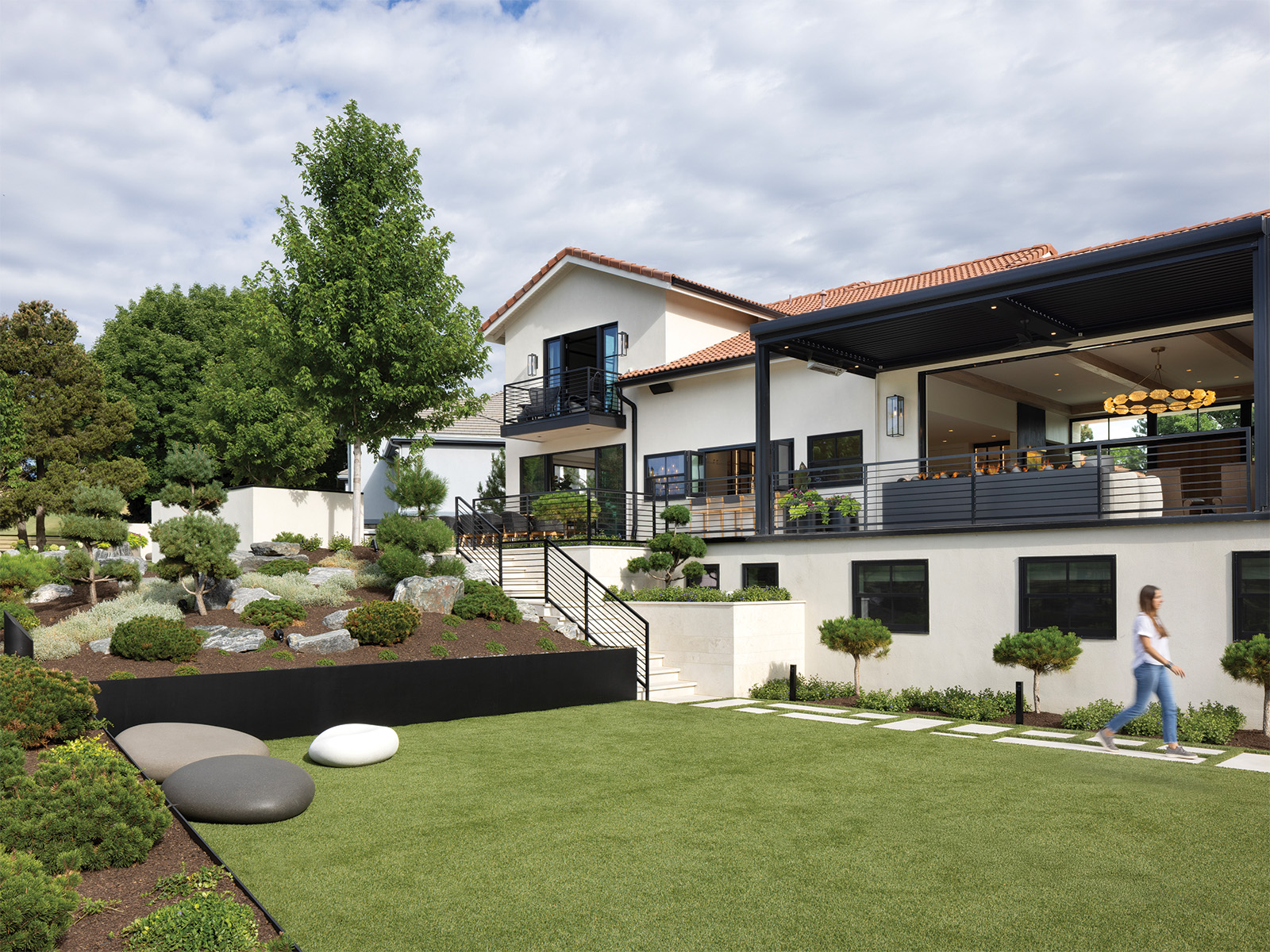
When a couple moved into a Spanish-modern home nestled along the manicured edges of a south Denver golf course, they envisioned transforming the neglected landscape into a fresh, polished yard that felt like a natural extension of the pristine greens beyond their property line. But they didn’t want the cost or hassle of the pricey irrigation that keeps golf courses’ turf primed for play. “We all know that water is like gold in Colorado,” says Keven Winkelmann, landscape architect at Denver-based Designs By Sundown. “These clients did not want an expensive water bill, ever.”
Winkelmann and his co-worker Jeromy Montano teamed up to create a series of modern outdoor spaces designed to be enjoyed, not obsessively maintained. To extend the home’s livable footprint, they installed upper- and lower-level porcelain-stone-paver patios in the backyard and equipped them with seating areas, fire pits, and a covered outdoor kitchen and TV lounge. Stretches of Kentucky bluegrass in the front and backyards were replaced with SynLawn, an artificial turf that incorporates thatch for a realistic look and feel. “We were just going to do synthetic turf in the backyard, but after the clients saw samples of the product, they got excited and decided to use it throughout the whole project,” Winkelmann says. And a two-tiered putting green in the southeast corner of the lot allows the homeowners and their guests to test their skills before hitting the links.
A mix of piñon and Ponderosa pine trees, evergreen shrubs, and moisture-retaining vinca vines outline the perimeter of the backyard, which the team equipped with a drip irrigation system that targets the roots of each plant so precious water isn’t wasted on sidewalks or driveways. In reflection of the homeowners’ sleek style, many of the plant and rock selections—including sculptural poodle pines, Mexican beach pebble, and dwarf Korean lilac—nod to Japanese-inspired minimalism, while clusters of smooth, concrete-stone seating evoke the feeling of a Zen garden.
The one water-intensive plant the homeowner couldn’t go without? Fluffy white Annabelle hydrangeas. To grant that wish without spiking the water bill, the design team strategically planted the flowers near the house. “I’m a firm believer of putting the right plant in the right location,” Winkelmann says. “You don’t want hydrangeas in west-facing conditions where they’re getting that very hot sun. They’ll survive, but they’ll need much more water than if they’re north-facing or east-facing and getting filtered morning sun and afternoon shade.”
Rewilded in the City
Denver resident Amanda Croy says she doesn’t preach about many things, but she makes an exception for native plants. “I’m a tear-up-your-lawn evangelist, basically,” she says. “The grass patch is such a relic of another time and place that is not relevant to our environment.” Croy and her husband have transformed two dirt-patch yards—one at their previous house near Sloan’s Lake, the other at their current home in Harvey Park—into low-water landscapes teeming with wildflowers and pollinators. “I think that xeric gardens can get a bad rap, because people assume you’re going to rip up your grass, fill the yard with rocks and two cacti, and call it a day,” she says. “But there are so many ways to design and plant in a way that’s drought-tolerant. It’s just a matter of planting things that want to be here.”
For her current backyard, Croy focused on the natural drainage of the site, building a series of berms and swales (read: peaks and valleys) to manipulate rainwater flow. “The plants that want a little more water go in the valleys, and the things that want a little less go on the slopes,” Croy explains. Then she selected native and adapted perennials: blue flax, Apache plume, Rocky Mountain penstemon, four o’clocks, blanket flower. For a full, meadowlike look, Croy grouped bushy flowers a bit closer together than their instructions recommended. “We want them to grow wild and overlap,” she says. Using a native seed mix, Croy also turned a neglected strip of side yard into a wildflower patch, which she dubbed her “lazy girl garden” for its hands-off maintenance plan.
Like all new gardens, the yard required regular watering (three times a week) for the first summer, but now, nearly four years in, Croy only hand-waters when temperatures hover above 95 degrees. “My water bill doesn’t go up a dollar in the summer,” she says. And as the garden has grown, so has its attractiveness to native pollinators and creatures. Hummingbirds visit Croy’s garden to drink from her hummingbird trumpet mint; kestrels swoop in to eat bugs from the soil after it’s rained; squirrels and mice eat seeds from the flowers; and osprey and hawks circle above to keep watch on the critters below.
“Something that’s fun and really beautiful and fulfilling to me is giving nature an island of safety in a city landscape that’s often so inhospitable,” she says. “This is how you make a positive impact on the earth: You invite nature in and build a tiny environment that becomes your own personal ecosystem.”
Designed for Wind
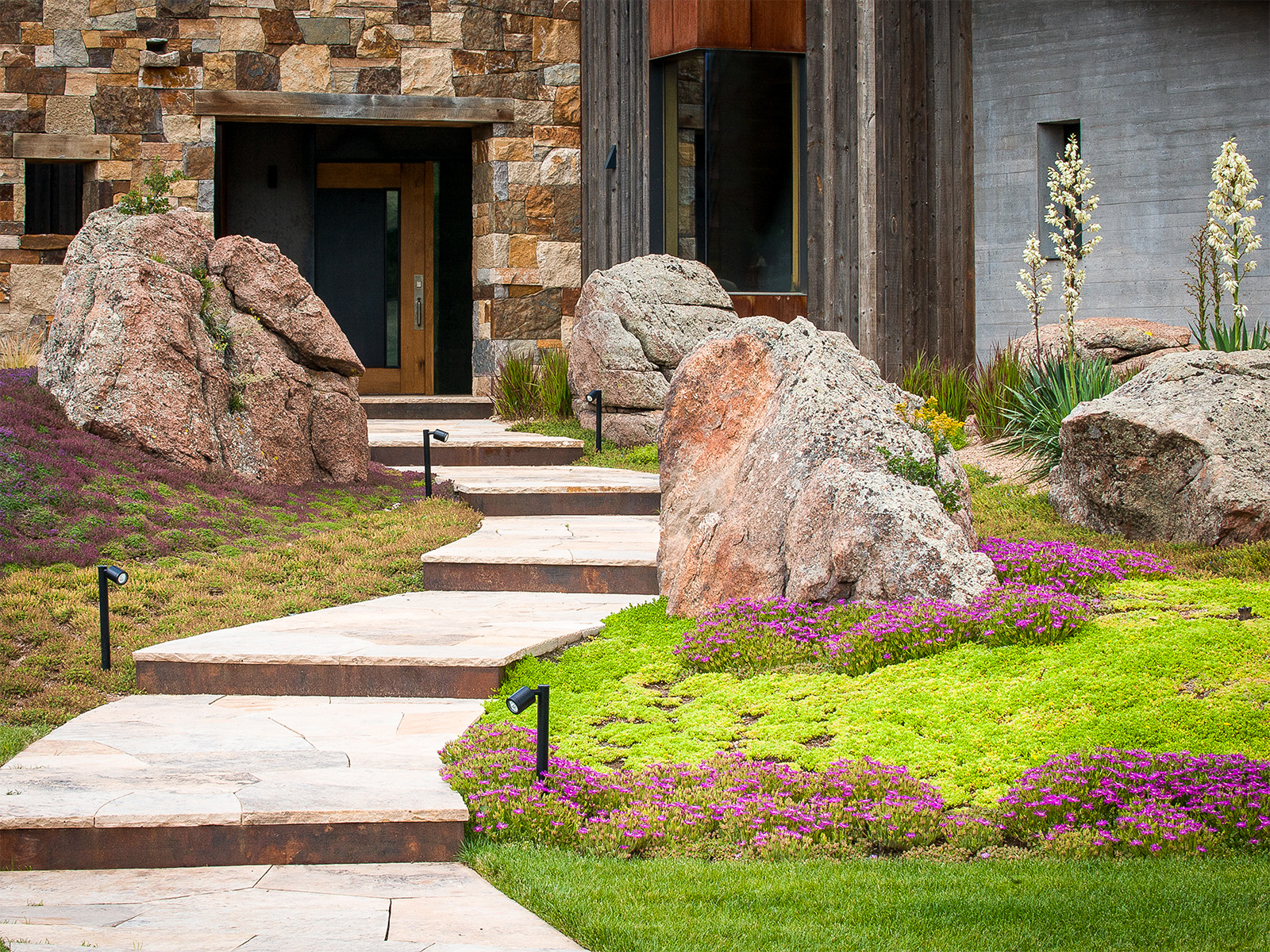
Situated near Marshall Lake in South Boulder, this 73-acre lot of sprawling meadows, rolling hills, and uninterrupted views of the Flatirons had never been built upon. And for good reason: “It’s probably one of the windiest pockets in all of Boulder,” says Luke Sanzone, principal of Marpa Landscape Architecture in Boulder. Aggressive western winds coming from Eldorado Canyon made the area inhospitable to plants; only a smattering of Ponderosa pines dotted the site. So when Sanzone was tasked with turning two acres of the barren land into a yard for a private residence, he knew hardiness had to be top of mind. “First and foremost, we needed a plant palette that was resilient,” Sanzone says.
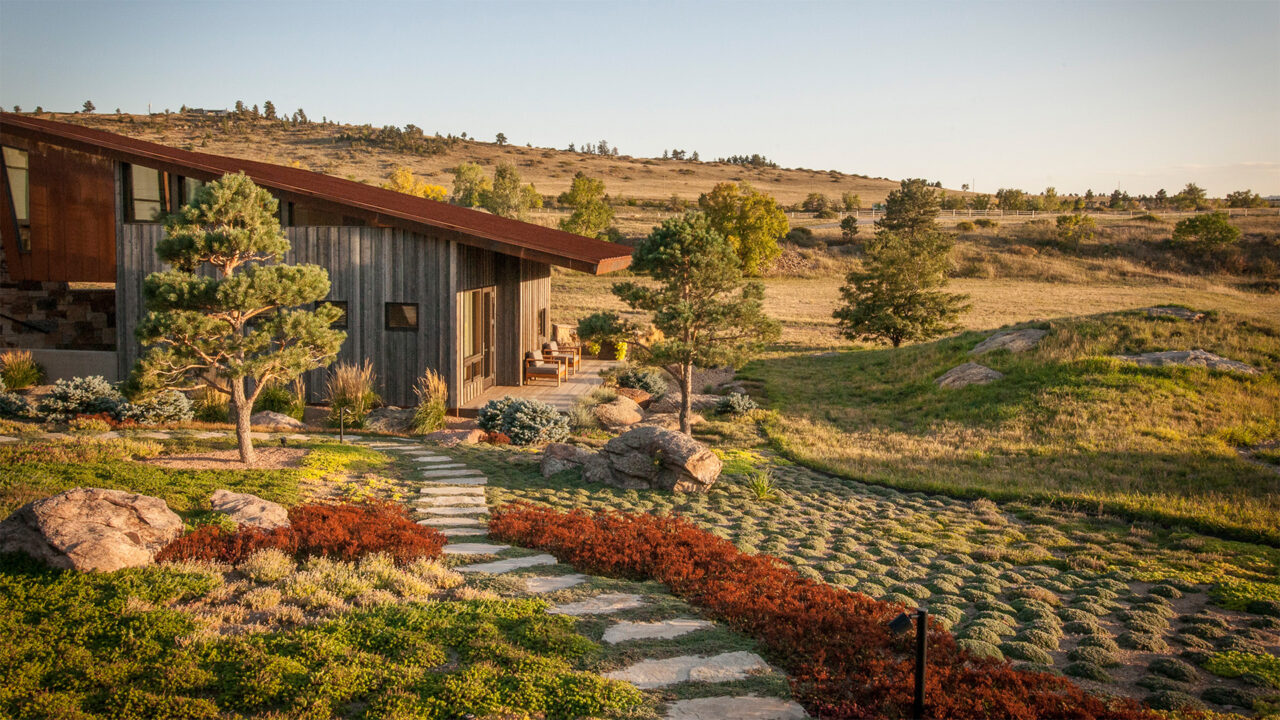
Drawing inspiration from the Japanese design technique shakkei, or borrowed scenery, Sanzone created continuity with the wide-open surrounding landscape by incorporating similar colors, textures, and shapes. “You’re basically creating a miniature version of that long view,” he explains. The design team built several berms to both mimic the rolling hills in the distance and create a series of wind-protected valleys where plant life had better odds of surviving. Then, they relied on native and adapted prairie grasses (blue oat grass, Mexican feathergrass, little bluestem), ground cover perennials (ice plants, sedums, hens and chicks), and pops of rust red Japanese bloodgrass and berry-hued creeping veronicas to create a lush, carpetlike tapestry. “Once those were established, the water consumption was near zero,” he says. And to echo the views of the jagged Flatirons beyond, Marpa created crevice gardens with sage, artemisia, and yucca nestled among moss-covered boulders.
For one section of the yard where the clients wanted a traditional lawn, Sanzone selected a low-water sod mixture developed at Colorado State University. “It grows roots two to three times the depth of standard bluegrass,” Sanzone says. “It uses probably 50 percent of the amount of water as a standard lawn.”
The mature landscape, dynamic with texture and color, reads like an abstract painting—a vast improvement from the desolation that covered the area before. But Sanzone recognizes that this extreme of a renovation isn’t always feasible. “Not everyone has millions of dollars to literally build mountains and valleys on their property,” he says. “But you can create wind breaks with plant material and shade with a canopy tree or a trellis. It comes down to studying your site and its climatic conditions…and working with those conditions rather than trying to fight or change them.”
Desert, Reimagined
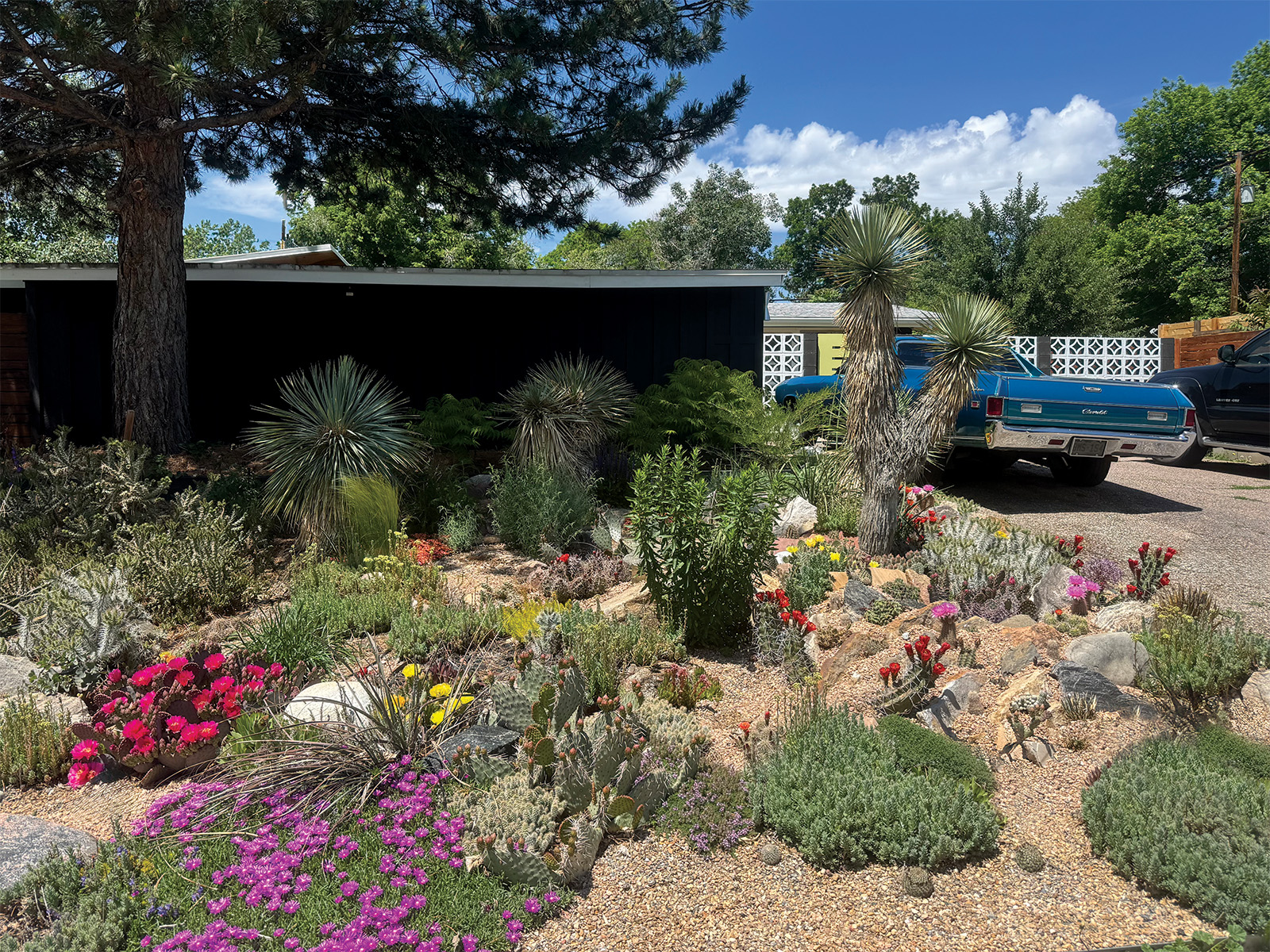
When local artist Nick Babich purchased his first house in 2021, he became the proud owner of a slice of Denver architectural history. His new three-bedroom, 1,385-square-foot ranch was one of Harvey Park’s 170 Cliff May Homes, a series of mid-mod prefabs from the esteemed California-based designer built in the 1950s. Like all Cliff May designs, Babich’s new digs featured a strong indoor-outdoor connection, with floor-to-ceiling window walls and exterior doors in nearly every room in the house. “You stand on the hardwood floor inside and look directly out to the ground outside,” Babich says. “Most of these houses are pretty small, but the whole idea was that if you’re connected to the outdoors, who cares how big the house is?”
But when Babich moved in, the only views through his expansive windows were of a dirt lot speckled with dandelions. Though the house itself needed extensive renovations, he fixated on tackling the neglected outdoor spaces first. “Maybe three days after closing on the house, I came out here with a big tilling machine and dug up the entire front yard,” Babich says. “I’m sure the neighbors thought I was insane.”
His goal was twofold: to create a landscape that required zero upkeep and stayed interesting year-round. “When I moved to Denver from Florida, it was a shock to the system that everything just died in the winter,” he says. Babich planted hardy, desert-dwelling plants including prickly pear cactus, yucca, and agave and hardscaped with a mixture of big rocks (most of which he scored from a construction dumpster in Golden and transported in his El Camino) and pea gravel filler. He also created crevice gardens, where plants fill the empty spaces between angled rocks that jut up from the dirt. “This promotes the roots to shoot straight down deeper into the ground, and the rock insulates them throughout the winter so they don’t freeze,” Babich says.
While his yard project required a lot of physical labor in the beginning, it hasn’t needed much of anything since. “I haven’t touched a single thing in years—no water or anything,” Babich says. Now, the lifelong artist only tends to his yard for creative fuel: Babich turns the prickly pear’s subtly sweet red fruit into fruit leather snacks, makes dead yucca and agave leaves into paper that he uses for screenprinting, and most often, simply admires his landscape from his floor-to-ceiling windows.
Read More: 4 Water-Wise Landscape Designs Created Just for Denver-Area Homes