The Local newsletter is your free, daily guide to life in Colorado. For locals, by locals.
As I write this, the outside air temperature is 80 degrees. Humidity is about 20 percent. The wind is steady and relentless at about 15 mph. It hasn’t rained in our rural Rocky Mountain community for at least two weeks, and little is predicted for the next 10 days. Fire restrictions are in place. Everyone I know around here is tense and edgy because, as novelist Raymond Chandler once wrote, “anything can happen.”
When people quote Chandler at times like this, they usually focus on his full-throated and unforgettable description of Southern California’s winds: “It was one of those hot dry Santa Anas that come down through the mountain passes and curl your hair and make your nerves jump and your skin itch. On nights like that, every booze party ends in a fight. Meek little wives feel the edge of the carving knife and study their husbands’ necks. Anything can happen.”
It’s that last sentence that really came to life for me in the fall of 2020, on a day much like today, with air so dry it crackles and the wind whipping up clouds of dust from the parched dirt roads that surround us. There’s a haze in the air this morning from a fire in Utah, and my lifetime of experiences with these unpredictable monsters has me on a hair trigger.
Because anything can happen.
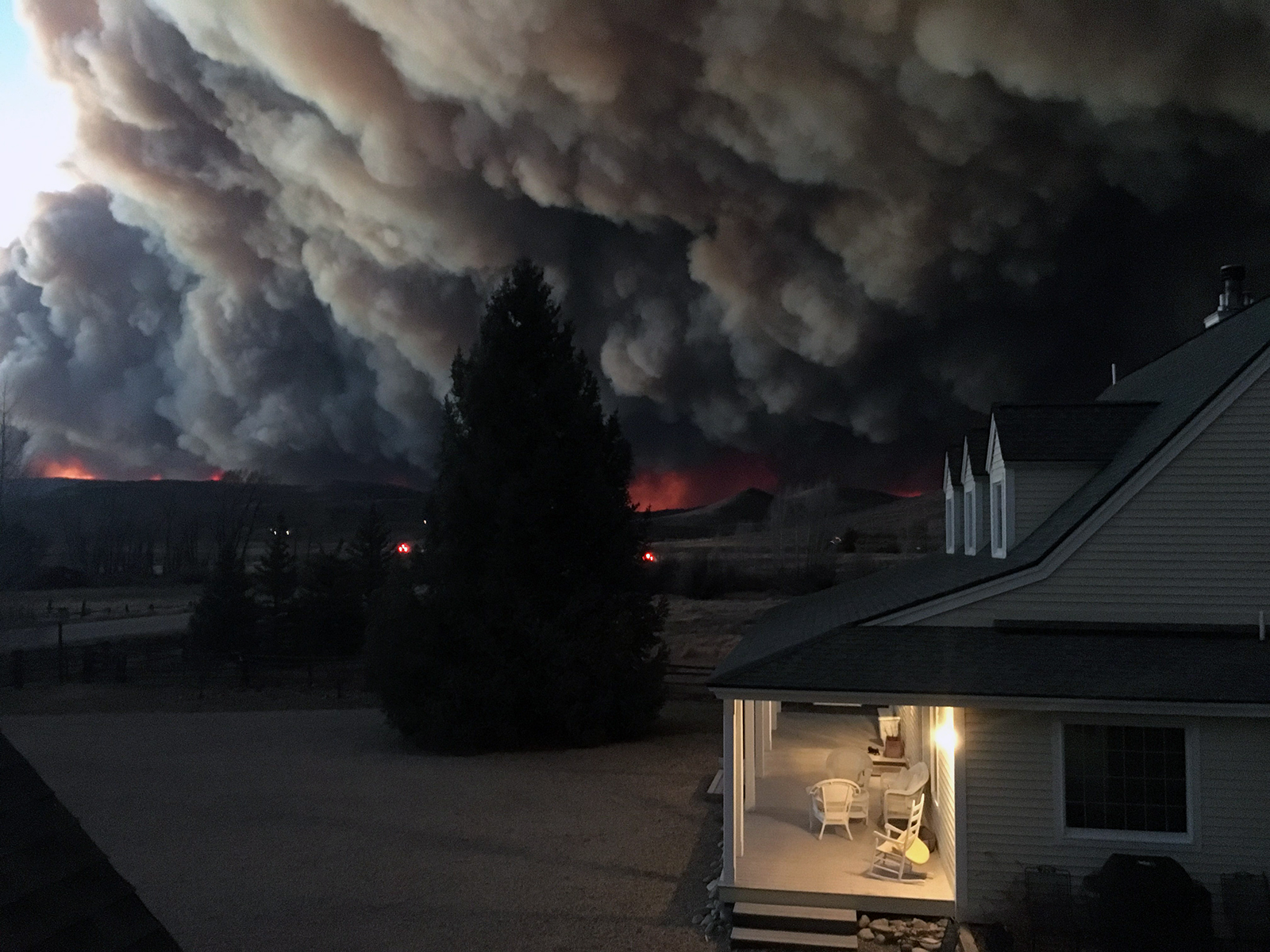
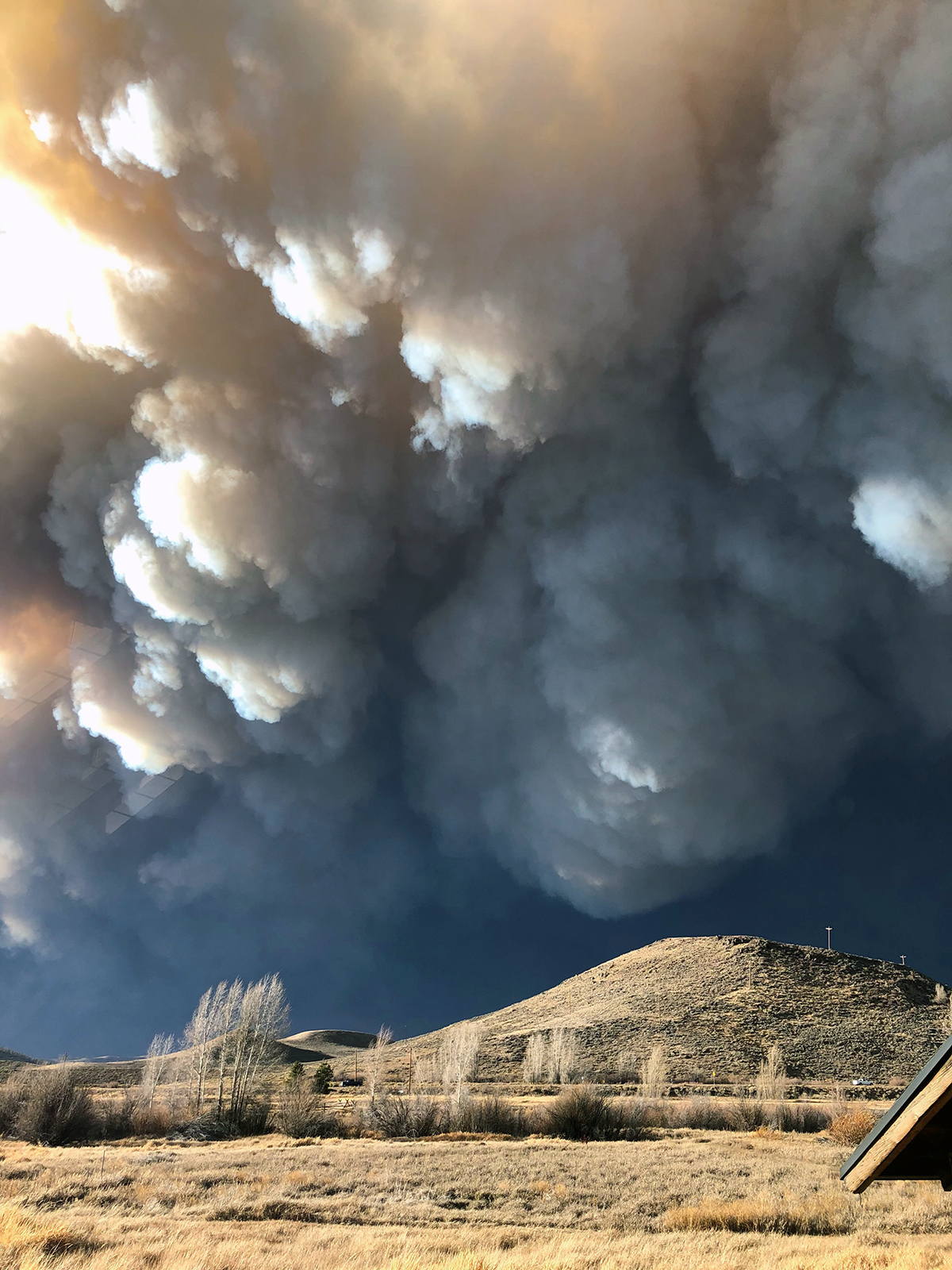
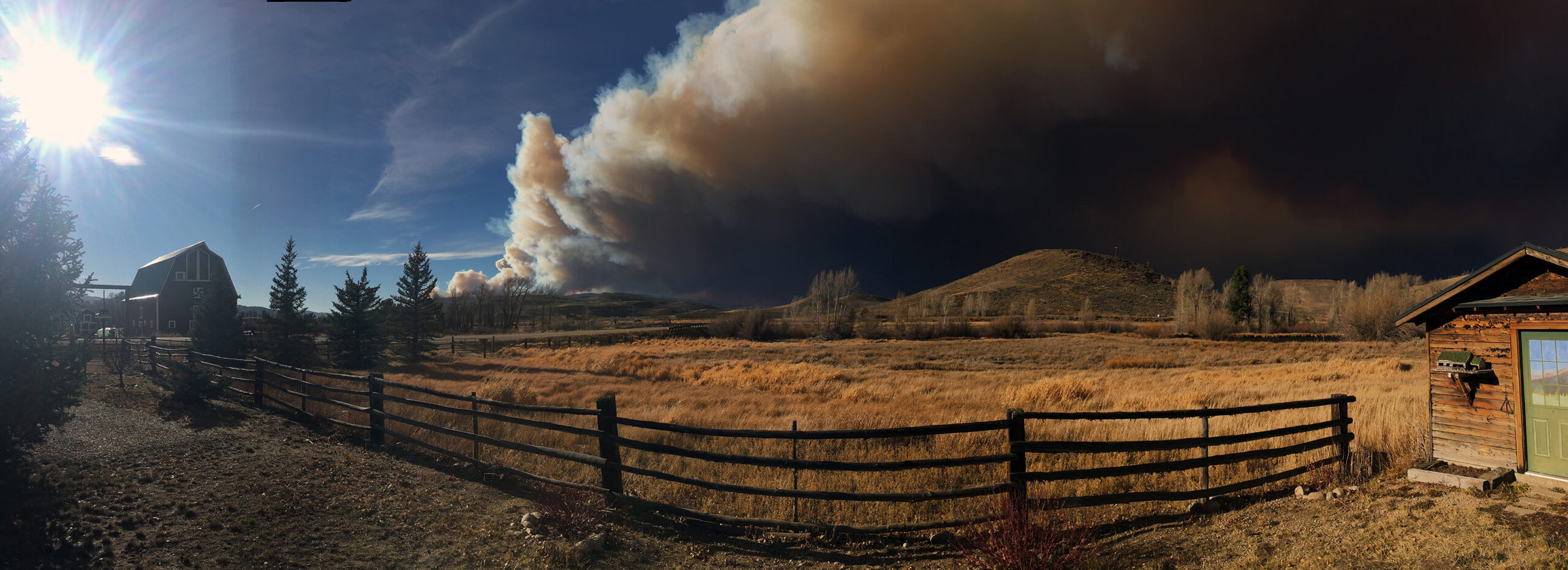
On the evening of October 21, 2020, a simmering blaze about 10 miles west of our house exploded from a manageable 18,550 acres to an almost unimaginable 187,964 acres in less than 24 hours. It started along the east fork of Troublesome Creek, so officials dubbed it the East Troublesome Fire.
Driven by high winds, the rough beast headed north through the lodgepoles at an unstoppable 6,000 acres an hour, passing within about a half-mile of our drought-crisp four acres before devouring more than 300 other homes on its approximately 18-mile run into Rocky Mountain National Park. About 200,000 acres burned, but improbably, only two people died. By dawn the next day a half-dozen of my local friends were homeless.
The emergency bulletins that day told a grim story. While the fire bypassed the small resort town of Grand Lake, it blew through the relatively dense neighborhood around Columbine Lake, heading into the park’s Kawuneeche Valley. With each update to the online map, the sickly pink stain depicting the burn area spread like a spilled drink. It began to creep up the steep canyons toward the Continental Divide and Estes Park on the eastern side, where another massive fire was burning.
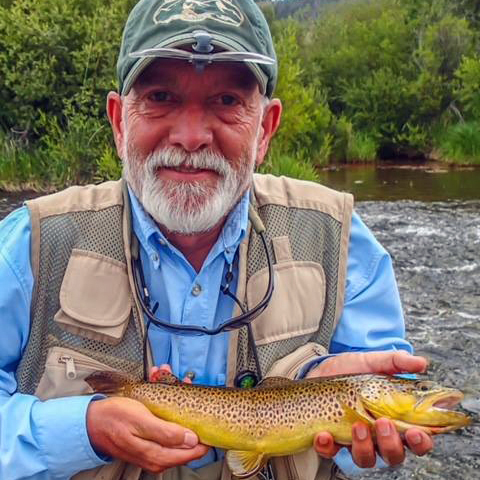
Just five weeks before, my visiting friend Steve and I had hiked the roughly three wooded miles from the park’s Kawuneeche Visitor Center north to Big Meadows, then fished Tonahutu Creek on our way back to civilization. We had the creek to ourselves, and it was a tempting puzzle punctuated by riffles and pools that dipped into and out of the pines. Some sections were crisscrossed by deadfall trees and studded with boulders. Hungry and naive wild brook trout lurked in their cool shadows. The sun was warm, the snowmelt cold but tolerable.
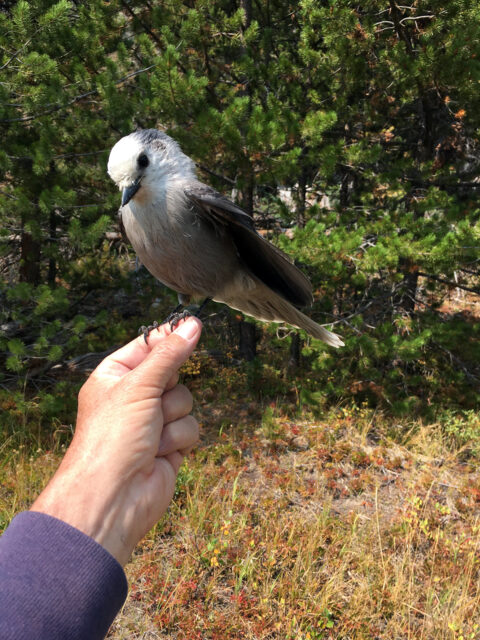
Looking back, a few moments stand out. Finding the bleached bones of an elk. The fish that took Steve’s fly the moment he accidentally dropped his line in the stream. The gray Canada jay that hovered to investigate my sandwich—then startled me by perching coyly on my outstretched finger.
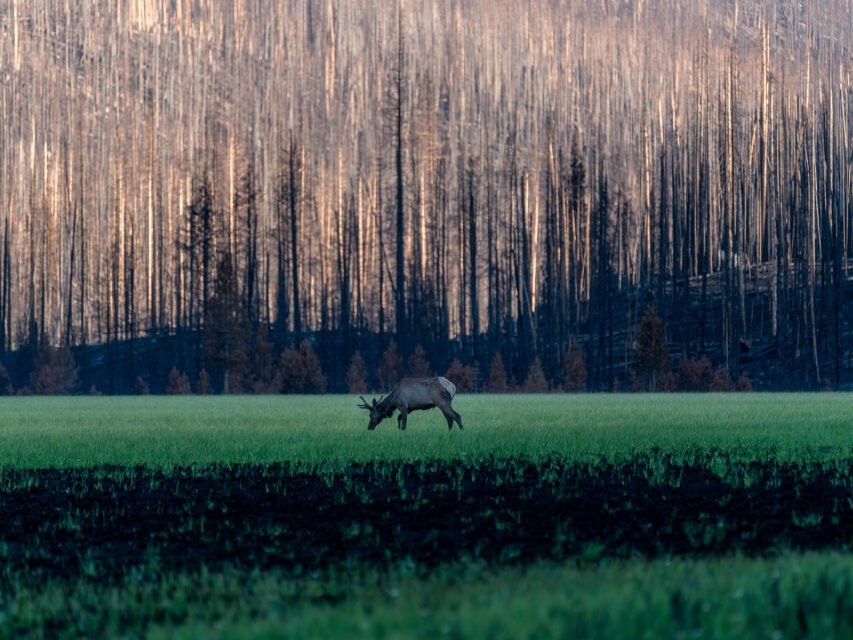
There was a magic to it all, the kind that can only take place in our precious wild places. When it was over, we dubbed it simply “the perfect day.” But looking back over my photographs from our outing, I also can see that we were hiking through a profoundly dangerous landscape. The creek was surrounded by beetle-killed pines. We were fishing in a beautiful tinderbox that, in a single night five weeks later, would be reduced to ashes.
I covered a few wildfires during my 31 years as a journalist in Southern California. Most memorably, I was on the scene of a 1993 fire in Laguna Beach. But I now appreciate that there’s a safe psychological distance between covering those tragedies and fleeing them.
At the time, my newsroom quickly became an all hands-on-deck operation as the firestorm winds roared to 92 mph across landscape as dry as kindling. The fire soon was over the hill and into the neighborhoods, and eventually it would consume 14,337 acres and destroy 441 homes on the densely packed hillsides. By the time I was able to ditch my car, cadge a ride into the ravaged hills, and talk my way into the fire zone, much of the city was in ashes. I spent hours walking through what was left of Laguna’s homes and neighborhoods, talking to firefighters and residents who looked like they’d been clocked in the forehead with an iron pipe.
As I made my way past charred hulks of cars, sad concrete foundations, and the ashes of so many scorched lives, I noticed something peculiar. Almost every home site had a gas pipe running to it and, even though the houses were gone, natural gas was still flowing through the pipes. I remember seeing dozens of those pipes sticking up through the ashes, each with a blue flame dancing at its tip like a melancholy candle.
At the time, I remember thinking how odd that seemed; those inadvertent, flickering torches were the most apparent sign of life amid all that crushing devastation.
Writers are notorious hoarders. We collect experiences, information, and memories, and we store them in forgotten parts of our brains until we find them useful. Years went by, then decades. I didn’t think of those strange little torches much, or at all. The city was rebuilt. Lessons were learned. Laguna Beach is as charming and fragrant as ever, and an unfamiliar visitor might never know what happened in that place not so long ago.
But in 2015, when I sat down to finish a novel called Combustion, it all came back. The rising panic. The powerless despair. The stinging eyes. The acrid smell of burnt everything. The memory of those solitary blue flames made their way into a scene where a veteran firefighter surveys the path of my fictional fire:
“He’d never seen anything like it. The blaze was moving like a runaway train, up hills, into valleys, across inland Southern California’s wide, flat plains where housing tracts stood like sun-dried dominoes. It spread in every direction from the point of origin in the foothills, fanned by the winds, a spreading char-black stain of indiscriminate destruction. It had turned more than a thousand homes to ash during the past three days, leaving in its wake only concrete foundations, stand-alone stone fireplaces, and tiny blue flames where open gas lines marked each home site like a flickering candle.”
As often happens with the passage of time, memories change. In 1993, I saw those candles as sad little reminders of what was lost. I later saw them as clear signs of hope for the resurrection to come. But, as Emily Dickinson wrote, “ ‘Hope’ is the thing with feathers.”
And to me feathers have always seemed unspeakably fragile.
Two weeks after the East Troublesome Fire, still hoping, I drove 12 miles from my home into Rocky Mountain National Park. I planned to hike along Tonahutu Creek to see what might have survived. It felt like driving to a morgue to identify the body of someone I loved. Seeing it might bring some closure, but I knew the images might live forever in my head.
I steered around roadblocks to the intact visitor center, where I found a district ranger. I explained my intentions. She shook her head. Crews had only just started to assess the damage on foot. “Too dangerous,” she said. Trees down everywhere. Trails impassable. Root fires still burning. Big Meadows? “Impacted.” Tonahutu Creek? “Same,” she said. A lot of what she knew was from aerial surveillance.
The most startling thing she said was that many of the little fish we caught and released during our perfect day may have been killed by the heat of the fire. I thought of the friendly Canada jay that shared my sandwich and perched on my finger. If it survived, where would it live now?
A month later, the National Park Service released a four-and-a-half-minute video featuring still photographs and aerial video footage of the carnage. An accompanying Facebook post noted that when combined with the damage from the Cameron Peak Fire on the eastern side of the Divide, about 30,000 acres—or nine percent of the park—had burned.
I know that idyllic run of Tonahutu Creek is just one small part of what was lost, but I was left with a gnawing kind of personal grief. If you multiply that by the millions of people who share my affection for the park, you begin to imagine the depth of the psychic wound to Colorado and the people who love it.
The park service ended its video with earnest talk about the important role that fire has always played in the Rocky Mountain ecosystem. It predicted an explosion of new life from soil enriched by the ashes and supercharged by sunlight from the suddenly open forest canopy. It promised improved biodiversity, pointing out that a wide variety of plants and animals eventually would thrive again.
I understand all that. Really, I do. But a full recovery may take decades. I turn 70 next month, and I don’t have many of those left. At least for now, and especially on high-alert days like today, I have to accept that a million special places—including the one where I spent a perfect day with an irreplaceable friend—will never again be exactly as I remember. I’m grateful for those memories, but for the rest of my life I’ll also walk with reverence on the ashes of friends’ homes and a landscape forever changed.
This essay originally appeared in journalist Martin J. Smith’s newsletter, The Shitshow Observed.