The Local newsletter is your free, daily guide to life in Colorado. For locals, by locals.
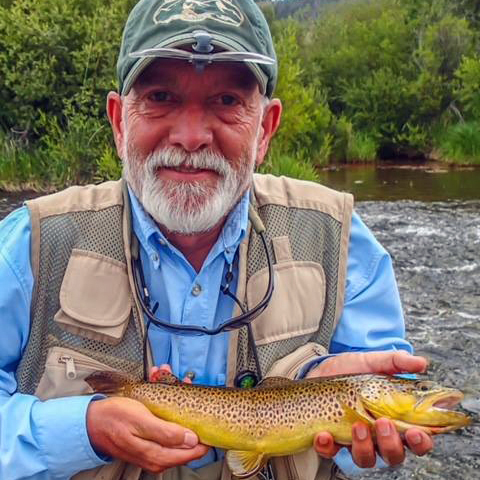
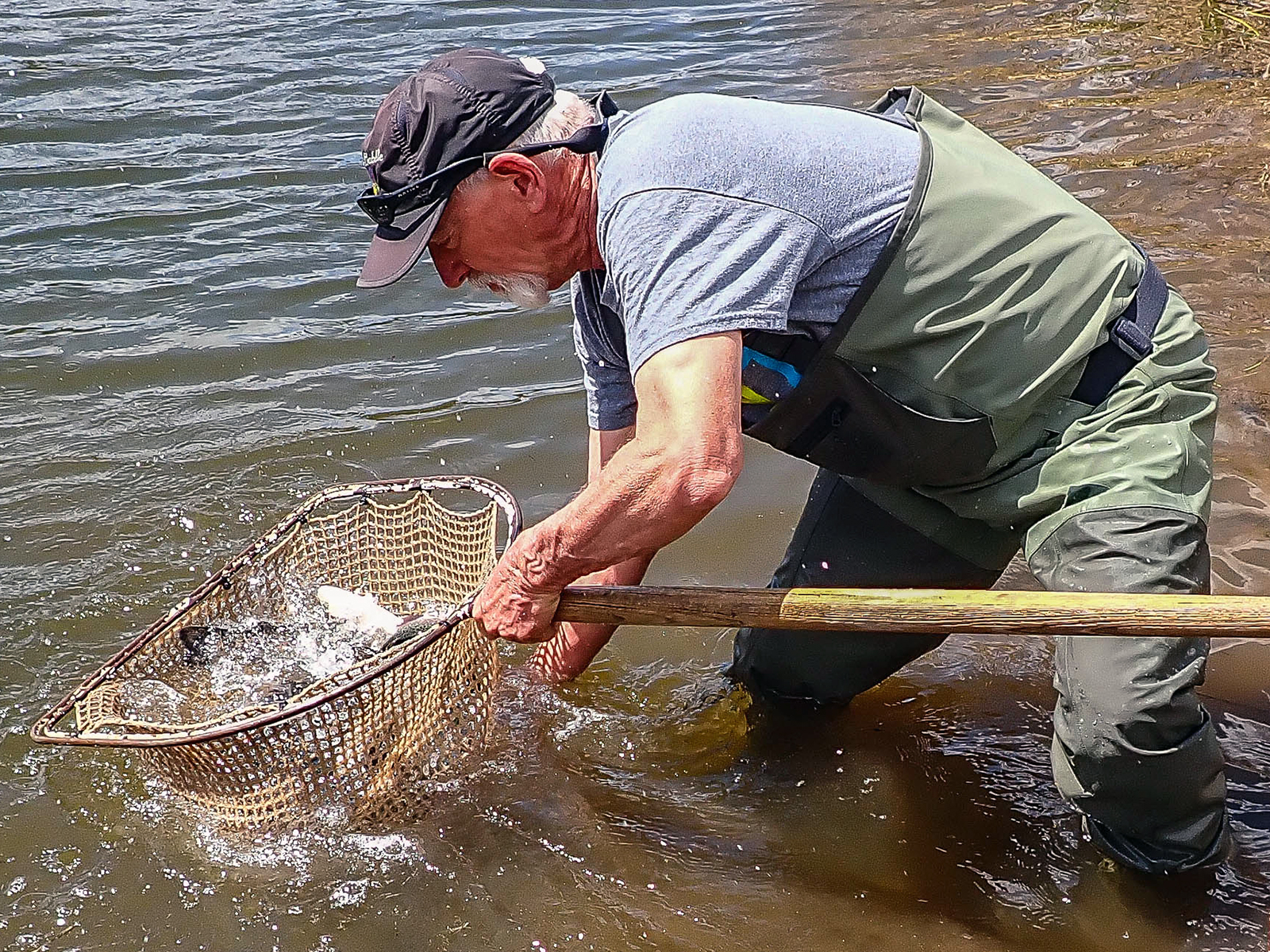
This Friday is fish-stocking day in the rural Colorado fly-fishing community where I live. It has been an annual May ritual of mine for 10 consecutive years now. At 8:30 a.m., I’ll gather with a half-dozen other crusty silverbacks to kvetch and sip coffee and await the arrival of a tanker truck filled with hundreds of pounds of live rainbow trout.
During our annual exercise, we release those hatchery-raised fish into a mile-and-a-half stretch of the Colorado River headwaters to live out their lives in the best possible place to be a trout. The water is clear and cold. The bugs are plentiful, and the river is essentially a watery DoorDash delivering 24/7. Our new residents will find deep pools and stony riffles and endless places to canoodle and spawn. We’ll drop wriggling netfuls of them into what’s essentially the Promised Land for those once-captive souls.
You may have guessed this is not a purely benevolent act. While we do try to protect them from otters, pelicans, osprey, and other real predators, for the rest of their lives those trout will have to put up with fisherpeople like me, with our fake bugs and treachery.
That said, it’s all barbless hooks and catch-and-release around here, so a sore lip and an occasional few minutes of anxiety seems a small price to pay for the privileged lives they will lead. I prefer to think of our good work as Liberation Day for these lucky creatures. I also think of my own arrival here a decade ago in much the same way.
I have friends who chase fish all over the world. The mentor who first taught me to cast on Montana’s Bighorn was a fly-fishing raconteur who spent much of his life drinking good wine, telling rude stories, and artfully presenting flies on the world’s most remote rivers. He lived large, always prowling for untrod paths and unmolested trout. He died as one of my role models.
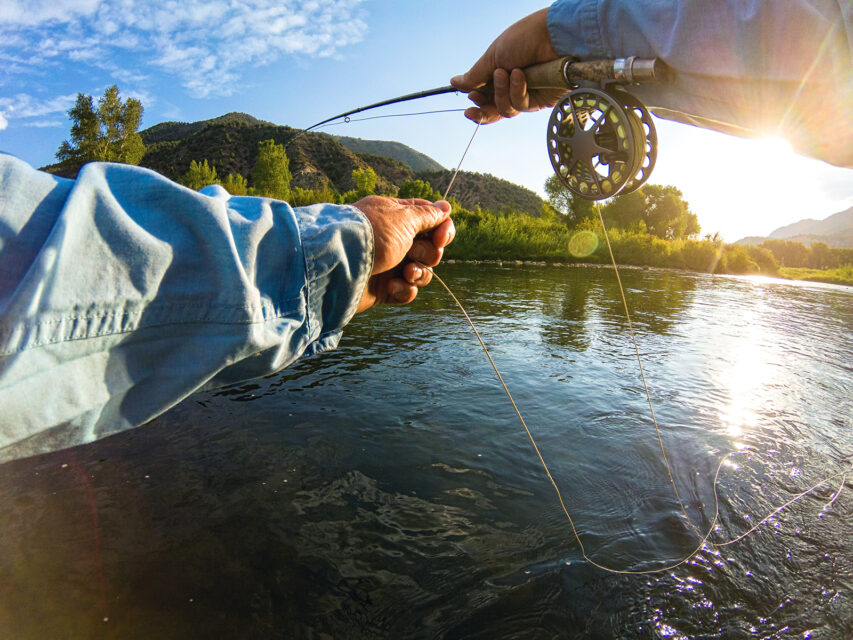
And yet I find myself content these days to endlessly fish our small stretch of the Colorado, which flows knee deep and the width of a county road about 50 yards from our house. Our little ranch controls fishing rights to that fraction of the 1,450-mile Colorado, the American West’s seminal river, and we divide that stretch into three half-mile sections—upper, middle, and lower. Each beat has its own personality, and the members of our angler’s club worry and fuss over those sections as if they were dog show poodles.
But my fellow anglers are mostly weekend people. I live here full time and have our stretch of river to myself during the week. I’ve learned to treasure the extraordinary value of solitude during my nearly 70 years. Life’s real treasures are all around us, within reach of those who have the time and patience to simply notice them. I intend to live and fish here until I die, and I sincerely believe I’ll die happy—even if I never fish anywhere else again. For me, repetition has become an act of exquisite memorization.
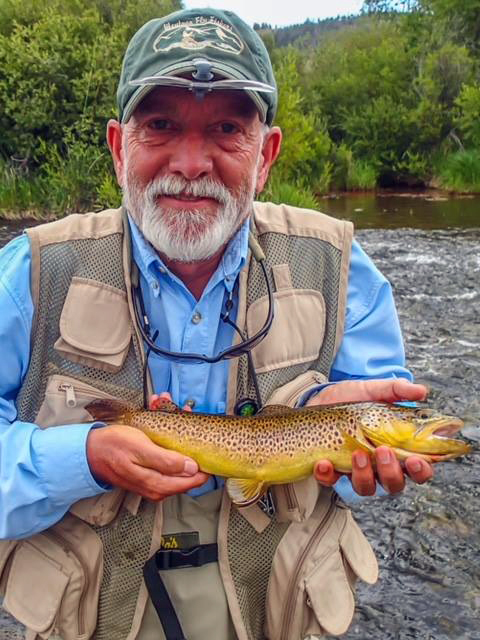
Just as I find simple comfort in the faces of the people I love, I find it, too, in a perfect tongue of water that spills into a deep pool in the middle section not far from my back door. I find it in an undercut bank overhung with willows where the native browns wait in cool shade.
My sacred place is a few hundred yards downstream, in the lower section, where the river splits and flows past a small island the shape of Manhattan, if Manhattan were only 10 yards long. You can wade there and keep your thighs dry. The water that flows left funnels fast into a deep channel that bites into the bank. The browns like it there, way down in water the color of coal. A short cast from the island will put a nymph into the flow, and a drift of 20 feet is about all you need. Hard strikes favor you with a rising flash as the prize turns its belly to the sun.
Straight downstream, off the tip of what would be Manhattan’s financial district, the widest part of the river spills over shallow rock and into a chest-deep pool. The laziest and stupidest rainbows congregate there, fat as mob bosses, waiting for gravity to bring them a bug. You can drift a nymph straight into their mouths, or lure the more ambitious ones to the surface by landing a dry fly, light as an angel’s kiss, onto the pool surface.
The far left channel mirrors the one on the right, and is nearly as easy to reach from the island. During an insect hatch, the browns lurk like muggers in the shadows of overhanging trees. I practically know them by name.
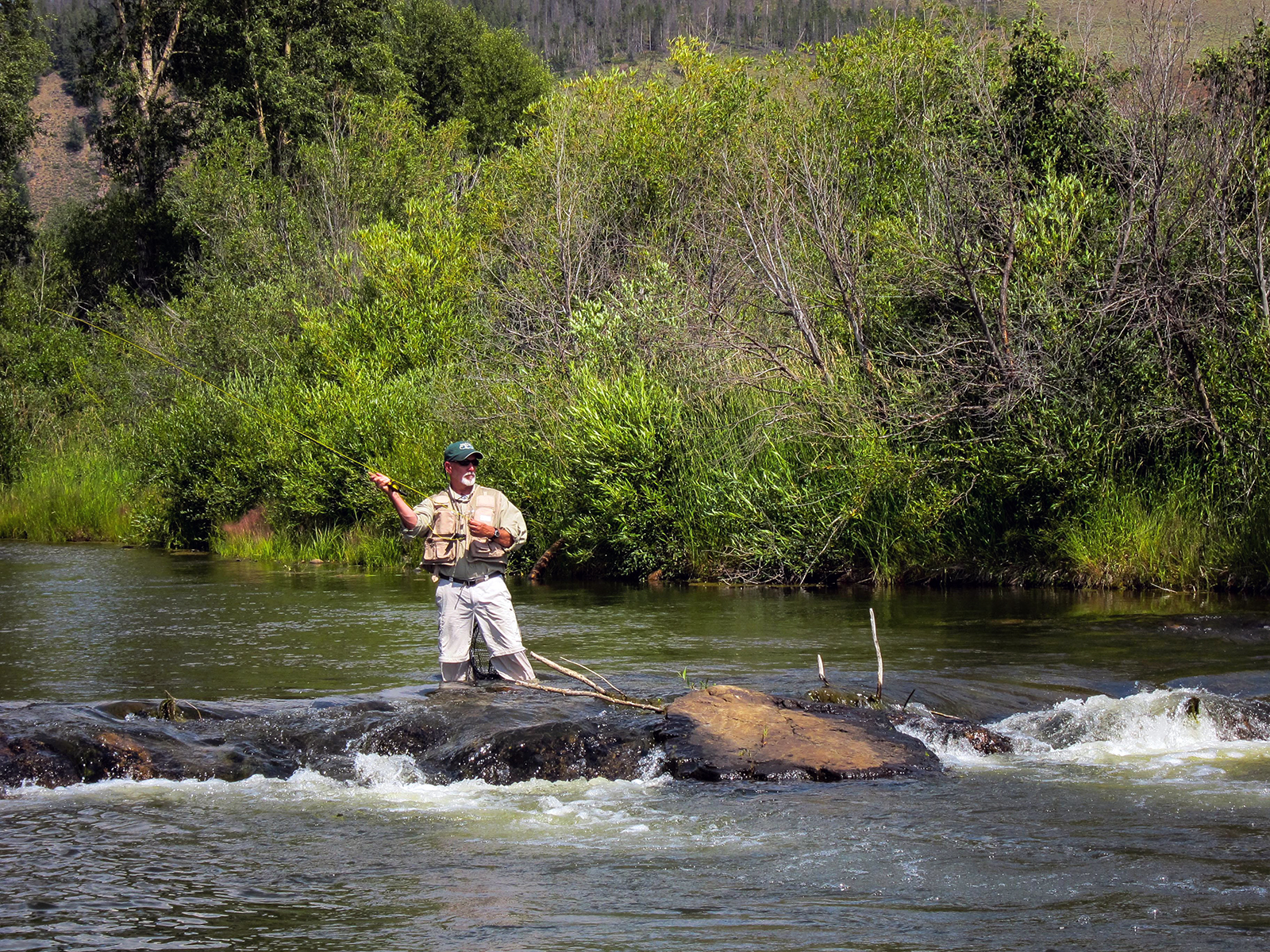
I treasure these little geographic accidents, and I’ve mind-mapped them all for future reference. Even when I’m away, I can visit anytime I want.
Call me boring. I’m fine with that. Would I like to bush plane into the Bristol Bay watershed to stalk three-foot rainbows? Chase German browns in Patagonia? Camp in yurts while hunting Mongolian monsters big enough to eat ducklings? Sure.
But I’m at a stage in life where I’m happiest on this familiar ground. When I’m traveling, I find myself wondering whether ice has begun to crust along the banks back home, if the riverside pond is alive at sunset with sipping cruisers, or if one of the resident beavers has, again, created a fresh pool at the start of the upper section. I imagine my wife and dogs on our porch, enjoying dry 8,000-foot air beneath a flawless blue sky, and my thoughts always turn toward the place I’m privileged to share with those soon-to-be-free hatchery refugees.
This essay originally appeared in journalist Martin J. Smith’s newsletter, The Shitshow Observed.