

The Local newsletter is your free, daily guide to life in Colorado. For locals, by locals.
One of my all-time favorite dining experiences happened seven years ago in Chania, a charming port city on the western end of the Greek island of Crete. Coming off a sightseeing-packed 24 hours in Athens, my husband and I were too tired to make our way to the bustling, Venetian-style harbor for dinner. So we wandered the labyrinth of cobblestone streets near our Airbnb until we came upon a tiny restaurant with a few patio tables.
We ordered the house red. Instead of two fussy stemmed glasses, the server plopped down a ceramic jug and a couple of tumblers. The wine inside was fruity, slightly chilled, and easy-drinking—somehow a perfect match for both the bright Greek salad and rich moussaka we enjoyed it with. Under twinkly lights and the pink blooms of a bougainvillea vine, we lingered over our refills and a customary Cretan parting gift: complimentary shots of raki, a grape-based digestif.
It was a magically simple meal, gently softened around the edges in my memory by good drink, hospitably served. My husband and I talk often about going back, but seven years and two kids later, I’ve come to terms with the fact that if I want to re-create elements of that night anytime soon, I’ll need to do it here in Denver.
Below, find our list of the best global drinks around Denver, including unique bevvies like pulque from Mexico (instead of better-known tequila or mezcal) and nonalcoholic yogurt-based specialties from southwest Asia (instead of tea). My first stop? Aurora’s Athenian Restaurant, in search of a Crete-grown Agiorgitiko that pairs as well with the Greek restaurant’s dishes as it does with my memories—even if it doesn’t come in a jug. —Jessica LaRusso
Search By Drink:
- American Single Malt Whiskey
- Ayran (Turkish)
- Baijiu (Chinese)
- Bekseju (Korean)
- Cachaça (Brazilian)
- Chicha Morada (Peruvian)
- Coffee (Ethiopian)
- Coffee (Guatemalan)
- Doogh (Iranian)
- Gin (Dutch)
- Makgeolli (Korean)
- Malai Lassi (Indian)
- Pulque (Mexican)
- Rakija (Balkan)
- Shochu (Japanese)
- Soju (Korean)
- Tea (Guatemalan)
- Wine (Greek)
La Diabla Pozole y Mezcal & El Borrego Negro Cocina de Humo
- Drink: Pulque
- Country of Origin: Mexico
- Address: 2233 Larimer St., Denver (Ballpark)
If you head down the alley behind Ballpark’s La Diabla Pozole y Mezcal on weekend mornings, you’ll find a party centered on a wood-fired underground oven hidden beneath steel hatch doors. This is El Borrego Negro Cocina de Humo—the outdoor concept where Michelin Bib Gourmand–awarded chef Jose Avila breaks down a whole sheep, covers it in maguey leaves, and slow-cooks it in the pit alongside a giant pot of consomé. Patrons at picnic tables feast on the shredded borrego (or similarly cooked rabbit or pork) heaped on blue-corn tortillas with salsa, onion, and cilantro on paper plates. But the fiesta wouldn’t be complete without the 800 liters of pulque Avila imports every couple of weeks.
The practice of fermenting aguamiel—the sweet sap of the maguey (aka agave) plant—into pulque predates tequila and mezcal by at least 1,500 years. Like their Mesoamerican ancestors, today’s aguamiel harvesters, called tlachiqueros, cut off the thick flower stalks of massive magueys, carve out the space where the stalks were growing, and collect the aguamiel as it pools in the hollows. Fermentation occurs naturally because of wild yeast both on the plant and in the air.
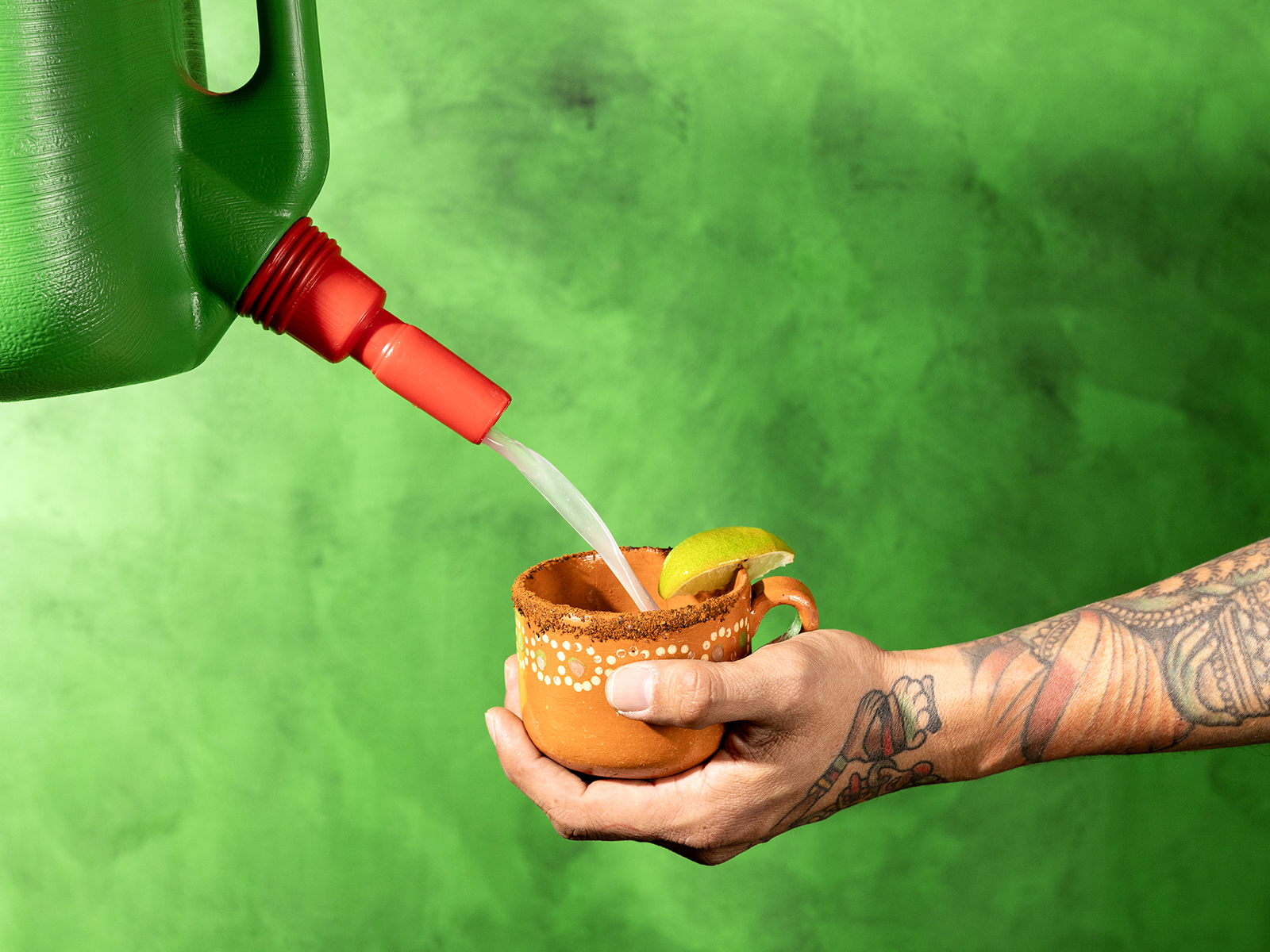
Avila’s pulque comes from Hidalgo, Mexico, in refrigerated trucks (to halt fermentation), packaged in red and green 20-liter canisters. At La Diabla and El Borrego Negro, he sells 12-ounce glasses or 32-ounce takeout tubs of the refreshing two-to-three-percent ABV sipper, which has an almost creamy texture and notes of honey, green apple, and yogurt. In addition to serving the plain version (called pulque natural), Avila also infuses the drink with seasonal ingredients like bitter celery; tart, tropical guanabana; or earthy huitlacoche (corn fungus).
While you’re unlikely to get tipsy from La Diabla’s pulque, there’s just enough alcohol that Avila says you might experience a “body high.” The real point, the Mexico City native adds, is not inebriation but rather a cultural celebration of maguey and the Aztec goddess Mayahuel, who presides over the many uses of the plant, from pulque, tequila, and mezcal to textiles, cooking, and traditional medicine.
Read More: Are Chefs of Latin American Descent Getting the Recognition They Deserve?
European Gusto Market & Cafe
- Drink: Rakija
- Region of Origin: Balkans
- Address: 4015 E. Arkansas Ave., Denver (Virginia Village)
Drinking rakija, a rough-hewn, high-proof fruit brandy found in many Eastern European bars, feels like a rite of passage—the Balkan equivalent of fiery Italian grappa. But as with grappa, more refined versions of rakija can be found, if you know where to look.
In Denver, that’s European Gusto Market & Cafe in Virginia Village, which carries a vast take-home selection, including the plum-based style known as slivovitz or šljivovica. Go at lunch and grab a locally made burek (a cheese-filled spiral pastry) or ćevapi (a kebab sandwich on equally local pita) at the deli counter, then peruse the shelves of rakija nestled among other Balkan wines and spirits. The drink is typically served neat and lightly chilled, before or after dinner, but you never know when a bottle will come in handy…like when you find yourself helping a Bosnian baker make burek at 9 a.m. and she insists on shots accompanied by shouts of “živjeli!” to shake the morning chill. [Editor’s note: This is a true story.]
Read More: 17 Locally Owned Food Markets for International Groceries
Istanbul Cafe & Bakery
- Drink: Ayran
- Country of Origin: Turkey
- Address: 850 S. Monaco St. Parkway, Denver (Washington Virginia Vale)
In the United States, yogurt drinks generally come with a straw as part of sweet, heavy smoothies blended up into meal replacements. But across southwest Asia, the creamy, tangy dairy product is used to make invigorating beverages that add balance to bold, spicy food and rich desserts. Washington Virginia Vale’s Istanbul Cafe & Bakery (which also has Highland and University Park outposts) makes ayran, a simple blend of lightly salted yogurt and water. Its tartness works well with a Turkish breakfast of olives, cheeses, veggies, sausage, eggs, and bread or as a surprising foil for the cafe’s many honey-drenched baklavas.
Shondiz Restaurant & Catering
- Drink: Doogh
- Country of Origin: Iran
- Address: 8000 E. Quincy Ave., Denver (Hampden South)
In Hampden South, Shondiz Restaurant & Catering has been serving Persian and Middle Eastern dishes since 2009. The restaurant’s tangy, effervescent doogh is a mix of yogurt, mint, and sea salt and pairs nicely with sizzling chicken, beef, or lamb kabobs.
Mad Over Curry
- Drink: Malai Lassi
- Country of Origin: India
- Address: 7605 E. Arapahoe Road, Centennial
Fans of spicy Indian cuisine often turn to mango lassis to quench the fire, but in Centennial, Mad Over Curry’s bold flavors require something extra. The malai lassi here starts with tart, frothy yogurt, but it’s topped with malai (clotted cream) and a sprinkle of cardamom and pistachio. The rich topping cools blistering dishes like the Andhra-style egg curry and chickpea paneer.
Bar Max
- Drink: Gin
- Country of Origin: Netherlands
- Address: 2412 E. Colfax Ave., Denver (Congress Park)
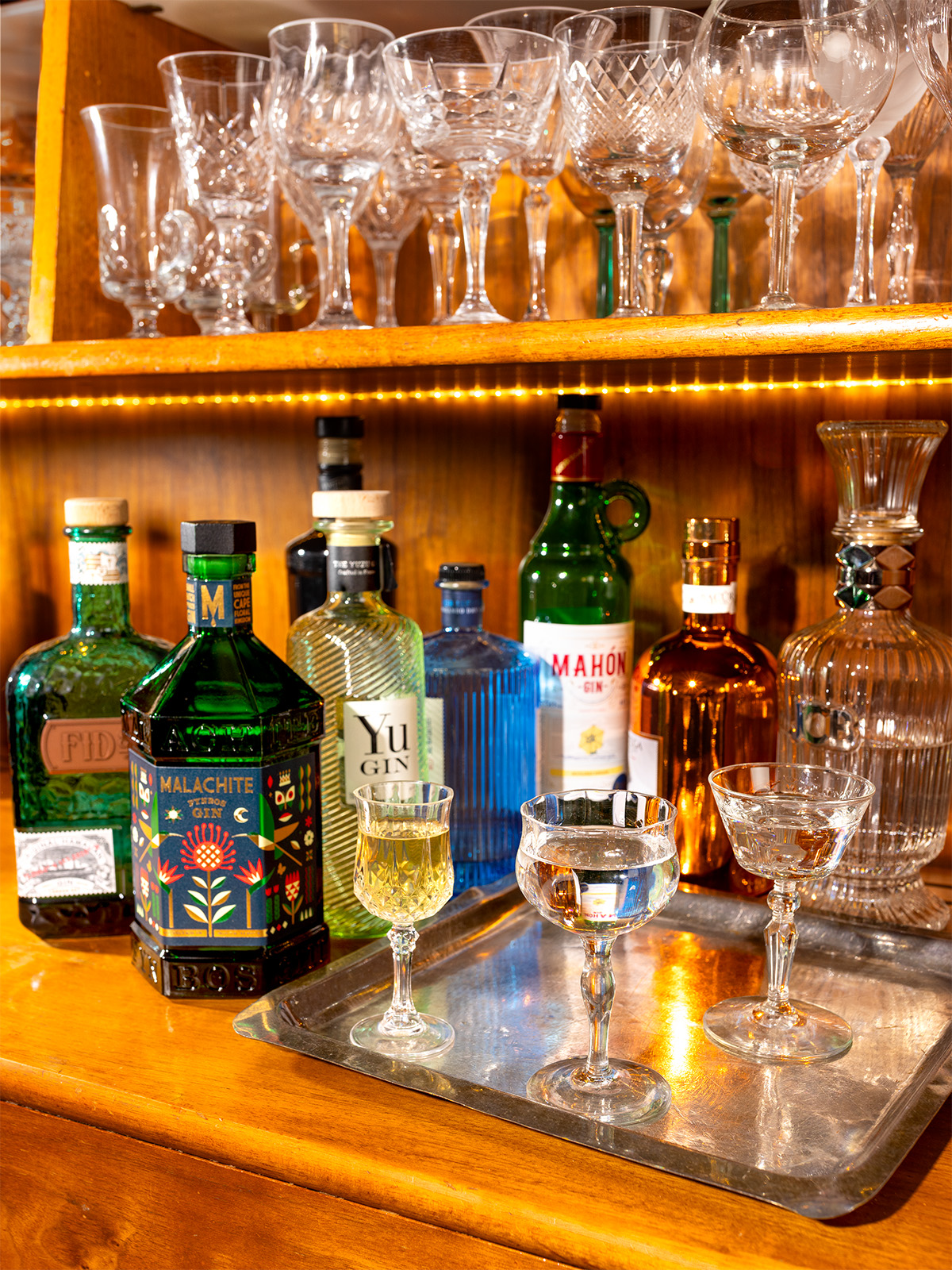
Asked why gin—born in the Netherlands and popularized in England—is the star of his Congress Park cocktail lounge, Bar Max, Marshall Smith pauses for a moment. “Three reasons,” he eventually replies. “I really like gin; it’s very versatile in cocktails; and I knew I couldn’t compete against the big whiskey, tequila, and mezcal bars in town.”
While not British or Dutch in style, Bar Max mirrors London and Amsterdam’s gin and genever (gin’s maltier sibling) watering holes in dedication to the typically juniper-infused spirit. It certainly doesn’t have much local competition when it comes to the sheer number of bottles on its shelves (more than 100). Some are classic, like the Mile High Spirits Denver dry gin Smith uses as a base in many of his house cocktails. Try it as a baseline in a flight alongside more innovative varieties, such as a barrel-finished gin that balances piny and oaky notes from Colorado’s Talnua Distillery and Japan’s Niseko Distillery’s Ohoro gin, which downplays juniper in favor of citrus, bright Japanese mint, and resinous sweet gale. Poured in lovely vintage glassware and based on suggestions from the bartender and your own preferences (yes, even if that’s “I don’t think I like gin”), the samplers are a delightful way to explore the spirit’s many distinct flavors.
Kizaki
- Drink: Shochu
- Country of Origin: Japan
- Address: 1551 S. Pearl St., Denver (Platt Park)
Twenty-course dinners start at $225 per person at Platt Park’s Kizaki, Sushi Den co-owner Toshi Kizaki’s Michelin-starred omakase chef’s counter. For a lower barrier to entry, pull up a stool at the austere, striking front bar, which shares space with the unrelated, but also Michelin-starred, Margot. There, you can enjoy raw oysters and other appetizers alongside sake’s lesser-known cousin, shochu.
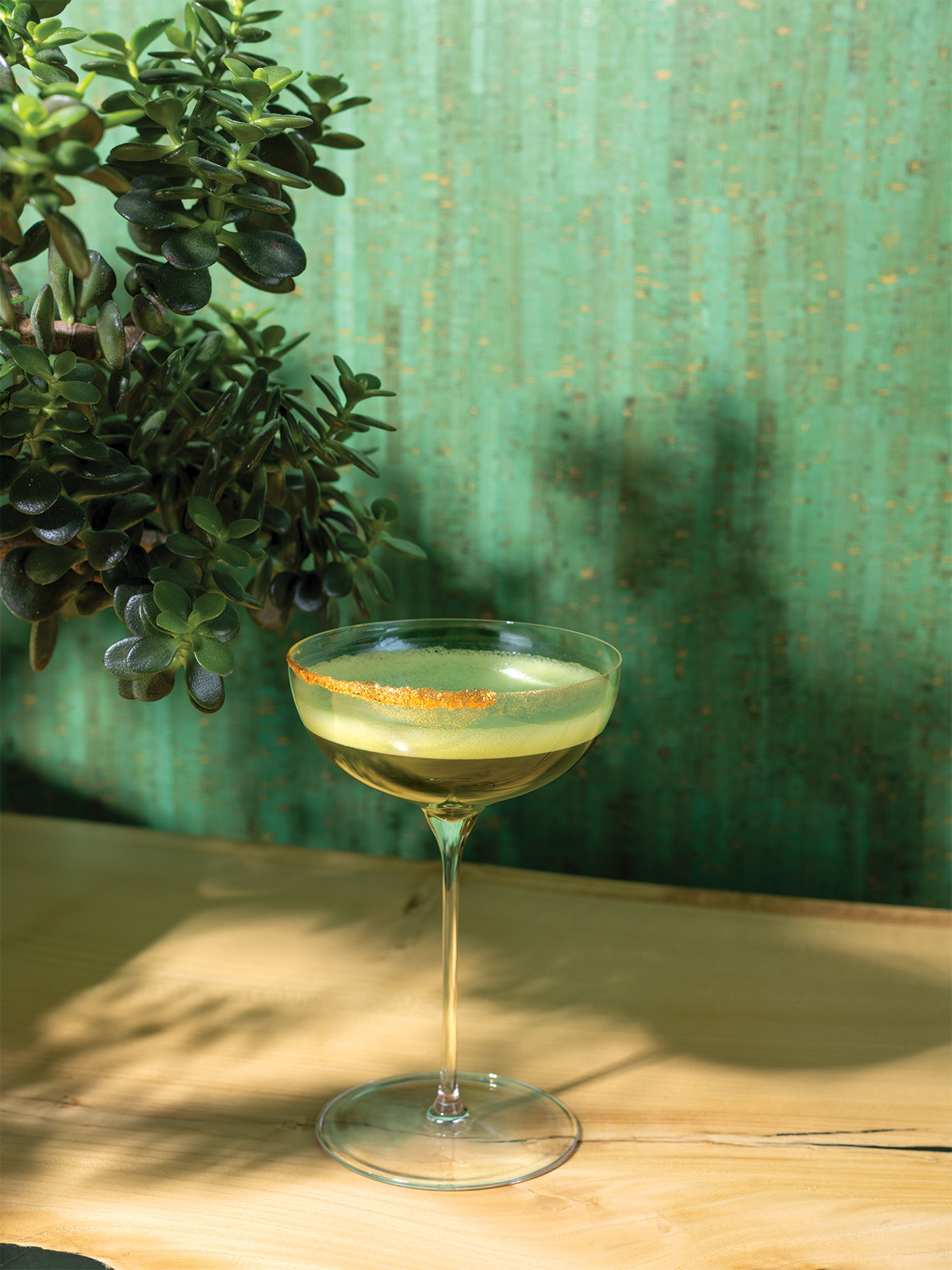
Unlike rice-brewed sake, shochu is distilled from rice, barley, or sweet potatoes (among other starches), resulting in a surprising range of flavors for a drink that visually resembles vodka. But at about 25 percent ABV, shochu is much mellower and more sippable than its Russian counterpart. “It’s most commonly enjoyed diluted with cold or hot water,” service lead and sake sommelier Yuki Minakawa says. At Kizaki, three-ounce servings are poured straight or with still or sparkling water over a large ice cube, allowing complex flavors to release as the ice slowly melts. Try one of these three as you contemplate springing for the omakase dining experience—or plane tickets to Tokyo.
- Hakutake Ginrei Shiro Silver: This shochu is made entirely from rice; it conjures sake in aroma and flavor, with lightly fruity notes and a strong, palate-clearing finish.
- Daiyame: Sweet-potato-based Daiyame isn’t sweet at all, instead hitting with earthy and wet-stone notes. Far from sake or vodka, this shochu will please drinkers seeking new and exciting flavors.
- Mizunomai Mugi Honkaku Genshu: Offering a subtler, more familiar experience for Western drinkers, this variety has a high barley percentage supplemented by a small amount of black koji rice.
Read More: 3 of the Best New Omakase Chef’s Counters in Denver
Little Brazil
- Drink: Cachaça
- Country of Origin: Brazil
- Address: 7333 W. 38th Ave., Wheat Ridge
Visually, Brazil’s iconic caipirinha resembles its close cousins, the margarita and daiquiri. But more than its cornerstone spirit, sugarcane-based cachaça, sets the drink apart from those better-known summer quenchers.
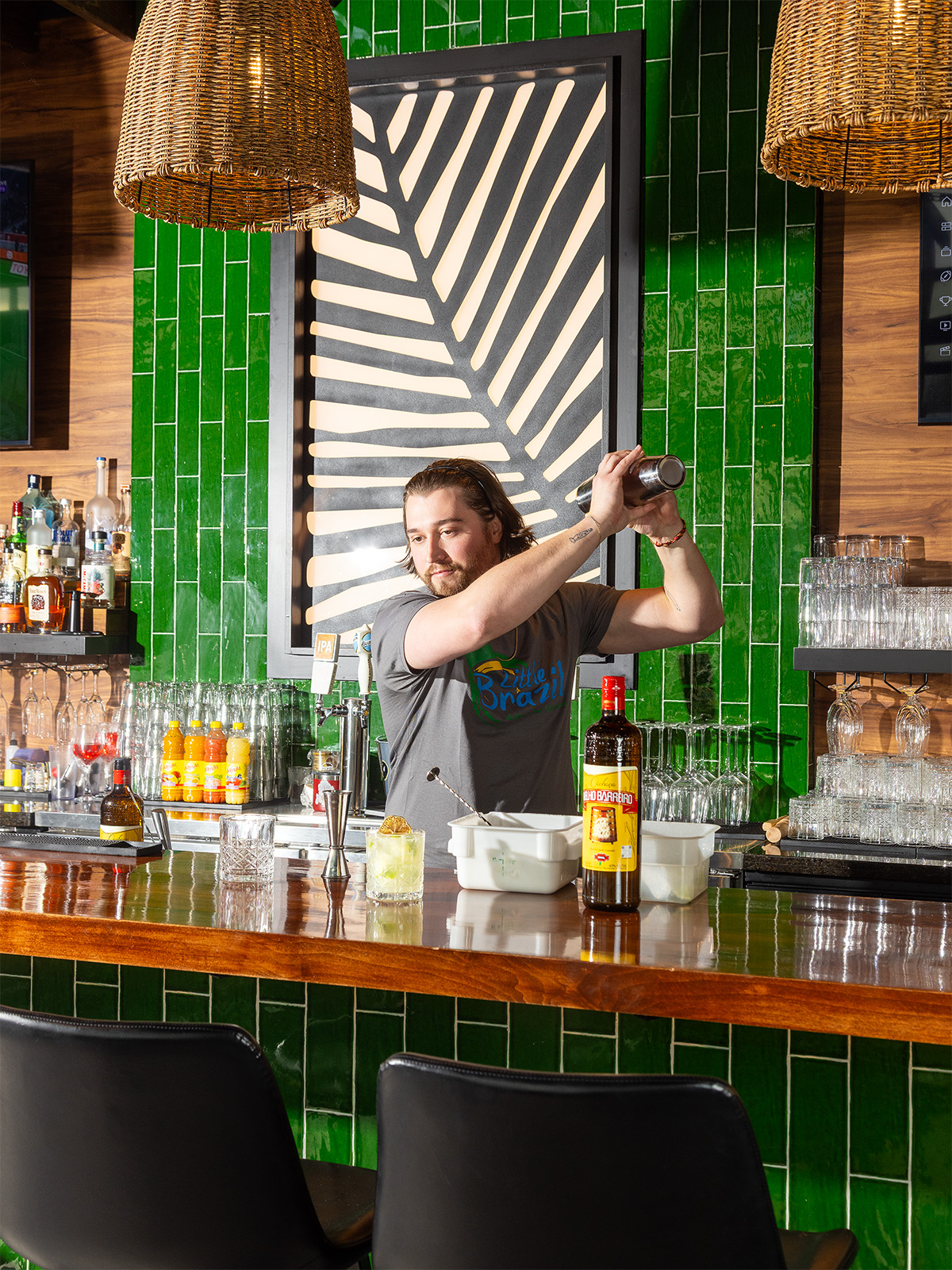
Watch the bartenders at 14-year-old Little Brazil—which reopened its market and restaurant in a modern, spacious spot in Wheat Ridge in 2024, after two moves from smaller locations—and you’ll see how small differences affect the final flavor. There’s no pre-squeezed juice, simple syrup, or sweet liqueur; instead, lime, cachaça, and sugar are muddled together in a shaker before the ice is added. This method releases the citrus oils in the lime peel to complement the spirit, which is considered a bit rugged and wild.
Use the recipe below to make a caipirinha at home the way they do it at Little Brazil—or visit during happy hour to drink one alongside Brazilian snacks like pão de queijo (gluten-free cheese buns), croquettes, and empanadas.
Little Brazil’s Caipirinha
- 2 ounces cachaça, such as Velho Barreiro
- 1 lime, quartered and center pith removed
- 2 teaspoons sugar
Put the lime quarters, cachaça, and sugar in a shaker and muddle until the sugar is dissolved. Add several ice cubes and shake well. Empty the contents, including the limes, into a rocks glass.
Fortune Nong Jia Le
- Drink: Baijiu
- Country of Origin: China
- Address: 500 E. Alameda Ave., Denver (Washington Park West)
Baijiu is a drink of conversation, according to frequent drinkers of the Chinese spirit. At Fortune Nong Jia Le in Washington Park West, the younger sibling of Cherry Creek’s nine-year-old Shanghainese Fortune Wok to Table, bartenders guide guests through tastings of baijiu, which is often made from sorghum and generally served at room temperature. Here, three baijius and their links to life and culture in China.
- Beijing Hongxing (Red Star): The flavor of this clear, alcohol-forward baijiu has a dry grain component that cuts through sauces and bold market-stall flavors. Street food is inseparable from social life in Chinese cities like Shanghai; share Red Star over Fortune’s dumplings or crispy beef rolls.
- Chu Yeh Ching Chiew: Bamboo leaves and other herbs give this baijiu a bittersweet taste similar to Italian alpine liqueurs. It’s also known as “elixir wine” for its purported restorative herbal properties. Try it as a palate cleanser between courses or after dinner to keep the night going.
- Wuliangye New Crystal (similar to Red Star but more intense): The aroma and flavor present a complex amalgam of dark fruits, tobacco, star anise, tar, honey, dry eucalyptus leaves, and delicate smoke. Fortune’s bar staffers have observed deals being made over this baijiu. They offer the coveted sipper for $45 per pour. Despite the price, Wuliangye is not for the wealthy only; it’s considered a worthy splurge for business dinners and family gatherings alike.
Jebena Ethiopian Coffee & Culture
- Drink: Coffee
- Country of Origin: Ethiopia
- Address: Mobile business
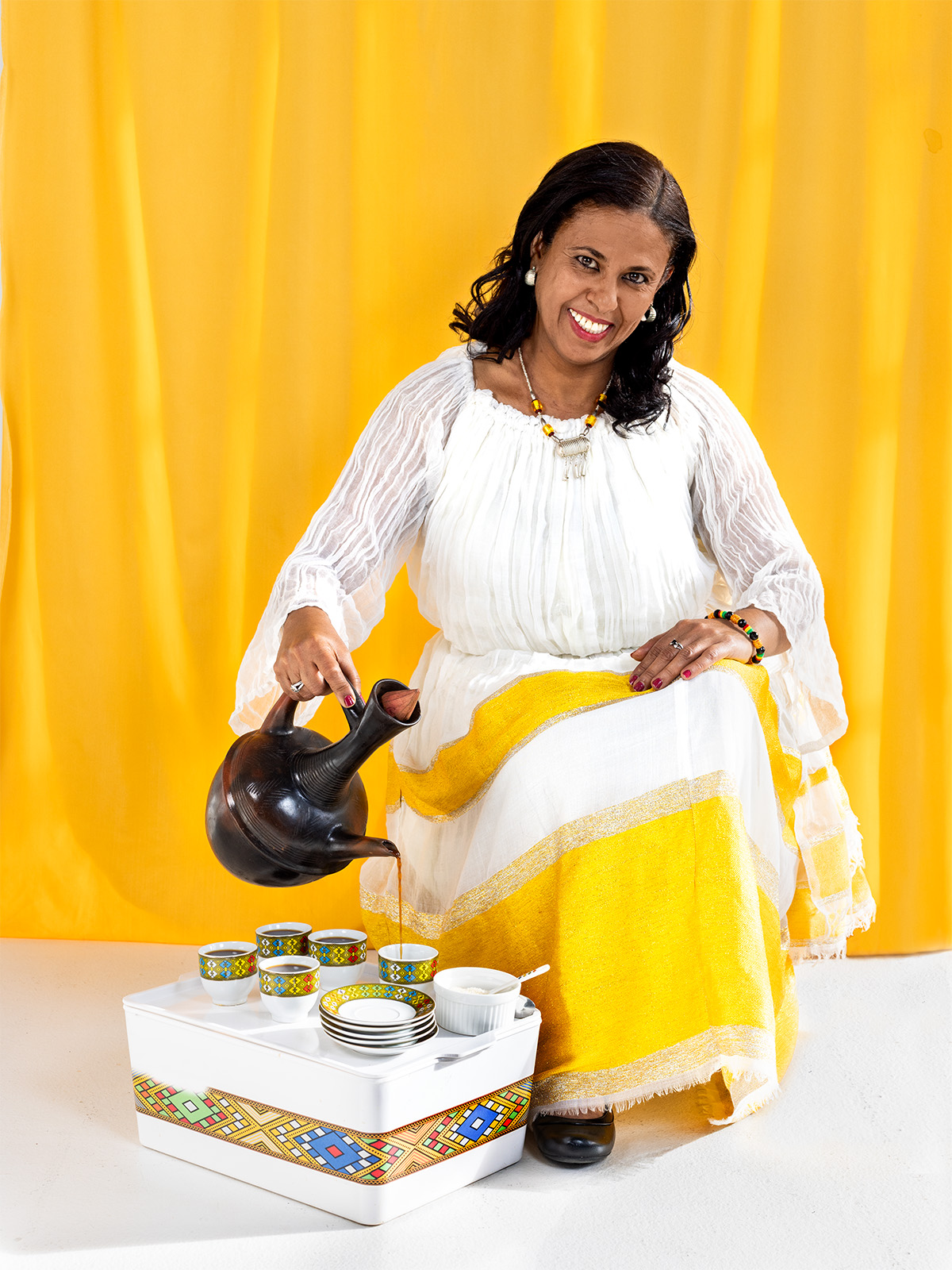
When Sara Gebre moved to Colorado from Addis Ababa, Ethiopia, in 2004, she brought along her expertise in traditional Ethiopian coffee ceremonies that unite friends, family, and neighbors over the rich, flavorful brew. What she didn’t know was how to turn that passion into a career. Enter Globeville’s (now-closed) Comal Heritage Food Incubator, where budding immigrant entrepreneurs were taught the basics of running culinary businesses. After going through its program, Gebre established Jebena Ethiopian Coffee & Culture—named for the country’s earthenware coffee urns—in 2018.
In addition to Ethiopian catering services and cooking classes, Gebre offers a mobile coffee ceremony for a minimum of 10 people (prices vary by group size and location). Often wearing a time-honored white habesha kemis dress, she starts each session with green Ethiopian coffee beans, which she roasts in a long-handled pan, hand-grinds, brews into coffee, and pours from her black-glazed jebena into colorful ceramic cups for each guest. To deepen the cultural connection, she shares stories about her homeland, answering questions along the way. Gebre serves her coffee with popcorn, cookies, and other small bites from her Ethiopian repertoire. “The coffee is strong, so it’s nice to have something to go with it,” she says.
To expand her business, Gebre now also sells whole or ground roasted Yirgacheffe beans (a prized, fragrant variety grown at high altitude in southern Ethiopia) so you can create your own coffee ritual with loved ones at home. “My goal is to share my culture and food with the people of Denver,” Gebre says.
Athenian Restaurant
- Drink: Wine
- Country of Origin: Greece
- Address: 15350 E. Iliff Ave., Aurora
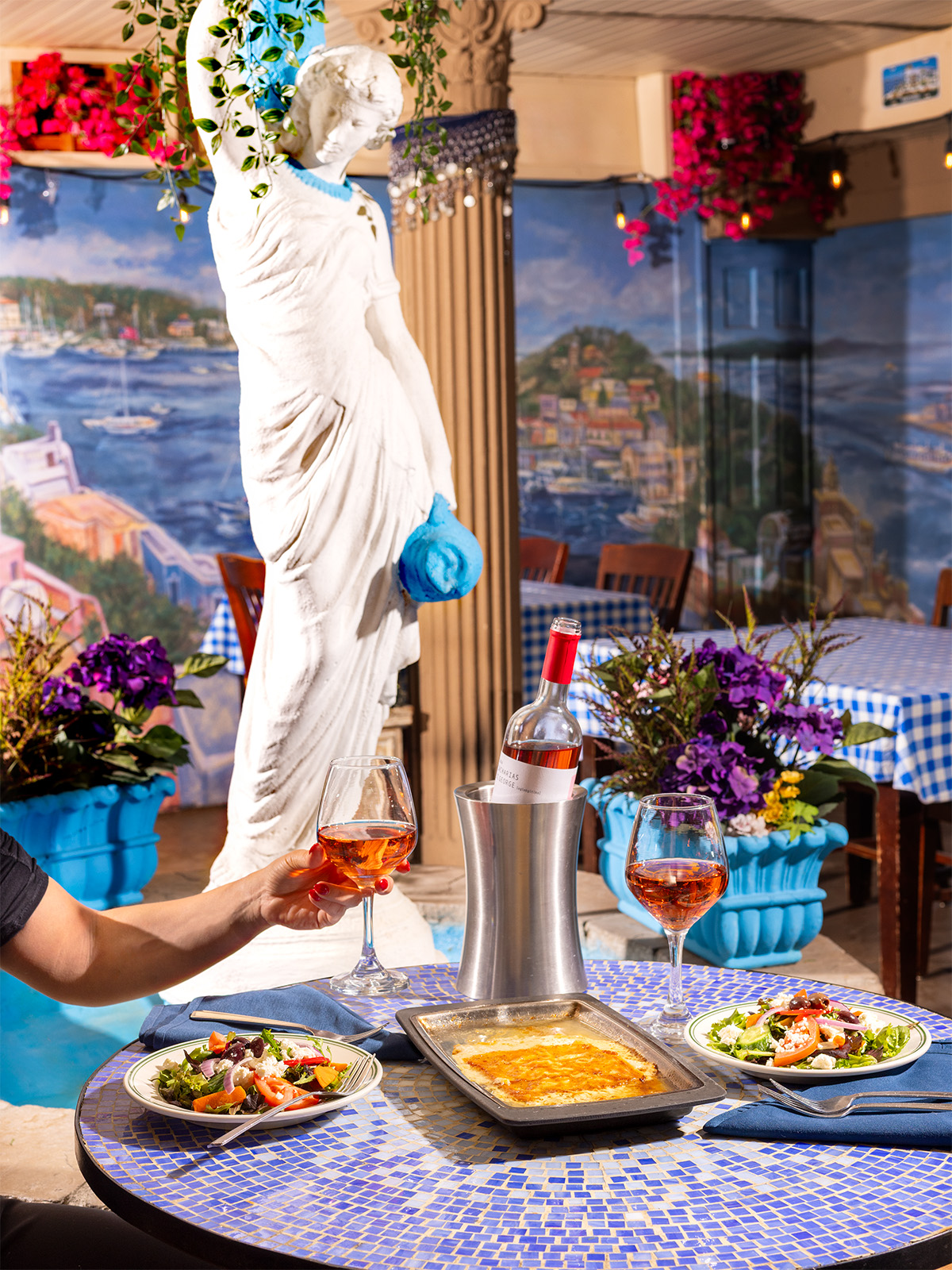
Moschofilero. Agiorgitiko. Xinomavro. Kotsifali. While pronouncing the names of indigenous Greek grape varieties can be daunting, drinking the wines they yield is a delight—provided, that is, you can find them. Despite the fact that Greece has been practicing viticulture for thousands of years, Marko Stathopoulos, co-owner of Aurora’s Athenian Restaurant, says, “I think wine is toward the bottom of the list of what [Greece] is known for, just because people are more accustomed to every other surrounding country that’s known for wine, like Italy and France.” Those countries, after all, grow far more grapes and export much greater quantities of wine to the United States.
Limited availability is indeed why the Athenian doesn’t always carry every variety listed on the otherwise handy guide to Greek grapes included on its menu. But it does stock several at any given time. Stathopoulos recommends starting your exploration with a glass of Assyrtiko, which he calls “one of my favorite white wines,” alongside the restaurant’s signature saganaki (fried kasseri cheese set aflame with ouzo). Traditionally grown on vines trained to resemble coils flat against the ground on the volcanic island of Santorini, Assyrtiko is prized for its soaring, even searing acidity and streak of salinity along with citrus (especially lemon) and floral notes. To pair with lamb chops, Stathopoulos suggests the aforementioned Agiorgitiko, “which is probably the most popular red wine in Greece,” he says. “It’s a lighter red, not very full-bodied, but it goes great with red meat.” Red fruits like plum and cherry, as well as baking spices, are common characteristics, complemented by moderate tannins.
And then there’s retsina. In ancient Greece, the amphorae (clay jars with pointed bottoms) in which wine was stored were sealed with pine sap, naturally resinating the liquid. Though production processes have changed, a fondness for resin-infused wine lingers in the motherland; here in America, retsina is a bit of a secret handshake. “Most people who come in and order it have had it in Greece before; they’re accustomed to it,” Stathopoulos says. “It’s a distinct taste, more of an acquired taste. But we refer to it as the wine of the gods.” —Ruth Tobias
Luchador Taco & More
- Drink: Chicha Morada
- Country of Origin: Peru
- Address: 2030 E. 28th Ave., Denver (Whittier)
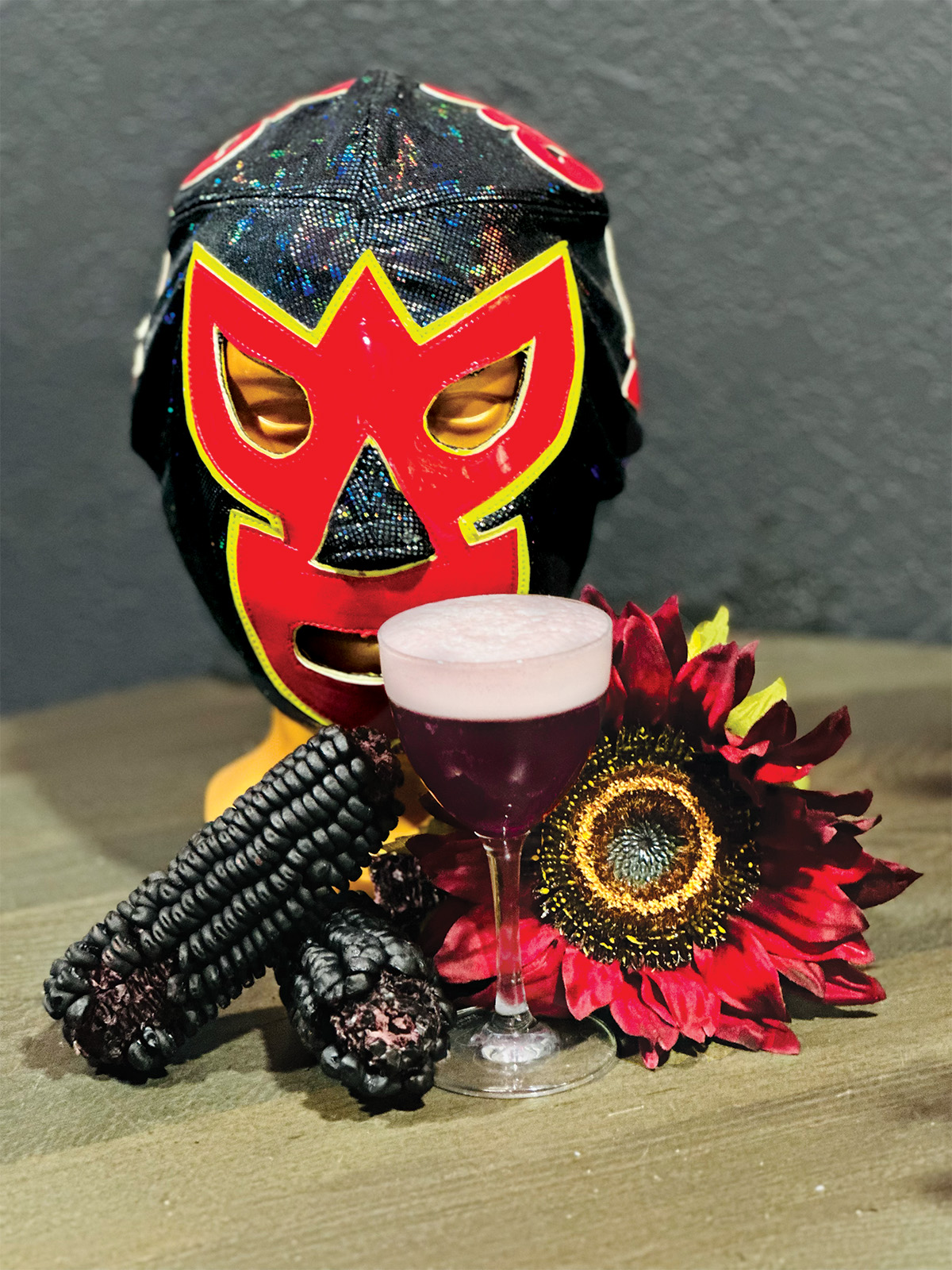
At Whittier’s Luchador Taco & More, chef Zuri Resendiz gets plenty of attention for his rooted Mexican cuisine, from playful octopus al pastor tacos to tender beef cheeks in pasilla negro adobo. But the love in Resendiz’s cooking is equally evident when he turns his attention to Peru, his wife’s homeland.
It starts with a cocktail made with the country’s grape-based spirit, pisco, and chicha morada, a purple-corn agua fresca. To make the chicha, Resendiz boils whole cobs of Peruvian corn with pineapple, cinnamon, clove, and sugar before straining out the solids. You can enjoy an iced, booze-free chicha morada served with a green apple garnish. Cocktail lovers, though, should chase away the blues with Luchador’s reddish-purple Chicha Sour, made with chicha morada and the egg white, pisco, and fresh lime juice of a classic pisco sour.
Read More: Luchador Taco & More Brings Mexican Street Eats to Whittier
KKoki Korean BBQ
- Drinks: Makgeolli, Bekseju, Soju
- Country of Origin: Korea
- Address: 2100 16th St., Denver (LoDo)
At LoDo’s Kkoki Korean BBQ, you’re first hit with the aromas of sizzling meat and bubbling stone bowls of hearty soups. The spot’s chile-spiked kimchi, boldly marinated beef and pork, and bar-centric bites beg for something ice-cold and refreshing. Luckily, owner Sung Choe stocks his bar with one of the largest selections of Korean beverages in town. Here, a quick guide to what you’re getting yourself into.
- Makgeolli: This unfiltered, milk-white rice beer looks heavy, but the lively, sweet-tart flavor makes it lighter than its six to eight percent ABV might suggest. Plain makgeolli—such as Kooksoondang Draft—is best with starters like fried dumplings and crackly fried chicken wings, but flavors include peach and banana.
- Bekseju: You won’t see many hip young drinkers enjoying bekseju at Kkoki; Choe says it’s generally preferred by older guests. But the corn-and-rice wine’s herbal flavor and 13 percent ABV give it a sophisticated complexity (almost like dry vermouth) alongside milder dishes like tteok mandu guk (beef stock with dumplings and toothsome rice cakes).
- Soju: This one is definitely having a moment in Denver’s many Asian eateries. Distilled to 20 to 45 percent ABV from barley, rice, or sweet potato, unflavored soju amplifies seasonings in food, and the alcohol hides itself well. Try it with a seafood pancake or a platter of pork bulgogi. Kkoki stocks many flavors but also makes soju infusions with fresh fruits.
Little Wolf
- Drink: American Single Malt Whiskey
- Country of Origin: USA
- Address: 4408 Lowell Blvd., Denver (Berkeley)
In January 2025, the U.S. government designated a new spirits category for the first time in more than half a century: American single malt whiskey. Although the elements of the style have long been brewing at craft distilleries throughout the nation, the new rules differentiate it from older styles. With 100 percent malted barley as the foundation (unlike bourbon or rye, which can be blends), the oak-barrel-aged spirit is carving out space and fans at bars and liquor stores in Colorado.
“If you’re coming at it from the Scotch whisky world, you’re going to notice two different things: the overall mouthfeel and flavor, and a difference in the amount of oak usage. Most Scotch whisky has less oak,” says local whiskey salesman, blender, and distillery consultant Ryan Negley. “If you’re coming at it as a bourbon drinker, you’re going to find [American single malt] much more grain-forward.”
Distillers are already playing with the spirit to coax out different flavor notes, but high quality is a constant. “It’s always super premium, because you can’t make a cheap single malt,” Negley says. “Malt barley is just so much more expensive than other grains.”
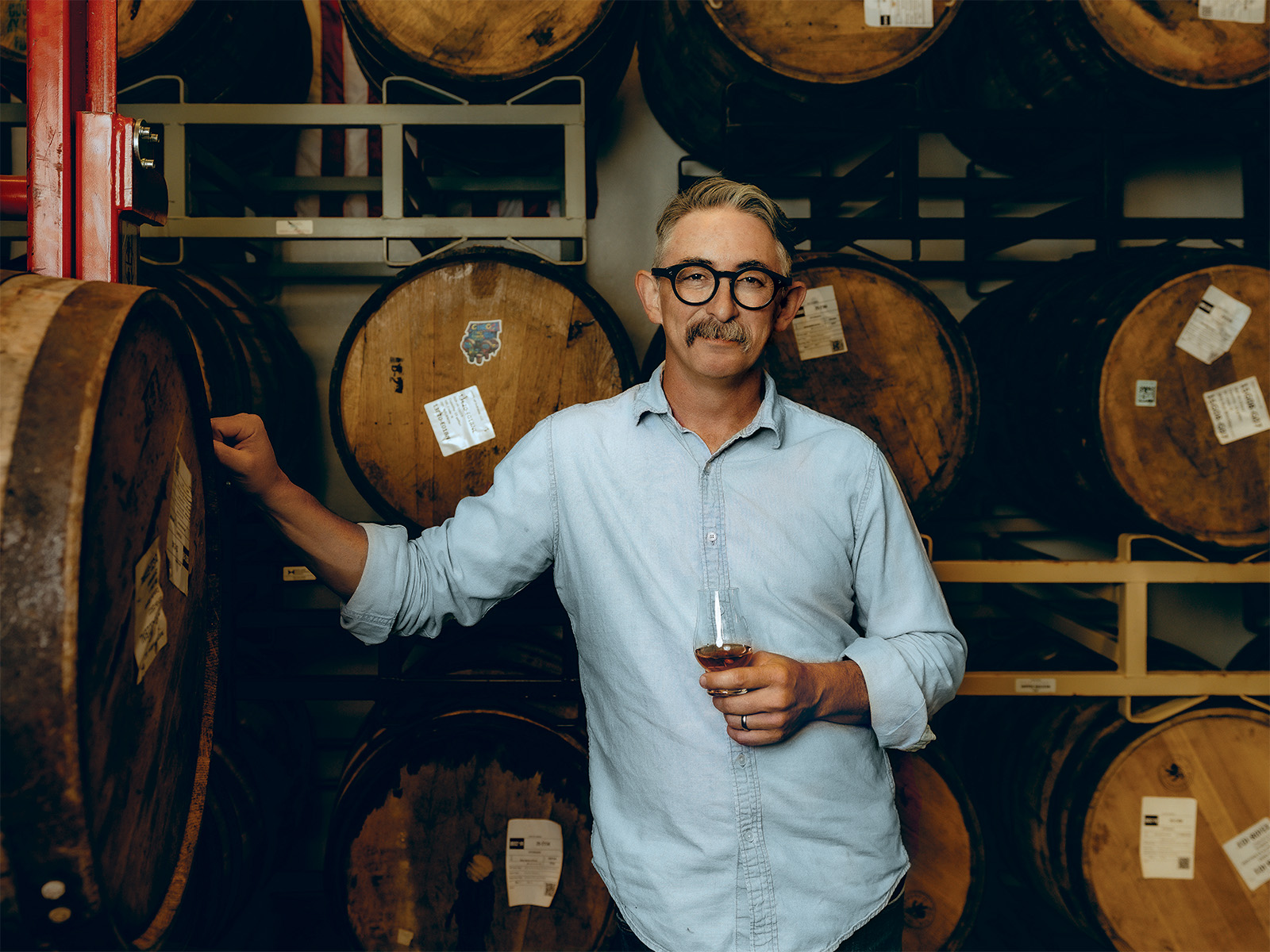
We met up with Negley to share samples of American single malt at Berkeley’s nine-month-old Little Wolf—where owners Clarke Boyer and Jonathan Odde maintain a 100-plus-bottle collection that might be the country’s largest—and find out what makes it worthy of its own designation. Below, four American single malt whiskeys Negley recommends trying at Little Wolf, alongside a plate of short-rib gravy fries topped with house-cured bacon and chimichurri.
- Single Malt Whiskey by Judson & Moore (Illinois): “This one includes smoked malt. It’s a great example of the grain and the barrel, with a delicate flavor profile.”
- The QuintEssential American Single Malt Whiskey by Cedar Ridge (Iowa): “This, in my opinion, is the best single malt in the country. It’s just so balanced.”
- Original Mesquite American Single Malt by Santa Fe Spirits (New Mexico): “The malt barley is smoked over mesquite. This is a great whiskey for people who are fans of barbecue.”
- McCarthy’s Sherry Cask Finished Oregon Single Malt Whiskey by Hood River Distillers (Oregon): “Scotch drinkers will love the peated malt in this.”
Convivio Café
- Drinks: Coffee & Tea
- Country of Origin: Guatemala
- Address: 4935 W. 38th Ave., Denver (Berkeley)
Vivi Lemus and Kristin Lacy, who hail from Guatemala and Oklahoma, respectively, are dedicated to sharing not just Guatemalan fare but also the country’s cafe culture at their bustling three-year-old Berkeley coffeeshop, Convivio Café. The bilingual space specializes in hot and cold Guatemalan drinks, including coffee made solely from beans grown in the mountainous country.
“What makes our coffee special is the geographic diversity and the many volcanos,” Lemus says. “The beans have to be hand-picked because of the topography.” Herbs for hot and cold teas are grown for traditional therapeutic uses by an Indigenous women’s collective, Lemus says. Even the black tea is grown in Guatemala. Mix up your morning brew with these Latin American delights.
- Rosa de Jamaica: A tart crimson drink made from Guatemalan hibiscus petals and served sparkling with a dash of agave nectar
- Churrazo (translation: super cute or hunky): Made with cinnamon syrup, coconut milk, and pinole (ground blue corn)
- Xochitl Pinole: A blend of pinole, Colorado organic milk, and house-made lavender syrup
Read More: Meet the Women Bringing ‘Beyond Fair Trade’ Coffee to Denver