
The Local newsletter is your free, daily guide to life in Colorado. For locals, by locals.
Many aspiring thespians flock to New York City or Los Angeles in the hopes of being discovered, but before Jenna Bainbridge made it to Broadway, she cut her teeth in the Front Range theater scene.
The Sedalia-raised actress grew up performing on Colorado stages, from playing Mary Magdalene in Jesus Christ Superstar at Arvada Center for the Arts to Cinderella in Phamaly Theatre Company’s Into the Woods. Those early roles helped her amass a robust résumé and impressive acting chops, but the leap to Broadway felt as distant as, well, Denver to Manhattan. But Bainbridge had some experience with overcoming daunting obstacles.
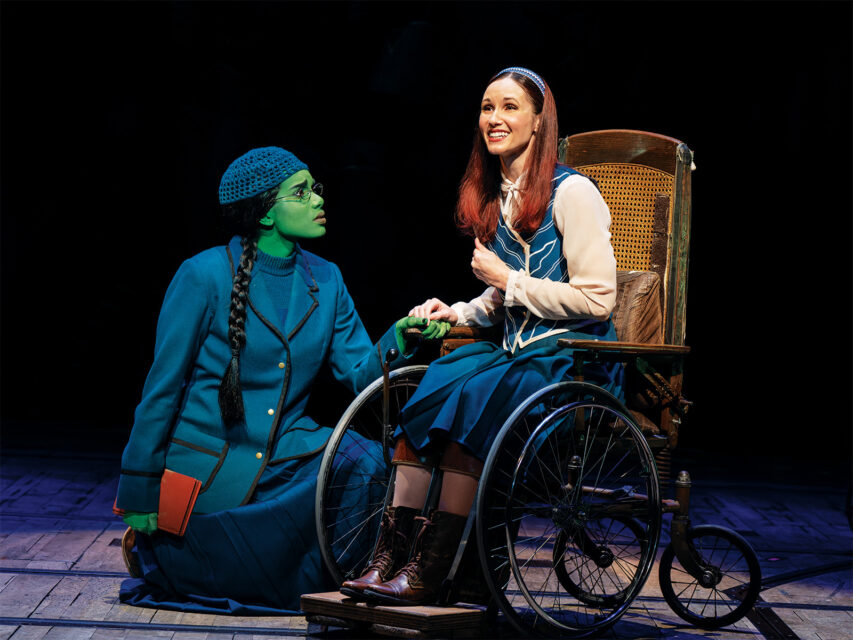
At 16 months old, Bainbridge became suddenly paralyzed due to an unknown cause. She slowly regained mobility over time, but still frequently uses a wheelchair, cane, and crutches for mobility purposes. In March, Bainbridge became the first authentically disabled actress to play Nessarose in Broadway’s Wicked. We caught up with her about how she landed a Broadway role, accessibility on stage, and if the upcoming release of Wicked: For Good starring Cynthia Erivo and Ariana Grande affects her version of Nessarose.
Editor’s note: The following conversation has been edited for length and clarity.
5280: Tell us about your childhood in Colorado. When did you start acting?
Jenna Bainbridge: I was born in California but moved to Colorado on my first birthday, so for all intents and purposes, I consider myself a Colorado girl through and through. I primarily grew up in Sedalia. I went to Sedalia Elementary, Castle Rock Middle School, and Castle View High School.
I started performing with a theater company that was called Castle Rock Players. As I got more passionate about acting, my parents took me to an audition with Phamaly Theatre Company when I was 12 years old. I worked with Phamaly most summers until I left Colorado, and I actually met my husband there, so it has a very dear spot in my heart. A lot of theater programs at the time didn’t know how to include me or train me, but Phamaly did both. Then I branched out to places like the Boulder Dinner Theatre, the Aurora Fox, and Colorado Shakespeare Festival.
How did you land the role in Wicked?
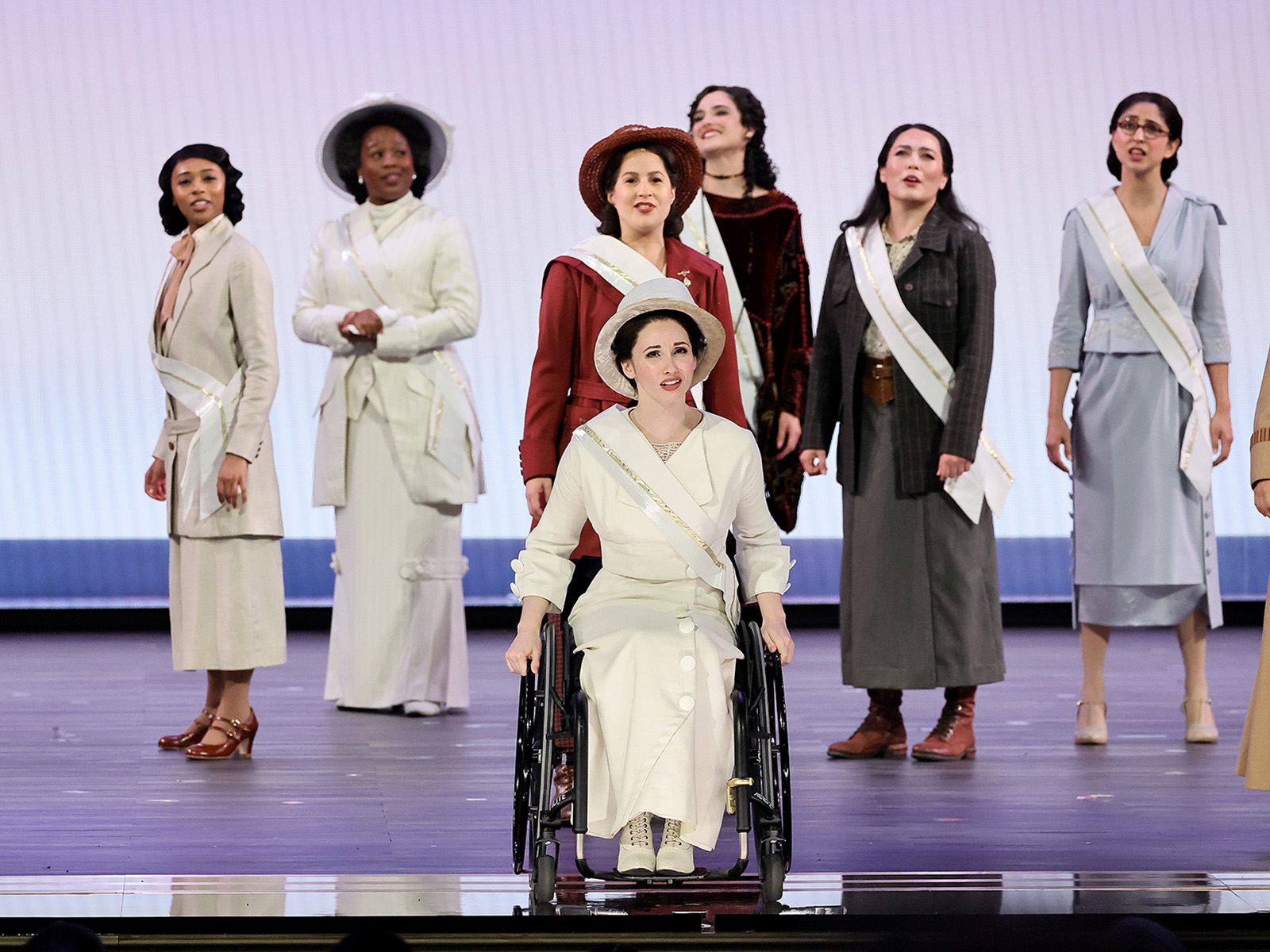
During the pandemic, I was living in Oregon and working for the Oregon Shakespeare Festival. At the time, auditions were being done online, so I started sending in tapes for dream jobs. That’s how I got a role in a workshop—which is when you read a play out loud but don’t perform it for the public—for the musical Suffs. That turned into another workshop, and then it turned into an off-Broadway performance, and then finally it opened on Broadway.
When I was performing in Suffs, I heard my friends were starting to get auditions for Wicked, so I asked my managers if they could try to get me an audition. I only had two auditions for the show before I booked it, which is surprisingly not many auditions for a Broadway show.
In 2023, you appeared in an episode of NBC’s Found. Are you hoping to do more film and television acting?
I’m very much just taking whatever comes my way right now. I’d love to do some more TV and film just because it’s fun to try out different elements of this craft. I also really love doing voiceover work. I’ve recorded a few audiobooks and would love to move into animation. My dream would be to work on some sort of recurring TV show just so I have steady work and then get to do more theater in between seasons.
What’s your schedule like for Wicked?
We have eight shows per week, and we get one day off a week. We also get a week of vacation and a handful of sick days and personal days, but for the most part, I’m usually always working. My contract is for a full year, and I’m scheduled for around 450 performances. I’ve found that the schedule is a little different from regional theater, which you do in sprints where you work really hard for a few months. Broadway feels more like a marathon that you keep doing until your contract’s over.
A TikTok video of you giving a tour of disability accommodations backstage went viral. Do you feel theaters are starting to become more accessible?
At most of the theaters I’ve worked at, I’ve been told I’m the first visibly disabled person to work there, which is quite a thing to hear in 2025. For the most part, the backstage of a theater is not legally required to be accessible because they’re considered private employee spaces. That leads to this weird chicken-or-the-egg issue where they don’t think it needs to be accessible but they then don’t hire people with disabilities.
Another issue is that many theaters predate the American with Disabilities Act by decades. The Gershwin, where I work now, was built in the ’70s, and it’s one of the youngest theaters on Broadway. There’s more disabled actors coming onto the scene these days, so I feel like I’m starting to see some changes, but another issue is that Broadway productions are technically renting the space, so these theaters aren’t seeing permanent changes.
When I worked on Suffs, we put in a ramp backstage, but we had to remove that ramp when the show was over. Regional theaters have a lot more flexibility to make those changes permanent, though, so I feel like I’m starting to see more accessibility there.
@wicked_musical Backstage at #WICKED, the magic begins with access. @Jenna Bainbridge shares how backstage accessibility measures help her shine. Because everyone deserves the chance to fly. #DisabilityPrideMonth ♬ original sound – WICKED the Musical
Why is it so important to support local theater?
Local theater is where you get your artists from. Amy Adams is a great example; she got her start at Douglas County High School and Boulder Dinner Theatre and Country Dinner Playhouse before becoming a star. All of my friends in Wicked got their start in local productions, too. I remember seeing Cinderella at Littleton Town Hall when I was a kid, and Melissa Benoist was performing as Cinderella. She went on to star in CW’s Supergirl.
Has the release of the Wicked movie changed how you portray Nessarose?
The biggest shift is in our audience. We’re getting a lot more people who have never seen a live performance at all before. When I was doing Suffs, the audience was mostly Broadway fans. It’s also fun because a lot of the audience doesn’t know what happens in act two, since the first movie is act one. I don’t think it’s impacted my role because I joined the show after the movie came out, so I wasn’t able to be affected by any biases. And the show is so different from the movie; everything from the dialogue to the blocking is totally different.
What’s been most impactful for me in the movie is that Marissa Bode, who plays Nessarose in the movie, is also a wheelchair user. I feel like we have that connection, and it impacts how we play the character because we’re not imagining what it’s like to be in a wheelchair, we actually know.
Is there anything else you’d want readers to know?
Go see local productions. Without them, we wouldn’t have Broadway and we certainly wouldn’t have Hollywood. When funding gets cut to local theater, we have to show up for each other.
Read More: 12 Easy Ways To Support the Local Arts Scene