
The Local newsletter is your free, daily guide to life in Colorado. For locals, by locals.
A culinary continuum of thick but tender griddled rounds of masa de maíz (corn-based dough) unites the diverse cuisines of Latin America. Colombian and Venezuelan arepas, Salvadoran pupusas, and Mexican gorditas share a common shape and cooking method, but each is distinct. “For most households, it is a daily meal,” says Venezuelan native Manuel Sucre, chef and co-owner of Catira in Greenwood Village.
Here’s how and where to enjoy all three styles in Denver.
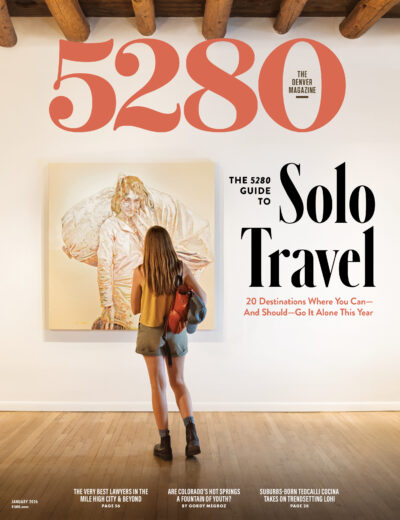
Arepas
What they are: These thick, crisped cakes were originally made by first cooking and grinding whole maíz into masa. These days, pre-cooked corn flour called masarepa makes things easier, if a little less flavorful. “In Venezuela, we use a specific brand called Harina P.A.N.,” Sucre says.
How to eat: Colombians and Venezuelans enjoy unfilled arepas of various sizes buttered, dipped in hot cocoa, or alongside soups and stews. Fat, fluffy Venezuelan arepas are served like circular sandwiches loaded with black beans, meats, eggs, fried plantains, avocado, and other savory fillings.
Where to find: Quiero Arepas (Platte Park, Boulder, and LoHi) serves monsters filled with the likes of smoked salmon or stewed beef, while Catira makes slightly smaller versions such as the chicken and avocado Veneka. South Broadway siblings LaTinto Café and La Chiva both offer Colombian arepas.
Pupusas
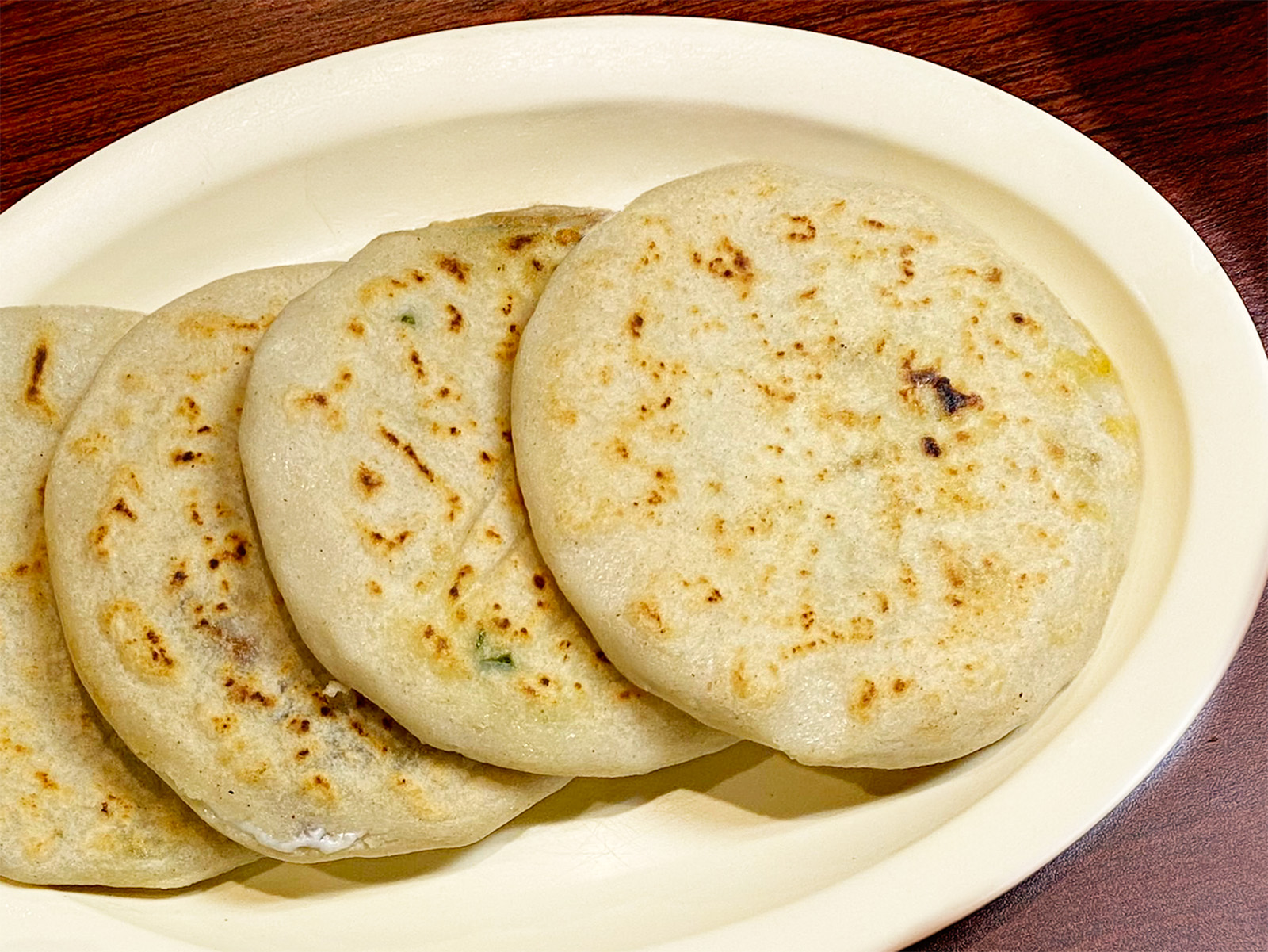
What they are: Rather than masarepa, pupusas are made from masa harina—corn that’s been cooked in an alkaline solution before being ground and dried into flour. They’re also stuffed first and then cooked, hiding molten cheese and fillings such as chicharrón (minced pork, not pork rind), loroco (tropical flower buds), beans, or zucchini.
How to eat: Enjoy pupusas with curtido (shredded, fermented cabbage) and salsa roja. Pour the salsa over the curtido and pinch bites of cabbage with torn-off pieces of pupusa—a knife and fork will mark you as a pupusa newcomer.
Where to find: Pupusas Lover (University Hills and Boulder) offers more than 20 stuffing options and an enormous “pupizza.” Harvey Park’s Pupusas Fire makes them tidy and puffy. East Colfax’s walk-up Tacos Acapulco cooks up floppy pupusas freckled with crispy cheese.
Gorditas
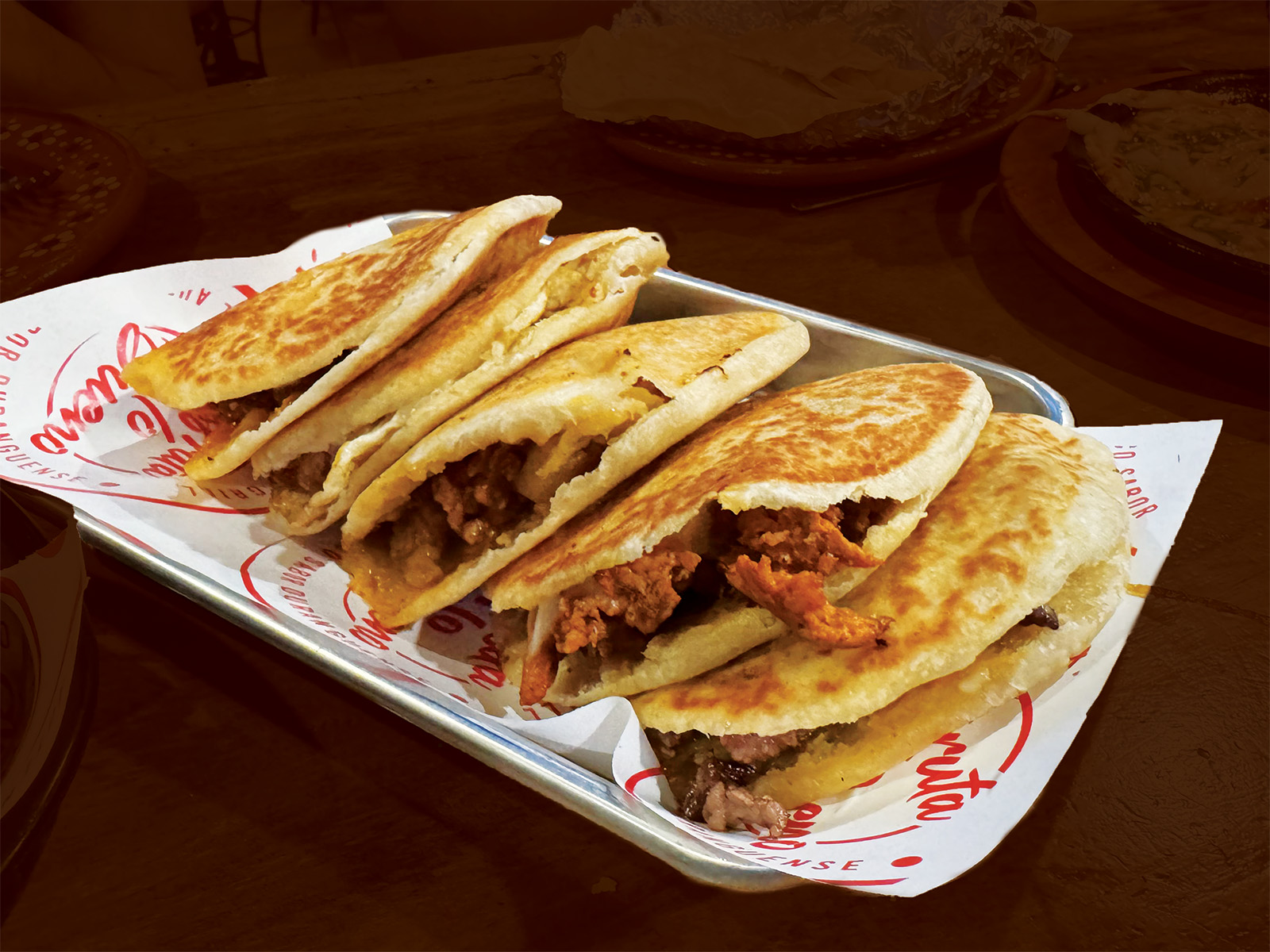
What they are: Gorditas are split and stuffed after they’re cooked, like arepas, but are thinner and crispier. Mexican restaurants often use the same fillings for both tacos and gorditas, so choices are many and varied.
How to eat: Drizzle in some salsa and go for it. The best are filled with guisadas—saucy stewed proteins (like soft-cooked pork rind) or veggies that soak into the gordita for a satisfyingly messy bite.
Where to find: DGO Mexican Grill (Commerce City and Federal Boulevard) builds Durango-style gorditas with corn or wheat flour. The street-style migadas bulge with ham, onion, tomato, cheese, avocado, and jalapeño at Montbello’s Gorditas Doña Juana.