


The Local newsletter is your free, daily guide to life in Colorado. For locals, by locals.
As far as wildlife sightings go, a septuagenarian climbing a ladder is the last thing you’d expect to see in the Rocky Mountains. But here he is, Colorado’s longest-tenured naturalist, balancing in the early afternoon sun outside his hand-built cabin.
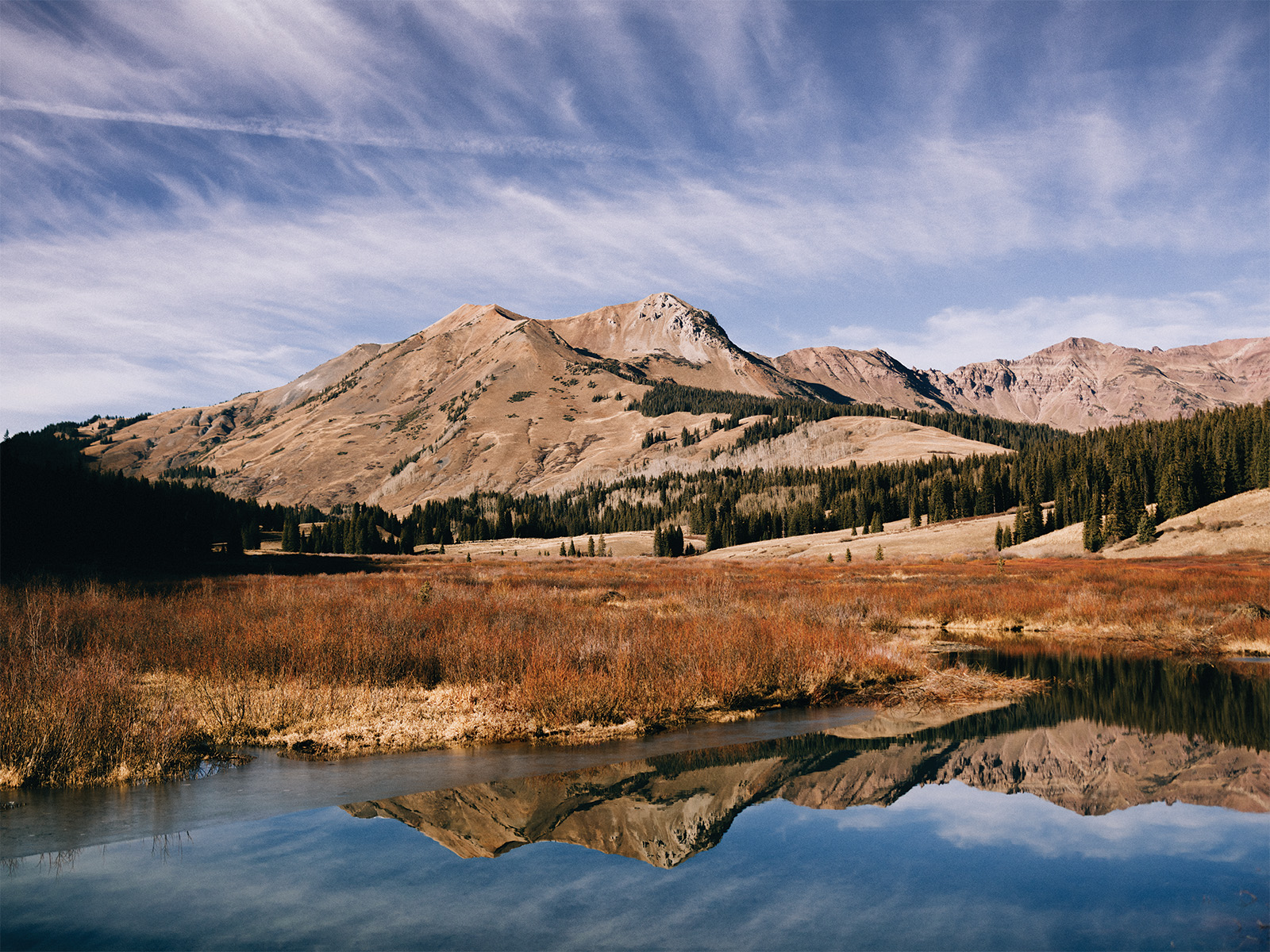
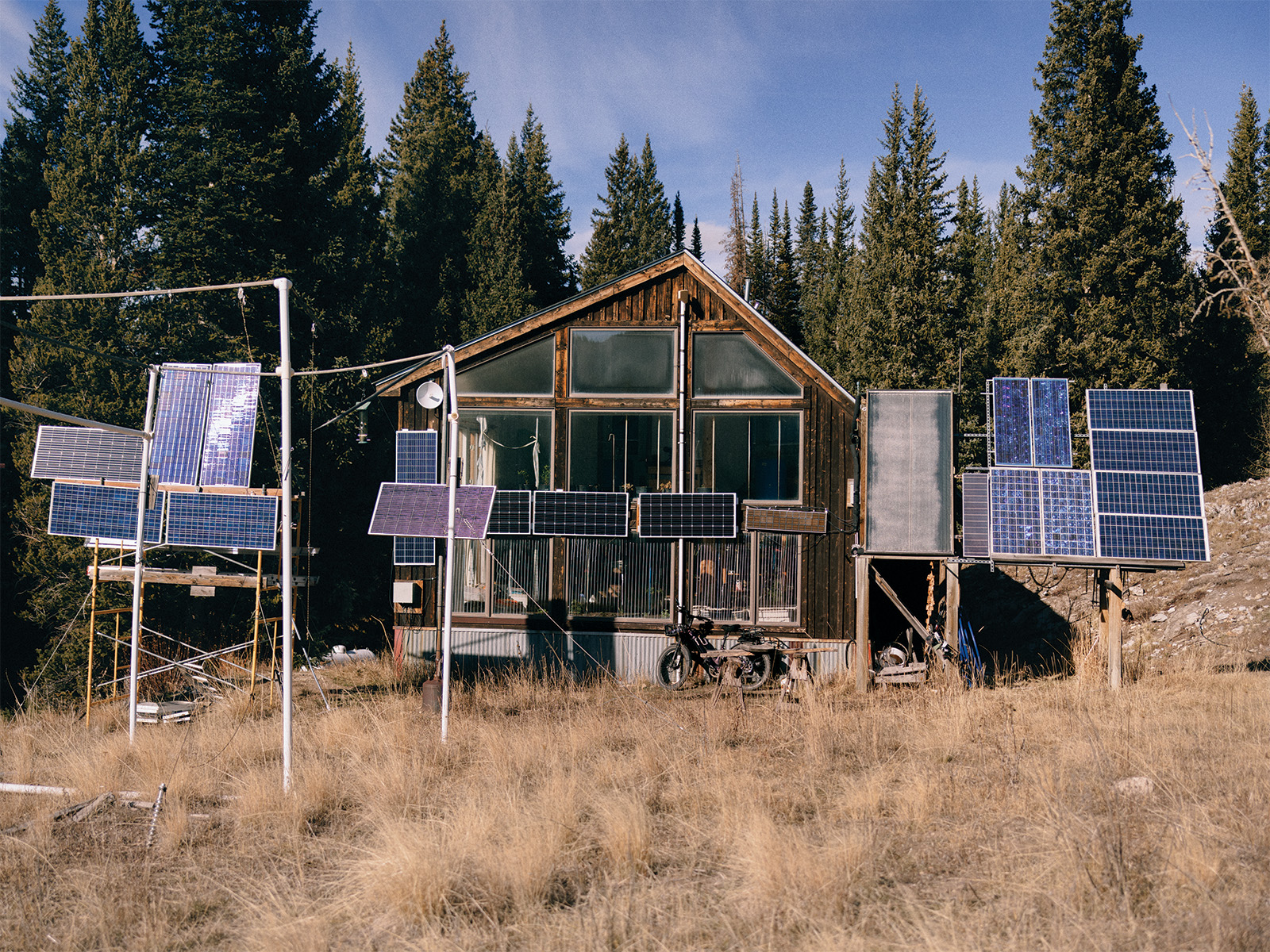
Billy Barr is preparing for his 54th winter in Colorado’s Gunnison National Forest, where he’s lived full time since graduating from New Jersey’s Rutgers University in the early 1970s. Even by local standards of remoteness, the 75-year-old lives way out there, alone in his 2,000-square-foot off-the-grid home on a patch of land tucked beside the Rocky Mountain Biological Laboratory (RMBL)—a research station built in 1928 on the remains of Gothic Mountain’s eponymous, abandoned silver-mining town. Over the decades, Barr has held various roles on the lab’s campus. These days, he’s a semi-retired part-time accountant. Unofficially, but most importantly, he’s the curator of one of the most detailed and enduring records of climate change in America.
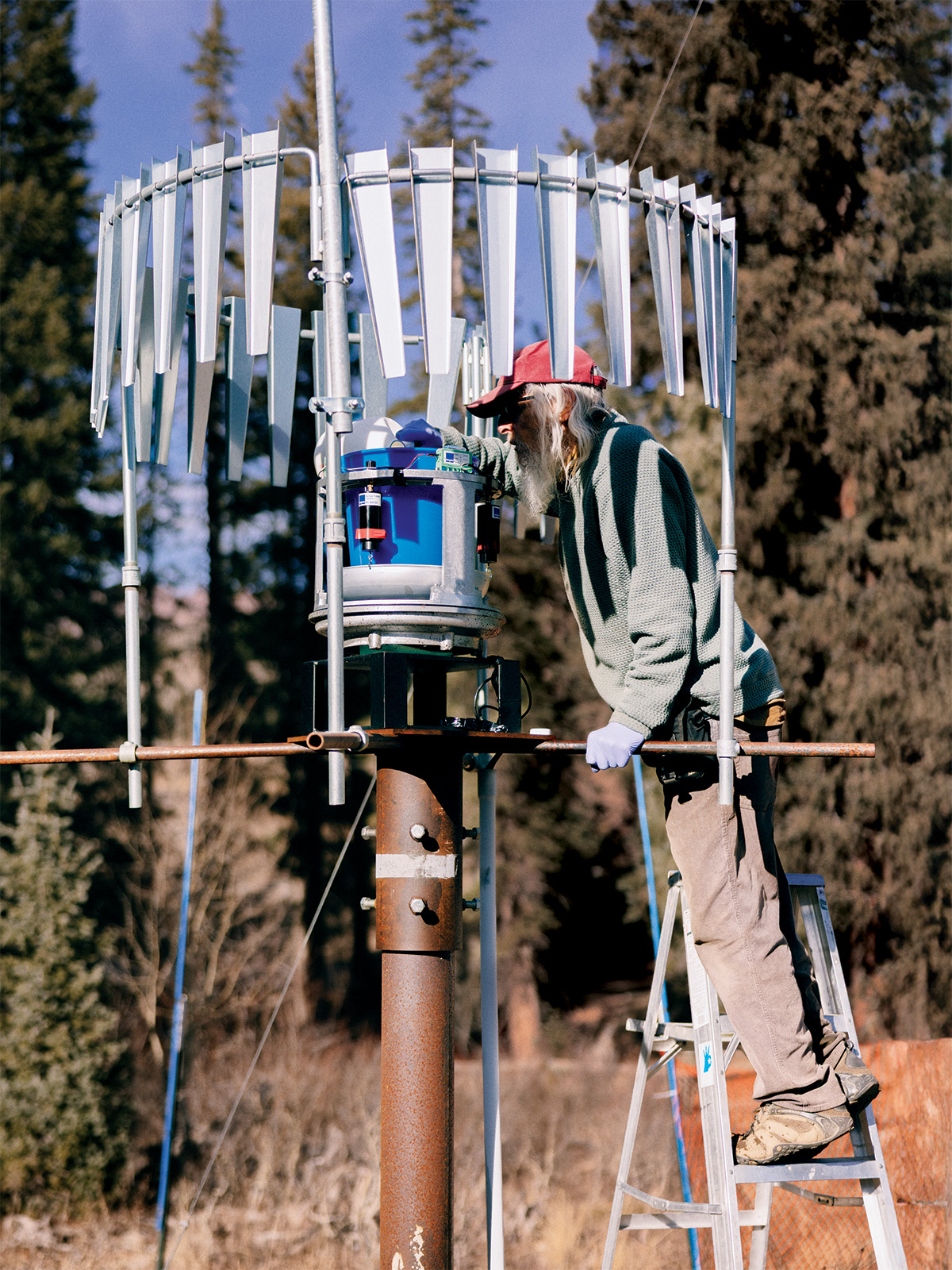
It’s a postcard-perfect day in mid-September, the precipice of snow season at 9,500 feet. Barr’s arms strain toward a metal canister that collects and measures precipitation, one of several daily data points he reports on his website, gothicwx.org. The ladder beneath him shifts as he stretches his hands skyward. “Almost got it,” he says, letting out a short grunt. Trailers, pickups, and SUVs kick up dust on the road running alongside Barr’s one and a half acres of forested homestead—vacationers glancing over at the bearded, gray-haired man perched in the air.
Barr’s Thoreauvian existence overlooking the East River has made him something of a celebrity. He’s been called the “resolute hermit,” “Colorado’s Most Interesting Hermit,” and an “eccentric mountain hermit.” He’s the subject of a 2016 short film, The Snow Guardian, and a bar six miles away in Crested Butte is named the billy barr in his honor. (Barr lowercases the B’s in his name, a nod to an egoless existence.) In summertime, friends stop by to see where Barr spends his winters taking measurements, cross-country skiing hundreds of miles, and recording data that shows how climate change is reshaping alpine ecology. In 2020, at the start of the COVID-19 lockdowns, National Public Radio asked the master of isolation for tips on social distancing. “I like it,” he admitted. “But what works for me…quite conceivably wouldn’t work for anybody else.”
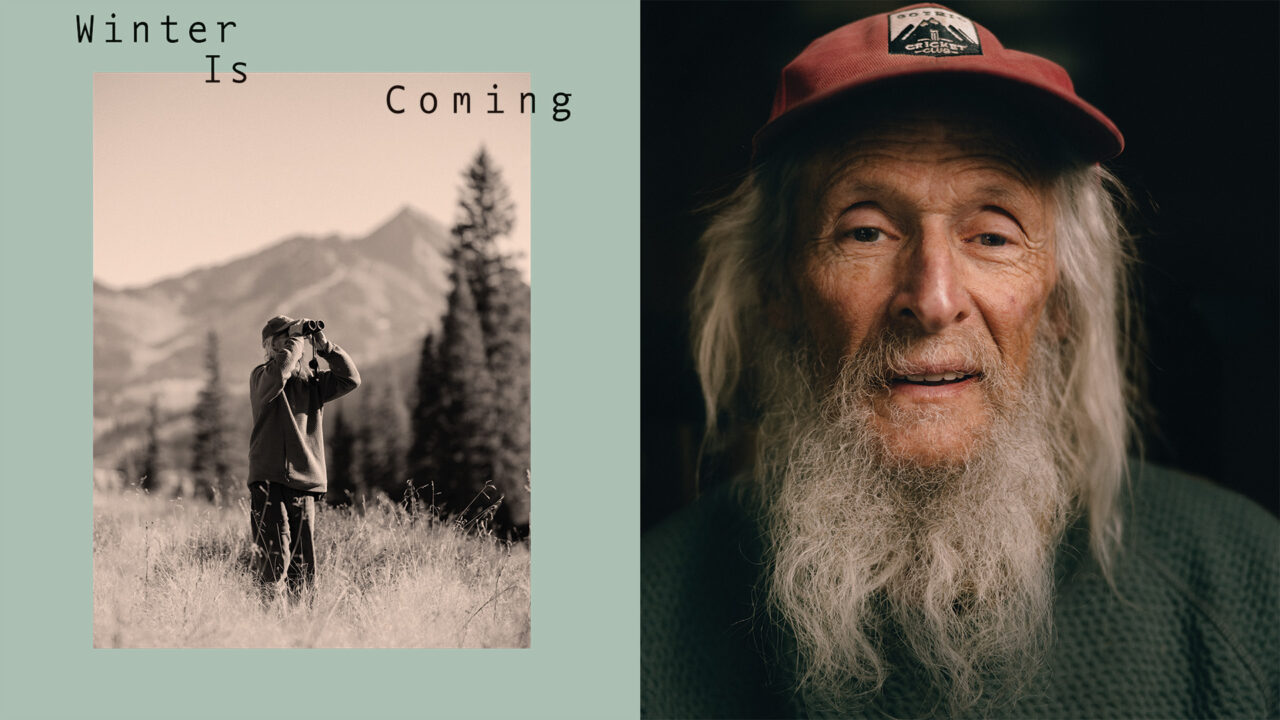
Barr is five-foot-eight and 120 pounds. This afternoon, his scraggly beard reaches below his throat; white hair shoots wildly from beneath a crimson hat mashed low atop his head. He’s wearing a tattered brown wool sweater and blue jeans. Tinted glasses hide the wrinkles around his eyes. He has no spouse and no children. He doesn’t date. Friends worry about his safety. He’s gotten frostbite a number of times and was almost killed in an avalanche. He eats a largely vegan diet and grows vegetables in a greenhouse he built for when County Road 317 becomes impassable and Barr is entombed in winter’s solitude.
This past fall, the coming season carried a different weight. His body had begun to betray him. He’s had two hip surgeries in recent years. Last winter, a sheet of ice slid off his cabin’s roof, smashed into his right leg, and clocked him in the jaw—nearly knocking him out. For a moment, Barr worried he was done for. When word of the accident spread across RMBL’s campus this summer, the whispers began. No one wanted to imagine it’s true: Is Billy Barr nearing his final winter in Gothic?
Long before he became a renowned recluse, Barr was a shy kid in Trenton, New Jersey. His mother died of a brain aneurysm on his third birthday, and he was particularly close to his grandmother. “I’d grab onto her, and I’d have to get pulled away,” he says. “It got to the point where I almost stopped visiting because it was so difficult.” He was close to his father but struggled socially and often struck out with girls. He was awkward and sensitive. “It was impossible to get him to fight for himself,” says his sister, Diane Barr Quinlan, a retired lawyer in Pittsburgh. “Billy was so sweet and gentle. He didn’t have it in him to be anything else.”
He escaped into numbers. Barr memorized baseball statistics for his beloved Philadelphia Phillies: home runs, batting averages, strikeouts. On road trips to his father’s childhood home in rural Connecticut, Barr counted filling stations—Atlantic, Shell, Sunoco—in a notepad. “I recorded everything,” he says. His father, a ceramics engineer, was an avid hunter, and those trips planted in Barr a deep love of the outdoors. At Rutgers in the late 1960s, he majored in environmental science, just as the field was beginning to take shape alongside the country’s emerging environmental movement.
In 1972, when Barr was a college junior, a water chemistry summer internship opened at RMBL. A professor urged him to apply.
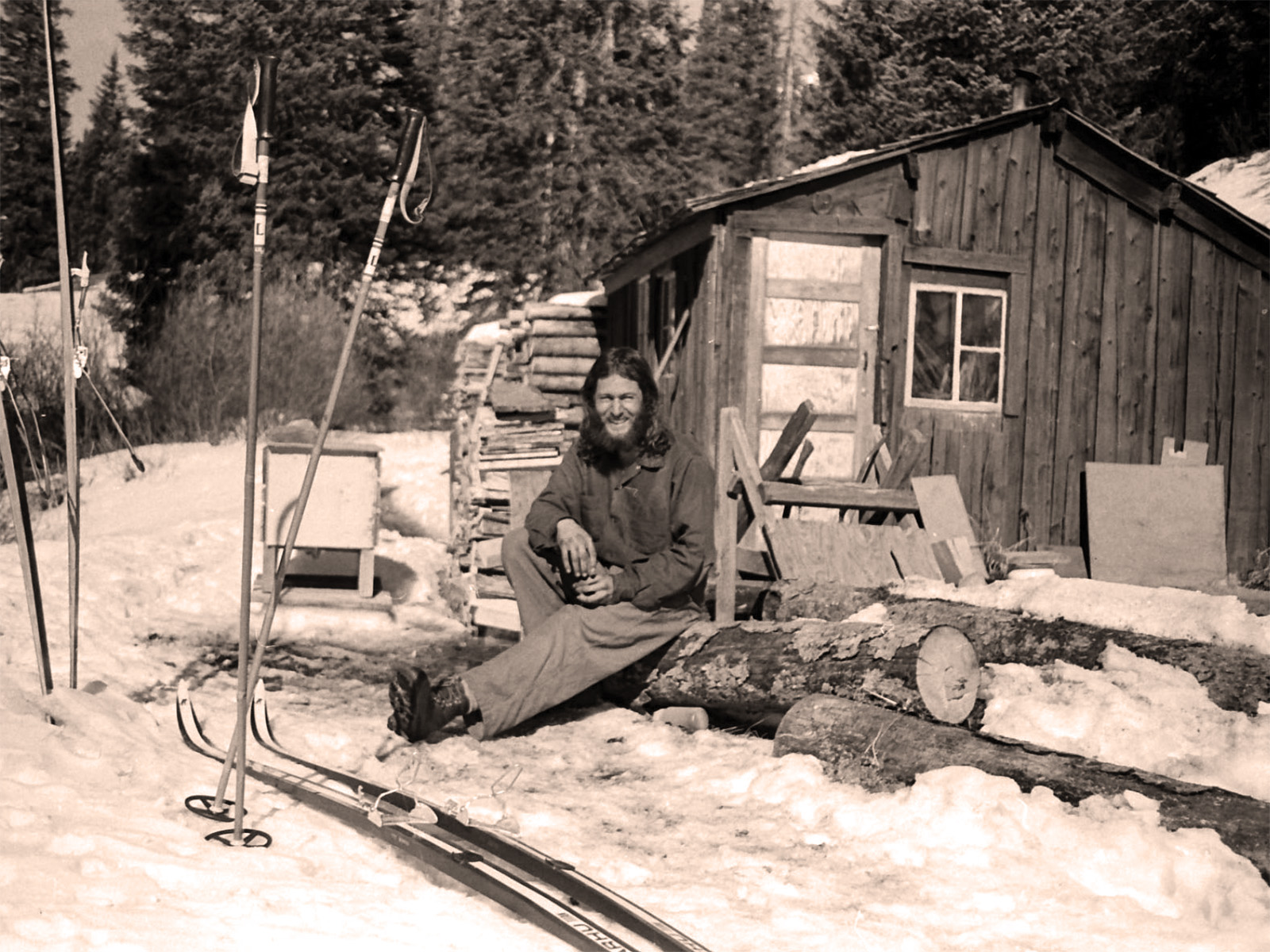
Barr fell in love the moment he arrived in Gothic. “I could take a deep breath,” he says. Pines spilled down mountainsides that teemed with woodland creatures. The East River slithered past the campus’ aging wooden buildings. One morning, he went to the river to wash up in the ice-cold water. “I froze my ass off,” he recalls. He spent his summer hiking and measuring stream samples. He ate in the chow hall with staff and interns and slept in the dormitory. Most of all, he felt liberated. Nobody cared about small talk or social polish.
When the internship ended, Barr asked to stay. He spent much of that winter, a time when Gothic can get more than 200 inches of snow, living in a tent. Afterward, Barr returned to Rutgers and graduated, then was hired as a caretaker at RMBL. He moved into an eight-by-10-foot mining shack with a kerosene lamp and a woodstove barely capable of warming his toes. Critters slipped through holes in the walls. “No light, no insulation, no nothing,” he says. “It was a relief.” Barr learned the basics of survival by trial and error. During his first winter, he taught himself to ski out of necessity. “The way I stopped was to fall down,” he says. “That got old.” For groceries, he skied five miles to a plowed road and hitchhiked to Crested Butte. He checked the cabins and water lines. He split wood. He saw ptarmigans and coyotes. He watched the snow.
Barr wanted something to occupy his mind. “Something to keep me busy,” he says, “something that interested me.” On November 4, 1974, he went outside his shack with a ruler. “Cloudy all A.M.,” Barr wrote in black ink inside his stenographer’s notebook in small, round script. “7 3/4” snow. 5 3/8” presently on ground by night.”
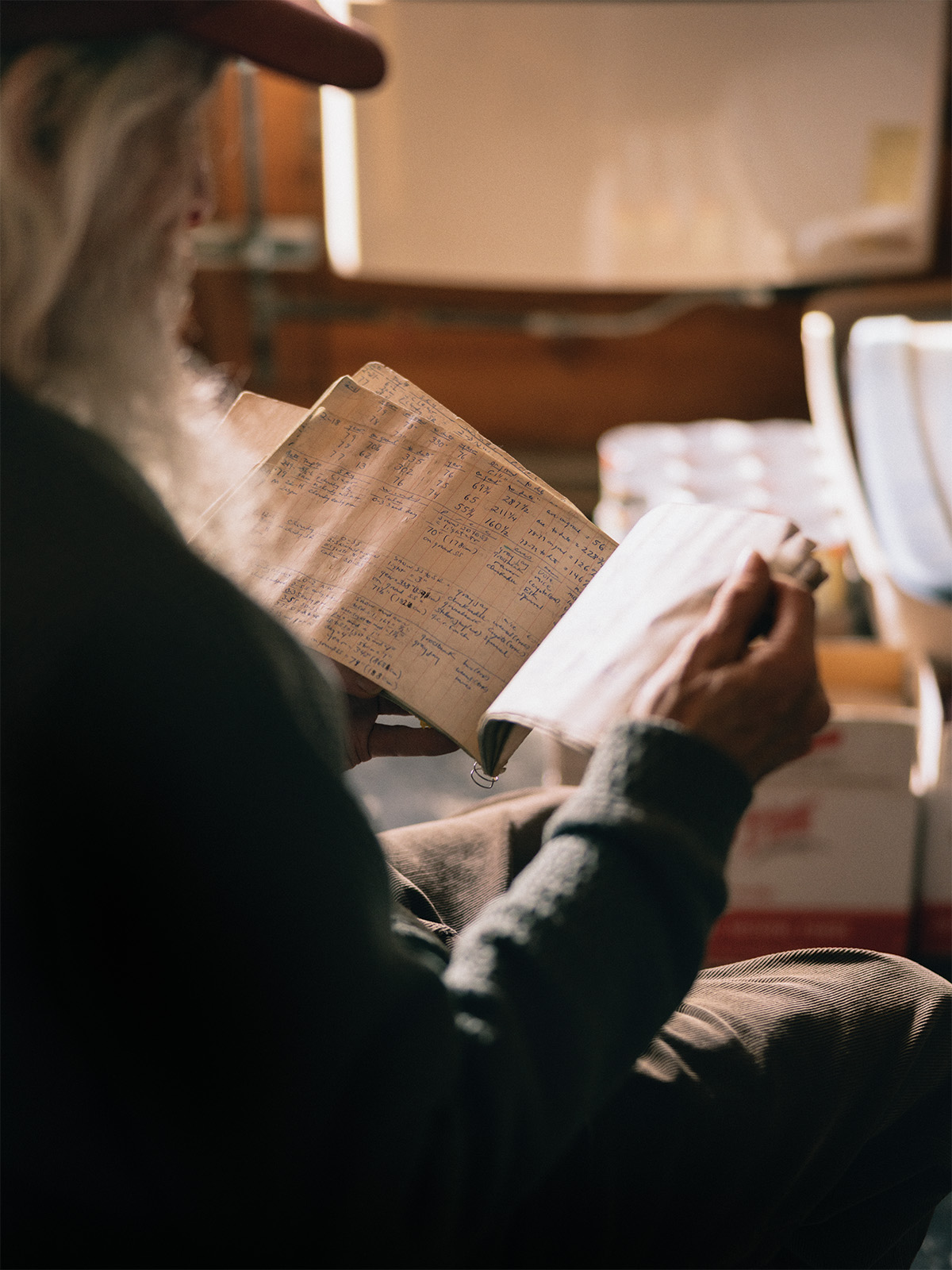
He recorded new snowfall the next day, and the day after that. He logged temperatures and daily conditions. On cross-country ski runs, he scouted wildlife and jotted sightings in his notebooks, which multiplied over the years. One notebook became two, then three. He invented his own tracking system: red highlighted first sightings of hibernating mammals or birds returning to their high-altitude homes. Each winter he skied roughly 500 miles, noting the sounds he heard—chitters from Steller’s jays, the jackhammer burst of the hairy woodpecker, the distant howl of a coyote. The long winters felt less monotonous. Eventually, the observations became illuminating. “After about the fifth year, I could compare the current winter I was in to the previous four,” Barr says. “I did that year after year.” He lived quietly with the data, unsure what it all meant.
In the late 1990s, Barr mentioned the growing stack of notebooks to his friend David Inouye, an ecologist and University of Maryland professor who did research at RMBL. Inouye was floored. He’d spent years searching for reliable, long-term data to pair with his research on alpine flowers and animals. “Not only did Billy have the daily records of snowpack and temperature and rainfall that were important, but he’d been recording things like the first robin in the spring, when he saw the first marmot come out of hibernation,” Inouye says.
Barr’s first academic credit came in 2000, on a study co-authored by Inouye that showed the long-term effects of climate change on hibernating mammals and migrating birds in the region. His data revealed unmistakable signals: Hibernating creatures were emerging 38 days earlier than when Barr first began recording, likely in response to warmer spring air, leaving the animals imperiled in a landscape still locked in winter. American robins, too, were arriving weeks earlier than just two decades prior, which put the songbird at risk of starvation.
Today, Barr’s collection of data remains a trove for scientists. His measurements help researchers understand groundwater flows in the Colorado River Basin, a lifeline to more than 40 million people across the West, and his figures are used to calibrate satellite-captured snowfall. In 2012, Barr co-authored another paper with Inouye and others that showed broad-tailed hummingbirds and the glacier lily, on which the birds’ springtime survival depends, were becoming phenologically mismatched: Their seasonal timing no longer aligned.
Barr doesn’t consider himself a scientist, and the station does not pay him for his data collection. He covers the cost of his website, along with much of the equipment he uses. (He doesn’t know how much he’s spent on the project over the past five decades.) “I’m not a meteorologist. I’m not a hydrologist. I don’t study climate change,” he says after climbing down his ladder and stepping inside his cabin. “All I do is write it down.” Interpretation, he says, is someone else’s job. Still, his numbers show that nearly 85 percent of the record-high temperatures around Gothic have come in the past 26 years. The 2024-’25 winter saw the fourth-lowest snowfall in 51 years, and for the first time, Barr recorded a February low temperature above freezing. “I know people that don’t believe in climate change, but that’s like saying the sky is not blue on a clear day,” he says. “What I’m doing is measuring something that exists. It’s like counting cars on the road to see if traffic this year is more than last year.” He shrugs off the idea that he’s accomplished something. “Some people want to go to college and want to be a physician, or they want to be lawyers or teachers, or they want to be musicians,” he says. “I did this, but not because I was planning to. I just ended up doing it.”
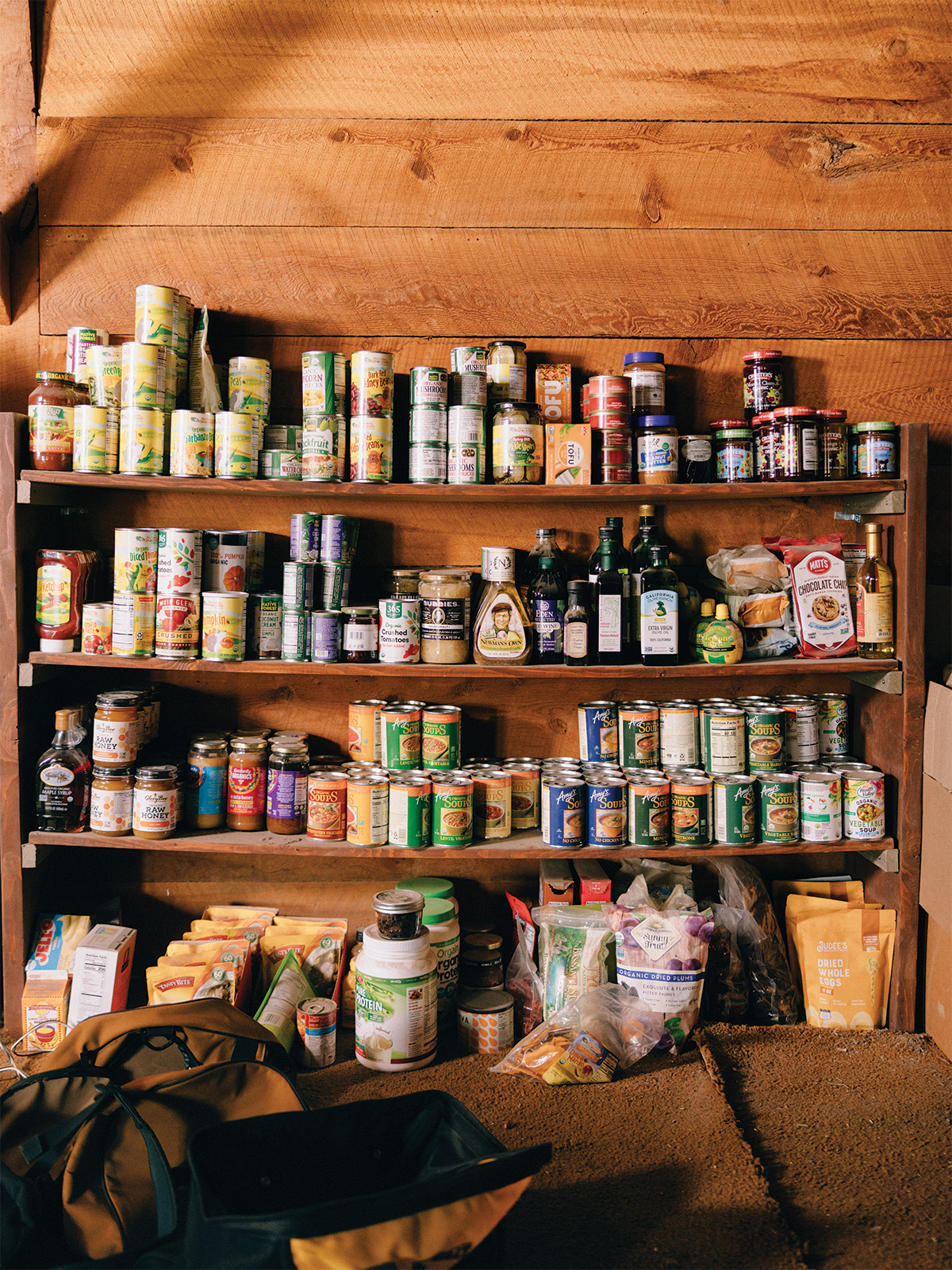
Inside his cabin’s main room, there’s a woodstove that sits a few feet from his kitchen, which has a hot plate, dishes, and a KitchenAid mixer he uses to make cookies. He’s been experimenting with cashew-based cream-cheese icing. (“It’s always a little granulated,” he says.) Near the front door, cans of beans, pea-protein canisters, olive oil, and bottles of Newman’s Own salad dressing line the wall. A waist-high stack of firewood is nearby, beside a worn table that’s covered with months-old editions of the New York Times.
Barr begins his data collection at precisely 7 a.m., logging overnight precipitation. Precision and timing matter to him, so he does most of his measurements by hand. In the winter, he trudges outside to check new snowfall against a board he’s set up a couple dozen yards from the door. He scoops fresh snow to test its water density. He checks soil temperature and soil moisture from probes planted near his metal precipitation bucket. He then goes online to look up solar-radiation and wind-speed data from a nearby weather station he helped repair last year. He puts on cross-country skis and begins his daily trips around the area. He watches for birds and other creatures. He then puts his snow numbers and animal sightings into an Excel spreadsheet and posts the information on his website for anyone to see.
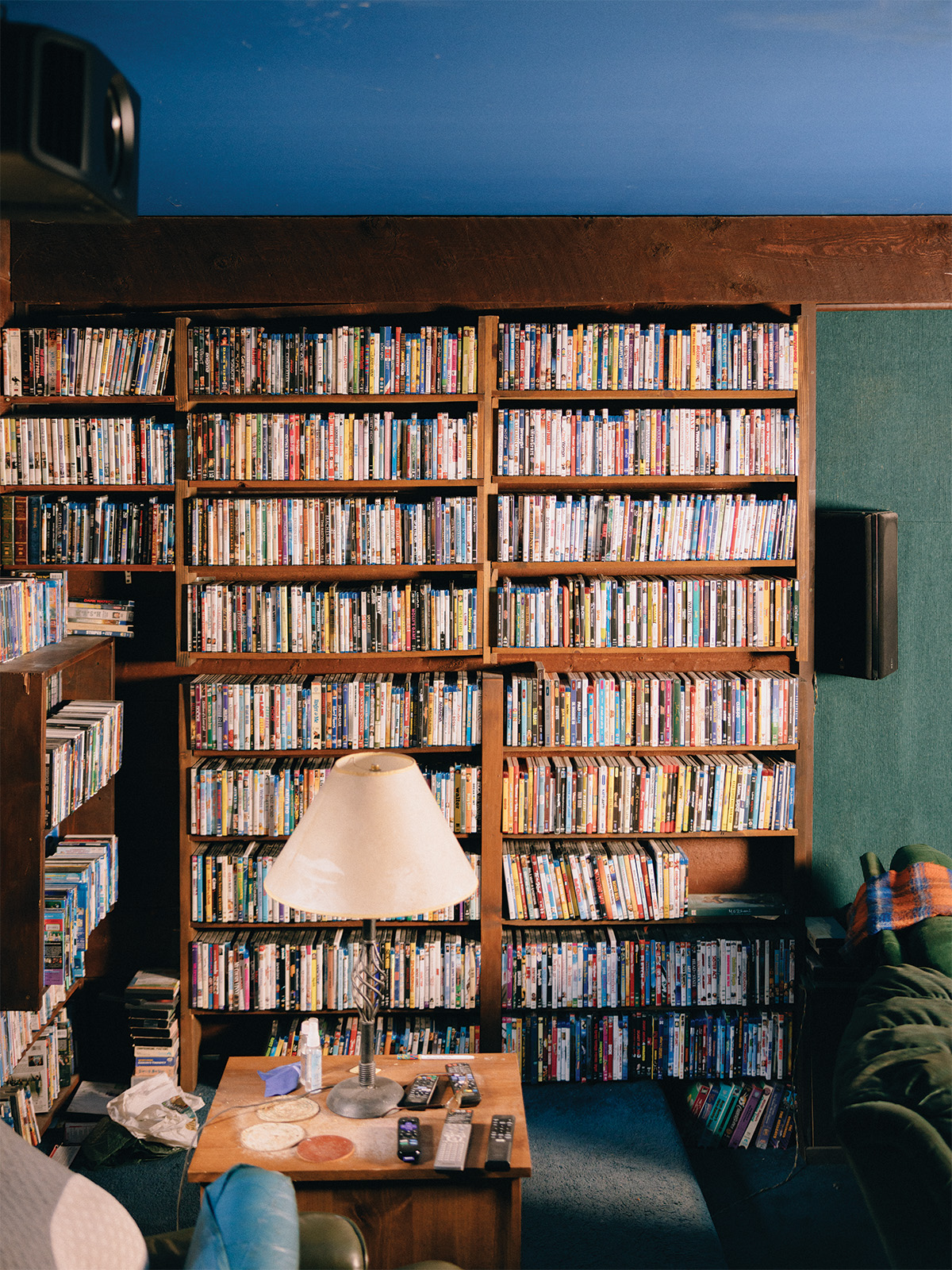
By 3 p.m., just as the sun slips behind Gothic Mountain, his work is mostly done (he continues to update the temperature into the evening). Barr retreats to the theater room he built opposite his wall of canned goods. There, every night, he projects one of the hundreds of DVDs in his collection. Like everything else, he ranks his movies; that spreadsheet is available on his website as well. (He likes The Princess Bride; he doesn’t watch horror movies.) Barr climbs his bare wooden steps to bed at 10:45 p.m. At dawn, he starts again.
Four years ago, Barr underwent his first of two hip replacement surgeries and spent nearly two months in Gunnison, where he built a second home in 2007, anticipating that his Gothic winters eventually would come to an end. He’d scheduled the surgeries for spring, and the first came on the heels of a particularly brutal season in which he’d managed only 174 miles on his skis—a little more than a quarter of his usual tally. “December came, and I was like, ‘I don’t think I can make it,’ ” he remembers. He toughed it out for four more months, had the surgery, then skied 400 miles the following winter. His other hip was replaced in spring 2023. Recovering again in Gunnison, he was forced to confront what remained of his winters in the woods. “I like going into high basins, but I don’t know if I will ever do that again,” he says. “I’m not young anymore.” (Still, he skied 930 miles the next year.)
This past February, Barr was clearing snow off his roof when a chunk of ice cascaded and smashed into both his face and his right tibia. “I almost had my jaw shattered,” Barr says. “If I got hit a little bit higher, it would have busted my skull.” He chastised himself for getting hurt doing something so routine: “If I got hit by that and was unconscious in the snow, then I’d be dead.”
News of the mishap circulated among the three staffers who live on campus year-round. “The day-to-day maintenance of life out here is a lot of work,” says Benjamin Schmatz, 28, one of RMBL’s caretakers. But, he adds, no one is suggesting Barr should abandon his post: “I think that Billy is living the life he wants to live.”
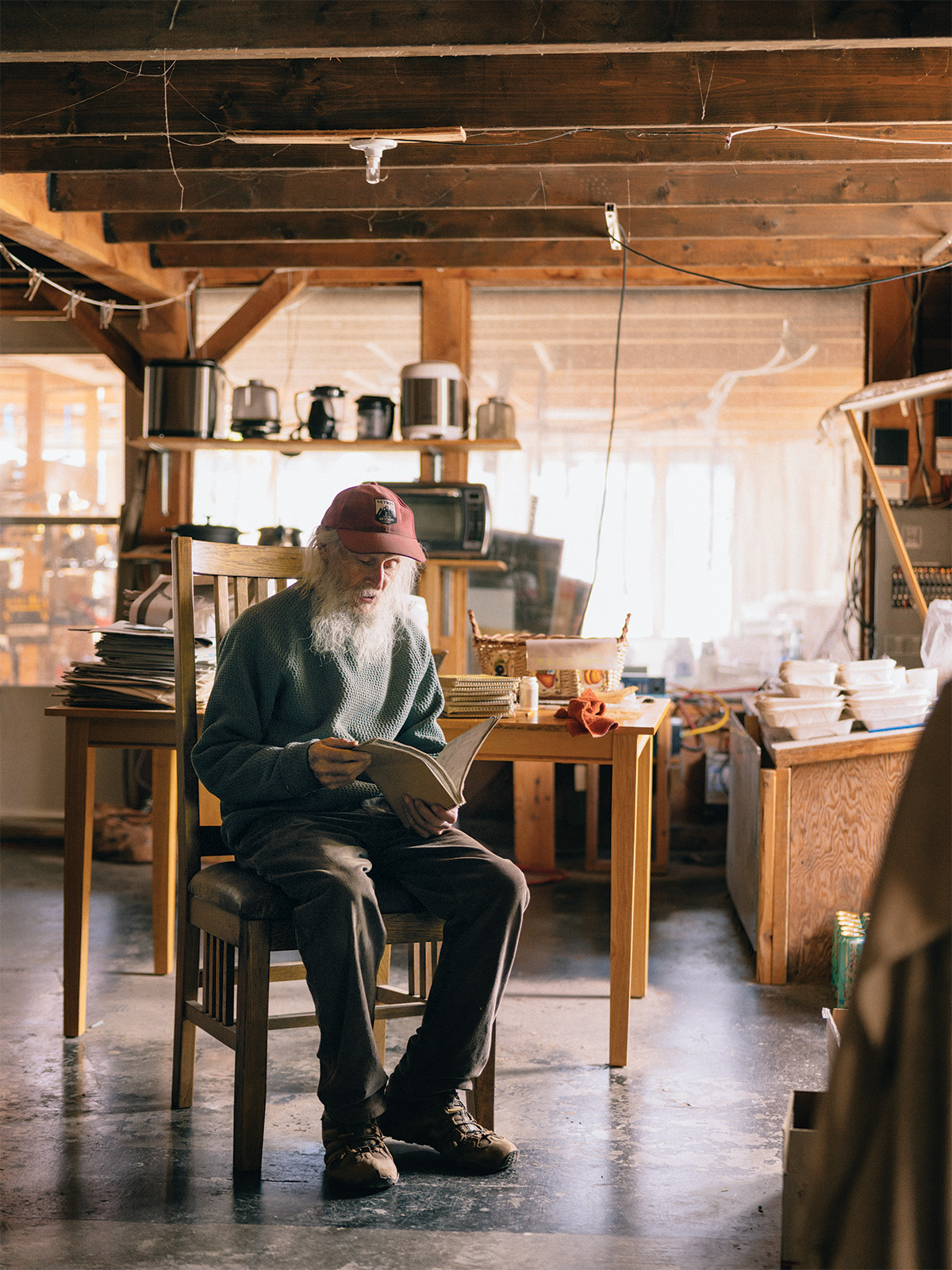
Climate change, in a mordant twist, is also making Barr’s daily existence even harder. For years, he has relied on a natural spring as his primary water source. But with less snow, and thus less insulation, his water line has frozen a couple of times in winter. Barr then has to ski to the RMBL campus for clean water, hauling four one-liter jugs on his back. Snow also is getting wetter and heavier, making it hard for him to break trails or dig out his cabin. “He doesn’t want people to do stuff for him,” says Bobbi Peckarsky, a Cornell University emeritus professor who met Barr at the research center in the 1970s and remains among his closest friends. “He wants to be able to do it for himself.”
RMBL is in the midst of planning ways to continue data collection after Barr decides to leave Gothic, though the methods will change. Gone, likely, will be many of the manual measurements and observations Barr has made over the decades. Jeni Blacklock, the lab’s executive director, says RMBL already has spent $500,000 on remote-sensing instrumentation and put $1 million from a congressional earmark into a NASA-National Ecological Observatory Network satellite overflight project that will help scientists better understand how Colorado ecosystems respond to drought and climate change.
There’s been talk of training the live-in caretakers to assume some of the simpler winter tasks, such as new snow measurements, which Barr temporarily delegated after his surgeries. Others have discussed installing additional automated equipment on Barr’s property that could transmit measurements remotely. A weather station from the 1980s—about a half-mile from Barr’s cabin—already captures local air temperatures and humidity, but it doesn’t measure snow. Additionally, a U.S. Department of Agriculture SNOTEL (snow telemetry) station is five miles away near the Crested Butte ski resort, and another is at Scofield Pass, six miles northwest of RMBL’s campus. “We want Billy’s work to continue,” Blacklock says. “There are 50 years of data that were recorded and are completely original. You don’t just stop when you have something so special. We don’t ever want to lose what Billy’s done here.”
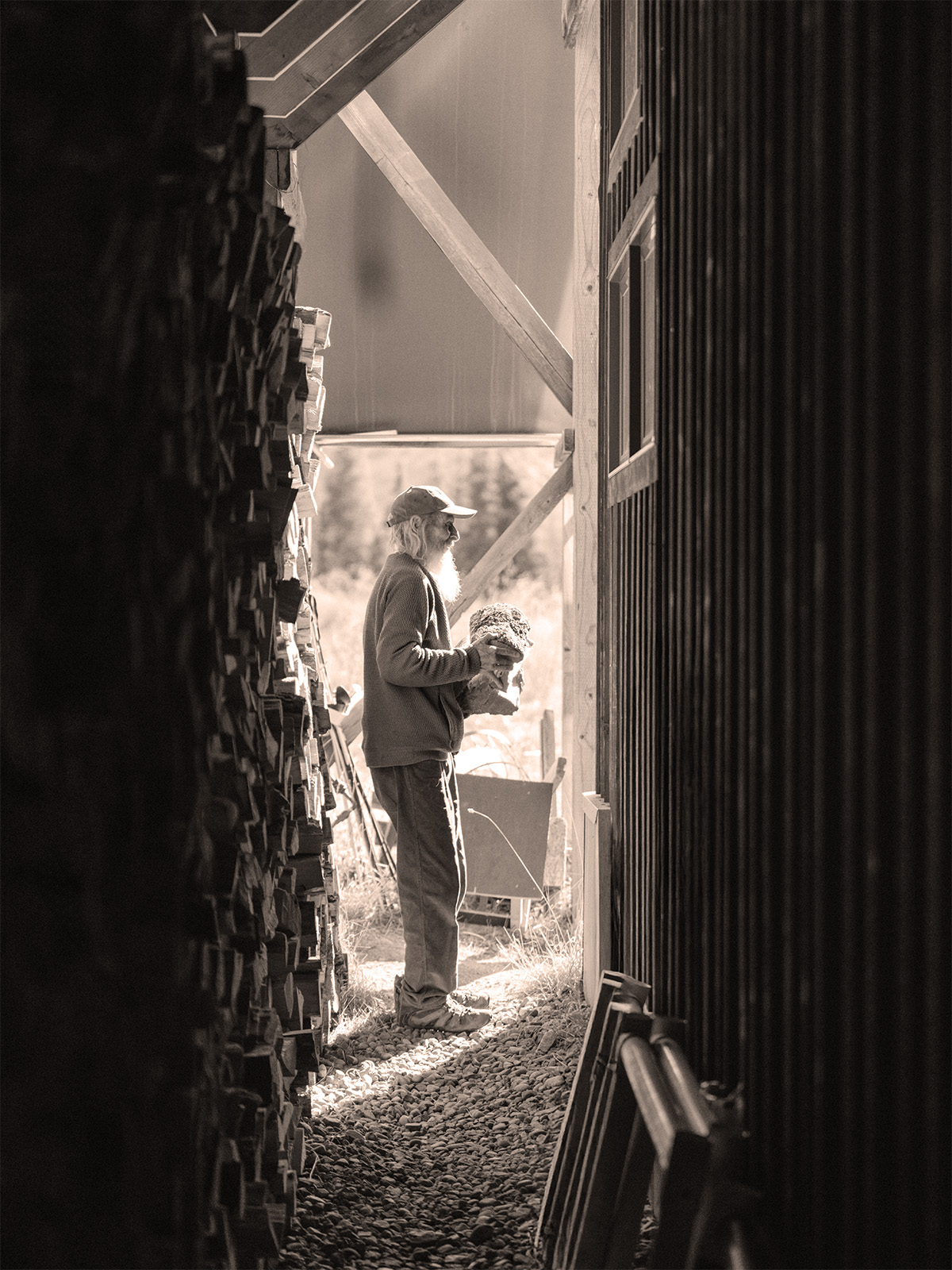
Seven years ago, RMBL honored Barr by naming its community center after him. The ceremony was scheduled one summer evening at dinnertime, and the place was packed. Barr—clueless about the surprise—saw the line leading into the food hall and turned around. “I went home,” he says. A friend eventually called Barr’s cabin: There’s a celebration here for you. Billy headed back and listened while folks said kind things about him. “I got mad,” Billy says. “They know I hate that stuff. I get embarrassed by stuff like that.”
The attention Barr receives has also led to mischaracterizations. A 2018 children’s book about his life, The Snow Man, still irks friends who think the story paints him as lonely, which Barr insists he’s not. He writes emails and letters to friends across the country. He founded the Gothic Cricket Club. He enjoys showing interns and staffers photos of his cabin swallowed in snow. He’s often among the first staffers to meet the summer interns. “He’s the grandpa of Gothic,” Schmatz says. “Billy builds community out here.”
On this September day, there isn’t much daylight left, and Barr still needs to drain the precipitation bucket and coat it with mineral oil, which prevents snow from evaporating. Outside his cabin again, the woodland clearing looks a little like a scientific Stonehenge. There’s the snow board, a rain gauge, a snow-depth pole, an evapotranspiration device, two thermometers, some “snow pillows” that calculate snowpack water, an anemometer, a solar-radiation gauge, a snow-depth reader, and two cameras that feed live video to his website.
A few days earlier, some college students had stopped by before the lab closed for the season. They wanted Billy Barr’s secrets. Instead of indulging them, he downplayed everything—his winter routine, his technical knowledge to run all these instruments, his surgeries, his thousands of miles of skiing, his decades of meticulous record-keeping, the way his observations are underpinning climate science in the Rockies. “I felt like I was fishing for compliments,” he says.
The truth is that Barr is neither a sage nor a hermit. He doesn’t pretend to know what a lifetime in the woods has taught him. “What I’ve done is not much of an accomplishment,” he says. Work that feels this enjoyable, he thinks, can’t count as real work. He knows the answer isn’t satisfactory, and maybe that’s the point. “I’m just telling my truth,” he says.
Along the dirt road, the parade of vehicles continues past the field where Barr is working. “There’s traffic all the time,” he says as he slides the newly oiled bucket back onto its pole. He steps down from his ladder and looks up at the mountain rising in the near distance. A passerby puts a hand out the window of an SUV and offers a small wave. Billy Barr doesn’t notice.