



The Local newsletter is your free, daily guide to life in Colorado. For locals, by locals.
Lars Grimsrud had spent countless hours in the garage of his home in Lafayette with his daughter, Kristil Krug. When she was younger, they worked on sports cars. When she got older, they sipped cocktails. But on a November day in 2023, they weren’t fixing engines or chatting over drinks. They were studying Lars’ Sig Sauer “Mosquito” .22-caliber handgun. A local police chief, a friend of Lars’, was with them. “That gun is way too small,” the chief told Kristil, then 43. “You’ll have to shoot him way too many times. You need a larger gun, because if you need to use it, you need to put him down.”
The statement was chilling, but so was her situation. For weeks, Kristil—who lived five miles away in Broomfield with her husband and three children—had been hounded by menacing emails and texts from a stalker claiming to be her ex-boyfriend from more than 20 years earlier. The harassment quickly graduated from abusive language to threats against Kristil and her husband, Dan. Kristil was terrified. So was Lars, who immediately loaned his daughter the .22 and organized the meeting with his police chief buddy.

On the chief’s advice, Kristil ditched the .22 and bought a new 9 mm Sig with an optical laser red-dot sighting system—the same brand the police chief carried. Kristil took shooting classes, got a concealed carry permit, practiced drills with her husband and kids in preparation for an intruder, and enlisted police to help track down the stalker. Still, she didn’t feel safe. As the threats continued to escalate, Kristil found herself crying in her car, overcome with feelings of helplessness and vulnerability.
At one point, Kristil told Lars: “Someone’s going to die. It’s either me or him. Either I’m going to have to kill him, or he’s going to kill me.”
“And she was right,” Lars says.
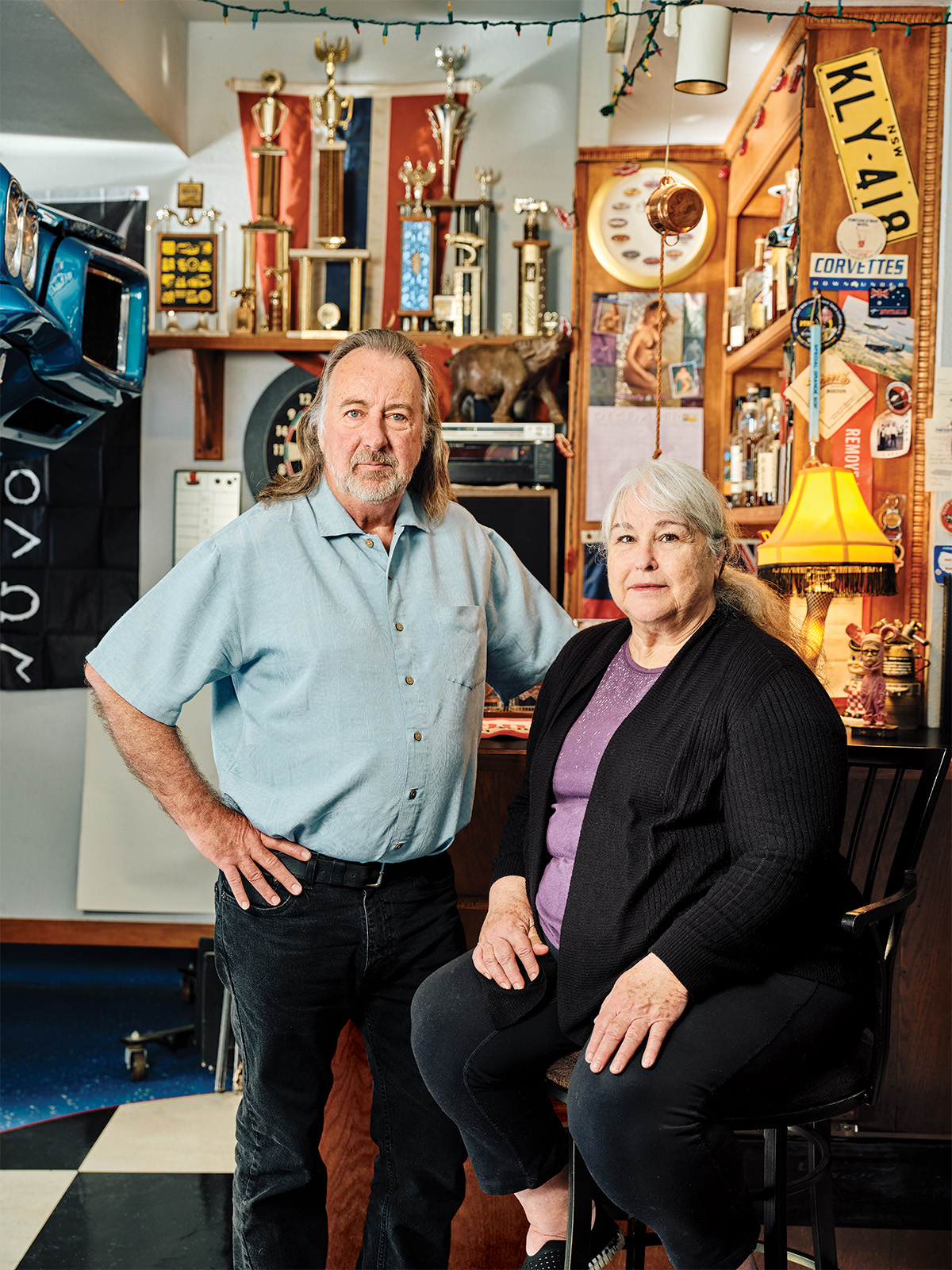
A retired aerospace engineer who emigrated from Norway to the United States in 1974, Lars is renowned for his skill at tuning vintage Corvette carburetors. “To the 110,000 members of CorvetteForum.com, he is known simply as Lars,” begins a 2006 New York Times story, a framed copy of which hangs in his garage. “Like Fangio, Cher or Elvis, his celebrity has eclipsed the need for a surname—or even a clever online nom-de-Net.”
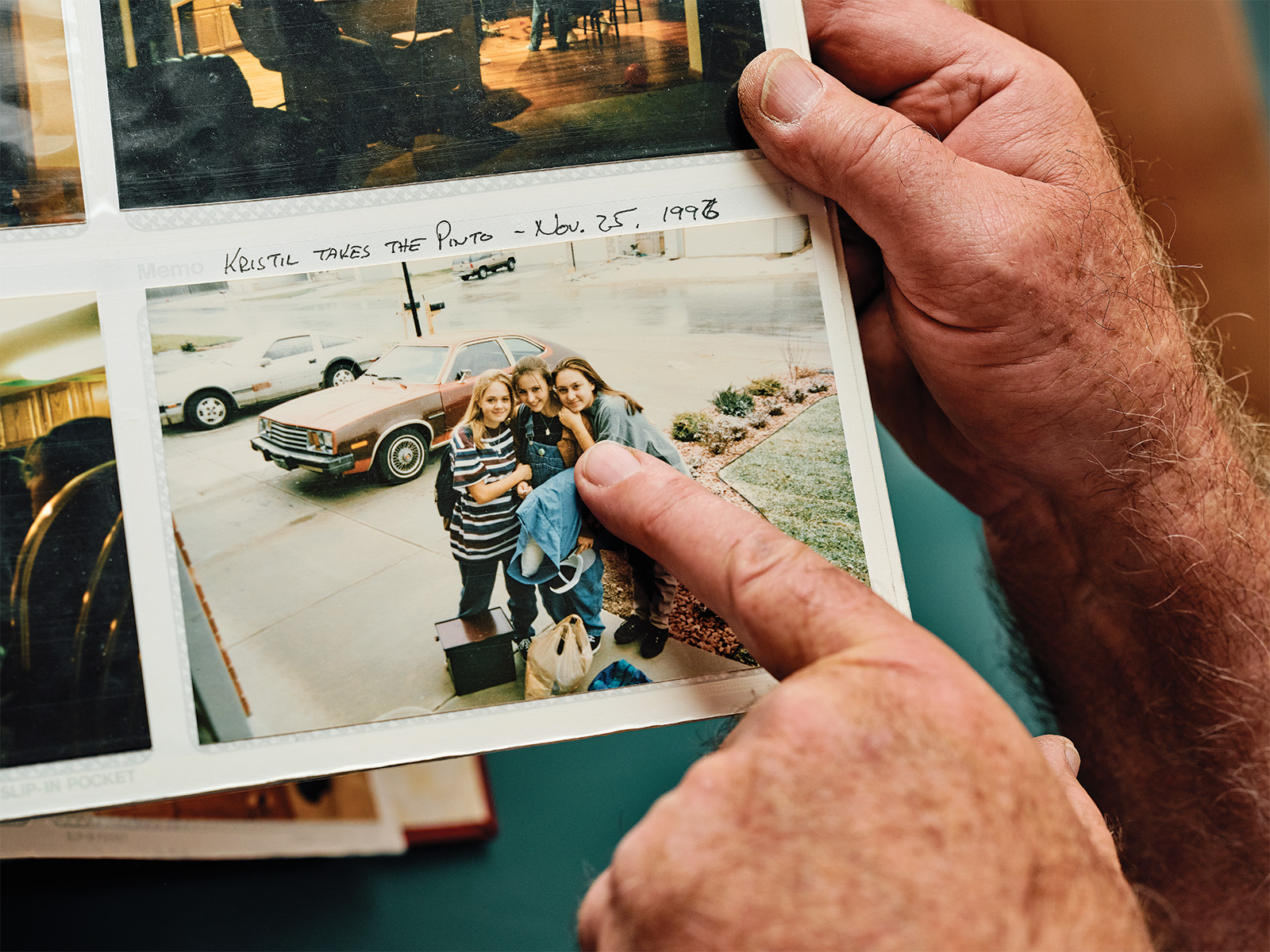
Lars shared his love of working on cars with his oldest child, Kristil (pronounced “Kris-teel,” a nod to the family’s Scandinavian heritage), who was born in 1980. “She could take a bicycle completely apart and put it back together,” Lars says. Kristil excelled at Standley Lake High School in Westminster, particularly in math and science, and she was an accomplished dancer, performing ballet and modern dance at the Arvada Center for the Arts and Humanities. She had a close-knit group of friends, but she was also reserved and studious. She once took a weeklong trip to Hawaii during her junior year to study biology. Her first car was a Ford Pinto that Lars later replaced with a 1976 Pontiac Bonneville. “That big old boat,” says Linda Grimsrud, Kristil’s mother, laughing.
At lunchtime, “the whole car would be packed with kids hanging out the windows driving down Wadsworth,” Lars recalls.
Kristil graduated as valedictorian in 1999 and headed to the Colorado School of Mines on an academic scholarship to study chemical engineering. While working part time at JCPenney, she met a co-worker named Anthony Holland, and the two struck up an unlikely teenage romance. Holland was a high school dropout who took Kristil to a rave on one of their first dates. She encouraged him to get his GED. Neither had attended their senior prom, so one night, Holland told her to dress up. He took Kristil to a nice restaurant and decorated his room with balloons. They danced to a setlist of her favorite songs.
As Kristil became more engrossed in her studies, however, Holland fell further into the party scene. They split around 2000, both crying during the breakup in Kristil’s car. Kristil transferred to the University of Colorado Boulder and began dating online, where she soon met another college student who seemed like a far better match.
Daniel Krug was one month older than Kristil, the youngest of five siblings and an Eagle Scout. He’d graduated from high school in Lakewood and was attending the Catholic University of America in Washington, D.C. They began a long-distance relationship before he moved back to Colorado following graduation.
Dan was tall, lanky, and smart. Even though Kristil’s parents thought he was a little arrogant (Lars describes him as a “cross between a car salesman and a politician”), that was fine. Their daughter was besotted, attracted not only to his intelligence, but also to the inseparability Dan engineered. “Everything had to be done together, it felt like,” says Linda, who reasoned her daughter liked the security and romance of it. Kristil and Dan moved into a townhome in Superior and enjoyed mutual passions, like taking food tours of Denver and grading wines.
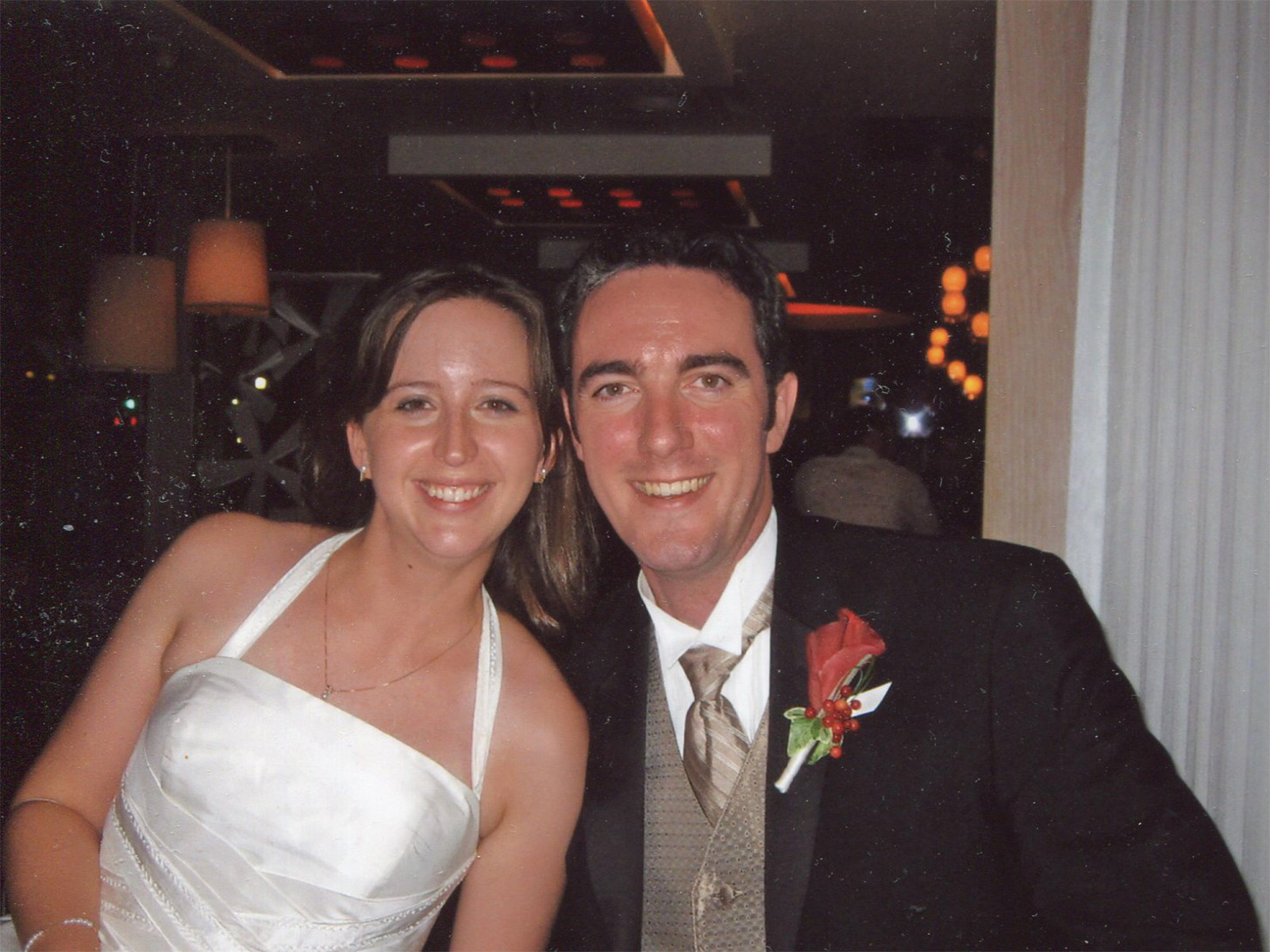
In 2007, Kristil and Dan married at Holy Ghost Catholic Church in downtown Denver; their reception was filled with booze and dancing. “The best wedding ever,” Linda says. Kristil began working as a project manager for Agilent Technologies, a pharmaceutical and biotech company, and would spend the next 19 years there. Dan bounced around, eventually landing in operations and administration at the Colorado Department of Public Health and Environment.
The couple settled into a four-bedroom, 3,500-square-foot home on a corner lot in Broomfield, where they raised three children, now 16, 13, and 10. Their oldest shared Kristil’s love of dance, a passion Kristil continued to pursue, even making the local news in 2012 as part of the School at Ballet Nouveau Colorado’s adult showcase of hip-hop, contemporary dance, and classical ballet. Although Lars and Linda divorced when Kristil was five, the family remained close. Kristil’s brother, also named Lars, lived in Broomfield, too, and they’d gained a stepbrother and stepsister when their father remarried in 1997. Everyone lived within about 15 minutes of each other, and the entire blended clan met frequently for birthdays and holidays, often at Lars’ home. Kristil was renowned within the family for bursting into rooms laden with bags and stories. “There was always so much laughter,” says Rebecca Ivanoff, Kristil’s cousin.
There was less ease in Kristil’s marriage. Loved ones began noticing tension between Kristil and Dan. He, for example, had trouble keeping a job, Linda says. Jenna Ericson, Kristil’s stepsister, recalls Dan becoming so annoyed at a family event that his jaw tensed. Kristil sometimes had to intervene, telling Dan to “walk away.” She confided to Linda that she felt like she was carrying the relationship, in charge of everything, while Dan directed outbursts at her and their children.
Leading up to 2023, Kristil became more guarded with what she shared. “It just felt like, over the years, she was changing and becoming more anxious,” Linda says.
Kristil admitted to her mother that she and Dan were living separately under one roof; she’d started sleeping in her son’s room. She had stayed in the marriage for the sake of their children, but by fall 2023, Kristil had decided that she wanted a divorce. Then the messages started to arrive.
On October 2, Kristil received a text from an unknown number: “Hi Kristil its Anthony. Hope its ok I looked you up. I go to boulder every few weeks and thought we could hook up. U game?” She didn’t respond. The texter followed up the next day: “r u there? U should say yes when I offer pity fuck… u should kill urself Dont waste my time.”
Kristil was bewildered. Holland had made reconnection attempts before, the last time in 2016, but never with any venom. She’d told him in the past that she was happily in a relationship. Dan knew about the messages, and Kristil had always considered her ex-beau to be harmless. On Halloween, however, Kristil received an email from a.holland.kicks@gmail.com along with a photo of Dan outside of his workplace. “This ur husband? Drives like slow old lady…Dont wanna clear rubber hose in his tailpipe,” the sender wrote.
Kristil filed a harassment report with the Broomfield Police Department, but the messages continued. The stalker sent an email on November 2 noting that her car’s registration had expired. She then began receiving unsolicited pictures of men’s genitals from unknown numbers; one mentioned a post on a classified website called Locanto. Kristil found the advertisement, which sought “well endowed men to run a train on me” and listed her town and number.
On November 7, Kristil met with Broomfield Detective Andrew Martinez. Sitting on a blue couch in an interview room, Kristil handed Martinez a dossier of information she’d compiled. She pointed across the table to a timeline she’d drawn up of her relationship with Holland, as well as her stalker log of the communications. She even gave the detective possible addresses for Holland that she’d found online and with the help of a private investigator (it seemed Holland had bounced around between Utah and Idaho). Given the vitriol present in the messages, Martinez was astounded by Kristil’s poise. Her composure, however, belied a gnawing fear.
“This is exhausting,” she told Martinez. She constantly worried that her tormentor would “come out from the bushes.” The distressing messages arrived “from all directions at any time.”
“It’s a lot,” she said to the detective, “and it has definitely made me paranoid everywhere I go.”
Kristil informed her employer about the stalking, changed her phone number, and began carrying pepper spray and the 9 mm. Kristil and Dan told their kids, who nicknamed the stalker “Kickman” in reference to the Gmail address he used. They changed up their schedules, and the elder Lars began providing an armed escort for his daughter and grandchildren to their various appointments.
By mid-November, Martinez had submitted digital search warrants to Verizon and TextNow—the service providers for the stalker’s phone numbers—and to Google in an attempt to trace the origins of the messages. In accordance with state law, Martinez obtained sign-off from a judge before filing the warrants, which mandate that information must be returned within a certain period of time, to the tech companies. In the case of the TextNow warrant, for example, Martinez asked for the data to be delivered within two weeks. (The warrant to Google had to be refiled because of a typo; it went through on December 6, 2023.) Broomfield police also issued an arrest warrant for Holland—not one that would be served, but one that would mean he would be detained if he were pulled over or had a run-in with police. Nobody, at any point, attempted to contact Holland.
The stalking, meanwhile, intensified. Police officers were sent to check on Dan at work and Kristil at home after a message threatened to “get rid of” him. Another claimed the stalker had ejaculated on her car while she was at a dentist appointment. When an officer came to search the car for evidence, Kristil confided she felt like “a sitting duck.” Still, she tried to maintain a sense of humor, telling the officer that she was now livestreaming her location to her brother at all times, laughing ruefully: “So, like, everyone knows where I’m going to be from now on.” Police covertly followed the couple in the hopes of catching Holland in the act. They never spotted him.
When Martinez brought Dan in for an interview on November 16, the father of three described “panicking” when someone dropped a can behind him in line at the grocery store. He said he’d started carrying a baton and pepper spray. “I’m doing a shit job of protecting my wife,” Dan said, struggling not to sob before apologizing: “I’m sorry for this. I wear a mask around the kids.”
Kristil’s brother says Dan told him at a family birthday party that he was balancing “vigilance and paranoia.” After asking his brother-in-law to stand guard with him outside, Dan clocked every passing car through the window.
But Kristil began doubting her spouse’s alleged fear. When she picked up a concealed carry purse from her stepmom’s sister, Diana West, Kristil said that she couldn’t “even rule out my husband as the stalker,” according to West. She even confronted Dan about it, though he denied the allegation.
Kristil’s family nursed their own suspicions about Dan. Ericson suspected her brother-in-law almost from the start, when the stalker sent the photo of Dan at his workplace on Halloween. “Like, how did you not see somebody taking this photo of you?” Ericson says. Linda had similar thoughts. She knew Kristil and Dan were going through a rough patch. That the stalker seemed to have the details of Kristil’s schedule suggested it was someone close to her. “It was just one of those things that nagged me in the back of my head,” Linda says, “but I never took action.”
Plus, it seemed clear that the messages were coming from Holland—and Kristil was becoming increasingly frustrated with the investigation’s lack of progress. Martinez said they needed digital evidence tying Holland to the crime before approaching the suspect so as not to endanger the case. (Broomfield Police Department did not make Martinez available for comment.) “She was very angry about that,” Linda says. The deadlines Martinez had set for the digital warrants came and went without the tech companies delivering the court-mandated information.
By December 2023, Kristil’s nerves were fraying. Her mind raced constantly. She spoke in a stream of harried patter. That month, her daughter was set to perform in a holiday recital of The Nutcracker. Citing safety concerns, the dance studio asked Kristil not to help with rehearsals, as she’d done in the past. They also asked her to skip opening night.
On the morning of December 14, Kristil packed the kids’ lunches before she and Dan made separate school and bus stop runs. He returned home at 6:47 a.m., Kristil at 7:58 a.m. Dan left for work at 8:24 a.m., 20 minutes later than usual.
Dan texted Kristil throughout the morning with no response. He sent a screenshot of the unread messages to Martinez at around noon. “This feels weird,” Dan wrote.
Dan called police for a wellness check minutes later and then dialed his mother-in-law. Dan sounded agitated and panicked to Linda. He was at his office in Greenwood Village, about 40 minutes away. Could she go check on Kristil?
When Linda arrived, a police cruiser was in the driveway. The garage door was slowly opening. Linda hurried over and leaned down to peer in. She saw her daughter’s motionless legs and an officer performing CPR on her body. The man ordered Linda away, and she staggered back, her hand over her mouth as more first responders rushed past her.
Linda watched frantically as paramedics wheeled out a stretcher—and then her world shattered when they put it back without her daughter. An autopsy would determine that Kristil had been bludgeoned and stabbed in the heart hours earlier. The 9 mm she’d purchased lay holstered in its purse beside her body.
Loved ones began gathering at the house. Lars hugged Linda tightly as his ex-wife sobbed. “This can’t be true, can it?” Linda cried. When Dan drove up, he leapt out of his car and ran toward the crime scene tape, shouting, “That’s my house!” He wailed, doubled over, and appeared to retch.
Linda went over to check on her son-in-law, thinking, He wouldn’t have done this sort of thing. “But when he looked at me,” Linda says, “his eyes were just wild…just these wild, wild-looking eyes that I had not seen from him.”
Finally, local deputies were dispatched to Holland’s residence, a festively decorated home in a quiet residential neighborhood in Eagle Mountain, Utah, about an hour south of Salt Lake City. The elderly family friends he lived with looked on in shock at the posse of police cruisers parked outside their house. Holland, 41, was groggy and confused after working a night shift the previous evening at Texas Roadhouse.
Officers asked Holland if he knew Kristil and if he could provide an alibi for earlier that day. They did not tell him she’d been killed. Anthony said he’d dated Kristil many years earlier and that he’d bought a sweatshirt that day at the local Kohl’s. He had the receipt to prove it. Officers quickly determined it would have been physically impossible for Kristil’s ex to have committed a murder in Broomfield just hours before making the purchase.
After Kristil’s murder, the digital search warrants were fast-tracked: State law requires tech companies to immediately provide information when law enforcement believes there is a threat to life or safety. The information further exonerated Holland—and pointed to a maddening new suspect.
Broomfield police took Dan in for questioning within hours of discovering Kristil’s body. On the same blue couch where his wife had first relayed the details of her stalker’s threats, Dan spoke falteringly—too upset to answer questions about things as simple as dinner the night beforehand. “I just want to be in a safe place with my children,” Dan said, lamenting how his daughters and son “should’ve had their mom for decades.”
Martinez watched Dan intently as he revealed that investigators knew Holland couldn’t have killed Kristil. The email addresses and messages from the stalker didn’t lead to Utah. They led to IP addresses at Dan’s workplace.
Dan’s demeanor changed immediately. Once confused and devastated, he now seemed hostile and annoyed. Leaning back on the couch, he turned his eyes to the ceiling and sighed: “It has to be the husband.”
He tried to explain. Wi-Fi passwords at his workplace were easy to get. He’d never “put my children through this.” He maintained an odd mix of mildness and defiance as officers confiscated his clothes to check for DNA and blood spatter.
Despite the mounting evidence against him, Dan wasn’t charged with Kristil’s murder that day. Authorities also did not disclose to Kristil’s family that Dan’s work IP addresses had been linked to the stalker’s messages. So when Dan left the station, he joined his grieving in-laws, who’d gathered at Kristil’s brother’s home. “He came over to me, and he gave me a hug, and he said, ‘I’m going to need help finding an attorney. It’s always the husband,’ ” says Ericson, an attorney herself. “Not, ‘Oh my God, I can’t believe my wife just died six hours ago.’ ”
Dan, the kids, and Linda slept at Kristil’s brother’s house that night. The next morning, Dan joined Linda on the porch. “He came out and started talking to me about how he was going to get rid of all her stuff…maybe keep her wedding dress but get rid of her underwear,” Linda says.
Dan went shopping to replace the clothes confiscated by police, and Lars tagged along—carrying a concealed firearm in case the murderer decided to attack his son-in-law. Dan also bought a new phone at Target. Lars couldn’t help but notice the speed and familiarity with which Dan set up the device.
Police arrested Dan the following day, December 16, and booked him into jail on charges of stalking, criminal impersonation, and first-degree murder.
As media began circulating news of the arrest, one woman stared at Dan’s face on her screen. Carrie, whose full name has been withheld to protect her identity, dated Dan from high school into college before breaking up with him during her freshman year at a university in Colorado Springs. Almost immediately, she began receiving pleas through AOL Instant Messenger from strangers, urging her to get back with him. Their appeals soon turned to abuse and threats. Police officers eventually traced the messages to Dan’s IP address. Carrie obtained a temporary restraining order, the communications stopped, and she dropped pursuit of a permanent order after Dan lawyered up. The experience had been traumatic, but Carrie hadn’t thought about Dan in years.
Reading the familiar charges of criminal impersonation and stalking against Dan more than two decades later, Carrie felt nauseated. “I was weirdly shocked but not shocked,” she says. “I wasn’t surprised he had done this again. I was surprised it got as violent as it did.”
Carrie ultimately agreed to testify at Dan’s trial, which began on April 4, 2025. The similarities between his stalking of Carrie and Kristil left jurors visibly unnerved. “There was always this element, in my situation, of: He got away with it,” Carrie says now. “There was no way I could sit there and be a part of him potentially getting away with something even worse.”
A bald and bespectacled Holland also took the stand during trial, wearing a suit, clutching a fidget toy to calm his anxiety, and staring down the man who tried to frame him. He told jurors about his romance with Kristil; his shock at finding police at his door on the day of her murder; and his lucky, exonerating purchase of a sweatshirt. Holland’s sister testified too, verifying that he’d been with her and her children—and nowhere near Colorado—during specific dates and times the stalking incidents took place.
Prosecutors theorized that Dan, who chose not to testify during the proceedings, orchestrated the stalking campaign to avoid a divorce and bring Kristil back to him. By December, he’d realized that the walls were closing in and his ruse hadn’t worked, Broomfield County senior deputy District Attorney Kate Armstrong said during her closing statement. “Then the only thing left to do was to end Kristil’s life, both to silence her and to punish her for not wanting to be with him.”
Dan’s defense team argued that the evidence was circumstantial. There was no DNA, and the clothes Dan had been wearing that morning were free of any traces of blood spatter. No murder weapon was found.
But the digital evidence obtained through the warrants after Kristil’s murder proved damning. Phone records showed the stalker used a number associated with a burner phone purchased eight months beforehand at a Walgreens—with a gift card registered to Dan. Location data indicated that Dan’s phone and the burner phone were repeatedly in the same geographic area. He’d made online searches about head trauma the day before Kristil’s murder. The photo of Dan outside his workplace had been taken in selfie mode using a timer. The Locanto ad could be traced to his employer’s IP address. When Kristil didn’t immediately respond to her stalker’s first text, the burner phone messaged “test” to Dan’s work phone. Someone from that number replied “yeah.”
On April 17, jurors convicted Dan on all counts. He was sentenced the next day to mandatory life in prison.
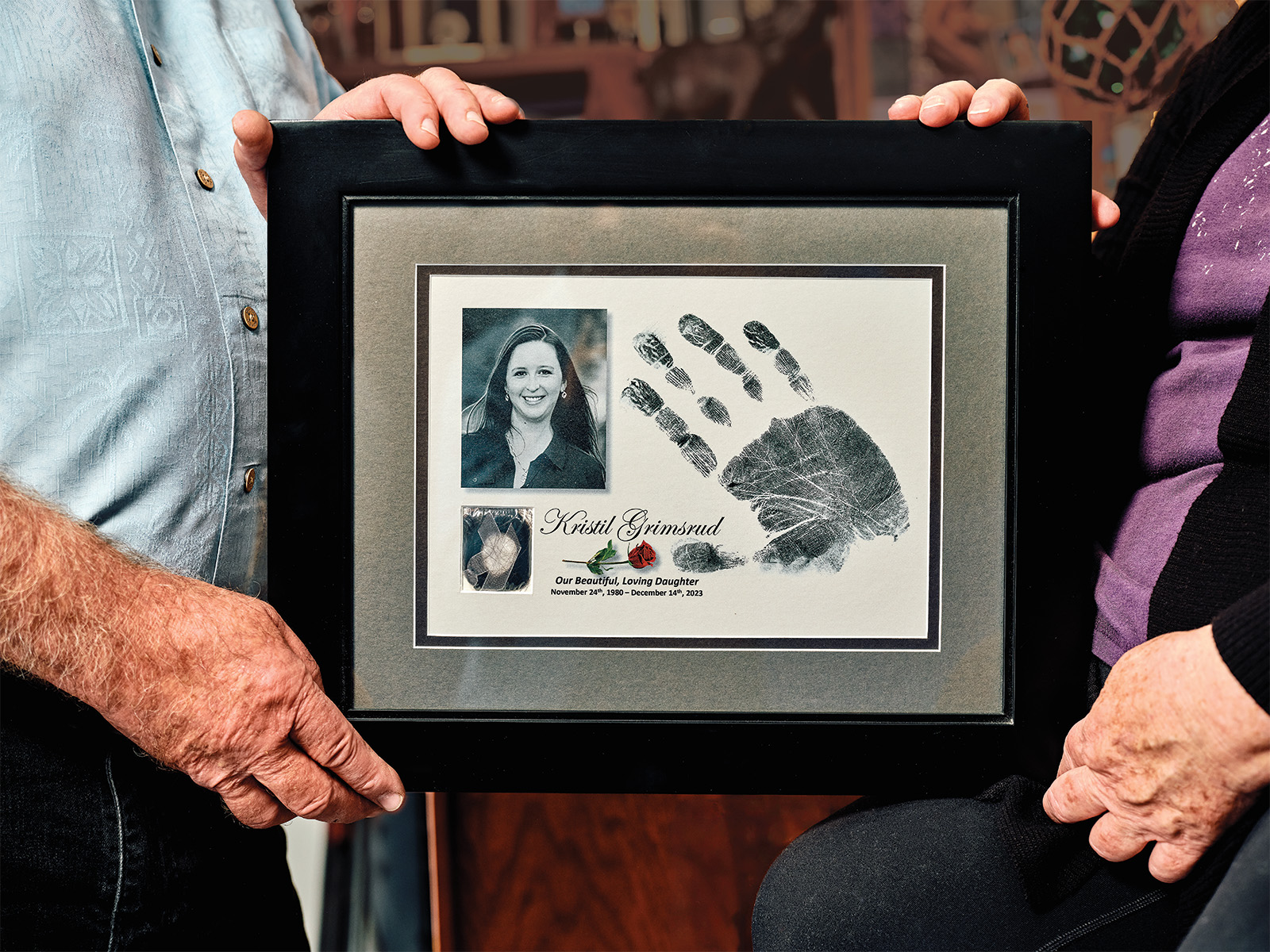
There’s a plaque now at the bottom of the stairs in Lars’ house, on the other side of the wall from the garage where he spent so many hours with his daughter. Kristil’s picture smiles out from it, alongside a lock of her hair and a handprint. Lars made identical plaques for each household in the family. There are more pictures of Kristil on the piano across the room, along with a box of her cremated remains, just steps from a display of her middle school artwork.
Kristil’s family now celebrates her birthday each November with German chocolate cake—her favorite—and they mark December 14 with remembrances, a candle lighting, and a toast that includes a pour of red wine for Kristil. But her loved ones are also channeling their grief into action, because they believe what happened to Kristil could and should have been prevented.
As Kristil’s family digested details from the trial—in particular, the mountain of digital evidence that led to Dan’s conviction—they were galled by the reality of what had transpired with the warrants sent to the communications companies. Martinez had ordered the information to be provided within 14 days, but the replies to the original warrants didn’t reach investigators until weeks after Kristil’s death. In one case, the response took three months. When the harassment turned to murder, however, the companies were able to provide the previously requested information almost immediately. Two of them did so in minutes.
TextNow did not respond to 5280’s requests for comment. In a statement, Verizon said it “receives over 325,000 demands for information from law enforcement annually, including 75,000 emergency requests—when officers can prove there is an imminent threat to life or safety under specific conditions which vary from state to state. We respond as quickly as possible to all emergency requests from law enforcement.” That included providing the requested information to Broomfield investigators within seven minutes on the day Kristil was killed.
Google receives more than 245,000 requests globally in a six-month period and keeps a team available 24/7 to address requests involving an imminent threat to life, a spokesperson told 5280. The company responded on the day of Kristil’s murder within six minutes of being contacted by Broomfield PD.
The sheer volume of requests received by large communications companies often means warrants are not even processed by the listed due dates. It’s rare for courts to hold businesses in contempt for failure to reply by the ordered deadlines.
Broomfield police issued 5280 a statement that read, in part, “From a law-enforcement perspective, while we can’t speculate on alternate outcomes, it is fair to say that timely access to critical information is essential in missing-person and violent-crime investigations.”
Although it was apparent Kristil’s murder might have been prevented with a few keystrokes, it seemed no one was at fault. “It became clear that the system…was functioning exactly as it’s currently designed,” says Ivanoff, Kristil’s cousin and a former domestic violence prosecutor. “Kristil did everything right, and she still got killed—and we have an opportunity to fix this system error.”
To accomplish that, Kristil’s family has developed proposed legislation they’re calling Kristil’s Law, which would require all communications companies operating in the United States to respond to search warrants, subpoenas, and any other court-ordered requests for information in cases of stalking and domestic violence within 48 hours.
Ivanoff has already solidified the support of a Republican state representative and Democratic state senator in Oregon, where she lives, to co-sponsor Kristil’s Law in that state’s upcoming short session. Kristil’s family has also formed a steering committee in Colorado with victim advocates and supporters from law enforcement; they held their first meeting over Zoom on November 3 and are lobbying state legislators and officials as they seek co-sponsors. The family plans to push for federal adoption of the legislation in the future—though they’re not sure how the new laws will approach enforcement.
Still, Kristil’s family felt like they had to do something. “We don’t want what happened to her just to be a complete waste—that it was just meaningless, pointless, it’s going to be forgotten, pushed under the rug, and nothing else is going to happen,” Lars says. “So we need to push this to a next step so that what happened to her, at least, maybe it serves some purpose—if not for her at this point, for somebody else.”
Read More: