

The Local newsletter is your free, daily guide to life in Colorado. For locals, by locals.
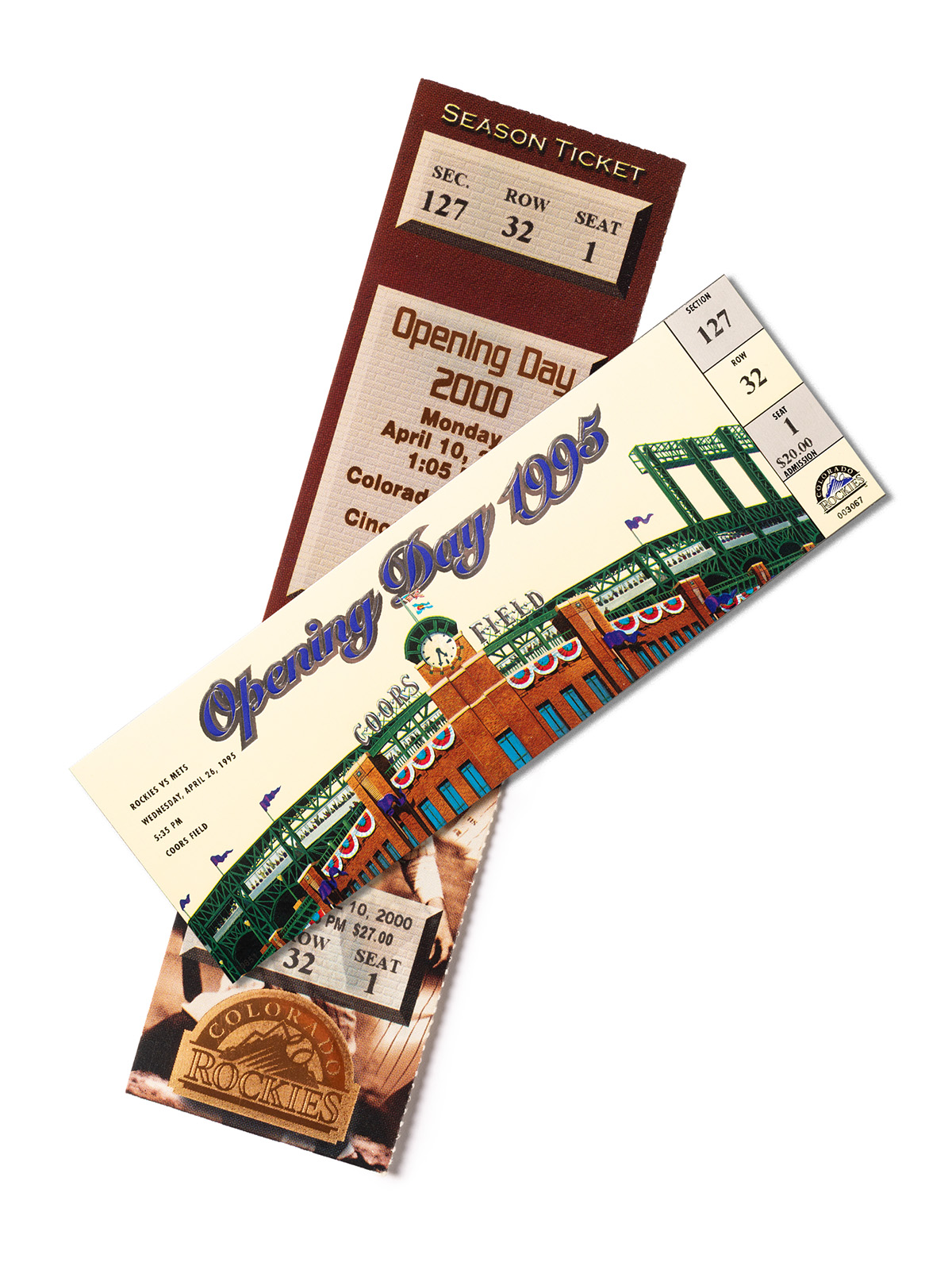
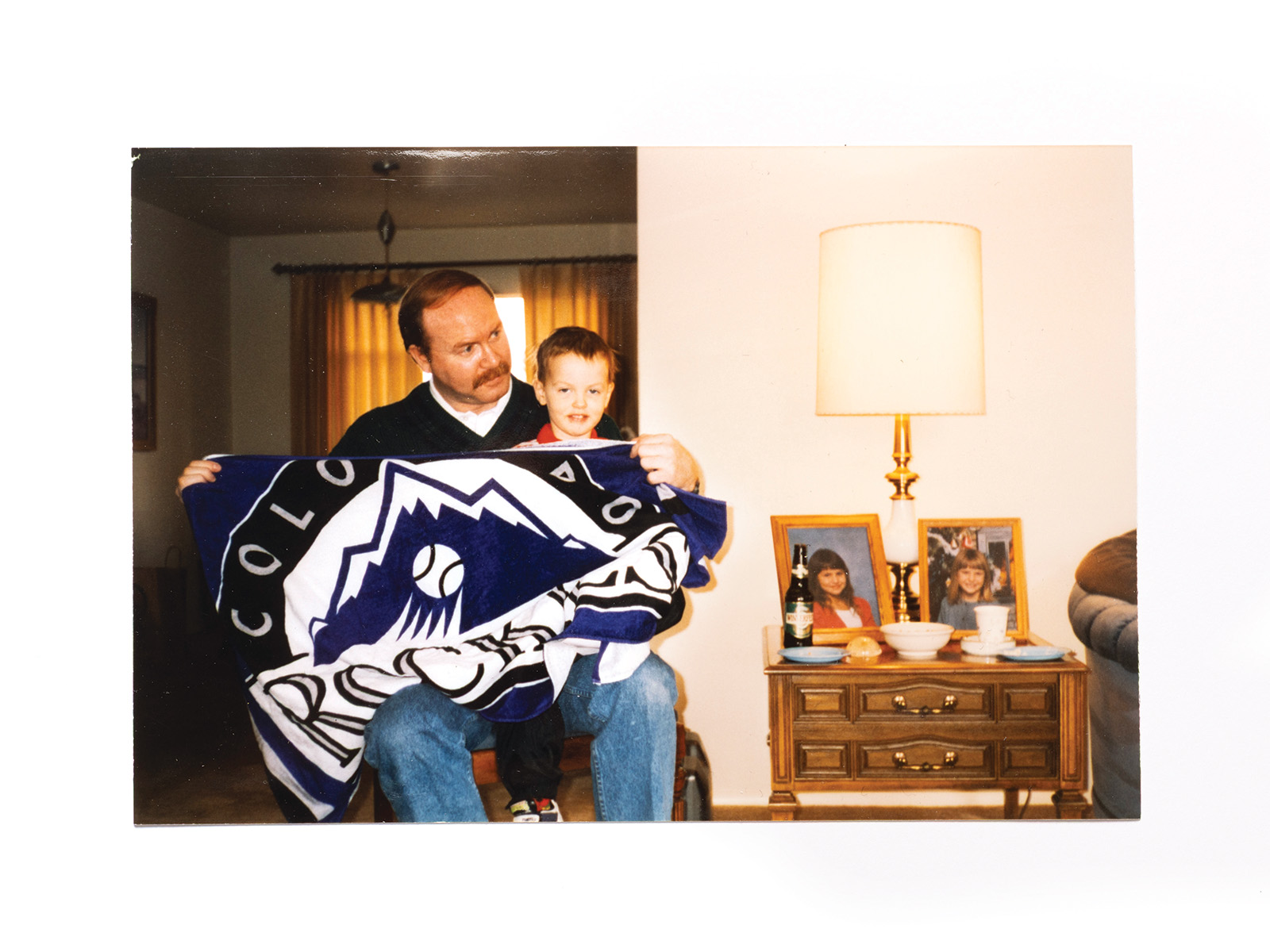
I love the Colorado Rockies. (Or at least, I used to.) I’m 34, two years older than my hometown team. My family was among the original season ticket holders, sharing eight seats with my dad’s buddies in section 127, down the first baseline. I’ve spent hundreds of afternoons at Coors Field, keeping score and wearing a rally cap as the sun set behind the left field wall. I mimicked outfielder Larry Walker’s batting stance in Little League. I will tell my children about a bloodied Nolan Arenado’s walk-off home run on Father’s Day 2017, the year after my own father passed away.
I know, I know. The team has never been perennially great—or even mediocre. The Rockies have had only nine winning records in more than three decades. But even the worst years never felt overly bleak. The Rockies always seemed to have a guy, or even a couple, that made following the team worthwhile—Todd Helton chasing a .400 batting average, Arenado stockpiling Gold Gloves. And they hit lots of home runs.

Since 2019, though, there hasn’t been much to cheer about. A relentless landslide of bad roster decisions (see: trading Arenado) has led to some of the worst baseball the league has ever seen. I’d give the front office a pass if the team was, in fact, rebuilding, but a new foundation is nowhere to be found. The Rockies continue to miss on high draft picks (pitchers Riley Pint and Ryan Rolison and first baseman Michael Toglia come to mind) and have failed to develop what few promising prospects they have (outfielders Zac Veen and Benny Montgomery seem incapable of escaping the minors).
The 103-loss season the team put together in 2023 was a new low. My family opted not to renew our season tickets for the following year. It was hard to give up something that meant so much to us—and to my dad—but it was clear Colorado wouldn’t be winning anytime soon. We would not support the franchise with our wallets.
Our protest had no effect on the Rockies’ utter ineptitude. In 2024, they lost another 101 games. So I decided to make the summer of 2025 as Rockies-free as possible.
I didn’t go to Coors Field. I didn’t watch the team on TV or listen to games on the radio. I didn’t check the box scores. I unfollowed DNVR Rockies, Blake Street Banter, and even the main team account on social media to limit the barrage of bad news.
The boycott turned out to be a good idea. The Rockies went 43-119, just two games better than the worst record in modern MLB history. The team’s first series victory didn’t come until June, more than two months into the season. It was shut out 18 times, breaking the previous franchise record of 16. The pitching staff logged a 5.99 ERA, the ninth-worst mark of all time, and the club recorded the worst run differential of any team since the early 1900s, giving up 424 more runs than it scored. At one point, the Washington Post called Colorado “monumentally, laughably, historically bad.” One modifier was not enough to describe the incompetence.
When news of the Rockies’ historic dysfunction pierced my firewall, I was not surprised. I knew they had essentially fielded a AAA roster to compete with divisional powerhouses in the Los Angeles Dodgers and San Diego Padres. And I’d already spent years ranting about the Monforts’ poor stewardship of the franchise to anyone who’d listen. The Rockies were atrocious, and I wasn’t sure if I cared.
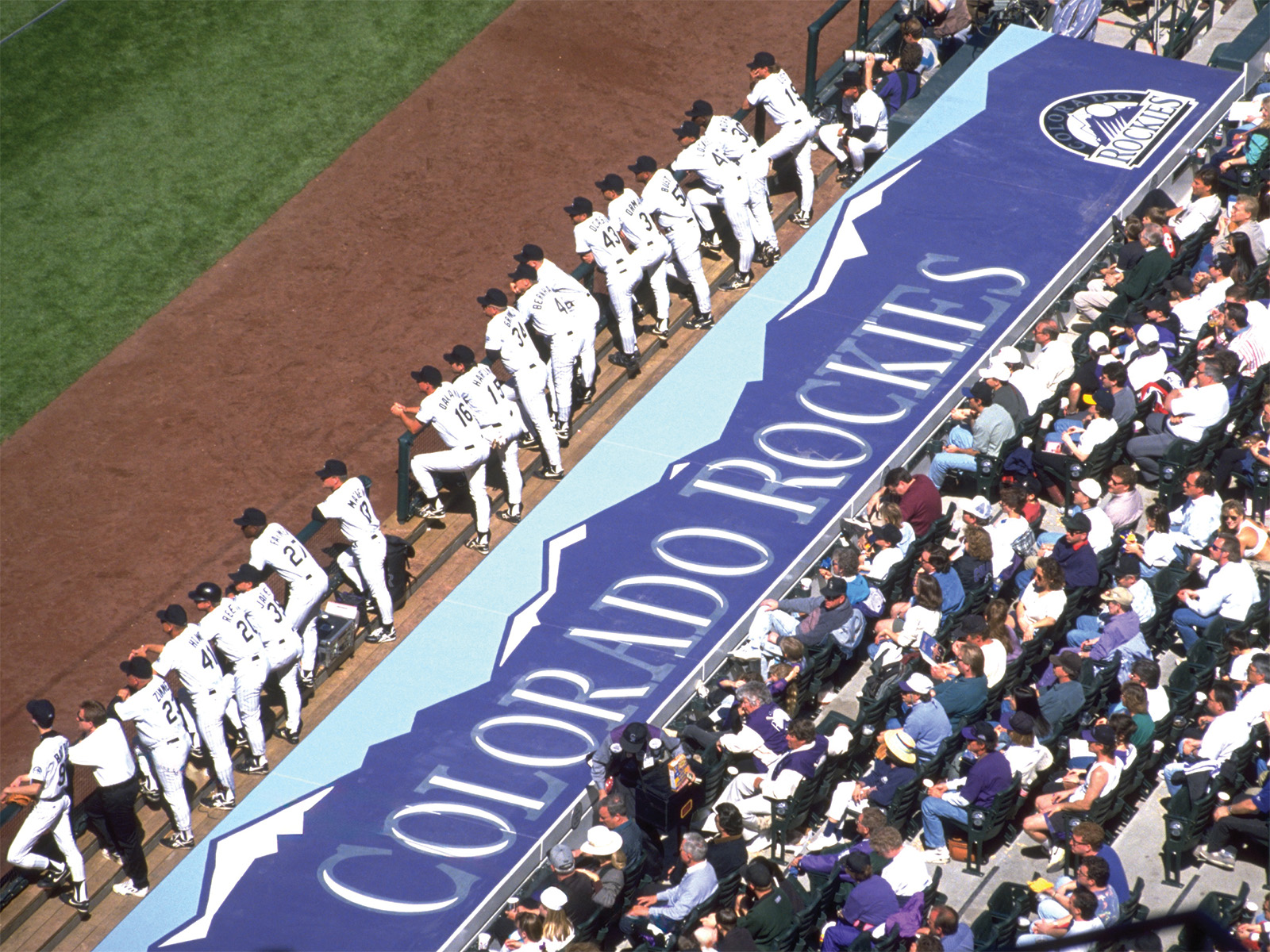
When the Rockies arrived in 1993, Denver was desperate for baseball. The team set the MLB single-season attendance record during its inaugural season, drawing nearly 4.5 million fans to the original Mile High Stadium, where a dirt diamond was etched into the north end zone while construction on Coors Field was underway. The demand was so great that team officials increased the capacity of Coors from 43,000 to 50,000 ahead of its official opening in the spring of 1995.
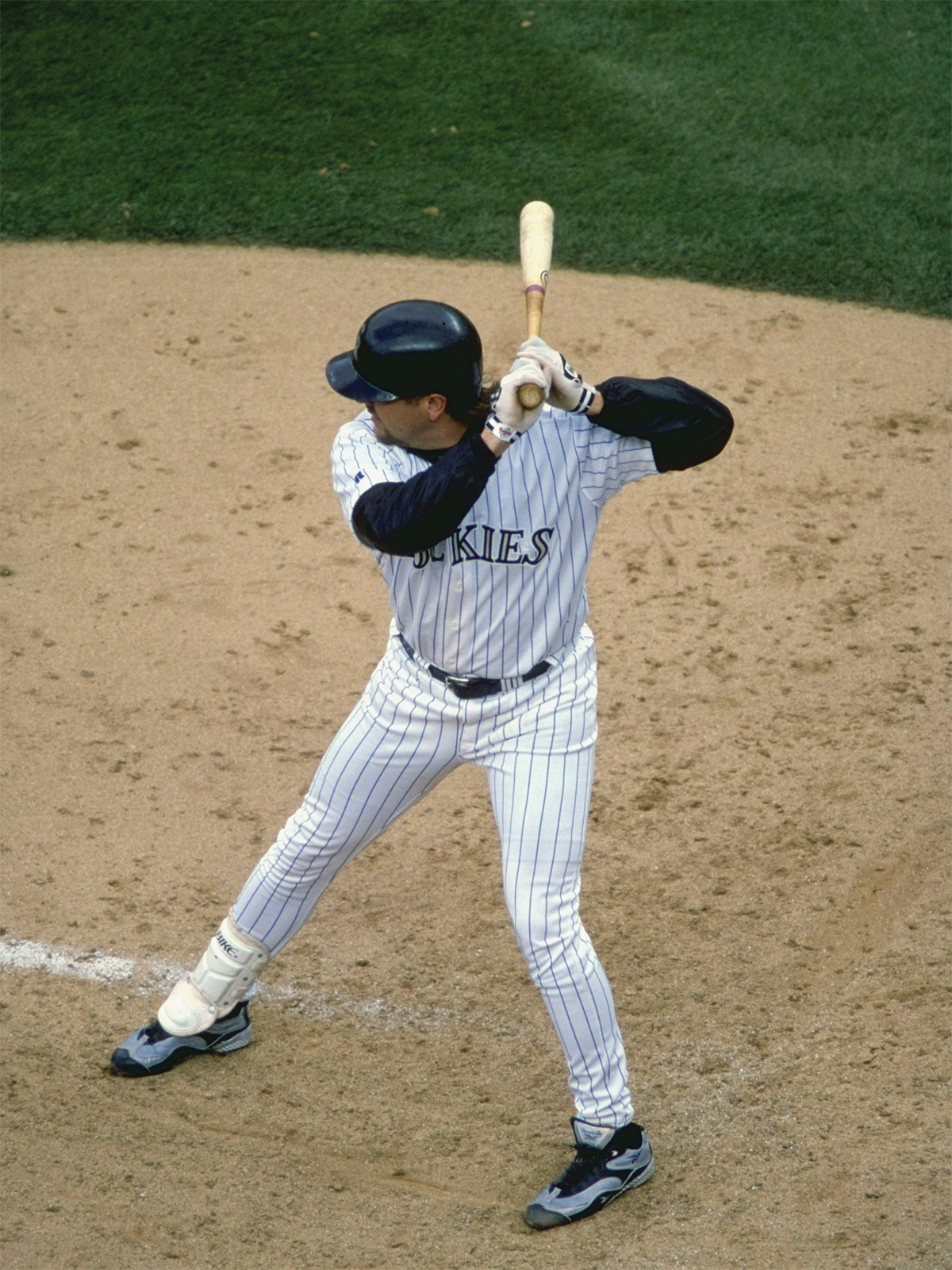
Success came quickly. The Rockies made the playoffs in 1995 behind a collection of home run hitters the city lovingly dubbed the Blake Street Bombers. There was Andrés Galarraga, the team’s first free-agent signing; Dante Bichette, the fiery, emotional heartbeat of the group; Vinny Castilla, the durable blue-collar third baseman; Ellis Burks, the veteran leader; and Larry Walker, the franchise’s first icon. The group fully leaned into its home-field advantage: Denver’s thin air, which allows a baseball to travel roughly 10 percent farther. The team led the National League in hits, runs, batting average, and slugging percentage that year. During the Rockies’ first six years at Coors Field, the ballpark produced three seasons that rank among the 10 highest combined home and away home run totals ever at a single stadium. The 303 long balls hit during the 1999 season still stand as the most ever.
During those early seasons, my father made sure to remind me how lucky we were to be able to go to Major League Baseball games in Denver. When he grew up here in the 1960s and ’70s, the city played host to a minor league team called the Denver Bears (later changed to the Zephyrs). He told my sisters and me that going to those games was fun but not as exciting as the Show, especially for a diehard baseball fan like himself. He’d lived in San Francisco during his 20s and spoke fondly about bundling up for Giants games at Candlestick Park. He always said that even on nights when the wind came howling off the bay, it was worth hanging around to watch baseball. The arrival of the Rockies was everything my dad ever wanted.
But while fog and inbound gusts helped turn Candlestick into a pitchers’ paradise, the thin air that gave rise to the Blake Street Bombers made it hard to build a winner at elevation. Not only does the ball travel farther in Denver, but it doesn’t break as much when spun from a pitcher’s hand. During the 1995 season alone, Rockies hurlers racked up a 6.17 home ERA, compared to a significantly lower 3.71 ERA on the road.
The offensive bonanza offered up by Coors Field led to some crazy outcomes. Just months after the stadium opened, the Chicago Cubs scored 26 runs in a single game. In May 1999, the Rockies and Cincinnati Reds combined for an MLB-record 81 total bases, including 10 home runs and 43 hits. The Reds won, 24-12. During those early years, my dad had a rule: We couldn’t leave early unless one team was up by more than five runs. Rally caps had real power, and abandoning the team could ruin a wild Rockies comeback. “Every game there is like a football game,” Hall of Fame pitcher Trevor Hoffman, who played for the San Diego Padres from 1993 to 2008, told ESPN. “The offense always has a chance. I cannot imagine playing 81 games a year like that.”
The carnage was real—and the question became whether the Rockies were going to do something about it. “The only person who tried to figure it out was Dan O’Dowd,” says Nick Groke, who covered the Rockies for the Denver Post and the Athletic. The franchise’s longest-serving general manager, from 1999 to 2014, O’Dowd came to the Rockies after spending more than a decade in the Cleveland Indians’ front office and was considered ahead of his time for his emphasis on analytics. (Sure enough, he’s now an analyst for MLB Network.)
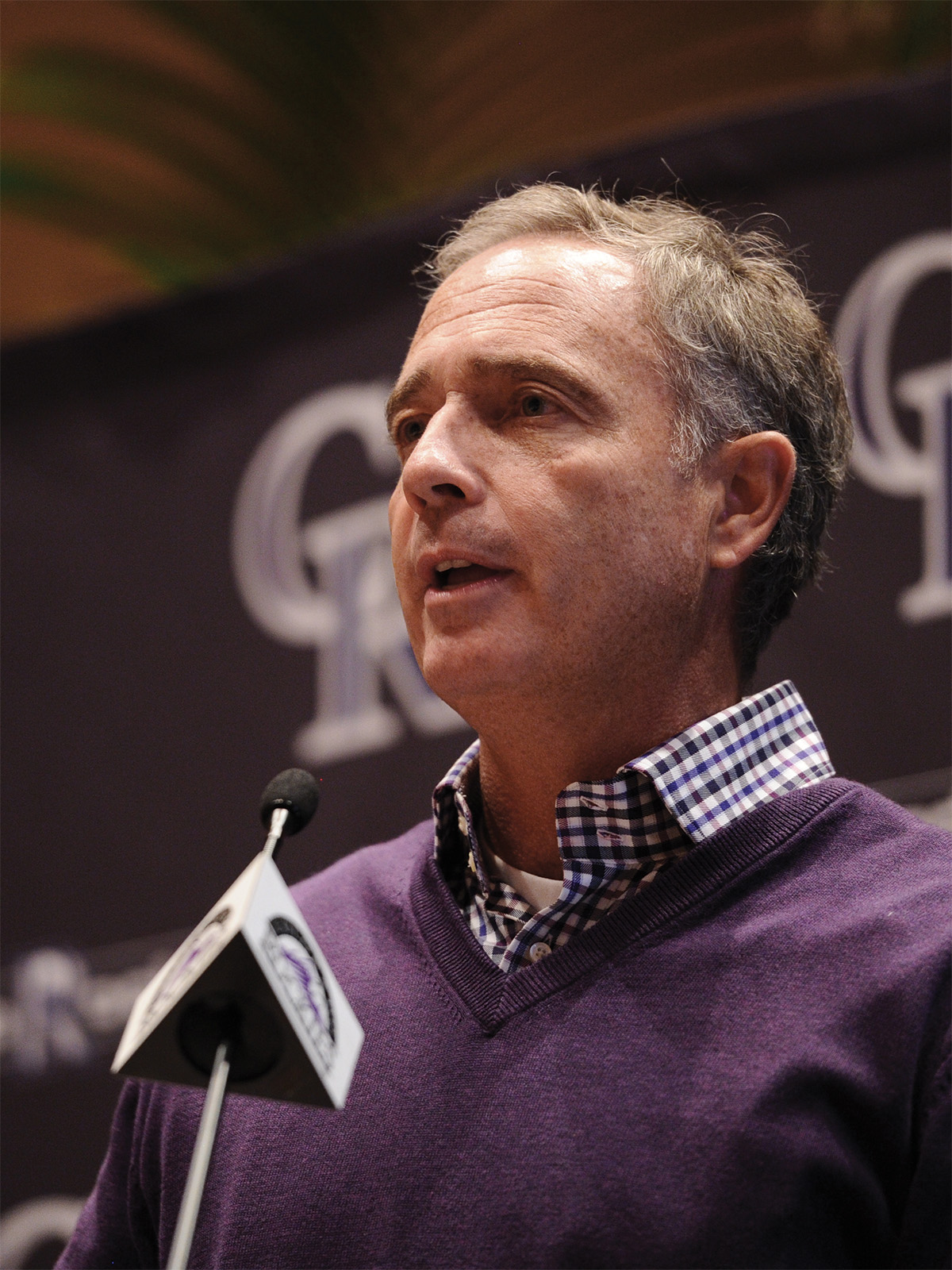
During O’Dowd’s first few seasons in charge, he prioritized signing sinker-ball pitchers, the idea being that grounders limited the effects of Denver’s thin air, which regularly turned routine fly balls into home runs. O’Dowd committed a combined $172 million to free agent pitchers Mike Hampton and Denny Neagle in 2000. (Hampton’s $121 million contract was the largest in MLB history when he signed it.) Both players finished their tenures in Denver with losing records and ERAs well above 5.00. Hampton was traded after two seasons, and Neagle’s contract was terminated in 2004 after he was arrested for solicitation of a prostitute.
In 2002, the Rockies became the first team to install a baseball humidor: a temperature- and humidity-controlled room where baseballs are stored to counteract the effects of elevation. During the following decade, average total runs scored per game at Coors Field dropped from 13.6 to 11.1. In 2022, MLB mandated the use of humidors across the league to help standardize the way balls behave at each stadium.
O’Dowd also became one of the first general managers to try a piggyback pitching rotation. The new approach, which he debuted in 2012, featured four starting pitchers (instead of the standard five) who would only throw about 75 pitches (the normal limit is around 100), along with three middle relief pitchers to supplement the shortened outings. The strategy aimed to offset the sluggish recovery and heightened physical toll caused by pitching at 5,280 feet. The pitching staff’s ERA dropped from 6.28 to 5.22 in the first month after the piggyback rotation was implemented.
Ultimately, though, it did little to prevent the Rockies from losing games. The team finished 64-98 that year, and O’Dowd later ditched the unusual strategy after players criticized the way it disrupted their routines. (Incidentally, multiple teams use a version of it today.) “He took a lot of grief, which in hindsight I think was unfair,” Groke says. “At least he tried something.”
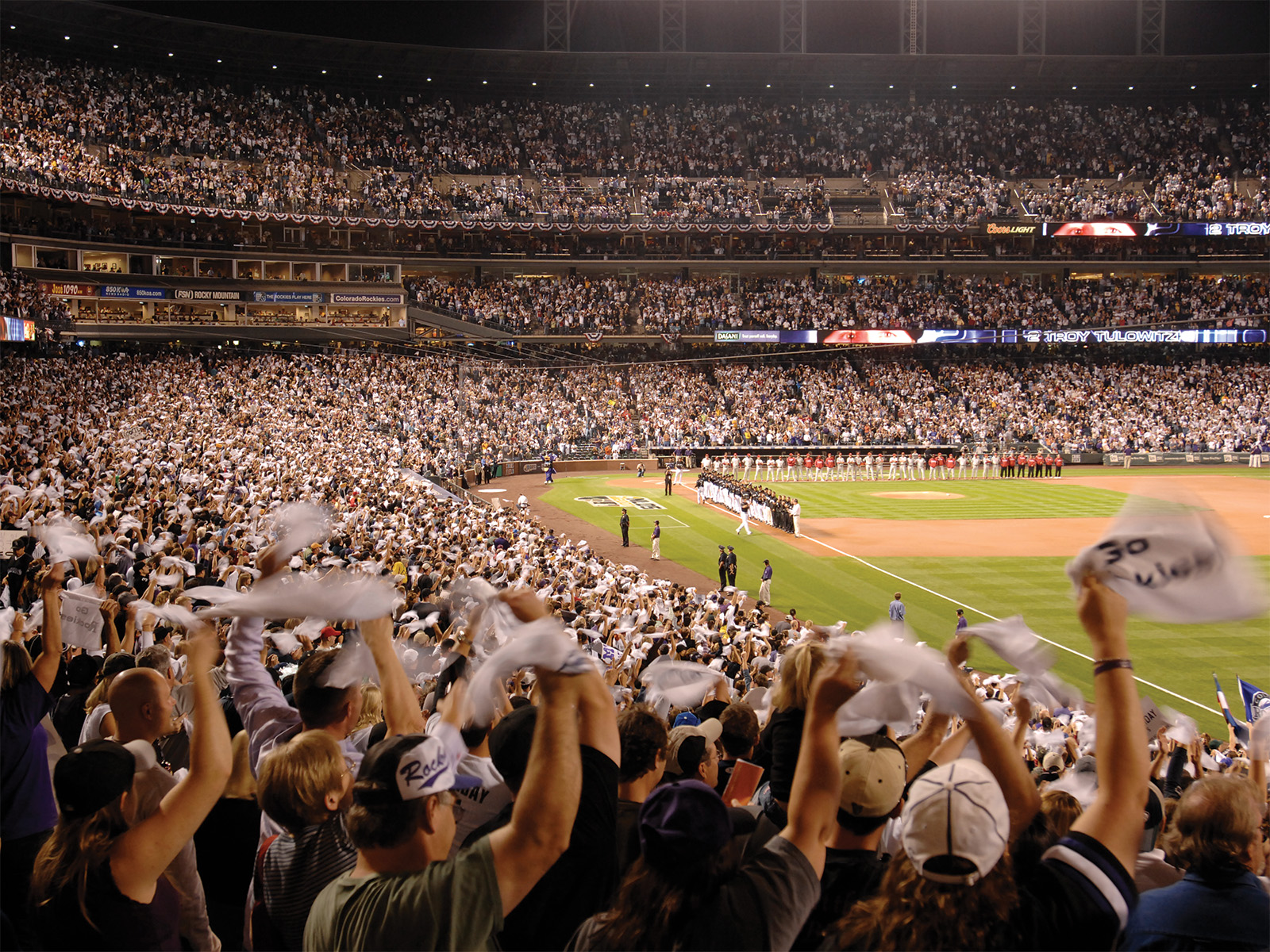
Amid the flops, the Rockies also made their deepest playoff run under O’Dowd’s supervision. In 2007, a group led by future Hall of Fame first baseman Helton, 22-year-old budding superstar Troy Tulowitzki, and MVP candidate Matt Holliday won 14 of its final 15 games to storm into the playoffs. In the final regular season game, a loser-goes-home tiebreaker against the Padres, the Rockies erased a two-run deficit in the 13th inning, sealing a postseason berth after a lumbering Holliday slid headfirst across home plate. The Rockies flooded out of the dugout, dogpiling Holliday, and Coors Field erupted into utter pandemonium. For the first time, an intoxicating idea crept into my mind: Was this the start of a championship run?
From September 15 to October 28, the Rockies went nearly undefeated. Fans packed Coors each night, turning downtown into a sea of purple. Colorado swept the Philadelphia Phillies in the NL Division Series and the Arizona Diamondbacks in the NL Championship Series. Until the magic ran out in the World Series, where the Boston Red Sox swept the Rockies, it felt like the team would never lose again.
The Rockies made another postseason run in 2009, but the team soon settled back into the familiar obscurity of the NL West basement. From 2010 to 2016, the club finished over .500 only once.
The Rockies’ futility in the early 2010s aligned with the longest stretch of time I spent living away from Denver. While in college out of state and starting my career, I would still tune in to the Rockies’ radio broadcast while studying or on train rides home. I remained obsessed with dissecting game notes and following reports about exciting new prospects. I called home to chat with my dad about Arenado’s defensive wizardry or how reliable closer Huston Street was. We were excited for a young core that included an electric outfielder in Charlie Blackmon and a burgeoning ace in Germán Márquez. It was easy to spot the outlines of a winning team.
My dad never got to see our optimism turn into on-field success. He died in 2016 after a long battle with cancer. When I moved back to Denver the following summer, I returned to Coors Field without him.
Despite the pang of not having him in the seat beside me, my timing couldn’t have been better, as the Rockies stitched together back-to-back playoff campaigns in 2017 and 2018. Those teams were led by MVP candidates Blackmon and Arenado, along with DJ LeMahieu, a gritty, high-IQ infielder, and starting pitchers Márquez and local kid Kyle Freeland, who’d graduated from Thomas Jefferson High School. I attended some 30 games each season in my family’s seats, dutifully joining 50,000 fans shouting “TONIIIIGHT!” when Blackmon stepped up to the dish as the Outfield’s “Your Love” blared through Coors. When Wade Davis struck out an incensed Bryce Harper to clinch Colorado’s postseason spot in 2018, I high-fived at least 50 strangers. Little did I know, that was as good as it would get.
Following the 2018 season, the Rockies let LeMahieu walk. The team’s spark plug, LeMahieu had won a batting title and three Gold Gloves during his time with Colorado. He was the Rockies’ metronome on those playoff teams, famously belting his first walk-off homer in a September tilt with the Arizona Diamondbacks that helped the 2018 squad keep pace with the Dodgers in the divisional race. “When we look at all the different things, not paying LeMahieu was the turning point,” says Christian Saez, who covers the Rockies for DNVR. “That set them down the path of dysfunction. They didn’t pay him, and they were pretty stubborn about it. I think the players saw that, and it led to a lot of frustration.”
In 2019, the Rockies started 3-12 and finished 20 games under .500—the first of a run of seven straight losing seasons. LeMahieu, meanwhile, was in the top five in MVP voting the next two seasons with the New York Yankees.
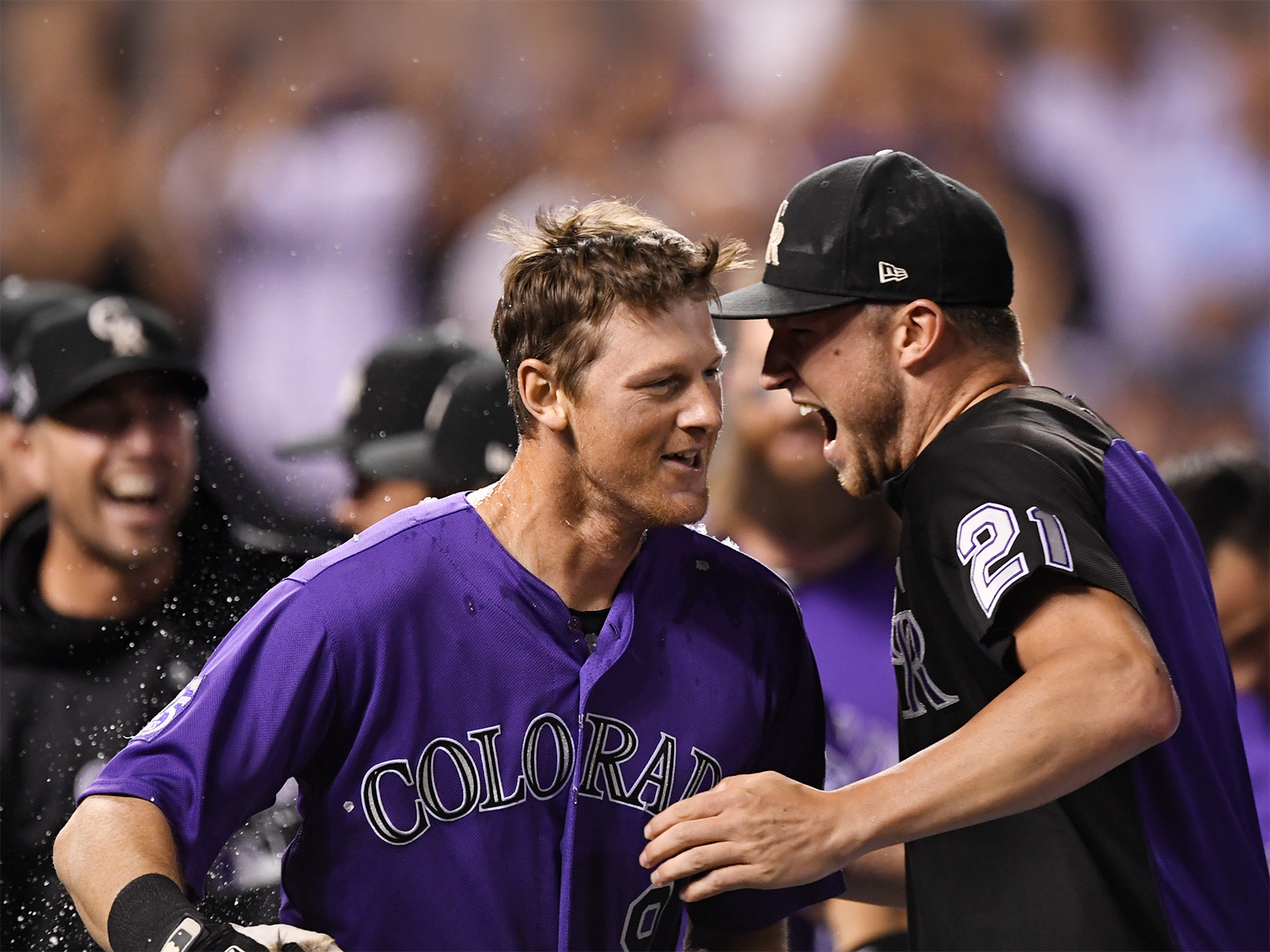
Even some of those directly involved in the decision to ditch LeMahieu say they have regrets about it now. “I don’t think you necessarily see the impact of the off-the-field stuff until you get further away from it and can really digest what the temperature of the team was following that change,” says Zack Rosenthal, who served as the Rockies’ assistant general manager for 11 seasons and vice president of baseball operations for four seasons before stepping down last fall. “DJ was a quiet guy but brought a real toughness and accountability that we missed when he left.”
The divide between the suits and the spikes came more clearly into view when Arenado, one of the best players in franchise history, openly expressed displeasure with the direction of the team in 2020 before requesting a trade ahead of the 2021 season. The star third baseman never fully explained his motivation for asking out. His on-the-record quotes on the subject were vague, but he was clearly frustrated with the Rockies’ leadership. “There’s a lot of disrespect from people there that I don’t want to be a part of,” he said at the time.
The Rockies ultimately traded Arenado to the St. Louis Cardinals for pitcher Austin Gomber and prospects, none of whom have come anywhere close to providing the value Arenado did. Even worse, the Rockies had to pay the Cardinals $51 million for the privilege to do so. At the time, Denver Post columnist Mark Kiszla likened the deal to throwing Arenado and $51 million in a dumpster and called it “the dumbest trade in Colorado sports history.”
For players inside the clubhouse, the trade only confirmed concerns that had been building for years. A former player who agreed to speak to me in exchange for anonymity said there were often times when he and his teammates wanted the front office to add needed pieces via trade. In 2018, many players felt the team had the opportunity to trade prospects for a player who could strengthen the lineup, including Marlins catcher J.T. Realmuto, an All Star and Silver Slugger that season. Miami flipped him to Philadelphia the following year.
That former player also said that one of the biggest differences between the Rockies and other teams he played for was a dearth of resources to help improve performance. He specifically cited technology and analytics as areas in which Colorado lagged.
Eno Sarris, who covers analytics and MLB for the Athletic, agrees with that assessment. As an example, he points to the team’s belated addition of a Trajekt pitching machine, which allows hitters to face video-simulated versions of real pitchers, in 2025. The system, which debuted in 2021, is especially beneficial for Rockies hitters because it can help them prepare for the contrast in how a baseball breaks (or doesn’t) at different elevations. “They are just getting to things that people have been doing for five to 10 years,” Sarris says.
Groke, the former Denver Post and Athletic beat writer, provided more stark evidence. In 2019, Blackmon changed his batting practice ahead of the first game of a road trip in an attempt to speed up his adjustment to how pitches moved at lower elevations. Instead of having a coach lob balls at him, he started using a three-rotor pitching machine that could duplicate the high spin rate and more dramatic break he would see during the game. Other players caught on, and the new method became commonplace. “This was a good thing that Charlie did. He was being proactive,” Groke says. “But in reality, he should not have had to do all that work by himself. He should have been focused on that game, that day. I think every other club in the league would’ve done that work for him.”
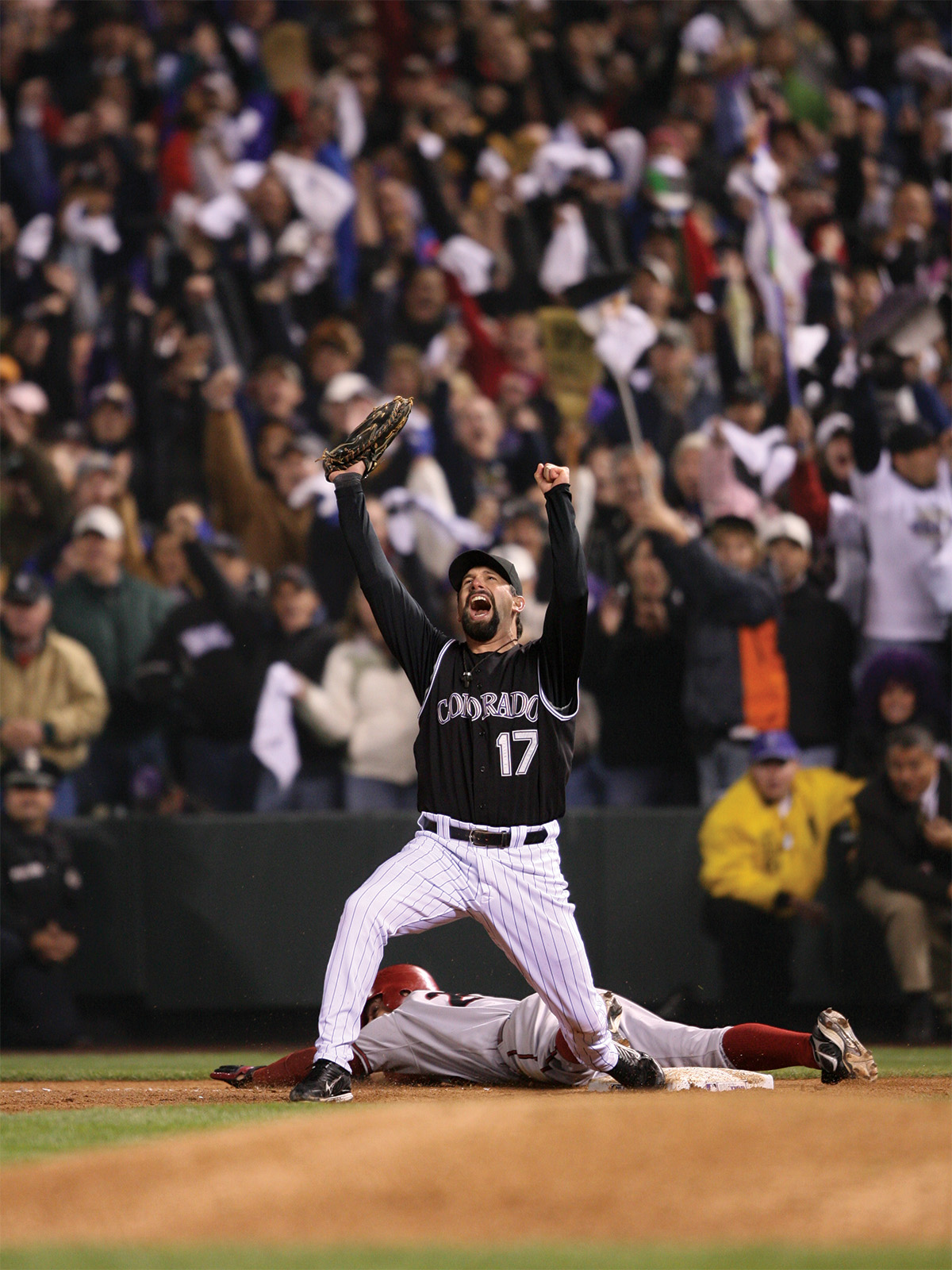
In February 2020, Dick Monfort, the majority owner and CEO of the Rockies, made a bold proclamation: The Rockies would win a franchise record 94 games during the coming season. The declaration was greeted with skepticism by both fans and pundits, as the team was set to return a mostly identical roster to the one that had won only 71 games and racked up a National League–worst 5.56 ERA the season prior.
The COVID-19 pandemic cut the season short, but the Rockies’ 26-34 record indicated they likely wouldn’t have fulfilled Monfort’s prophecy. His poor prognostication, though, was part of a disconcerting pattern for Rockies brass post-2018: They had a desperate desire to see a winning baseball team where none existed. Multiple times in the ensuing years, Monfort and general manager Bill Schmidt, the longtime head of Colorado’s scouting department before he was promoted to run baseball operations in 2021, claimed the Rockies were just about to turn it around, that the next season would go better than predicted.
I fell for some of it. In April 2020, I even wrote an article for this magazine positing that the addition of McGregor Square, a massive mixed-use development the Monforts built adjacent to Coors Field, might bolster the Rockies’ revenue and thus the team’s ability to assemble a winning roster. (Thank goodness the pandemic memory-holed that one.) As a fan, I ignored signs that the team was headed in the wrong direction and the ballooning disparity between midlevel spenders like Colorado (2020 payroll: $136 million) and fat cats like Los Angeles ($189 million). (In 2025, the Rockies’ payroll was $121 million; the Dodgers’ was nearly triple that, at $331 million.) I wanted to believe my favorite team could become a consistent winner.
There are a few ways to interpret the public displays of hopefulness by the Rockies’ leadership. The first is that they earnestly believed what they were selling. Walker Monfort, Dick’s eldest son and the team’s president, says it wasn’t ill-intentioned. “I think maybe we’ve been guilty of maintaining too high a level of optimism,” he says. “We’ve had higher expectations than what reality is.”
Groke, however, is more skeptical. “It was a con job,” he says. “They constantly rode this idea of hope. And I think it’s an actual grift perpetrated on fans.”
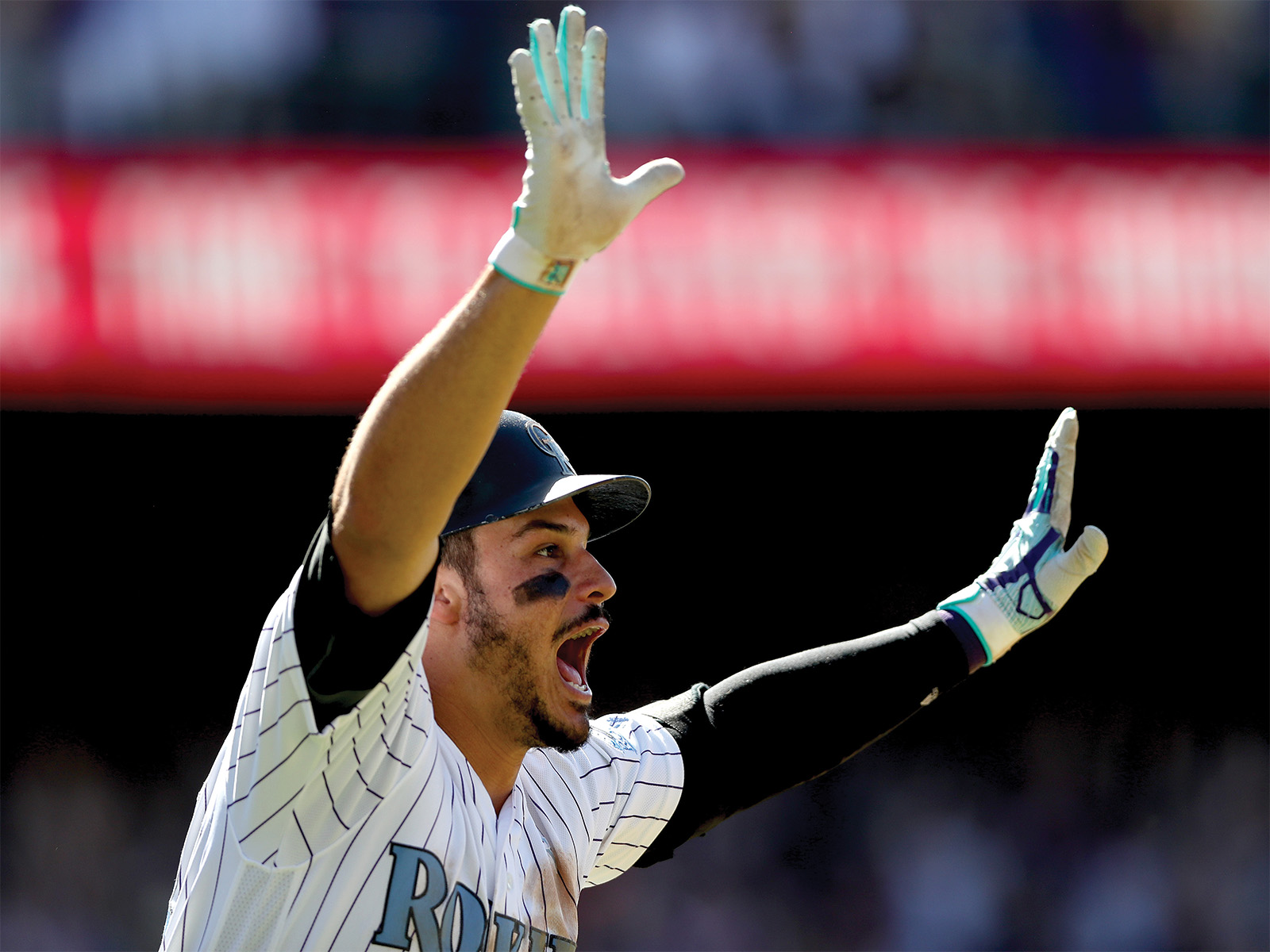
In March 2022, a year after claiming the team could not afford Arenado, Dick Monfort inked left fielder Kris Bryant to a seven-year, $182 million contract. “This is a great day for us,” Monfort said at the introductory press conference. “Just so many things make this feel really, really right. We’re extremely excited to have Kris with us for the next seven years and to help us win that elusive World Series that we are all looking for.”
Bryant has barely made an impact for the Rockies. The former National League MVP has only appeared in 170 games in four years, and a degenerative disc issue in his back has him doubtful for the coming season; he started spring training on the 60-day injured list. “[The signing] was brutal,” Sarris, the analyst for the Athletic, says. “It was so far out in front of what people were projecting that contract to be. There were already whispers about how long his body would hold up. It just showed that they may not have a good process going on.”
Saez, the DNVR reporter, says the Rockies’ poor decision-making was a product of stubbornness. The team’s inflexibility over the past few seasons was all-consuming, he says, from an unwillingness to try new approaches to playing at elevation to excessive loyalty to players like shortstop Trevor Story and pitcher Jon Gray when trades might have been in the team’s best interest. And then there’s the ownership’s unwavering commitments to people in the front office itself. “Dick Monfort ran the Rockies like a mom-and-pop coffeeshop,” Saez says. “Everyone stays the same, and you get promoted from within. In reality, no other MLB franchise operates like that.”
Former Rockies assistant general manager Rosenthal, who spent more than two decades with the team, says front office members have many regrets about the past few seasons, citing roster moves and years of unsuccessful drafts. “I look back now and see some of the things that probably on their own didn’t feel like they were massive,” he says, “but when you put them all together, they had a big impact.”
Rosenthal also says the Rockies’ front office was intentionally small. With only 11 or 12 staffers in its analytics department, it was one of the most modest in MLB, he says. “The way things have changed in terms of how much data is available and how much information is out there,” he says, “we could’ve used more people to help us work through that.”
Despite the slight staff, Rosenthal doesn’t think the group’s process was flawed. And he says top leadership would always listen to employees’ input. “The job of everyone in the baseball operations department is to execute the vision of the general manager and the owner,” he says. “ ‘Hey, this is the type of team we’re going to build. This is how I want to spend our money.’ That vision has to come from the top.”
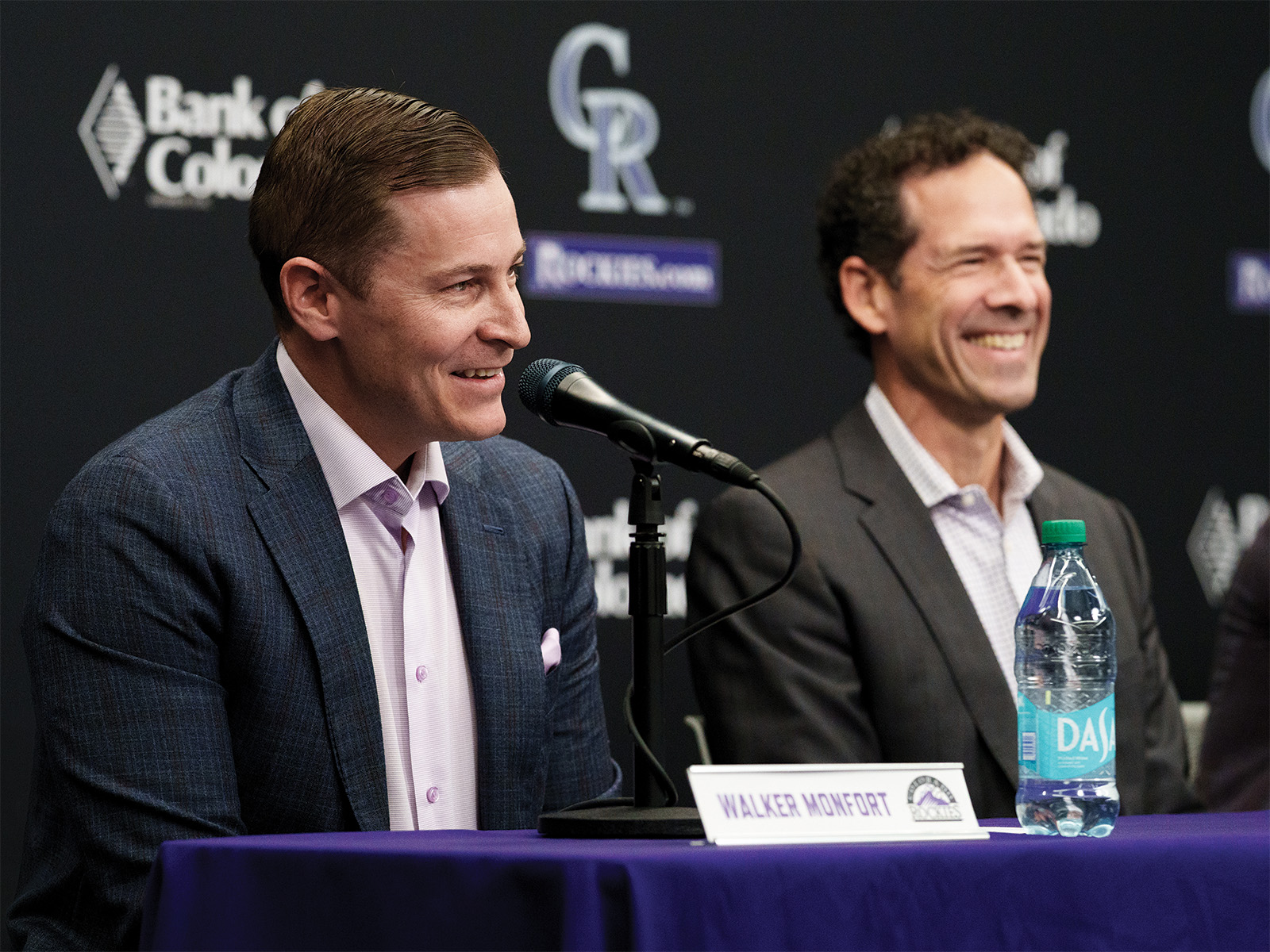
In early November, the Rockies held a press conference to introduce Paul DePodesta as the team’s new president of baseball operations. DePodesta and Walker Monfort fielded the majority of queries about the state of the team and its future. Dick Monfort was mostly a bystander. At one point, he even joked, “I think they’re sort of pushing me out—doesn’t it feel that way?”
Dick Monfort is still the chairman and CEO of the team. But two months after signing DePodesta, Walker assumed the role of president, a move that effectively makes him the key member of the family shaping the Rockies’ roster. Outsiders see that as smart. “Walker has a better understanding of what this organization needs,” Saez says. “He knows the Monforts don’t have all the answers, and they needed to hire some baseball people who do. If the Monforts allow DePodesta to do what he was hired to do, I think there is an opportunity to grow.”
DePodesta, general manager Billy Beane’s right-hand man on the famously overachieving Oakland A’s teams of the early 2000s (Jonah Hill played him in the film Moneyball), is often credited with rethinking how players are evaluated. He comes to Denver with no shortage of experience, including serving as assistant general manager of the A’s, executive vice president of the San Diego Padres, vice president of player development and amateur scouting for the New York Mets, and general manager of the Los Angeles Dodgers.
The Rockies have also added Josh Byrnes, former senior vice president of baseball operations with the Dodgers, as general manager, and Tommy Tanous and Ian Levin, both former Mets executives, as assistant general managers.
It’s an avalanche of change where there had been none in recent years. “We have made really impactful hires. These are people that have been with winning organizations throughout their careers,” Walker says. “What we are trying to do is take best practices from everyone else, and we are hopeful that over the short and long terms, we will find more success than we have in the past five years.”
There are reasons for skepticism. For all of DePodesta’s bona fides, he’s been out of baseball for a long time. He spent the past decade as chief strategy officer for the Cleveland Browns, which means one of the last significant draft picks he made was University of Colorado Boulder quarterback Shedeur Sanders. And there is a chance the Monforts will get in his way.
Still, the new-look front office has me feeling something I haven’t in a long time: optimism. And, if the Rockies are serious about fixing what they’ve spent years breaking, I think my dad would feel the same way. He’d probably want me to make my way back to 20th and Blake.