
The Local newsletter is your free, daily guide to life in Colorado. For locals, by locals.
If you had told classically trained pianist Anne-Marie Keane four years ago that today she would be sailing around the world, she wouldn’t have been surprised. In fact, she might have asked what took her so long.
The Vail-based composer and her husband of 34 years, John, had long fantasized about what it might be like to live life on the open ocean. “We first met sailing [back in 1988] and have always seen the opportunity of sailing around the world as an adventure of a lifetime,” says Anne-Marie.
But for decades, this dream remained just that: a dream. The couple raised four children, Anne-Marie led a high-performing team as a corporate executive, and the family moved to Vail so the kids could pursue ski racing.
But in 2019, the Keanes’ seafaring ambitions rose to the surface. Anne-Marie went back to school to earn a master’s degree in film scoring from Berklee College of Music, and John “learned and practiced all the skills necessary to captain a 60-foot sailboat. Both talents were put to use in December when the couple embarked on a 15-day crossing of the Atlantic Ocean and Anne-Marie simultaneously released her debut studio album, Layers of a Woman.
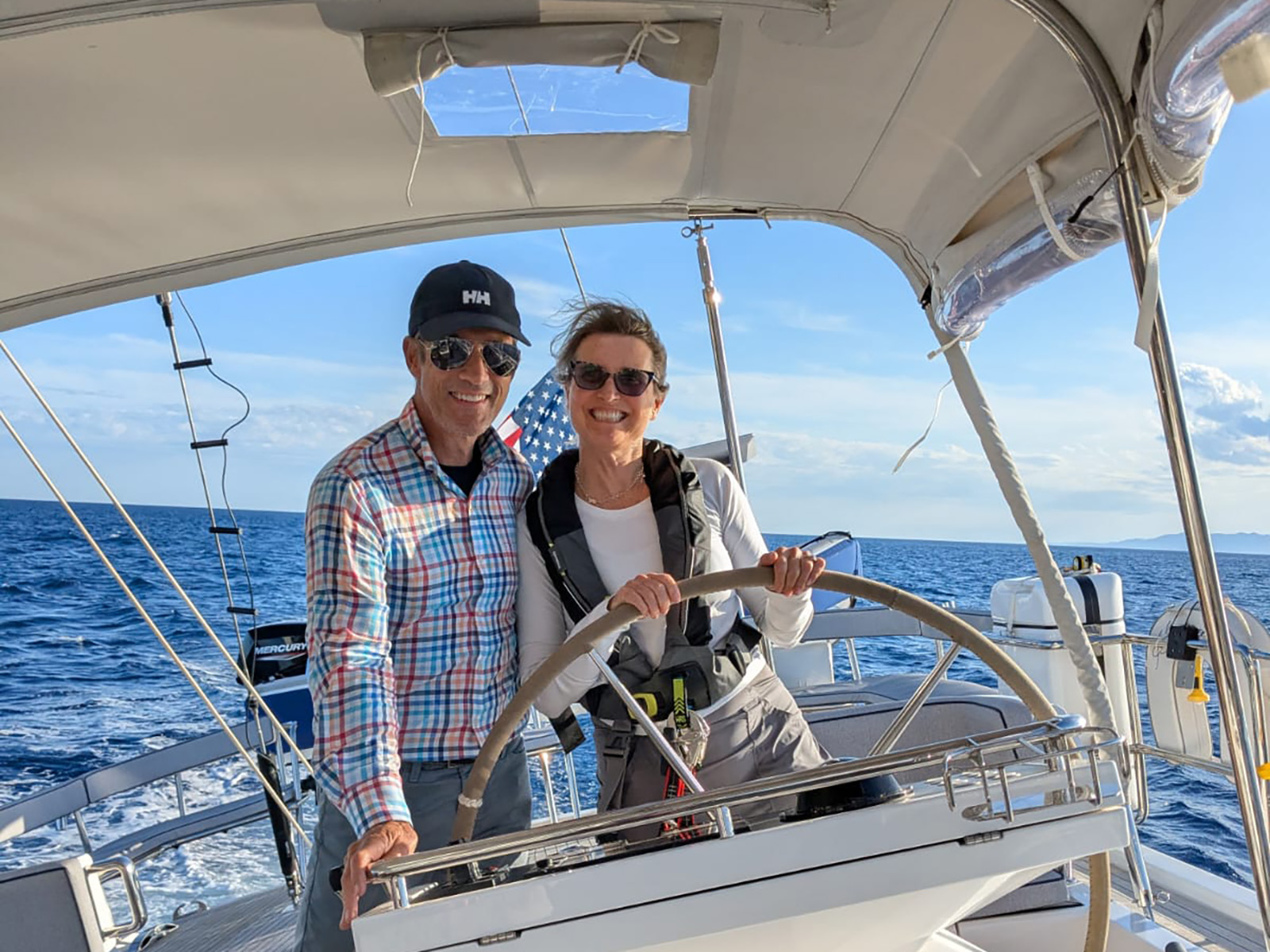
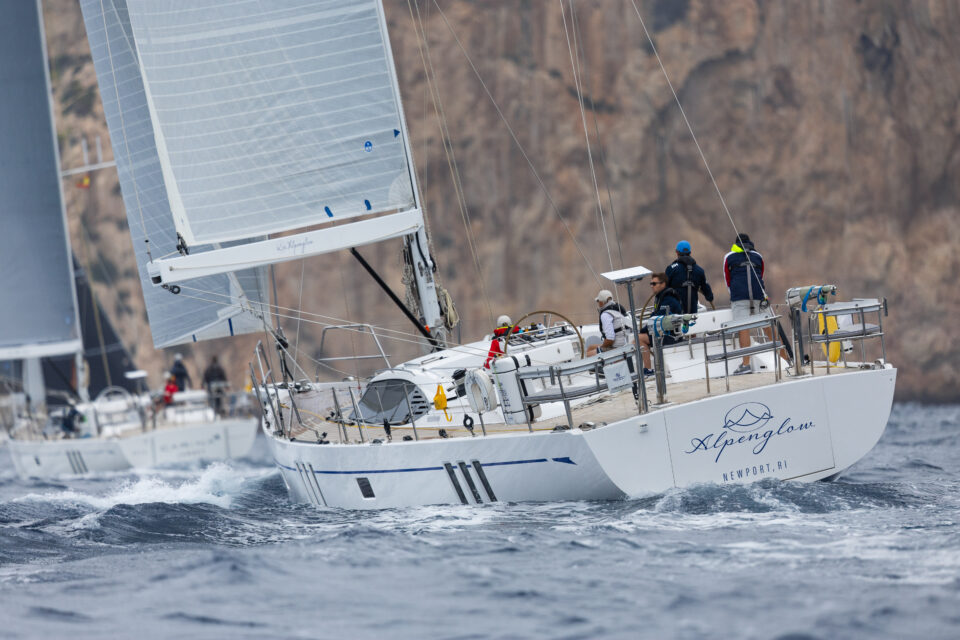
They made the voyage on a 60-foot solid bluewater sailboat, named Alpenglow. “She is beefier and heavier than a typical coastal cruising boat and comfortable to live in. She loves wind,” Keane relays to me from off the coast of Antigua, where she and the rest of the Alpenglow crew are currently resolving their sleep debts and reprovisioning after successfully navigating more than 3,500 miles from the Canary Islands to the Caribbean.
John captains the boat while Anne-Marie serves as the ship’s all-encompassing C-Suite, which she jokes, “includes chief tech officer, chief health officer, chief safety officer, social media specialist, and head chef.” The rest of the crew includes first-mate and engineer, Martijn, and Keane’s cousin and deckhand, Steve.
Crossing the Atlantic required the crew to adhere to a strict 24-hour watch schedule, during which they rotated deck duties, meal preparation, and repairs. In between all her responsibilities (and squeezing in a few hours of sleep), Anne-Marie would find time to cozy up inside Alpenglow’s general living area with her portable keyboard. She plugged the keyboard into her computer, alongside an external hard drive loaded with all her instrumental libraries, put on her headphones, and busied herself with finding the perfect sounds and arrangements.
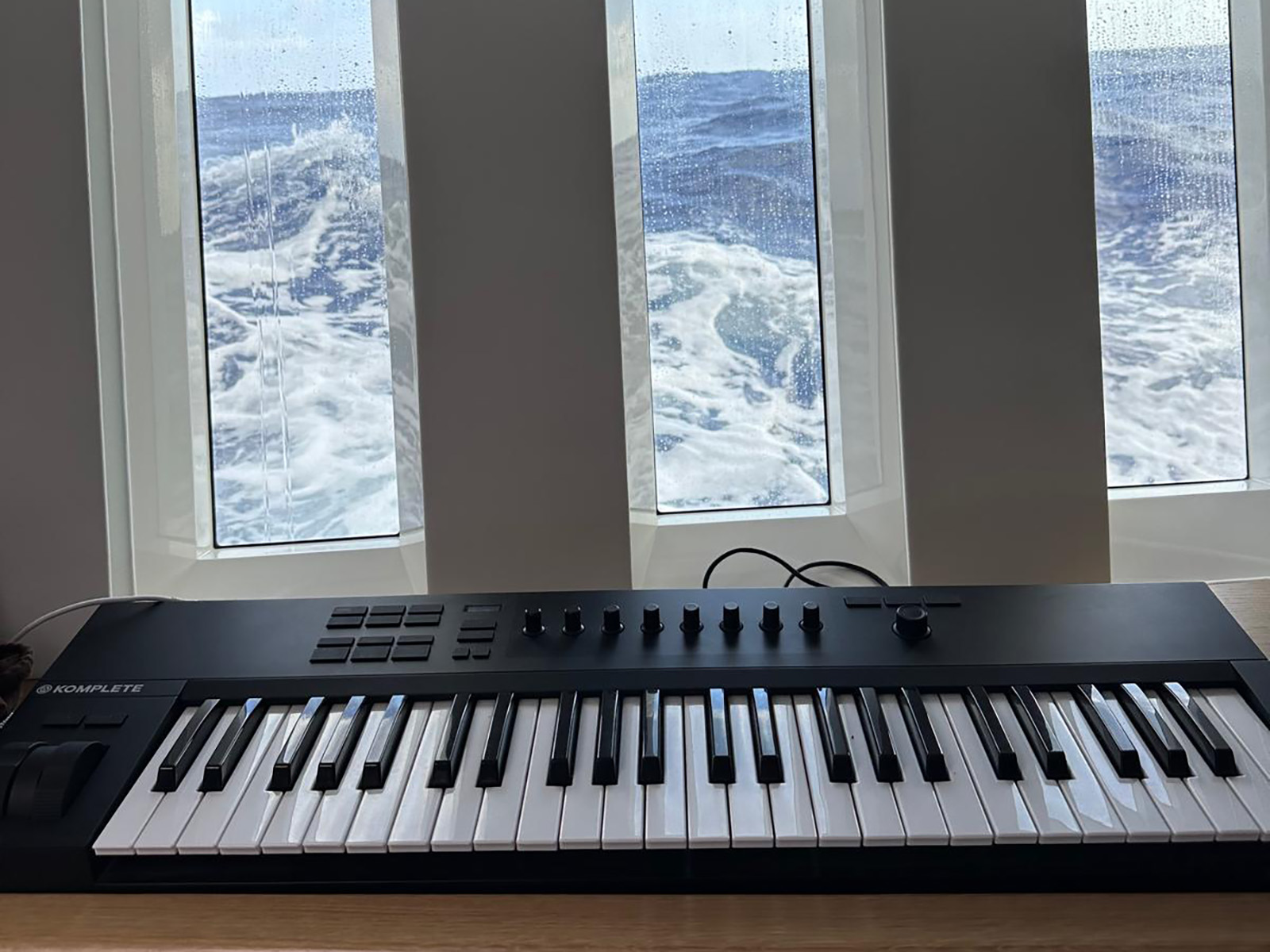
“I mostly like to work in the early morning or late at night when everyone is asleep,” she says. “I usually do my best work in short sessions with frequent breaks. It keeps my ears fresh and keeps me moving forward with my compositions. I sometimes become obsessed with finding just the right note or chord. But often it’s best to do something different, and then go back. Sometimes the right note just appears, and it solves itself.”
Most of the music Keane has written this year, including Layers of a Woman, has found her aboard Alpenglow. The ocean, one of nature’s greatest soundscapes, has become a trusted partner. “I am working on a piece right now inspired by our Atlantic passage. The sounds of the water swishing along the side of the boat, and the cadence of the waves got me humming various tunes into my phone. I plan to play with them over the next couple of weeks and develop a theme and variations that reflect the different conditions of our passage, sometimes smooth and flowing, and at other times rough and rocky.”
The Alpenglow crew will continue from Antigua to the Panama Canal, then to the Galápagos Islands, South Pacific, Australia, South Africa, and finally return to the Atlantic before reaching Brazil and completing their multiyear, global expedition.
Anne-Marie says she will always make music, though for the first time in a while, she doesn’t exactly know where that music will take her. “I know where I am traveling to on Alpenglow, but I have no idea how the music will capture and tell that story. It is an adventure of its own making, and I am aboard.”
Read More: A Beginner’s Guide to Sailing in Colorado
Editor’s note: The following conversation has been edited for length and clarity.
5280: Where are you right now? Are you anchored or sailing toward a specific landfall?
Anne-Marie Keane: We just arrived in Antigua. It took us 15 days to sail from the Canary Islands to St. Lucia. We stayed there for a couple of days to catch up on our sleep and reprovision the boat. Then we continued to Antigua, sailing nonstop for 24 hours. We had fabulous winds and great weather the whole way.
How does living aboard a sailboat compare to the romanticized ideal of sailing the world?
I love living on a sailboat. It is my perfect version of a tiny house, one with an ocean view that goes where I want to go. There is only room for the essentials. We like to say that every item on the boat has to “earn its passage.” After sailing across the Atlantic, we voted to keep the mandolin slicer and get rid of the barbecue.
The boat might be smaller than our house, but maintaining and repairing it is more challenging for us. If our toilet breaks, we have to figure out how to fix it or use a bucket; we can’t call a plumber in the middle of the sea. We can survive without a toilet, but losing a rudder or our engine is much more critical.
Tell me about Alpenglow. What’s she like?
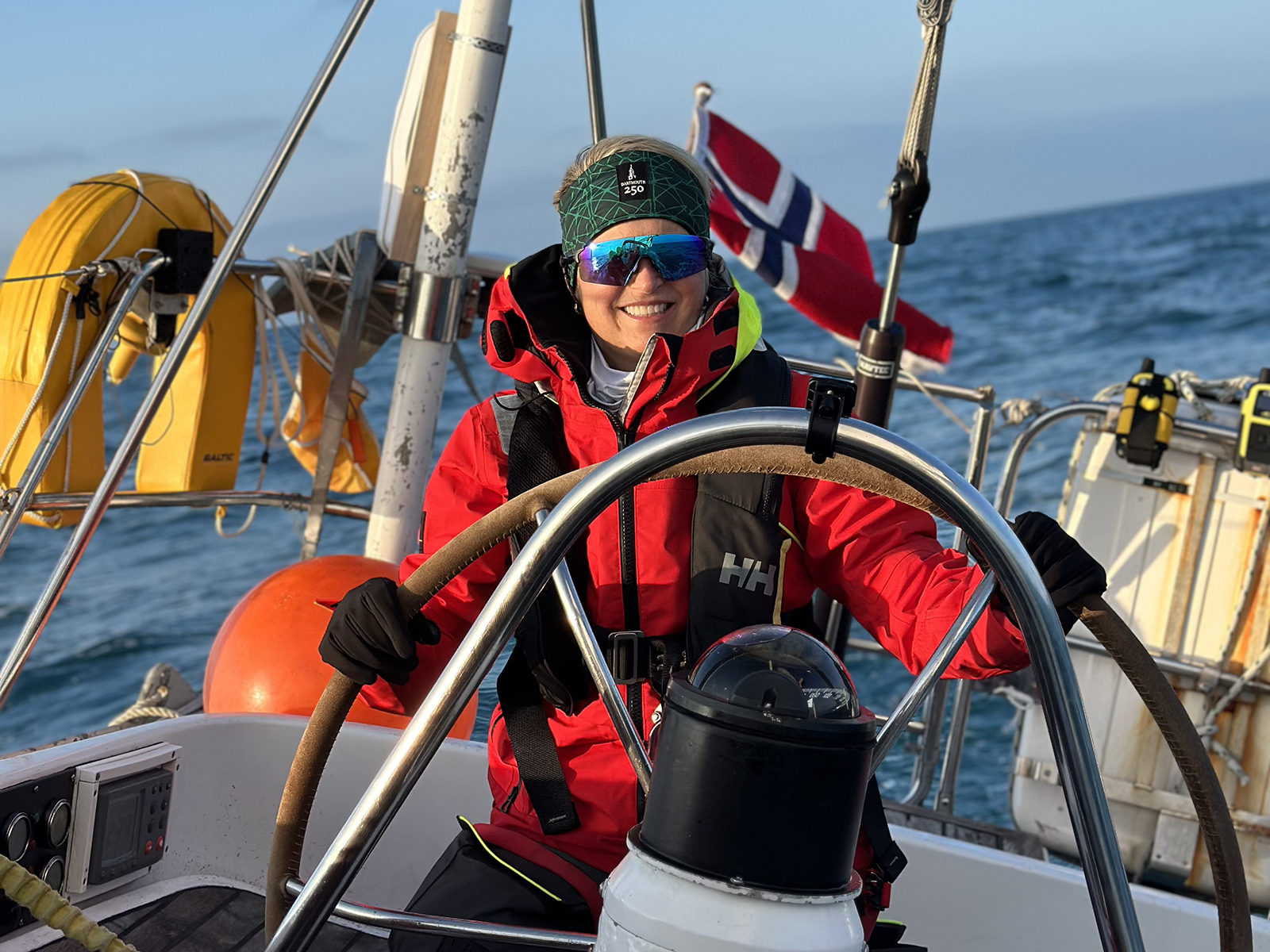
She plows through chop and waves, creating a much gentler ride than other boats I have sailed. I love helming her. She only needs a light touch and some gentle adjustments when the sail trim [positioning of the sails] is right. In addition, she has all the comforts of a small apartment under the deck. We have two heads [bathrooms], four cabins [bedrooms], and a living room and dining area in the center of the boat for meals and work.
In our galley [kitchen], we have an induction stove with four burners over a single large oven, as well as a microwave, refrigerator, freezer, and luxury items such as a dishwasher, washer, and dryer. Fortunately, the galley is small enough for me to brace myself between the counters when I am preparing a meal while the boat is heeled over. It helps that the stove is mounted on a gimbal to keep it level while the boat is in motion, so liquids don’t spill.
How did your Atlantic crossing go?
The most daunting moment was on the last night of the crossing. The wind was gusty and very shifty as the squalls around us impacted the prevailing wind. I finished a four-hour watch at 3 a.m. When my cousin came on deck, the wind was starting to build again, and I could see a squall forming behind us on the radar. We had no idea whether the rain and wind would hit us or how much. I told my cousin to put on some raingear, and I did the same. We braced for the squall to hit.
Not only did it last 45 minutes, but we also achieved some of the best speeds of the day, 9 to 9.4 knots per hour, which is fast for this boat. I was so excited that we had weathered the storm and were that much closer to our final destination.
How has this experience challenged or expanded your creative vision?
One of the things I observed during our Atlantic crossing is how the ocean landscape changes. People think one has the same view of the sky and water day after day when you sail across the ocean. It was not like that. Every day was different. The sky around us changed by the hour with clouds appearing and disappearing, and some turning into rain squalls. Every day, the sun rose and set, but each time was different because the various cloud formations were lit with different colors and intensities. Each night, the moon rose at a different time, grew until it became a supermoon, and then waned. Even the stars shifted their location in the night sky as we headed further south toward the equator.
Seeing how a single landscape could change so dramatically day after day inspired me to think about how my music can have the same elements but sound different. There are an infinite number of combinations of instruments, sounds, rhythms, scales, harmonies, and melodies. I will never run out of music to write. I plan to keep exploring the sonic world, discovering new sounds, and combining them in new ways.
Does the ocean force you to listen differently?
Composing music is a solitary endeavor. I live in my own head and block out the rest of the world when I am scoring a film or writing for an orchestra. It is similar when I am on watch on Alpenglow. I am alone with the sounds of the boat and the sea, feeling the wind on my face and neck, listening to the sound the boat makes as it moves through the water. It is usually a pleasant hum, so when there is a sharp sound, like the snap of a line, a pop of a sail, or any unusual sound inside or outside of the boat, I snap to alert. Using one’s ears is critical for identifying anything that might not be normal and would put Alpenglow and our lives at risk.
How have the landscapes of Colorado influenced your artistry?
My husband and I actually chose to move to Vail 16 years ago so our four kids could pursue ski racing. This decision reshaped our lives in ways I never could have imagined. Living in the mountains was initially about supporting our children’s dreams, but over time, the landscape and lifestyle began to shape me as well. My home studio has a beautiful view of the mountains and the surrounding landscape. That view makes me feel free and constantly inspired.
Tell me about Layers of a Woman.
The story started as a ballet collaboration with Ursula Verduzco. She wanted to tell a very personal story about her journey of self-discovery. Together, we created a four-movement ballet that culminates in an intense finale featuring her singing voice. I wanted to continue the story beyond the ballet, so I added two more pieces to expand the narrative: Forgiving and the title track, Layers of a Woman. Each of us has a story to tell about our lives, and by weaving together Ursula’s story and my own, I was able to create a more complex, multidimensional narrative.
Why’d you choose to collaborate with Ensemble Mycelium on the album?
Writing for a small ensemble is more challenging than for a full orchestra because I need to make every note count. With only three musicians, there are no extra notes. Once I learned that Ensemble Mycelium was an all-women’s trio, I knew they would be a good fit for this project. They completed the community that Ursula and I started, bringing an instinctive understanding as mothers, lovers, and creative artists. The emotions they expressed in the music were familiar and present in their lives. There are not too many trios written for piano, cello, and viola. I particularly liked the darker sound of the viola over the brighter sound of the violin for this album.
Is there anything else you want readers to know about Layers of a Woman?
Layers of a Woman grew out of my work on the ballet Untamed Woman, in collaboration with AVID Dance and choreographer Ursula Verduzco. Each piece reflects a different facet of womanhood, and translating those experiences into music has been incredibly rewarding. Our sailing expedition is reshaping how I create, expanding how I use sound to tell a story as it is unfolding.