
The Local newsletter is your free, daily guide to life in Colorado. For locals, by locals.
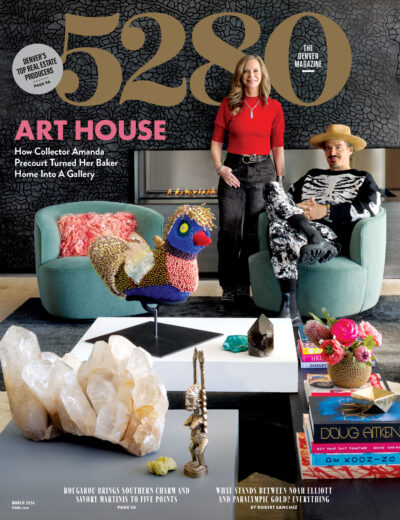
Filling a home’s walls and shelves with art is often the final step in the interior design process. But for her new-build home in Baker, local real estate developer Amanda Precourt started with her contemporary art collection.
Perched on top of Cookie Factory—Precourt’s nearly year-old gallery space that once housed a fortune cookie factory—the 7,865-square-foot residence was designed to display more than 100 sculptures, paintings, and mixed-media pieces. “Art elicits a mood, a response, an emotion,” Precourt says. “So the different rooms have different feels and colors based on the art pieces within them.”
Throughout her life, the 52-year-old Denver native has turned to art in times of mental distress. “I started drawing and painting as a young girl to moderate my anxiety,” says Precourt, who was later diagnosed with generalized anxiety disorder. “It wasn’t something I did consciously at first. When I felt anxious, I’d just doodle and draw.”
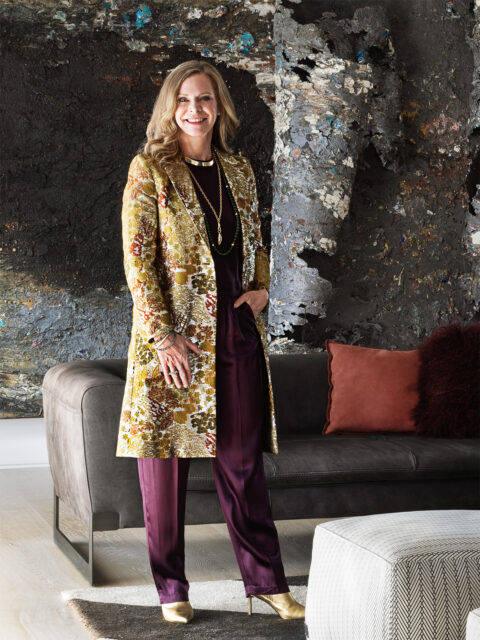
As a teen, Precourt found relief perusing the halls of the Denver Art Museum, where she worked as an intern throughout her East High School years, before going to college at Stanford University. (She now serves on the museum’s board of trustees and chairs its collections committee; in 2017, she donated $4 million to underwrite the construction of the Amanda J. Precourt Galleries, which houses the museum’s Architecture and Design collection inside the Martin Building.)
In her late 30s, Precourt checked into an inpatient psychiatric clinic for 15 weeks after attempting to throw herself out of a moving vehicle on I-70. “I had some shame and embarrassment around it,” says Precourt, who eventually helped co-found the Precourt Healing Center, an inpatient behavioral health facility in Edwards, with her late father, local businessman and philanthropist Jay Precourt. “When I got out of treatment, I started collecting art for myself because it gave me an outlet to get out of the depression. I poured my heart into it.”
She started small, picking up works by regional visual artists such as Quang Ho and Stephen Batura. In 2016, Precourt began working with her longtime friend Kimberly Gould—the late founder and president of Florida-based Gould Art Advisory—to expand her collection, starting with a beaded punching bag by Indigenous artist Jeffrey Gibson. Around that time, she stumbled upon the defunct cookie factory.
“As a developer, finding old cool buildings that you can repurpose is a dream come true. I was like, This has to be something art-related,” Precourt says. “I just had this switch in my head where I was like, The space needs to be a gift to Denver.” She worked with Matt Davis of Davis Urban, local architect Aaron Gray, and Matthew Pierce and Daniel Martell of Character Built on the twofold project: renovating the existing 1940s warehouse into a free and open-to-the-public art center and building a new second-level private residence. There, her private art collection—filled with personal pieces that touch on themes of emotional struggle—work in dialogue with the structure designed just for them.
Take a Tour of Art Collector Amanda Precourt’s Home
Exterior
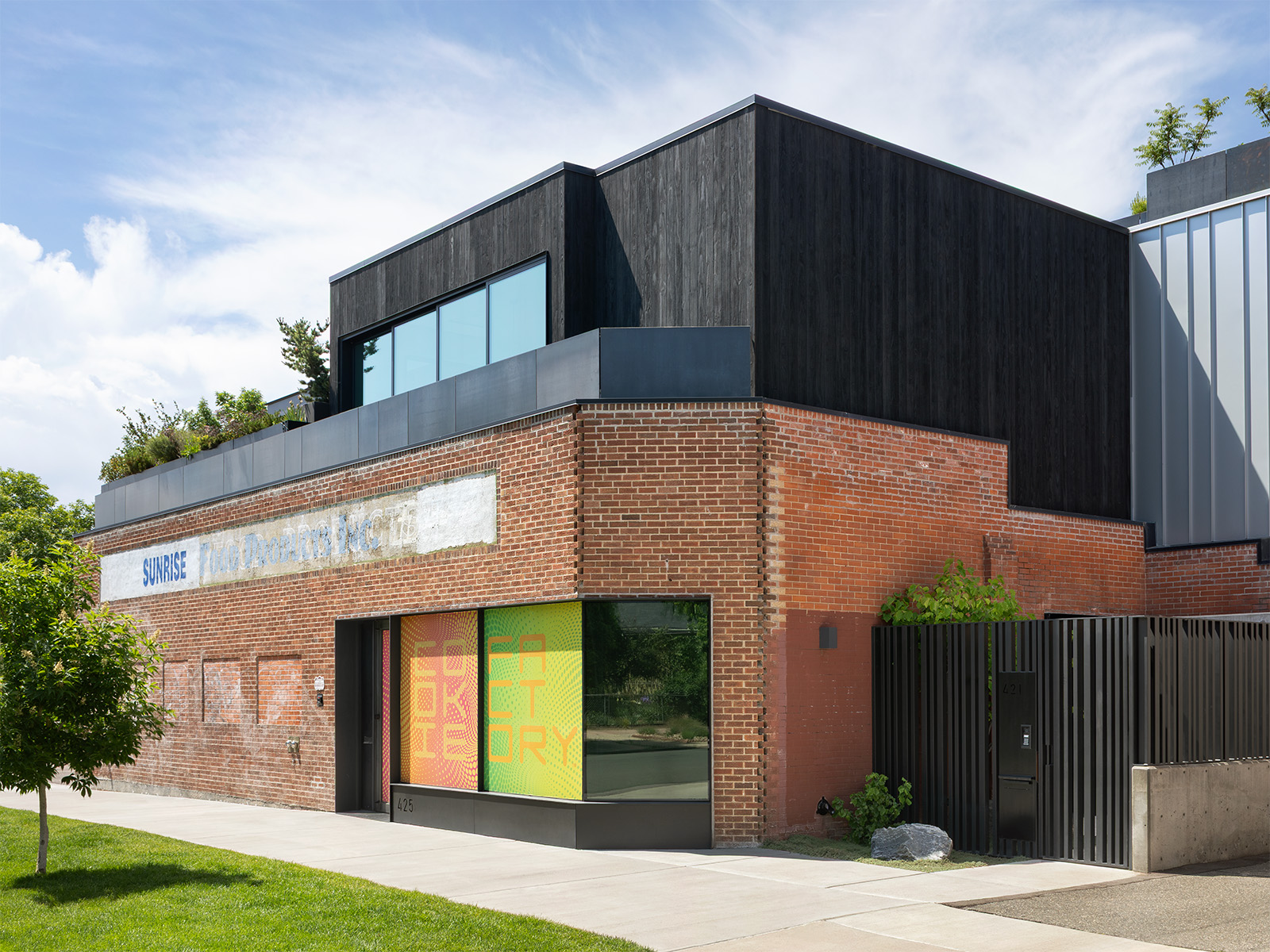
Old meets new on the mixed-use facade, where a worn, red-brick exterior adorned with a faded Sunrise Food Products Inc. sign intersects with the boxy, steel-clad residence above. The original building’s walls were too weak to support the weight of the new second story, so Davis Urban Architects floated the residence on top of the old structure using stilts.
Entry
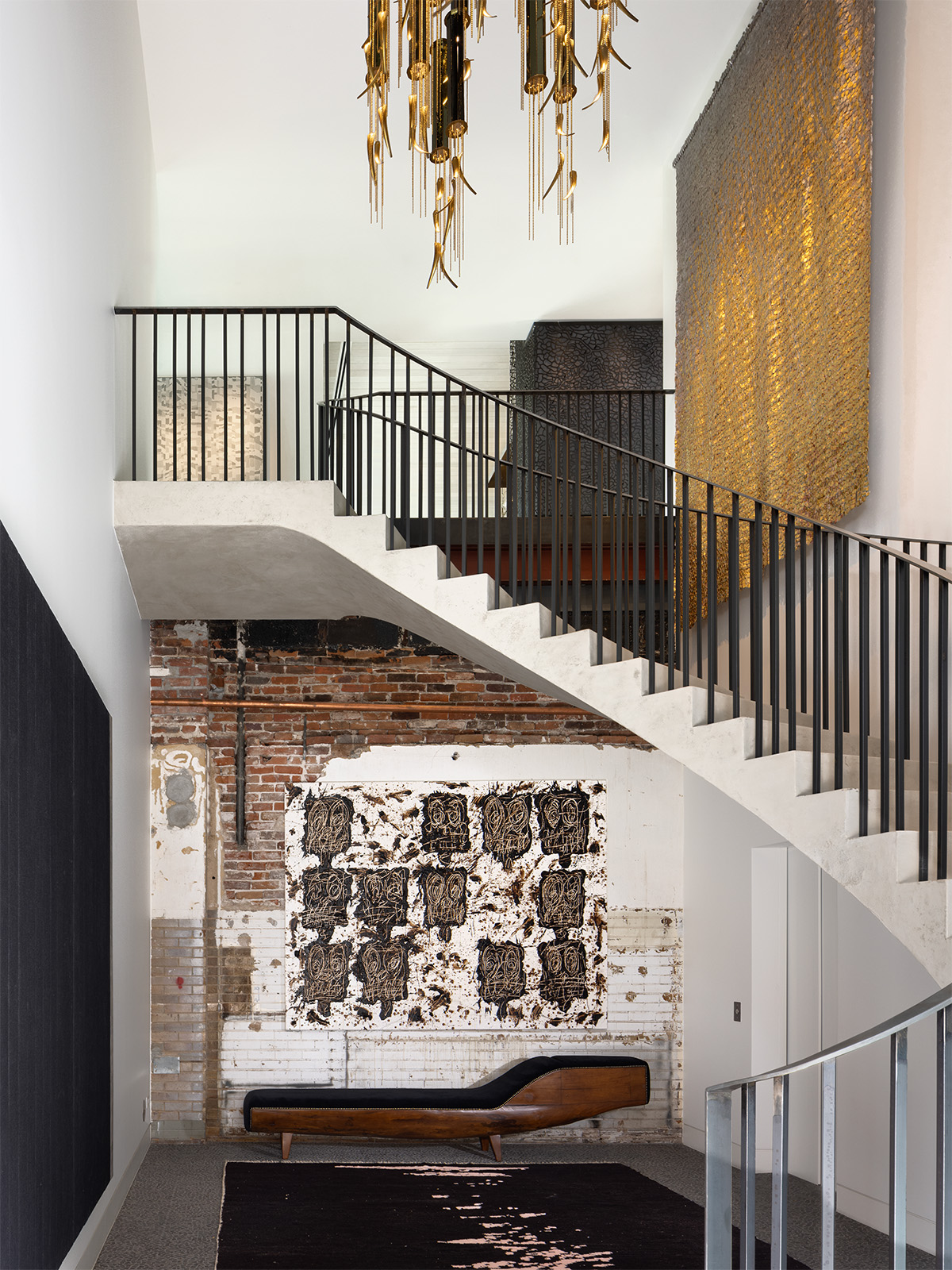
On the ground floor, New York–based artist Rashid Johnson’s “Untitled Anxious Audience” features similar tones and textures as the exposed brick wall—salvaged from the original cookie factory—it hangs upon. “Johnson’s art really depicts his own challenges with depression, anxiety, substance abuse, et cetera,” Precourt says. A nine-foot-long chandelier designed by British sculptor Sam Orlando Miller crowns the space, emitting a golden glow that’s amplified by Olga de Amaral’s gold-leaf textile piece draped over an adjacent wall.
Living Room
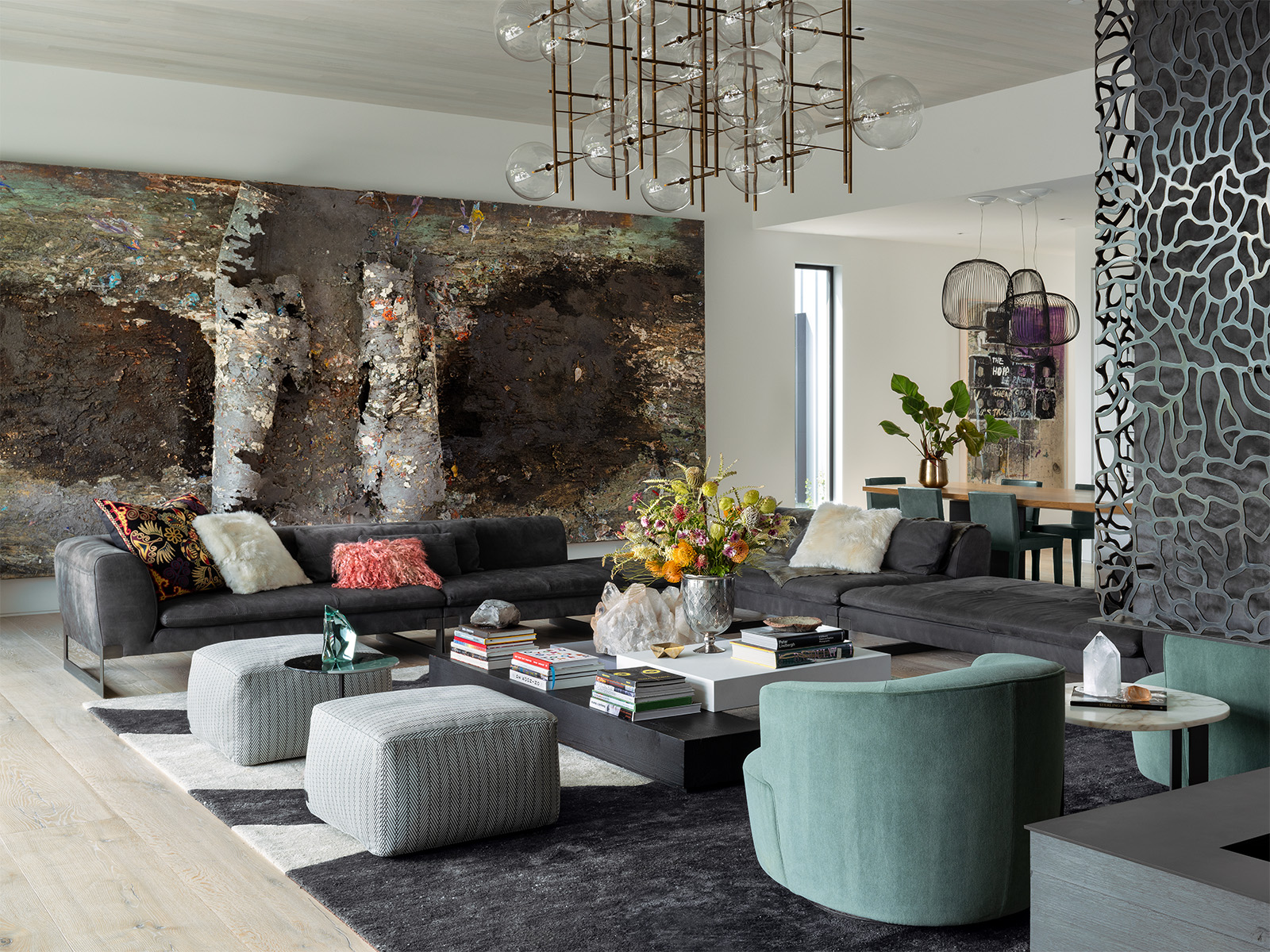
The western wall was structurally engineered to support a 2,700-pound, 22-foot-wide artwork by German artist Anselm Kiefer. Unhappy with an oil painting of a field of flowers, Kiefer spread molten lead over the piece, causing layers of paint and canvas to curl backward. “It looks like a phoenix rising from the ashes,” Precourt says. On the opposite side of the room, a floor-to-ceiling fireplace wall made of Venetian plaster is layered with a watercut-steel lattice Precourt collaborated on with local metal artist Jodie Roth Cooper.
Dining Room
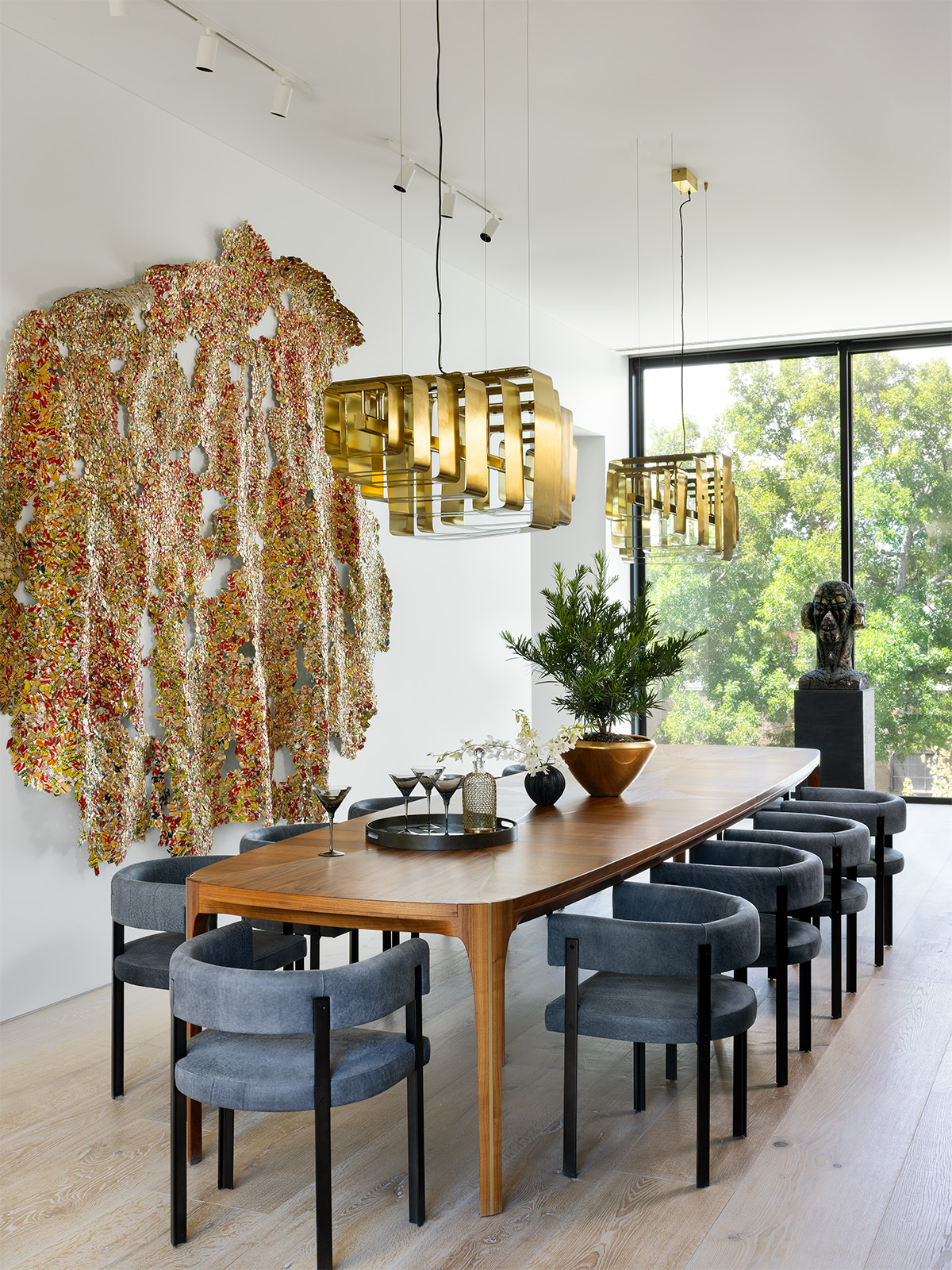
More wall space means more real estate to hang art, so Precourt closed the dining room off from the kitchen with a wall wide enough to don a textural aluminum piece by Ghanaian sculptor El Anatsui.
Lounge
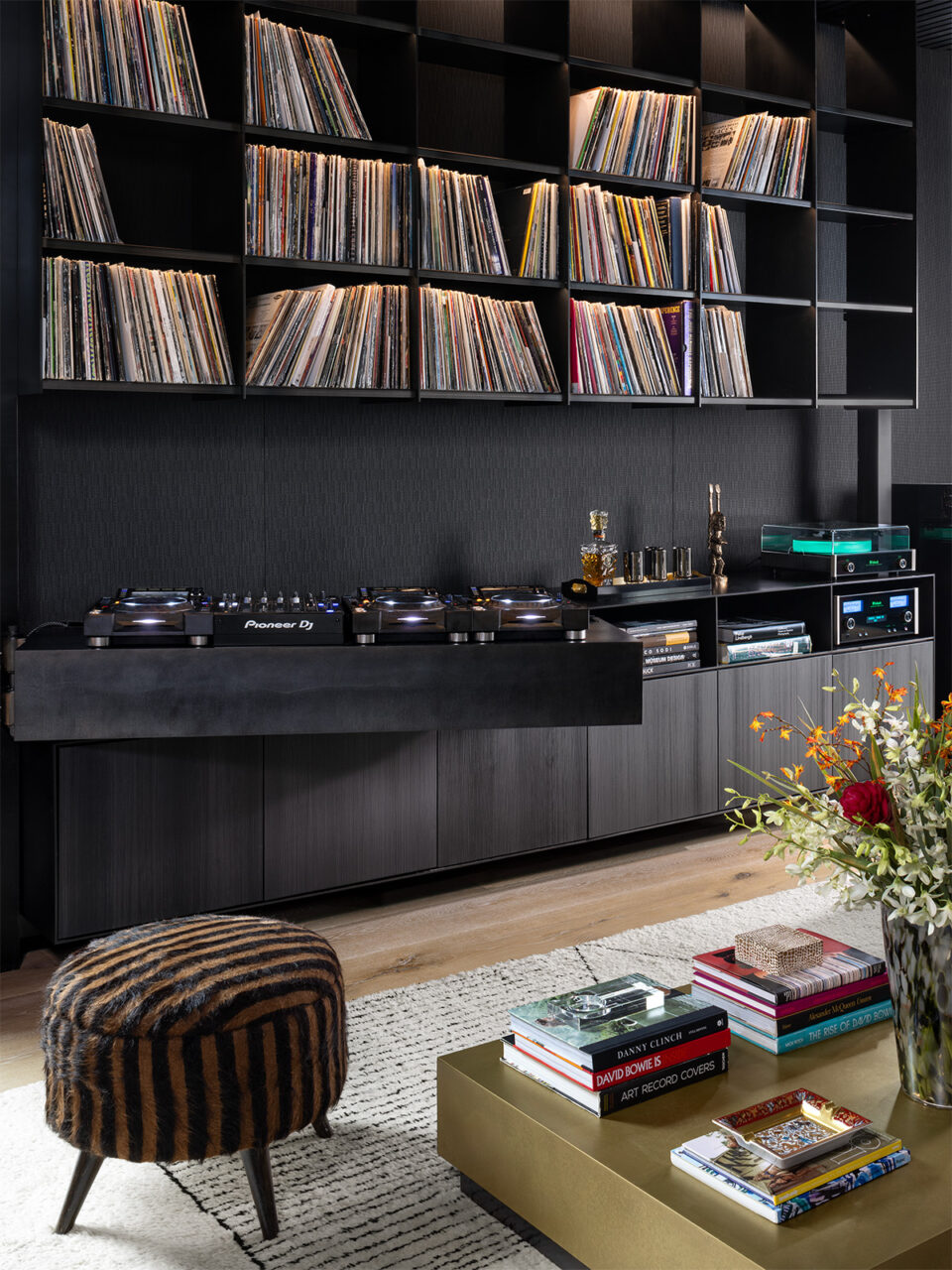
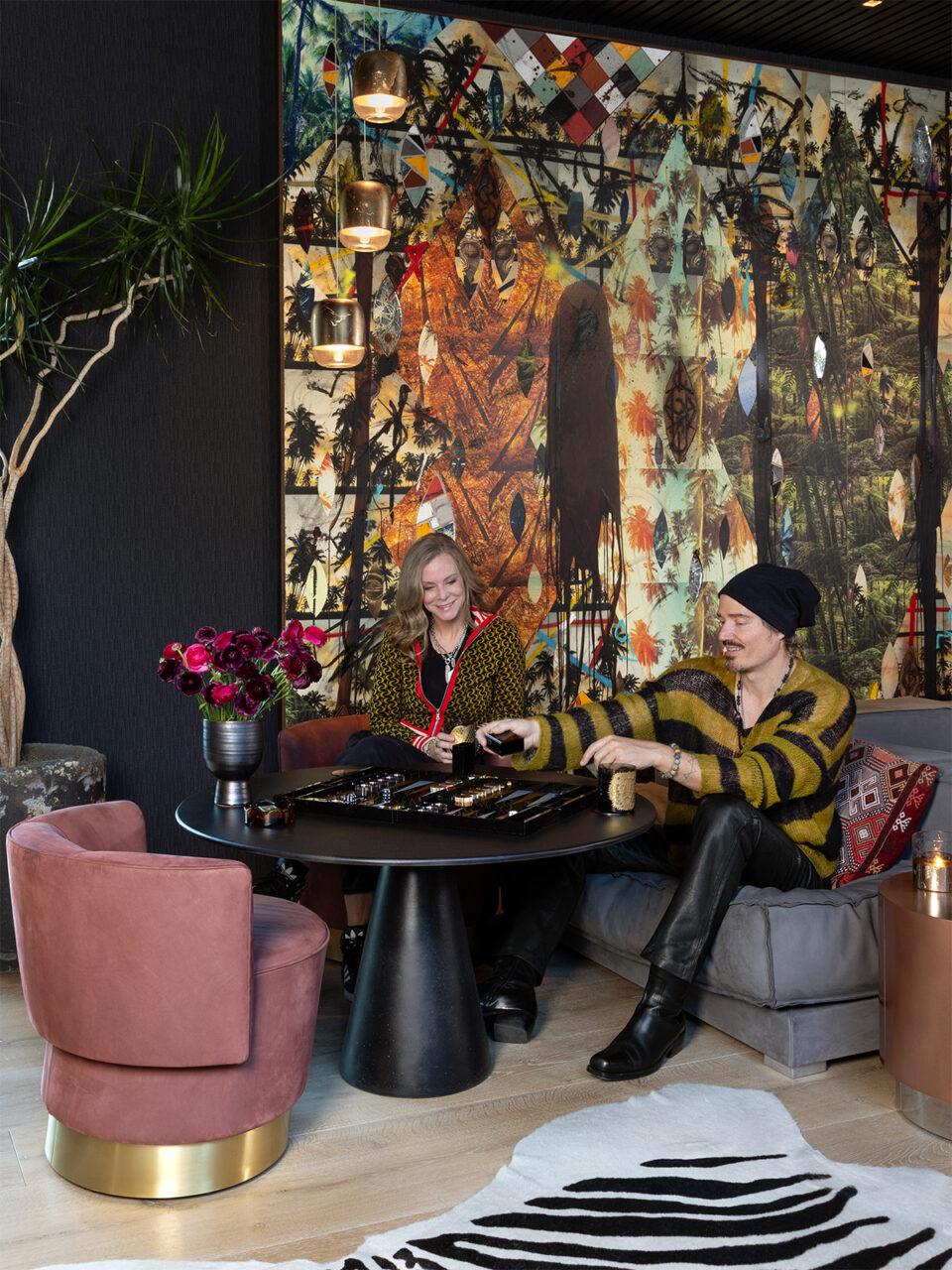
Equipped with a DJ booth, a drop-down movie screen, and plenty of plush seating, the lounge is a cozy space where Precourt can unwind with her partner, Andrew Jensdotter—who serves as the Cookie Factory’s director of exhibitions—or entertain guests. A 16-foot-long collage by Rashid Johnson inspired the laid-back vibe. “While the piece in the entryway depicts how he feels when he’s anxious, this one is how he feels when he’s in a place of calm,” she says. Black paint on the walls and a charcoal stain on the ceiling draw the eye to the painting, which acts as the room’s vibrant wallpaper.
Bedroom
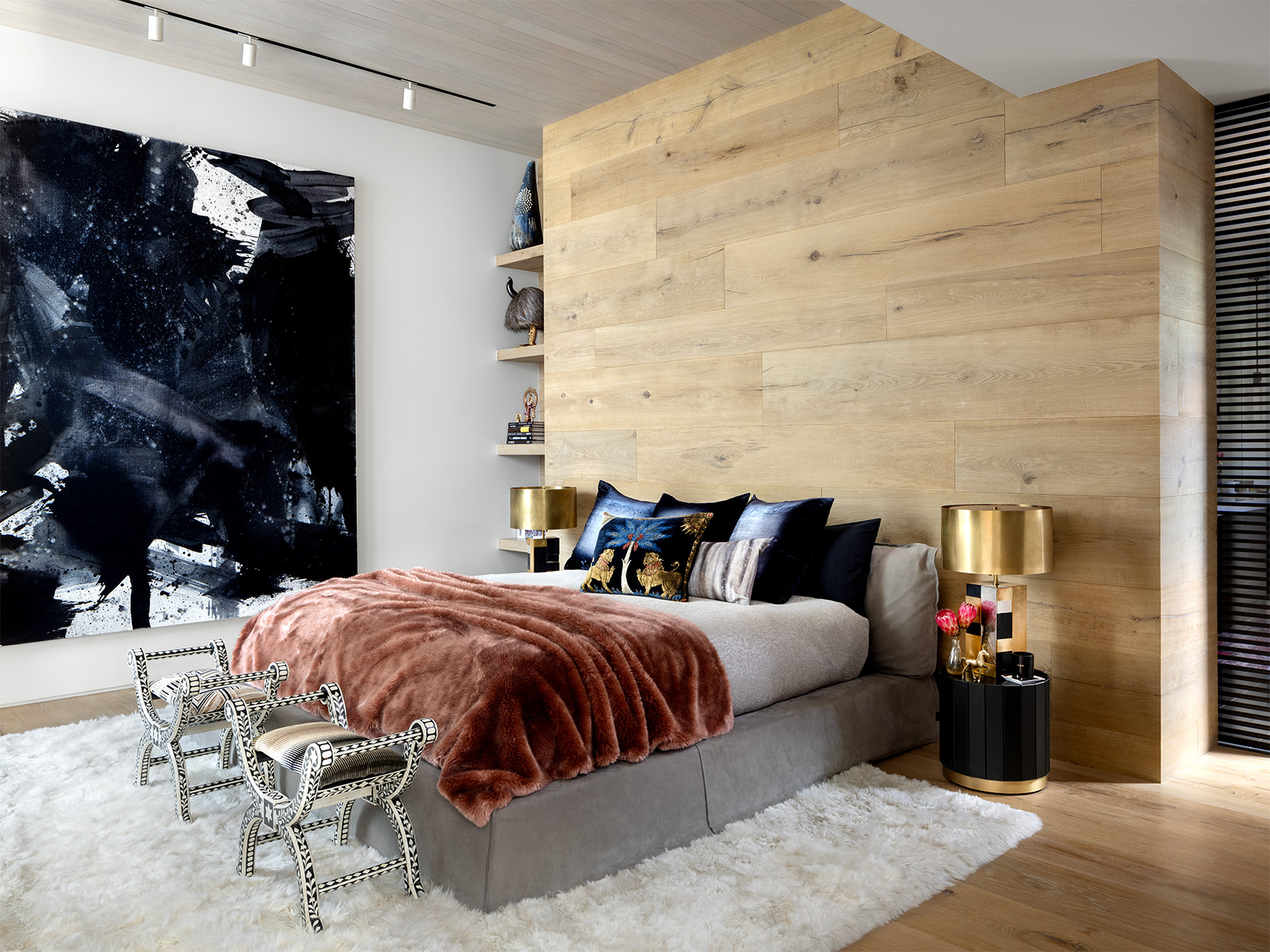
Leftover oak flooring was used on the primary bedroom’s feature wall. “I wanted this space to feel really cozy, like a womb,” Precourt says. “If this wall were just white, it wouldn’t have been as cool.” Los Angeles–based artist Mary Weatherford’s inky painting titled “train at night, string of lights” and automated blackout shades reinforce the room’s main purpose: restful sleep.
Closet
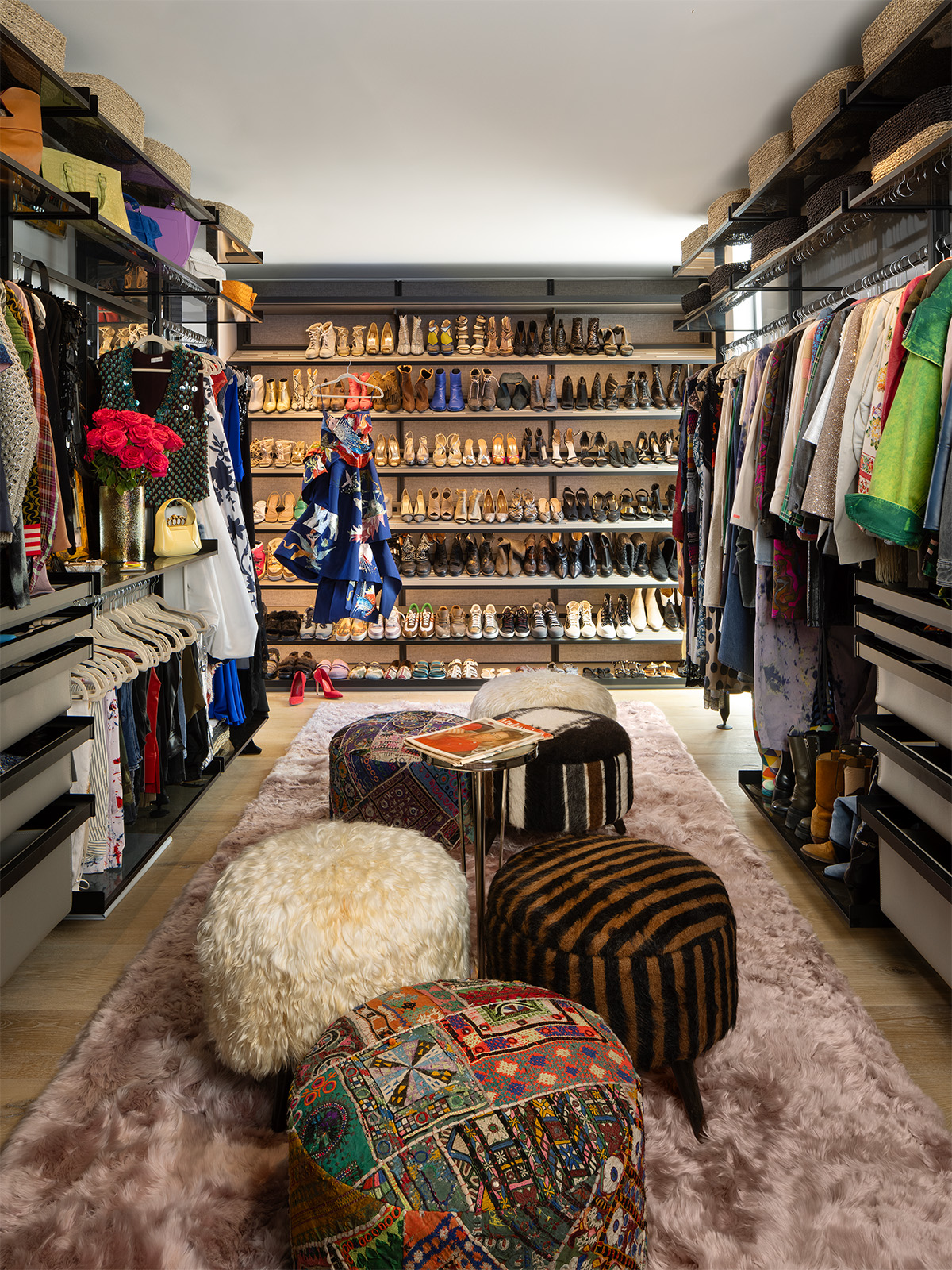
“I can’t wear heels anymore and mostly stick with combat-style boots or cool sneakers,” Precourt says. “However, I keep good-quality fashion around, so I decided to make an ‘art wall’ in my closet out of all the high heels I have worn over the course of my life.” A blush pink rug and a smattering of poufs provide a plush space to assemble outfits from her wardrobe, which includes pieces by Alexander McQueen and French designer Isabel Marant.
Bathroom
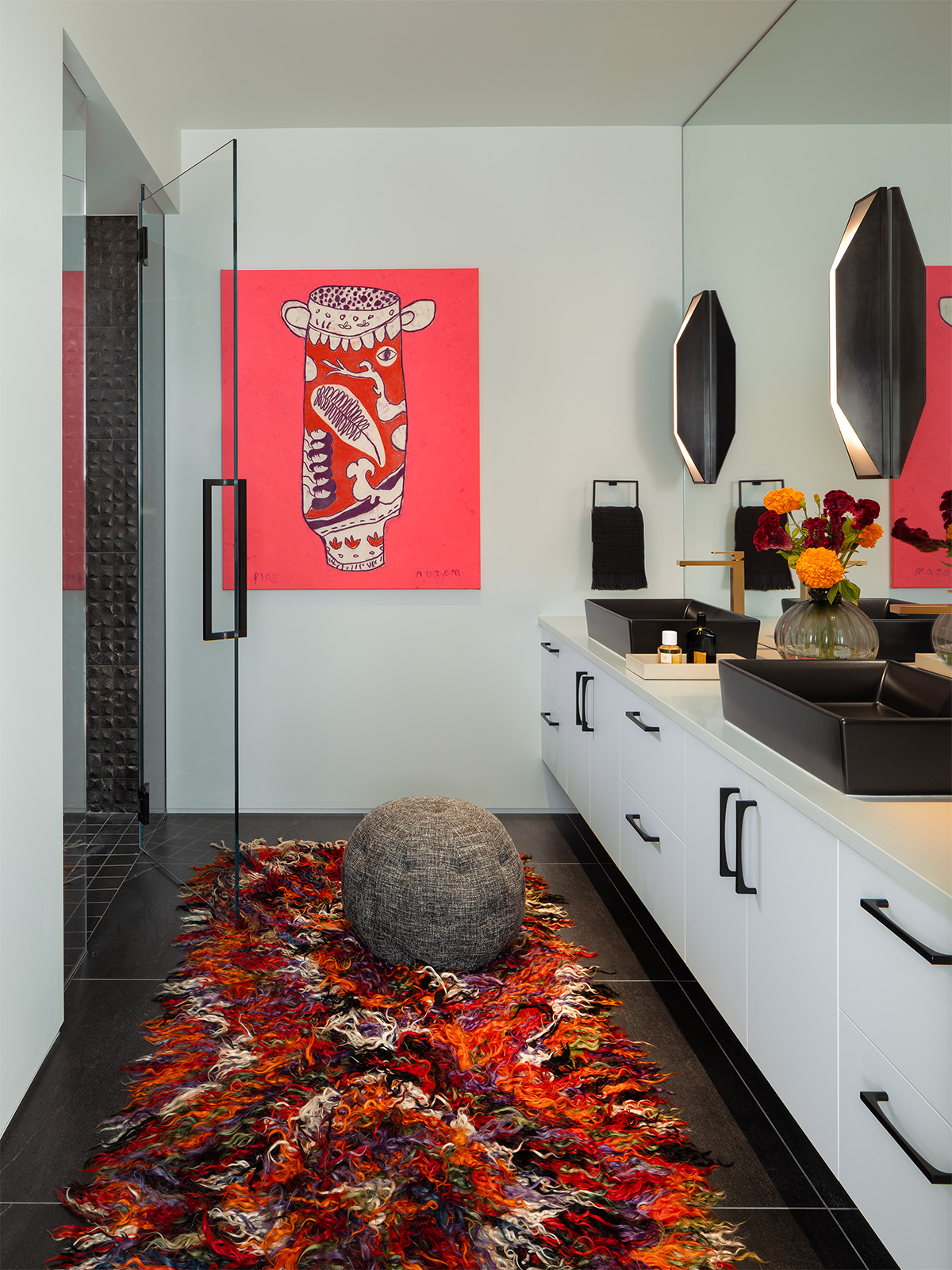
“Pink always seems to find its way into my bathrooms,” Precourt says of Corey Mason’s vivid oil painting. “I just love being surrounded by hot pink.” To match the art’s electric energy, she chose a shaggy rug in a kaleidoscope of colors.
Hallway
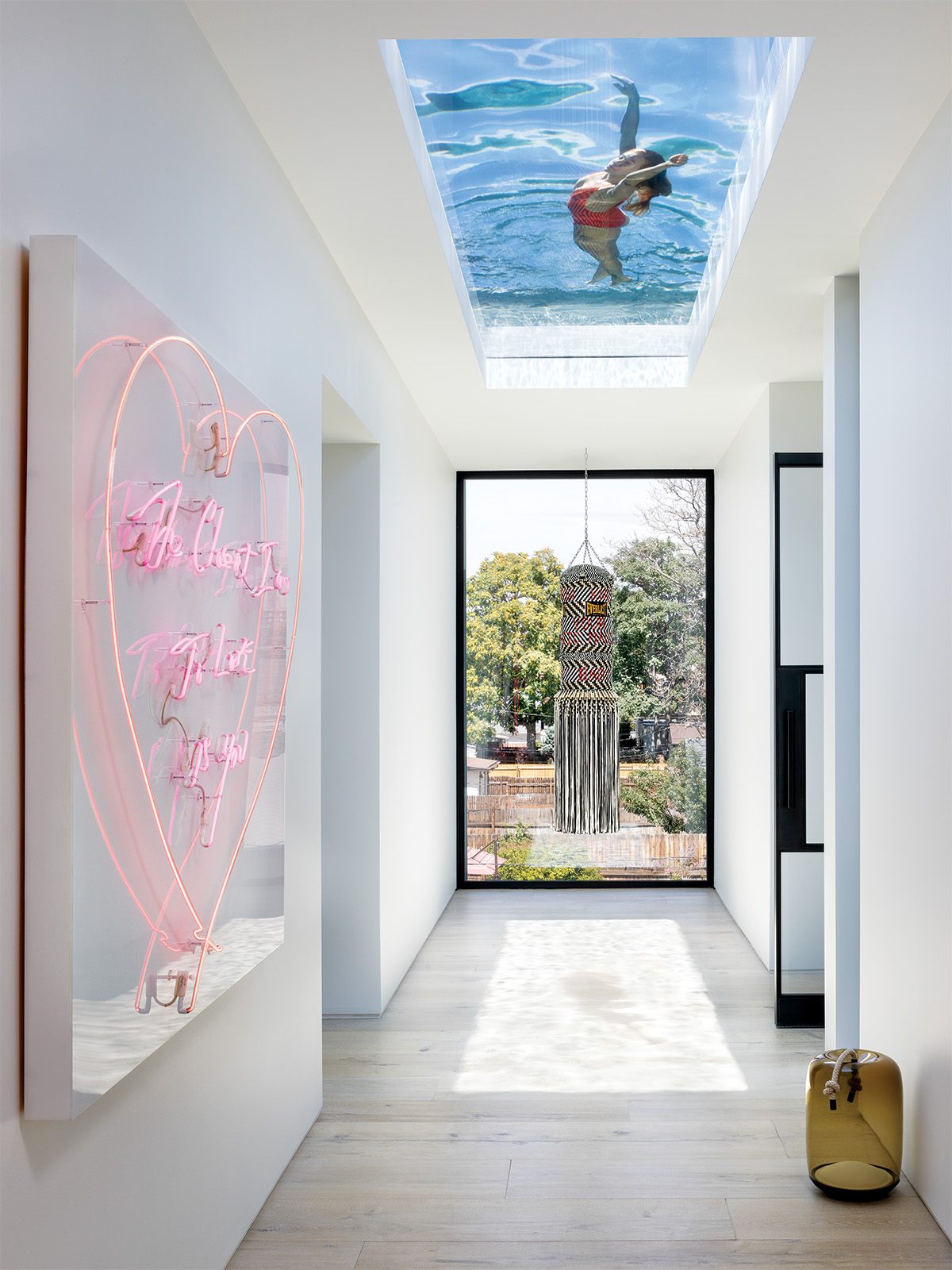
Precourt’s first big art purchase—a repurposed punching bag that Native American artist Jeffrey Gibson adorned with glass beads, nylon fringe, and the words “know your magic, baby”—hangs in front of a neighborhood-facing window wall. “It feels very hopeful to me,” Precourt says. “And it’s cool because people can see the art from the outside; it’s kind of like a museum.” A rooftop lap pool doubles as a skylight, casting shadows and splintering light on the Gibson piece and British artist Tracey Emin’s neon heart sculpture.
Rooftop
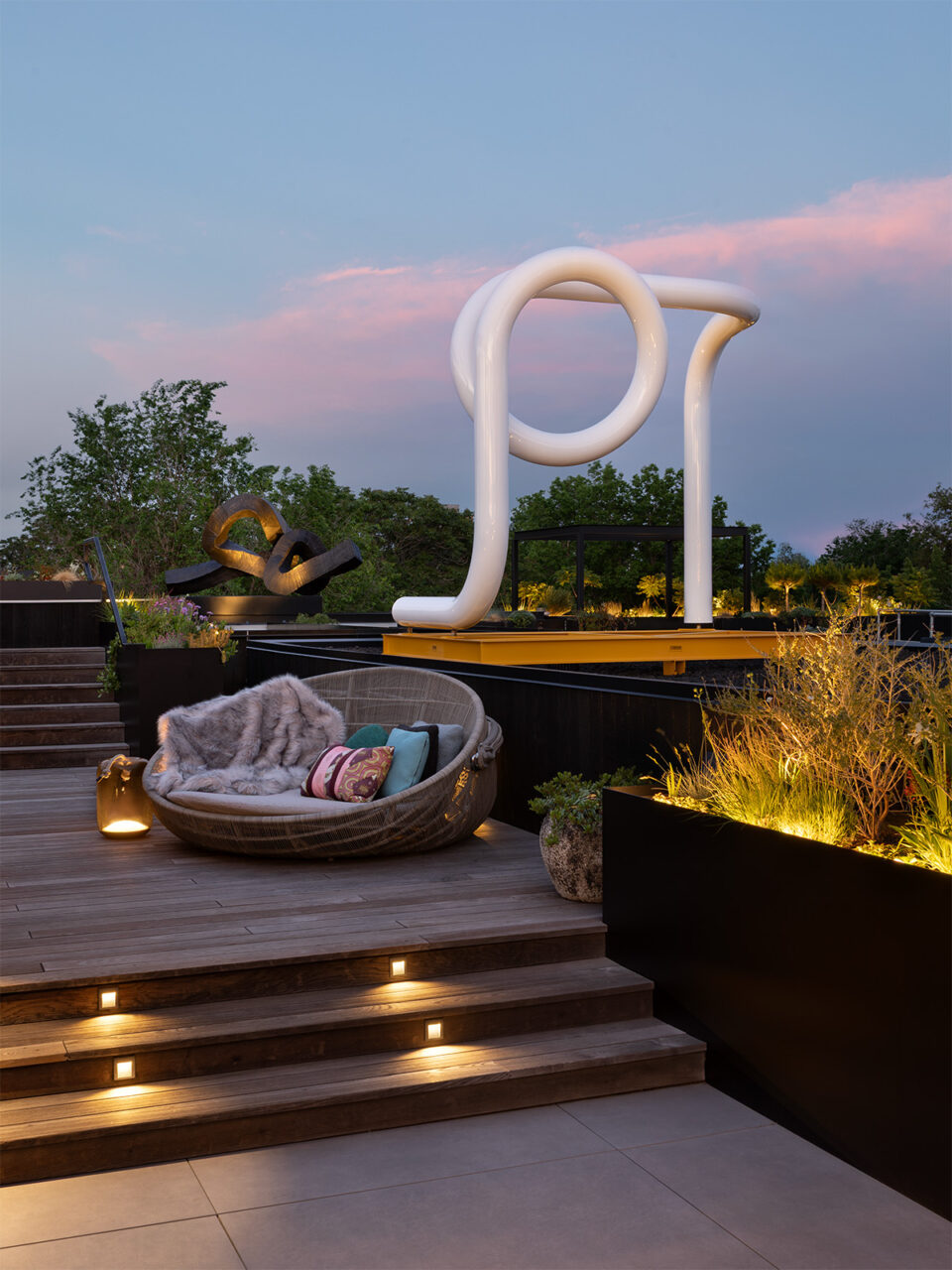
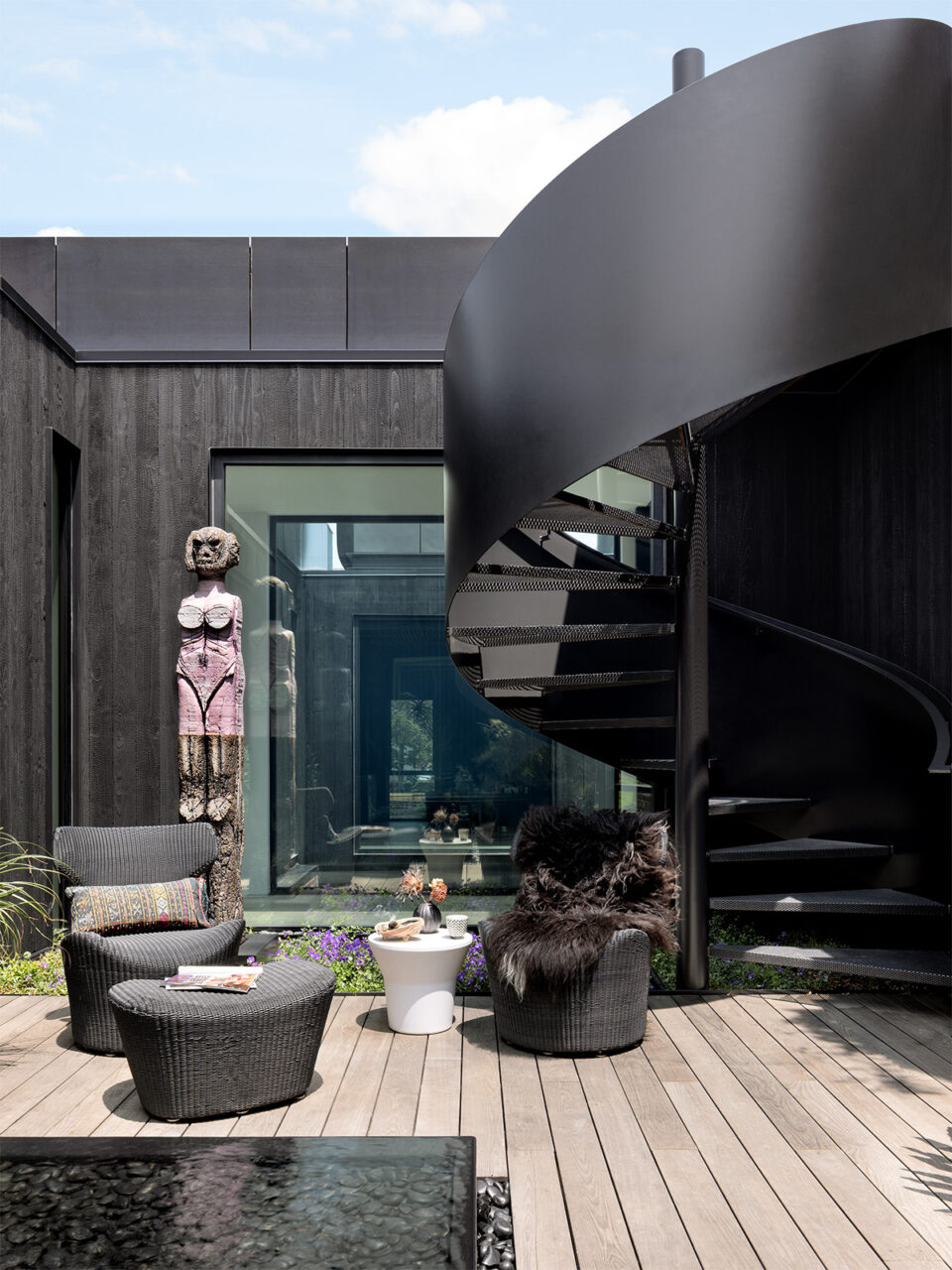
Inspired by the traditional riad terraces in Morocco, where Precourt and Jensdotter spent their honeymoon, the sprawling outdoor space includes several lounge areas, a kitchen, and large-scale sculptures. A knotted dark bronze piece by South Korean visual artist Lee Bae and a curving white, pipelike sculpture by Brooklyn-based artist Carol Bove can be seen from the street. Says Precourt: “I like balancing the black, the white, the masculine, the feminine—the yin and the yang.”