

The Local newsletter is your free, daily guide to life in Colorado. For locals, by locals.
While the rest of us were busy learning to crochet during the pandemic, Laura Shape began a more unexpected hobby: handstitching luxury leather handbags. Although the end product was Insta-worthy, Shape grew frustrated with the slow and tedious stitching process. But rather than stuff her materials in the back of her closet and binge Tiger King, the Denver-based multimedia artist pivoted to making fine art and wall hangings out of leather, which was faster, more flexible, and more fun.
As Shape continued experimenting with new artwork—like a ring dish made from alligator leather remnants adorned with gold leaf sheets—she found herself drawn to the unique textures of exotic hides, but they posed an ethical dilemma for her. “I didn’t feel a hundred percent great about using something else’s skin as an art medium,” Shape says.

That’s when Shape read an article about invasive Burmese pythons in Florida, where tens of thousands of snakes slither around the Everglades as apex predators, outcompeting native animals for food. “They must be removed. They have to be killed,” Shape says. “They can’t be sent back to where they originally came from because they already contain all of the pathogens and seeds from their current environment in Florida.”
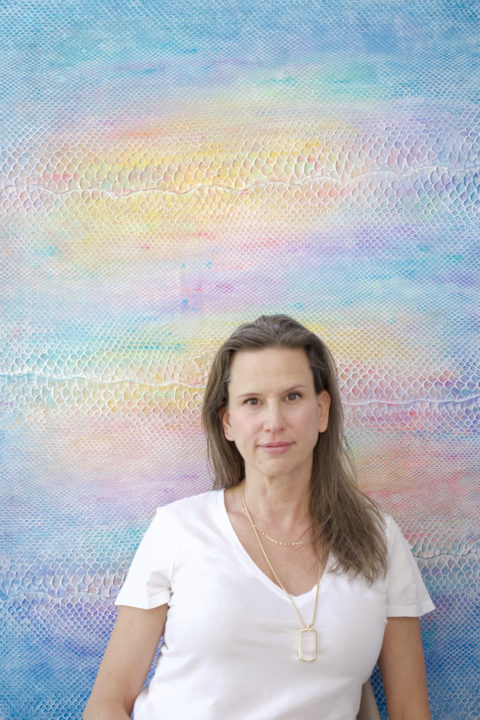
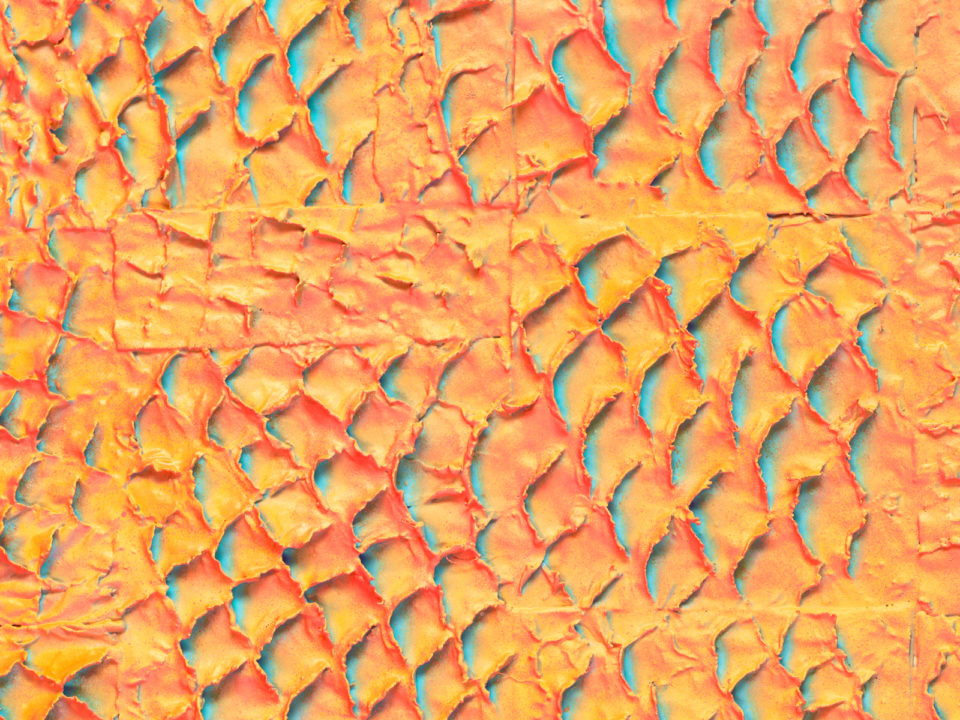
So instead of letting the snakes die in vain, Shape started incorporating their skins into her work, molding them into sculptures or painting over their scales. “It’s a way to both honor these animals while also raising awareness about invasive species,” she says. Shape also uses the skins of invasive lionfish in the Atlantic Ocean and invasive carp throughout the Mississippi River Basin. We sat down with Shape to learn more about who wrangles the pythons, how each skin presents unique challenges, and why she leans into the rainbow.
Editor’s note: The following conversation has been edited for length and clarity.
5280: How do you source the skins?
Laura Shape: When they come to me, they’re already processed into leather, so I don’t handle the raw skins. I work with Amy Siewe, a professional python huntress. She skins the animals and sends them to a tannery, which turns them into leather.
The rest of them I get through Inversa, an ethical leather supplier that gets the invasive skins from hunters and fishers. Inversa’s main clients are in the fashion industry, which has a bad reputation for unethically using leather and fur. By using invasive species’ skins, they’re actually benefitting the local environment. I’m the only visual artist they’re working with right now.
Have you thought about creating art with the skin of invasive species in Colorado?
I get asked this a lot because there are all kinds of invasive plants, animals, and bugs out in the world, but I have to find someone that is ethically processing the skins into leather. The company I currently work with has mentioned that they might expand to a couple of other animals, but they haven’t told me what kind yet.
How are the skins different from one another?
The leather from a lionfish has tiny little scale pockets where the scales of the fish would have been, but the skins of the carp are enormous, to the point where I could fit my whole finger in there. The skin of the python gets to me with the scales still on them. They all absorb acrylic paint differently.
You seem to use a lot of bright colors and pastels. Is the rainbow vibe intentional?
These animals are a disaster. They are causing ecological havoc on a mind-boggling scale. Most artwork that raises awareness for disasters like this tends to be angry and dark and miserable, and I think the world has enough of that. I’d rather my work be uplifting and compelling, that it draws you in and leaves people saying, “That’s beautiful, what is that?”
Are you a part of any exhibitions?
I’m currently in a virtual exhibition called Under the Sea presented by Moku Art Studio. It’s endorsed by UNESCO as part of the Ocean Decade initiative. It’s made up of 13 artists from around the world and it’s worth checking out—it’s a pretty neat show.
What’s next for you?
I’ll be speaking at the Society for Ecological Restoration conference in Denver (September 30–October 4) about the ability to raise awareness and change minds with art. I’m currently working on a big three-piece carp series that I’d like to show as soon as it’s finished, hopefully in the next couple of months.
Ultimately, I’d love to work on a larger scale because the more of these animals I can use, the more impact I’m having. My dream is to create pieces for hotels, resorts, airports, cruise lines, and hospitals.
What do you hope people take away from your work?
What I love about this niche that I’ve found is that it shows that art can be part of the solution. In American culture, we really undermine the value of art, and I like that this art has become a viable solution to helping solve this massive problem. I’d love for my art to inspire people to do two things: think creatively and inspire organizations to involve artists in their thinking process. It’s a completely wackadoodle way to approach this problem, but it works.