

The Local newsletter is your free, daily guide to life in Colorado. For locals, by locals.
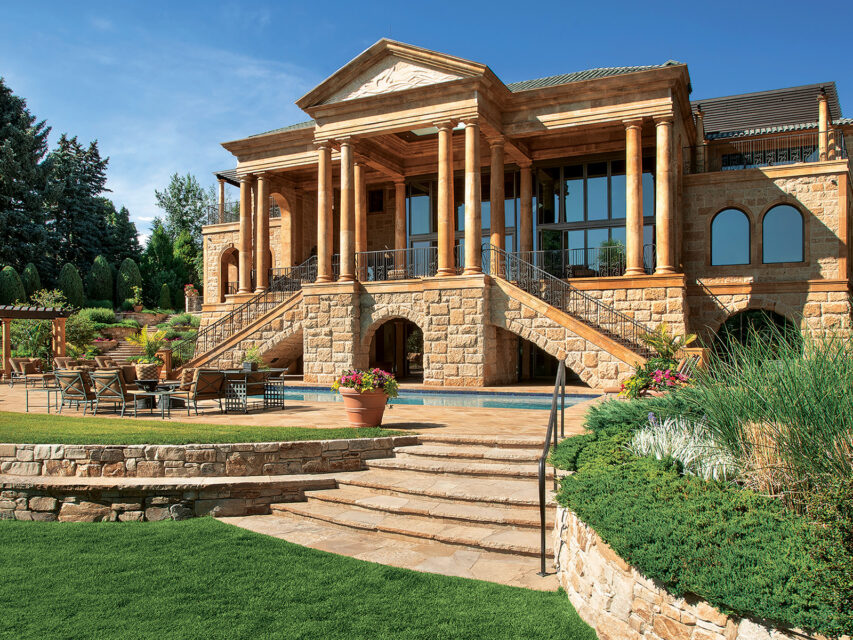
It took more than two decades to build the Great Pyramid of Giza, eight years to build the Roman Colosseum, and nearly four years to build Pondbank, the Cherry Hills mansion owned by local philanthropists Bob and Judi Newman. That might seem like an unjustifiably long time to build a home, but one look at this palatial residence reveals it’s anything but your average abode.
Completed in 2012, the 21,500-square-foot Palladian-style home that overlooks a suburban pond has been the backdrop for family holidays, award ceremonies, and charity events—the Newmans are key supporters of the Newman Center for the Performing Arts at the University of Denver, the Newman Center for Theatre Education at the Denver Center for the Performing Arts, and the Freyer-Newman Center at Denver Botanic Gardens. But the Newmans are inviting the public into their home for the first time with the recent release of Pondbank: The Residence of Robert and Judi Newman, a 200-page coffee table book that goes behind the scenes of building a grand, neoclassical manor fit for modern living.
“This was just a dream project,” Judi says. “The team was unbelievable, and that’s why we did the book. We wanted to show off the craftsmanship that went into it.”
From the family dog getting lost in the walls during construction to shipping millions of tiles from Italy, the Newmans shared with us about some of the unexpected stories and fun facts outlined in the new book.
The house was designed to show off the Newmans’ impressive art collection.
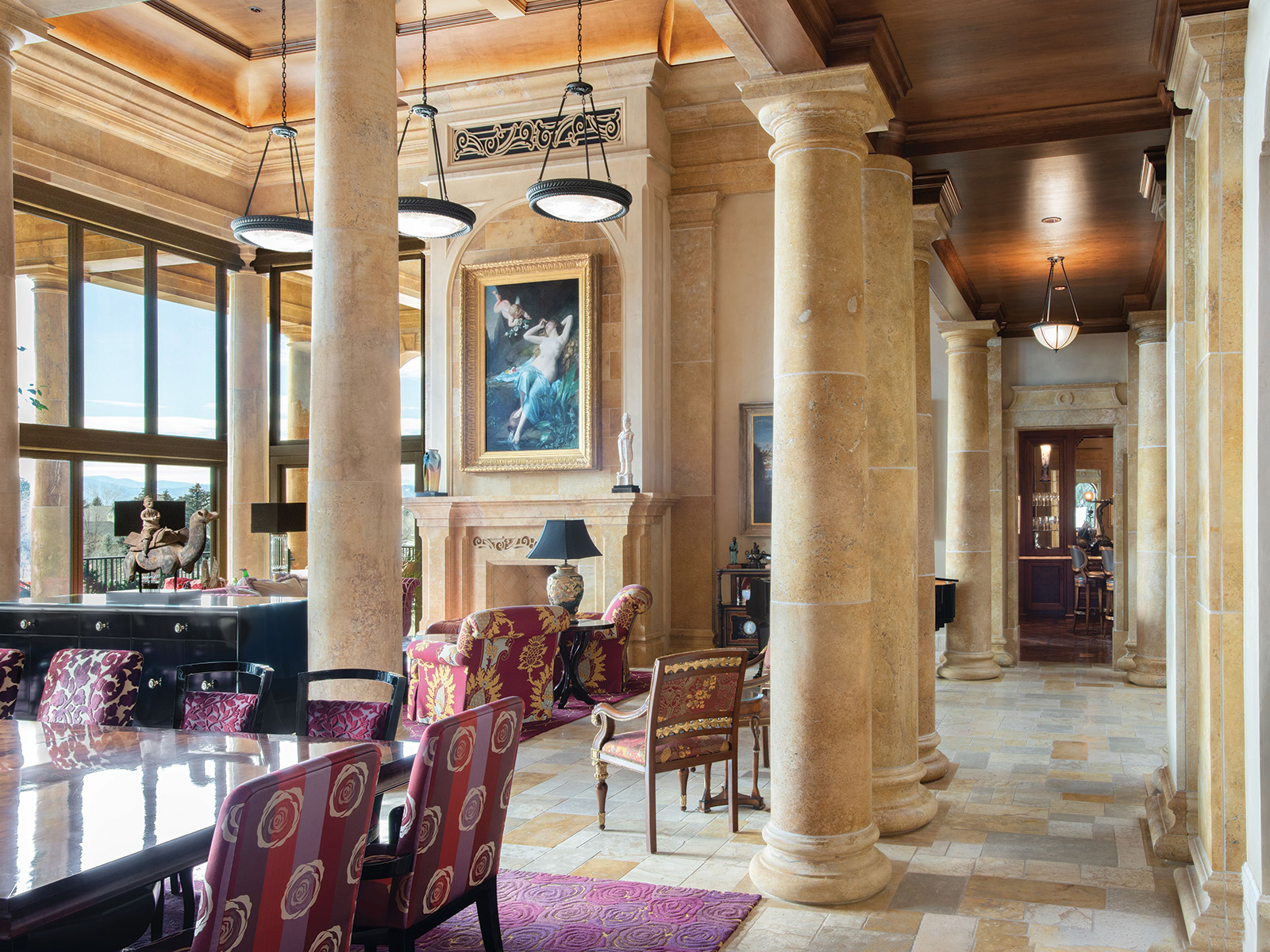
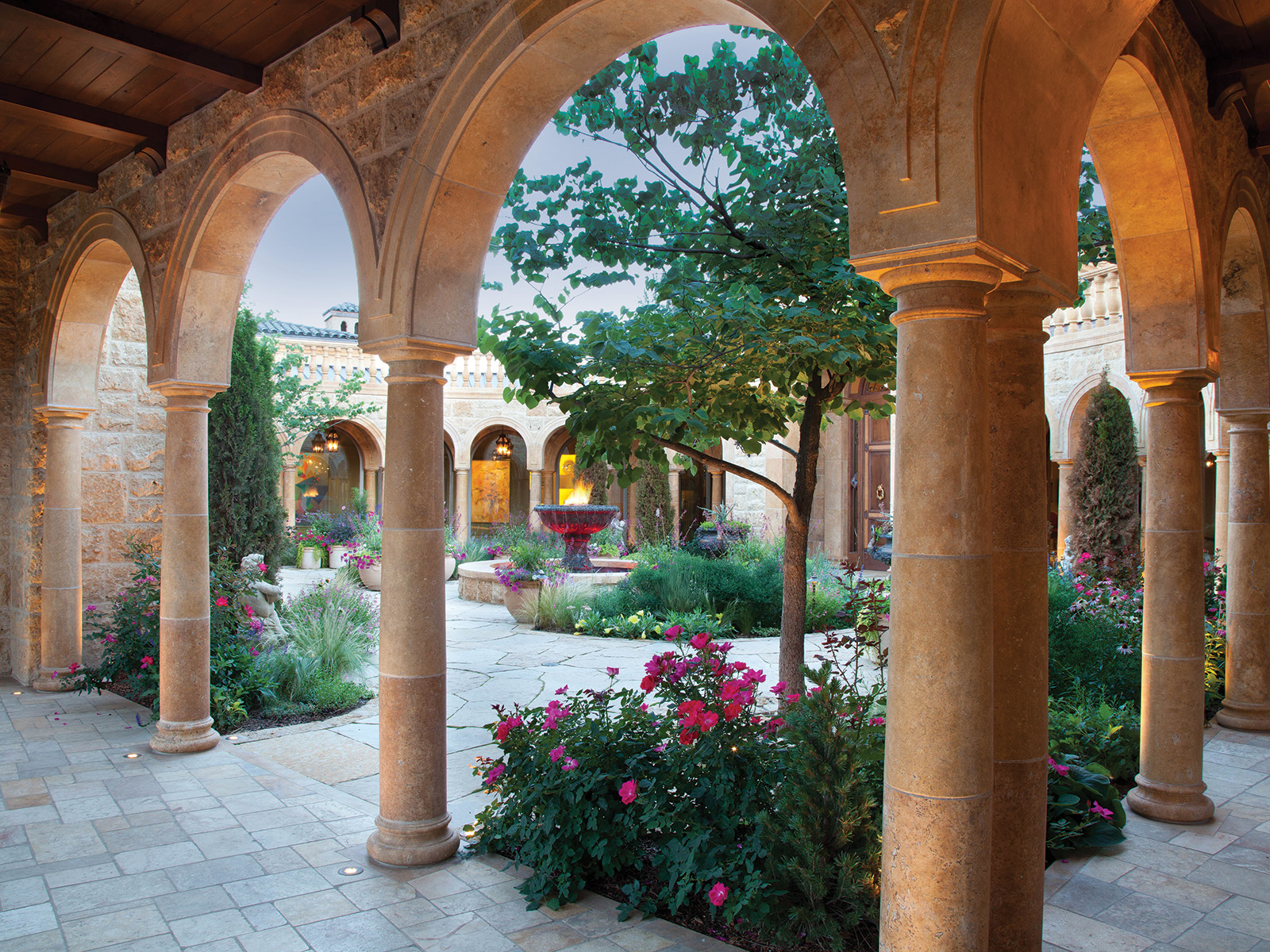
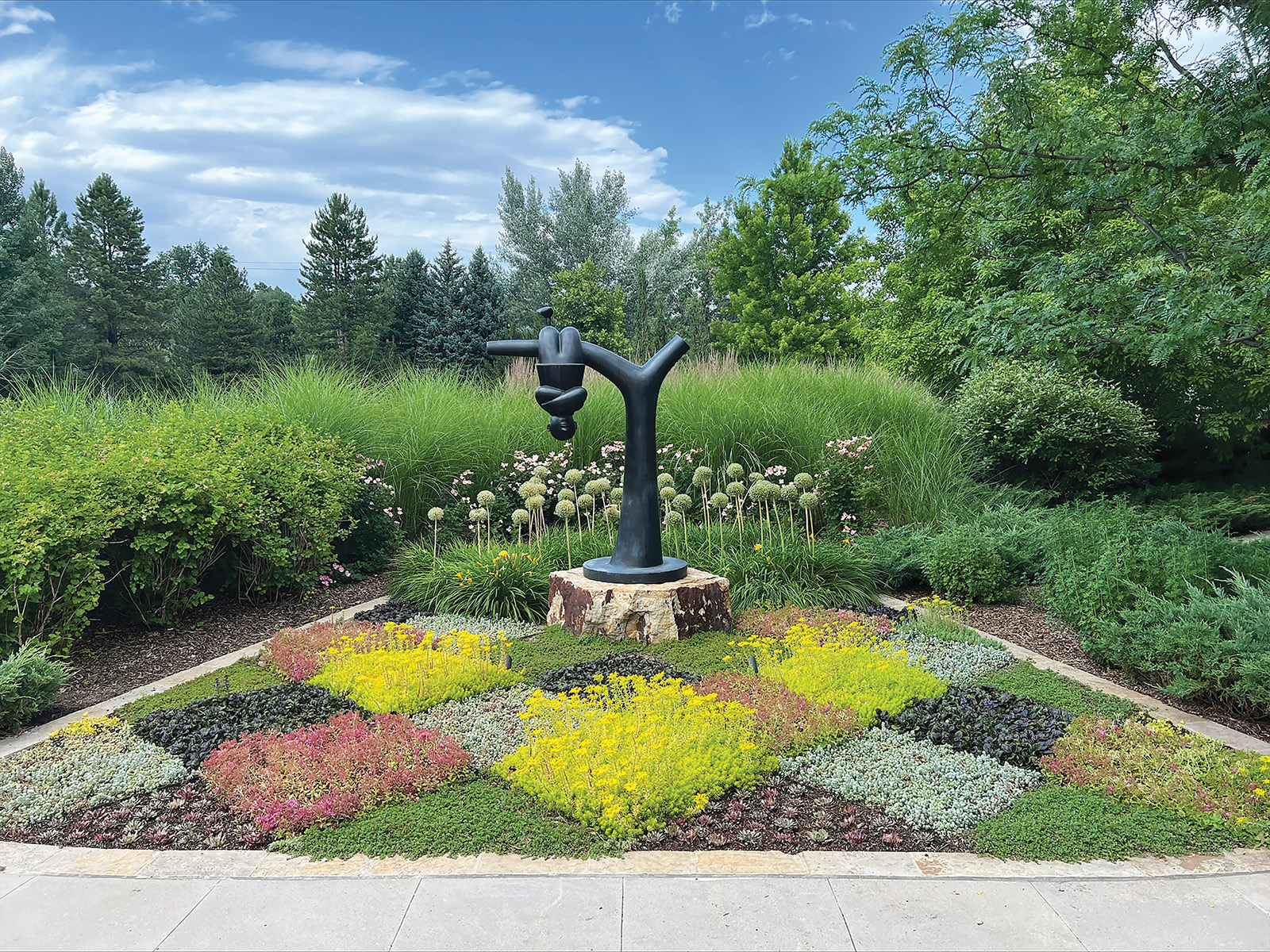
One rule within Bob and Judi’s five-decade-long marriage? “We both have to like and be in agreement on something before we buy it,” Bob says. Luckily when it comes to art, the Newmans have no trouble aligning; their personal collection includes more than 400 paintings, objects, and sculptures spanning eras, styles, and geographic origins. “Most art collectors are thematic, meaning they pick a theme of some kind and concentrate on that,” Bob says. “But we have everything from a 5,000-year-old pot to some recent watercolors.”
Architect Don Ruggles built several art-viewing points within the home’s design. At the front of the house, a colonnade opens to a curved arcade (not the video game kind but rather a covered passageway made up of arches) that showcases a mix of historical and contemporary artworks. In the Buckingham Palace–inspired gallery, traditional paintings are displayed in ornate gold frames and illuminated by the arched ceiling’s massive skylights.
But the home’s artistic touches aren’t confined to frames: The arcade includes stained glass doors by Denver artisan Ann Wolff; the rear-facing stone pediment features a wavelike relief sculpture by local artists Kathleen Caricof and Madeline Wiener; and in the vestibule, Colorado artist Laura Chappell painted a western tanager holding a key in its beak directly onto the stone. “It’s a smart house, so we don’t have physical keys,” Judi says. “So Laura painted one right next to the front door.”
The Newmans didn’t plan for the house to be that big.
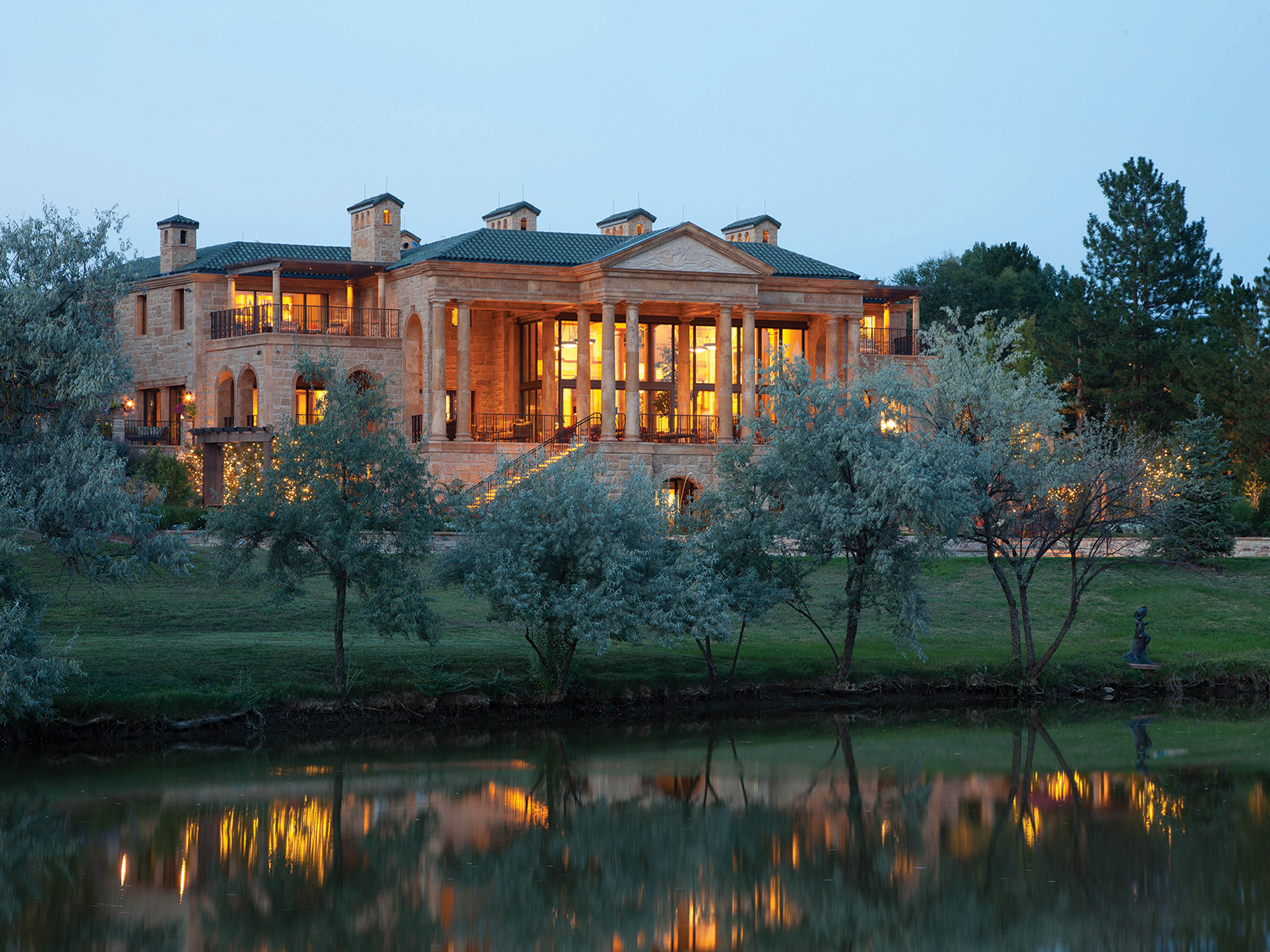
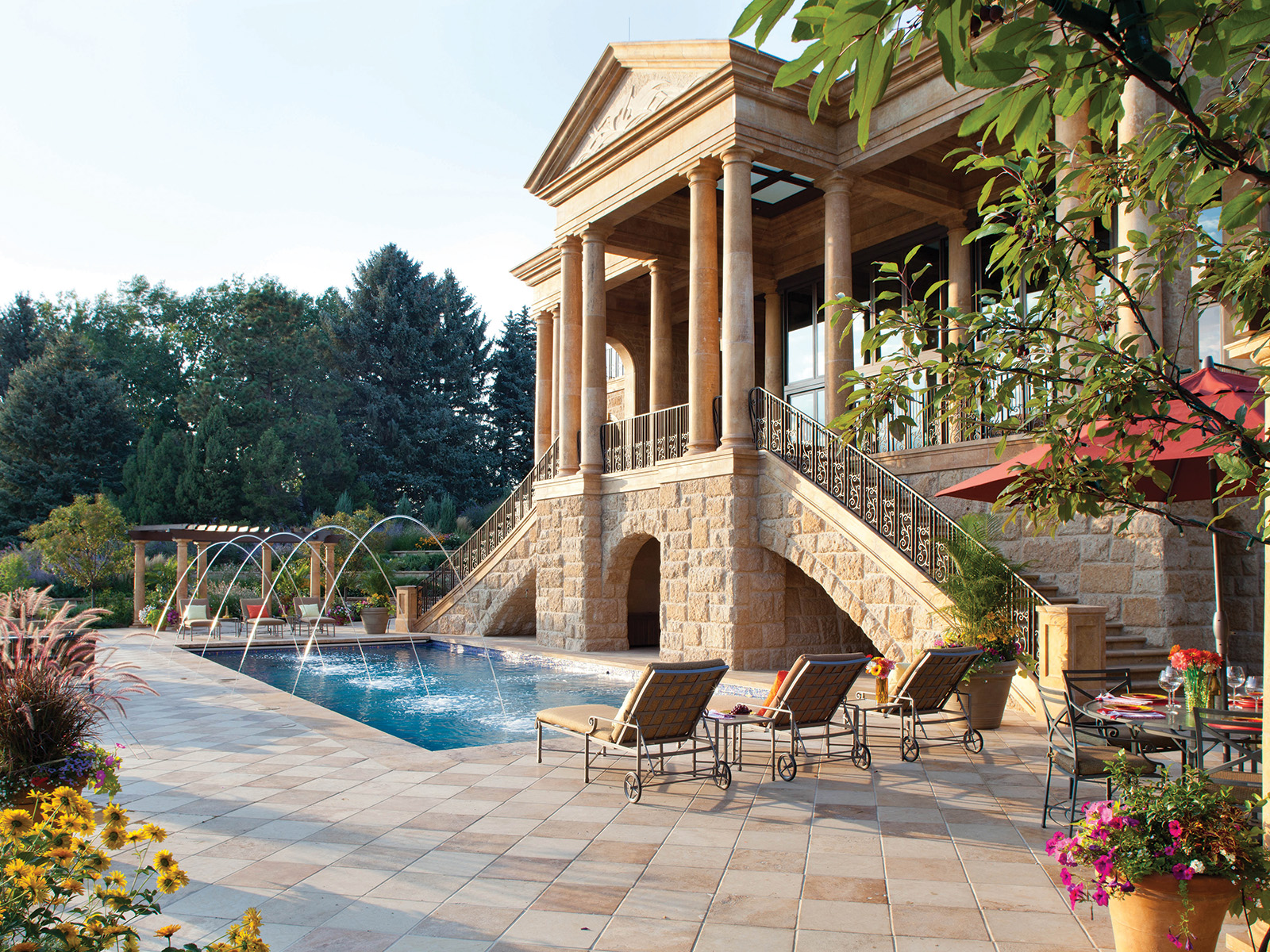
“We certainly do not need the number of bedrooms we have,” Judi says. The Newmans originally envisioned a home about half the size of Pondbank, but Ruggles padded the square footage to accommodate additional requests that would come up throughout construction and to keep the structure balanced and symmetrical—a cornerstone of Palladian architecture.
The sheer size of the house even led the Newmans to lose their dog, Buzz, while visiting the jobsite during construction. After a frantic search through the walls of framing and the surrounding neighborhood, Buzz was found the next day in a basement crawl space. (Years after the house was completed, the Newmans learned that an electrician working on-site discovered a coyote living in a subterranean electrical room.) To ensure they don’t lose one another in the labyrinthian house, the Newmans installed a paging system that connects to each room.
The exterior pathways are all curved for a reason.
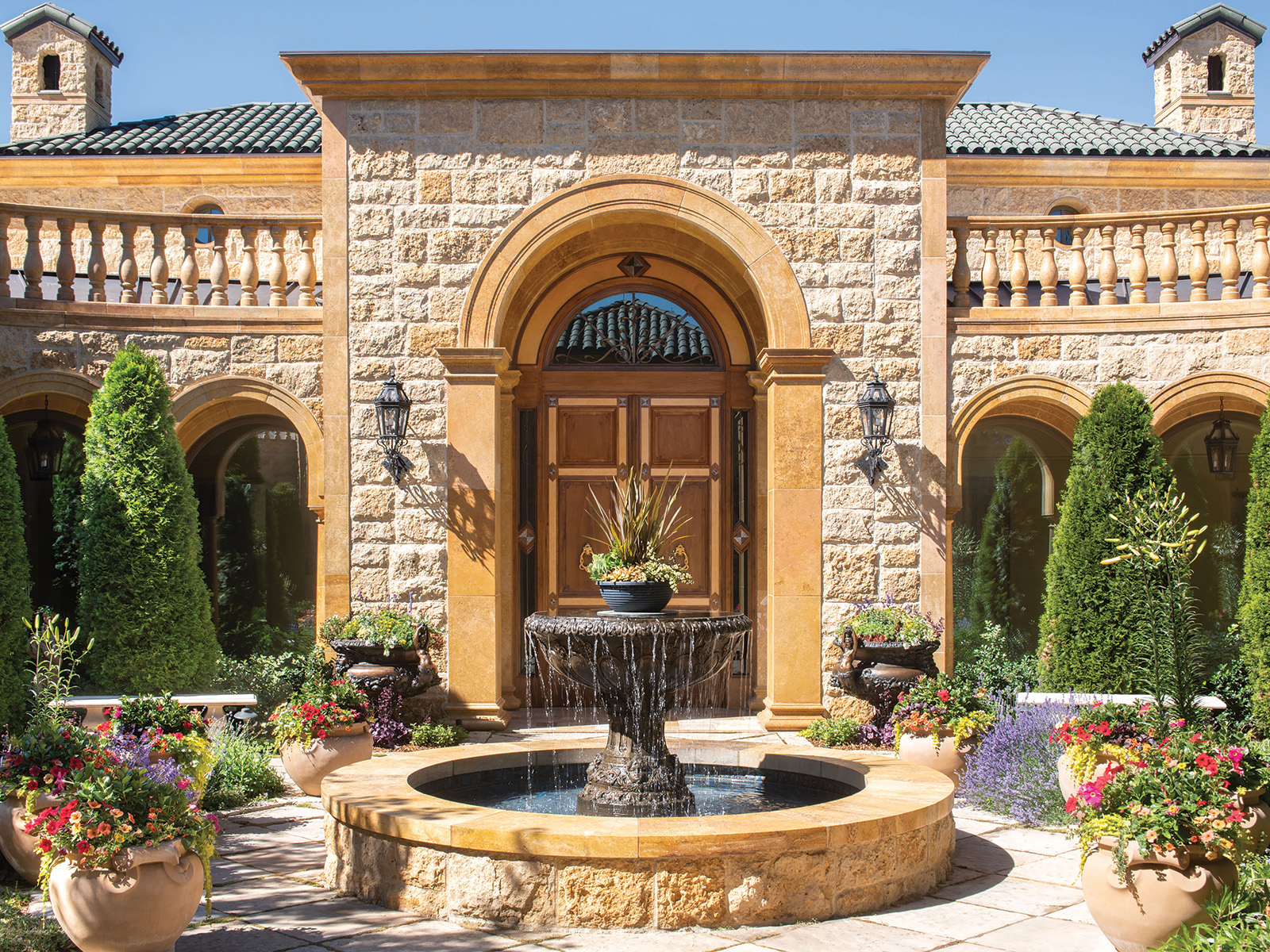
Landscape designer Herb Schaal wanted Pondbank’s outdoor space to feel like a series of rooms, so he linked each individual area—including a kitchen garden, a Japanese spa garden, a pool terrace, and a playground—with stone paths. Each route, even the driveway, curves from point to point, a design trick that only allows the eye to focus on the plants and flowers directly ahead. In other words, the layout encourages guests to literally stop and smell the flowers.
The quantities of building materials required for Pondbank are dizzying.
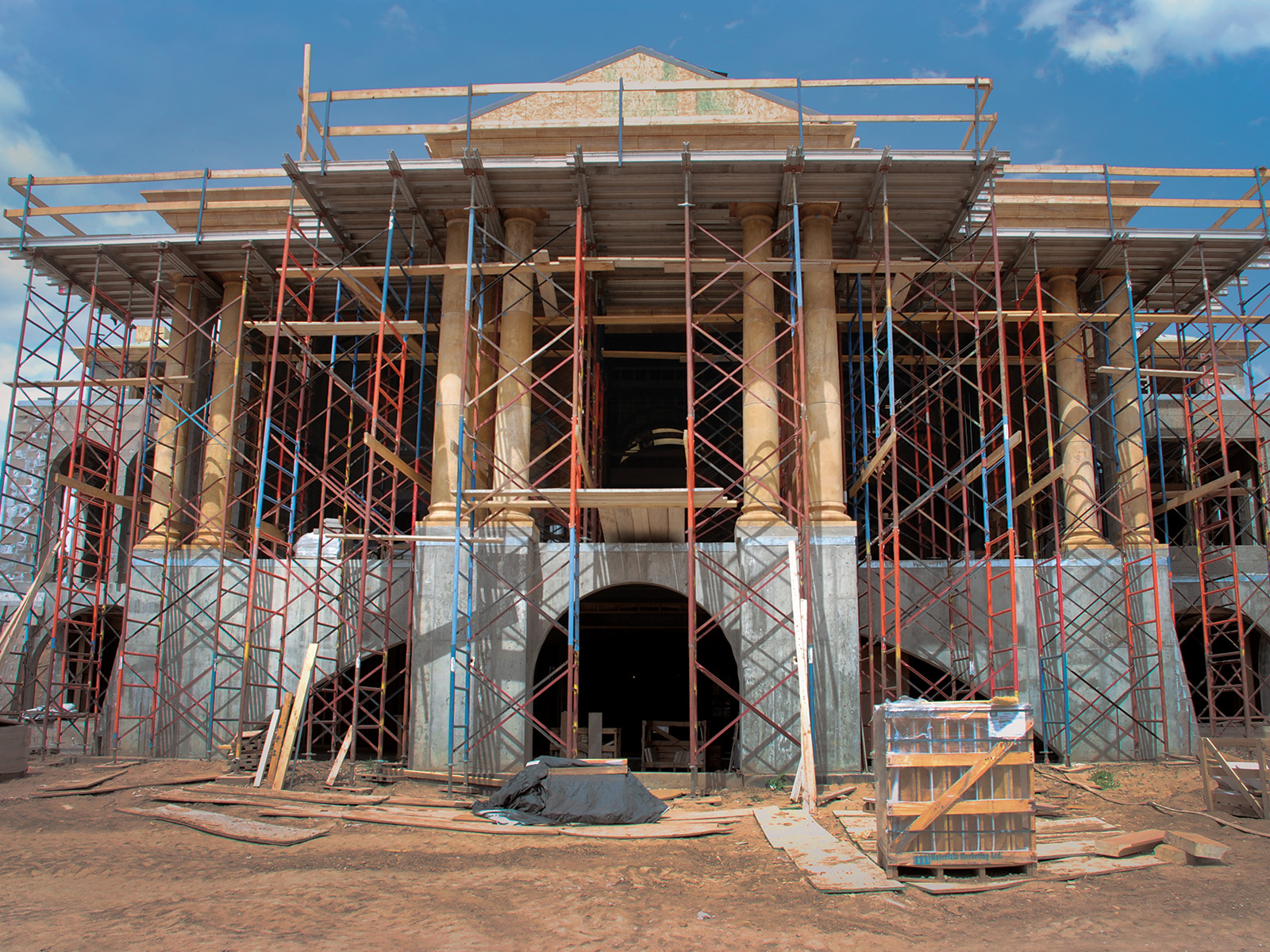
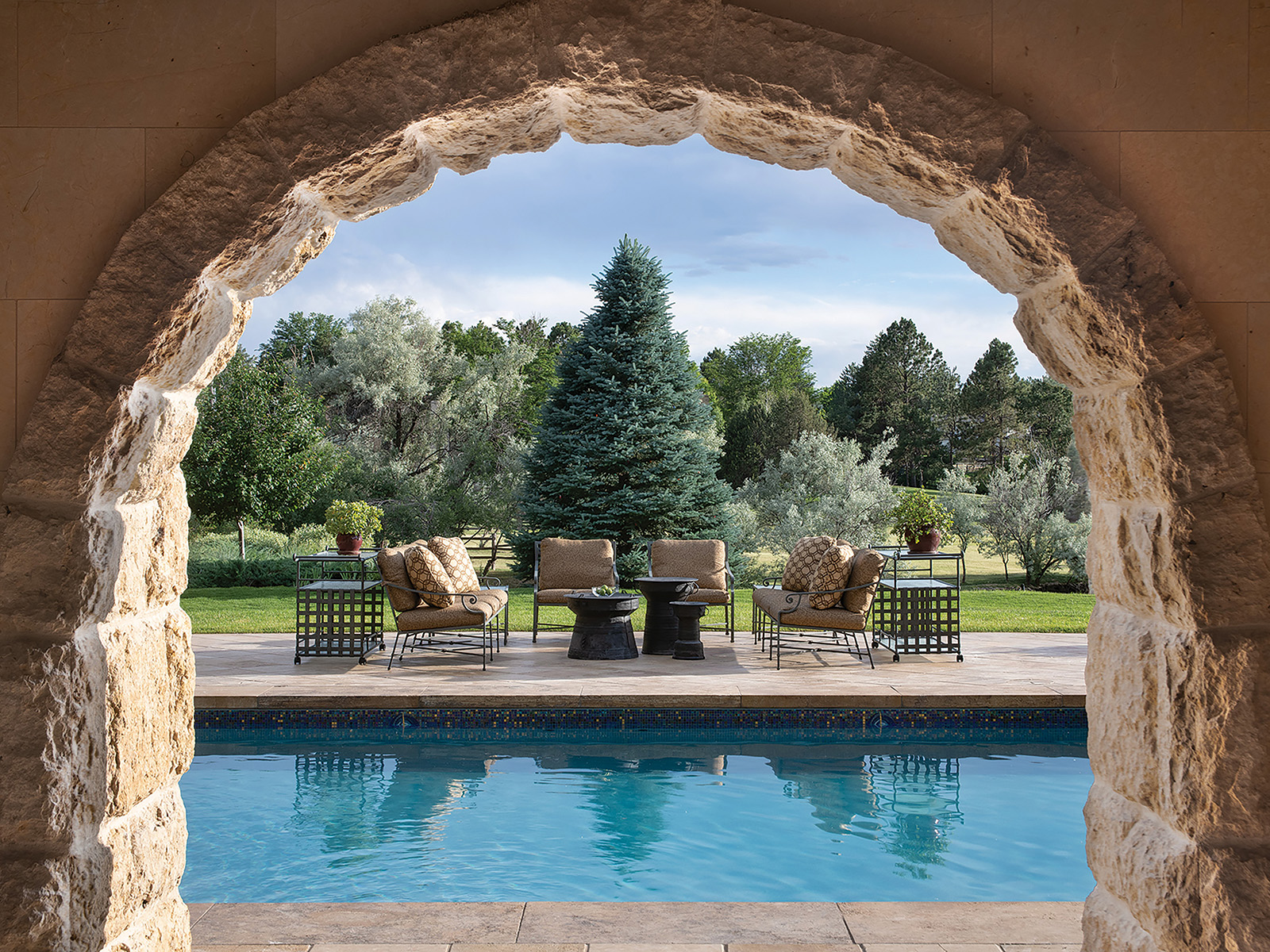
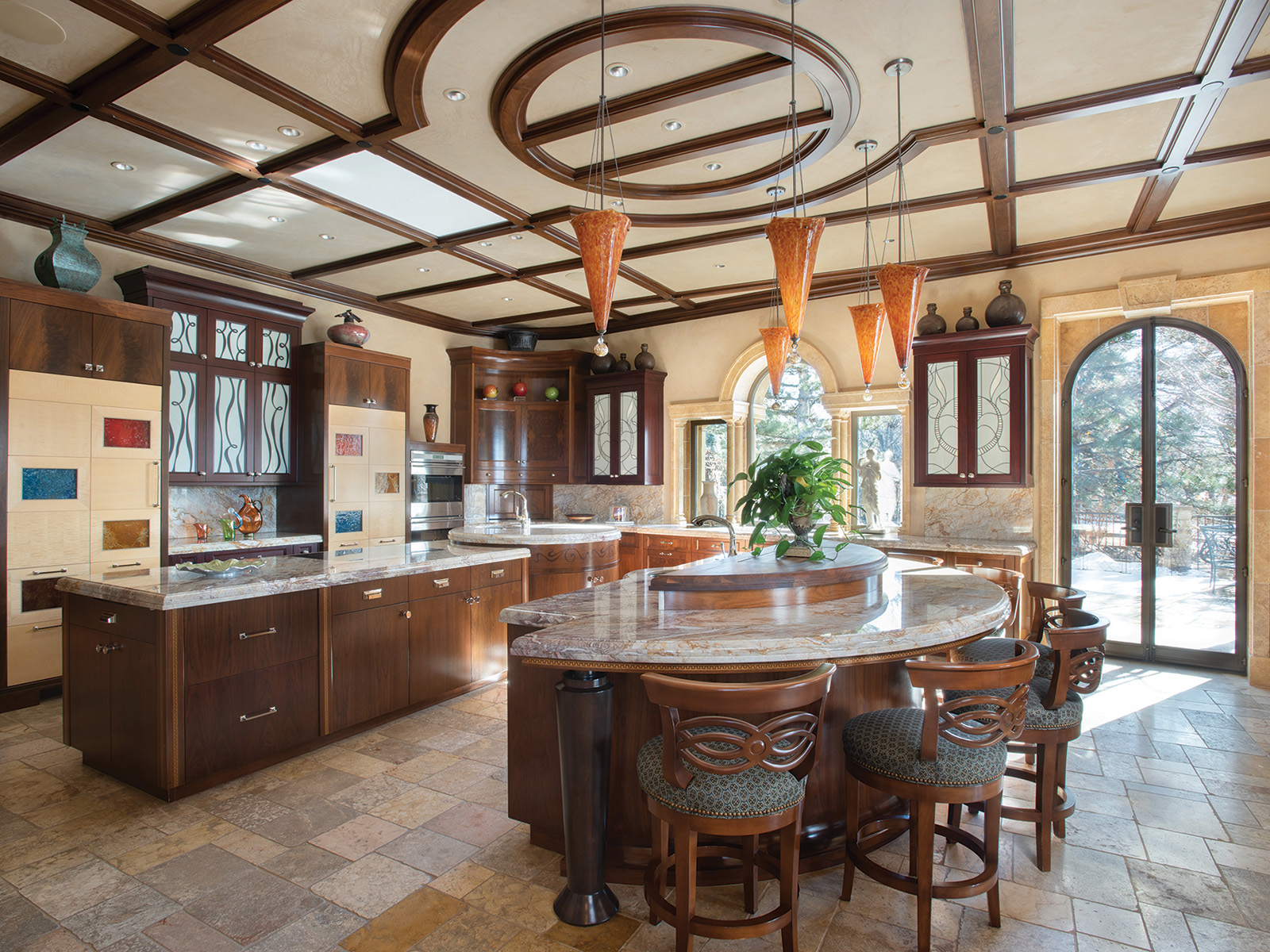
To create more than 21,000 square feet of intricately designed living space, the builders used 832,000 nails, more than a million staples, 90,000 linear feet of framing wood, and hundreds of thousands of pounds of stone masonry. For the indoor pool’s floor alone, which was inspired by the pool at Hearst Castle in California, Italian tile manufacturer Sicis created over one million one-inch glass tiles and assembled them into a vibrant mosaic depicting the Milky Way. “When it was all done, they cut the mosaic into six-inch square sections, numbered them so that they could be reassembled like a jigsaw puzzle, and shipped them to us,” Bob says. “It took basically a full [Boeing] 747 to get them back to Denver.”