

The Local newsletter is your free, daily guide to life in Colorado. For locals, by locals.
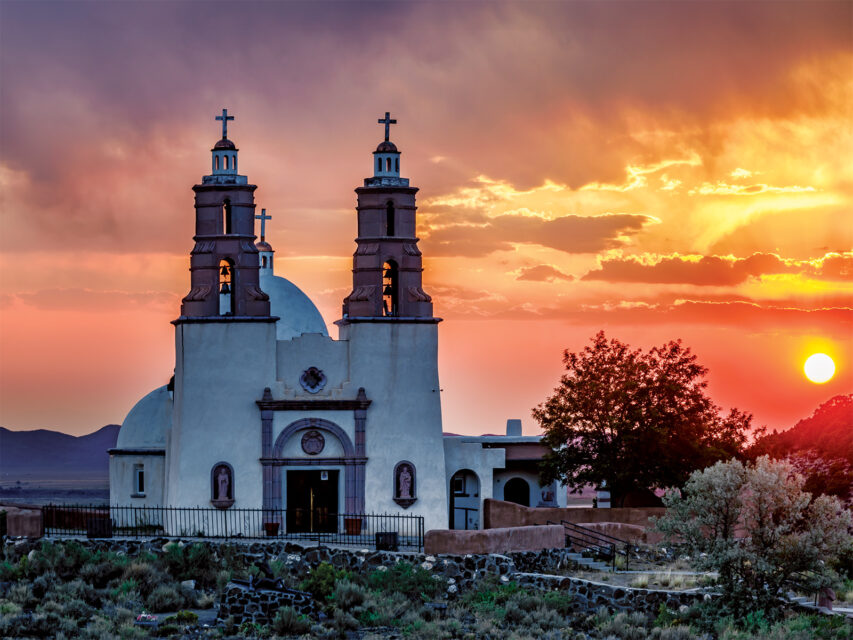
In April 1851, Hispanos from Taos, New Mexico, established a settlement called San Luis on the banks of Culebra Creek, overlooking the subtle shift where the Rocky Mountains open to what would become the American Southwest. Mexico had ceded the land (which has been home to Native American tribes for thousands of years) to the United States three years earlier, as part of the treaty that ended the Mexican-American War. Numerous villages sprouted in the area following the exchange, but the state recognizes San Luis as its oldest continuously inhabited town.
Tucked 15 miles north of the New Mexico border, San Luis marks its 175th anniversary this month as a living reminder of the cultures that helped create Colorado.
- How To Live Longer and Better, According to Actual Medical Experts
- The Federal Government Slashed Funding for Migrant College Programs. Here’s What That Means for Colorado Students.
- What Happened to the Colorado Rockies? Inside a Franchise’s Long Decline
- The Best Italian Restaurants in Denver and Beyond
Life for the roughly 700 residents of San Luis unfolds among high-altitude farms, adobe architecture, and the San Luis Peoples Market (formerly the R&R Market), which opened in 1857. But the town’s most famous attraction is the Stations of the Cross Shrine, also known as La Mesa de la Piedad y de la Misericordia. These 14 near-life-size bronze sculptures depict Christ’s passion, death, and resurrection along a half-mile trail and were created in 1990 by local artist Huberto Maestas, whose family has been in the area for six generations. “The people here are proud of their history,” Maestas, 66, says. “My roots are so deep, I can’t dig out.”
Ahead of San Luis’ 175th anniversary, we caught up with the artist to find out why this small community has such a lasting heart.
Editor’s note: The following conversation has been edited for length and clarity.
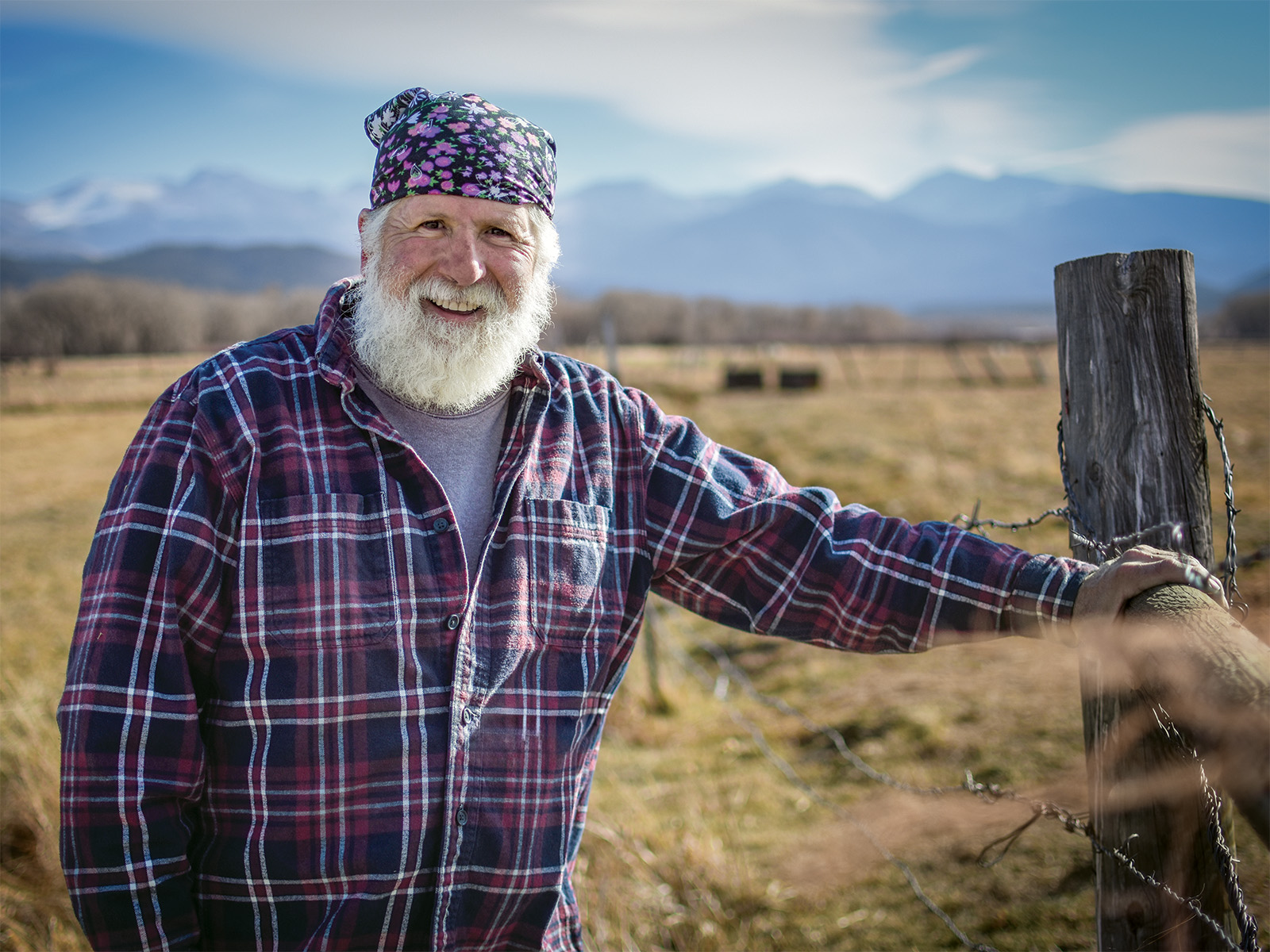
5280: How do you explain San Luis to someone who’s not from there?
Huberto Maestas: We’re the seeds of Colorado. It all started here. So many people leave because there aren’t jobs unless you want to take over the family farm. They come back when they retire, though. They’re tied to the culture here, tied to the land, tied to the way of life. It’s all about family and connection. You don’t have to like them all, but this is still family.
Why has San Luis endured for 175 years?
We come from a resilient historical background. The Spanish came north to resettle…. It was a struggle over a long period of time. But we’re strong and stubborn, and the people here have a strong belief in their faith and the hope that they survive the next day.
We also have the oldest water rights in Colorado. There’s a saying: “Without water, there is no life; without land, there is no home.” We try to keep those things intact here. Our young people learn to be good stewards of our land because it’s attached to our people, to our culture.
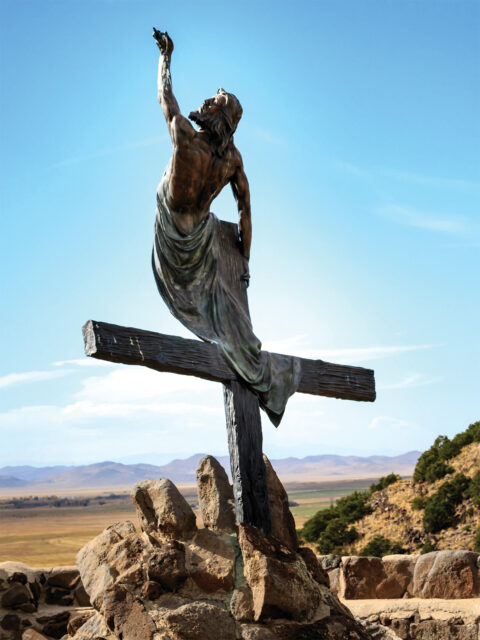
Your Stations of the Cross was dedicated in 1990 and became an instant landmark. Back then, did you realize the impact it would have on your town?
The downtown businesses were boarded up. There was nothing, and it was sad. Doing those sculptures kind of brought the art world here. Some artists moved from the Denver area. They bought buildings and opened their own studios. The Stations became powerful because of all the people who got involved cleaning the trail, helping me build the bases. Not me sculpting. It became a national shrine, but that had nothing to do with me. I think that has to do with energy from above. It gave great pride to our community, saying to everyone, “We did this.”
Beyond its history, what’s San Luis’ attraction?
This is undiscovered country. It’s clear, pure, undeveloped land.
Would you agree that San Luis feels different from what most folks consider quintessential Colorado?
People don’t know there’s an invisible line that separates Colorado from New Mexico. They’ll stop by my gallery and say they’re going to Colorado. I’m like, “You’re in Colorado.”
What do you hope people learn about San Luis at 175?
If you want to live here, you’ve got to bring your talent with you. Understand our history, because it’s embedded. We’re all extended family. But once you get to know the people, you really know them. You’ll feel like an orphan who found home.