

The Local newsletter is your free, daily guide to life in Colorado. For locals, by locals.
Few of us recognize fate when it rises to meet us, when history opens its books and offers an opportunity to add our names.
So it was for me on a recent Thursday, when I hit a clunky drive to the left side of the fairway, a solid-but-over-drawn nine-iron short of the green, and a blind-luck lag putt to tap-in range. Said tap-in made it four strokes. Par, in other words. Yet another way to put it: Good, but unremarkable.
Except that this, as one of my playing companions noted, just happened to be the first par ever recorded on the third hole of Rodeo Dunes, the most-hyped golf course in recent Colorado memory.
“Where do you think they’ll put the statue?” I asked.
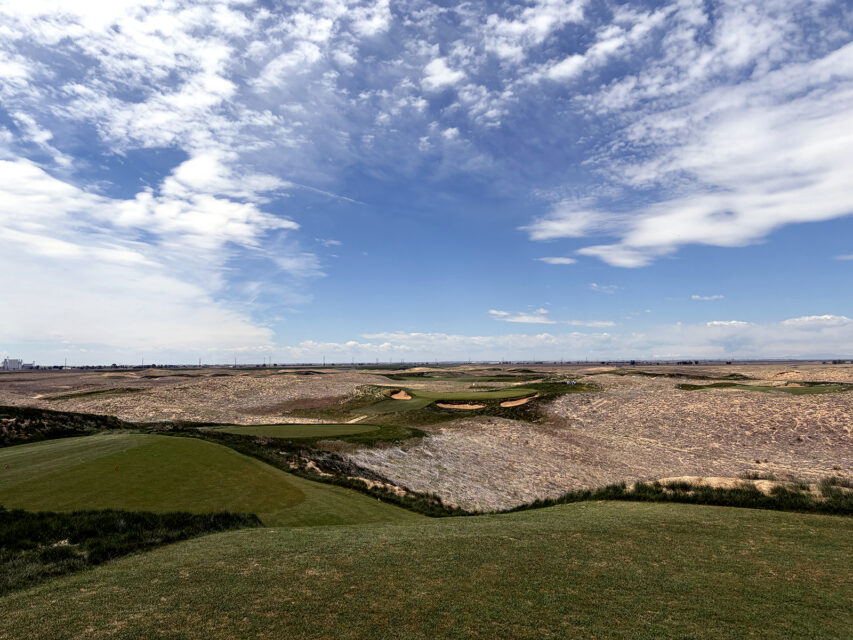
Rodeo Dunes’ hype owes itself almost entirely to the Keiser clan, the family behind Bandon Dunes in Oregon and Sand Valley in Wisconsin, resorts that are home to nearly 10 percent of the layouts on Golf Digest’s list of America’s 100 Greatest Public Courses. So when word broke that Michael Keiser, who co-developed Sand Valley, planned to build a new mecca 45 minutes northeast of Denver in Weld County, golfers experienced the sort of tingling, unbridled anticipation typically reserved for Star Wars fans before the franchise discovered content.
Rodeo Dunes’ first course, though completed last year, won’t open to the public until 2027. (Rodeo Dunes is expected to feature six courses, lodging, a restaurant, and practice facilities.) But to stoke anticipation, Keiser invited local and national media-types to somewhere in the middle of nowhere to be the first to play a full 18 at Rodeo Dunes.
Here’s what we saw.
The Legend
Like all places of worship, great golf courses have great lore. Take, for example, the sport’s Vatican—Augusta National. Its cofounder was Bobby Jones, the Grand Slam saint of 1930 who resisted the temptations of professionalism and remained a virginal amateur (the picture of purity) throughout his career. Jones built his temple not on rock, but atop Louis Mathieu Edouard Berckmans’ former fruit-tree plantation, which, according to an enraptured writer on PGA.com, means, “The land itself had a horticultural soul before it ever had bentgrass greens, gallery ropes, or Sunday roars.” (Can you feel the chills?) A three-hole stretch on the back nine is christened “Amen Corner.”
The legend of Rodeo Dunes goes like this: Keiser was rummaging around on Google Earth one day (as one does) when he spotted acres of sand dunes near Denver. To most, this was a wasteland. To Keiser, it was a gold mine. You see, the Keisers trade in a specific brand of golf by recreating Scottish links courses—no trees, undulating fairways and greens—in these United States. Sand dunes are essential to this style because they provide a naturally rolling canvas upon which to route 18 holes.
Keiser suspected he’d discovered a rich vein and flew to Denver, drove to Roggen, and jumped a fence to get a better look. This, of course, was trespassing. But evidently Keiser looked innocent enough (we imagine him committing this misdemeanor in a Manning-esque quarter-zip and Vuori tech chinos), because the ranch hand who caught him simply took the developer to meet Mike Cervi, a renowned rodeo contractor and the owner of the 60,000-acre ranch on which the dunes stand. Cervi fed his intruder a ham sandwich while listening to the harebrained scheme.
The Setting
You can’t really appreciate the pair of Titleists it takes to build a luxury golf course in unincorporated Roggen, Colorado, until you drive 45 minutes northwest out of the Denver metro on I-76, cross the highway, and take a left at Motel Roggen (one-star on Google, though there’s only one review). An unmarked gravel road leads you through…nothing. Really, there’s not a single thing I can remember seeing on the drive except for barbed-wire fencing and scrub grass. I kept craning to get a glimpse of the course or even these famous sandhills and…nothing. I started to wonder if I had taken the wrong unmarked gravel road and would eventually run out of gas in the middle of the High Plains desert or, worse, Nebraska. Finally, after two miles I arrived at a makeshift parking lot and saw…nothing.
The Vibe
During my storied career, I’ve played Torrey Pines (home of the 2008 and ’22 U.S. Opens), Pine Needles (home of the ’22 Women’s U.S. Open), and even St. Andrews (home of golf). But my hands-down favorite track of all-time is Bandon Dunes. Reason number one: There’s not just one track, there’s six. Reason number two: Each of those courses runs along the edge of the Pacific Ocean. Reason number three: It’s Disney World for golfers.
Yes, the golf is great. But every minute detail of the resort’s overall design pulls together to create a fantasy land. There’s a Scottish pub, restaurants that overlook the courses and the ocean beyond, a practice facility that (at least while we were there) never confines you to the dreaded thud of artificial mats, and a 100,000-square-foot putting green called the Punchbowl where foursomes convene after their rounds to ride ridiculous breaks made even more ridiculous by cocktails from the greenside Tap-In bar. Apologies to the wife and kids, but my life peaked at Bandon Dunes.
Given its Keiser pedigree, Rodeo Dunes would inevitably face comparisons to Bandon—by me, the minute I stepped out of my car.
This is obviously unfair. Rodeo Dunes is still very much a construction zone and none of the resort’s amenities have been built yet. Right now, the resort’s only public-facing building is a temporary clubhouse set inside a portable building. A staffer told me that there are plans to build lodgings, probably a mix of hotels and private residences, and a restaurant. Beyond that? He shrugged. (The putting green will at least outshine Bandon’s: Crews are currently shaping a seven-and-a-half-acre faux dance floor behind the first tee.)
By choice, Rodeo will never rival its Oregonian forefather for luxury. As Keiser told Golf magazine in 2023: “The goal is to create raw, pure golf, with everything else stripped away.” Like an eager Naropa freshman, Keiser is embracing the sacred void of emptiness.
The Golf

As you might be able to tell, I was feeling a bit disoriented at this point. Then, just over a rising dune, there it was: The first tee.
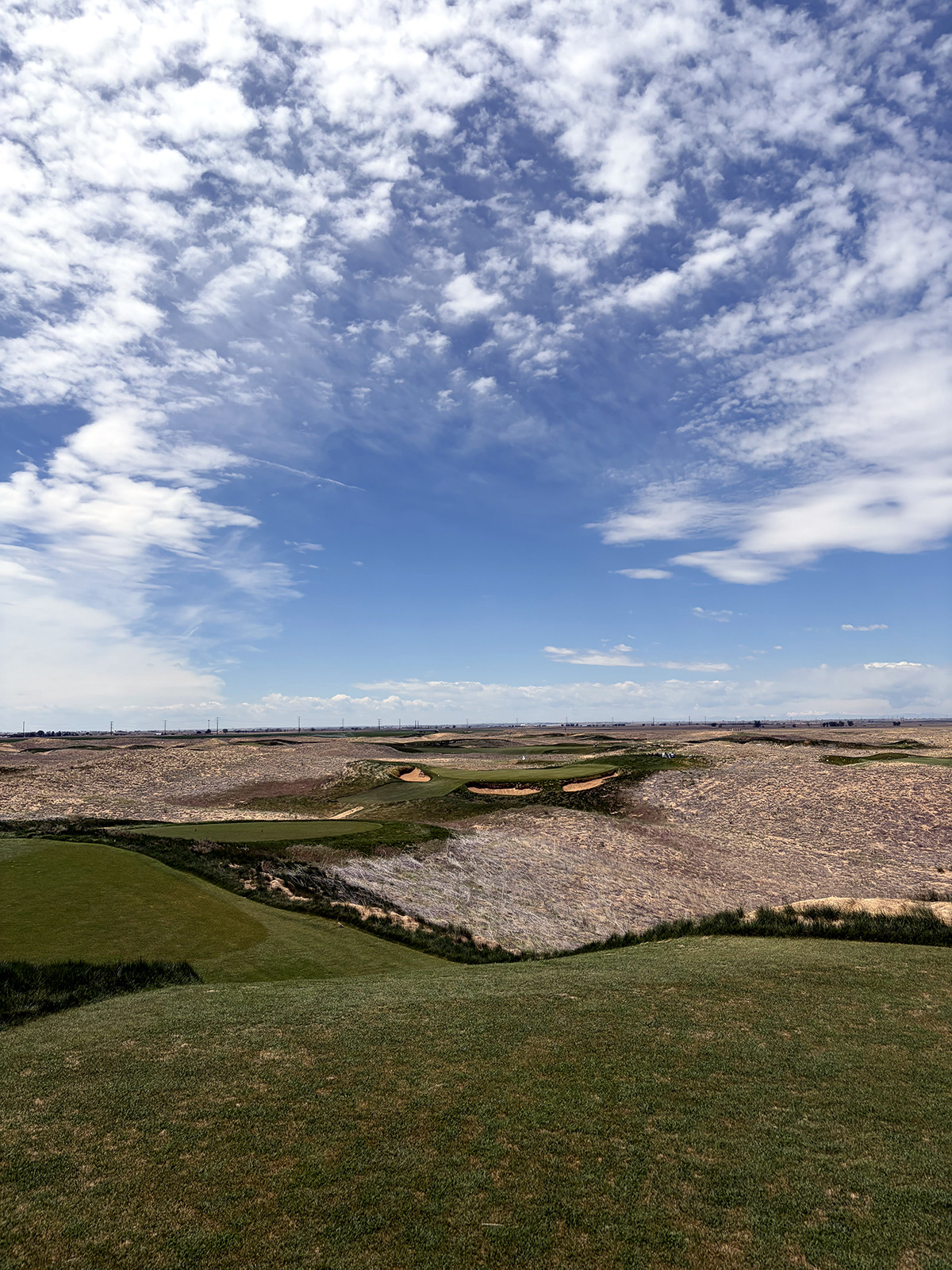
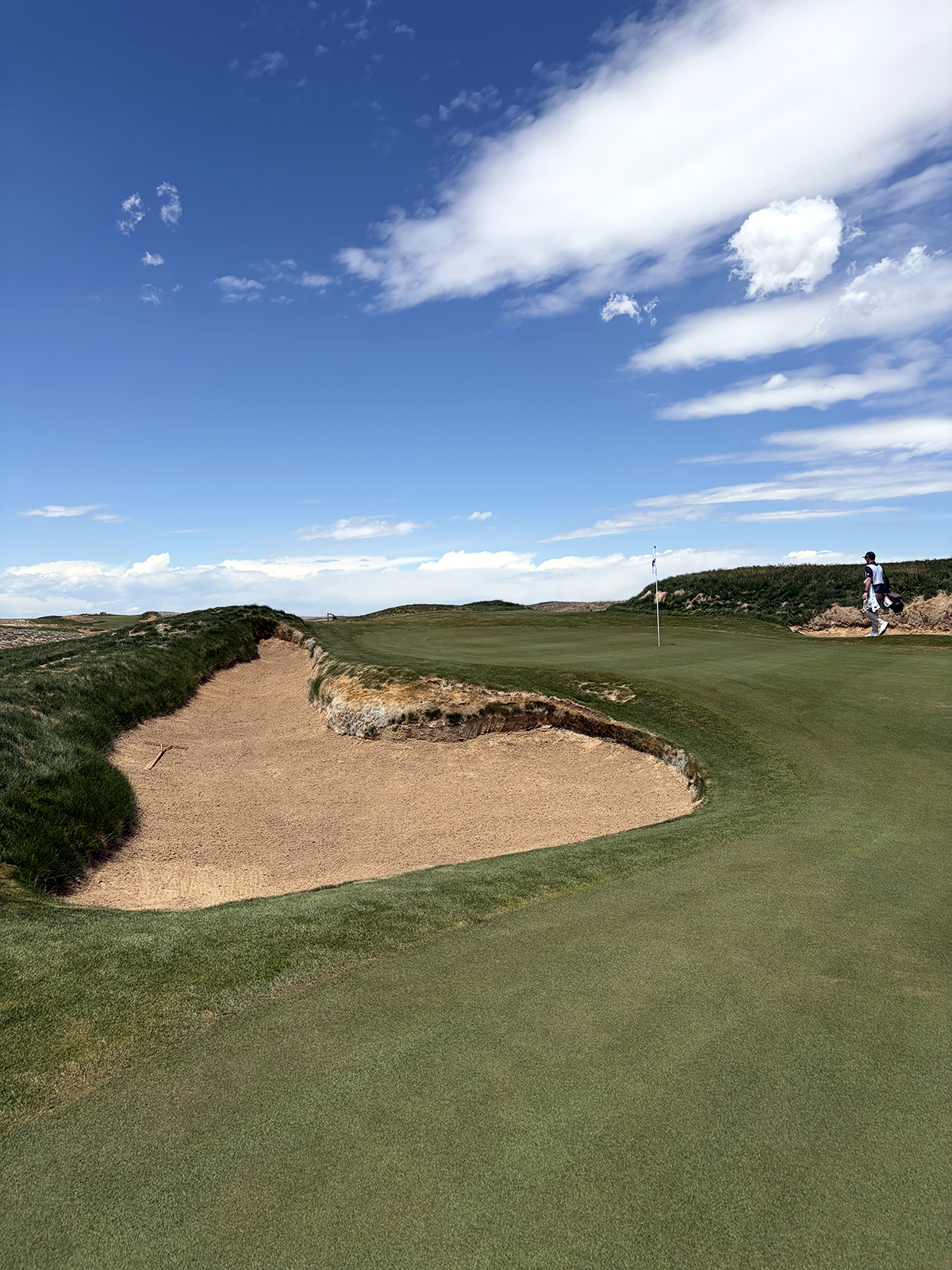
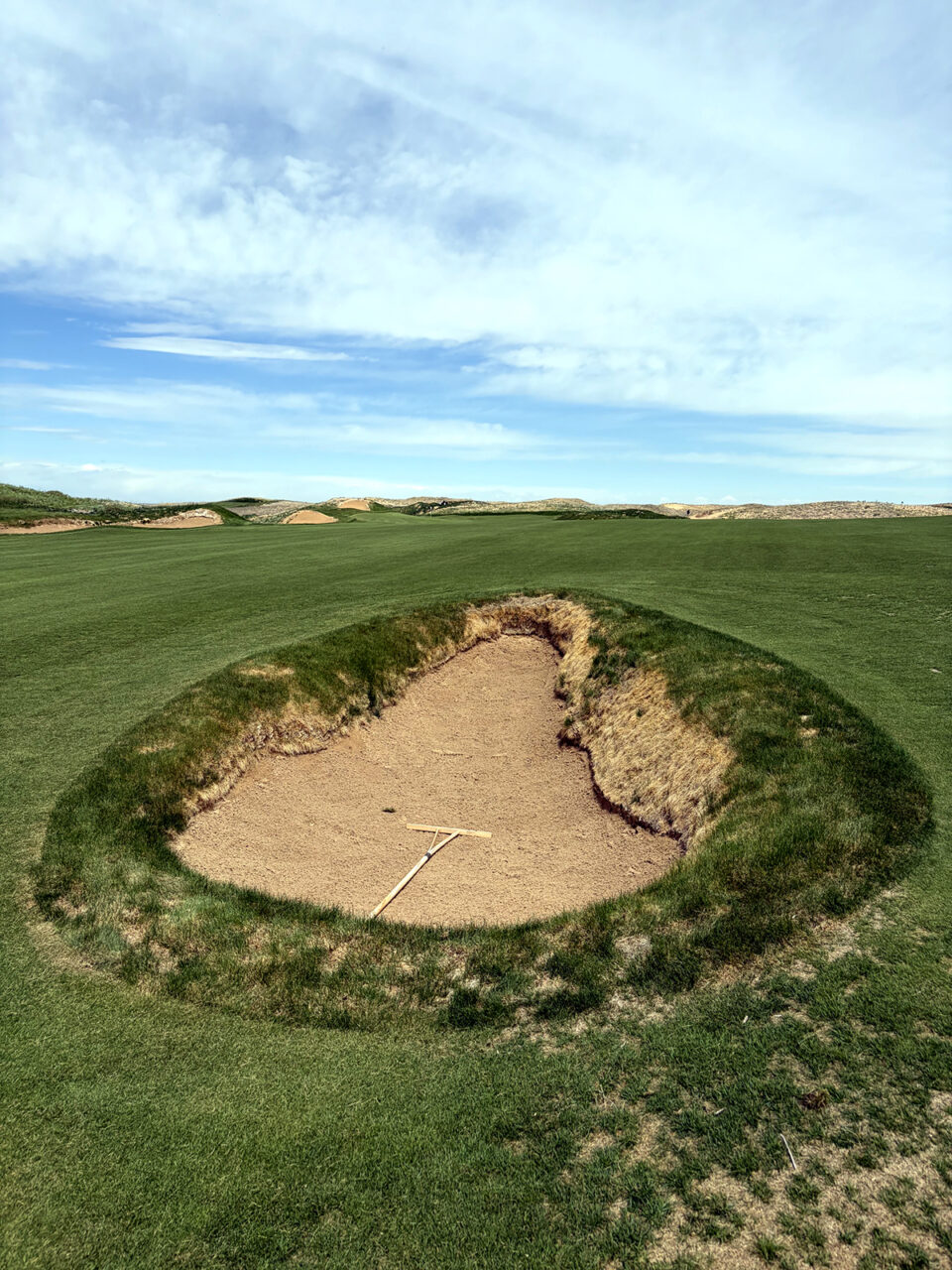
Rodeo’s firstborn was delivered by architects Ben Crenshaw and Bill Coore, who designed courses at both Bandon and Sand Valley. They specialize in exactly the sort of links-style layouts that the Keisers like to dig into the sand. Simply put, that equates to very big fairways and very big greens. The magic comes via the contours—those precious dunes.
A ridge, for example, runs down the middle of the first fairway, essentially splitting it in two. Those brave enough to carry the bunkers on the left with their drives are rewarded with a direct view of a large green. Those who bail out right (hello!) will still find the fairway, but won’t be able to see the flag behind a pokey dune jutting out from the desert. Once on the green, at least two tiers and too many bumps to count turn routine two-putts into embarrassing three-jacks (hi!).
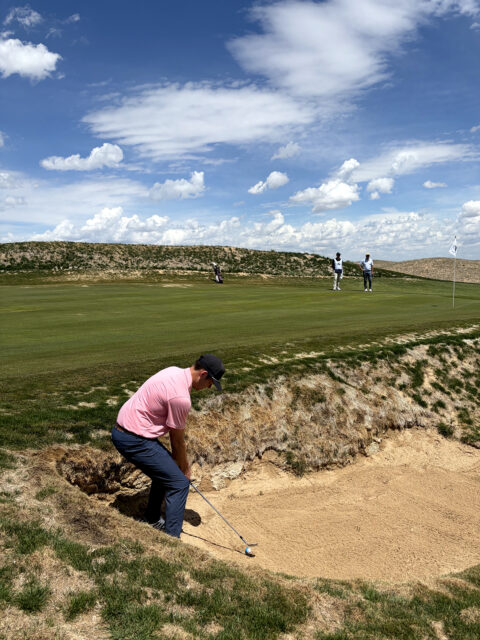
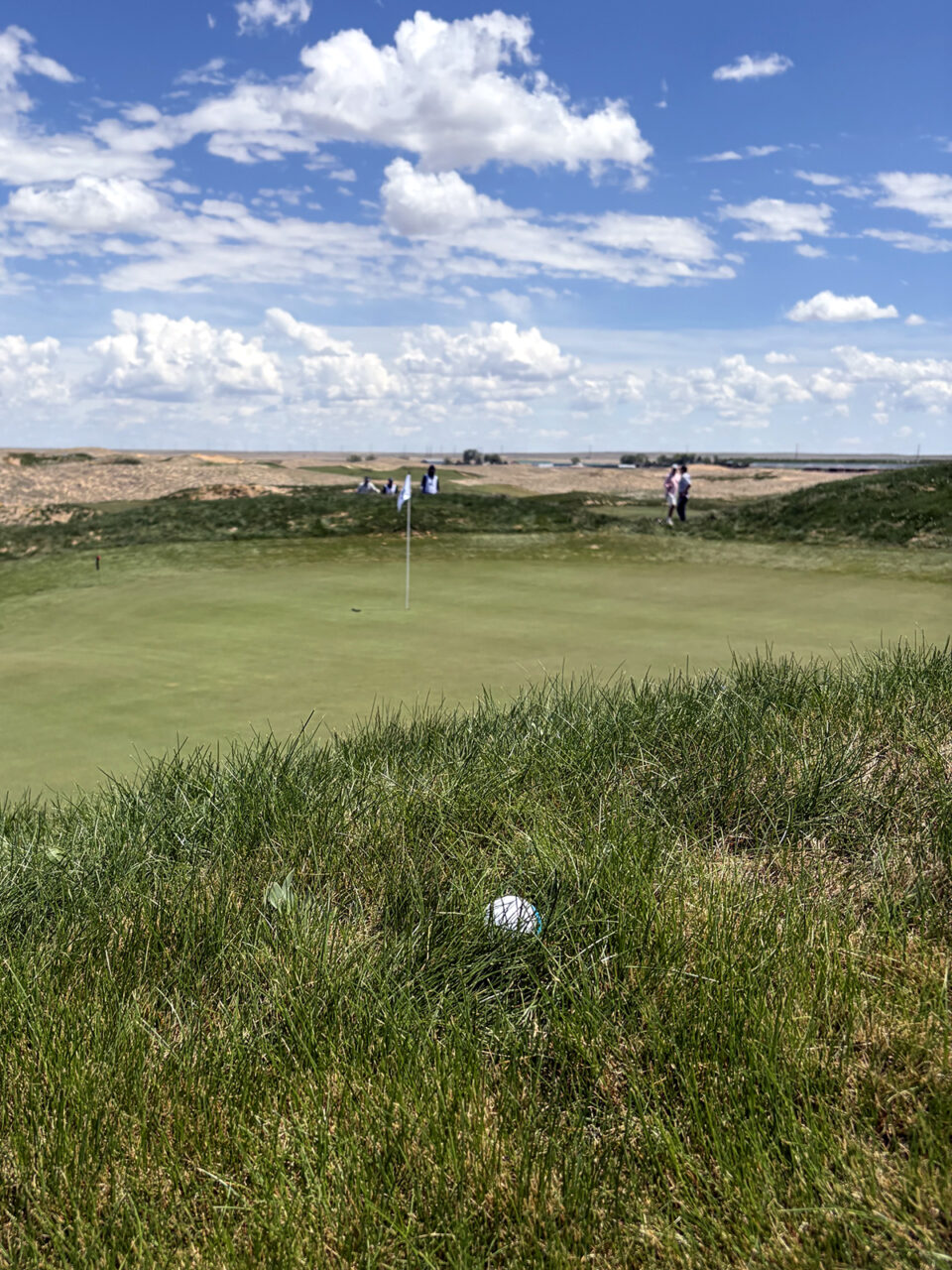
On the second hole—a benign-looking, 149-yard par three—missing the green by two paces results in trying to chip off a swale of a dune some 10 feet in the air (me again!).
This is the fun and the challenge of Keiser courses. You never really feel like you’re struggling because the fairways and greens are so wide. Then, at the end of the day, you look down at your card and realize the terrain’s hobbles and wobbles did a number on your scorecard. (I shot an 84 with two four-putts. Thanks for asking.)
That’s not to say that Rodeo Dunes is unfair. With its driveable par fours and reachable par fives, it reminds me of Sheep Ranch, Bandon Dunes’ most gettable course and one also designed by Coore and Crenshaw. (Quick aside: I played the round of my life at Sheep Ranch, needing only a bogey on the 18th to finish under par for the first time in my life. I triple-bogeyed the hole. Again—thanks for asking.)
What sets Rodeo Dunes apart is the locale. Ask me to name a distinctive landmark and the only thing I can remember is a grain silo. And it was far away.
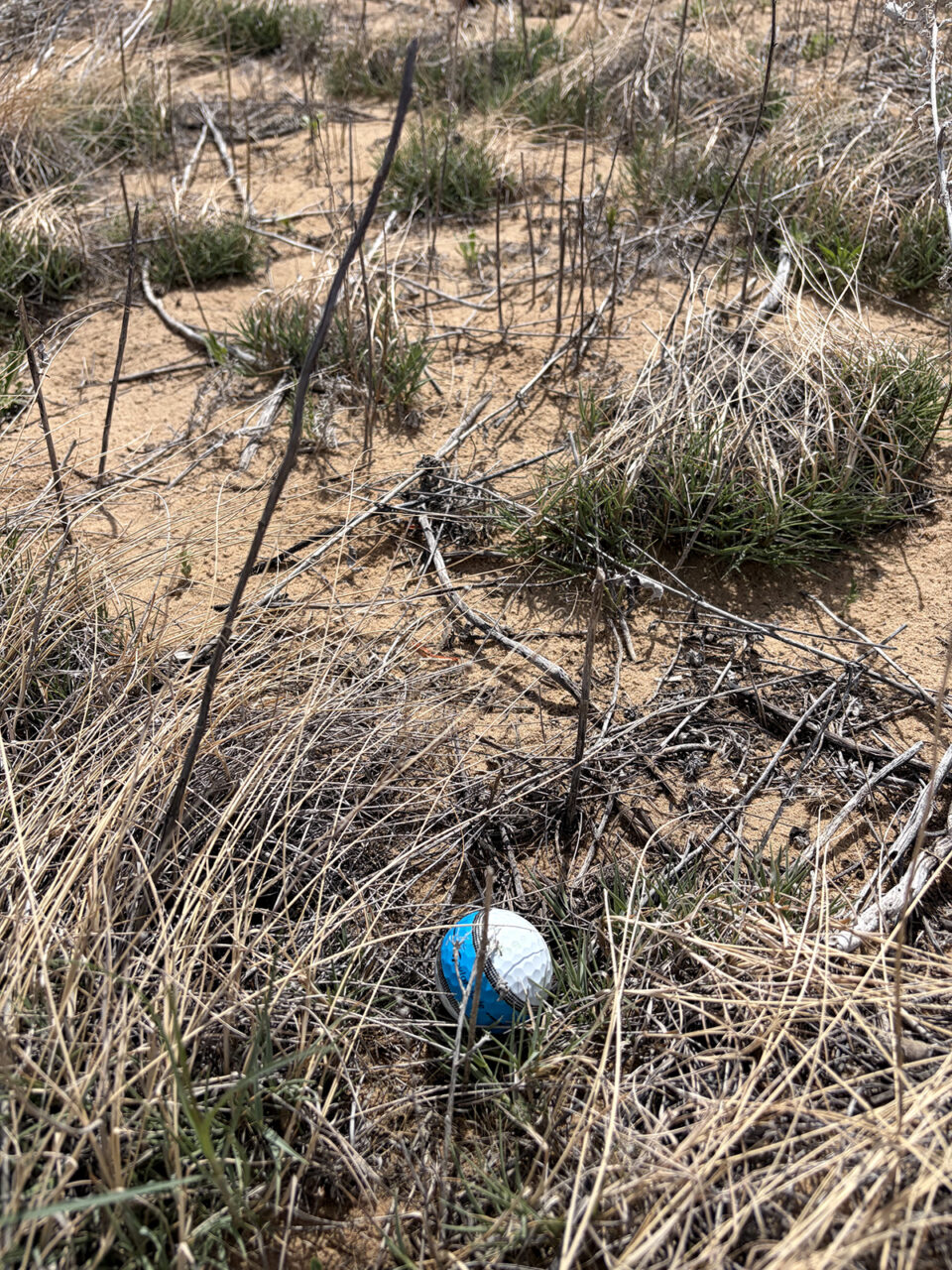
There are no crashing ocean waves to gaze upon; there’s no water anywhere. On the 12th hole, I hit my drive deep into the scrub brush on the left. Just when it should have been dropping into the sand, one of my playing companions said, “I think I saw a splash.”
“Really?” I sobbed, genuinely concerned I’d landed in a water hazard. Everybody laughed at the gullible rube.
For better or worse, Keiser built his foundation on sand. Some may be disappointed by the experience, visions of Bandon stuck in their heads, but I think most will get lost in the landscape—the endless horizon, the sand dunes rising to meet it. The effect is one of isolation. In such infinite terrain, your own perspective narrows—to the golf, to the people in your group, to yourself. I’ve never played a place like it.
In other words: It’s a truly unique Colorado experience, even if you’re from Colorado.
Rodeo Dunes’ Best Holes
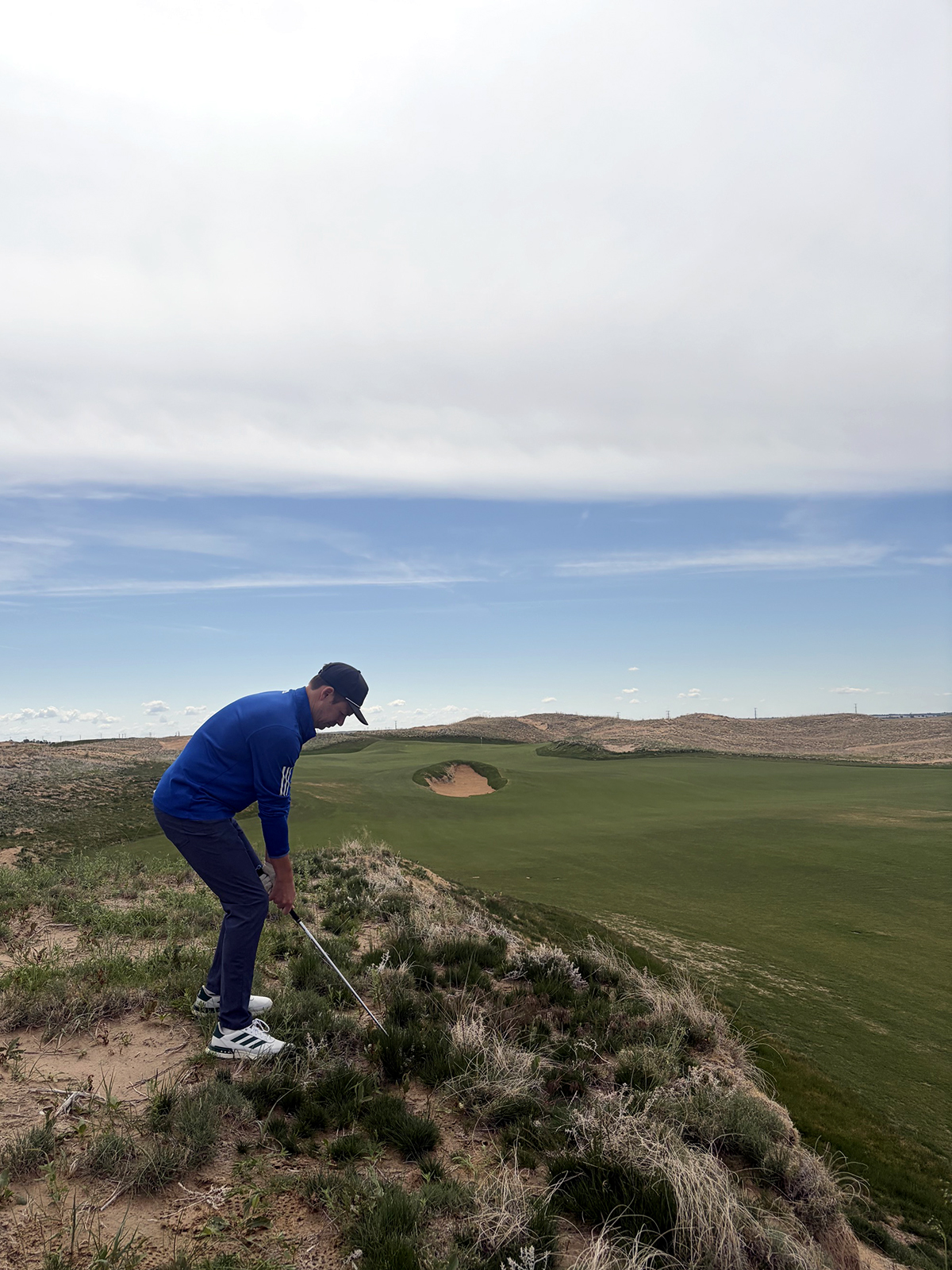
No. 4
392-yard Par 4
A large bunker bisects the fairway. Those who gamble for the left side of it get a better shot into the green; the right side of the fairway is bigger, but the approach is blind to an elevated green protected by imposing dunes. A small dollop of a hill sits in the front part of the green, giving the dance floor a horse-shoe effect.
No. 6
298-yard Par 4
A classic risk-versus-reward teeshot. Big hitters can drive the green, though the fairway pinches, leaving any but the straightest drives in a melange of sand, fescue, and whatever other thorny vegetation grows out here. The green is one of the smallest on the course, so even those who lay up don’t have any easy approach.
No. 15
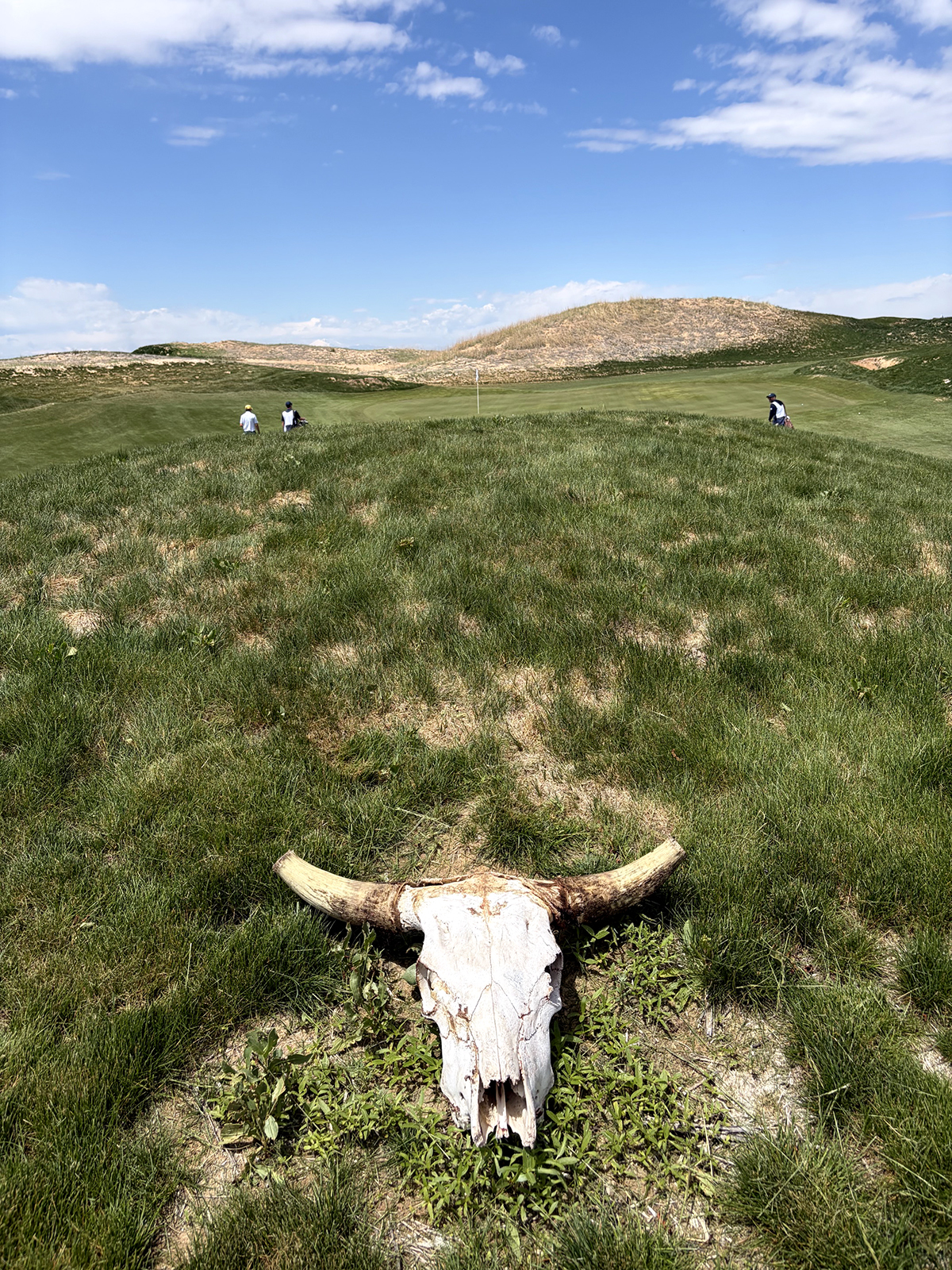
373-yard Par 4
The wide fairway offers plenty of forgiveness, but the approach is all about trust. The elevated green is hidden behind a long dune with a skull at the top (don’t worry; it’s bovine). Take your second shot over the right antler or left, depending on the pin placement. Pick the wrong one, and face a long lag putt that looks as if it might drop over the horizon.
Read More: How Coloradans Are Making Golf Fun Again