
The Local newsletter is your free, daily guide to life in Colorado. For locals, by locals.
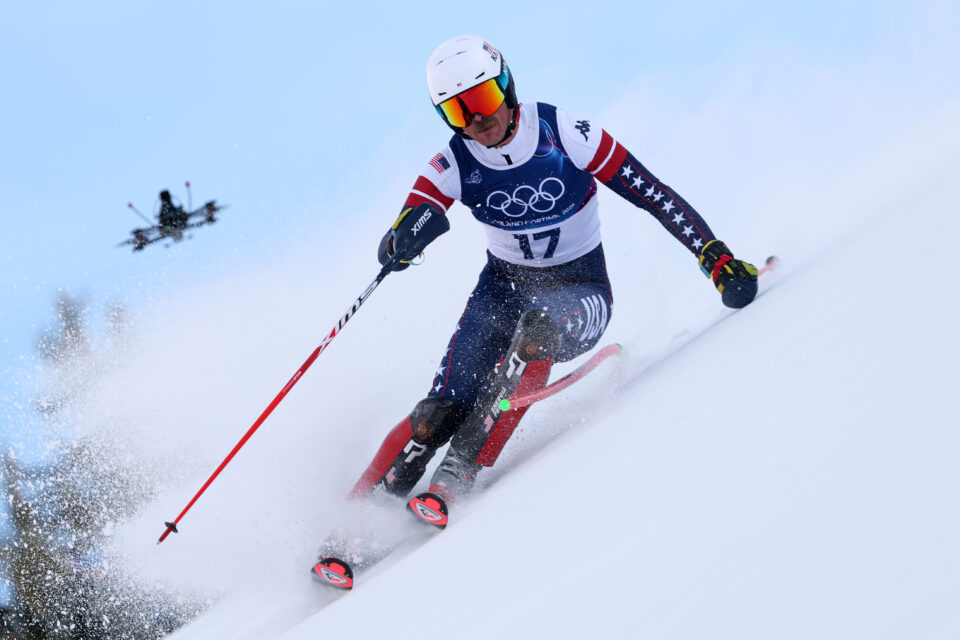
River Radamus has had four years to think about the 0.26 seconds that separated him from the giant slalom podium in Beijing. But instead of letting it rile him up, the 27-year-old, who was raised by two prominent ski coaches in Edwards, has developed a more Zen perspective.
“Ski racing is a year-round job,” Radamus says. “I spend 250-plus days on the snow; 150 to 200 days, I’m working out in the gym. And the job that I get graded on is less than an hour of work, total, throughout the season.” Narrow your scope to the Olympics, he continues, and “you’re working four years for two minutes, basically…. If I only judge myself as a success or failure on that, then I’m going to have a lot of time where I’m really down on myself and I’m not enjoying the process.”
Still, the hoopla that comes with the Olympic cycle is impossible to ignore for a rising star like Radamus, whose Hemsworthian good looks are on display in ads for J.Crew’s new U.S. Ski & Snowboard collection. “I’d be lying if I said it wasn’t different,” Radamus says. “There’s a much bigger spotlight on ski racing.”
Before he took off for Italy, we caught up with Radamus to talk about how he’s been mentally preparing for the 2026 Games and the work with his nonprofit here in Colorado that keeps him grounded.
Editor’s note: The following conversation has been edited for length and clarity.
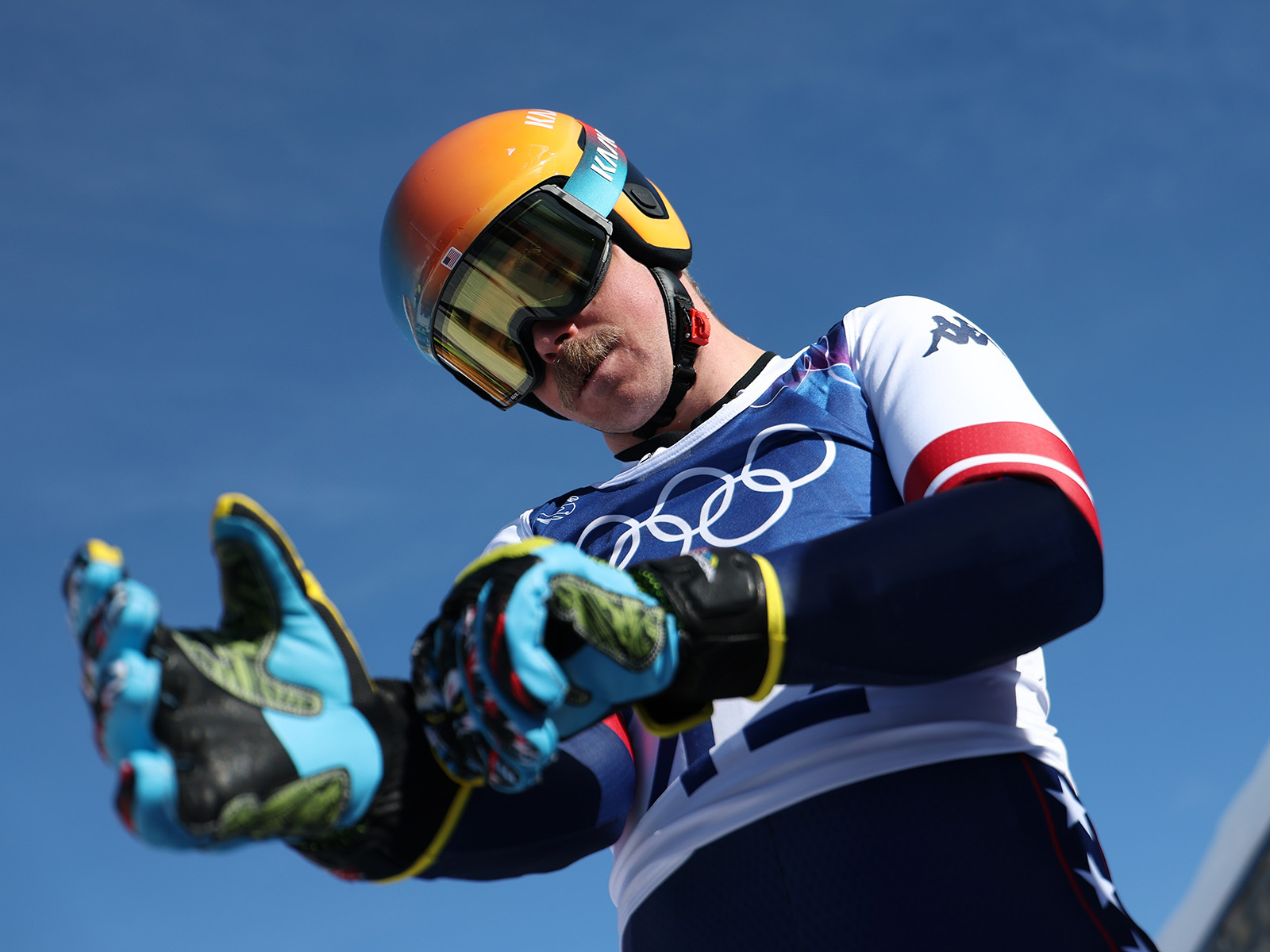
5280: Where am I catching you today?
River Radamus: I just got to Adelboden, Switzerland, from Italy. We were doing a little training, and now it’s back to race mode. I still live with my folks in Edwards, which is just past Beaver Creek, but I’m on the road so much, it’s about three weeks a year that I’m there.
How does Colorado skiing stack up against the rest of the world?
I think that it compares with the best of the best. I grew up skiing at Vail, and we’re pretty spoiled there with how much terrain there is. And the snow that you get in Colorado—like obviously the powder, but the snow that we train and race on—we call it “hero snow” because it’s so responsive. It feels a bit like styrofoam under the foot. When you make a turn and you lay the ski up, you know that it’s going to react just the way you want it to. It feels like a dream, and it makes you feel like a hero. We don’t see that kind of snow a lot on the World Cup circuit, but it’s always a pleasure to ski, especially when we come back for races in Beaver Creek and Copper.
What’s it like to go from a normal World Cup circuit year to the frenzy that the Olympics brings?
I don’t think there’s a single ski racer out there that would tell you that they didn’t dream of becoming an Olympic champion. So you put a little bit of extra weight on a season like this, but then obviously, the whole world’s attention is turned toward winter sports. And I think that’s good and bad. There’s the opportunity to make the sport a little bit more financially viable and be able to showcase our sport to the world stage and represent it as best we can.
How do you stay focused amid distractions like J. Crew shoots and Celsius energy drink social posts?
I think the last Olympics was really informative and helped me navigate not just the Olympic cycle, but how I go through the sport. I went into [Beijing] not really expecting much. I was sort of just breaking through onto the World Cup and finally finding some momentum, but I certainly wasn’t a favorite.
I had a really great Olympics. I skied probably better than most would have expected. I didn’t have a ton of expectations, but at the same time, I was fourth. Coming that close, knowing that there are so few opportunities you get…. You work your entire life toward that moment, and I was two tenths of a second away from a podium. It felt like maybe I just missed my opportunity.
That was a tough time processing what that meant to me. I realized if fourth place wasn’t going to be something I could be proud of, then why would third place? And why would second place? And even if I got first, first is great, but it’s just one day, you know? And so I realized I sort of had to step back and try to reformulate how I go about the sport.
What does that look like now?
Through this Olympic cycle, I’ve been really trying to embrace the one percent gains; sucking and succeeding and learning and growing. And when I get in that start gate, whether it’s in Seoul in the first race of the year or in Bormio in February at the Olympics, I know that win or lose, I’ve given everything I possibly have. To know that I’ve worked as hard, or harder, than anybody else in the field—whatever happens, I can be proud of that. That frees me up. It sort of takes the weight off my shoulders on race day. It’s a more satisfying way to go through this job in this life.
How does your work with your ARCO (Alpine Racing Career Opportunities) Foundation fit in?
It was actually born out of that processing of the last Olympics. I went home and I was thinking about purpose and about why I do this—because chasing elite performance in a sport can sometimes be very selfish. It can feel very selfish when you’re in it. I’m spending so much time away from my family. I have so many people supporting me. But when I’m out there in the start gate, I’m alone; I’m just chasing this dream. But what good am I? Am I providing? What good am I giving back to the community that’s given to me?
I started to connect a lot to gratitude and think about how fortunate I am to do what I do and also take more seriously the platform that I have as an athlete right now. That’s the gift that’s been given to me by my performance. Ski racing obviously isn’t the most affordable sport to begin with, and I wouldn’t be where I am today if I didn’t have such a huge support system of coaches that guided me and a community that was able to help me afford this career. This whole ecosystem doesn’t really run unless the people that gain so much from it also give back to it. And so I wanted to do what I can right now, both to give back to the next generation and hopefully inspire my peers and inspire others in the community to also do their part.
What exactly does ARCO do?
This is the third year now, and we’ve granted more than $100,000 to athletes. We’ve supported more than 75 athletes from across the country. We focus on [under-16] athletes, which is a really key age for ski racing. It’s a time where suddenly the price of ski racing goes up a lot, because you have to go to a lot of out-of-region races, and you need more skis. At the same time you’re going into high school and you’re getting that pull to do what your peers are doing. It’s sort of an inflection point where you’re like, Do I really want to do this, or do I just want to live a normal life and go to high school?
And so we’re trying to bridge the gap a little bit and make sure that the athletes that are super passionate, super talented, great human beings that don’t have the resources are able to afford to keep competing and stay on par with the athletes that have those means. It’s important for the pipeline of our sport, and it’s important for our community. This world of ski racing has given so much to me, and whether you make it to the top level or not, the life lessons you learn and the lifelong endeavor of skiing is something that’s so special, and so I want to be able to share that as much as I possibly can.
I also run camps in the spring at Copper, for the last two years now, completely free. Athletes are always wanting to ski more, and so the programs get a little bit more expensive. And then the pool narrows and narrows and narrows. I wanted to give athletes an opportunity to get on snow in the spring, at the end of the season, in great conditions, so that they have that extra training. At the end of the day, the most important thing for development is just on-snow time, getting those reps. Hopefully having me there as a World Cup skier to coach also produces some value for them.
Read More: Coloradans to Watch at the 2026 Milan Winter Olympics