


The Local newsletter is your free, daily guide to life in Colorado. For locals, by locals.
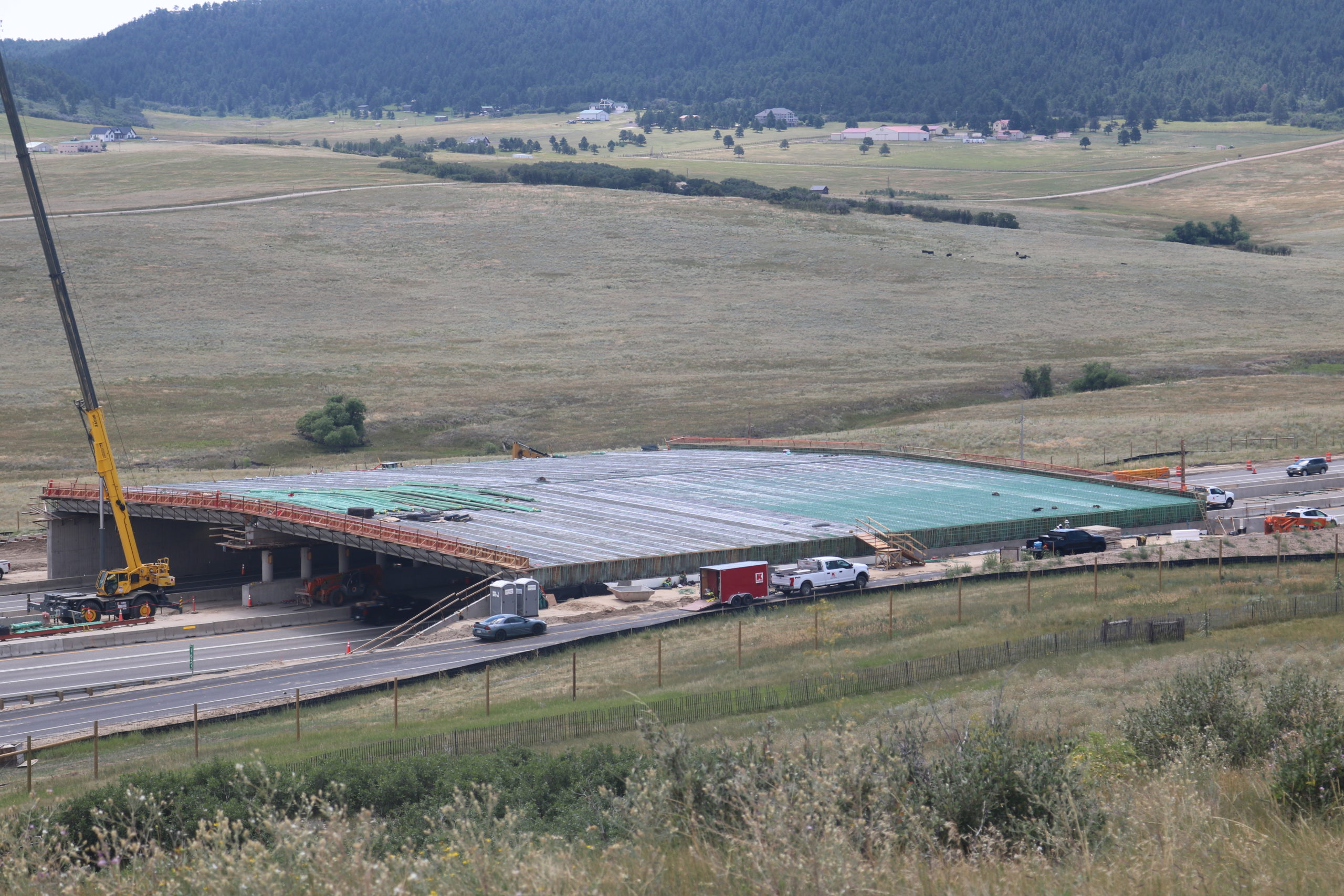
On a steamy August morning, standing atop a small hill just west of I-25 between Castle Rock and Monument, Chuck Attardo surveys the enormous bridge he’s spent seven years trying to build. As the I-25 south corridor environmental project manager for the Colorado Department of Transportation (CDOT), Attardo oversees one of the most critical roadways in the state, an 18-mile stretch of highway south of Denver.
Known as the I-25 gap, this section is one of the last undeveloped areas on the Front Range—and it’s a key migration corridor for elk, mule deer, pronghorn, and other critters big and small. Over the past decade, CDOT has partnered with county, state, and federal agencies to make the gap safer for motorists and animals, a $450 million effort that resulted in 28 miles of eight-foot-tall wildlife fencing, five underpasses that allow animals to cross safely beneath I-25, and 63 escape ramps for wildlife stuck on the wrong side of the fencing. The pièce de résistance is the Greenland Wildlife Overpass, a land bridge that will span more than 40,000 square feet and open a key passageway across I-25 for large mammals.

According to CDOT data, the I-25 Gap project has already resulted in a 91-percent reduction in wildlife-vehicle collisions—at least to the extent that those collisions can be tracked. But Attardo knows there’s more to be done, and the wildlife overpass, now in the final stages of construction, marks the last step. “If we do this right,” he says, “we can make it the most important wildlife connection between the mountains, the foothills, and the plains left in Colorado.”
The Collision Conundrum
It’s hard to know how many animals are killed on any stretch of road in America. The methods of gathering statistics are as limited as they are grisly. Transportation planners and wildlife biologists rely on carcass counts, which typically come from highway maintenance workers and law enforcement. But those counts only happen when an animal is found dead on the road. If, for instance, a mule deer is struck and then wanders a few hundred yards before collapsing in the brush, no data is passed along—especially if the damage to the driver’s vehicle isn’t severe enough for them to stop.
“This whole field of research has a chronic data issue,” says Ben Goldfarb, a Salida-based environmental journalist whose 2023 book, Crossings: How Road Ecology Is Shaping the Future of Our Planet, examines mitigation techniques like overpasses. “You’re always missing a lot of collisions, even if you’re rigorously counting carcasses.”
Compared to most states, Colorado does rigorously count carcasses. Before the I-25 gap project officially launched in 2018, a multiyear study conducted by CDOT, Colorado Parks and Wildlife (CPW), and Douglas County tried to quantify the roadkill problem along the stretch of interstate between Castle Rock and Monument.
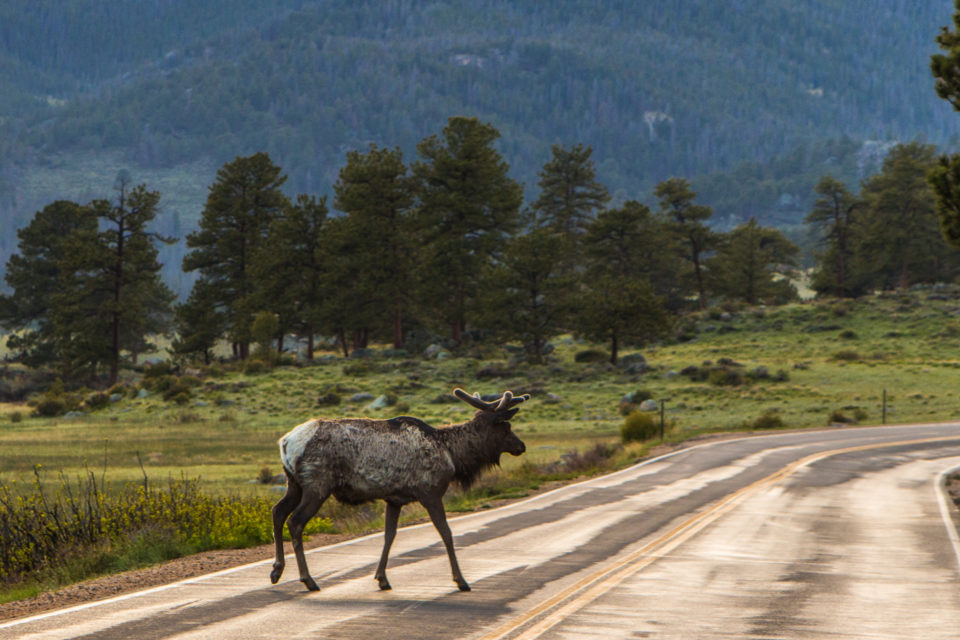
According to Attardo, 10 mountain lions and 18 black bears were killed by vehicles during the five-year study period. But the data for deer and elk was a different story. The numbers were so high, the collisions so frequent, it became difficult to produce precise figures. “There was at least one collision per day during the fall and spring movement seasons,” Attardo says. “It’s a huge number.”
Read More: Salida Author Ben Goldfarb’s New Book Explores The Intersection of Roads and Wildlife
Building Bridges
Around the time the I-25 gap project began, CDOT and CPW joined forces to create the Colorado Wildlife Transportation Alliance, which today includes partners like the Federal Highway Administration, the Southern Ute Indian Tribe, and the Rocky Mountain Elk Foundation. The goal is to incorporate wildlife needs into transportation planning efforts, creating safer passageways throughout the state. Attardo, co-chair of the alliance, says the group identified seven statewide projects that would make it safer for animals to migrate (and for humans to avoid costly and potentially deadly crashes).
Some of those—including an overpass built on U.S. 160 in southwest Colorado and two bridges constructed on CO 9 in Grand County—have already been completed. Others, including mitigation on a stretch of I-70 on East Vail Pass, are yet to come. But one of the top priorities was on I-25 at mile marker 165.4, where the Greenland Wildlife Overpass is now being built. Using a federal grant from the Wildlife Crossings Pilot Program, CDOT hired Kraemer North America, which began construction in February. The $15 million structure is expected to be finished by December, promising to connect the grasslands east of the highway to the Pike National Forest to the west.
“It’s such a unique place because of all the protected lands on either side of the highway,” says Julia Kintsch, the senior ecologist and founder of Eco-resolutions, a company focused on improving infrastructure for humans and animals. Kintsch was brought in as a consultant during the design process due to her expertise with wildlife crossings.
The construction of the overpass is only possible thanks to the decades-long work of local land managers. According to Andy Hough, environmental resources coordinator for Douglas County Open Space, the county has conserved 66,000 acres over the past 30 years by way of open space purchases and conservation easements on private land. In the area of the I-25 gap, there are 55 square miles of protected habitat: an ideal location for an overpass. “We essentially completed a network of conserved areas,” Hough says.
Is This Really the Biggest in the World?
When construction on the Greenland Wildlife Overpass began, CDOT billed it as “the world’s largest structure over a major roadway for wildlife to cross”—a claim that has repeatedly made headlines. It’s a bold statement, and one that doesn’t really hold up under scrutiny. There’s no doubt that the Greenland crossing, which will be 209 feet long and 200 feet wide when it is finished, is enormous. But the “world’s largest” claim is dubious, especially when compared to the Wallis Annenberg Wildlife Crossing on Highway 101 outside of Los Angeles.
The largest bridge at the Annenberg Crossing is 210 feet long by 174 feet wide, meaning the I-25 bridge structure is indeed longer and wider. But, as Goldfarb points out, the Annenberg project actually involves two bridges—including a smaller structure spanning a frontage road—as well as many acres of ecological restoration in the surrounding area, so its total square footage is larger. “The scope of the [Wallis Annenberg project] transcends the bridge,” Goldfarb says.
Attardo, chief promoter for Greenland Overpass, understands all this. “It depends on how you slice and dice the numbers,” he says. “I’m good friends with the people working on the crossing in California. When I’m out here telling media this is the largest in the world, that’s sensitive to them. We like to say: ‘Ours is the largest east of the Rockies; theirs is the largest West of the Rockies.’ ”
In reality, neither Colorado or California can really claim the planet’s largest overpass. The Natuurbrug Zanderij Crailoo crossing in the Netherlands, at 164 feet wide and a whopping 2,624 feet long, dwarfs any structure being built in the United States. It spans a rail line and a highway, as well as other complexes. Plus, a similarly massive project in India boasts dimensions that far exceed any American bridge to date.
The Wildlife Impact
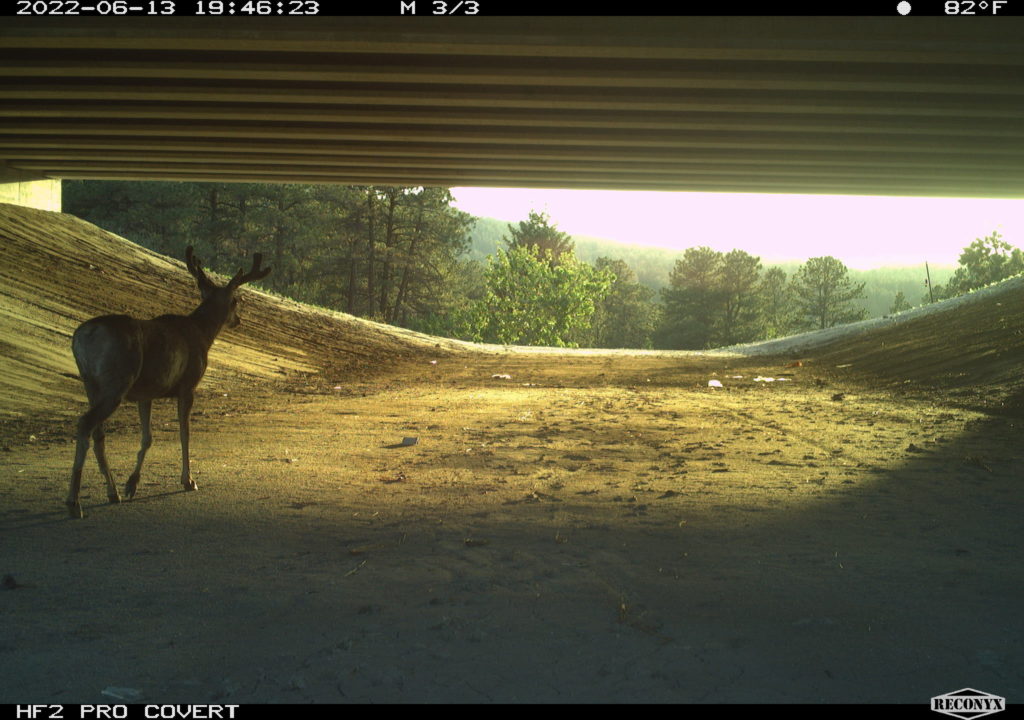
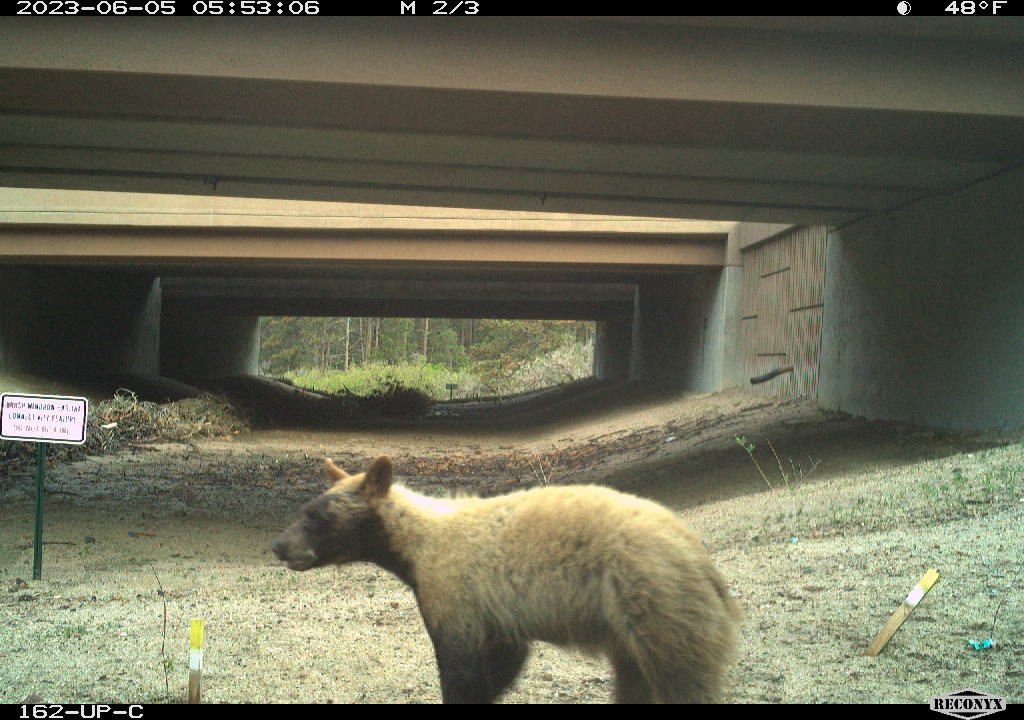
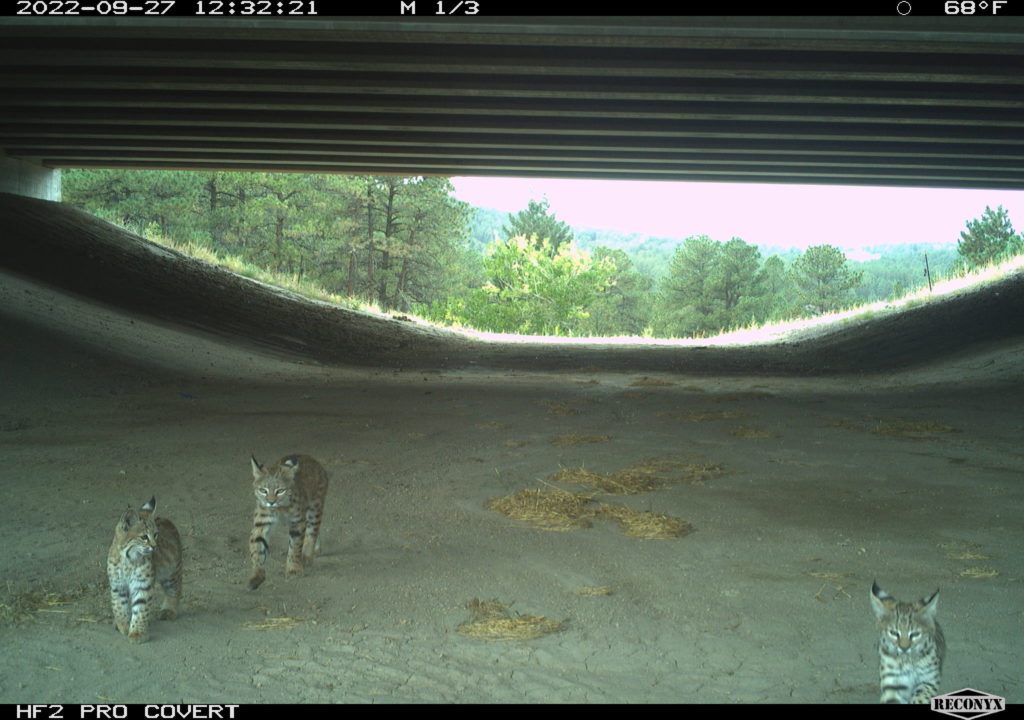
The Greenland Overpass is massive for a reason. It spans six lanes of interstate traffic, and the larger species that will use it need all the space they can find. The five underpasses constructed as part of the I-25 gap project are already a boon for smaller game. In fact, the underpasses were designed with small-mammal passageways within them, helping critters like the Preble’s meadow jumping mouse cross under the highway. Coyotes, foxes, and deer utilize those conduits, too.
But the herds of elk and pronghorn grazing nearby are reluctant to use an underpass. The pronghorn, North America’s fastest land animal, needs ample open space to see long distances and run at high speeds (up to 60 miles per hour). “Pronghorn are the quintessential example of an overcrosser,” Goldfarb says. “If your goal is to get pronghorn across the highway, you absolutely want an overpass.”
As the design for the Greenland Overpass took shape, Kintsch and others also had to consider the traffic noise and light emanating from the interstate. “For animals that are sensitive to noise and lights, making the overpass wider creates more security,” Kinitsch says. “We need to design for all the wildlife in this landscape.”
To ensure that sense of security, the overpass will feature three feet of dirt and natural vegetation atop the cement bridge. It will also have eight-foot walls, a combination of cement and fencing, to block the noise and sight of cars and trucks below.
When the bridge is complete later this year, it will mark Colorado’s fourth wildlife overpass. And according to data from CPW, it will join a statewide network that includes more than 70 underpasses, making Colorado a national leader in mitigating wildlife-vehicle collisions.
“We’re one of the few states in the country that actually has this scientific approach to where our worst collisions are,” Attaro says. “We use that information to figure out what our priorities are. This bridge was one of them.”
Back on the hillside west of I-25, as Attardo admires the gigantic overpass, he spots something moving east of the interstate. Looking closer, he spots an animal—two, actually. They’re pronghorn, Attardo explains. And maybe this time next year, thanks to his work, they’ll have a safe way to cross the road.