

The Local newsletter is your free, daily guide to life in Colorado. For locals, by locals.
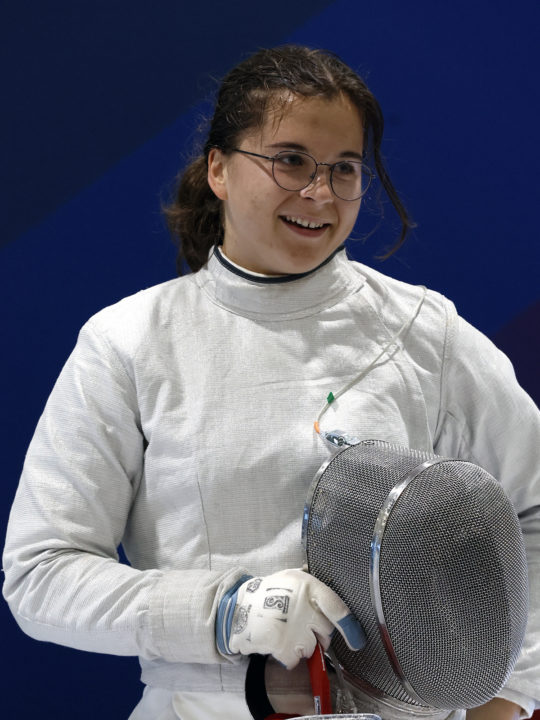
Fifteen-year-old Sofiia Vinogorova is a lot like other kids her age. She worries about her grades, practices her alto saxophone, and loves to travel. She daydreams about winning Olympic gold. But unlike most other high schoolers, she’s poised to do so.
Vinogorova first learned about fencing as a little kid when she watched old-school swashbuckling flicks like Zorro and The Three Musketeers. At age nine, she tagged along to a friend’s fencing practice—and was hooked. A year later, in 2020, she placed fifth out of 42 other athletes in her Y-10 age group at the National Championships. “I remember her coach, Greg Dilworth, saying, ‘She doesn’t even know how good she is,’ ” says Vinogorova’s father, Mikhail. “He had a hope, but from hope to success is a long story. [Since then, he’s] found how to communicate with Sofiia, how to support the creation of a champion.”

This past July, the sophomore at Boulder’s Fairview High School demonstrated she’s well on her way to her—and her coach’s—golden goal. At USA Fencing’s 2025 Summer Nationals, the largest fencing tournament in the U.S., Vinogorova clinched first place in the Y-14 Women’s Saber competition and earned the title of National Champion.
We sat down with the title winner to hear her take on the sport—and with a little (OK, a lot of) help from the sport’s governing body, Colorado Springs–based USA Fencing, we actually understood what she was talking about.
Editor’s note: The following conversation has been edited for length and clarity.
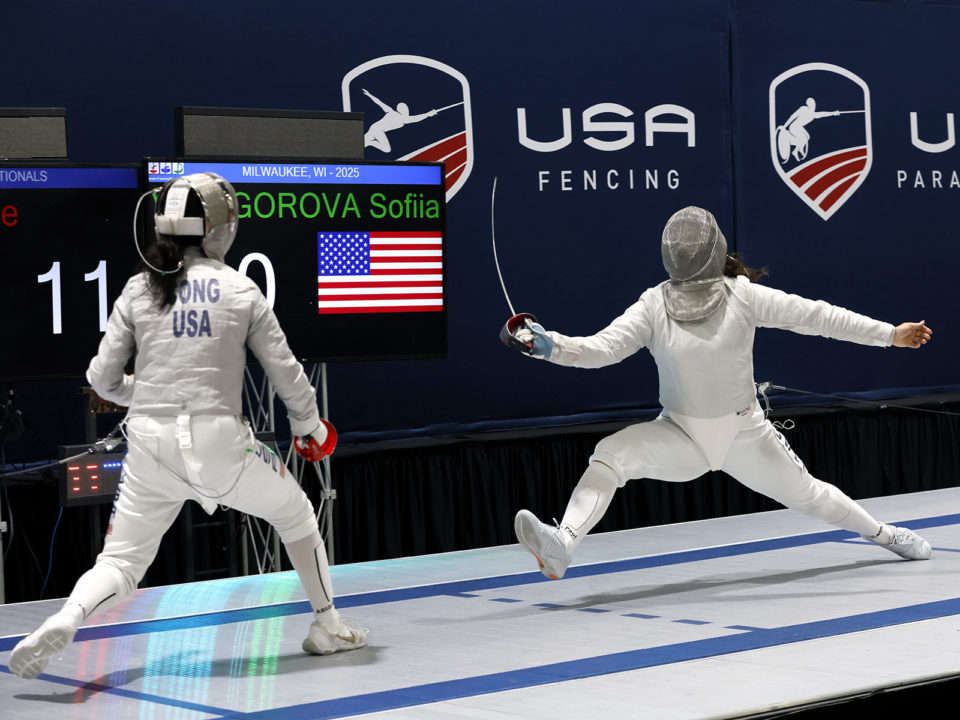
Fencing fact: There are three different weapons in the sport of fencing. In the epee and foil events, a fencer scores points only when the tip of their blade touches the target area, which includes the full body in epee and just the torso in foil. In saber, the athlete scores a point when they touch their opponent anywhere above the bend in their hips using either the tip or the side of their sword.
5280: Why did you decide to pursue saber rather than the other two fencing disciplines?
Sofiia Vinogorova: Saber is a lot more dynamic, strategic, and physically demanding than the other options. It’s just more interesting, in my opinion. It’s like chess: You have to think about what you’re doing.
Fencing fact: In fencing, an attack is the movement or collection of movements used to score—or at least try to score—a point. Most often, the fencer uses a lunge technique, which involves pushing off their rear leg, landing on their front leg, and thrusting their saber forward toward their opponent. Their opponent can try to parry, or block, the blade. If the offender successfully touches their opponent’s target area, they score a point. If they don’t, the former defender can become the offender by making a “riposte,” or attack of their own.
What does it take, physically, to be good at fencing?
Fencing, it’s very leg-specific, especially saber. Saber is very explosive and really fast. You’re literally sitting and moving in a squat position at, like, 20 mph. You’re doing lunges, moving back and forth, and switching directions. It takes a lot of agility and strength. Plus, your technique has to be really good in order to execute at such high speeds and high pressure.
Fencing fact: Individual games of fencing, called bouts, are won by scoring the designated number of touches. A bout begins when the referee calls out, “En garde! Prêts? Allez!” which translates to “On guard! Ready? Fence!”
What is happening on the mental level during a fencing bout?
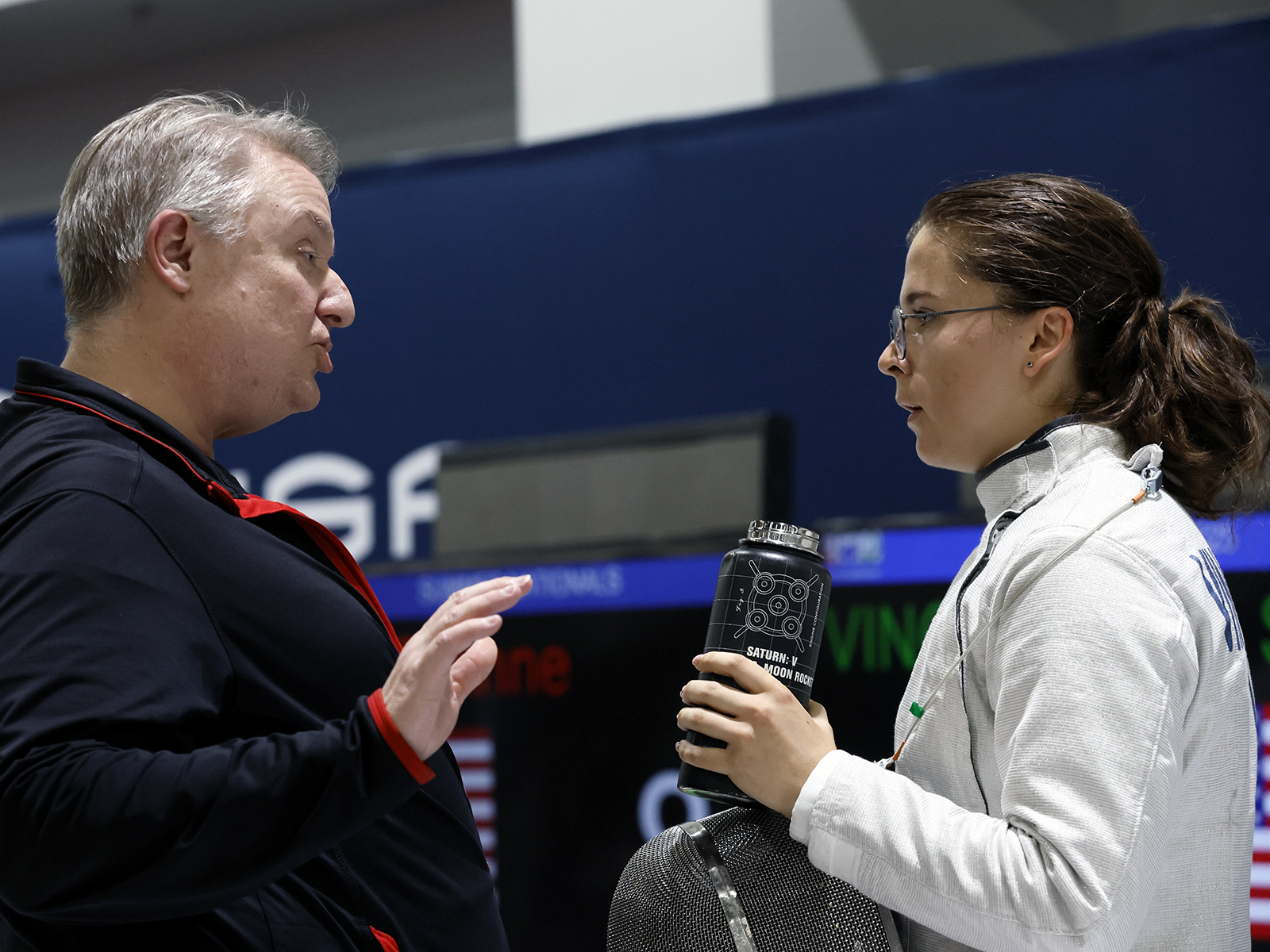
Throughout the bout, you gather data about where your opponent is hitting, how fast they’re hitting, what actions they’re doing, and then adapt. You build a strategy for what you’re going to do. The strategy I tend to use is to actually slow down, and then once I’m ready to attack, I speed up. If I feel myself spiraling or losing control over my mindset or my mental game, I tell myself, Just fence. You know what you’re doing. You’ve practiced this so many times. You know how to fence well. Just do it. I also know my coach Greg Dilworth is right there, and he’s a very smart guy.
Fencing fact: Most tournaments start with round-robin pool play (each bout is first to five touches) that determines the direct-elimination bracket where each bout is first to 15 touches. Saber bouts are divided into two periods, the first of which ends when one athlete reaches eight points. After a one-minute break, the saberists return to the playing area, called the “strip,” to try to be the first to reach 15 points and end the bout.
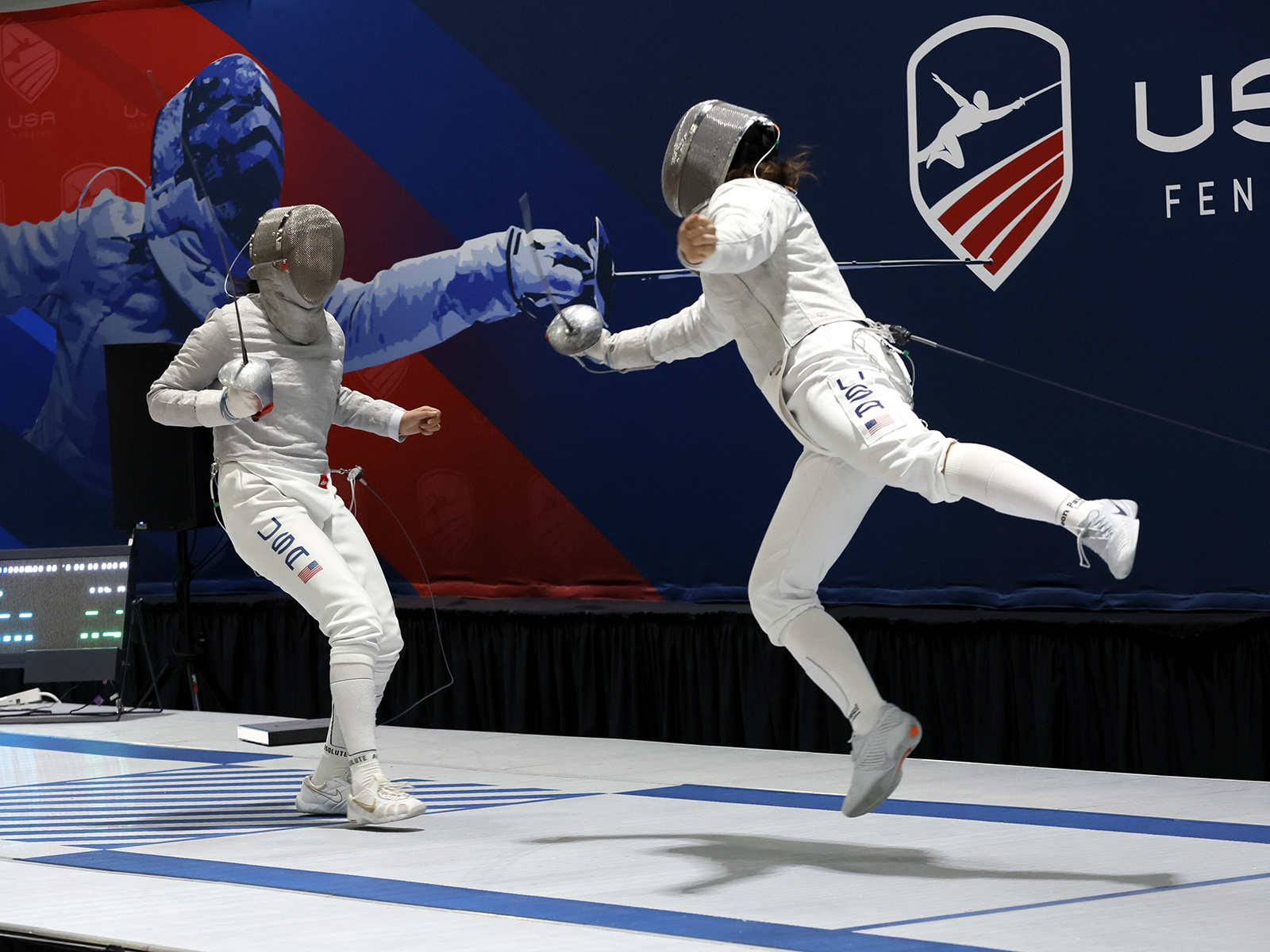
Can you give us a rough play-by-play of your experience at USA Fencing’s 2025 Summer Nationals?
The tournament did not start very well. In pools, I won four and lost two—definitely not my best result. I was getting a little bit stressed. But fencing teaches you determination. I think people really underestimate how much mental strength goes into this sport. It goes into all sports, but with fencing, having mental strength is really, really key. You have to believe in yourself and your decisions and push through hard times as you try to win touches step by step. Plus, there’s adrenaline and pressure involved since there’s a person literally running at you with a sword.
During the direct-elimination round at Nationals, I had to tell myself, You know what. I’m here, I should at least try to do something. That was when I was able to move up the bracket, and with each direct-elimination bout, my mindset just locked into place.
Fencing fact: Over the course of the 2024-’25 season, USA Fencing reported 45,157 members supported by 752 affiliated clubs across the nation. Both are all-time records.
What would you say to other people interested in fencing?
Try it! Pick a weapon and try it. Why not? Most people really enjoy it. And, you’re hitting people with swords. How is that not cool?