
The Local newsletter is your free, daily guide to life in Colorado. For locals, by locals.
If you want to chase a dream, start in your basement. That’s where Bill Gates built his Microsoft empire, William Harley and Arthur Davidson designed the prototype of their iconic motorcycle brand, and Kevin Plank launched Under Armour. So Joe Cappa is in good company.
Born in Chicago and raised in Oklahoma, Cappa had always been a keen illustrator. For years he used his creative talents in the advertising industry. But it wasn’t until he moved to Denver in 2015 to launch his own video production company that he started to tinker with stop-motion animation. “I taught myself character animation, how to tell a story through animation,” Cappa says. “It was a slow, gradual process, but it all happened in the basement of our house in Denver.”
After his first short animation, Ghost Dogs, won entry into the 2021 Sundance Film Festival, Cappa began uploading his work to Instagram and TikTok. The videos caught the attention of Adult Swim, who invited him to create animated shorts for their Youtube series Smalls. Viewers loved Cappa’s short-form videos so much that Adult Swim soon asked him to create a TV show.
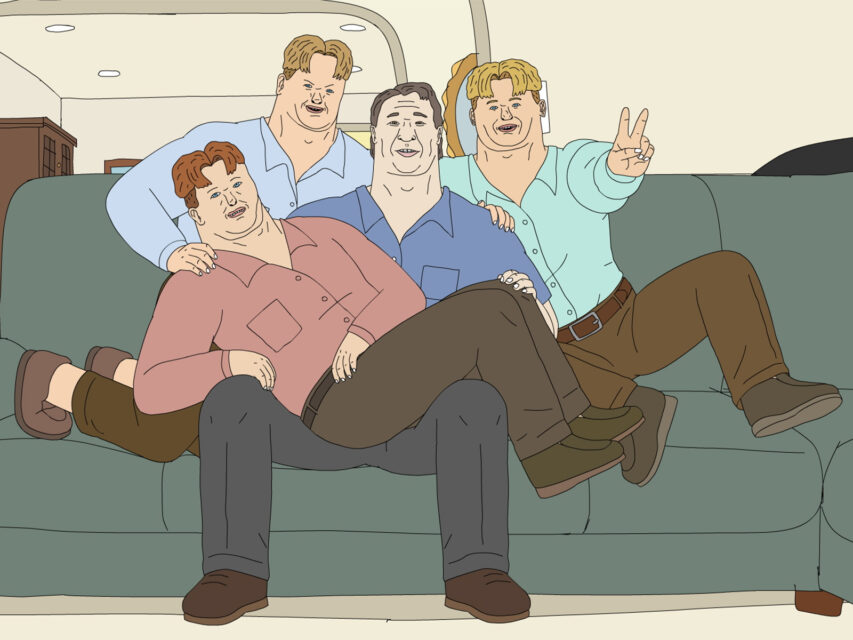
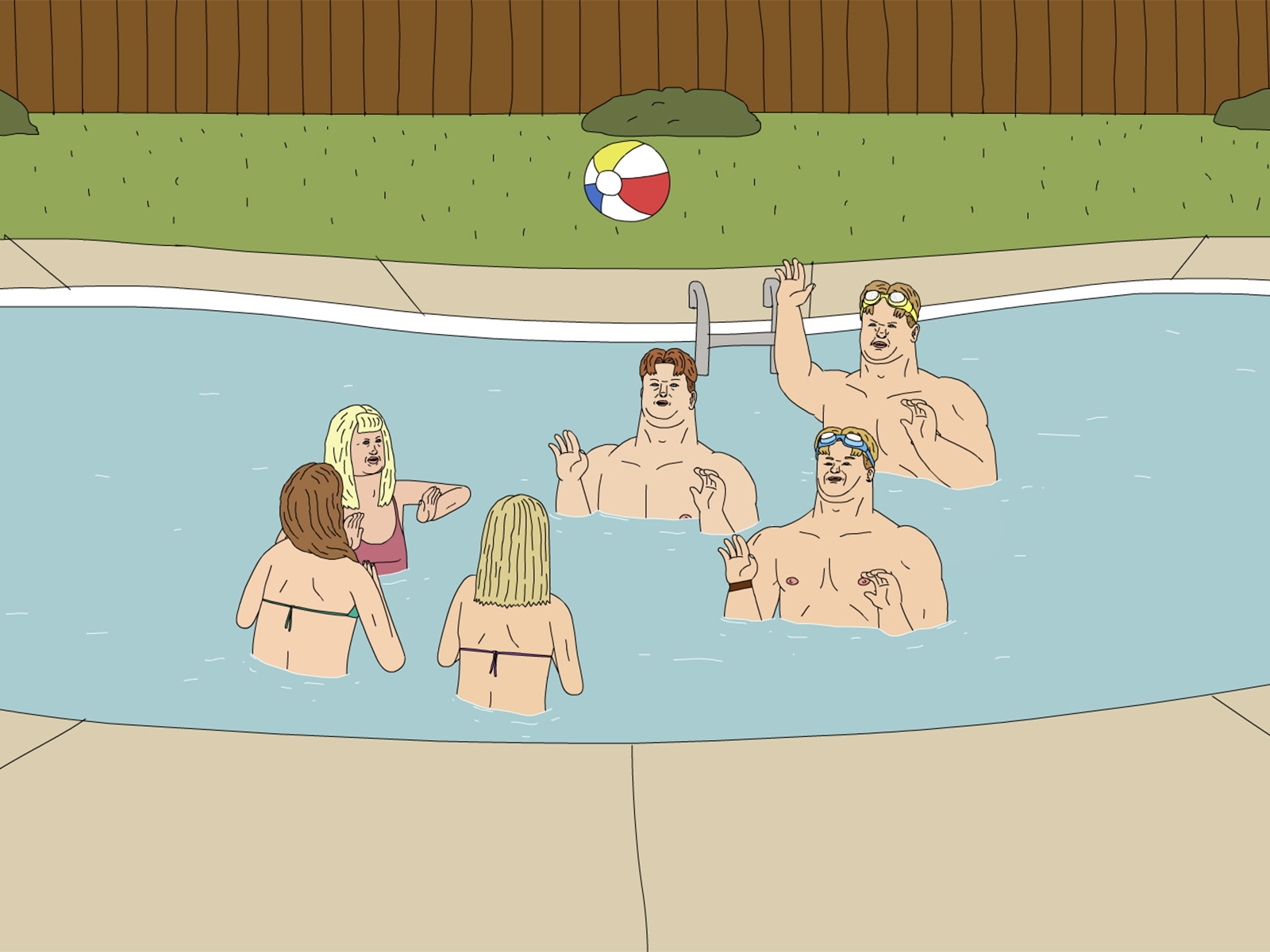
Cappa’s television debut, Haha, You Clowns, revolves around a recently widowed father and his three sons finding laughter, love, and the spirit of their dead matriarch in their everyday lives. The series premiered on October 19, and new episodes air every Sunday at 9:45 p.m.
We sat down with the creator to talk about how his time in Denver shaped his animation career, the conception of Haha, You Clowns, and why this Adult Swim show is more wholesome than you might think.
Editor’s note: The following conversation has been edited for length and clarity.
5280: What’s your connection to Denver and Colorado?
Joe Cappa: I was in Denver for around eight years. I’ve now lived in Los Angeles for about two. I moved to Denver because it just seemed like a cool place to live. I saw it as a place of opportunity. I knew there were a lot of ad agencies in Denver. I just learned that it wasn’t my world. I wasn’t really good at managing my own business. That’s when I took a leap of faith and made my short film Ghost Dogs. It got into Sundance. That made me realize, “I can do this. I can try to make a living making art.”
How did your time in Denver shape your filmmaking career?
To be honest, I’m not sure if this is the sound byte you want, but it really was the lack of community that allowed me to become an animator. You have to just do it on your own and spend a lot of hours by yourself. Not having a lot of distractions, and being able to go camping and hiking whenever was great for me. It cleared my mind. And I got a lot of inspiration from doing that—from being outdoors and being so close to the mountains. Then I just went right back into the dungeon and really got working. Then COVID-19 happened and that really allowed me to finish Ghost Dogs.
Did working in advertising help your development as a filmmaker? How eager were you to leave that job?
Now that I’m on the outside, I can look back and be like, “Oh, it was great.” It was where I was able to slowly learn how to animate—because I’m a slow learner. It gave me the opportunity to do that. I wouldn’t be here if it wasn’t for that.
But I also remember when I was around 25 being like, “By the time I’m 30, I want to be doing exactly what I want.” That didn’t happen. I’m 41 now. I needed time to find myself. I’m not saying I’m successful by any means, but I’m happy to be doing what I’m doing now. It took me so long to get to this phase in my life. I think I would have blown it and squandered it if I was younger. I just needed that maturity.
How did going to Sundance impact your career?
I thought Sundance was going to be a game changer for my career. I did a lot of different festivals. But then after the festival run, nobody reached out. Maybe it was because of COVID-19, but no opportunities came from Sundance. I was a little bit disappointed. But that process gave me the confidence to know that maybe I could tell some interesting stories.
So I just made one Instagram video. Because I was like, “I have to animate. I have to stay busy.” Then it got a good reception. [So] I just kept making one-minute videos on Instagram. They were making me laugh. I was having a good time making them. Then Bento Box, an animation studio, reached out. They had seen me on social media. It was just perfect timing. I was like, “Great! I’d love to get paid.”
Who were your animation inspirations?
I always credit Mike Judge; Jarrad Wright, who is an animator out of Australia; and Marc M., who runs Sick Animation. Haha, You Clowns is supposed to be riffing on shows like 7th Heaven, which is a prime-time drama.
Where did the idea for Haha, You Clowns come from?
When Adult Swim reached out in 2022, they asked if I had any ideas. I just thought the relationship of three boys who adored their dad and thought he was the coolest was funny. I was glad that they were receptive to that. They allowed me to figure out what the show was. It grew like all my ideas do—it’s just me going to a coffeeshop with a little bit of an edible, drawing out the episodes in my storyboard book. It was an organic process of discovery.
What did you want to achieve with the show?
To me, it’s all about comedy. I love the fact that it’s so sweet. Because it’s on Adult Swim, people might think it’s going to go somewhere pretty dark. The unexpected thing is that it doesn’t. From reading the comments on YouTube, it takes people a second to adjust. Because they’re just conditioned to think that it’s going to be really cynical. But that never happens. Then you’re left with this aftertaste of, “Oh, that wasn’t too bad.”
I just think this is funny. That’s it. I’m not trying to impress anybody here. I just went with my gut on it, and it seems to be working.
What do you hope audiences take away from Haha, You Clowns?
I guess I’m just trying to guide people to think less cynically. This show is a reaction to typical adult animation. A lot of stuff has very snarky characters saying very snarky lines and one-liners to each other. I think that’s great, but it’s just not my style. I want people to know that stuff can be funny without it being totally for adults and full of sex and swearing.