


The Local newsletter is your free, daily guide to life in Colorado. For locals, by locals.
Most of the spring was a shadow in Alan Koziel’s mind. Still, he remembered his wife’s birthday in late March and the call that afternoon from his doctor at the VA hospital in Aurora. A PET scan a few weeks later revealed that the cancer was moving toward his lungs. In May, Alan learned the disease had spread to 11 parts of his body. “It’s everywhere,” his wife, Patricia, said.
Alan had developed small-cell carcinoma, a particularly aggressive form of lung cancer. An oxygen tank rolled behind him like a child’s toy. He took fistfuls of pills to lessen the pain. A doctor told Alan he had six weeks to live, and two had passed in June when he finally asked his hospice nurse a question he had never before considered: Was there a better way for this to end?

The hospice referred Alan to Denver Health’s Medical Aid in Dying (MAID) clinic. In 2016, voters passed the End of Life Options Act, which makes it legal for terminally ill adult Coloradans to obtain and self-administer a fatal dose of prescribed medication. Roughly 1,100 people have used MAID in the state, and recent legislation increased access for the sickest patients. On June 17, Alan met virtually with Kerri Mason, a Denver Health physician who serves as the clinic’s medical director. Mason confirmed Alan’s cancer diagnosis and thought he fit Colorado’s MAID criteria, which include being of sound mind and having six months or less to live. A week after that first consultation, a second Denver Health doctor agreed with the assessment. Mason then prescribed the drugs that would end Alan’s life.
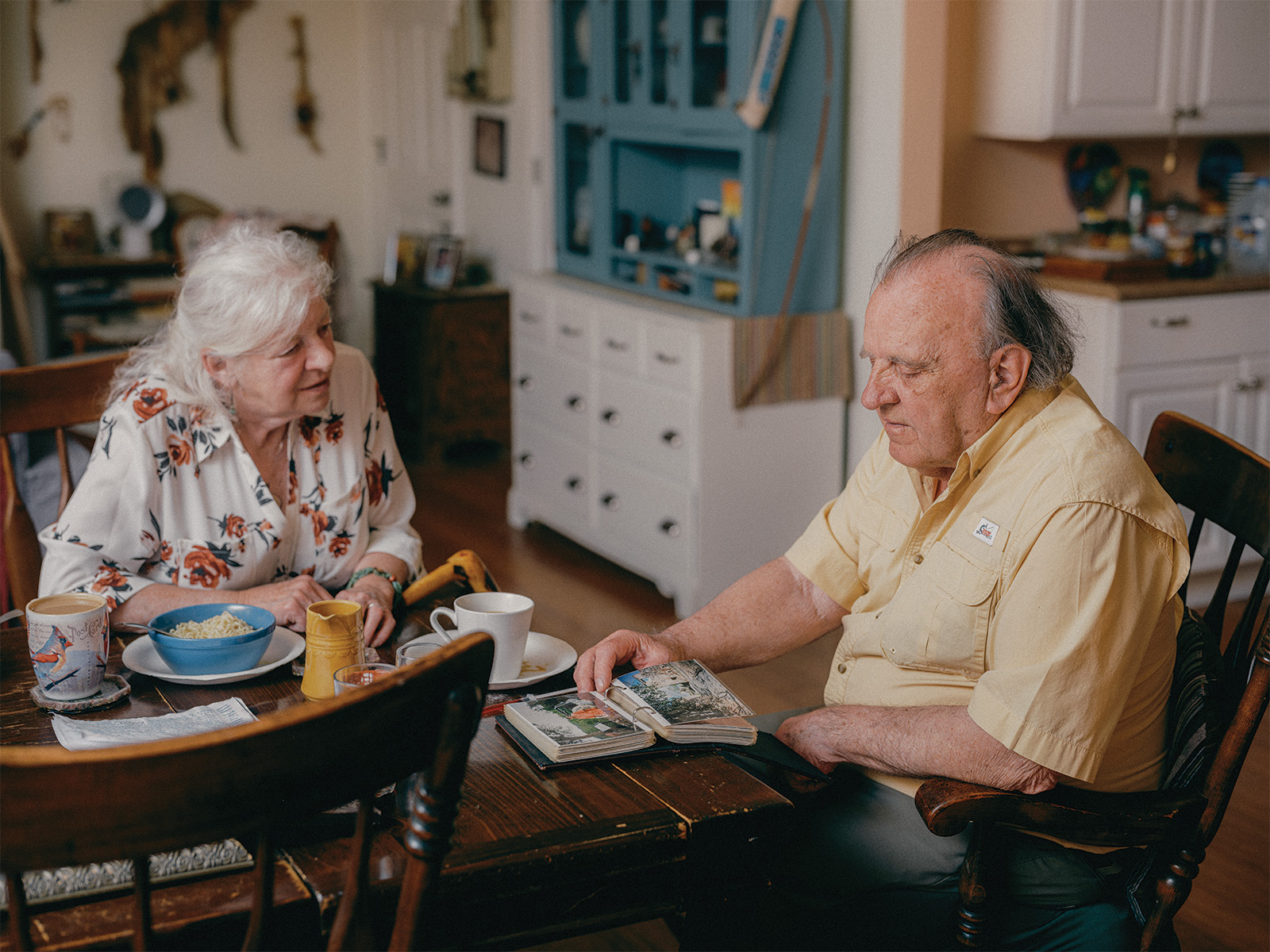
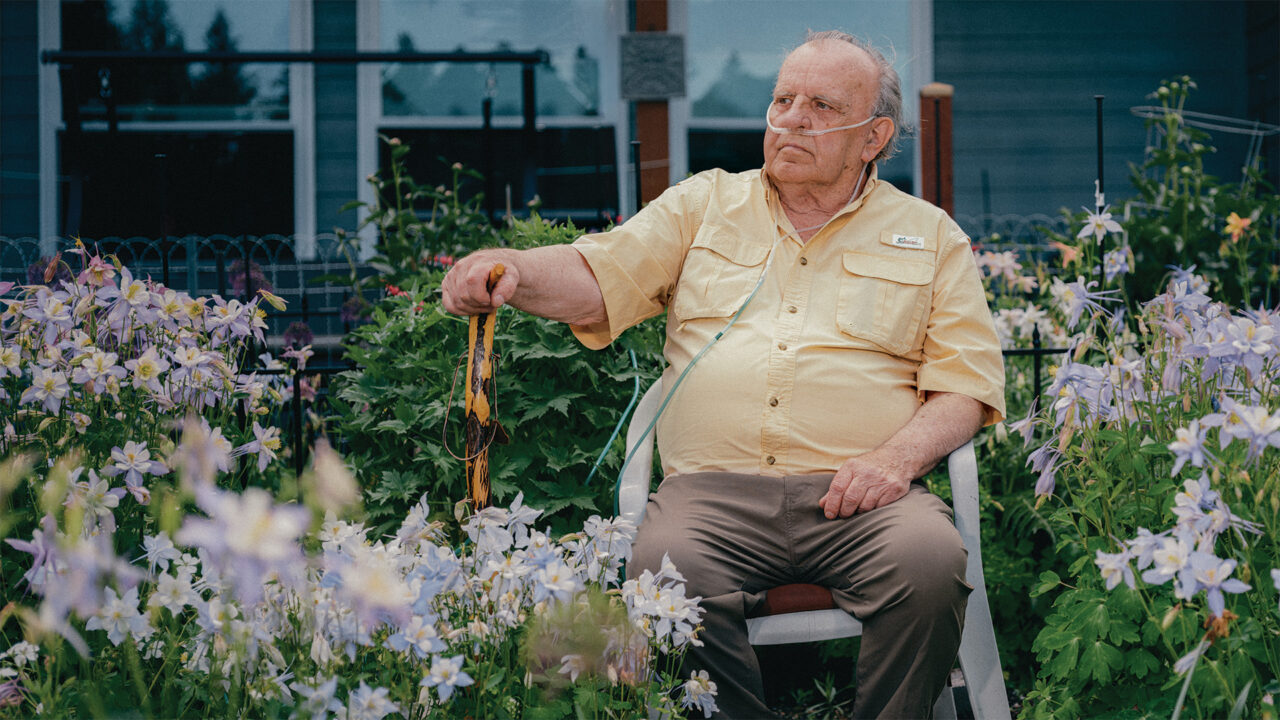
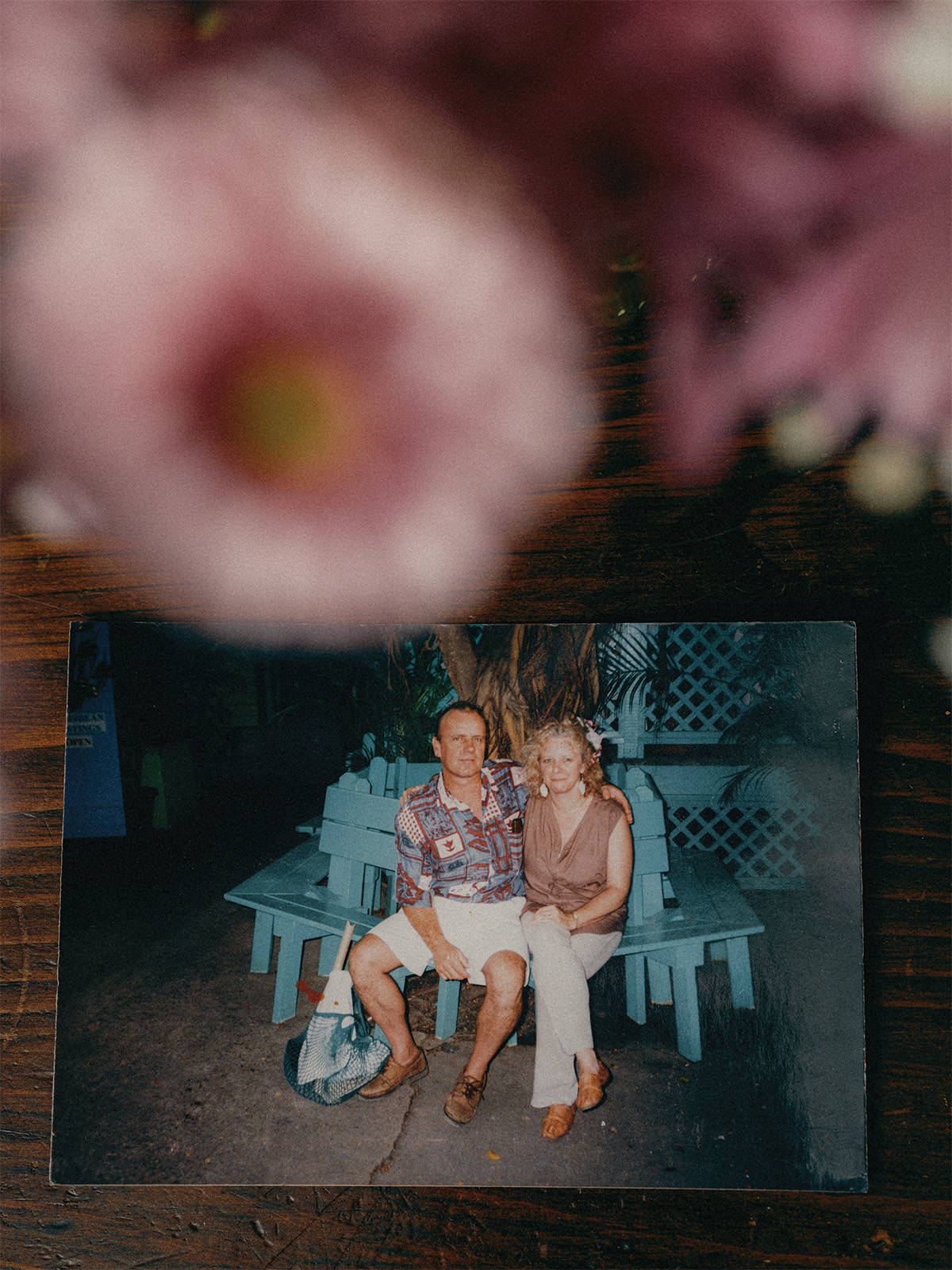
A few days after the doctor wrote the order, Alan and Pat spread photos and notebook paper across their dining room table. Alan was planning his memorial service, which he wanted held at the couple’s Black Hawk home after he died. He and Pat had spent much of their lives in New York and New Jersey, where they’d raised three sons and Alan had renovated high-end properties. They’d moved to Colorado 23 years ago and lived near the top of a long road in the mountains, with views of pine trees across the property. When folks marveled at Pat’s flower garden out front—full of snapdragons, columbines, and daisies—she’d say, “We’re from Jersey. The Garden State.”
The couple expected hundreds of friends and family—from Gilpin County, New Jersey, New York, and other places across the country—to show up for the memorial. Pat’s perfect cursive took up an entire page just for food: roast beef, Genoa salami, baked ham, eggplant, meatballs, pasta salad, potato salad, garden salad. A playlist of songs suggested by Alan’s friends filled four pages.
A tie-dye T-shirt hung on the back of Alan’s chair. The pattern resembled a psychedelic flower, with purple and red and green and blue exploding in every direction. A friend had made it; a pair of matching pants would arrive soon. Alan wanted to be cremated in them, and he told Pat to spread his ashes on a nearby mountainside.
Alan spoke with his sons about his decision, and each supported him. “I want this to be over with,” he told his youngest, who was 48. “I want to face it.” His prescription was ready at a pharmacy near Denver. Alan planned to have it couriered to the house. He hadn’t selected a day to use the medication but figured he’d know when he knew. “It’s not far off,” he said.
Pat didn’t want to talk much about her husband’s death. “I’ll just fall apart,” she said. A procession of friends began stopping by to say goodbye. At night, Alan took his pain medications and climbed into bed next to his wife. Pat pressed herself against her husband’s body, and they cried together. Each night, she fell asleep in his arms.
On July 2, Alan put on his tie-dye shirt and matching pants. He left behind his oxygen tank, stepped into the sunlight with the help of a wooden cane, and posed for a final family photo near the flower garden. He sat in a chair where he could see the pine trees while one of his sons mixed the powdery medication with juice and poured it into a cup. At noon, exactly, Alan took a drink.
Medical Aid in Dying remains one of the nation’s most divisive moral quandaries. Supporters say the practice offers autonomy and relief from debilitating, dignity-stripping suffering. Critics contend it devalues life and opens a door to efficiency masquerading as compassion. Ultimately, the question remains: How much control should we have over the terms of our deaths?
Increasingly, Americans want expanded end-of-life options for the sickest adults among us. MAID is now legal in 11 states, plus Washington, D.C. Delaware approved the practice this year, and at least 17 other states have introduced legislation on the issue.
Denver Health opened its MAID clinic in 2018, two years after Colorado’s law passed, deciding to fold the legislation into its mission to handle the region’s most complex medical cases. The clinic operates out of Denver Health’s outpatient medical center near downtown. The fourth-floor office has a couch and comfy chairs for patients and their families, though most consultations are done online to eliminate time-consuming and uncomfortable trips.
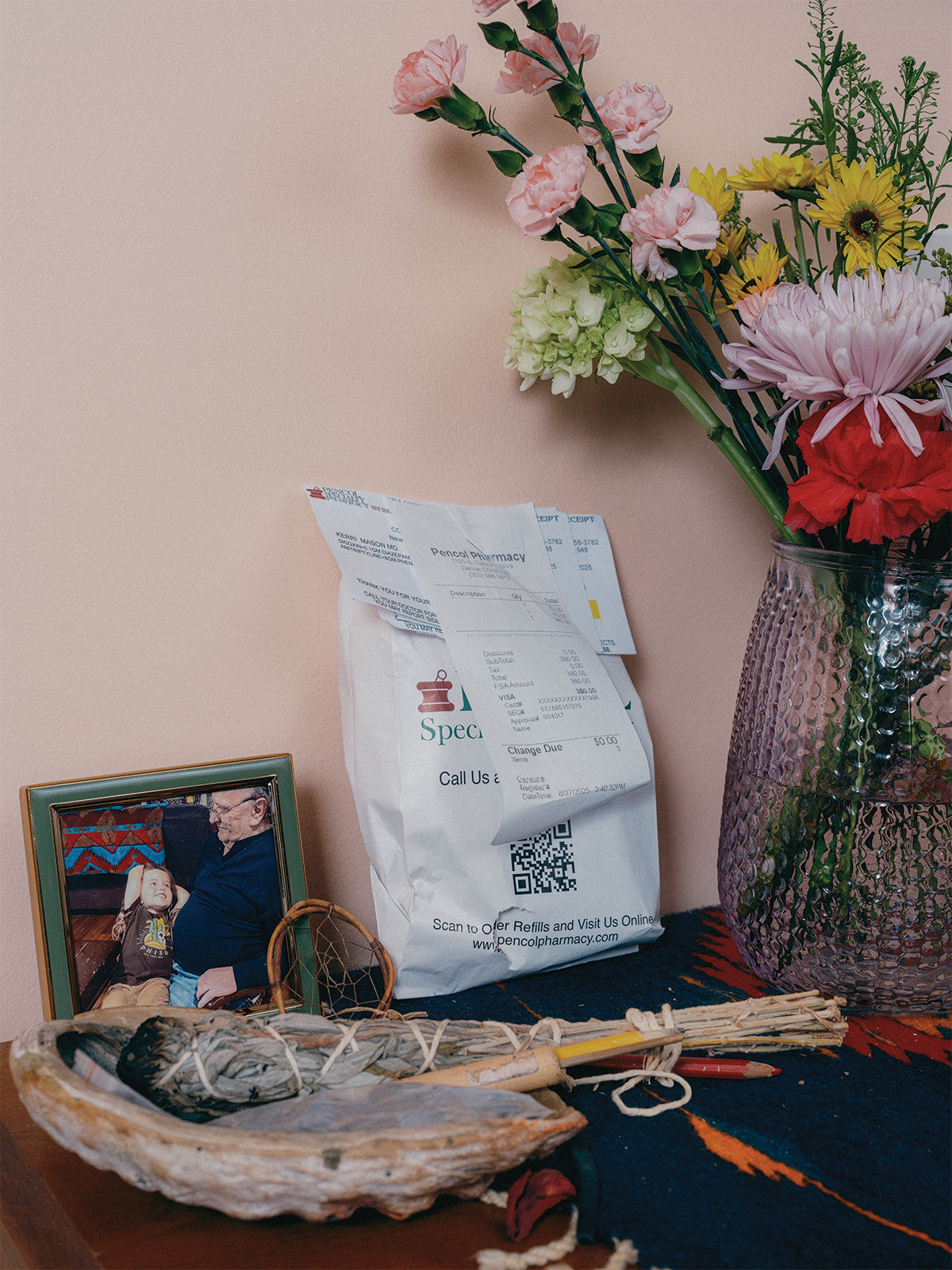
Any Colorado resident who qualifies for MAID can get care from the clinic, regardless of their ability to pay the $755 fee for two consultations and a prescription for the lethal dose of amitriptyline, diazepam, digoxin, hydromorphone, and phenobarbital that comes from one of the state’s compounding pharmacies. (Some physicians charge up to $3,000 for the same service.)
No physician in Colorado understands the realities of MAID better than Mason, who has written about 600 prescriptions since taking over as the clinic’s medical director in October 2020. She learned of Alan’s death the morning after he took his medication. “I don’t know that I have that same courage,” she says, adding that she’d be too afraid of missing any moments with the people she loves. “I don’t know that I’m brave enough.”
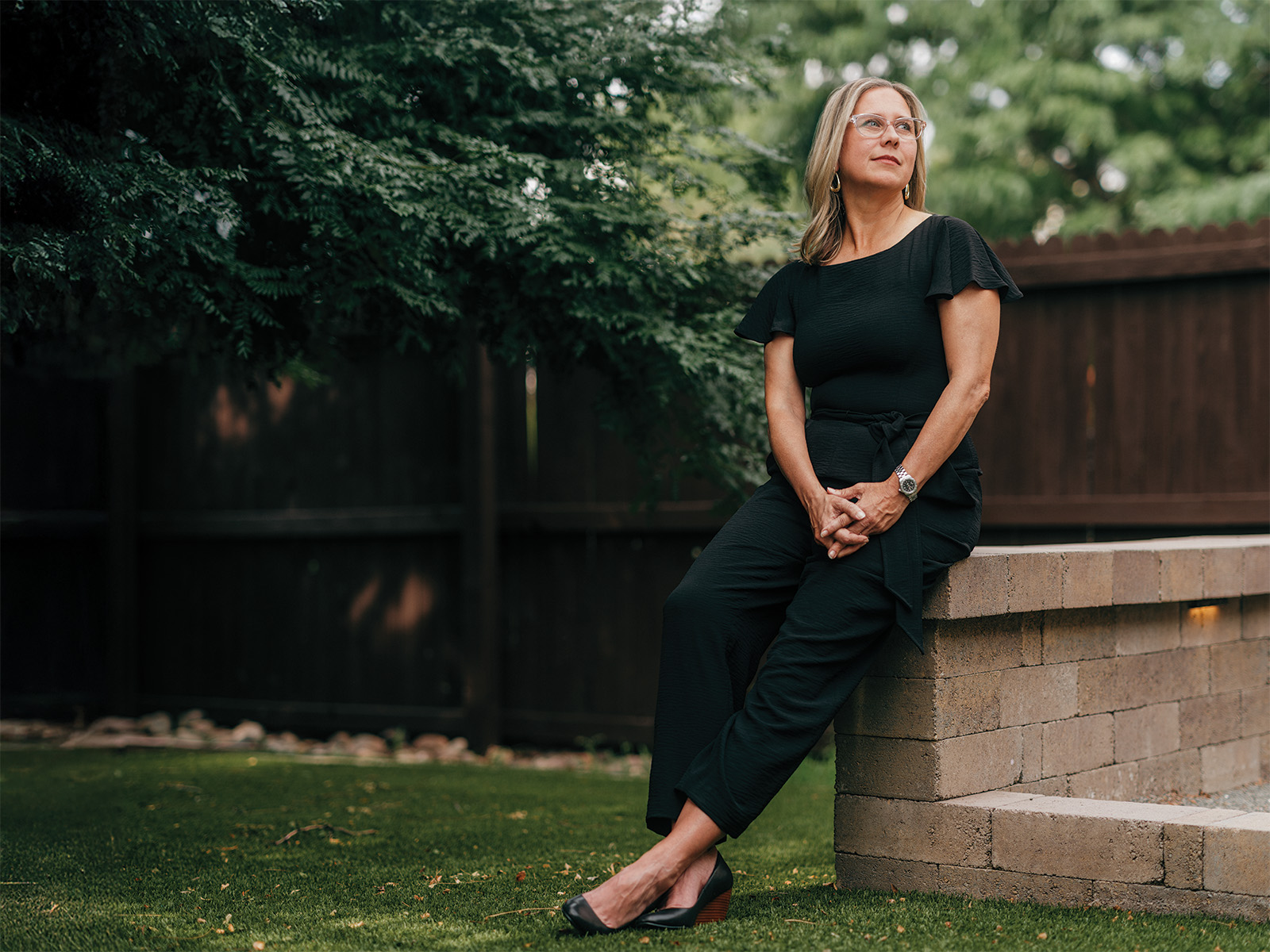
Mason is 50, a mother of four who grew up in western Nebraska’s hill country. She joined the hospital in 2009 and today splits her time between the clinic and Denver Health’s emergency department. She began volunteering with the MAID clinic in 2018, consulting with patients until she took over the program. Mason stands 5-foot-2 and has a runner’s build. Her focus is legend at Denver Health. She once ran the BolderBoulder course twice in the same day—for a best time and then with her father. During her second circuit, she performed CPR on a man who collapsed from a heart attack. Mason waited for the paramedics then got up and kept running.
Mason predicts this year will be the busiest yet for the clinic and expects to see at least 400 patients—roughly 100 more than last year. That growth will be fueled, in part, by Colorado lawmakers, who in August 2024 expanded access for adults whose deaths are most imminent. Prior to the law’s adoption, patients often died within a mandated 15-day waiting period between the first and second consultations—or declined so significantly they no longer could self-administer the medication. The state Legislature remedied that, dropping the waiting period to seven days and giving physicians wide latitude to waive waiting times entirely for the direst cases.
The clinic operates as a full-service program. Patients get consultations, and families receive after-care support, including free monthly group therapy sessions. “This is a gift, for someone to have somebody looking out for them in those last days,” says Katie Sue Van Valkenburg, a 33-year-old medical social worker who’s also the clinic’s full-time coordinator. “It’s like we’re giving these people a little bit of their power back. They’ve already had so many things taken away from them.” Mason and Van Valkenburg give their cell numbers to patients and even coordinate with homeowners who volunteer their properties to host MAID deaths. (Hospices and hospitals don’t permit the practice.) Mason and Van Valkenburg almost always offer to attend what they call “the ingestion.” According to their standard, no one dies alone.
This summer, Mason saw 74 patients and attended 23 deaths. There were people with breast cancer, pancreatic cancer, and lung cancer. One woman had a bacterial infection that was working its way up her spinal column and toward her brain. She’d already purchased her urn from Amazon. A woman with chronic obstructive pulmonary disease—a progressive condition that turns breathing into slow-motion suffocation—said it felt like a monster was eating her body. Some were tired of stuffing themselves with pain medication that dulled their minds. Some said their growing care needs had become burdens for their loved ones. They no longer wanted to watch their spouses and grown children put their lives on hold while they died.
The consultations often felt like therapy sessions. Patients chatted about marriages, children, family vacations, old jobs. Some felt guilty about leaving pets behind. They talked about how they found the clinic (often online, sometimes through their hospices). People moved up birthday parties and expedited family visits. They gave away necklaces and rings. They wrote letters: to sons, to daughters-in-law, to siblings, to their buddies at the Rotary Club. They wrote checks to grandchildren. A sister apologized to a sibling for her years of drug abuse. A father apologized for not accepting his son’s sexuality sooner. Mason mostly listened.
One morning in July, Mason had just finished a video consult with a bedridden woman whose voice barely rose above a whisper. “I’m so, so sorry you’re going through this,” the doctor said before approving the woman for a second appointment. Four more consultations were scheduled for that morning. Van Valkenburg joined the video calls.
Astrid Marlow, a 64-year-old from Colorado Springs, appeared on the screen at 9:30 a.m. Her daughter was seated beside her.
“Is this Astrid?” Mason asked.
“Yep,” her then-31-year-old daughter, Sam Marlow, said.
“Astrid, hi, I’m Dr. Kerri Mason. You can call me Kerri.”
Mason had read Astrid’s file earlier that morning. ALS had ravaged the woman’s body. Her physician confirmed in a report that Astrid likely had only a few months to live. “She can’t walk or talk. Swallowing is really an issue,” Sam said. Her mother communicated with grunts, thumbs-up, and texts.
Astrid wore glasses and had a white napkin covering her chest. Her mussed hair was pulled into a ponytail. Her mouth was fixed into a crooked grimace; she looked gaunt and exhausted. A month earlier, Astrid had texted her daughter that she couldn’t continue. She’d refused a feeding tube, and her daughter noticed she often stopped breathing when she slept. Astrid worried she would suffocate to death. “It’s terrifying,” Sam said.
Sam had found Mason through an online search, and she was thrilled she didn’t have to drive her mother the hour north to Denver for the consultation. Few in her family supported her mother’s decision, and Sam explained that another family member had canceled Astrid’s previous appointment with the clinic.
Mason frowned.
“Tell me about your journey into deciding to get this medication to peacefully end your life,” the doctor asked. Astrid anticipated the question—MAID laws in the state require patients to affirm they understand what they’re asking for—and she’d already pecked out a text on her phone. Sam read it to the doctor: “I request this because I am tired of living like this. I request the medicine that brings me death.”
To Mason, this was a clear case for approval. ALS had destroyed Astrid’s body, but not her mind. Sam said her mother often texted in her native German and that the two loved watching Agatha Christie’s crime-solving Miss Marple character in black-and-white on her mother’s bedroom television. Astrid was cognizant and alert, but death was imminent.
“I think she needs to stop the suffering,” Sam said. “She’s miserable.”
The doctor said she would approve Astrid for a MAID prescription, pending a second opinion, and decided to expedite a meeting with one of the clinic’s volunteer physicians. Mason hoped she could get Astrid her second consultation within the hour.
“It’s OK,” Sam told her mother. “They’re on your side.”
“You’re in charge,” Van Valkenburg told Astrid.
Astrid let out a high-pitched wail. Sam hugged her.
Logistically, Mason admitted, this was a difficult case. She worried Astrid would be unable to hold a cup and then lift it to her mouth—and it was illegal for someone to physically assist her. Even if Astrid could do those things, she might regurgitate the liquid. Mason decided the safest way would be a rectal catheter attached to a large plastic syringe. If Astrid didn’t have enough strength to depress the plunger, the doctor said, she could lean her weight against it and release the drugs that way.
“Astrid, I promise you we will figure this out,” Mason said. “Can you tell me when you want me there?”
Astrid pecked out a text. Her daughter read it: “She says as soon as possible.”
“Is it going to happen today?” Sam continued. “Like, can she breathe a sigh of relief that she’ll be free today?”
Mason promised she’d drive down that afternoon. “I’ve got you,” the doctor said.
Tears began to run down Astrid’s face.
“I think that’s—I think that’s happy, right?” Mason asked.
Astrid looked into the camera and gave a thumbs-up.
The same afternoon Alan Koziel died, Terry Monks sat on a couch alone inside his house in Commerce City, preparing for his own death that evening. He had a blanket draped over his 112-pound body that was emblazoned with photos of his wife, Jackie, and his family. An enormous image of Terry’s kids and grandkids covered the spot across his chest.
Terry was 81, a Navy veteran and former air-conditioning repairman who’d installed cooling systems on Denver skyscrapers. Working hundreds of feet above the city, he’d gotten used to seeing perspectives most people never experienced. His pancreatic cancer diagnosis had come two years earlier. Four or five months of chemotherapy followed, then a Whipple procedure that removed part of his pancreas, intestine, and bile duct. The surgery didn’t get everything. Terry went back on chemo, which nearly killed him. “I decided this was no way to live,” he said.
His hospice contacted Denver Health’s clinic in June, about a year after he stopped his chemo. Terry received a terminal diagnosis and knew about Colorado’s MAID law but didn’t understand the process. He had an informational meeting with the clinic and was taken through the steps. Terry talked to Mason, and the second physician signed off. The prescription had been in his house for less than a day and having the drugs had already given him a sense of relief. “It was the first time this felt real,” he said. “Like, this was an option I could actually pursue.”
There was a spiral notebook on the TV tray in front of Terry. He’d been writing in it lately, filling pages with his thoughts. There were notes about his years in the military, and trips he and Jackie had taken with their grandchildren—Mt. Rushmore, Carlsbad Caverns, the Wisconsin Dells, Disneyland. “Just memory after memory after memory,” Terry said.
He was prone to telling stories. “The only thing that works on me is my head and my mouth,” he said. Terry spoke in parables. He had a favorite phrase: You can’t stop sunrises. He likened the end of his life to being on a ship filling with water. “You’re sinking, and you’re bailing with a bucket,” he said. “You finally get to this point where it dawns on you that you’re not going to bail this boat out.”
Jackie walked into the room and listened from the kitchen table. They’d been married 60 years.
“She wants me to wait until Sunday,” Terry said and motioned to his wife. It was Wednesday. “Sunday is as far away as Christmas to me. I’d just be postponing the inevitable.” He shrugged. Jackie covered her face.
Terry admitted he was doing this, at least in part, for her. He felt guilty for how his body had failed, how it had created pain for everyone he loved. He and Jackie hadn’t taken a car ride together in more than a year. He knew Jackie couldn’t enjoy an afternoon away because she constantly worried about what she might find when she returned home.
Just that morning, Jackie was doing some cleaning when she heard a thud. She ran into the family room and saw Terry trying to push himself off the ground. His muscles wouldn’t work. Jackie tried to pull her husband off the floor. “It scared me to death,” she said. Jackie phoned one of her sons, who rushed over and got his dad onto the couch. Terry had a small red mark on his forehead from the ordeal. It was the first time he’d fallen, and he told his wife it’d probably happen again if he didn’t die soon. He didn’t want feebleness to be the thing she remembered about him.
Jackie shook her head. “I’m here to take care of that,” she said. “How can you have guilt about being sick?” A third great-grandchild was due in a couple of months. “He really wanted to see that baby,” Jackie said. “It’s not fair I get to enjoy that, and he can’t.”
“It’s two months away,” Terry said to his wife. “There’s no way I’m going to make it two months.”
His words lingered. The pair looked at each other from across the room. “I can’t imagine my life without him,” Jackie finally said. “I sit here and see him, and I just can’t believe that he won’t be here.”
Mason drove her Subaru Crosstrek through a neighborhood of aging homes in Colorado Springs, parked in front of Astrid’s brick two-story, and opened her trunk. The doctor—in a blue shirt with polka dots, white shorts, and a pair of Sperry boat shoes—had rushed down from Denver after finishing the last of her online consultations that afternoon.
She lined up the items in her trunk: two rubber tubes, a clamp in plastic packaging, a sterile bedsheet, and, finally, a green plastic bottle with an inch of white powder. “That’s it,” Mason said. She placed the items into a Lululemon bag and headed to the front door.
Sam’s husband, Lee Robinson, welcomed the doctor inside. Astrid’s hospice had arranged for a pastor, and the man was introducing himself upstairs. Mason climbed the stairs and paused outside the bedroom as the pastor began: “Lord, let us pray that you intervene and take her to peace….” Once the pastor left, Mason entered the room. America’s Test Kitchen played on the television. Sam was curled up next to her mother on the bed.
“It’s an honor to be here for you,” Mason said to the two women.
The doctor went over the details: She’d insert a short tube into Astrid’s rectum that would connect to a large syringe. Then she’d go downstairs and prepare the drug mixture that would gradually shut down Astrid’s body. There were questions from Sam about timing; she didn’t want her mother to suffer. “It’ll be peaceful,” Mason assured her.
Sam’s husband busied himself corralling the family’s barking dogs downstairs. Astrid pecked out a text to Sam, in German: “Wunderhübsche Tochter Danke.” Beautiful Daughter Thank You. She added a heart emoji.
Mason put on a pair of clear gloves in the kitchen, then measured two ounces of lukewarm tap water and mixed it into the green medication bottle. She closed the cap, shook the bottle, and washed her hands.
Sam was fumbling with her cell phone, which was connected to the television, when Mason re-entered the bedroom. “Hang on, hang on,” Sam called out. “I am not letting you die to a cooking show, Mom.” She tapped on her phone’s screen and Miss Marple appeared on the TV. “There you go,” Sam said.
Around 3:30 p.m., Mason asked, “Are you ready?” Astrid raised her right hand and gave a thumbs-up. She began to cry.
“I know you don’t like long goodbyes,” Sam said and kissed her mother’s head.
The doctor held out the plastic syringe with the tube attached. She placed it in front of Astrid, who immediately reached for it. She raised her twisted left hand and pressed with all her strength.
“You’re so strong,” Mason said. “Keep going.”
The syringe emptied quickly. Astrid sank into her pillow. Mason gently rubbed the woman’s arm, then straightened her legs across the bed.
“Now, just relax,” the doctor said.
Sam stroked her mother’s face. “You finally got your wish,” she whispered.
A few minutes passed. Sam looked at Mason.
“I think she’s falling asleep.”
Mason likens her job to running a marathon: “Mind over matter. Sometimes you’ve got to do what you’ve got to do.” It was one reason she’d survived in emergency medicine longer than many of her younger colleagues. Still, she wondered if ER work had hardened her; if she’d built a shield to protect her from the job’s emotional swings.
As her career progressed, Mason found herself wanting more time with her MAID patients. Her role with the clinic intrigued and satisfied her in ways emergency medicine couldn’t. The clinic’s work forced her to slow down, to be present with people. She texted and called families. She visited homes. Husbands and wives and sons and daughters often sent her emails after their loved ones died. A few patients posthumously left donations to the clinic. “I went into medicine to take care of people,” she says. “This feels more like taking care of people.”
Her first ingestion was for a colleague’s mother. The woman was in her 80s and declined further treatment for abdominal cancer. She had a sharp wit. During one of her consultations, she asked Mason if she might soil herself as she died. Mason told her it was a possibility. “I guess I have to diaper up,” the woman said. Before the woman took her medication, she toasted Champagne with her children and grandchildren. The intimacy of that moment stuck with Mason. “There was this kind of beauty about the whole thing,” she remembered. “I never knew something like that could exist.” That night, Mason sat in the hot tub on her patio, replaying the scene in her mind.
Her youngest patient had been 26 and in the final stages of rapid-onset ALS. Her mother was with her. Mason remembered how thin the young woman looked, how she was vomiting blood that night. She was trying to thread the needle, stretching every second from her brief life while still being physically capable of self-administering the medicine. Mason attached the syringe to her feeding tube. The woman depressed the plunger.
It wouldn’t budge.
“I waited too long, Mom!” the woman cried.
Mason checked the hose. She removed a small kink and said to try again. Weeks later, a package arrived: dried flowers from the woman’s funeral, pressed into a suncatcher that now hangs on the glass door in Mason’s kitchen.
There’d been other memorable deaths: the woman who drank her medicine and then gave Mason a thank-you card; the flirty old man who held Mason’s hand and said the drugs must be working because he was looking at an angel.
The doctor had been in touch with Sam, who was busy arranging her mother’s cremation. “I think she was doing everything she could to keep it together in that bedroom, to show her mom she wasn’t scared,” Mason says. Astrid’s end had been memorable for how quickly it came, just 17 minutes. It’s common for patients to linger, sometimes for hours, after taking their medication. The rapidity of Astrid’s death left Mason confident she’d been right to expedite the prescription.
“All stories need to have an ending, and we want our stories to matter,” Mason says. Her work with MAID has taught her something she thinks can’t be learned elsewhere in medicine: that letting go is its own kind of control. “With [MAID], I feel like it gives you the last page,” Mason says. “You get to finish that story, and your ending matters.”
Mason’s own story has been punctuated recently by endings. Her brother, Mark Brown, died from cancer in 2024. The married father of two boys was a high school athletic director and football coach in Nebraska. He was 40. Just five months earlier, Mason’s father, Bob Brown, had died from a rare genetic disease at 73. Colleagues asked Mason if she needed to step away from MAID. “Did I need a moment off?” she says. “No. It makes me more in tune with this, and I think it made me a better person for this job.”
The day after her father’s funeral, Mason returned to Colorado and helped with an ingestion. The patient’s daughter held her father’s hand and talked about the trips and quiet moments the two had spent together. “A daughter and her dad,” Mason said. “There were just too many similarities.”
Mason found herself blinking back tears. She left the room and scolded herself for losing composure, for stealing a daughter’s moment. When Mason returned, she apologized and explained she’d recently lost her father, too. The woman wrapped Mason in a hug, and they cried together.
In late July, Mason was at a medical conference in Santa Fe, New Mexico, when she answered a FaceTime call from a patient’s niece in Colorado. On her phone’s screen was a woman partially slumped in her recliner, the top of her curly white hair visible, her eyes barely open. Paula Anderson was a 64-year-old with chronic obstructive pulmonary disease who’d already gotten her MAID prescription. She was wearing gold earrings and a green dress she’d bought at Walmart. Her chest was heaving.
“Kerri? Kerri?” Paula’s niece, Holly Anderson, said into the phone. “She wants to do this now.”
Mason had grown close to Paula and Holly in the six weeks since they’d met at their first consultation. She learned about Paula’s dogs, how she loved horses and California beaches. She now lived in a Longmont rental with Holly, her primary caregiver. Holly was 48 and in recovery. Helping her aunt had given her purpose and a place to live while she attended meetings.
Mason had personally delivered Paula’s MAID prescription to Longmont, but now she was disappointed she couldn’t physically be in the room with them during the ingestion. As Mason sat in her hotel room, she leaned close to the phone. “You look beautiful,” Mason said when she saw Paula. “I’m right here for you.”
Outside, neighborhood children played football in the street. Holly mixed the white powder with two ounces of blue Gatorade. She gave Paula a cherry popsicle to cool her throat, just as Mason had advised. “That’s good,” Mason told Holly. “You’ve done a great job.”
Holly held up a plastic cup with a straw attached. “Here it is,” she said, and lifted the cup to the camera.
“Nice and easy, Paula,” Mason said from the phone.
Holly took a deep breath, exhaled, and put the straw in front of her aunt’s lips. “Can you suck on this?” she asked, then added: “I love you.”
Paula put her lips to the straw and took an enormous gulp.
“Whoa, girlfriend!” Mason called out. “That’s one good sip. Paula, you’re tough.”
Paula looked into the phone’s camera.
“How are you doing?” Mason asked.
“Oh, terrific,” Paula croaked.
“Take that last little bit,” the doctor said. “I think you’re being amazing.” Paula took a final sip. Holly grabbed the rest of the popsicle and gave it to her aunt.
“Is that good?” Holly asked.
Paula opened her eyes briefly and looked upward, toward her niece. “You’re going to get sleepy,” Mason said.
Holly leaned toward her aunt. “I love you,” she said again. “Paula, I love you.”
Paula’s breathing began to slow.
“Holly, are you OK?” the doctor asked.
“I’m good. I got this,” Holly replied.
“Holly, don’t feel bad or guilty. You’ve done so much. It’s hard to take care of someone who is terminally ill,” Mason said. “You’ve got to take care of yourself now.”
Holly again promised the doctor she’d be OK. One of her childhood friends planned to stay the night. A hospice nurse would call the funeral home. Paula wanted to be cremated and have her ashes spread somewhere near Estes Park. Holly said she hoped she and Mason could stay in touch, that this wouldn’t be the end of their relationship.
“Paula really liked you,” Holly told the doctor. “Thank you for everything.”