

The Local newsletter is your free, daily guide to life in Colorado. For locals, by locals.
Trying to find a private, level campsite on public lands is hard enough without figuring out if it’s already taken. A few weeks ago, Jordan Ellis pulled up to a seemingly available dispersed campsite outside Crested Butte that had nothing but an old chair and half-empty water jug in it. Assuming these were trash, Ellis set up his rooftop tent and made camp. Hours later, well after dark, the owner of said supplies showed up and immediately erupted about how it was “his spot.”
Ellis brought the matter to TikTok, asking whether he was in the wrong. The comment section lit up.
Many people stood on the age-old assertion that a chair claims the spot, while others agreed with Ellis, saying a tent or camper are the only items that qualify as a claim. A ranger chimed in to say they’d have assumed the chair and water jug were forgotten items and would’ve taken them to lost and found.
“Outdoor culture is built on unspoken norms,” says Chris Cordes, a certified master tread trainer who teaches outdoor ethics and responsible recreation and is a senior content lead at onX Offroad. “But while a chair may have been enough to claim a spot in the past, the amount of trash and abandoned items we see today on public lands makes it understandable someone might assume the site is unused.”
@jordanellis000 Am I in the wrong here? #camping #nature #travel #outdoors ♬ original sound – jordanellis0
Todd Farrow, park manager at Golden Gate Canyon State Park, which offered first-come, first-served camping in the past, says he used to have to make these kinds of decisions all the time—is someone coming back tonight for this lone chair or beat-up tent, or should I clear it out so someone else can use this spot? “The old rules are continually evolving, and I don’t think you can get by anymore with just putting a camp chair or a gallon of water in a free campsite and thinking that it’s yours,” he says.
At the heart of this debate is a growing problem within outdoor etiquette: As Colorado camping becomes more popular and the places to camp for free more limited—especially in high-traffic areas like Crested Butte—more people are dropping a tent, sometimes days in advance, to hold a spot for the weekend, something known as “ghost camping.” Cordes points out that this practice limits other people’s opportunities to enjoy the outdoors. “These tactics erode trust and fairness, and they ultimately risk driving policy changes that limit dispersed access altogether,” he says.
So what does constitute a claim to a campsite?
“My stance is simple: If you’re not physically there, or your vehicle isn’t there, you haven’t claimed anything,” Ellis says. Many commenters on his TikTok video shared this sentiment. Many who don’t say there has to be leeway for people who camp in or on their vehicles to take their car or van to explore for the day.
“I believe a spot is only reasonably claimed if it’s actively in use—meaning you’re camping that night and have left gear there while off enjoying nearby activities,” Cordes says. As for what gear qualifies as a claim, he adds: “For me, it’s less about the value of the gear and more about intent and context.”
Read More: The Oversimplified Guide to Finding Dispersed Campsites
Farrow echoes this view: “I’m a big fan of what’s reasonable: Would a reasonable person consider this to be [forgotten] equipment or is somebody trying to save a site?” He adds that logical discernment is key—say, how recently does the item look like it was left? Is there rain on the chair seat like it’s been sitting out for a few days? In the end, Farrow says it’s a personal choice because you’re going to be the one to deal with the potential blowback if the previous occupant shows up.
“If someone finds a questionable setup and decides to camp, I encourage them to do so with humility—acknowledging the gray area and being open to a civil conversation if the original party returns,” Cordes says. He adds that, if someone nabbed your campsite while you were out, approach with empathy rather than entitlement as it was probably an honest mistake. “Outdoor ethics are rooted in respect,” he says.
Ellis agrees with this, pointing to a similar interaction he had in the past: “I once unknowingly set up camp near a woman and her daughter who had gear hidden behind some brush I hadn’t seen. When they returned, she kindly explained the situation, and I apologized. She told me not to worry and even invited me to share the site and have dinner with them. That’s how these things should go: respectfully and with some basic decency.”
And if you’re not willing to share the site, then don’t set up camp somewhere ownership is in question. Move on till you find a site that’s clearly open.
3 Ways to Claim a Dispersed Campsite
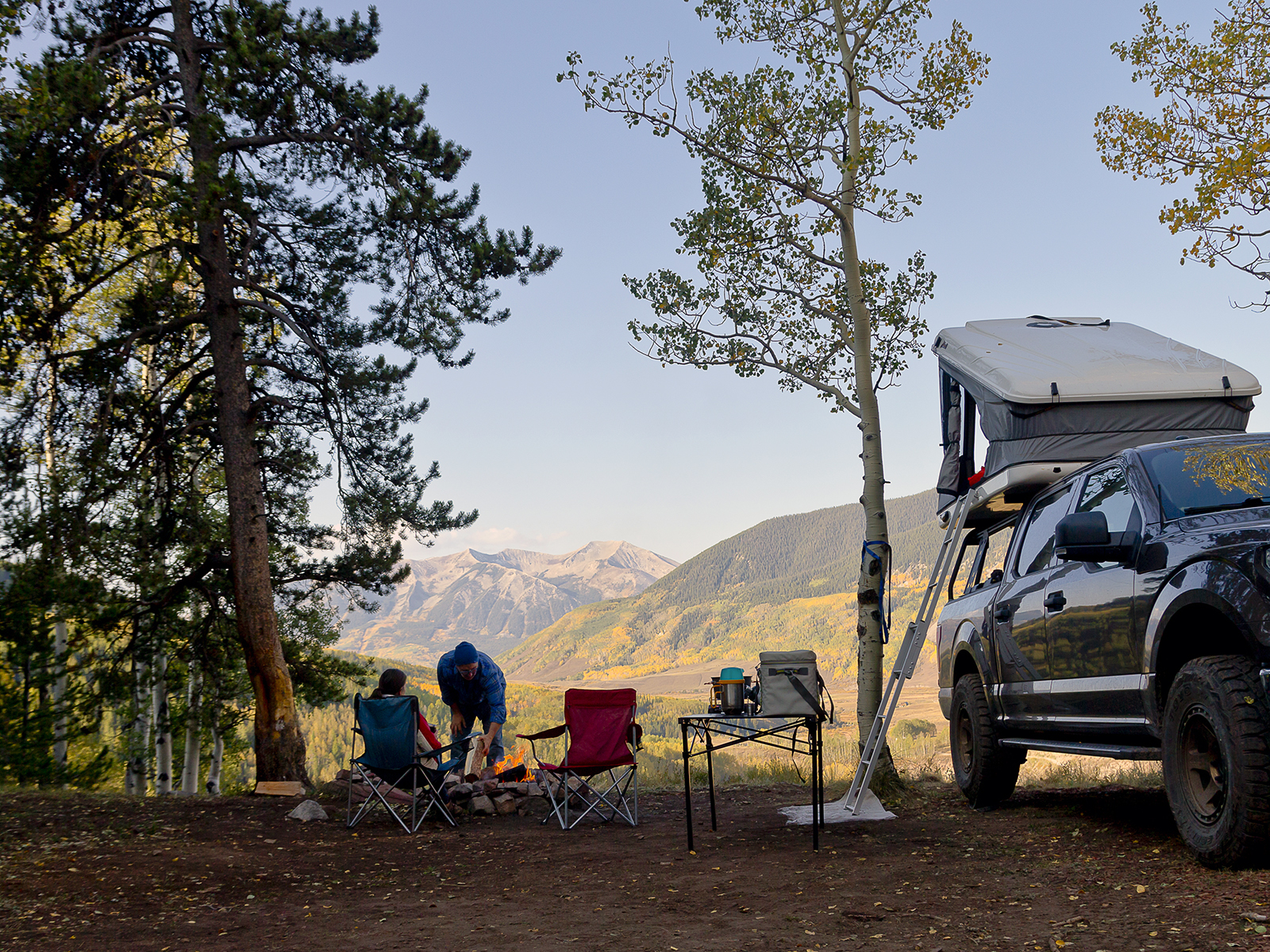
- Leave a tent or a camper.
- Add a note with the nights you will be camping and approximate time a camper will return to the spot.
- Be kind.