
The Local newsletter is your free, daily guide to life in Colorado. For locals, by locals.
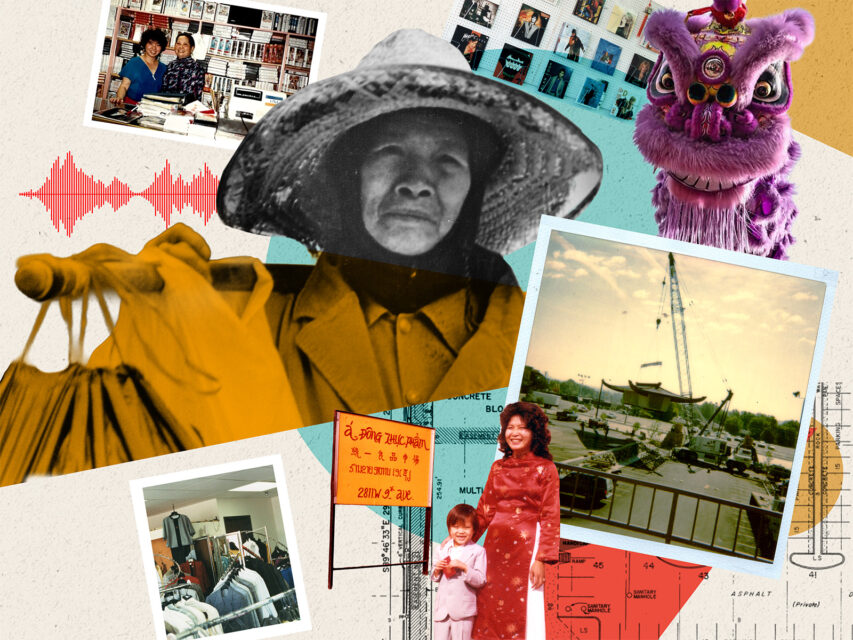
When the Vietnam War ended in 1975, more than 120,000 South Vietnamese people fled the capital of Saigon in fear of the newly installed Communist government. Resettlement organizations and sponsors in Denver helped a small number of refugees—about 10,000—find homes near Denver’s Alameda Avenue and Federal Boulevard. Over time, the newcomers transformed the area into Little Saigon, a hub of grocery stores, tailoring shops, and restaurants that became the epicenter of Southeast Asian and East Asian culture in Denver.
But 50 years later, the district is losing its link to its founders: “A lot of the original residents are either retiring or being displaced or, unfortunately, passing away,” says Joie Ha, executive director of Colorado Asian Pacific United, a nonprofit that hosts cultural events and community projects. So in 2023, the organization partnered with History Colorado to record 27 oral histories from people with connections to Little Saigon to preserve their legacy.
On October 21, Capitol Hill’s History Colorado Center will debut Big Dreams in Denver’s Little Saigon, featuring clips of the audio files, historical photos of the district, and art created by local Asian American artists. Ahead of its opening, we asked Ha and Yadira Solis, History Colorado’s Museum of Memory director, to share excerpts from their new trove of personal stories.
3 Excerpts From Big Dreams in Denver’s Little Saigon
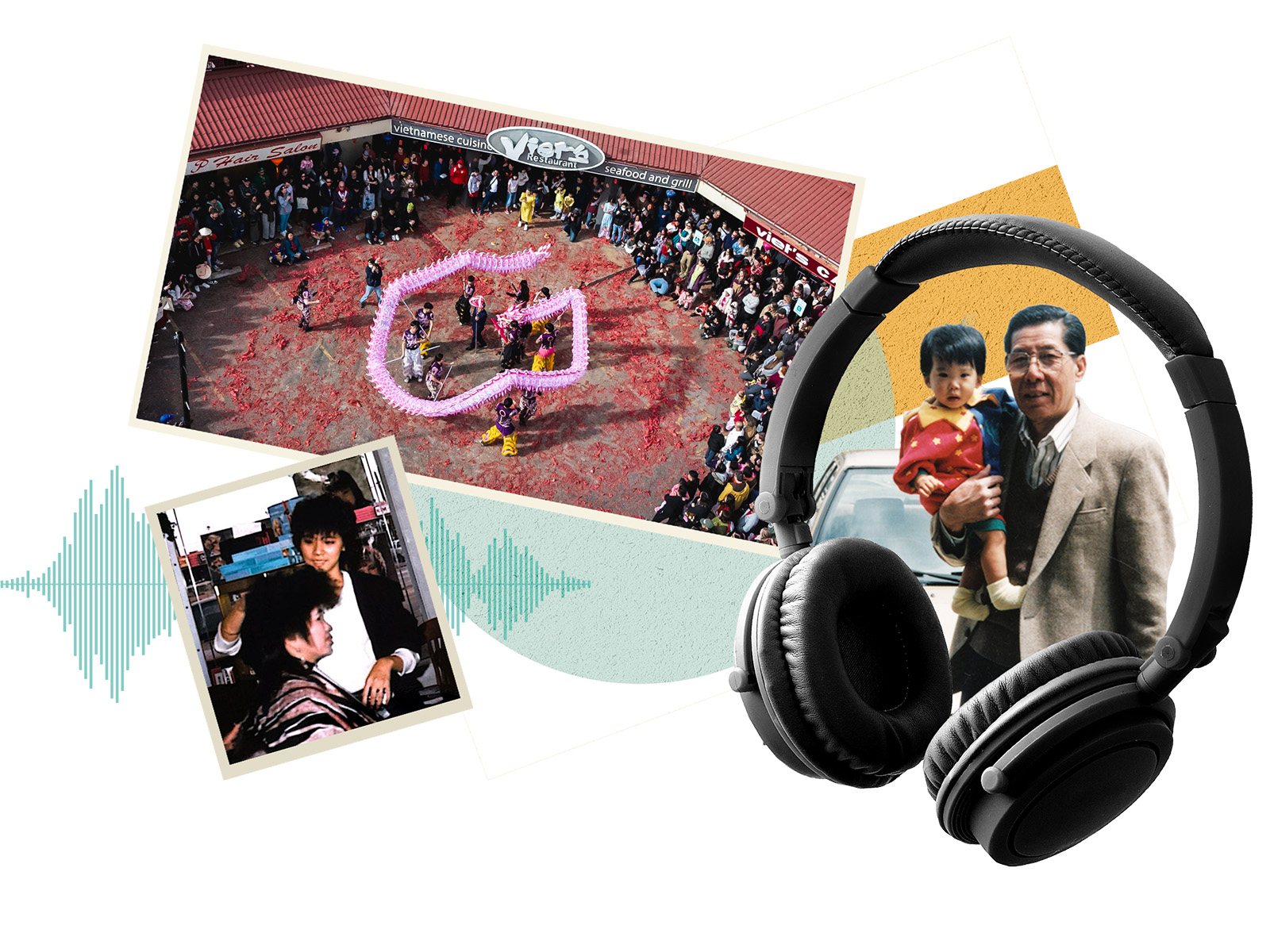
Ivy Ha, a refugee (and Joie Ha’s mother) who owned a salon and boutique in Little Saigon, on leaving Vietnam:
“We were in a cargo ship meant to carry oil. It was packed with people, so my family and I found a space in the corner. The worst part of being on the ship was nighttime. Everyone had to lay down by 6 p.m. I was seasick and dizzy. There were lots of kids running around and having fun, but it was really difficult for me. We were on the ship from Vietnam to Hong Kong for five days. Hong Kong did not let us arrive, so we had to stay on the ship for 28 [more] days. We did not get any food or water for a few days.”
Thien Tai, an artist and muralist born in Denver to a Vietnamese refugee, on growing up in Colorado as a first-generation America:
“We lived in Section 8 housing in North Denver. A lot of Vietnamese refugees lived there, but there was a lot of conflict because it was already a Chicano-dominant area. But they loved my mom, because she grew mint and strawberries and lavender in the front yard. Kids knew not to step in my mom’s yard. They’d say, ‘That’s Thien’s mom’s yard, don’t step on it,’ and I loved that.”
Linh Ton, whose grandfather fled Vietnam in 1975, on why Vietnamese immigrants form tight-knit communities:
“When you arrive in a new country with only four dollars in your pocket, in order to make it you have to rely on family, friends, and your culture. When one person learns a craft, they then pass it on so everyone can succeed. That’s why Vietnamese people have a lock in the nail business—it’s about sharing knowledge. Back then, you didn’t have cell phones, maybe a house phone if you’re rich. Few had cars, and they were usually shared cars. We wanted to stick around each other for the most part. Vietnamese populations are so concentrated for comfort, for learning, and to save, grind, and hustle until we could make it.”
4 Local Asian American Artists Who Made Exclusive Pieces for Big Dreams in Denver’s Little Saigon
Jane Ly
Denver graphic designer and second-generation Vietnamese American Jane Ly’s “Little Saigon Stamp Book” paintings incorporate postage stamps to draw on themes of long-distance communication and migration.
Akemi Tsutsui-Kunitake
Akemi Tsutsui-Kunitake believes legacy is best preserved by those who lived it, which is why text from the oral histories features throughout her mixed-media triptych.
Madalyn Drewno
Illustrator Madalyn Drewno brings Asian American experiences (like the Colorado Dragon Boat Festival) to life through vibrant, whimsical works made with watercolor, ink, and collage.
Editor’s note: After this story went to press, History Colorado Center pulled Drewno’s artwork titled “None of Us Are Free Until All of Us Are Free.” The museum cited concerns that the painting, which features unflattering depictions of local politicians, violates the state’s Fair Campaign Practices Act; free speech advocates called the move censorship.
Quynh Nhu Nguyen
Using oil pastels, colored pencils, and acrylic paint, Quynh Nhu Nguyen’s work is an ode to traditional Lunar New Year feasts.