

The Local newsletter is your free, daily guide to life in Colorado. For locals, by locals.
With the Collegiate Peaks as its backdrop and the Arkansas River running through its center, Chaffee County is known as a place to unplug and convene with nature; a haven for raft guides and rock climbers. But Kansas City–based engineer Grant Hamel saw it as the perfect testing ground for new, avant-garde accommodations.
In 2022, he moved from his homebase to small-town Salida to launch VeroTouch, a 3D-printing construction and manufacturing company. With a population just over 6,000, Salida may not seem like a cash cow for cutting-edge development, but the city’s size was actually what attracted Hamel. “If I were to go to a large municipality, I would have dealt with, say, a building department that has a thousand homes they need to approve this week,” Hamel says. “[But in Chaffee County], you’ve got this microcosm of all the problems you’d have in a big city, but in a small area where you can easily work with regulators and hasten a new, novel idea.”
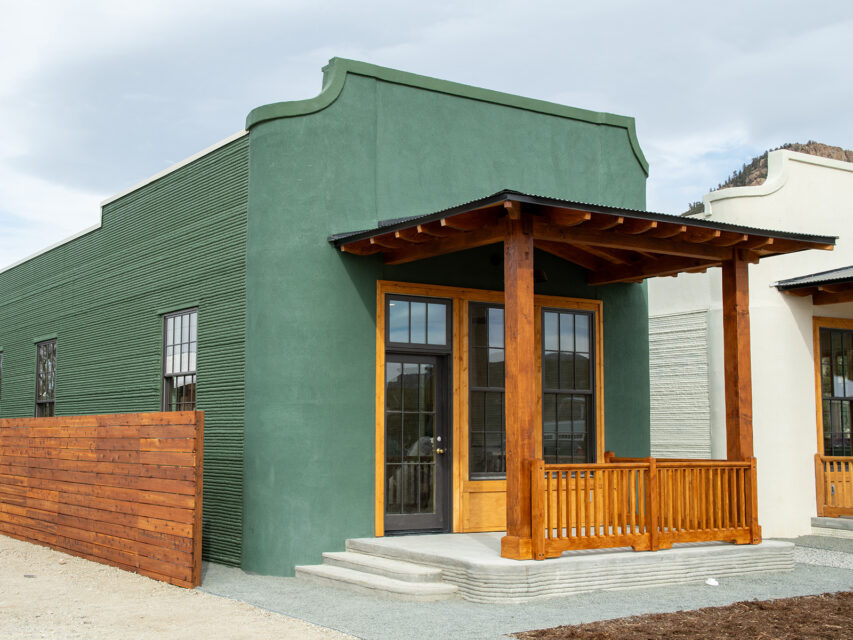
This February, VeroTouch completed its pilot project, a duo of 3D-printed residences—the first of their kind in Colorado—in Buena Vista’s South Main neighborhood. Here, five things you should know about the 1,100-square-foot homes, one of which you can rent for $3,500 a month.
1. They’re fire-resistant.
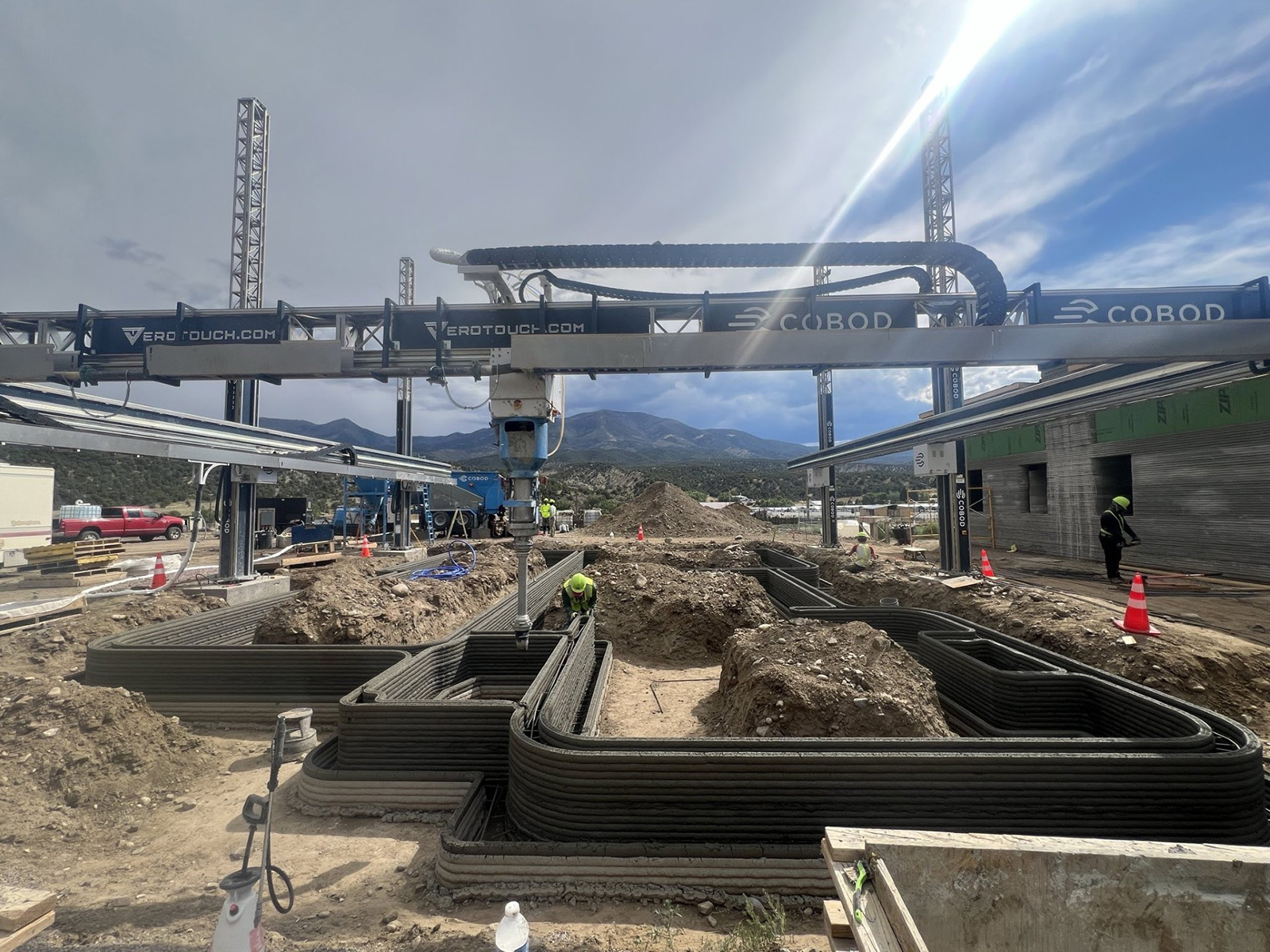
While most modern homes are constructed with flammable wood framing, VeroTouch uses noncombustible concrete as its main building material. Once the home’s footprint is programmed, a large-scale 3D printer dispenses concrete in continuous ropelike layers to form exterior and interior walls. “In places like Florida, you [see] a whole community burn down, but three homes are left standing, and every single one of those homes are concrete,” Hamel says.
The homes in Buena Vista were topped with wood roof trusses, but VeroTouch plans to use fire-resistant metal roofing for future projects.
2. They’re low(ish) maintenance.
Relying on concrete also means sidestepping catastrophic issues with timber-frame construction, like termites or water damage that leads to mold and wood rot. But concrete can swell and crack over time or when exposed to extreme temperature fluctuations. “We get plenty of that in Colorado, where it can be 60 degrees during the day and zero at night,” Hamel says. “So you want to make sure to keep the concrete sealed, keep it painted, and pay attention to any microcracking that can be alleviated before a bigger problem arises.” He suggests a routine check by a professional each year to ensure that the walls stay in top shape.
3. They’re surprisingly stylish.
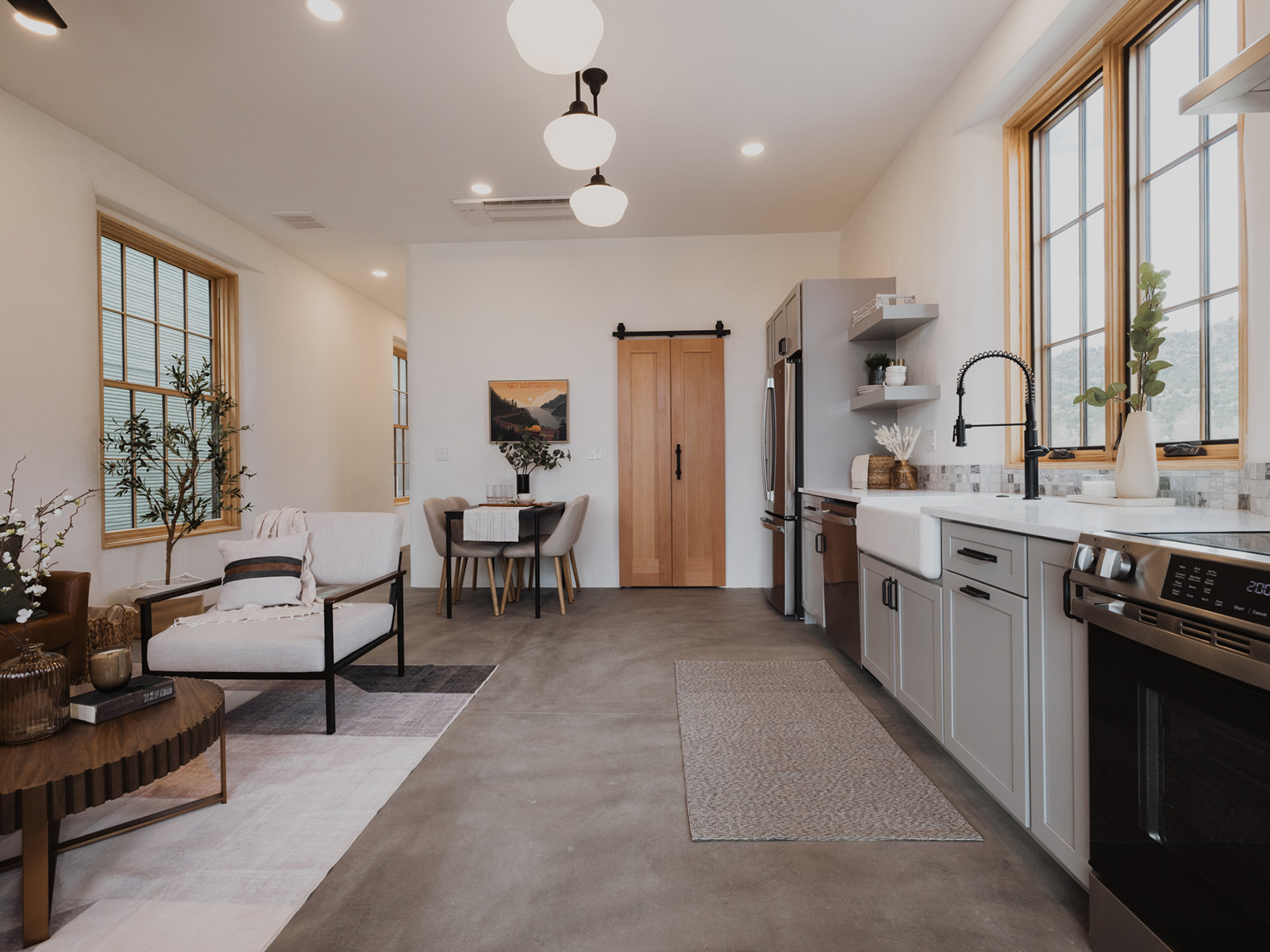
VeroTouch’s home-building robot is no Gaudí, but the simple structures fit in with South Main’s mix of modern new builds and stonefront cottages. “We wanted to make sure the first two pieces we made weren’t just a high-quality structural product, but really pieces of art,” Hamel says, noting that his team was going for a Southwest-inspired look. The corded concrete adds texture and subtle curves to the homes’ exteriors, which include wood-frame porches and multipane windows (installed by human builders).
Inside, one home’s walls were finished with smooth plaster while the other maintains its rippled texture. Polished concrete floors, black fixtures and hardware, and modern lighting provide a move-in ready, clean slate to which residents can add their own personality.
4. They’re the first of many.
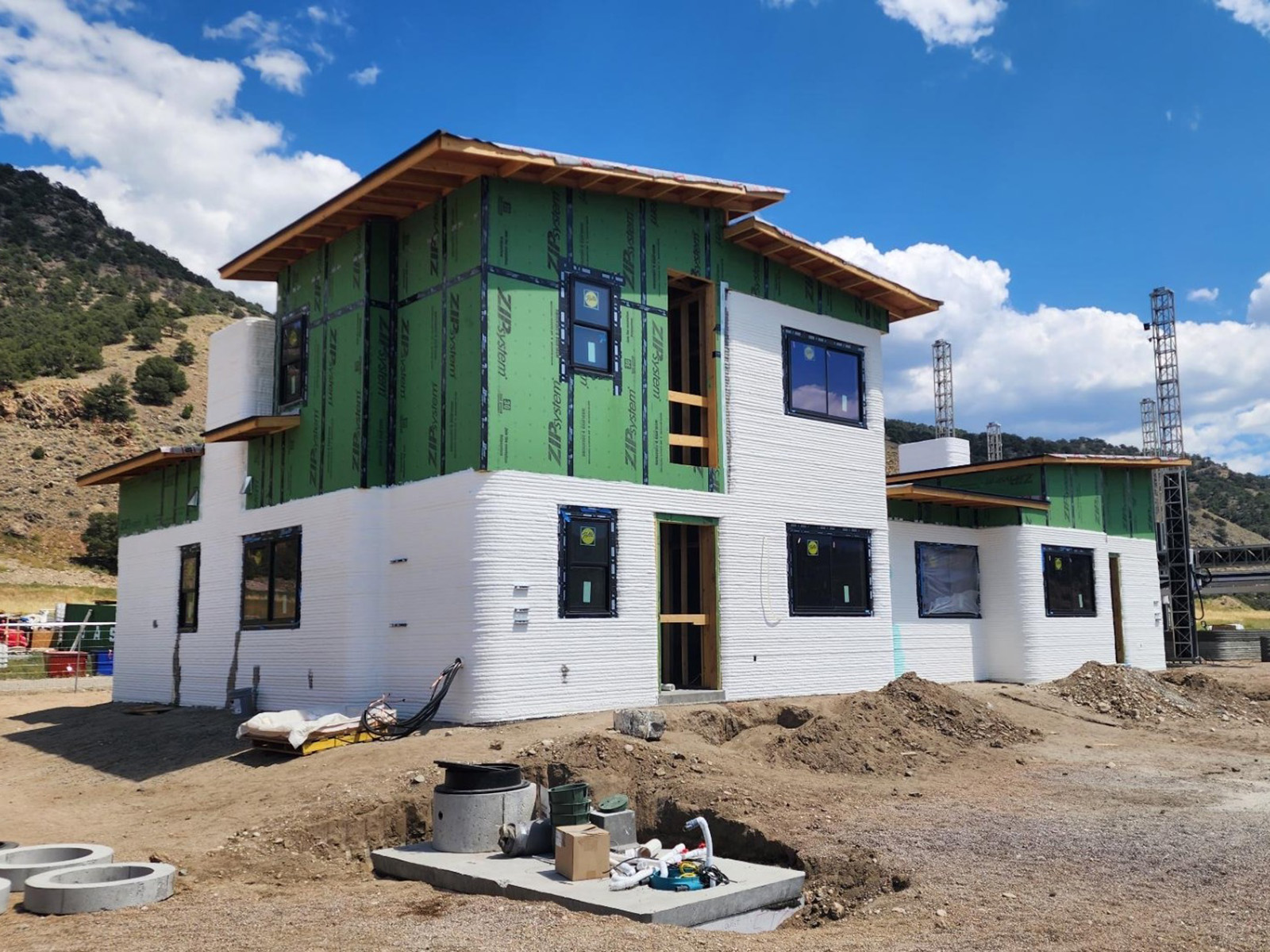
VeroTouch is currently building 31 additional 3D-printed homes in Salida’s Cleora development; a portion of them should be market-ready by the end of this year. Just like the homes in Buena Vista, most of the Salida properties will be 1,000-square-foot single-family houses with two bedrooms and two bathrooms, though VeroTouch is also including a few duplexes in the mix. “Having a project of that size and level will allow us to iterate four or five floor plans and perfect what we’re doing,” Hamel says.
By tweaking their design process to make it more affordable and efficient, VeroTouch plans to list these homes starting at $450,000—which is $175,000 less than the asking price for the Buena Vista homes.
5. They’re a prototype for big aspirations.
“Our mission is to solve the housing crisis,” Hamel says, noting that cutting construction expenses ultimately leads to more affordable homes on the market. According to its website, VeroTouch’s 3D-printing business model reduces building costs by up to 20 percent, labor needs by up to 40 percent, and project timelines by up to 20 percent.
But Hamel recognizes that quicker and cheaper doesn’t always mean better. “Right now, there’s housing you can buy for cheap, but it’s not going to last for very long. We’re really trying to get out of the current phase of construction: Build it fast, turn it over quick, sell it quick, tear it down,” he says. “We want to build communities where the residents aren’t thinking, I’m going to have to rebuild this home in 20 years. They’re thinking, How am I going to pass this onto my grandchildren?”