

The Local newsletter is your free, daily guide to life in Colorado. For locals, by locals.
Nine out of 10 skiers agree prepping your skis for the offseason is a lot like flossing. You know you should do it—and you may even say you do it—but how often are you actually following through? Routine care is a necessity, however, if you want to keep your planks minty fresh for next winter.
So make these expert tips from Thad Eldredge, owner of Carvers Ski & Bike in Breckenridge, and Jonah Drescher, showroom manager at Christy Sports in Arvada, part of your spring routine.

1. Clean your skis.
Even if you can’t see it, gunk is there. Wash off dirt, grime, and chemicals built up on surfaces and around components with warm water, mild soap, and a cloth. Skip harsh solvents and mineral spirits that can damage ski materials. Be especially meticulous if you use a roof rack: Magnesium chloride from the road can corrode skis.
2. Wax your skis to protect bases.
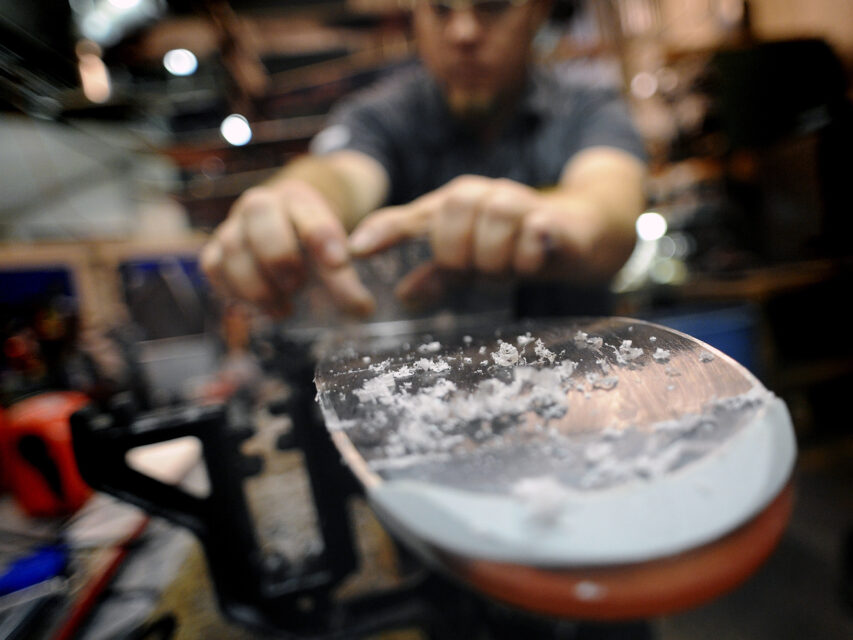
Freshen bases with a specialized conditioner, like Avon-based Purl Eco Base Cleaner, made specifically for the job. Apply an even layer of any type of ski wax (never candle wax) to coat the base and surround edges for hydration and protection from rust all summer long. Don’t heap it on, though—that makes removal in the fall a pain.
3. Tune and sharpen ski edges.
Edges need a polish with a file guide followed by a gummy stone to remove burrs and rust. It’s also a good time to inspect for edge separation or delamination and get those issues fixed before they grow into major problems. Your local ski shop can address both with a basic tune.
4. Loosen your ski bindings.
Bindings rest best in a low-pressure environment. Note your usual DIN (the force needed to eject your boots and prevent injury during a yard sale), and crank down the tension to release strain on the components. Just remember to reset your bindings before you click back in.
5. Store skis properly.
Stash your skis in a dry, climate-controlled spot away from direct sunlight, water heaters, and HVAC units; temperature swings cause materials to warp or wear out faster. An interior closet on the main level is better than an attic or garage. Ideally, you’d store your rig on a hanging rack or lay the sticks horizontally with nothing on top to avoid warping or delamination.
Read More: Our 5 Favorite Local Outdoor Stores In and Around Denver