



The Local newsletter is your free, daily guide to life in Colorado. For locals, by locals.
I blinked groggily, staring at a black-and-white clock on the wall of a hospital room. I’d just woken up from surgery, and my OB-GYN was standing at the foot of the bed, telling me that the procedure had gone smoothly. Concentrating on her words was hard, though, because the clock appeared to be slowly sliding down the wall—a visual distortion from the fentanyl a nurse had given me for the pain in my lower abdomen.
I closed my eyes for a moment, and when I opened them again, the doctor was holding up photos that showed dozens of ugly red growths that had been all over my ovaries, intestines, and fallopian tubes. The tubes were especially useless: blocked, swollen, and filled with fluid (“like a toxic swamp,” as another doctor had said cheerfully when I failed a diagnostic test a few weeks earlier). “It’s a pretty bad case of endometriosis,” the surgeon said, “but hopefully IVF will work.”

Even after the drugs had worn off, the diagnosis was hard to grasp. I’d read about endometriosis online. In essays and social media posts by regular women as well as celebrities such as Chrissy Teigen, the story was always the same: A woman experiences crippling pain with her period, and a doctor dismisses her suffering as normal cramps, suggesting she take Tylenol. She eventually insists on surgery—the only way to get a definitive diagnosis—and feels validated when the surgeon finds abnormal growths of uterine tissue outside the uterus. At least one in 10 women suffer from this underdiagnosed disease, which can cause infertility as well as chronic pain.
But could this really be my story? I’d never had painful periods or any other symptoms, and yet my case was stage 4. My IVF doctor explained that this was silent or asymptomatic endo, as it’s often called, and that she saw it all the time. Mysteriously, the severity of the symptoms and the disease don’t always correlate; you can be stage 1 and have crippling pain or stage 4 with none. And while many women with endo will struggle with infertility, others don’t.
I asked my doctor if women with endo had lower than average IVF success rates. No, she said, assuring me I had a 70 percent chance of pregnancy with the first attempt alone. Three years, seven embryo transfers, and nearly six figures in medical bills later, I’d learn she was wrong, at least when it came to severe cases like mine. Although it’s common—accounting for 25 to 50 percent of all female infertility—endometriosis is such a poorly understood condition that even fertility experts can be misinformed about it.
Part of the problem is a lack of money for research. “Women’s health has always been severely underfunded, and there’s no government funding whatsoever for infertility,” says Dr. Eric Surrey, a senior reproductive endocrinologist (IVF doctor) at CCRM Colorado in Lone Tree. Pharmaceutical companies aren’t interested, either: “All our studies [at CCRM] have been self-funded,” he says, as is almost all endometriosis research nationally.
The fact that the disease can only be definitively diagnosed with surgery also presents a major obstacle. Surrey believes the widely cited estimate that 10 percent of women have endo is likely a significant undercount, since many don’t undergo surgery. Earlier diagnosis wouldn’t just reduce suffering, he argues—it would also save money. The average cost billed to insurance for an endo patient who waits three or more years for a diagnosis is a staggering $34,460, according to a study Surrey led in 2020. “Earlier diagnosis is critical,” he says. Someday, he hopes, it might be caught early with a simple blood test.
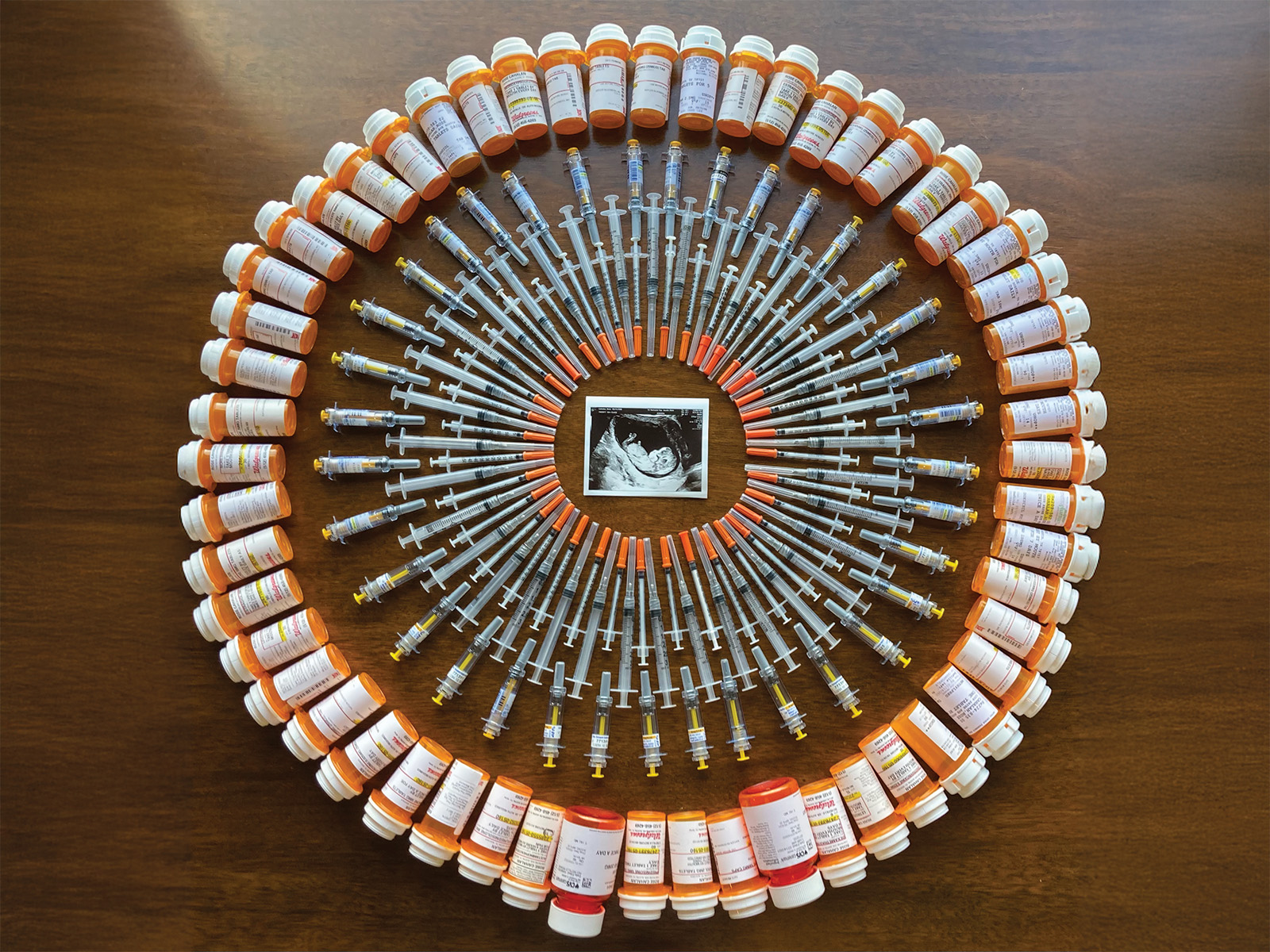
In the meantime, other developments are ongoing, including new medications with fewer side effects. One of the cruelest things about endometriosis, for me, was that the same hormone that made me feel good, estrogen, fueled the lesions’ growth; to suppress the disease and increase the chances IVF could work, I had to take a $1,900 monthly shot (which my insurance refused to cover) called Lupron Depot, which tanks estrogen levels and temporarily induces menopause, with all its hellish side effects. I’d wake at 2 a.m. after a hot flash, pajamas drenched in cold sweat, wondering why there wasn’t a better way.
“We are making progress,” Surrey assured me. He’s hopeful in part because of how dramatically women’s health care has advanced in his lifetime. “If you go back to the 1970s, they were doing open abdominal surgery [rather than minimally invasive] for endometriosis, and the main surgery was hysterectomy,” he says. “We’ve gone way beyond that now, and I’m optimistic that will continue.”
Three years into IVF, I wasn’t nearly as sanguine. As we transferred embryo after embryo—an onerous process involving hundreds of hormone shots, invasive procedures, pills, and blood draws—the result was always a negative pregnancy test. We tried new doctors, new clinics, new meds, and eventually, a new uterus: that of a kindhearted relative who volunteered to be our surrogate. She had a miscarriage.
Even in support groups, previously a source of comfort, I felt alone. Most of the women I’d met there early on had long since had their babies. After my fourth or fifth negative, I could no longer bring myself to look at the black-and-white embryo photo that I was given before each transfer. It was too painful to imagine the person that clump of cells could become, knowing that nine days later this chance would likely be gone like all the others.
For the seventh attempt—the last one, my husband and I decided, before going all in on surrogacy—a friend offered her frozen eggs. It was a long shot; there was nothing wrong with my eggs, the doctors agreed. Nevertheless, we gave it a try, and one of those eggs turned into my now-three-year-old son. At my lowest, I’d wondered if all the pain would ever feel worth it; from the first time I held him, tiny and pink and squalling, I knew it was.
Why my case was so difficult is a mystery. At some point, the doctors started shrugging and admitting they didn’t know. Despite all the advanced technology that comes with IVF, luck remains a significant part of the equation. I carry some scars, physical and emotional, from those hard years, but the silver lining is that I usually don’t worry about minor everyday challenges, because my gratitude for the chance to be a parent is so profound. My toddler doesn’t eat vegetables, and some days he watches more cartoons than he should, but he is here, smiling and laughing and running around with a shock of blond hair and piercing green eyes. How incredible is that?
Read More:
- A First-of-Its-Kind Colorado Clinic Is Changing the Game for Teen Girls in Sports
- She Barely Survived Giving Birth. Then She Vowed To Give Other New Moms a Better Experience.
- Heart Attacks Are Twice As Deadly in Women. A Colorado Doctor Believes Earlier Detection Could Save Lives.
- Denver Doctor Nanette Santoro Is Busting Menopause Myths