


The Local newsletter is your free, daily guide to life in Colorado. For locals, by locals.
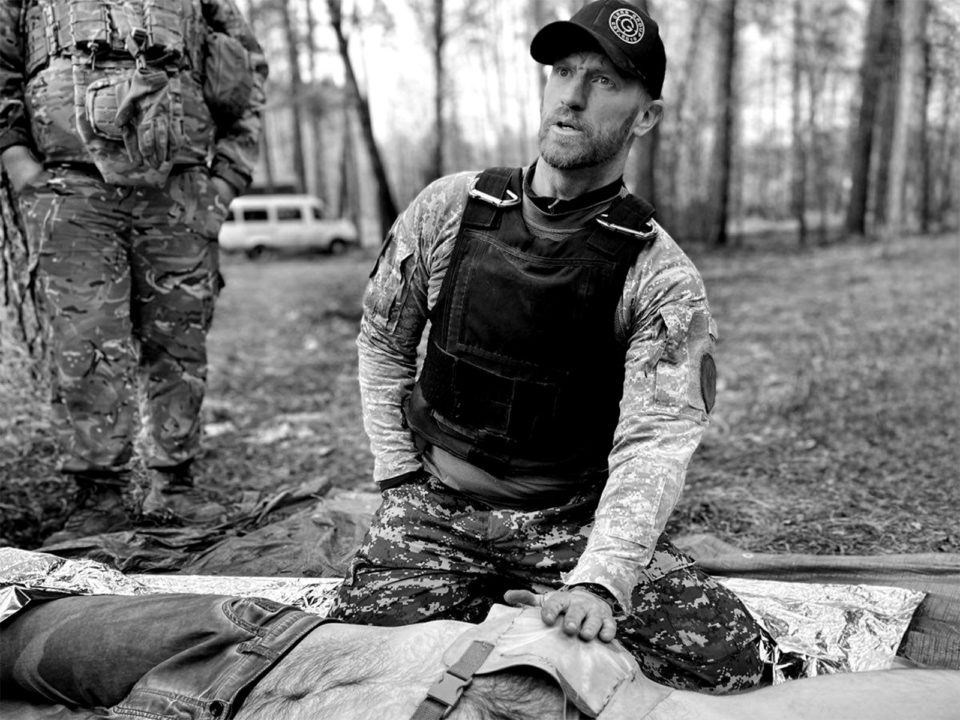
While working a Texas trail race in 2022, U.S. counterterrorism expert turned paramedic Mike Piet was approached to join a volunteer medical mission to Ukraine, where he treated civilians displaced by the war. Two subsequent trips made clear to Piet that Ukrainian soldiers lacked advanced front-line trauma education.
He relocated to the Boulder area later that year and, in 2023, co-founded Força Ukraine, a nonprofit that trains Ukrainian soldiers to treat complex blast injuries from heavy artillery, land mines, and explosive drones. Before Piet sets out this month on his eighth mission to Ukraine, we asked him about the challenges the soldiers are facing and the dangers his team—which includes five other Colorado-based medics—experiences on the ground.

Editor’s note: The following conversation has been edited for length and clarity.
5280: Was it difficult to recruit volunteers for Força?
Mike Piet: In Colorado, there’s an interest in the world that’s different from elsewhere in the country. I see Ukrainian flags on every bike ride outside Boulder. Colorado’s natural beauty attracts people who have enough sense of adventure to agree with some weirdo like me asking: Hey, do you want to go to Ukraine and do meaningful work while living in a tent?
Have you noticed any shifts in Ukraine since President Donald Trump took office?
Ukrainian friends ask: “What is America doing in this war?” There was hope that this administration would end it, and now we’re in this almost fatalistic reality. Russia is taking advantage, becoming emboldened and well-armed while Ukraine has to be judicious about defense.
What are the biggest challenges for Ukrainian medics?
The war in Ukraine is teaching us the mindset of prolonged field care in austere settings without helicopters. How do you do effective medicine while evacuation is threatened by drones? How do you provide prolonged care for blast injuries from a backpack in a trench or basement? Ukrainians demonstrate exceptional tenacity and inventiveness, and we use their experiences to inform our teaching.
How do donations help on the ground?
We’re just a conduit: Donors directly impact lives. One hundred percent goes to training and equipment. We do as much as we can with every dollar—living in tents and farm houses, offering training in exchange for meals—so we can put everything we’ve got into Ukraine. With just $13, we can buy a Ukrainian-produced tourniquet and show people how to use it.
How do you balance wanting to help with the dangers involved?
Our goal is to meet medics where they are, but can I continue to ask my team to take risks in places where drones are so pervasive? At some point, you have to assess: What is the safest thing for everybody? We’re also an obvious target for surveillance, and I don’t want people we’ve trained to come under additional threat. Some towns we’ve worked in no longer exist or are inaccessible. While we will continue to the best of our ability, the reality is that Ukraine is losing territory, and drone attacks make our missions harder—the threat keeps increasing.
So why do you keep going back?
Many people we’ve trained haven’t survived. We return and rarely see the same faces. As a small team with a small budget, sometimes it feels like we’re not making a difference. Then someone messages: “I used what you taught me, and I saved somebody.” Those are unspeakable joys in a sea of tragedy. Over six months, one unit suffered an 80 percent loss. One soldier said: “If you hadn’t trained the medics, we wouldn’t have anybody left.”
I gave up on changing foreign policy long ago…but if we can change one person’s life, and that person has an opportunity to change other people’s lives—that’s the force-multiplying ripple effect a small team can have. We know we’re doing something right when people ask when we’re coming back.
Read More:
- The Extraordinary Ways Coloradans Are Helping Ukrainians Right Now
- How One Local Designer Benefits Ukrainian Orphans Through Fashion
- How Colorado Restaurants and Breweries are Supporting Ukraine
This reporting was supported by the International Women’s Media Foundation’s Women on the Ground: Reporting from Ukraine’s Unseen Frontlines Initiative in partnership with the Howard G. Buffett Foundation.