


The Local newsletter is your free, daily guide to life in Colorado. For locals, by locals.
If you’ve ever walked into a room full of plants and felt your shoulders relax or entered a harshly lit grocery store and immediately felt on edge, you’ve experienced neuroaesthetics: the brain’s often subconscious response to beauty, visual art, and your environment. “We’re taking in 11 million bits of information at any given time, but we only process 50,” says Angela Harris, CEO and principal of Denver design firm Trio. “So we experience spaces very unconsciously.”
Through a graduate program at the Institute for Doctoral Studies in the Visual Arts, Harris is currently studying how the aesthetics of our living spaces impact our nervous systems and, in turn, our overall well-being. “Every design decision that we make is either tapping into our parasympathetic nervous system or our sympathetic nervous system, triggering either our survival mode or relaxation mode,” she says. And with Americans spending 18 percent more time at home than they did two decades ago, according to a survey by the Bureau of Labor Statistics, the question of how our spaces make us feel is more pertinent than ever.
Here, Harris shares five simple ways to tweak your living space for a happier life.
1. Adjust lighting to follow your body’s circadian rhythm.
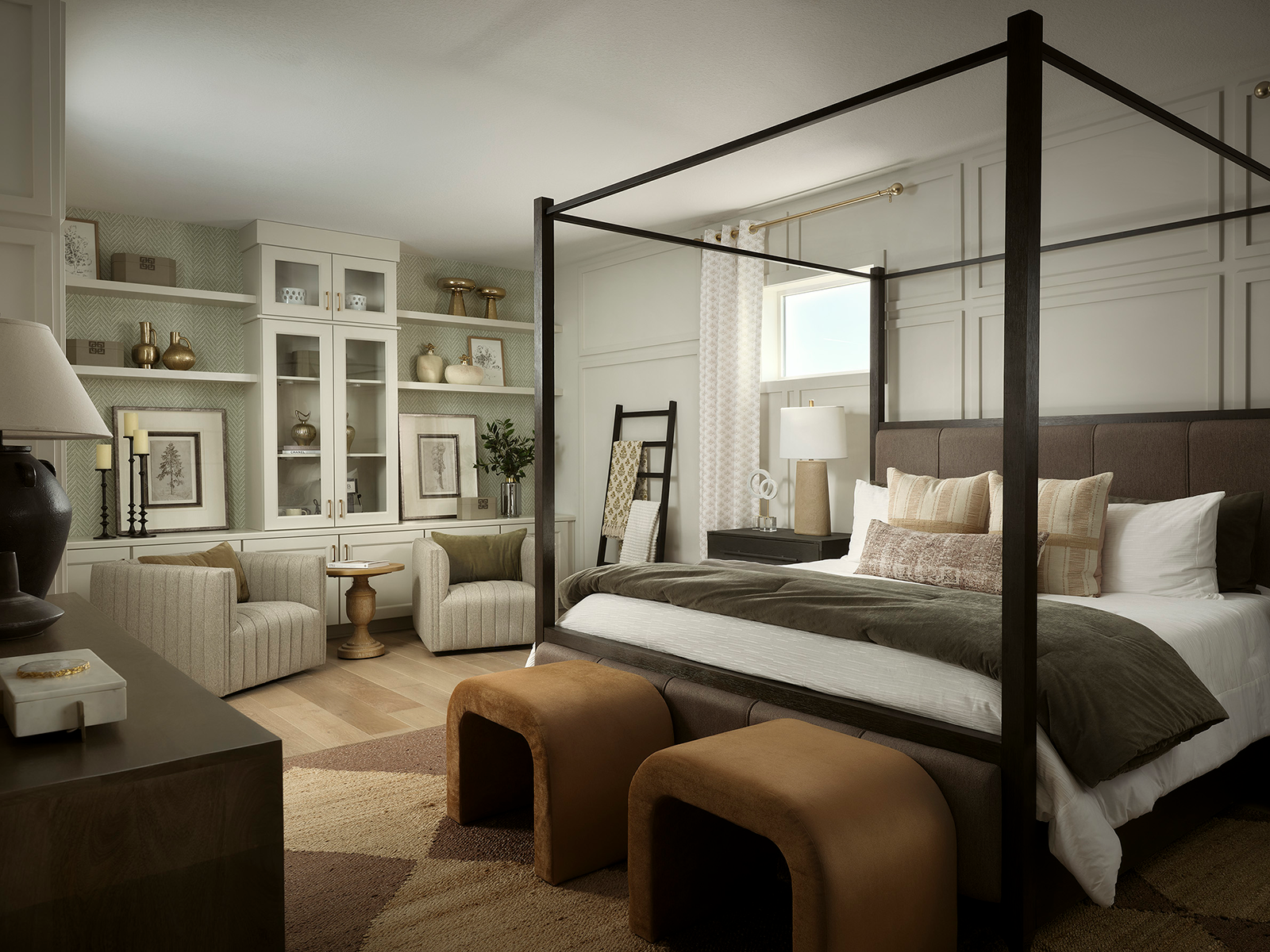
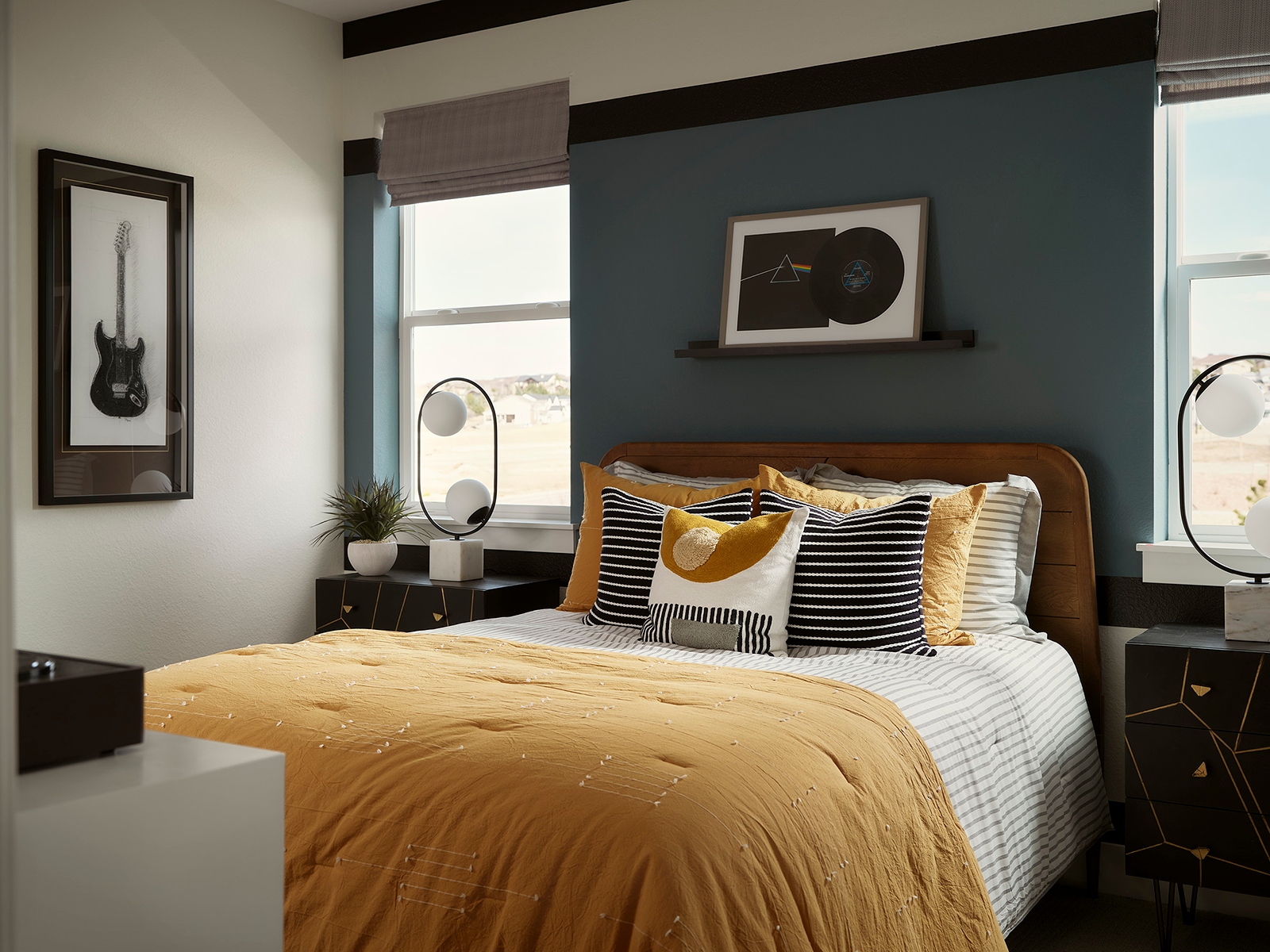
“The first thing to consider is always light,” Harris says. Pulling back the blackout curtains and letting Colorado’s abundant sunshine into your home is one obvious way to elevate your mood, but how you light your home after dark matters just as much. Rather than defaulting to overhead lighting, Harris recommends building a layered, dynamic lighting scheme. “Ambient lighting and mood lighting is critically important,” Harris says.
If possible, place recessed ceiling lights and main fixtures on dimmers and supplement with low-light sources (read: lamps and sconces) you can flip on as the evening winds down. The goal is to mirror your body’s natural circadian rhythm by gradually transitioning from bright, energizing light during the day to warm, soft light as bedtime approaches.
2. Add something living.
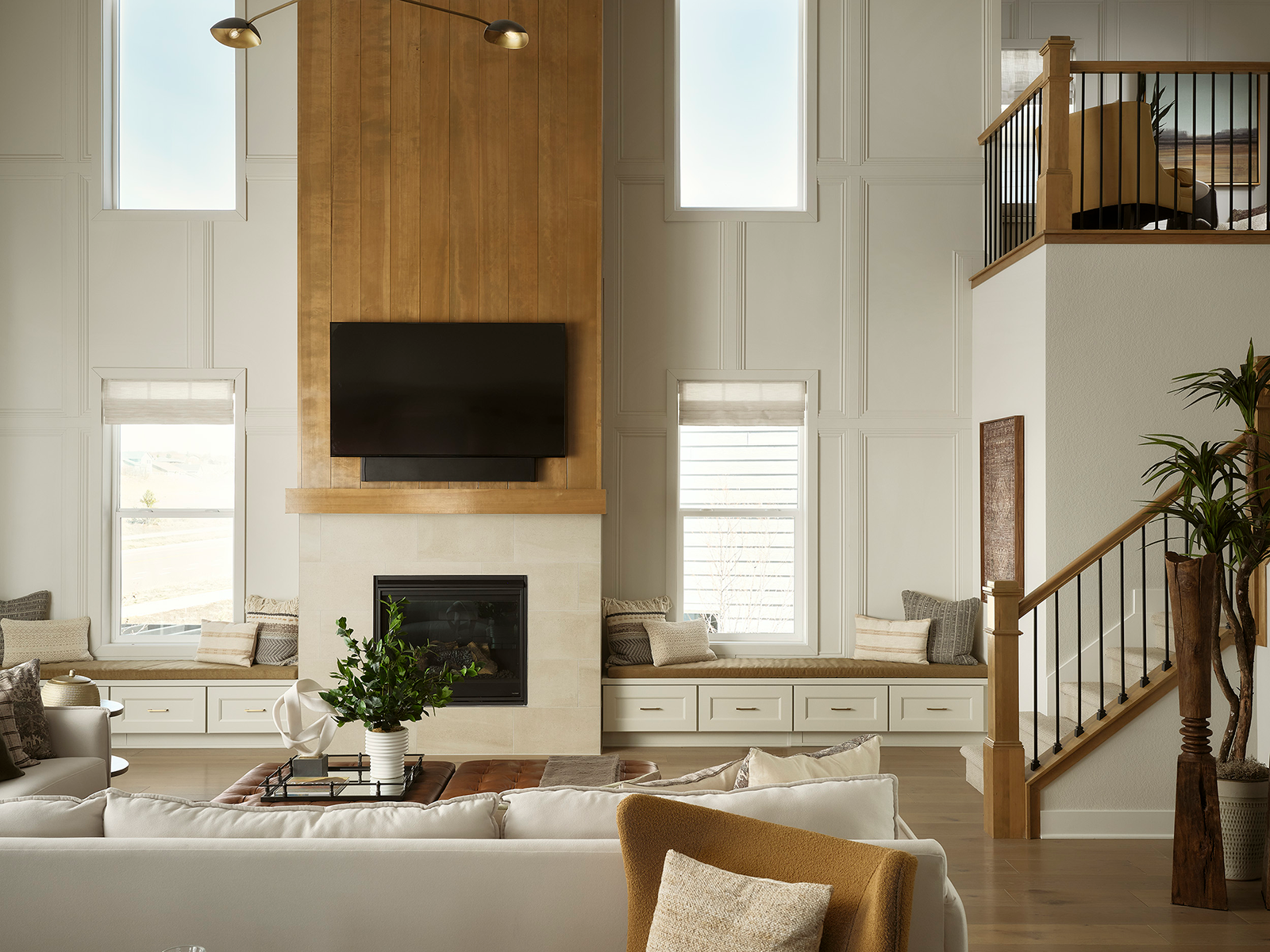
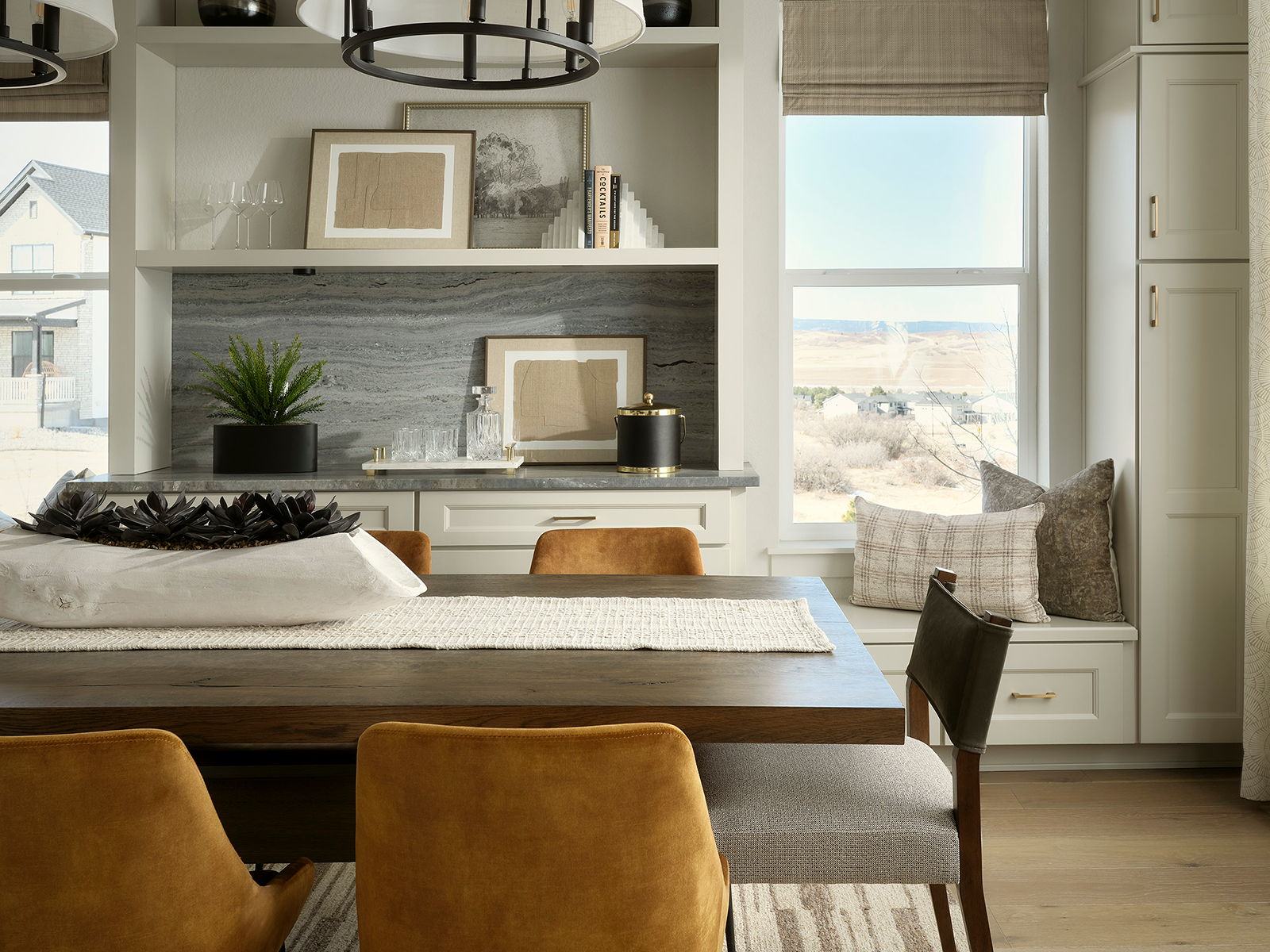
The Environmental Protection Agency estimates that Americans spend roughly 90 percent of their lives indoors, yet our nervous systems are wired for the natural world. Maintaining a connection to the outside, even from within your four walls, can have a profound effect on how calm and grounded you feel at home. “The research shows that stress levels are reduced by 60 percent with a connection or exposure to nature,” Harris says.
If you don’t have a panoramic mountain view from your bedroom, don’t fret: Incorporating natural materials like wood and stone, organic textures, and living elements can send messages of safety to your brain. “The go-to is plant life, but it doesn’t have to be that,” Harris says. “It could be blunt branches in a vase or a simple bowl of fruit on the counter.”
3. Set your space up for what makes you happy.
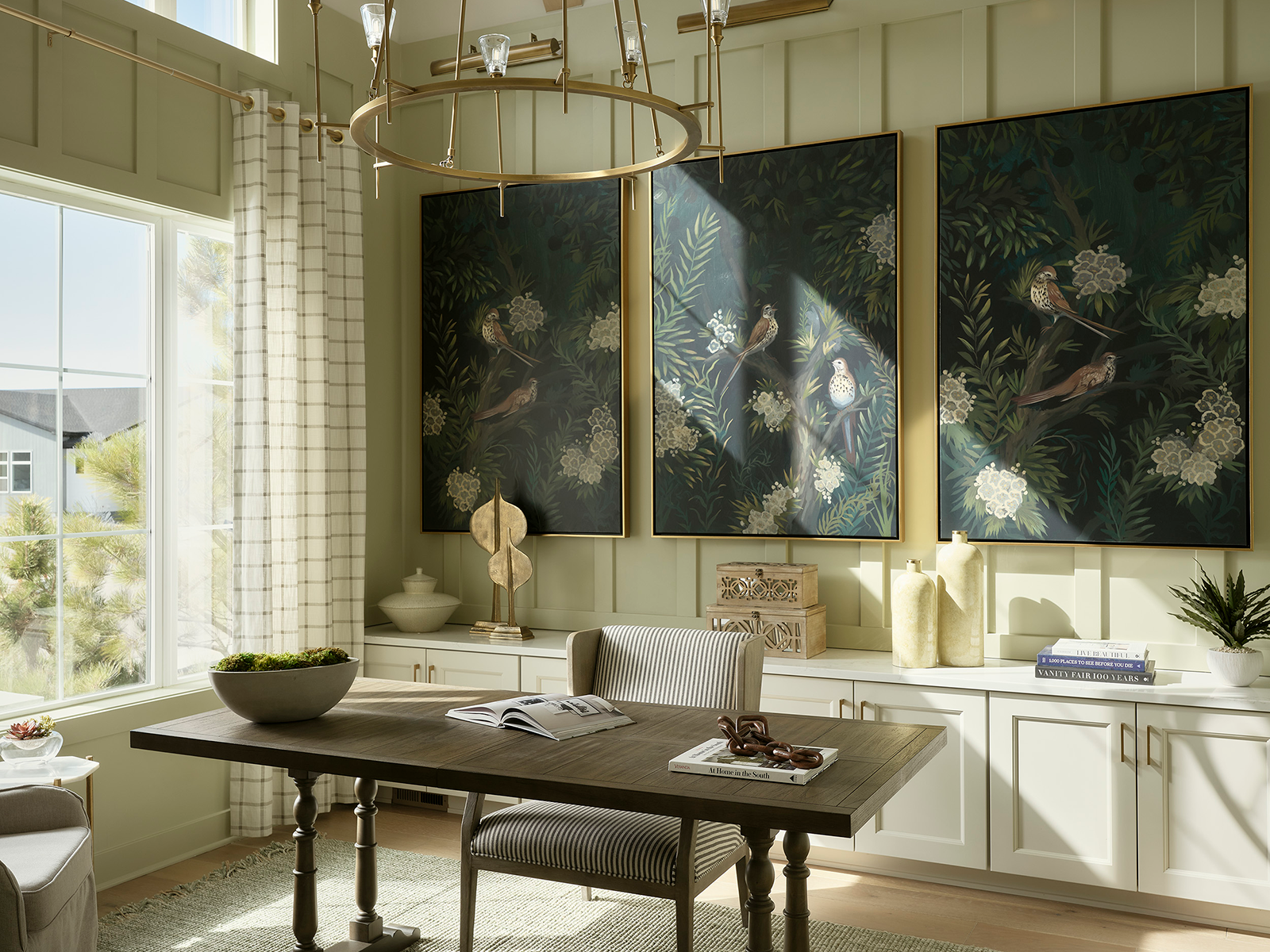
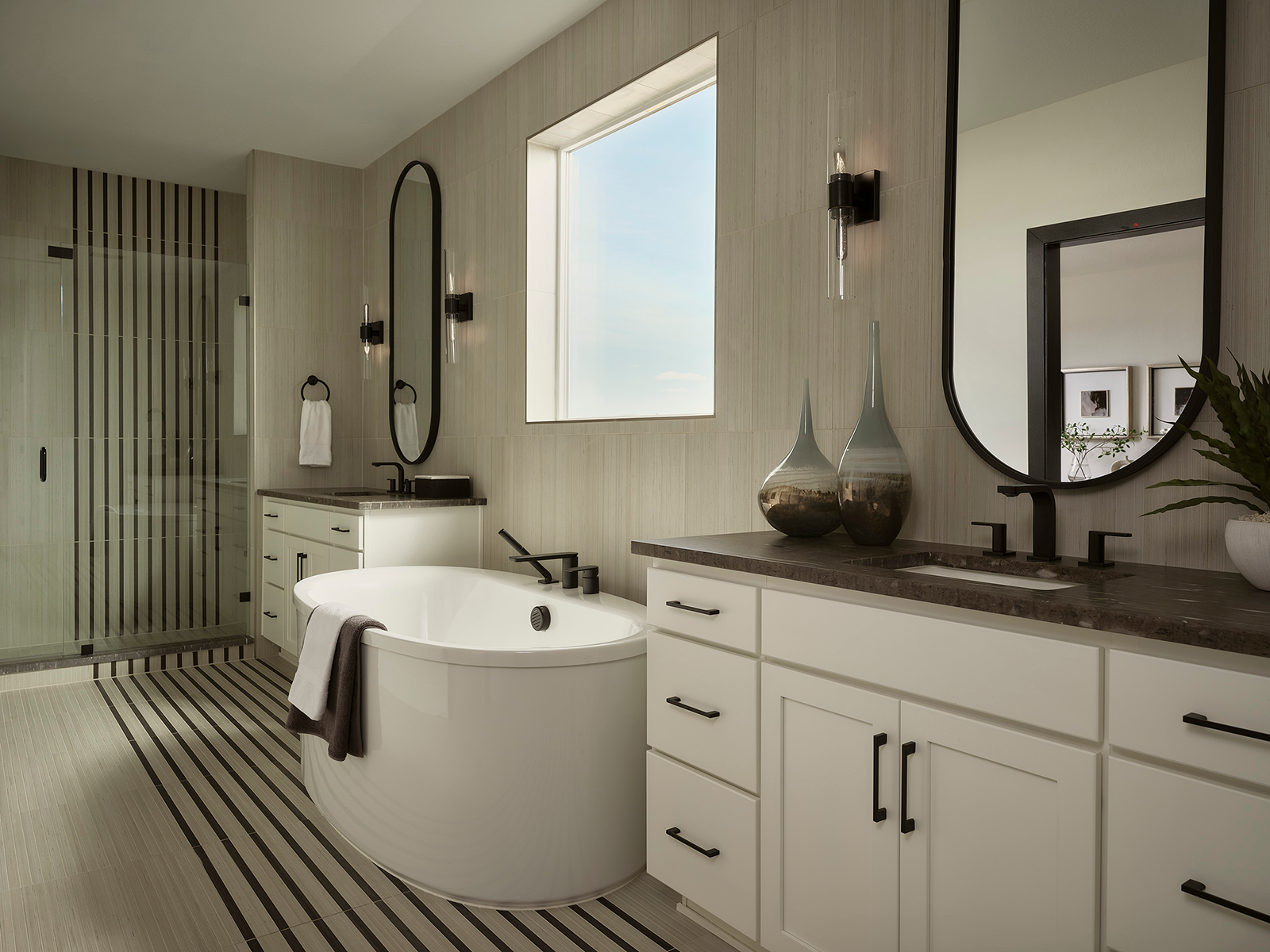
Harris encourages her clients to design their living spaces around the rituals or moments that they look forward to each day. If you go to bed already giddy about your cup of coffee the next morning, carve out a dedicated corner of your kitchen for a proper coffee station. If nothing brings you more joy than your collection of vintage handbags, turn an unused wall of your bedroom or closet into a functional display that you can ogle every day. “It’s about really understanding who you are and how you operate,” Harris says. “Think about the key components of your day that help ground you.”
4. Reduce visual clutter.
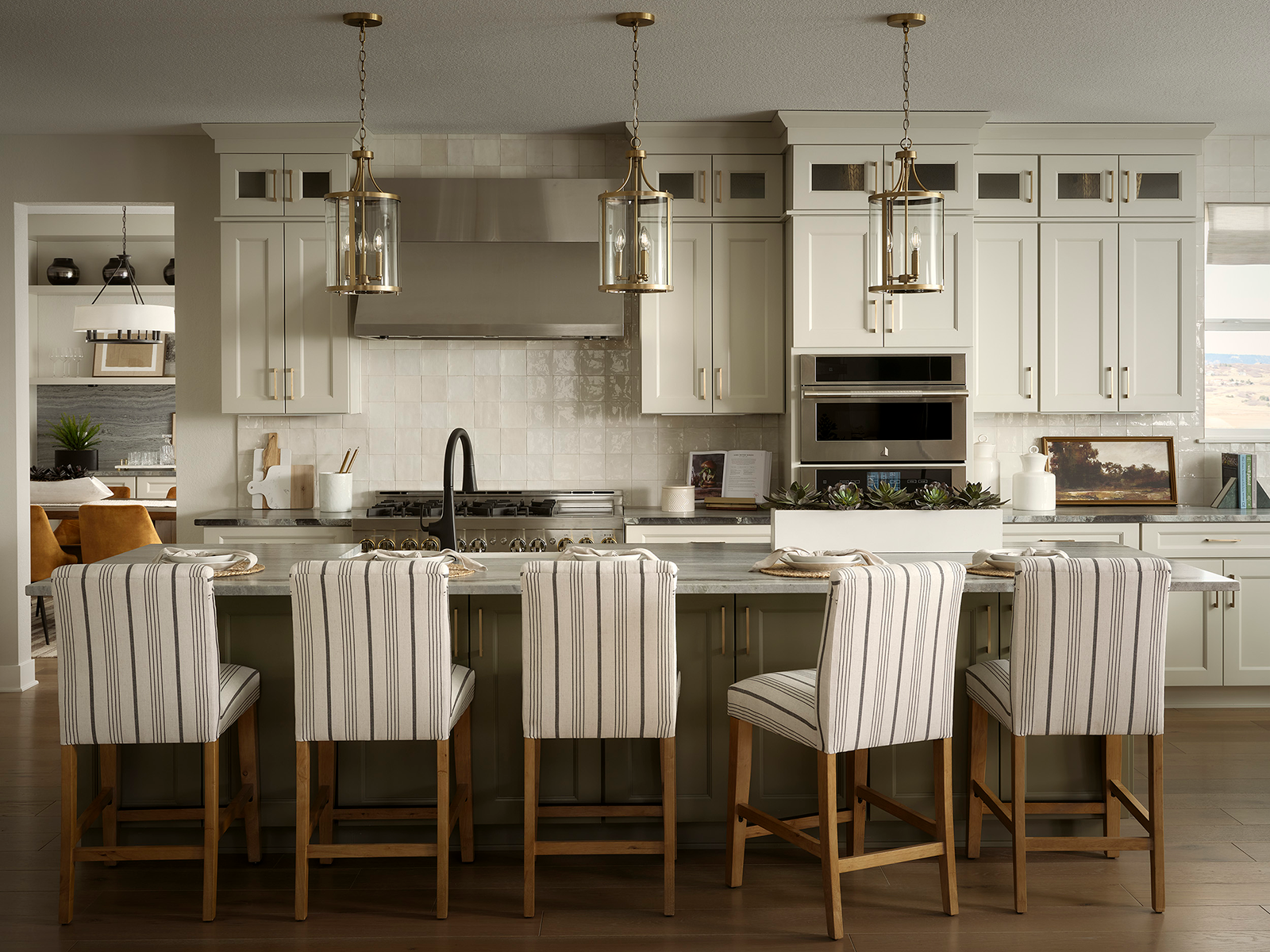
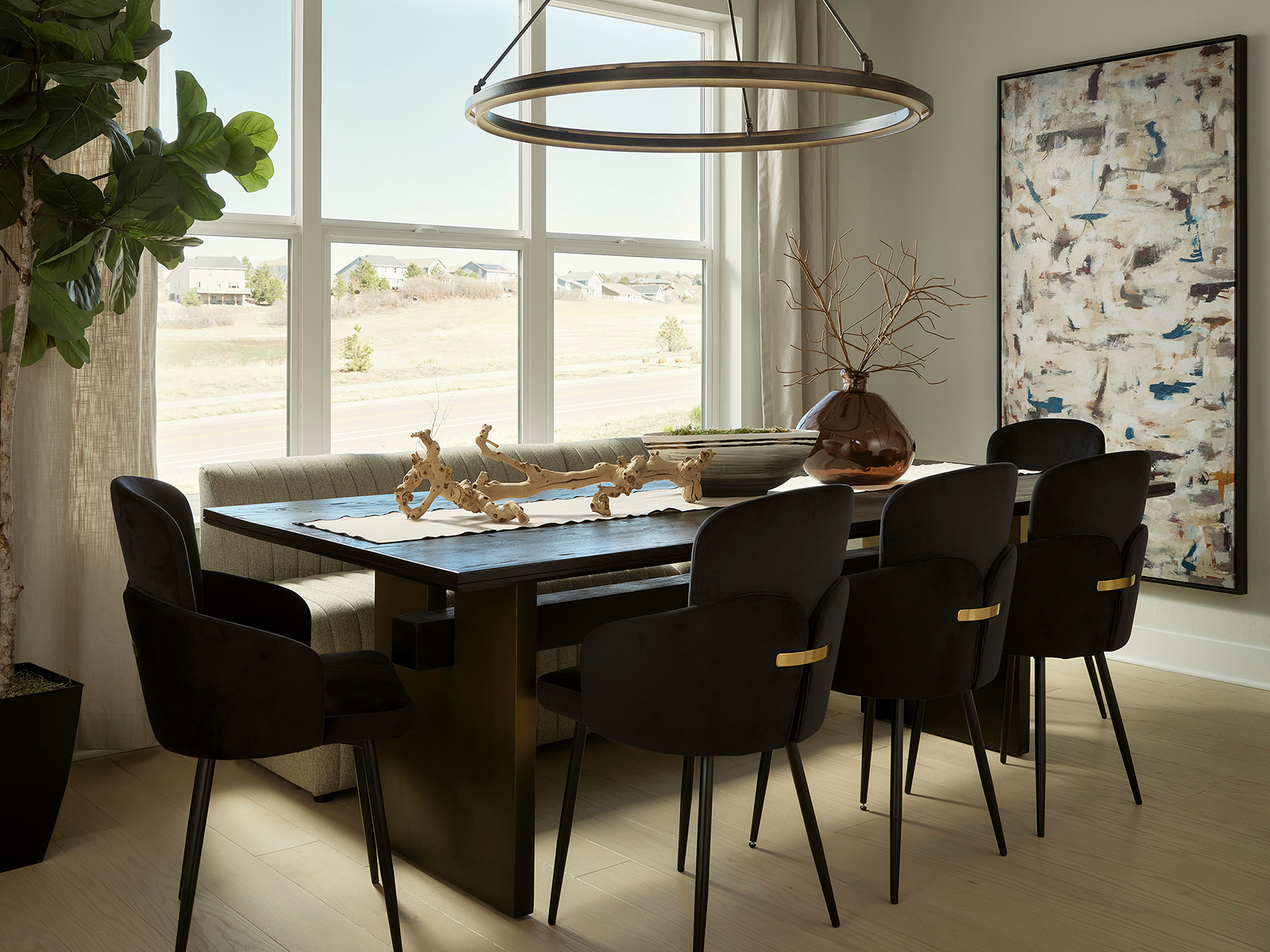
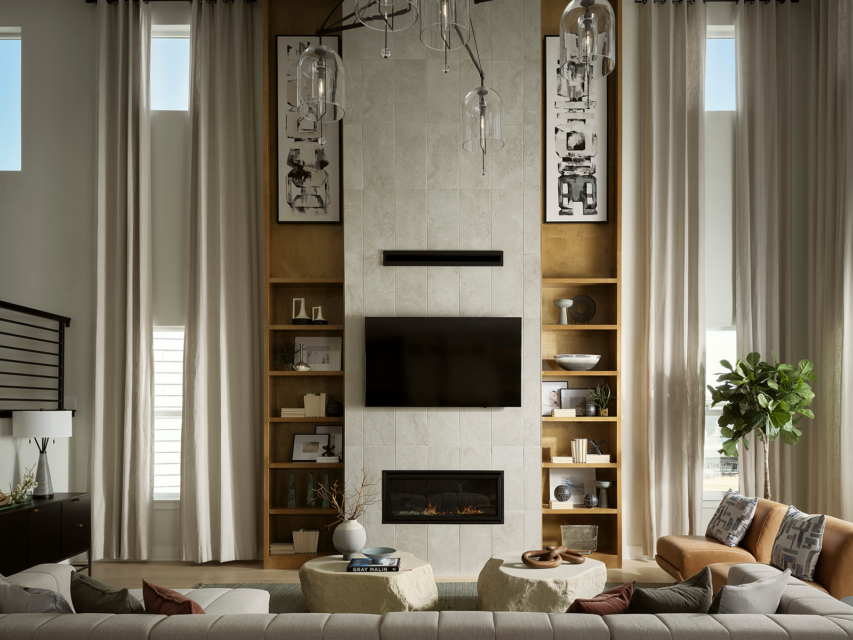
“We’re all so busy in our daily lives, and we’re constantly bombarded by technology and noise,” Harris says. “So when you get in your home environment, you need to counterbalance that.” To dial down the visual clutter in your home, think about scaling up certain elements. Maybe that means trading your busy gallery wall in the living room for a single substantial art piece, choosing one oversized light fixture to hang above your kitchen island rather than three small pendants, or combining your tiny potted succulents into one large planter. Creating focal points will help reduce the visual noise, and in turn, quiet the mind.
5. Be wary of trends.
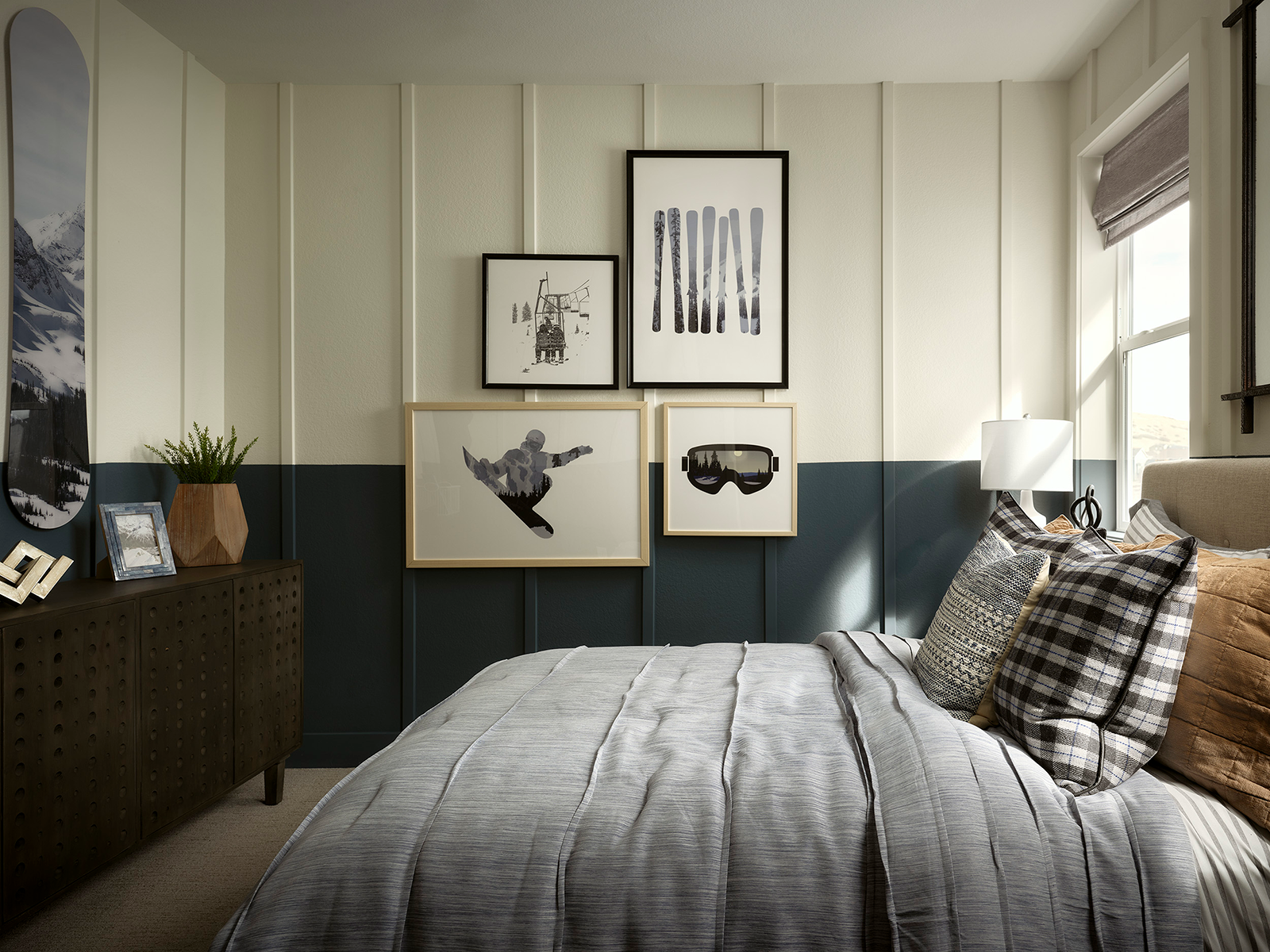
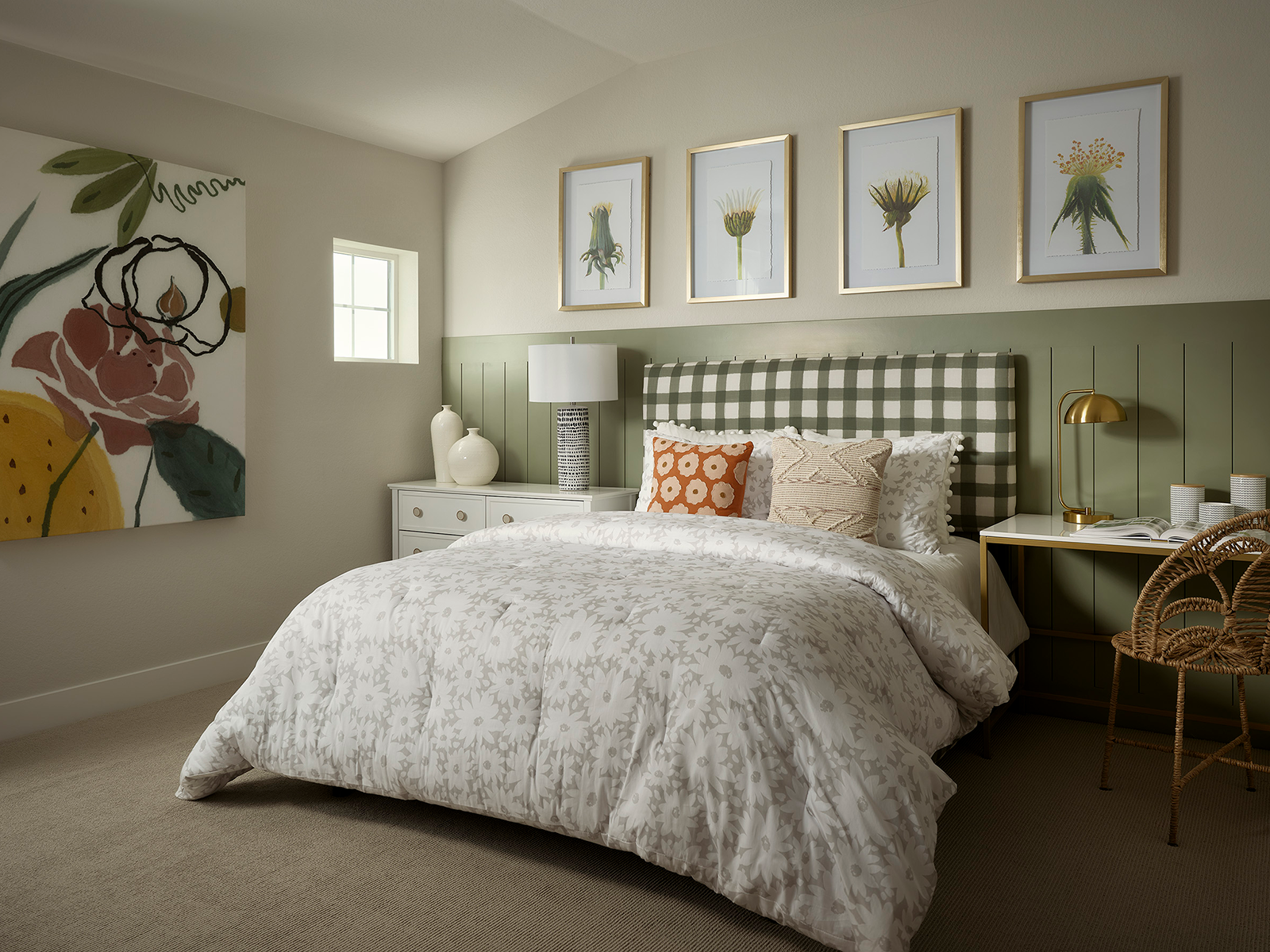
While Instagram and Pinterest are filled with design inspiration, putting down the phone may help you tune into your distinct personal style. “Your interior environment is one of the most important forms of art [in your life] because it’s your own individual expression,” Harris says. Instead of scrolling for your next idea, go old school by visiting a local showroom or design center to touch fabric swatches, feel the weight of different materials, and see how colors read under real light.
Or take design cues from nature—hitting a mountain trail can reveal the tones and textures that make you feel inspired or at ease. “Certain colors and textures and elements foster certain feelings and memories. If you start to build your design palette from there as opposed to what’s trending this year from an aesthetic perspective…you can develop a space that’s uniquely yours.”