

The Local newsletter is your free, daily guide to life in Colorado. For locals, by locals.
When it came time for Ali Sweeney to send her oldest daughter, Anna, to middle school, she worried her child might get lost in the shuffle of students at Denver Public Schools (DPS), which averaged 436 sixth, seventh, and eighth graders per school last year.
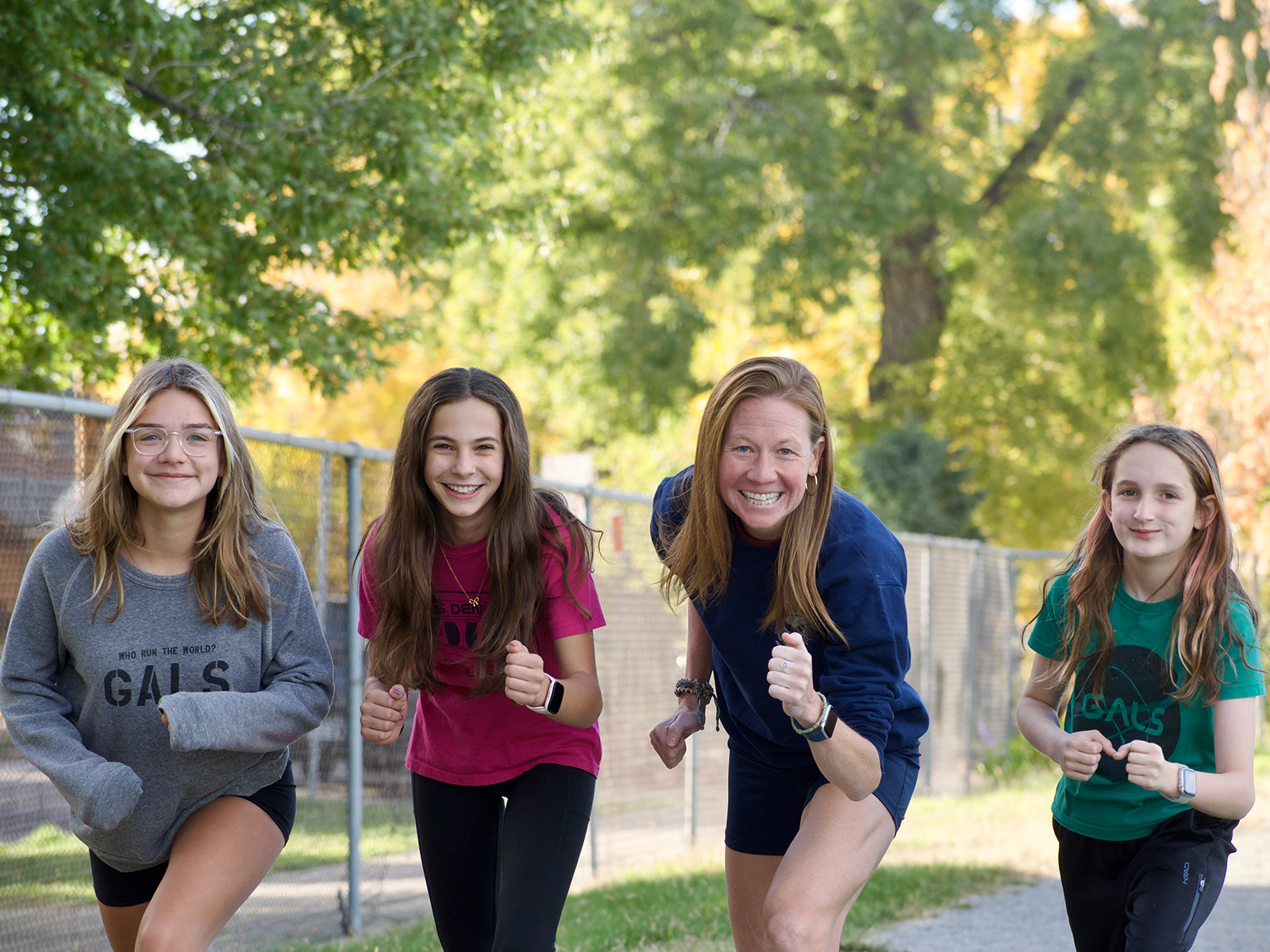
So, Sweeney started searching for non-traditional options where her sometimes-timid daughter might excel. She stumbled across Girls Athletic Leadership School (GALS), a public, all-girls middle school in Lincoln Park.

Founded in 2010 as part of DPS, the tuition-free charter school is the only all-girls public school in the city (it’s also inclusive of non-binary and transgender children). The model is specifically designed to empower girls “during their most formative years,” according to the school’s website.
“Middle school girls in the world don’t have great experiences typically, and there’s a lot of messaging in the world that middle school girls internalize,” says Leah Bock, principal at GALS. “I think the purpose of GALS is to undo all of that.”
It’s no small undertaking. According to a 2018 poll conducted by YPulse, girls’ confidence levels plummet 30 percent between the ages of eight and 14. More than half of the teen girls in the poll reported feeling the pressure to be perfect; three out four said they’re afraid of failure. GALS hopes to tackle some of these emotional trends by encouraging its students to physically take up space, voice their opinions, and step into leadership roles.
“I remember thinking, Wow, if it’s half as good as what they say it is, this will be incredible,” Sweeney says. “And it was way more than what they say it is.”
When Sweeney’s oldest daughter, now in 10th grade at a DPS high school, began sixth grade at GALS, she was shy and lacked self-assurance. By the end of her three years at the charter school, Anna had gained so much confidence that she gave a speech in front of her peers at eighth grade graduation. Sweeney has seen similar strides in her youngest daughter, Piper, who recently began eighth grade at GALS.
“What I treasure most about GALS isn’t found in the big milestones or standout performances. It’s in the everyday moments where its impact truly shines,” Sweeney says. “They take accountability for their choices, not because someone is watching, but because they’ve learned to hold themselves to their own standards.”
What’s Working at GALS?
The Sweeneys aren’t the only family to find success at GALS. Enrollment at the school increased about 13.5 percent this year and nearly 10 percent between the 2023-’24 and 2024-’25 school years, according to data from GALS and the Colorado Department of Education (CDE). Last year, GALS was the third-fastest growing DPS middle school, behind Hamilton Middle School (10.7 percent increase) and Montbello Middle School (10.5 percent increase), according to the CDE. (Enrollment numbers for the current school year won’t be available until after October.)
This growth is in contrast to DPS, which is shuttering schools due to declines in enrollment. The average enrollment at DPS middle schools—factoring in GALS growth—increased just 1.7 percent between the 2023-’24 and 2024-’25 school years, according to the CDE. Without GALS, it’s 1.2 percent.
“Speaking generally, the pattern of GALS increasing enrollment while other nearby DPS [schools] are seeing a decline might indicate that parents are seeking a non-traditional and specialized learning environment for their daughters,” says Harmony Newman, professor and chair of University of Northern Colorado’s gender studies program. “They may be drawn to the innovative model of GALS while feeling frustrated in traditional learning environments.”
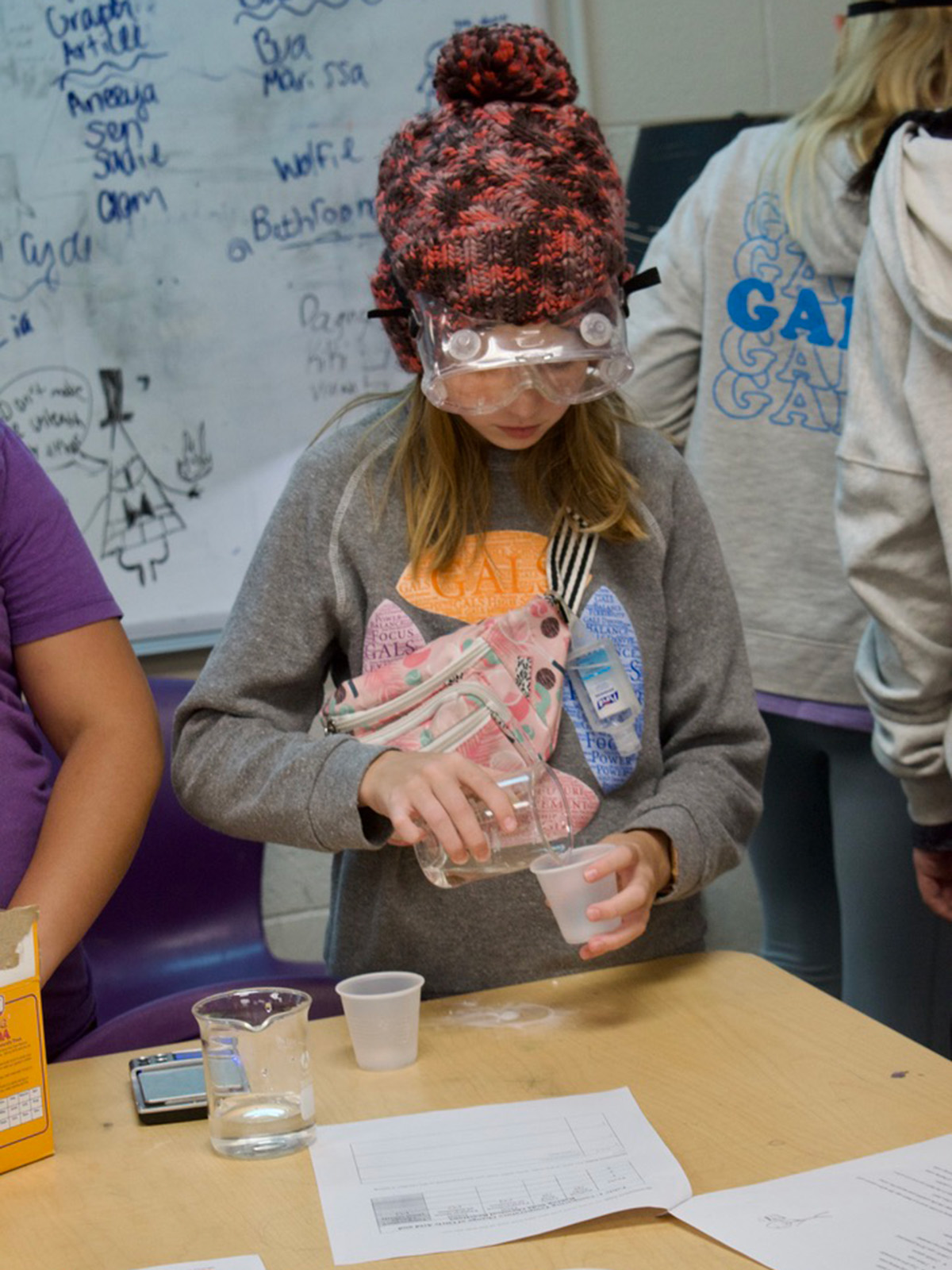
GALS’ executive director Timeri Tolnay attributes the school’s success—enrollment growth and various academic achievements—to that “innovative model,” which has three components: focusing on students’ mental and physical well-being, incorporating movement into each class, and being a single-gender student environment (the school does employ several male teachers).
To support the students’ mental well-being, Bock, the principal, learns each kid’s name on the first day of school and greets them every morning. If she forgets a student’s name, she owes them 10 push-ups. It’s a small gesture that reminds children they’re known and welcomed. Kids are allowed to run in the hallways, and they start each day (typically at 8:30 a.m.) with 45 minutes of movement (usually pickleball, yoga, ultimate frisbee, golf, or CrossFit).
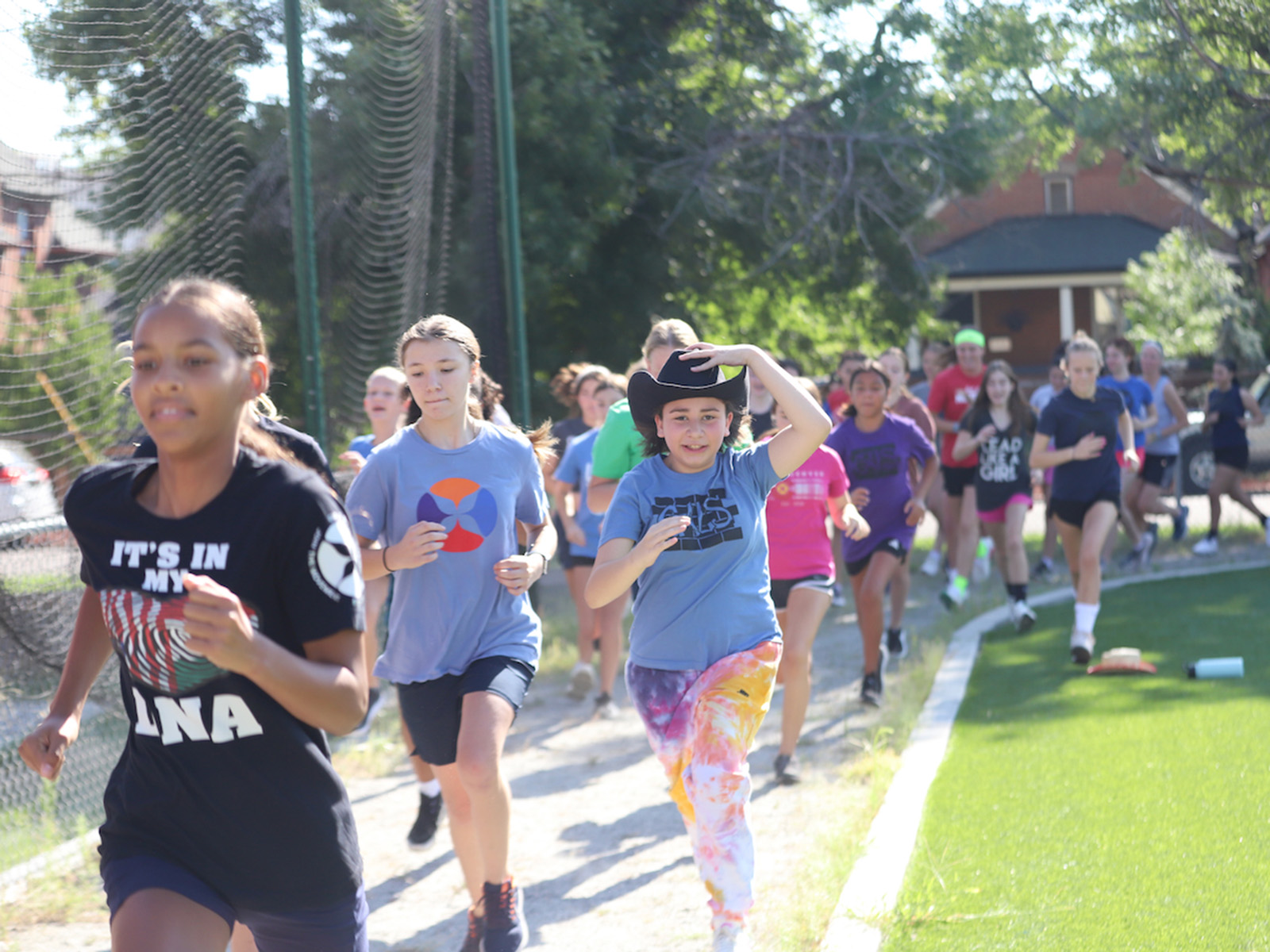
In addition to sports, GALS’ students also run a mile the first week of school and several times throughout the year. Not only is it good physical activity, but it teaches students they can do hard things, Bock says. “We run because most kids hate it…[but] there’s a lesson to be learned,” she says. “If they can run the mile after believing that they never could, they can definitely pass the math tests, they can definitely navigate a difficult conversation.”
Movement doesn’t stop when the lessons start, either. Sometimes they’ll do 10 jumping jacks because that was the answer to a math problem or take a break to play Simon Says. When a lesson calls for it, they may even relocate class to the gym (say, when the science curriculum is about how cells take in and release oxygen).
“I’ve never seen a model quite like [GALS],” says Bock, who’s worked in education for 14 years, 10 of which have been at GALS. “We have really high expectations for kids, and we push them to learn and grow and take risks. We spend a lot of time and attention [on academics], and we spend the same amount of time and attention…[creating] an environment that is full of joy and community.”
Is Gender Separation the Key to Student Success?
While advocates for single-sex schooling will point to studies that say it can boost confidence, encourage girls to enter STEM fields, and promote a more positive peer culture, research on the topic is mixed.
A 2024 metanalysis found that the type of educational setting—co-ed or single-sex—did not contribute to a significant change in student academic achievement. In fact, the study asserts that students in co-educational settings demonstrated higher levels of confidence and stronger communication skills than those in single-sex schools.
“What we do find in the research around single-sex schools is they tend to rely on and reinforce sex stereotypes, so they work for a certain kind of girl,” says Liz J. Meyer, a professor at the University of Colorado Boulder’s school of education. Children who don’t conform to traditionally feminine stereotypes may not feel like an all-girls school is a good fit.
In a 2011 study conducted by Arizona State University, researchers found that when kids are separated and labeled—whether it be by gender, eye color, or randomly assigned T-shirts—the children assume the groups are different in significant ways and develop biases. “Separating boys and girls in public school classrooms makes gender very salient, and this salience reinforces stereotypes and sexism,” the study says.
Sweeney disagrees. She says an all-girls school helped removed the pressures of the outside world and stereotypical expectations of being a girl. She watched her daughters stand up taller, find their voice, and “become themselves without having to be something else for other people,” she says.
What Can Other Public Schools Learn From GALS?
While some of GALS’ practices, like incorporating movement into each class (which the Centers for Disease Control and Prevention says can improve student academic performance, especially for math and reading) could be applied to all middle schools, the exact model is hard to replicate and doesn’t work for all ages.
In 2014, GALS tried to replicate the model for high school girls but shuttered it at the end of the 2024-’25 school year due to low enrollment. “We ended up in a situation where our middle school was really increasing in enrollment and our high school was decreasing,” Tolnay says, adding that some GALS middle schoolers wanted to continue at an all-girls school for high school, while others were ready to take on bigger, all-gender schools.
In 2017, GALS opened an affiliate all-boys public school called the Boys School of Denver. In addition to facing low enrollment, the school never landed a permanent building, prompting its closure in 2020.
After the GALS model failed at the high school level and with boys, leaders focused on the model that was seeing success: girls middle school. GALS has even expanded to different cities, opening a campus in Los Angeles in 2016 and forming plans for another in Columbus, Ohio, Tolnay says.
GALS Denver still has room to grow, too. This year, 253 girls will fill the halls—the most students since the 2020-’21 school year. (The school can accommodate up to 315.) Tolnay says GALS will continue to accept every child that applies, including those who don’t live within DPS boundaries, until they hit capacity.