


The Local newsletter is your free, daily guide to life in Colorado. For locals, by locals.
The Leadville Trail 100 is one of the world’s most daunting footraces. The iconic Colorado ultramarathon demands more than 18,000 feet of climbing, rarely dips lower than 10,000 feet of elevation, and exposes runners to extreme temperature fluctuations.
The conditions have humbled some of the greatest names in the sport. Anton Krupicka’s legs stopped functioning at mile 76. Even Matt Carpenter, who set the course record in 2005, wilted in his first attempt. His knees refused to bend after 67 miles.

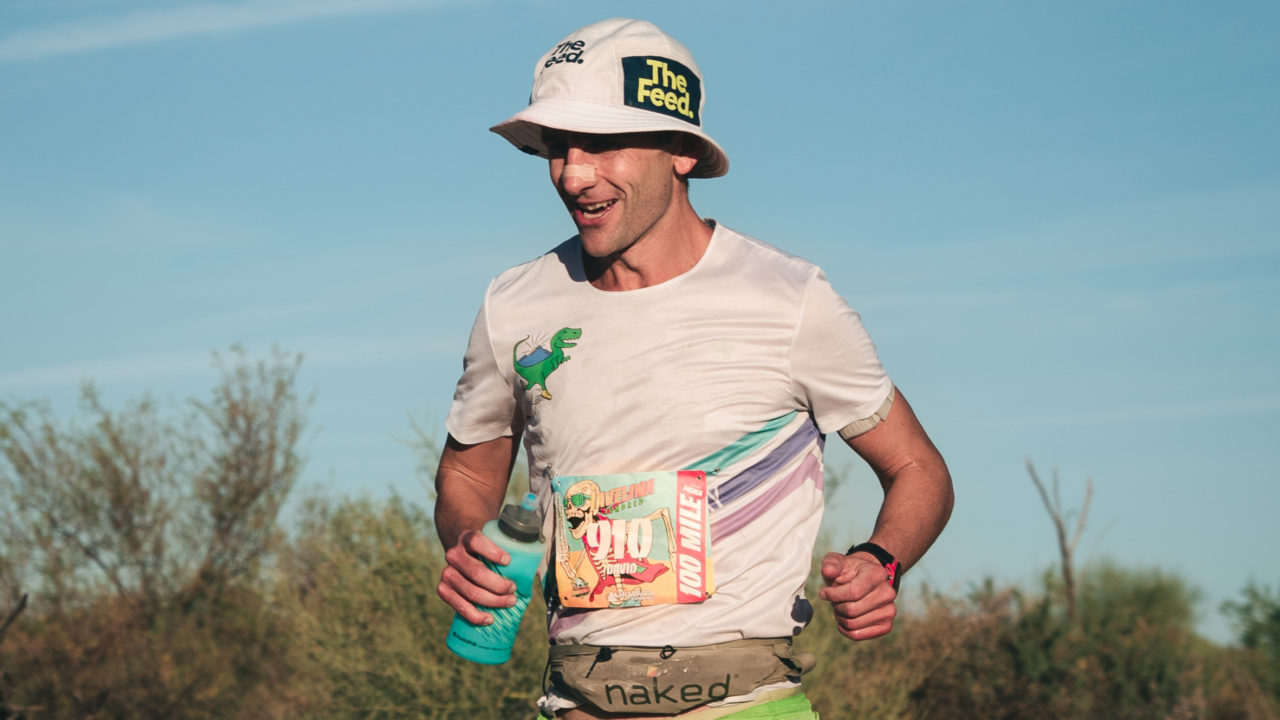
In August 2024, David Roche decided to disrespect Leadville. A professional coach and runner from Boulder, he’d never competed in a race longer than 62 miles. But Roche was a man of faith—or, rather, a man of science. He had concocted a training regimen based on rigorous academic study he believed would enable him to mock Leadville’s brick-wall inclines, razor-thin air, and ever-changing weather by running every step of all 100 miles.
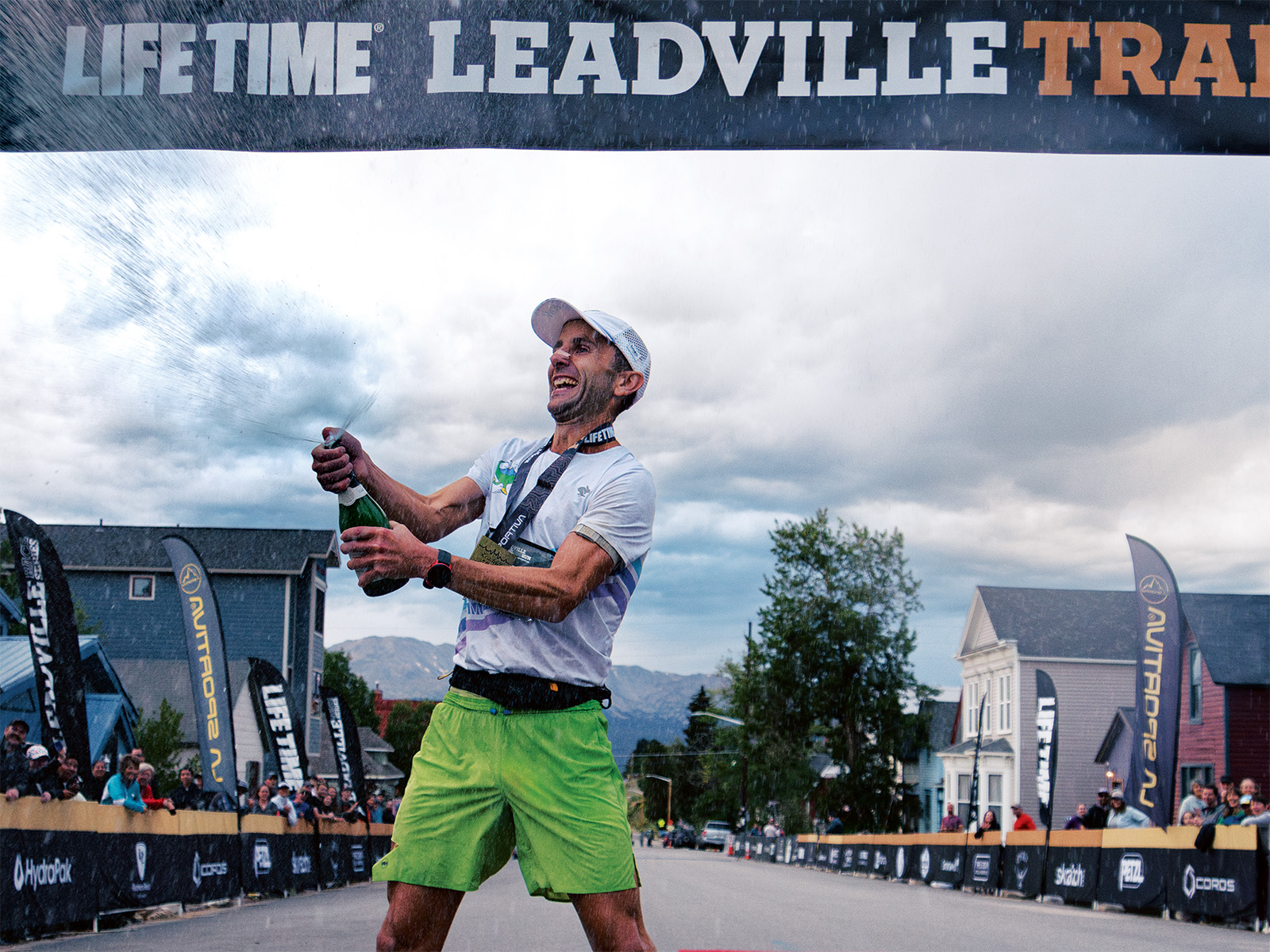
Despite enduring waves of online skepticism, the skinny, 37-year-old former environmental lawyer surprised everyone: He ran Leadville in 15 hours, 26 minutes, and 34 seconds, winning last year’s edition by half an hour. More important, Roche shattered Carpenter’s mark by 16 minutes.
Roche says: “Matt [Carpenter] is a GOAT, who was better than I could dream of being. How can you compete with someone whose VO2 max was one of the highest ever recorded, and who trained with methodical focus in a way that was ahead of his time? Answer: I’d need to disrespect the distance by pushing harder.”
Five months after Roche notched the Leadville record, my brother and I drove southwest out of Austin toward Texas’ rugged Hill Country. Daniel is a committed amateur ultrarunner. During the past 10 years, he’d run 75 miles around Mt. Rainier, a 24-hour race called the Black Mountain Monster, and all 50 miles of the Grand Canyon’s Rim-to-Rim-to-Rim route. For his newest challenge, he’d begun training for his first 100-miler and asked me to crew for him during a 100K (62 miles) “warmup” race.
I was honored. Every family has its overachiever, and Daniel is ours. He co-owns a successful real estate business, has been married to his high school sweetheart for more than 20 years, keeps an immaculate backyard, and has raised two happy, smart, polite boys. His judgment is so sound that our father made Daniel, the third of his four kids, the executor of his estate.
Determined not to let him down, I asked Daniel about his approach to the race. He launched into a lesson on carbs, telling me how the body expends amazing amounts of energy during ultramarathons and how runners have taken to replenishing their stores with tiny packets of gel—essentially, sugar. He’d used gel before, but Daniel told me he planned to drastically increase his consumption during this event. The strategy was not his own. “There’s this guy named David Roche…,” he began. Since winning the so-called Race Across the Sky, Roche had shared the details of his training regimen on a podcast hosted by Rich Roll, a wellness influencer whom my brother listens to religiously.
The race kicked off at 8 a.m. and consisted of two loops of about 31 miles each. Daniel predicted he’d complete the first around 1 p.m., which would require running each mile in 11 minutes. I took my position at the midway aid station and prepared the Jetboil for broth, lined up the snacks, and laid out new clothes. Eventually, the appointed time came. No Daniel. Another hour, still no sign of him. I began to worry.
Around 4 p.m., three hours later than his prediction, Daniel finally approached the aid station. Normally lighthearted and game for some goading, he remained grimly silent when I jokingly mentioned his late arrival. He stared into the surrounding hills, like he was scanning for a rescue party to airlift him off this rock-infested land. Blood trickled from his knee. Most concerning was his coloring. He’d thrown up a pile of gel on the side of the trail and was now frighteningly pale.
The fact that Daniel had struggled so mightily to reach a mere 31 miles—half a mile above sea level in Texas—seemed to confirm a suspicion I’d long harbored about Roche and his strategies.
I’d interviewed Roche a few years earlier while writing a beginner’s guide to trail running. A Maryland native, Roche had already established himself as a major figure in ultrarunning through his Some Work All Play coaching service, which trains professionals such as Grayson Murphy and Allie Ostrander. He’d also earned a reputation as the mad scientist of ultrarunning by writing long, science-heavy stories for Trail Runner magazine.
I’d hoped Roche would outline specific tips that would make the sport easier for newbies. The perfect angle of thigh thrust necessary to scale an incline, for example, or exactly how many ounces of electrolytes to drink on a long run. Instead, I can only remember him talking about love and patience and giving it your best. Roche’s advice sounded more like a wedding toast than practical counsel. This previous experience combined with my brother’s epic spew made me wonder if the emperor might, in fact, be naked.
Roche says: “I am here to demonstrate what love mixed with being a tough motherfucker looks like.”
I wanted to interview Roche again. Over the past few years, I’d become increasingly disgruntled with health trends and the wellness gurus who hawk them. Cold plunges, foam-rolling, the all-bean diet. Each new fad promises better performance, better recovery, a better existence. Their extraordinary benefits turn out to be rather average, but not before leaving you feeling like you’re the one who’s failed. At the same time, it was difficult to ignore Roche’s results. Maybe if I dug deeper and evaluated his methods firsthand, I could discover whether his training method was innovative or snake oil wrapped in science.
Roche responded to my email immediately. He couldn’t participate. He’d just had his second kid and was “too time crunched” for a story.
I couldn’t blame him. I have two young boys. My four-year-old, Tommy, is blond with green eyes and recently jumped into the pool and swam to the other side all by himself; I’d never felt such a mix of terror, joy, and pride. My 11-month-old, Hank, is a portly gentleman who looks a little like Winston Churchill and absolutely beams whenever he sees anyone. “You know,” his daycare teacher once said, “me and that little one have a special relationship.” My wife and I didn’t have the heart to tell her how promiscuous he is.
He’s the perfect baby—aside from the fact that he wakes up every morning between 4 and 5:30. Tommy doesn’t fall asleep until 9 p.m. In between these bookends, my wife and I are constantly in motion: preparing the kids for school, working full-time jobs, cleaning the house, juggling the nighttime routine. We’re not defeated because we’re winning, but it’s a war of attrition. I recently played dead while Tommy licked my nose for at least three minutes at bedtime. He eventually fell asleep. The only thing I lost was some dignity.
Well, that and my time. My wife and I want to be successful at parenting and at our jobs. We love both. But attending an afternoon daycare recital or staying home with an infant who has two pink eyes and a double ear infection (at the same time!) requires catching up on work in our spare time. Suddenly, my schedule is filled with nonnegotiable responsibilities. The only reliable slice of time left that I own anymore is the hour between daycare drop-off and the start of my workday. In that space, I jog—slowly and for no other reason than to clear my head.
Roche says: “The goal of a coach is to get someone to shoot a shot that they’re scared of. One, because that’s how you learn. But two, unless you shoot 100 of them and miss 100 of them…you’re never going to have that one you swish from half court.”
I think this sense of a shared experience with him explains why I couldn’t stop thinking about Roche after he declined my interview request. On one of my three-mile runs by the creek near my house, I listened to his appearance on Roll’s podcast. “I just wanted to have a day out there,” Roche said. “Whether it was a good day or a really hard day, it was going to be my day.”
Perhaps it was selfish, but I wanted that too. I wanted a purpose outside of my family. I wanted a goal that didn’t include putting an infant to bed or wiping a toddler’s butt. By finally spilling his secrets, maybe Roche had made that possible. Maybe Daniel had just done the program wrong. Maybe I could do better. Maybe, I thought, Roche was the real deal.
I found the Human Potential Running Series on the internet. Not only did the name seem divined by the running gods, but the Granby event offered a 21-mile course that climbed nearly 4,000 feet up green slopes and looked out at the Indian Peaks Wilderness. (My best friend also lives there, so I had a place to stay.) The race was in mid-June, seven weeks away.
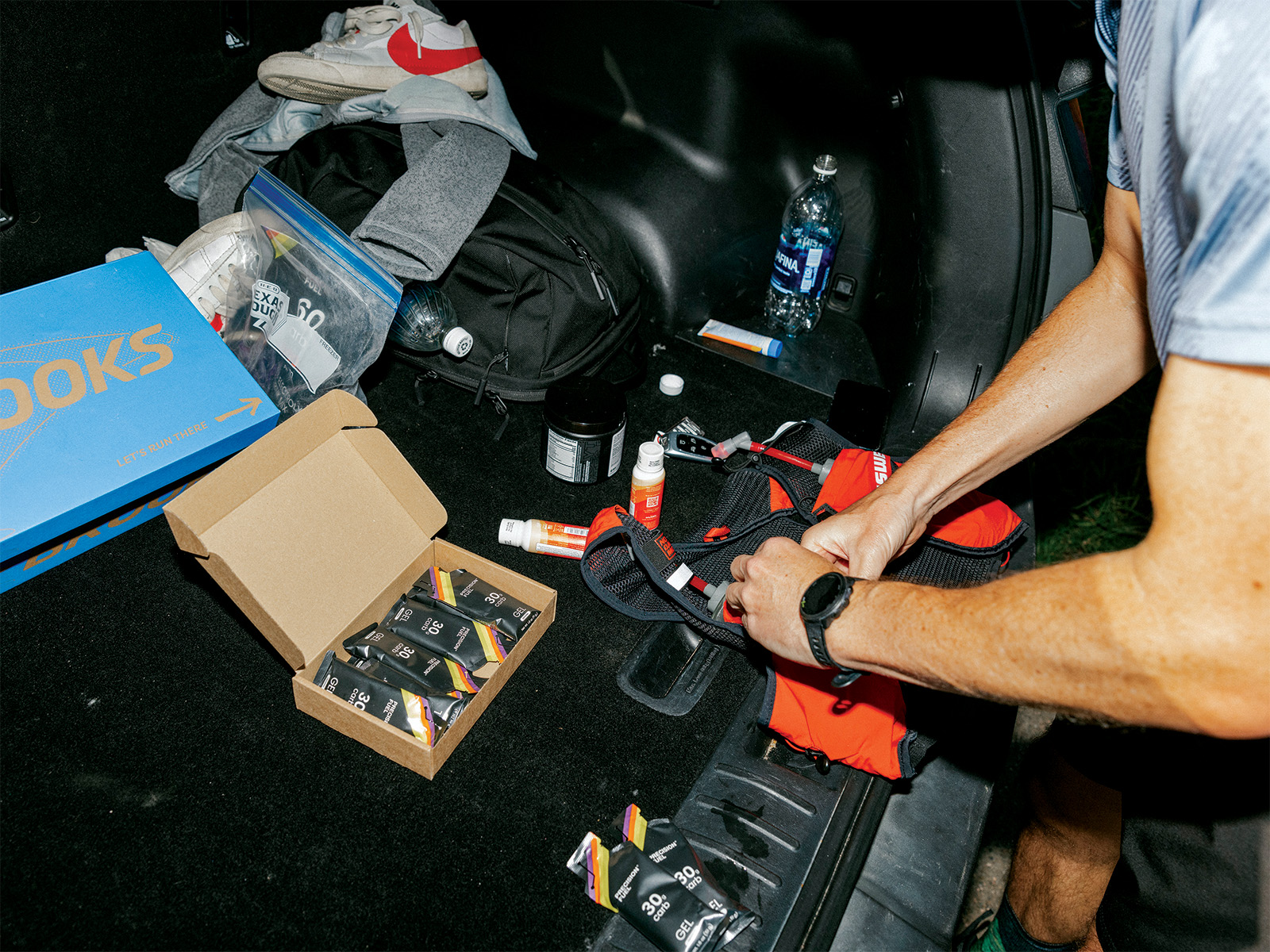
I entered my information, put $118.28 on my credit card, and started training. Even if I didn’t know why, I figured gel would be important, so I bought a fistful of individual Honey Stinger fruit-smoothie-flavored packets at the grocery store for about two bucks apiece and sucked them down indiscriminately.
I borrowed my brother’s years-old Garmin Forerunner 55 running watch to clock just how slow I’d been lumbering. (Very.) I refused to buy trail shoes—too expensive—figuring my Brooks road soles would work fine. And I immersed myself in Roche. I listened to his interview with Roll again, dug into his Trail Runner archive going back years, and read interviews he gave to Scientific Triathlon and Defector. I let his mantras—“Impress yourself,” “Dream so big,” “You are loved and enough as you are”—wash over me.
Much of Roche’s recipe evolved from new science on old ingredients. Ultrarunners typically consume 60 to 90 grams of carbs per hour. Roche learned from pro cycling coaches that athletes who exert intense effort can dial that number up to 120. Sodium bicarbonate, aka baking soda, boosts performance by reducing lactic acid, but its gains were long mitigated by an accompanying urgency to poop. Roche said a company called Maurten had developed a product that was easier on the gut.
Ketones are energy-producing compounds made by the liver that supplement companies market as fuel. Roche admits there’s no strong evidence to support that claim, but 2023 research in the American Journal of Physiology-Endocrine and Metabolism showed they created higher levels of natural EPO—even if, he concedes, they “taste like a robot’s ass.” Extreme athletes often train in 100-plus-degree heat to thicken their red blood cells. Roche believes you can reap the same reward by sitting passively in a hot tub or sauna.
Roche says: “I am 36 going on 22, and that’s because carbs let me push harder on the day and then adapt faster than ever before…. [This approach to fueling] is the most emphatic performance revolution we will ever see in all of endurance sports.”
These prescriptions weren’t magic. You still had to work. Most ultrarunners train by stacking mileage. Runners preparing for a 100-miler will sometimes log 100 miles per week to ready their legs for the competitive strain. In the lead-up to Leadville, Roche ran 60 to 75 miles per week. He supplemented that with strength training, buying a squat bar for his house. He rode his bike around Boulder. He maintains that the best way to quickly improve your VO2 max, which measures how much oxygen your body can wring from its circulatory system during workouts, is through short bursts up hills. Speed intervals lead to a quicker pace.
My first week of training was everything I’d hoped for. Whereas previously I’d plodded along to the glacial rhythm of Ira Glass’ nasal monotone, I now raced to the lashing thump of Taylor Swift’s righteous woe. I abandoned the same trail I’d run almost daily for years in search of longer, more rugged paths. While on my first long run, about 11 miles, I shot out of a stretch of woods into a clearing at the base of a rock face. A lone climber had just descended. My sudden arrival startled us both into stillness. Seconds passed. Finally, I said, “Good job.” He replied, “You too.”
Like Swift, I soon encountered my own heartbreak. A cold gripped me the Wednesday of my second week, followed by a stomach bug that passed like an unholy spirit through Hank, Tommy, my wife, and, finally, me.
Even after the most putrid effects of the illness waned, my body remained sluggish for weeks. I’d sprinted into my training with 9.5-minute miles but now struggled to maintain an 11. I walked up hills. The rubber band of my running watch irritated my skin. More often than not, I’d tear it from my wrist and shove it into my pocket.
The training schedule I’d downloaded from Roche’s website called for longer and longer runs. The time I set aside each morning for running invaded office and family hours. I missed birthday parties and a boat trip with my family. My wife regularly took the kids to the park without me. I had to confine my long runs to Saturdays, and then I’d complain about how exhausted I was for the rest of the weekend. Whenever I lowered myself to the floor to play Magna-Tiles with Tommy and Hank, I croaked an old-man grunt. I usually ended up lying on the carpet as one or the other, or both, climbed aboard my supine body.
I worried I’d made a mistake. My pace wasn’t getting better, I was always exhausted, and my life felt even more constricted.
I blamed Roche. His advice began to seem less like wisdom and more like mysticism. Back in April 2024, Roche was riding his bike in Boulder when a car hit him. He suffered a broken wrist and a concussion. The collision didn’t cause lasting damage, and Roche began running in a sling the following week. In fact, the wreck may have been the reason he didn’t get tired at Leadville. “I think that there might have been a change [with] my accident in my brain,” Roche told Roll. I listened to that podcast episode again during the worst part of my training. In my dispirited state, it sounded like Roche believed a radioactive spider had turned him into a superhero.
Roche says: “I am so happy to be alive!… I was having so much fun on that bike ride, and the next morning, I can remember thinking just before the accident: If this isn’t nice, I don’t know what is. When I woke up in the ambulance, and the call got through to [my wife] Megan, I remember thinking the same thing.”
My feet, legs, and back ached. I was so tired I sometimes collapsed on the guest bed in my home office during work. But the emotional pain hurt the worst. One day we were in the playroom when I got a message from daycare on my phone. “Hey, Tommy,” I announced excitedly, “Daddy’s coming to school for doughnuts for Father’s Day!” The words had barely left my mouth when I realized I would be out of town that Friday in preparation for the race. When I told him I couldn’t attend (shamelessly spinning it as a “work trip”), his Disney-princess eyes filled with tears and his lower lip trembled tragically: “But who’s going to go to school with me?”
With only three weeks before my human potential was due for judgment in Granby Ranch, I had no choice but to push—run every mile of every scheduled workout, finish every sprint, guzzle every gel. That Monday, I fed the kids breakfast, dressed them for school, and dropped them off. Then, as I drove back to my house, it started to pour. I begrudgingly wrestled my feet into my running shoes anyway.
The instant I opened the garage door, the rain stopped. The sun appeared. I pressed play on “Love Story” and took off.
I noticed a strength in my gait that had been missing. For the first time in a long time, my legs were striding for extra ground instead of struggling to stay upright.
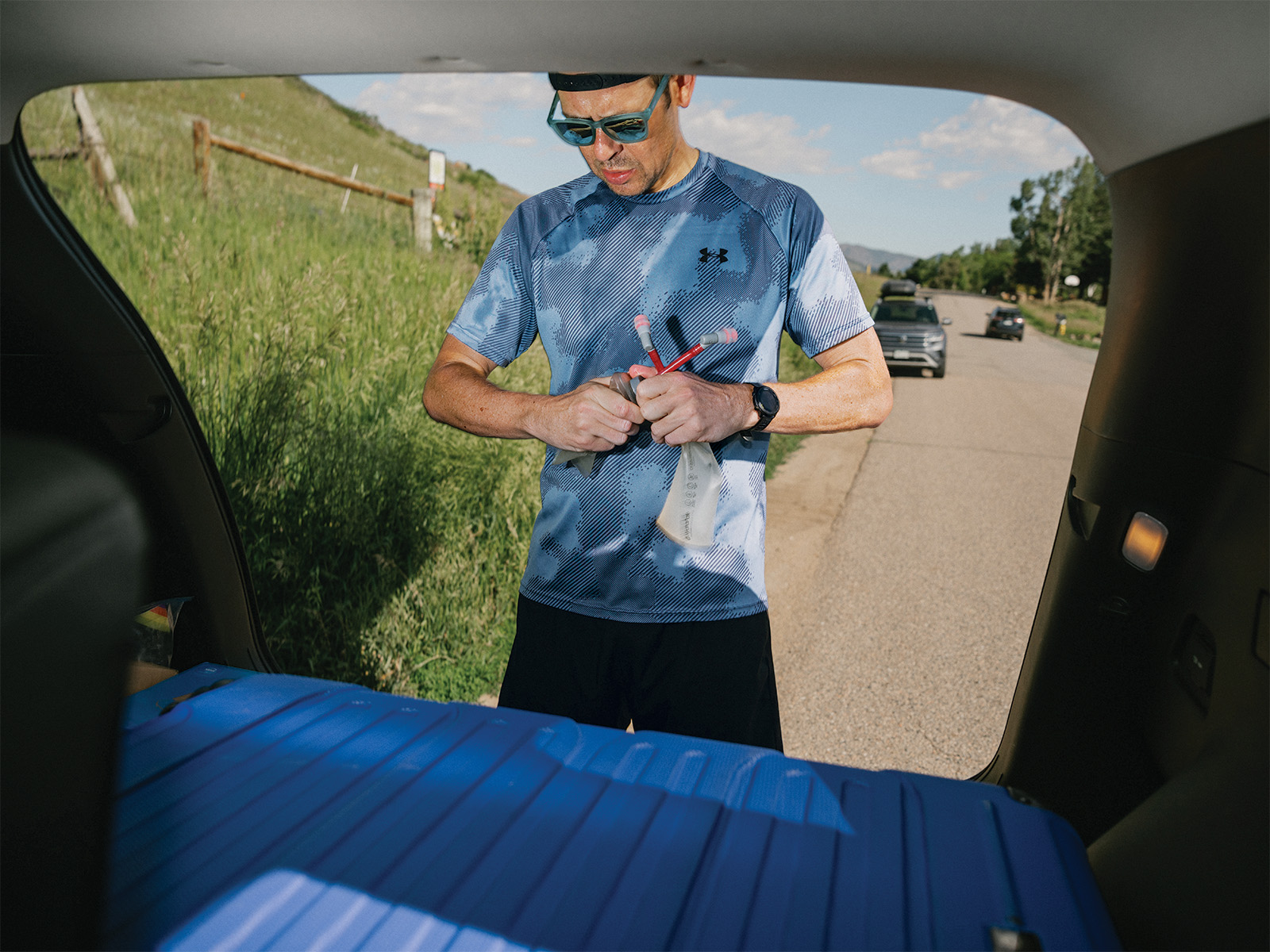
As I felt my pace quicken almost effortlessly, I wondered: Was Roche’s prescription finally working? I repledged my allegiance. I bought two cases of Precision Fuel gels because he used them. I chugged 24 ounces of water before each run to acclimate my stomach to all the gel and liquids I’d need to down during the race, just like he did. (Roche copied techniques perfected by competitive eaters.) I visited three different stores to find ketones.
I also got tougher. I completed my longest prerace run, 17 miles, on the last day of May. I posted my fastest paces during the final three miles. Even more astonishingly, I started to welcome the punishment of the path. The trail I ran on was dotted with rocks and scree that jabbed into my feet. Rather than try to avoid them, I began to seek out the sharpest edges. I hooked my toes over small crags and pushed off to feel my aching shins stretch into agony. I screamed “Yeah!” when stones stuck me and “Break me!” when my shins felt like snapping. I’d never been more impressed with myself.
Roche says: “I stacked aerobic bricks for 18 years, and it took those years of hard work for some commentators who haven’t been following on Strava to view me as an overnight success. [Winning Leadville] is for the brick-stackers.”
The final race email reined in my confidence. In my excitement over my cosmic connection with the organizer’s name, I’d failed to examine the course. The elevation profile looked like waves children draw—a series of sharply angled swells. I’d yet to train in real mountains.
Sensing my anxiety, my wife encouraged me to travel to the high country a week early to acclimate to the thin air. Tommy agreed to forget about the whole doughnuts-with-dad crisis, but only if we packed him off to Grandma’s house for the weekend. And Hank? He woke up extra early to see me off. Still, it was difficult to shake the notion that I was leaving them behind.
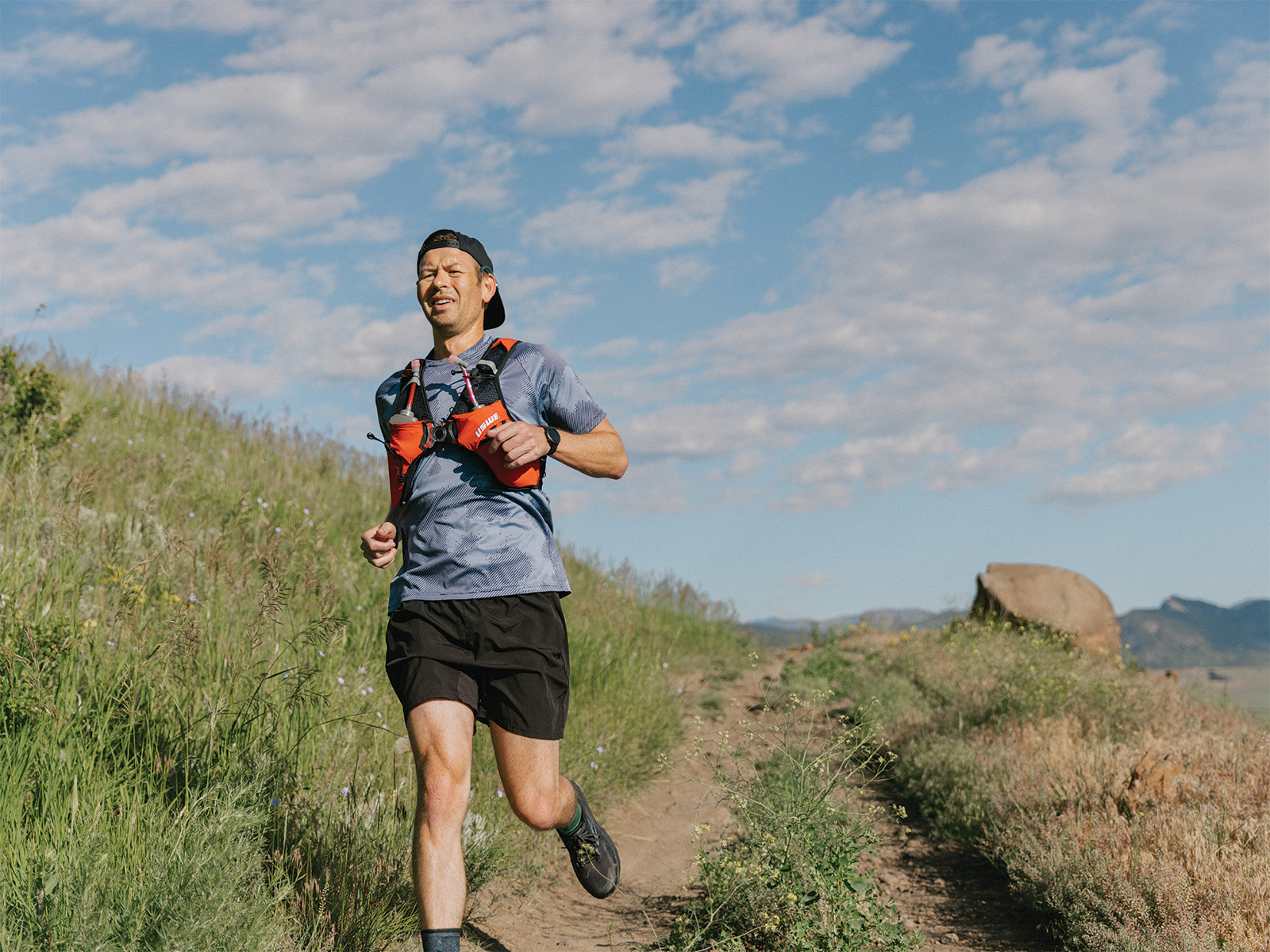
“Hanky said hi to me,” my wife texted soon after I left. Confirmation of my son’s first word—and not being there to share it—made me feel like an absentee father. I wondered if I was sacrificing my kids to chase a midlife crisis.
Nothing seemed certain, especially not the race: With one day to go, I still didn’t have a plan. Roche is a fast starter. His Leadville mission basically began with a thought experiment: What if I treated the first three miles of a 100-miler like a 5K? Roche and his wife/trainer, Megan, decided he’d need to be in sub-four-minute-mile shape. Roche had kept a detailed spreadsheet of his paces that predicted he’d win Leadville with a time of 15 hours and 27 minutes. His calculations were off by 26 seconds.
I dug into my data in search of similar specificity. Unlike Roche, I was a horrible starter. My runs typically began with shortness of breath followed by the panicked mental mantra I can’t do this. I gained enough experience over time to know I’d relax around the third mile. At the same time, Daniel kept pounding prudence into my head: Don’t go out fast. You’ll tire yourself out. He thought I would cross the finish line in about five hours, which seemed too vague—not to mention too pessimistic. My stats told me I could do better. My aspirational pace was 11:36 per mile. If I could maintain that speed for 21 miles, I’d finish in four hours, three minutes, and 36 seconds.
View this post on Instagram
The race began at Granby Ranch, a small ski resort about 20 miles north of Winter Park. A few minutes before 7 a.m., dozens of runners who were dressed like me—hat, shorts, shades, pack, trail shoes—gathered on a gravel drive at the base, surrounded by summer green hills on three sides. Most runners formed in circles with their friends. I was alone to contemplate the monster looming in front of me: an immediate three-mile, 800-foot incline to the first peak. Finally, the organizer squeezed a rubber chicken (it was that kind of event), and the race started.
Daniel’s caution prevailed—though probably it was fear. Over much of the first mile, I walked with the rest of the pack and watched my pace tick into the upper two-digits. Then, around a switchback, I spotted space in the traffic. I had not missed Hank’s “hi,” skipped doughnuts with dad, and chugged metallic-butthole-flavored supplements simply to survive. My entire life was about finishing—about grinding through each day. Roche’s clichés flashed through my head. “Shoot your shot.” “You got this.” “You’re a boss.” I started running.
Granby Ranch offers unencumbered views of the Continental Divide. I barely saw them. My eyes pinged from the trail to my watch—to check pace and gel-feeding times—back to the trail. I remember three things clearly. One: As I passed a group, the leader called out to his friends, “Watch out. Real runner coming through.” (I don’t think he was being sarcastic.) Two: A temporary race buddy and I plowed up the steepest pitch on the course, sometimes using our hands to get holds. At the top of the climb, both of us heaving, he said, “Thanks for setting a strong pace there.”
Three: Back when Tommy was one, my wife and I visited my best friend at Granby Ranch, and it quickly became clear our dynamic had changed. My friend and I used to pass the time drinking, golfing, and smoking cigarettes. None of those activities are recommended for babies. We eventually went on a hike, Tommy strapped to my chest, and after about a mile the path split. The left route took us home, while the right one strayed into more remote territory. It wasn’t even a decision. It was hot outside, and Tommy was getting fussy. We veered left.
Now, near the end of my race, the course came to the same fork. I kept right.
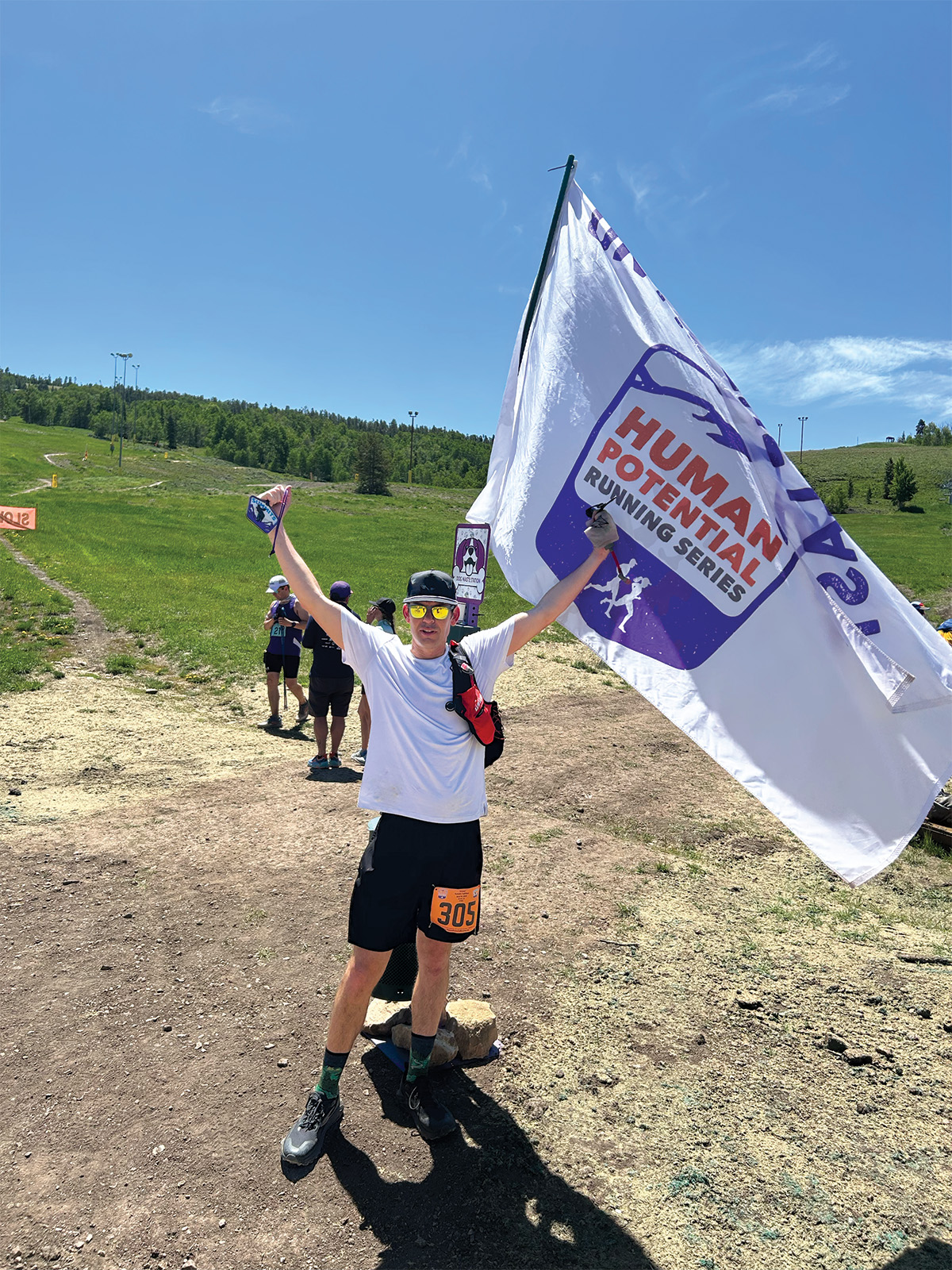
I crossed the finish line in four hours and 37 minutes—34 minutes off my planned pace. I didn’t care. I had pushed myself as hard as I could go. I had achieved something I didn’t think possible. I had shot my shot and finished fifth out of 39 runners. Once my hips stopped aching, I was sure I’d understand how this race had changed my life.
I’m still waiting.
I never expected parenting to be so full of doubt. Do we let sleeping babies lie or put them on strict nap schedules? Do we reason with misbehaving toddlers or send them to timeout? Breast milk or formula? Screens or no? And if we make the wrong choices, will they fall behind? Be bullied? Hate us? Worse yet, hate themselves?
That’s why I get sucked into so many parenting posts on Instagram. Each influencer knows how to get your kids to eat their broccoli, poop in the toilet, and sleep through the night. You just need to follow their advice—and please subscribe. I’m always full of optimism for a few days before feeling like a failure when their “scientifically proven” tips don’t work for me.
In retrospect, that’s also why Roche initially aggravated me and eventually converted me: the assurance his training plan seemed to promise. If I followed his instructions, I would run fast over a long distance. And I did—fast and long for me, anyway. But weeks after the race, I’m still filled with doubt. I fear I didn’t take enough carbs. I wonder if 21 miles was too short to judge not only Roche, but myself. I worry people will think this quest was stupid; I worry I’ll think it was stupid.
Life returned to normal after Granby Ranch. Tommy loved watching my race videos and made me promise to take him on my next one—not to watch, but to compete. Hank hasn’t said hi to me, but he grinned and shook like Santa Claus when I walked in the door. My wife and I have filled my morning running hour with walks through the trees near our house.
Tommy also slugged me because I wouldn’t let him watch Frozen. Hank continues to rise before the sun. And recently, my wife and I engaged in a knockout clash over, what else, how we’re raising the kids. We didn’t even know we were arguing until we were suddenly shouting at each other over the foot of the bed.
Later that day, we dropped the boys off for parents’ night out at church and went to dinner. We mended our rift by playing a question game for new couples. For example, “Given the choice of anyone in the world, whom would you want as a dinner guest?” (Her: Barack Obama. Me: Hugh Grant.) By the time we’d polished off our margaritas and ventured out the door, we were laughing. She moved toward the car to go pick up the kids, but I pulled her onto the patio to watch the sunset. There was no need to rush.
Read More: