


The Local newsletter is your free, daily guide to life in Colorado. For locals, by locals.
White sneakers, Taylor Swift, the internet—I was slow to all of them. I take a lot of pride, then, in being able to say: I was into solo travel before it was cool.
It was 2018, and my wife and I wanted to spend the holidays with my parents in Dallas. But plane tickets were expensive, and we couldn’t drive because she had to work the day after Christmas. We decided to split the difference. We’d drive there together, she’d fly back to Denver, and I’d follow in the car. After dropping her off at the airport, however, I thought, Why rush? I had the week off, my wife would be busy, and I was all caught up on The Great British Baking Show. I pulled up a map, spotted a flyspeck called Marfa in West Texas, and pointed my Prius toward it.
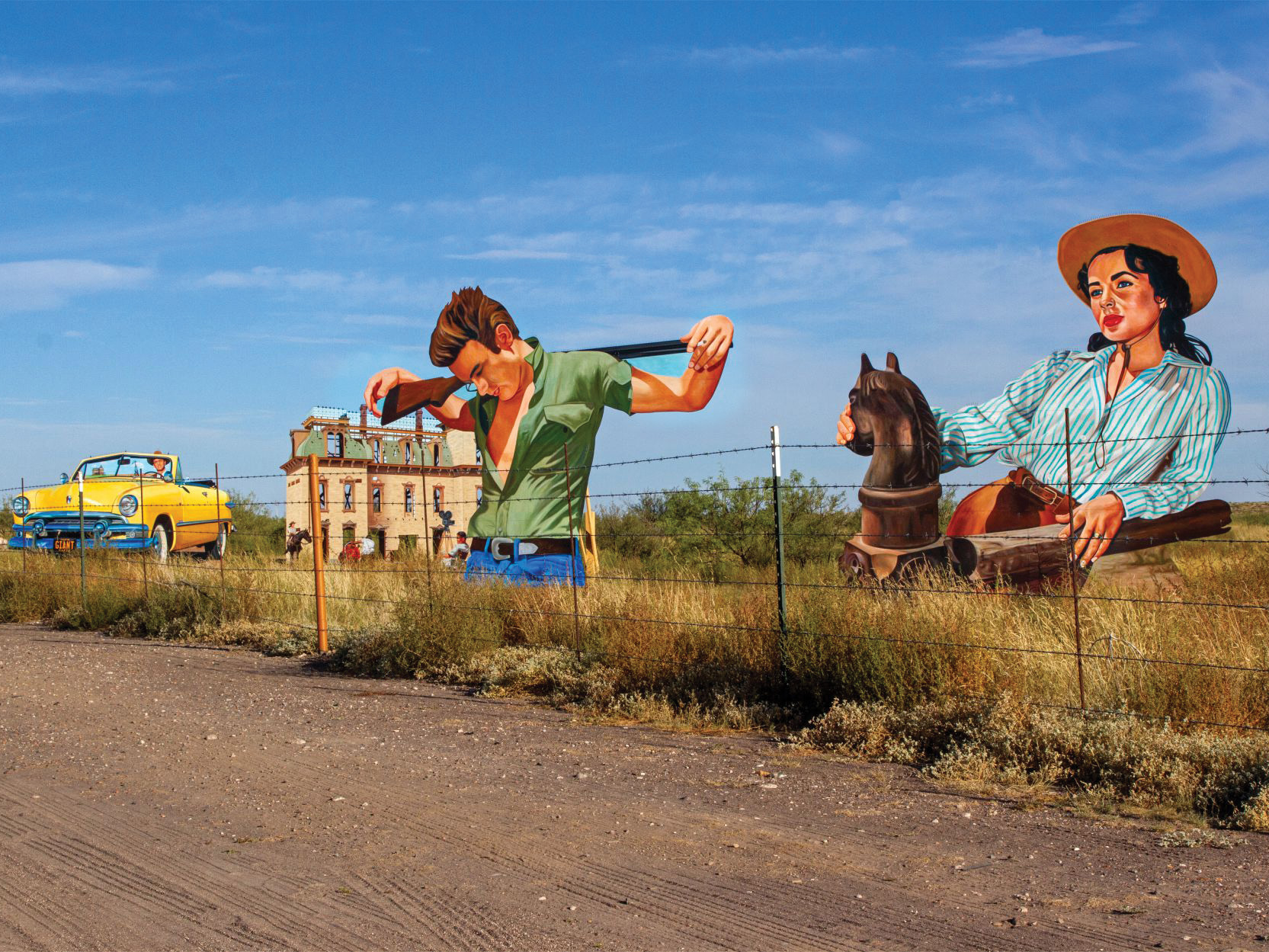
The direct route to Denver would have taken 12 hours. Instead, I spent four days on the road. In Marfa, I attended an impromptu art show inside an abandoned house and joined a 30-minute-long line outside a ramshackle burrito joint. I wandered past burial plots in the ghost town of Terlingua. I took a detour to Guadalupe National Park, where a sudden storm turned the terrain into a melting checkerboard of black rock and white snow. I made a pit stop in El Paso for enchiladas, which were great, but not as revelatory as seeing Ciudad Juarez and its colorful cityscape for the first time. I paid my respects to the miraculous spiral staircase inside the Loretto Chapel in Santa Fe, New Mexico, and to George R.R. Martin, author of A Game of Thrones, at the bookstore there that he owns. Before I’d even made it back to Colorado, I decided this solitary sojourn would not be my last.
Traveling with others means being captive to their desires. An itinerary—meet here at this time for that thing—is essential to avoid chaos. These restrictions are often worth it because people are fun. But during my road trip through the Southwest, I learned that solo travel has its merits, too. Namely, freedom. I could hit the brakes if I saw an interesting greasy spoon, challenge that goateed fella at the dive bar to a game of pool (and happily donate my $5 to his growing prize purse), or spend a guilt-free afternoon reading a trashy thriller in my hotel room.
I may have started this trend, but the world quickly caught on. According to the MMGY Global Portrait of American Travelers, 28 percent of tourists who were interested in visiting Colorado this past fall planned to go alone. “Colorado is an ideal destination for solo travelers because of our welcoming towns and cities, easy-to-navigate infrastructure, and accessible adventures,” says Shelley Cooper, director of marketing for the Colorado Tourism Office. Last year, the London Evening Standard published a piece titled “Why Everyone Should Take a Solo Road Trip to Colorado.”
Admittedly, this travel craze might not sound like great news for the state of society. Since the pandemic, Americans have become more isolated. Communities seem to be cracking. People report having fewer close friends than ever. Loneliness is on the rise. Do we really want to become more withdrawn from one another?
But traveling solo isn’t about escaping from the world; it’s about experiencing it more deeply and without compromise. In this guide, you’ll learn how to do just that—whether you crave your own road trip to a remote hamlet, an immersive weekend in one of the West’s capitals of culture, or simply a sliver of space to find a piece of yourself that’s been lost in the flood of everyday life. —Spencer Campbell
Where To Go:
Plus:
- Colorado Books To Read While Traveling
- Classes To Take While Traveling
- Guiding Services for Solo Adventuring
- Social Discovery App Pao Helps You Explore New Places
- Safety Tips for Traveling Solo
Solo Travel Itineraries for Colorado Road Trips
U.S. 285
Now that the leaf-peepers have scattered, the only things between you and Salida’s hot springs are brochure-worthy views (Kenosha Pass) and roadside oddities (Bailey’s hot-dog-shaped South Park Coney Island restaurant). Just be careful; the eccentrically cozy cabins at Glen Isle Resort in Bailey, rainbow trout at North Fork Ranch in Shawnee, and house-made cheese at the Mountain Goat Lodge near Salida might convince you to give up your wandering ways.
U.S. 40
If you can make it through Winter Park, ski traffic melts away, leaving the northern part of the state at your disposal. From Granby, head east on U.S. 34 to explore the western half of Rocky Mountain National Park, which is quiet now that Trail Ridge Road, which connects the area to Estes Park, is closed for the season. Continue north on CO 125 to visit Walden, the moose capital of Colorado. Or stay on U.S. 40 to reach the relative luxury of Steamboat Springs.
I-76
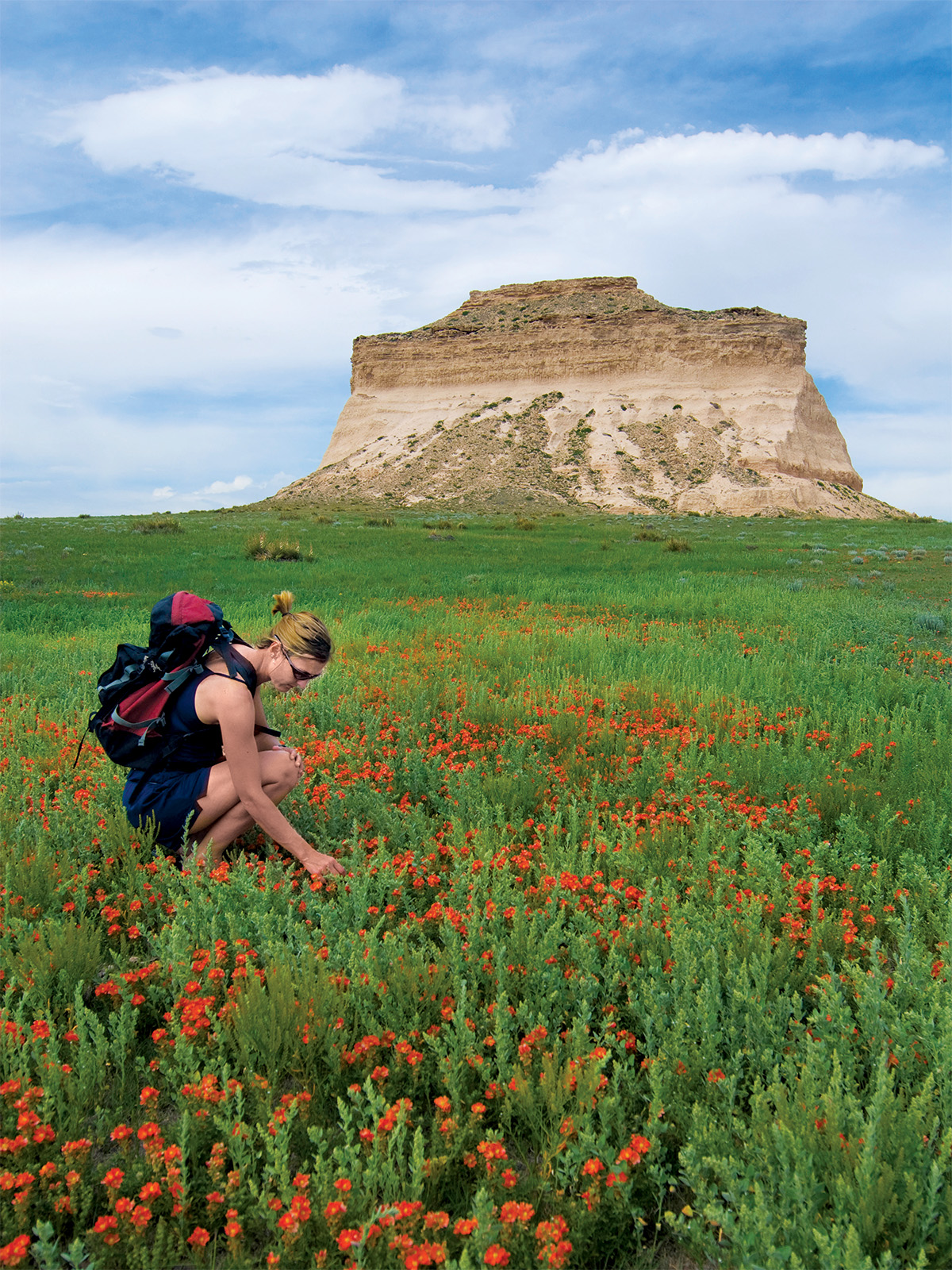
This highway is studded with Eastern Plains pearls, including Sterling, where visitors can learn about pioneers at the Overland Trail Museum and order a judiciously hopped Redneck Mother Citrus IPA at Parts & Labor Brewing, located inside a century-old Cadillac auto shop. Should you be dying for some rock formations, abandon I-76 early, in Fort Morgan, and go to Pawnee National Grassland, where its twin 300-foot Pawnee Buttes await.
Solo Travel Itineraries for Cities That Are Easy To Get to From DIA
Rome
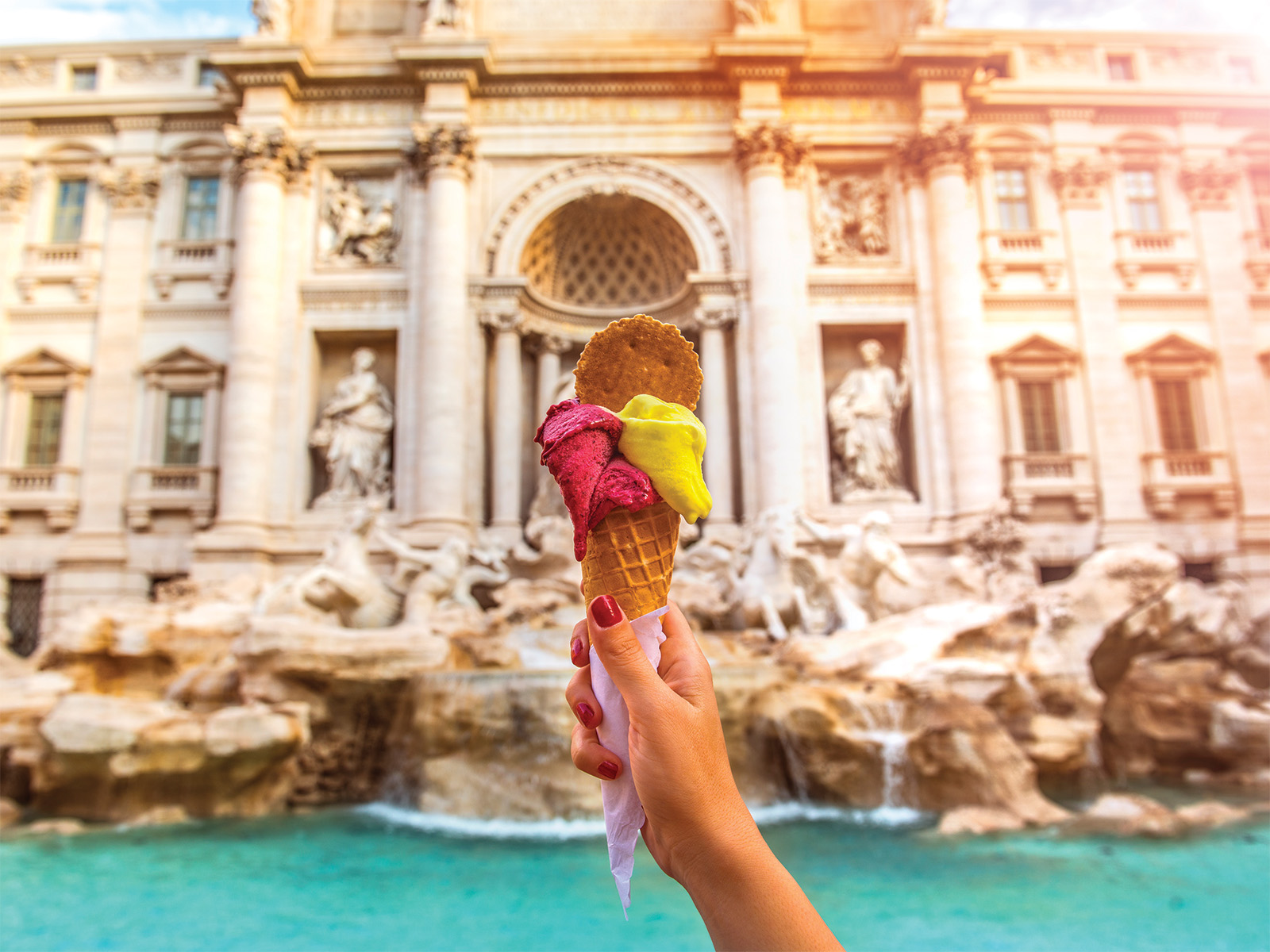
I’m the only one here eating gelato alone.
The small shop I ordered my hazelnut, chocolate, and banana scoops from is less than a mile from Rome’s grandest site, the Colosseum, which explains why, on a sunny Tuesday evening, the cobblestone square is filled with chatty students, friends, and couples. They’re all mingling with others as I lean against a wall.
I’m not lonely, though. In fact, I feel a weight lifting from my shoulders. I’ve been in Rome for just 28 hours, but it’s one of the first days in eight months—since I gave birth to my first child—that I’ve been guided by my own desires. And at this moment, as the golden hour between afternoon and evening settles over the city, that’s gelato.
Despite its growing popularity, particularly among women, solo travel has never really appealed to me. I enjoy having a companion during mealtimes and someone who will share the burden of staying unlost. But in my New Mom Era, I crave solitude. Being a mother means being constantly in demand—emotionally and physically. It’s intoxicating, moving, and oh-so wearing. I was a passionate traveler before becoming a parent, and wanderlust continues to flow through me alongside the milk that keeps me entwined with my sweet girl for most hours of the day. So when the opportunity arose to travel to Rome for work for four days, I booked my ticket.
I arrived with no plans. Italy’s capital is a massive, frenzied place, brimming with activity. It was easier than I thought it’d be to detach from my home life amid the whirlwind.
What I found as I wandered the flower-scented streets was a fragile serenity. With my time suddenly my own, I sat and listened to a busker on top of Janiculum Hill for a half hour. I delighted in choosing a dinner spot in the Campo Marzio district based on what food looked the best and not on whether the restaurant had high chairs. I kept my Wi-Fi off while I was out, opting to follow my wonder instead of a map.
These joys were regularly tempered by tears when I realized I was missing early morning snuggles or messy pasta dinners back home. But it was worth it. The distance gave me the physical space I needed to reconnect with a calmer, more curious and adventurous side of myself while also allowing me to see the joys of my new life without a haze of stress clouding its beauty. I recognized that it was time for my husband and me to loosen up and give our baby a little more space to discover the world, too—not to hover over her as she played and slept.
When my return flight landed early, I was overjoyed that I would make it home in time to put my daughter to bed. I whispered to her about gladiators and pizza and cacio e pepe. And I told her that one day I’d take her to Rome to experience it all. Or, perhaps, she’d take herself. —Daliah Singer
Chicago
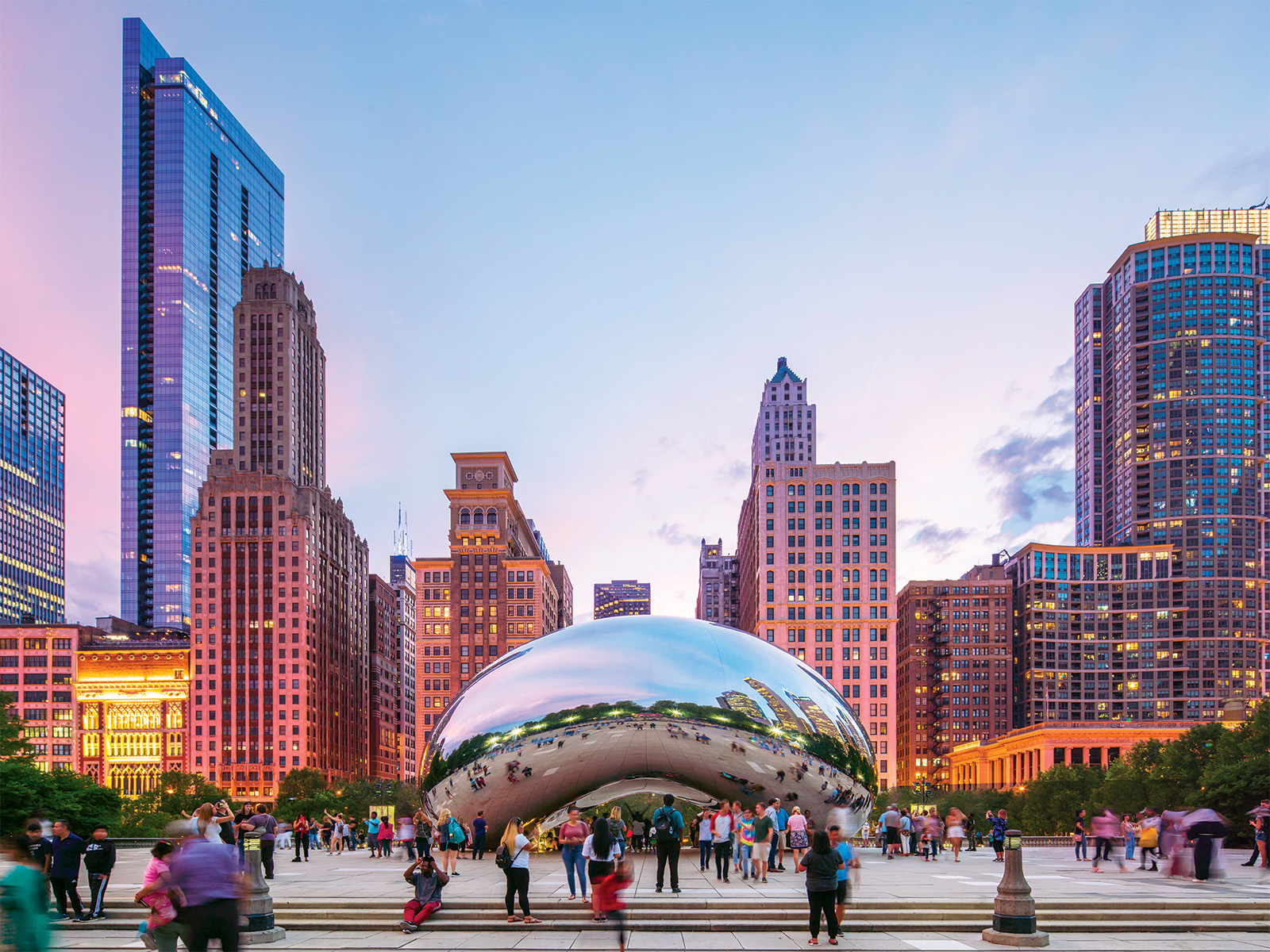
Get your bearings on a guided architecture cruise along Chicago’s namesake river, then duck in and out of the elaborate storefronts—and likely, the cold and wind—that line the Magnificent Mile shopping district. After snapping a self-portrait in the reflective surface of Anish Kapoor’s “Cloud Gate” (aka the Bean, pictured) in Millennium Park, walk the Nichols Bridgeway to the Art Institute of Chicago’s Modern Wing, both designed by Italian architect Renzo Piano.
San Antonio
Even in January, daily highs are in the mid-60s—fine weather for strolling the 15-mile, European-inspired River Walk. A few minutes’ detour delivers you to the 276-year-old San Fernando Cathedral (lit up with projections of state history at night) and Historic Market Square, which bustles with Mexican craft and food vendors. Brackenridge Park, home to a zoo and a Japanese tea garden, offers another 400 acres to explore. Also remember (to visit) the Alamo.
San Francisco
Forget cable cars: For $15, you can buy a daylong Bay Wheels pass and cruise the Wiggle, a well-marked bike route that bobs and weaves around the City by the Bay’s notorious hills, from the Mission District to Ocean Beach. You’ll pass through residential neighborhoods—including famed hippie haven Haight-Ashbury—and Golden Gate Park. Connect with the Land’s End Trail to find a stone labyrinth with views of the Golden Gate Bridge.
Solo Travel Itineraries for Historical Places in Colorado
Leadville

It happens slowly. The years pass, responsibilities pile up; maybe you get married, have children. Then one day, you look in the mirror and realize: You’re addicted to history podcasts. The arcane trivia you glean becomes the currency of your conversations with other (usually male) adults.
The emerging subgenre of historical solo travel, then, in which people re-create the itineraries of famous wanderers, seemed like an ideal way to uplevel my talking points. Almost immediately, I thought of Leadville. While many Colorado places boast rich backstories, Cloud City has everything a history hound could want: big names (Doc Holliday had his last gunfight there), scandal (local 19th-century silver baron Horace Tabor and his much-younger second wife, Baby Doe), and famous foreigners (Oscar Wilde gave lectures there in 1882).
Shootouts and infidelity seemed unwise itineraries to emulate, so I decided to follow in Wilde’s footsteps. First up? Re-creating the “miner’s supper” the Irish author was served while in town: “The first course being whiskey, the second whiskey, and the third whiskey,” Wilde wrote. I took my appetizer at Before & After, a two-year-old coffeeshop and bar that serves a terrific $10 old fashioned. Its dubstep soundtrack, however, was hardly period-appropriate. My next stop, the Silver Dollar Saloon, opened in 1879 and acted as Wilde’s post-lecture watering hole; its hot caramel cider warmed my bones, yet the nearly deserted barroom left me cold. I ordered dessert (another old fashioned) at the Delaware Hotel, which has been providing room and board since 1886. Sitting at the bar, I gave silent compliments to each chef. Still, I had to admit that the evening hadn’t inspired any new insights into the past. (It did, however, conjure another famous wit: Sarah Jessica Parker, who was dining at the hotel that night.)
The following day I woke up with a shade of a hangover and a new plan. The city’s website features a historical walking tour—what better way to trace the footsteps of the greats? The results were mixed. Two of the stops (the Leadville Heritage Museum and the Healy House Museum and Dexter Cabin) were closed. I hoofed it to the home of Tabor—known as an ostentatiously rich man whose lavish spending would eventually bankrupt him—only to find an ordinary, white clapboard house. I started to think the trip had been a bust, much like Tabor’s mines.
Before leaving town, I swung by Evergreen Cemetery to check out the Irish Miners’ Memorial at the north end of the property. The bronze statue, of a miner kneeling next to a mother holding her child, is surrounded by glass panels inscribed with the names of more than 1,300 people who were buried, in mostly unmarked graves, in the cemetery’s Catholic Free section. These immigrants scraped millions of dollars in precious metals from the earth but couldn’t afford $15 for a plot. I followed the names until I came to my own. As far as I know, none of my ancestors lived in Leadville, but one entry still stopped me: “Campbell, Infant – 1d.”
The cemetery was deserted. A barricade of pines insulated me from the noise of the outside world. A cold wind from the south rushed through the trees, stinging my eyes as I thought about the two young boys I’d left at home. Although I’d come to Leadville hoping to channel its legends, whatever magic they’d cast seemed to have dried up. But this baby and the history it never got a chance to make will live forever, at least in my mind. —SC
Read More: Your Guide to Leadville
Durango

A walk down Main Avenue is an education in Victorian architecture (the largest collection of American-era Victorian furniture resides in the Strater Hotel, built in 1887). The real history, however, lies to the west, at Mesa Verde National Park, Colorado’s lone UNESCO World Heritage Site. In the 1190s, Ancestral Puebloans began carving living quarters into the cliffsides here; today, the park is home to more than 600 of their dwellings.
Cripple Creek
In no Colorado town is history more alive than Cripple Creek, which is home to the last major gold-digging operation in the state and a herd of wild donkeys whose ancestors carried picks into those mountains in the 1890s. On the Gold Camp Trail, peep artifacts like a giant hoist that moved miners in and out of a 1,260-foot-deep shaft in Poverty Gulch. Then hit the 15th annual Ice Castles exhibition, which allows visitors to squeeze and slide through Frozen-like tunnels and caverns.
Julesburg
Mark Twain once wrote that this Eastern Colorado town was “the strangest, quaintest, funniest frontier town that our untraveled eyes had ever stared at.” And he was there for only an hour. Trace the city’s history along the 19-mile South Platte River Trail; the state’s shortest scenic byway passes Colorado’s only Pony Express station and the Lincoln Highway, which, when finished in 1913, became one of the country’s first transcontinental highways.
Solo Travel Itineraries for Art Hot Spots in (and Near) Colorado
Aspen
The corpse lying on the mattress might be Mickey Mouse. It has his billowy white gloves and his trademark two-button shorts, but the face is all wrong. The head is a skeleton framed by tufts of hair on the sides, like a clown. Or maybe those are his withered ears. Whoever it is, they’re definitely dead—the X’s painted over the eyes are difficult to misinterpret. Is the artist bemoaning the passing of his childhood? Maybe the sculpture is a comment on Disney and, thus, capitalism? Wait, is that poor, lifeless cartoon me?
I don’t usually probe this deeply into something I spot while window shopping. I don’t have the bandwidth, not with my phone lighting up with Slack alerts, my thoughts running through recipes I can whip up for dinner, and my legs racing to get to daycare in time for pickup. But here in Aspen—which, thanks to the considerable assets of its residents, might have more great works per capita than any place in the state—I finally have the space. I’m alone, surrounded by amazing art, and eager to get existential.
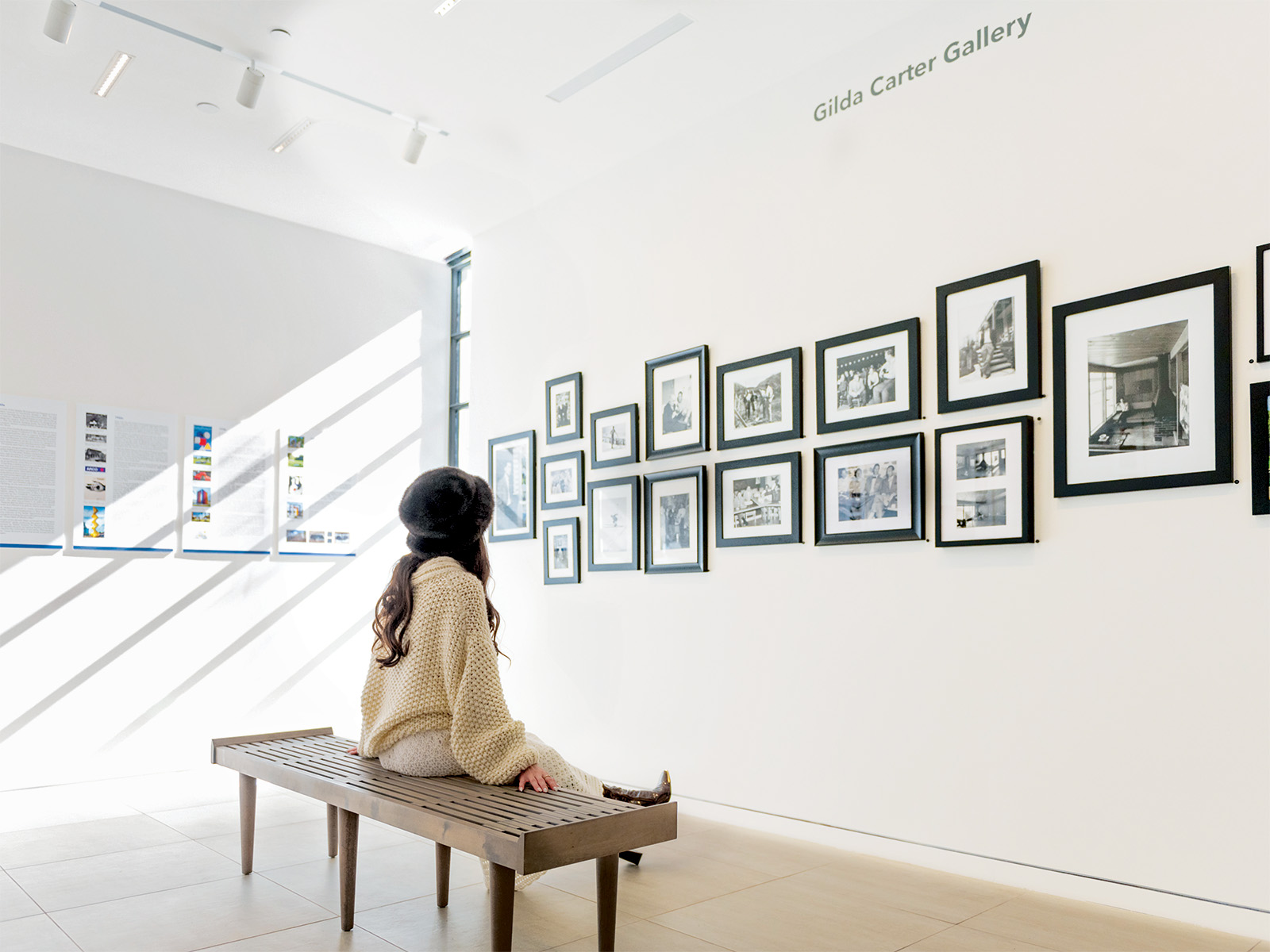
My quest began at the Resnick Center for Herbert Bayer Studies (pictured), a collection of the Bauhaus master’s work (think: clean lines and functionality). In 1973, Bayer designed a green space called “Anderson Park” that sits between the center and Aspen Meadows Resort. It’s punctuated by three small mounds, a circular pond, and a small depression that, according to the center’s website, invites “quiet contemplation.” The design is subtle and beautiful but unmistakably artificial. Staring into the hole, I, as Bayer intended, contemplated: Was the artist trying to say something about taming nature?
I was confronted by similar moments of reflection at the Aspen Art Museum, which was hosting an exhibition by Glenn Ligon, a New York–based conceptual artist, and at the Anderson Ranch Arts Center in nearby Snowmass, an artists’ retreat dotted with a dozen outdoor sculptures. Ligon’s work, which often references civil rights activist James Baldwin, sent me into a spiral of self-analysis about race and identity. At Anderson Ranch, I sat on Hank Willis Thomas’ “Josephine and Kazumi”—a large text bubble that also acts as a bench—and dissected my compulsion to fill and smother every conversational pause, awkward or otherwise. Somewhere along my tour, I acknowledged that I was probably overthinking things. That I had no idea what these works meant. That maybe it was enough for art to be pretty.
Then again: When was the last time I’d paused, left my phone in my pocket, and (for lack of a less pretentious word) ruminated? Turned a single thought over and over in my mind to find out what would shake loose? Some of the objects I saw made no impression; others, though, moved me, making me interrogate difficult parts of my identity. Maybe these weren’t the right questions, but they’re the ones I needed to ask. —SC
Grand Junction
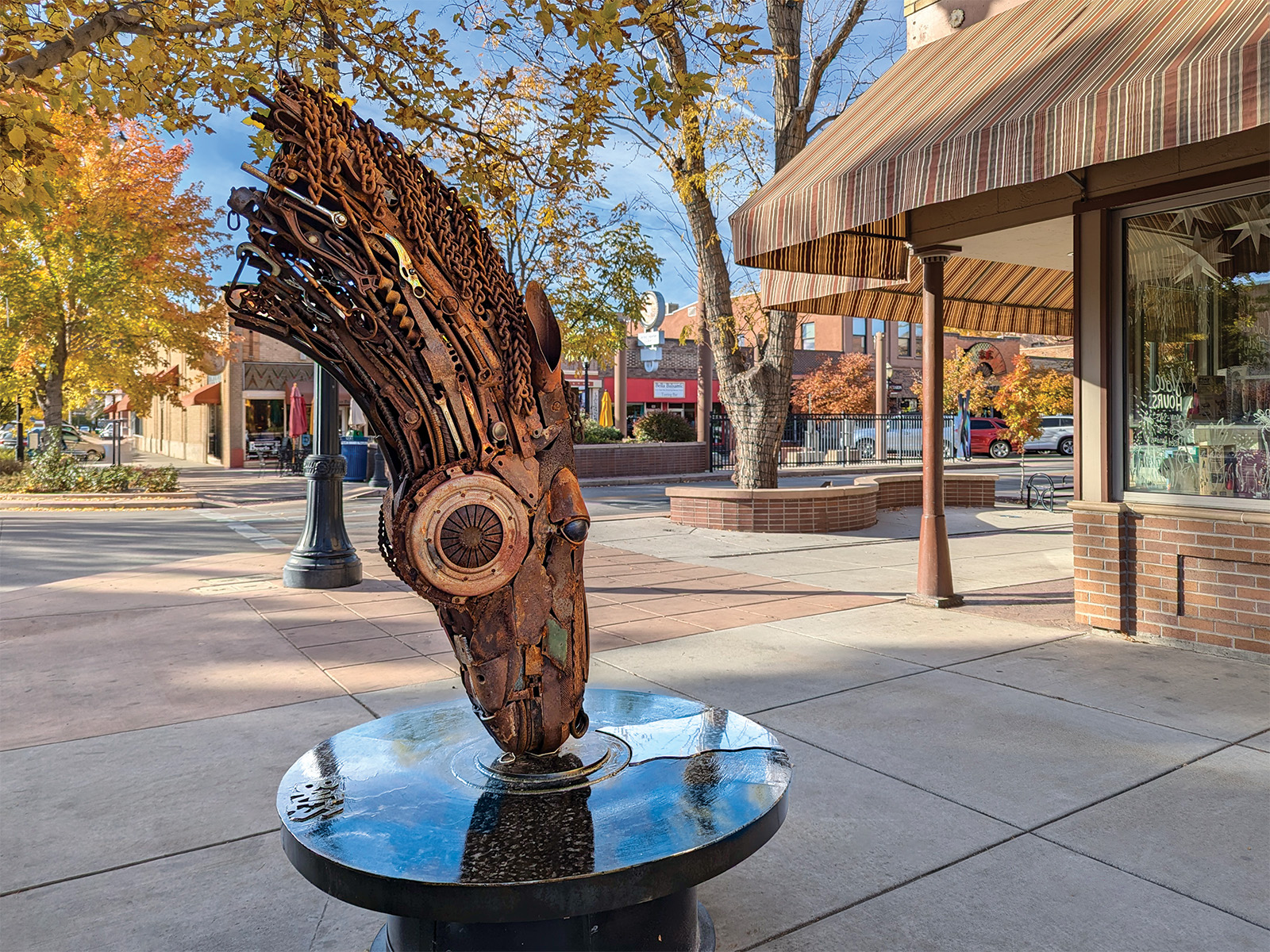
This Western Slope city is home to one of the nation’s oldest outdoor sculpture programs (Grand Junction has more than 100 permanent pieces, including “Self Reflection” by Jeff Bates, pictured). You can wander downtown’s Colorado Certified Creative District—or bike the Lunch Loop Trail System’s singletrack—before sitting down in Colorado Mesa University’s new 860-seat Asteria Theatre, which is hosting Tina: The Tina Turner Musical this month.
Taos
Coloradans might be more accustomed to making the five-hour drive south on I-25 to shred at Taos Ski Valley, but this quaint New Mexico town has an art scene that is worth the trip on its own. More than 70 galleries, spanning a host of mediums, inhabit mostly adobe structures. Save some of your budget for the Taos Pueblo, a UNESCO World Heritage Site and Puebloan community with shops that sell handmade arts and crafts.
Trinidad
Counterculture vultures once knew Trinidad as Drop City, a commune founded by four artists. Today, visitors flock to Create Trinidad, a historical downtown district that’s home to the new-in-2020 Trinidad Space to Create, which has affordable housing and studio space. Catch a show by Main Street Live’s professional company or stroll Old Trinidad’s brick-lined streets for one of the West’s largest collections of Victorian houses.
Solo Travel Itineraries for Outdoors Destinations in Colorado
Breckenridge
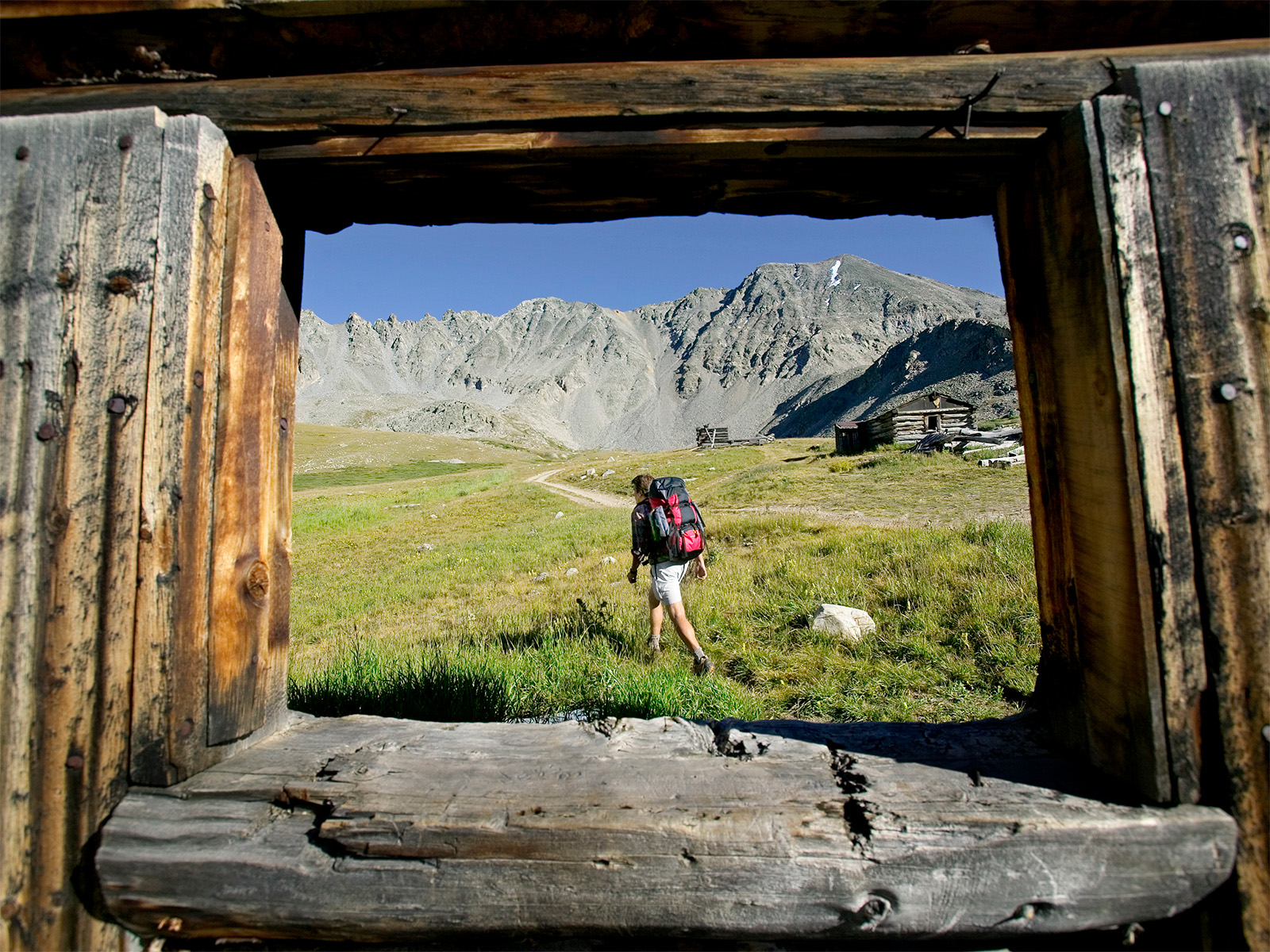
I exhaled when I saw the text. “Made it just before the hail,” my wife, Larissa, wrote. “Now in the tent, reading with a mai tai. I love you.”
It was mid-July: thunderstorm season. She had left three hours earlier on foot, carrying 40 pounds on her back, headed to a wild basin above our house south of Breckenridge, where an elk herd grazes at 12,000 feet and the nighttime sky looks like fireworks. Each summer, Larissa and I give each other one evening to ourselves to hike up and camp. I was relieved to know she was safe from the storm that was now pelting our roof with ice balls. And I knew I likely wouldn’t hear from her again until tomorrow, time apart that fuels us both individually and as a couple.
I’ve always enjoyed camping alone. I often do it on reporting trips. Sometimes that means pitching a tent next to my truck or sleeping in its bed instead of in a hotel. Other times—the best ones—it means leaving civilization. While researching a book about a backcountry tragedy in Lake County, I hiked into the rugged accident site and spent a night alone with my thoughts, listening to the wind and animals, imagining my protagonists’ plight. Outside of work, solitary nights spent outdoors help me feel free. I have seven- and 10-year-old sons who like to jump on my back and wrestle; who need to be fed and comforted; who often require a referee. I love all of that, and I of course love them, but after a while, I find myself craving time away from the bustle and stress of family life.
I asked Larissa about this over breakfast recently—what her little getaways do for her. She grew up in Iowa and used to be afraid of venturing into the wilderness by herself. Then she tried it and felt the liberation it brought. Now, she looks forward to her solo night all year. “Just being in my own head, talking to myself, staring at a pristine landscape, feeling so removed from everyone and everything—which we don’t get very much, because our lives are so full,” she said. “Out there, I get a chance to simply exist, without having anyone else to care for or nurture. And I feel proud for carrying everything I need to be safe and eat.”
The last time I went backpacking by myself, on a clear and warm night this past August, I felt guilty. I’d been away for work a good amount, and it struck me as selfish to tack on a recreational escape when Larissa had been carrying the load at home. But each time I expressed reservations, she shot them down. “We’ll be fine,” she said. “Go.” I left the trailhead still saddled with guilt—and, fine, a few canned beverages and a log of homemade soppressata—but with each step up the trail, the feeling faded. By the time I popped out of the forest into our cherished basin, spotting the local elk herd above where I’d pitch my tent, the only emotion that registered was bliss. I made a fire, whipped up a meal of coconut chicken, and fell asleep before my kids’ bedtime.
The next day, I hiked out like a recharged battery, ready to be jumped on and wrestled and needed again. —Devon O’Neil
Alamosa

Solo travelers who find themselves sleepwalking through life can experience a brisk wake-up call at Rio Frio Ice Fest (January 23 to 25), which, after a 5K on Saturday, concludes with a polar plunge at Alamosa’s Blanca Vista Park. Those seeking unadulterated solitude can disappear into Great Sand Dunes National Park and Preserve or discover whether they’re truly alone (in the universe) from the observation deck at the UFO Watchtower, a nearby roadside attraction.
Lake County
This winter, Lake County (Leadville and Twin Lakes) expanded grooming efforts on its 60-plus miles of winter trails, providing smoother tracks for cross-country skiing, snowshoeing, and fat biking. Visitors can revel in the isolating barrier that powder provides at five trail systems, though we can almost guarantee a perspective-shifting experience on the 14-mile loop around Turquoise Lake, which features views of fourteeners Mt. Elbert and Mt. Massive.
The Colorado Trail
Covering nearly 500 miles from Denver to Durango, this long-distance footpath offers an opportunity for extended alone time (four to six weeks, on average). It should be undertaken only by experienced backpackers; elevation on the route hits 13,271 feet and cell service is spotty, making it difficult to phone a friend if conditions become dicey or if you get lonely. Should the latter occur, don’t freak out: Fellow solo hikers are usually open to buddying up.
Colorado Books To Read While Traveling
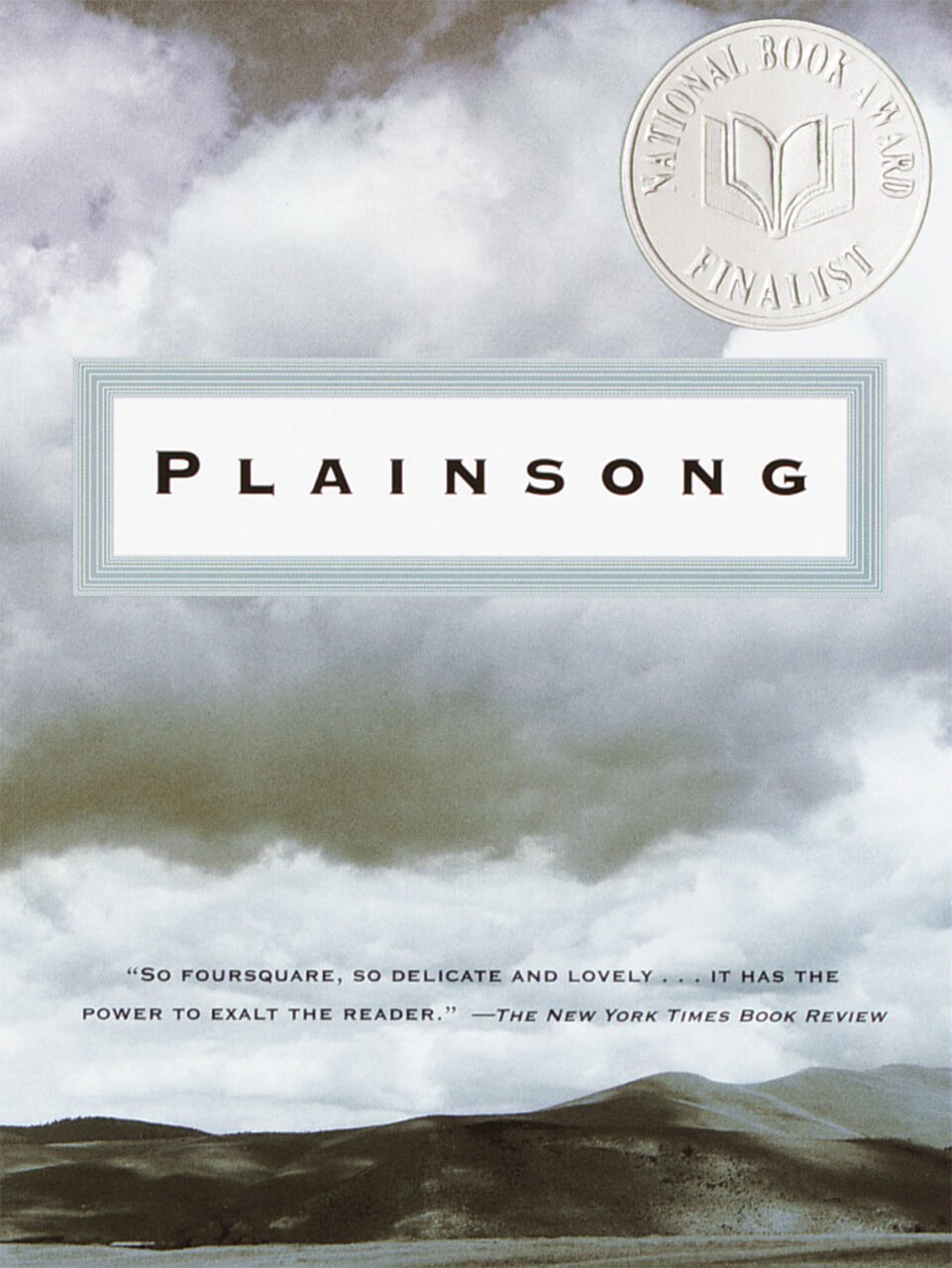

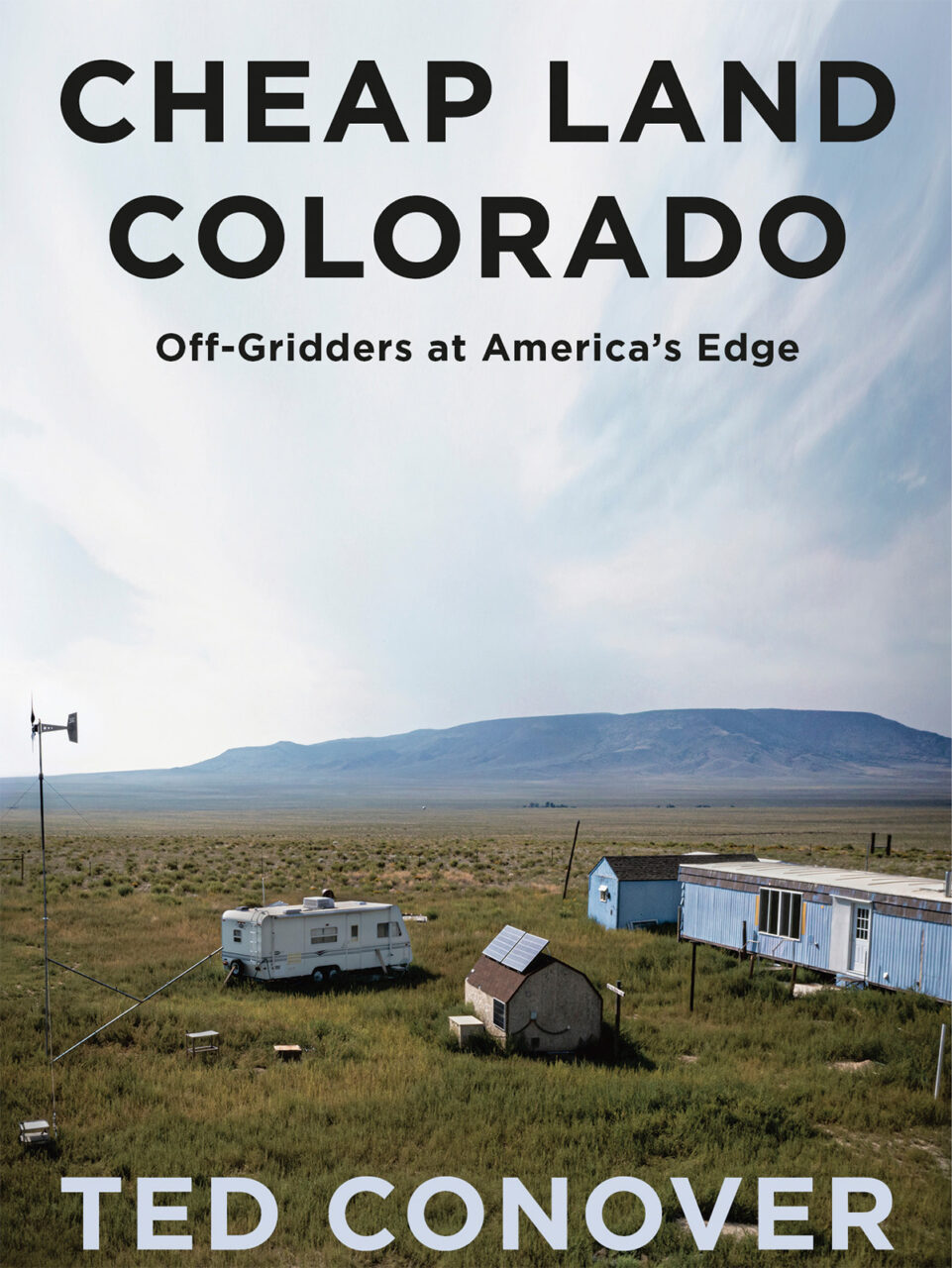
When you travel alone, you’ll have some downtime. Sure, you could paw through Instagram to see what you’re missing back home (spoiler: nothing). Or you could spend your idle hours with Colorado’s greatest authors, who, in addition to being amiable travel companions, can deepen your understanding of the terrain you happen to be visiting.
Take, for instance, the late novelist Kent Haruf, whose sparse, poignant prose—particularly in his 1999 masterpiece, Plainsong, about a family navigating life in the fictional town of Holt—reflects the stark beauty of the Eastern Plains. Conversely, the lush language in Shelley Read’s Go As A River feels as vibrant and moving as her setting, the Gunnison Valley, and makes the tragedy of the book’s romance even more devastating.
Finally, if you’re interested in taking this solo thing to the next level, pick up Ted Conover’s Cheap Land Colorado. The Denver-born journalist details the lives of folks living off the grid in the San Luis Valley, giving you the insight you need to find out if you’re ready to emulate their lifestyle (spoiler: you’re not). —SC
Classes To Take While Traveling

Even if following the footsteps of historical figures doesn’t appeal to you, there’s likely some hobby you’ve been meaning to pick up, if only you had the time. One of the major benefits of solo travel is that less socializing means more skill-honing—as long as you find the right destination. Winter Park and Fraser, for example, have more than 600 miles of mountain bike trails, giving you ample space to kick your training wheels. (In the summer, the resort offers a half-day beginner’s class outlining how to shred downhills.)
Budding Eric Claptons can sign up for the Colorado Roots Music Camp (June 5 to 11 and August 7 to 13) at the Rocky Mountain Mennonite Camp in Divide for a weeklong immersion into blues, swing, and a whole lot of jammin’. And if your inner artist is tired of toiling in Excel spreadsheets, Telluride’s Ah Haa School for the Arts has a range of offerings this summer, including a ceramics class (May 26 to 30), a fabric-design workshop (August 6 to 10), and an abstract painting seminar (August 20 to 24). —SC
Guiding Services for Solo Adventuring
Alex Honnold took the ultimate solo trip in June 2017, when he became the first person to scale El Capitan in Yosemite National Park without the aid of ropes. (The movie Free Solo documented his trip.) To us mortals, Honnold makes for a bad role model. Doing anything inherently dangerous by yourself in the outdoors is a bad idea. (Remember Aron Ralston, the climber who amputated his own arm after it became trapped by a boulder in Utah?) That doesn’t mean you can’t tap some adventure adrenaline on a solo trip.
Basecamp Ouray offers one-on-one guided climbs on its Gold Mountain via ferrata, which scales 1,200 vertical feet and traverses a 287-foot suspension bridge. For longer outdoor experiences, contact Adventures in Good Company. The Fort Collins–based outfit organizes activity-focused trips for women to more than 100 international spots, from cowgirling in Laramie, Wyoming, to exploring on the Galapagos Islands. Embarking on these experiences means others will encroach on your alone time, but at least you won’t have to handle the scalpel if things go sideways. —SC
Social Discovery App Pao Helps You Explore New Places

To some, the open sidewalks of a new city present wide-open possibilities. These people delight in picking a route at random, even if the restaurants, shops, and saloons that line the way don’t end up being the best the burg has to offer. Other travelers (justifiably) fear that what seems like a charming path might actually peter out at a Chili’s. Such risk-averse wayfarers should download Pao, a Boulder-based app with crowdsourced sites to see in 19 (and counting) domestic and international cities, from Paris to St. Paul, Minnesota. Users upload recommendations, focusing on local businesses. Pao often curates the content into highlight reels featuring the likes of “Insta-worthy gems” in San Diego and endless “pastabilities” in Boston. The company’s website also compiles event guides, should you crave a little contact companionship on your solo journey.
But even though the brand, whose name means “go” in Greek, is built for travel, it’s helpful at home, too—whether you’re looking to add a little spice to your life (King of Wings in Wheat Ridge) or a spot to woo your one and only this Valentine’s Day (North Park Hill’s Trellis Wine Bar). —SC
Safety Tips for Traveling Solo

One of the main reasons solo trips have gained popularity, especially among women, is that they’ve gotten safer. We have technology to thank for the extra security.
If you think something sketchy is about to go down, you can activate the Noonlight app. A button will appear on the screen; hold that down until the danger passes and then input your pin number to deactivate the silent alarm. If you release the button and don’t type in your pin, the app will assume you’re being assaulted, notify police, and give them your location. She’s Birdie makes a pocket-alarm keychain (pictured) that’s slightly larger than your finger but emits a shriek reminiscent of a jet engine.
You can also fake it: Just pretend to make a call. Logistically, solo trippers need to be more diligent than usual by making copies of their travel documents and sharing their itineraries with family or friends. Beyond that, it’s common sense. Don’t wear shiny things that beg to get stolen, avoid dark alleyways, and don’t tell the person on the next barstool where you’re staying—no matter how cute they are. —SC