

The Local newsletter is your free, daily guide to life in Colorado. For locals, by locals.
Perhaps no one in Colorado has been following the Pattie Gonia vs. Patagonia lawsuit with more interest—and more knowledge—than Tim Holbrook.
Not only is the University of Denver professor an internationally renowned expert on intellectual property law (his work has been cited before the U.S. Supreme Court), and a longtime advocate for LGBTQ+ rights (he teamed up with pro football players back in 2015 to help win the fight for nationwide marriage equality), he’s also a fan of drag. So, when Patagonia’s lawsuit against beloved drag queen and climate activist Pattie Gonia began to heat up over the weekend, Holbrook’s phone started buzzing.

“Yes, I’ve been getting some texts about it [from friends],” Holbrook laughs, “and when the lawsuit hit, my husband was like, ‘You have got to see this.’ ”
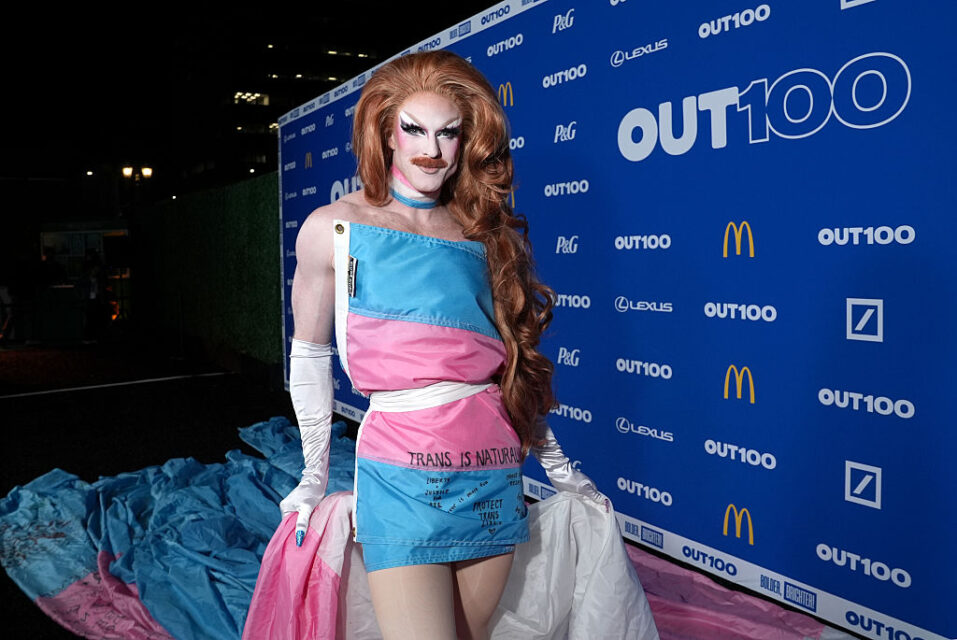
First, a quick primer for anyone who hasn’t followed the case. Wyn Wiley created the Pattie Gonia drag persona in 2018 when he posted a video of himself in high-heeled boots on a backpacking trip in Colorado. Since then, he has used the Pattie Gonia platform to raise more than $3.7 million for environmental and LGBTQ+ causes. In January, Patagonia filed a trademark infringement lawsuit against Wiley after he attempted to trademark the name “Pattie Gonia” for merch, speaking engagements, and environmental activism.
But it wasn’t until last week that Pattie broke her silence about the suit online, claiming the company was “trying to erase an activist.” The outdoor brand promptly shot back that it “has a responsibility to protect the company.”
Patagonia’s complaint alleges that in 2022, the drag performer agreed not to sell merchandise using logos and graphics that are “substantially similar” to the company’s trademarked logos, but that she’s done so anyway. Pattie argues that their 2022 conversation wasn’t a “broad agreement about her future” and that the logo usage examples in the complaint are “playful parody,” protected by the First Amendment. Although the apparel brand is seeking just $1 in damages, Pattie Gonia could be on the hook for substantial legal fees if a judge rules in favor of the outdoor company.
The ensuing social media melee has gone exactly how you’d expect, with Pattie Gonia mobilizing her army of followers to call for Patagonia to back down. “Is this the most tone-deaf corporate response of 2026?!” reads a typical comment among the thousands responding to Patagonia’s social media post defending its lawsuit. Others argue that Patagonia has an obligation to defend its trademark, claiming that giving the star a pass could come back to haunt the company in future disputes. Predictably, there are memes.
Who’s right, and who’s wrong? Is it time for Patagonia to sashay away, or does Pattie need to—good god—get a grip, girl? Holbrook shared his take on the dispute with 5280.
Editor’s note: The following conversation has been edited for length and clarity.
5280: What was your initial reaction to this lawsuit?
Tim Holbrook: I really think this is an example of a trademark owner, the clothing company, overreaching to try to protect their brand. I’ve been aware of the drag queen for a long time, and I never would’ve linked her to the company. To have trademark infringement, there’s got to be similarity between not only the marks, but also the products and services.
Think of Delta Airlines and Delta Faucets: They have the same name, but nobody’s confused. I’ve been aware of the drag queen for a long time, but I always just thought the witty name was based off the land mass, not the company.
There are forms of mark protection called anti-dilution protection that are reserved for famous marks that are household names, like Apple and Nike. So maybe Patagonia, the clothing company, could argue for that. But I don’t know that they’re quite at that level of fame. Either way, it just seems like an overreach.
What do you make of Patagonia’s argument that it has to defend its intellectual property, because if they let it slide this time, it would weaken their standing in future trademarking infringement cases? Does that reasoning hold water?
No, I don’t think so. The company doesn’t get an absolute right to use the name Patagonia in every setting. You only get it in association with your goods and services. I wouldn’t quite put the company in this category, but they’re approaching the phenomenon that’s called being a trademark bully. Bullying is when trademark owners go after smaller operators, saying that you infringe our trademark, when in fact a reasonable assessment would be that there’s no infringement, but they’re just hoping to get the person to stop—to eliminate all risk and monopolize the use of the term Patagonia.
They’re trying to eliminate all legal risk, but there’s a PR risk too, right? This story is doing major damage to their reputation.
Absolutely. When I’m teaching, I try to instill in my students that they’re learning to be lawyers, but in litigation, every decision is a business decision. Yeah, Patagonia could win the case, but at what cost? They’re risking alienating the LGTBQ community.
View this post on Instagram
To play devil’s advocate: Pattie Gonia is also, arguably, profiting off this controversy in terms of the free PR. Where do you draw the line between activism and advertising? The company’s lawyers write that she has departed “from the discrete use of a persona to engage in activism … to launch a wide-ranging commercial enterprise under the Pattie Gonia brand.”
It’s tricky because every instance is different. If she’s selling merchandise with altered Patagonia logos featuring the drag name, that’s a problem. But if she takes those down, they shouldn’t be able to stop her altogether. As long as she’s not representing herself as being funded or sponsored by the company in any way, what she’s doing seems very distinct from what the company is doing.
Is it relevant that Pattie Gonia is part of an oppressed group and is an activist representing both environmental and LGTBQ+ causes?
That’s where First Amendment concerns start to creep in. She’s using “Pattie Gonia” in an expressive fashion. If the apparel company shuts down that creative expression, they really are controlling speech in a way. That makes this case different than a classic commercial vs. commercial dispute, like when McDonald’s sued a dental company going by the name McDental.
If she’s using the logo simply to advance herself, OK, that’s a problem. And that’s what the Supreme Court ruled a couple years ago in the Jack Daniel’s v. Bad Spaniels case [which found that a company selling whiskey-bottle-shaped chew toys might confuse consumers into thinking the stuffies were endorsed by the liquor brand]. But some courts might be resistant to shut down what she’s doing in light of the expressive nature of her activist activity.
Will you be teaching this controversy in your next class?
I probably will. It’s a fairly unique trademark dispute, and it makes for pretty rich social commentary. It’s going to be a great introduction to trademark law for my students.