



The Local newsletter is your free, daily guide to life in Colorado. For locals, by locals.
Glenwood Springs’ Hanging Lake is one of the state’s most beloved hikes, and for good reason: The pool is a stunning sight straight out of a fantasy novel. Waterfalls cascade over mossy travertine deposits into a dazzling turquoise tarn. Black swifts (a rare, bucket-list sight for birders) dart in the mist behind the falls, while rainbow trout shimmer in the gin-clear waters below. And unlike many alpine lakes, this piece of paradise is relatively accessible, lying at the end of a short, steep, 1.2-mile hike just off I-70.
But decades of heavy visitation—followed by wildfire and devastating floods—nearly destroyed it. It took $4.9 million and almost two years of construction to rebuild the trail, which has been fully restored with an eye toward climate resilience. On June 18, staff from the National Forest Foundation, the U.S. Forest Service, Great Outdoors Colorado, Colorado Parks and Wildlife, the city of Glenwood Springs, and other public and private entities that collaborated on the restoration gathered for a ribbon-cutting ceremony to celebrate its completion.

“This project was really daunting,” says Emily Kasyon, the National Forest Foundation’s White River National Forest coordinator. “Hanging Lake is such a special place to Colorado, but the damage was enormous, and the logistical problem-solving that had to happen was so substantial. I mean, we used helicopters to move giant rocks around.”
Unlike most trail restoration projects, which rely heavily on volunteers, this was a job for the professionals. The Boulder-based trail design company ContourLogic and Denver’s DHM Design, a landscape architecture and planning firm, completely reshaped the route. They rebuilt and stabilized sections of the route, strengthened slopes to reduce erosion, and installed 1,289 new stone steps leading to the lake. Each step weighs between 500 and 600 pounds, meaning the builders wrangled at least 322 tons of stone. Workers also installed a new boardwalk around the lake to protect its fragile limestone ecosystem.
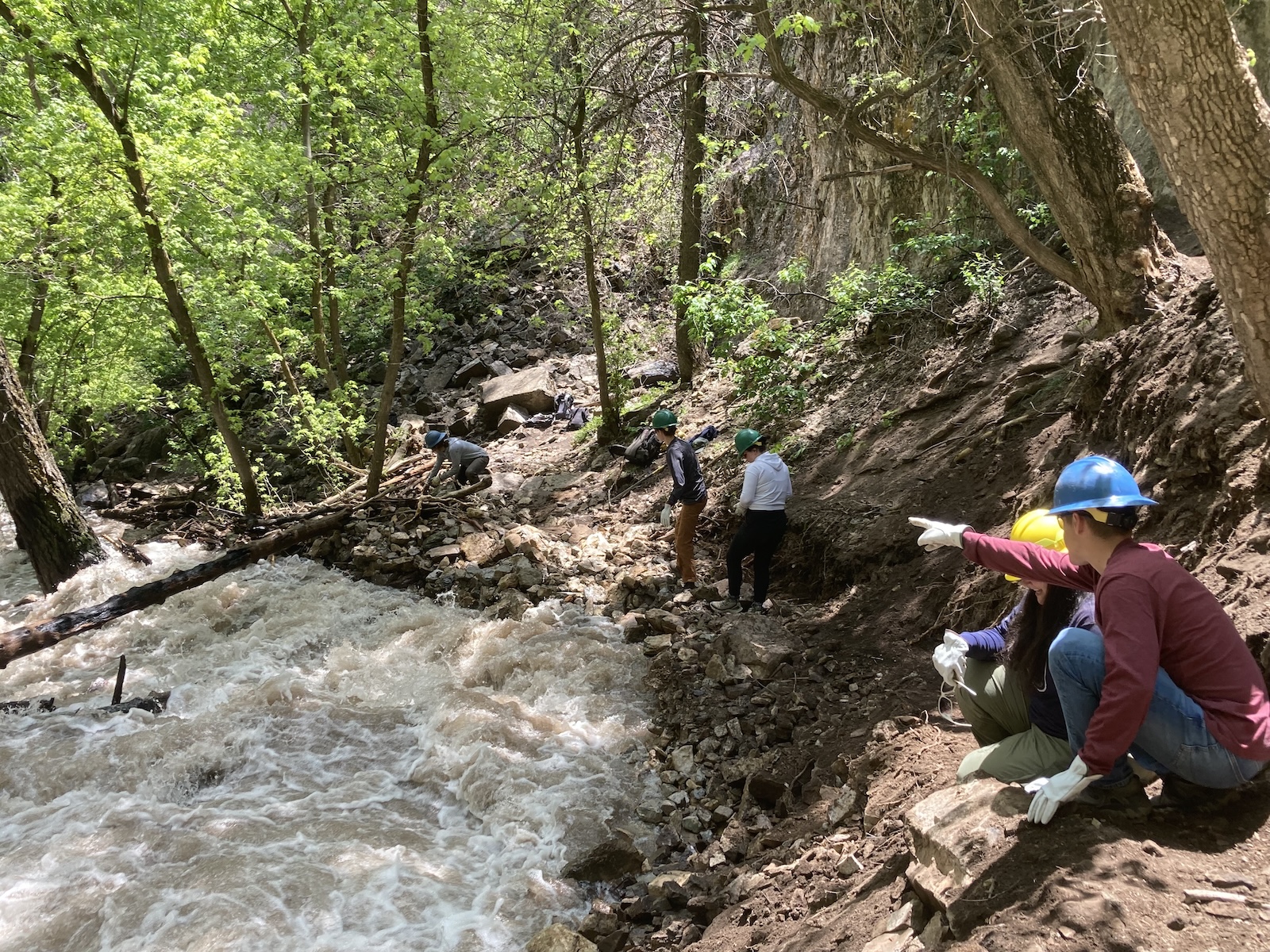
Another major component: elevating the seven wooden bridges that carry hikers over the rushing waters of Deadhorse Creek. Raising the bridges helps them withstand future flooding and debris flows, which washed away large swaths of the path in 2021, after the Grizzly Creek Fire narrowly missed the trail in 2020.
Even before the natural disasters, Hanging Lake was at risk of being loved to death. Prior to the addition of a permit and timed-entry system in 2019, “arguments were breaking out in the parking lot, and people were parking on the shoulder of I-70,” says Sam Massman, recreation program manager with the Forest Service. “The crowds were to the point where emergency vehicles couldn’t get in.” Capping the number of visitors helped, “but the trail was already in bad shape, and then the debris flows just wiped it out,” Massman says.
About half of the project’s funding, almost $2.3 million, was drawn from lottery ticket sales. (Fun fact: Colorado is the only state whose lottery is solely dedicated to funding outdoor conservation and recreation.) An additional $2 million came from the U.S. Forest Service—a significant federal investment at a time when many public-land agencies face budget pressures. Colorado Parks and Wildlife and the city of Glenwood Springs (which benefits from an estimated $4.6 million in local tourism dollars that trail visitors bring annually) also pitched in.
“Hanging Lake stands as a powerful example of what’s possible when people come together with shared vision and purpose,” Bunni Maceo, deputy regional forester for the U.S. Forest Service, told a crowd of about 50 onlookers at the Thursday morning event. “Public land agencies are facing increasing demands, aging infrastructure, and unprecedented natural events. Meeting these challenges requires exactly what you see here today: Federal agencies, local governments, nonprofit partners, businesses, volunteers, and community members all working together side by side.”
How To Hike Hanging Lake Trail
Though the trail has technically been open for about a year (it welcomed visitors during some of the restoration), its 615 daily permits haven’t been selling out—yet.
- Reserve Your Spot: Secure permits, $12 per person, for a three-hour hiking window in advance online.
- Getting There: The Hanging Lake trailhead is about 2 hours and 40 minutes west of Denver on I-70. Because there is no westbound exit, you’ll need to take the Grizzly Creek exit (121) and head back east on I-70 to the Hanging Lake exit (125). You may park or be dropped off by a private car, but ride-share services like Uber and Lyft are not allowed.
- Bring: Plenty of water, snacks, sun protection, and sturdy hiking boots or trail running shoes.
- Don’t Bring: Your dog, who is not allowed to traverse the trail; leaving pets in your car in the parking lot is also not permitted.
- Etiquette: Hikers going uphill have the right of way. If you’re on your way down, step aside to let them pass, but stay on the path to avoid damaging the Hanging Lake area’s sensitive ecosystem.
Read More: Hanging Lake Is Finally Open Again. Here’s What to Expect