

The Local newsletter is your free, daily guide to life in Colorado. For locals, by locals.
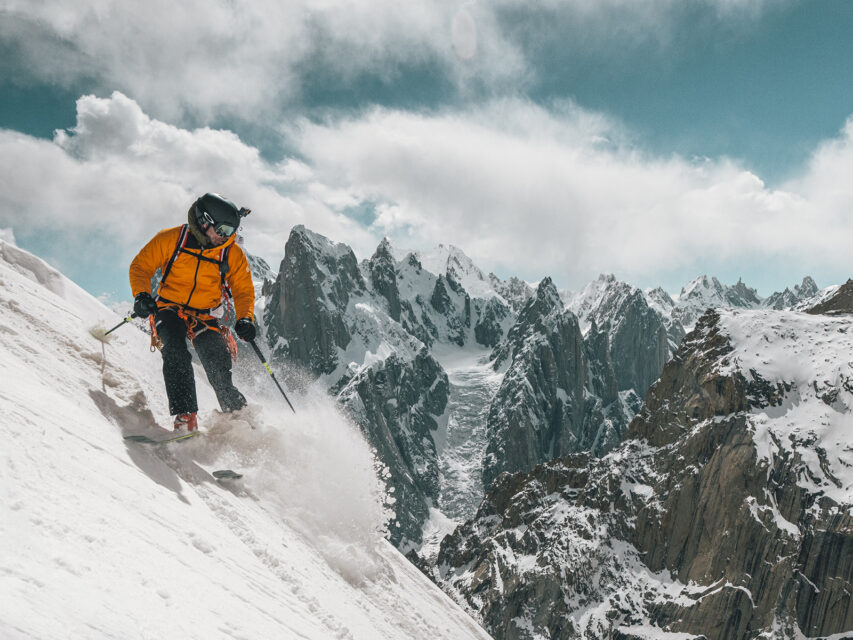
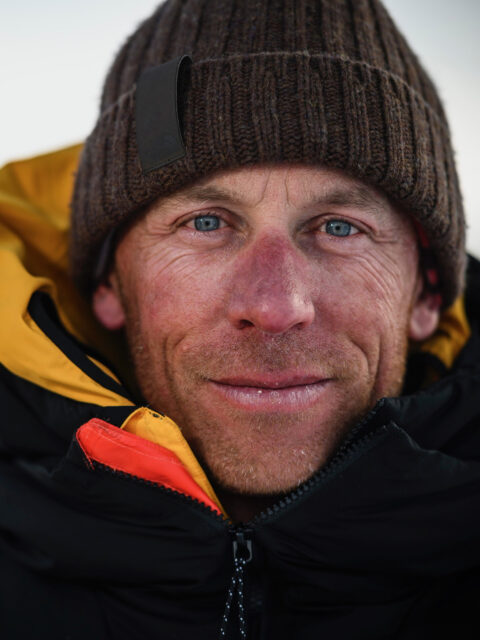
Colorado resident Jim Morrison will long be remembered as a big-mountain skier. Sure, he might be confused with a certain counterculture vocalist, but with two-planked first descents down India’s Papsura (known locally as the Peak of Evil), northern Pakistan’s Great Trango Tower, and now Everest (to name just a few), it’s clear this Morrison has opened—and skied through—a few doors of his own.
What the North Face–sponsored athlete achieved last October on the gnarly north face of the world’s tallest peak has already been heralded in magazine articles. If his friend Jimmy Chin has anything to say about it, the documentary recounting the effort, expected to debut next fall, will memorialize the feat with an award or two.
But if you ask Morrison how he wants to be remembered, his response might surprise you. “If there’s a legacy I hope to leave,” he says, “it’s not just about the lines I skied but the reminder that even after life breaks you, you can still choose to do hard things and move forward.”
We sat down with Morrison to hear the devastatingly beautiful path he’s taken to do so.
Editor’s note: The following conversation has been edited for length and clarity.
5280: Last October 15, you and a support crew that included lauded film director Jimmy Chin were the sixth expedition in history—and the first in 30 years—to climb up Everest’s Hornbein Couloir. Then, you skied down it. What was it like?
Jim Morrison: It was a very direct and steep and unrelenting line down the center of a 9,000-foot face. The turns right in front of me were what I was always thinking about—the next two turns, the next three turns—not what was down at the bottom. It was very demanding and consequential—every turn was in what we call the no-fall zone—and it was spectacular.
It was everything I’ve worked toward for my whole life. It was a real feat, a real celebration of my late partner, Hilaree Nelson, and a really special moment to share with the world.
What did it take to get to the top—and the bottom—of Everest?
I’ve always had dreams of getting to these really big mountains and skiing these lines that I’d seen the world’s famous alpinists and mountaineers climbing, but there are a lot of steps. You don’t go to these places based on a little bit of experience; it’s a lifetime of experience. And this thing I did last fall, I like to say it took me 50 years to be ready to do that. All of the climbing trips in the summer, all of the bike rides, all of the adventures when I was in the back of the car as a kid riding up the hill to skateboard back down.
Those suffering moments that we go through on our adventures—I always looked for them and pushed myself through them and thought they were building character, building endurance, building experience, and getting me ready for what I was trying to do.
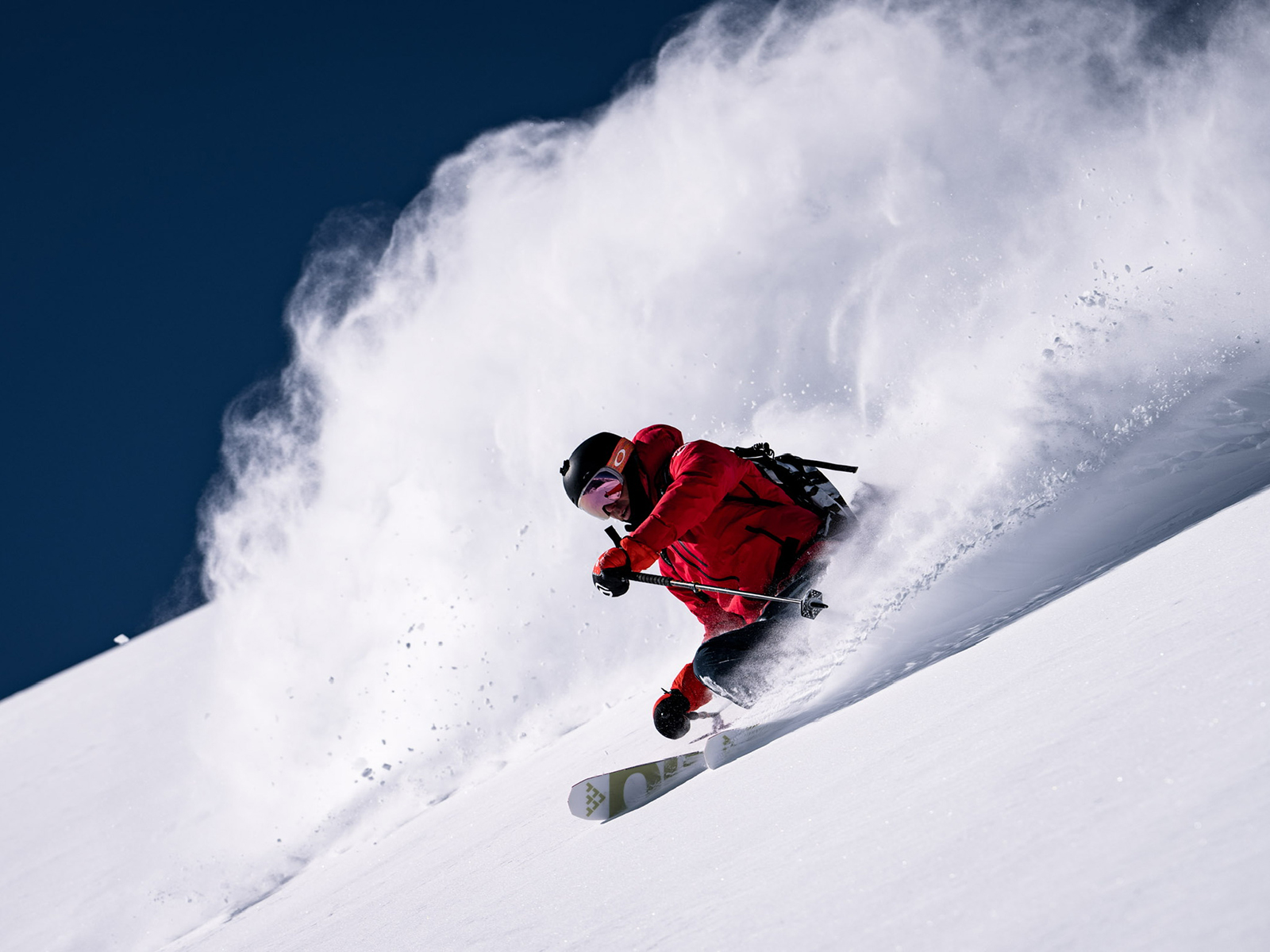
In the past decade, you have skied 14 of Telluride’s most difficult couloirs, as well as 7,000 vertical feet down the Lhotse Couloir (the world’s fourth-tallest peak). You’ve also earned first descents on Cho Oyu (the world’s sixth-tallest peak) and, along with Christina Lustenberger, the Great Trango Tower. How do you choose which lines to ski?
A lot of what I’m seeking in ski mountaineering is an aesthetic line. Papsura, for example, had this beautiful couloir that just came right off the summit and straight down the middle and split this really impressive face on a really impressive mountain. Hilaree coaxed me into going there. It was probably the steepest, scariest, hardest, most difficult descent that I’d ever done up until this last fall. It was everything you could hope for in a wild adventure: Go to India, travel overland for days, hike deep into a mountain range, see the beautiful line, climb it, make it to the summit, ski it, be in your tent the next day, watch the snow on the face, and this beautiful line that we’d painted down, this dream of ours, was just erased 24 hours later.
What drives you to take on these fleeting challenges?
The first memories I have of skiing in powder with my dad, I remember thinking, If I go over here where there are no tracks, no one’s ever been here before. I’m the first one to ever do it. It was a visceral love of that concept of exploration.
Is it purely a love of exploration that pushes you forward?
In 2011, I had everything one could dream of: a flourishing business and a beautiful family. In an instant, I lost my wife and children in an airplane crash. My life was just completely destroyed. I didn’t know if I would keep breathing or if I would just disintegrate and turn into dust. In the beginning, it was minute by minute and day by day. Eventually, I stepped over the crack at the top of my driveway—it was a real achievement.
Not too long after that, I went into the mountains. There, I didn’t have a lot of room to think negative thoughts. I focused on what was right in front of me, which was fun and adventure and staying alive. Year by year, I went on bigger and different adventures. And eventually I met Hillaree and had a really fantastic run with her, and then I lost her in 2022, and the grieving process started over again. But going outside always helped. Going outside, I think, always helps.
Is that the message you want to share with the world?
I hope that my legacy is climbing and skiing some of the raddest lines on the planet—and being the first one to do it—but hopefully my story will be deeper and broader than that. Everyone experiences some level of tragedy or grief or depression in their life but going out for a walk or climbing that trail or just being in nature can provide you so much healing.
Read More: The Colorado Ski Resort Guide
Trango, produced by the North Face, debuted at select film festivals last spring. It is now touring theaters and festivals across North America, and can be streamed on Documentary+. Morrison’s Everest descent will be documented in a forthcoming film by National Geographic.