

The Local newsletter is your free, daily guide to life in Colorado. For locals, by locals.
The strangest thing about Malik Robinson’s new office is how quiet it is. Things have only gotten busier at Cleo Parker Robinson Dance (CPRD), but thanks to the organization’s newly expanded digs in Five Points, CPRD’s chief executive officer sometimes opens his office door to discover a building packed with people that he didn’t know were there.
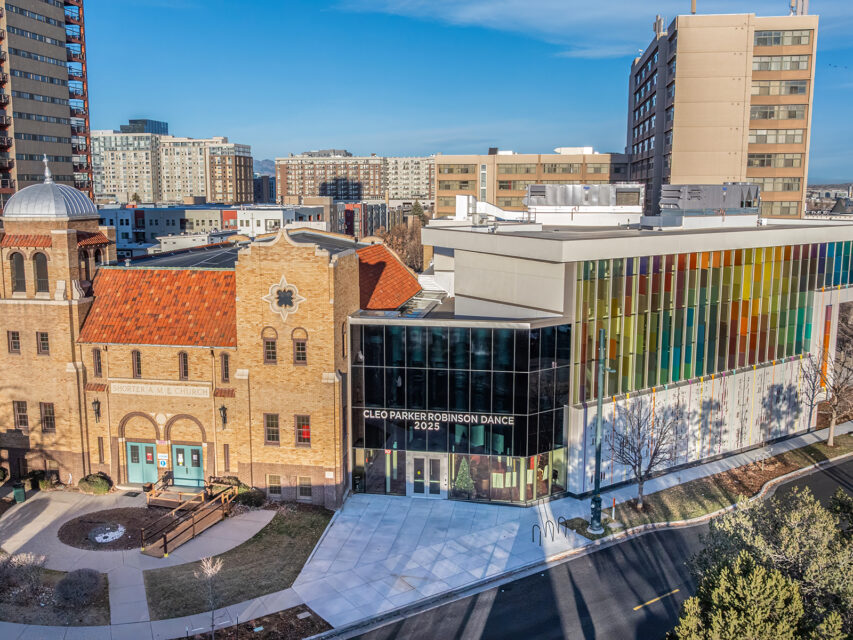
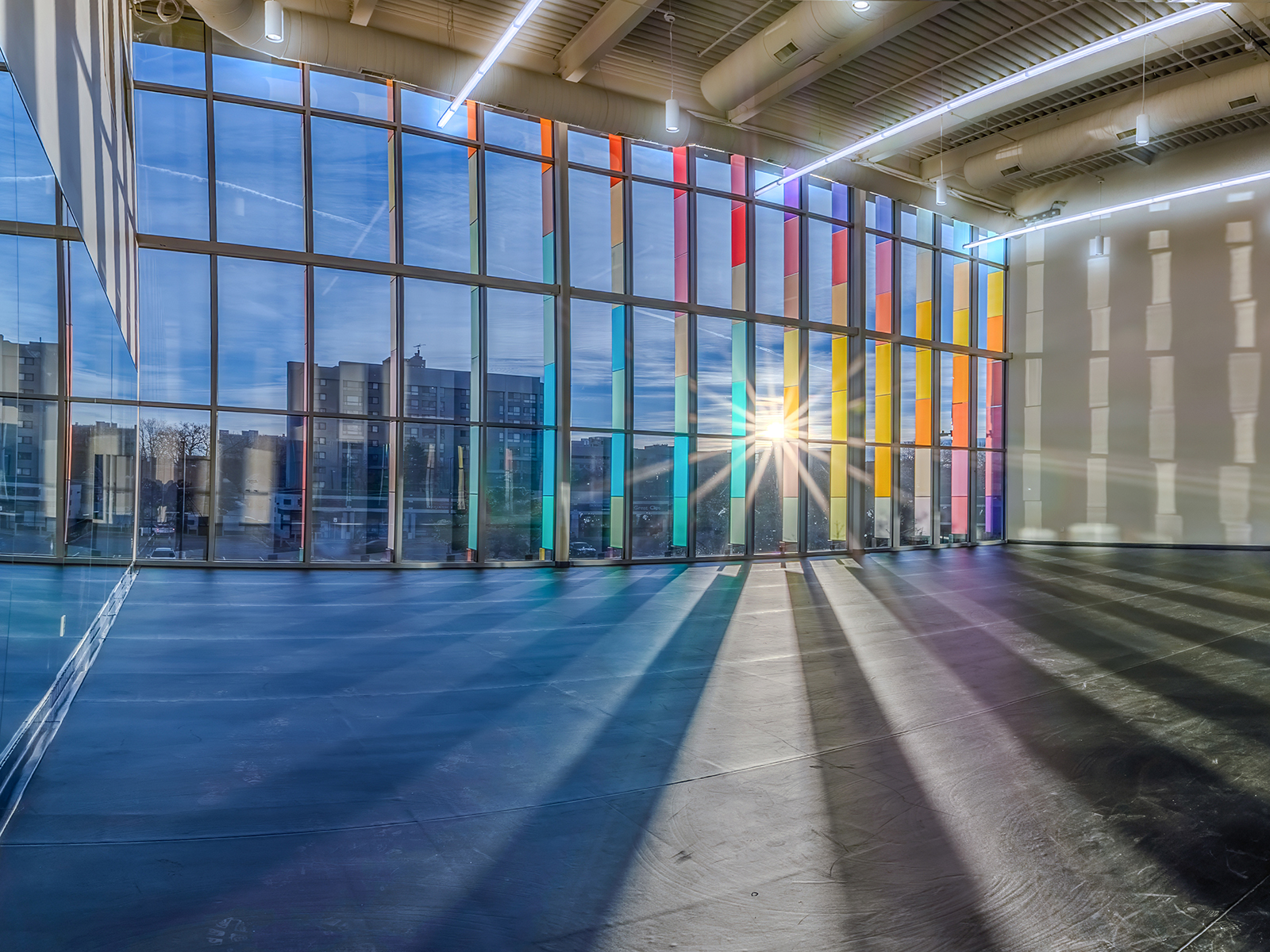
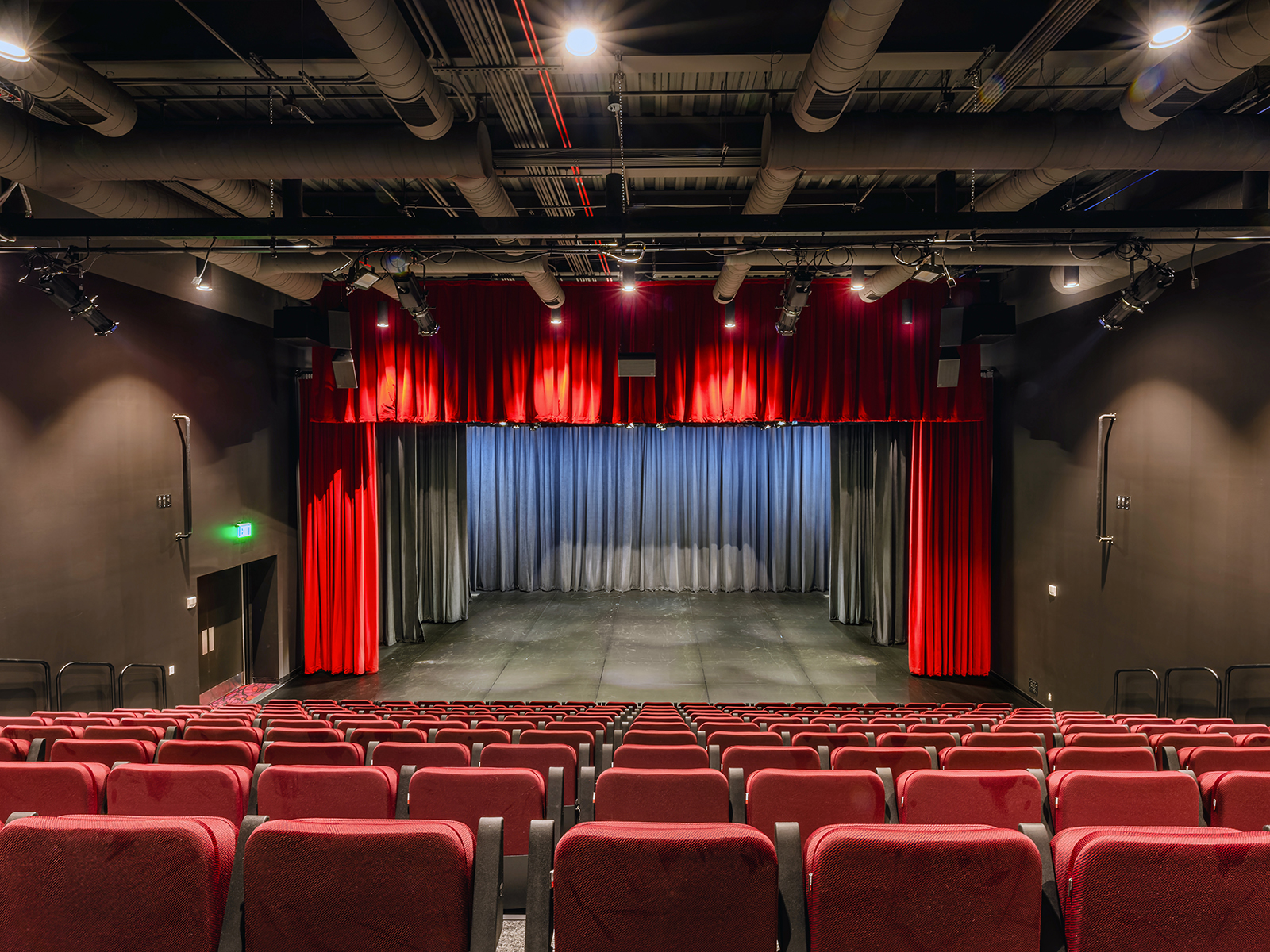
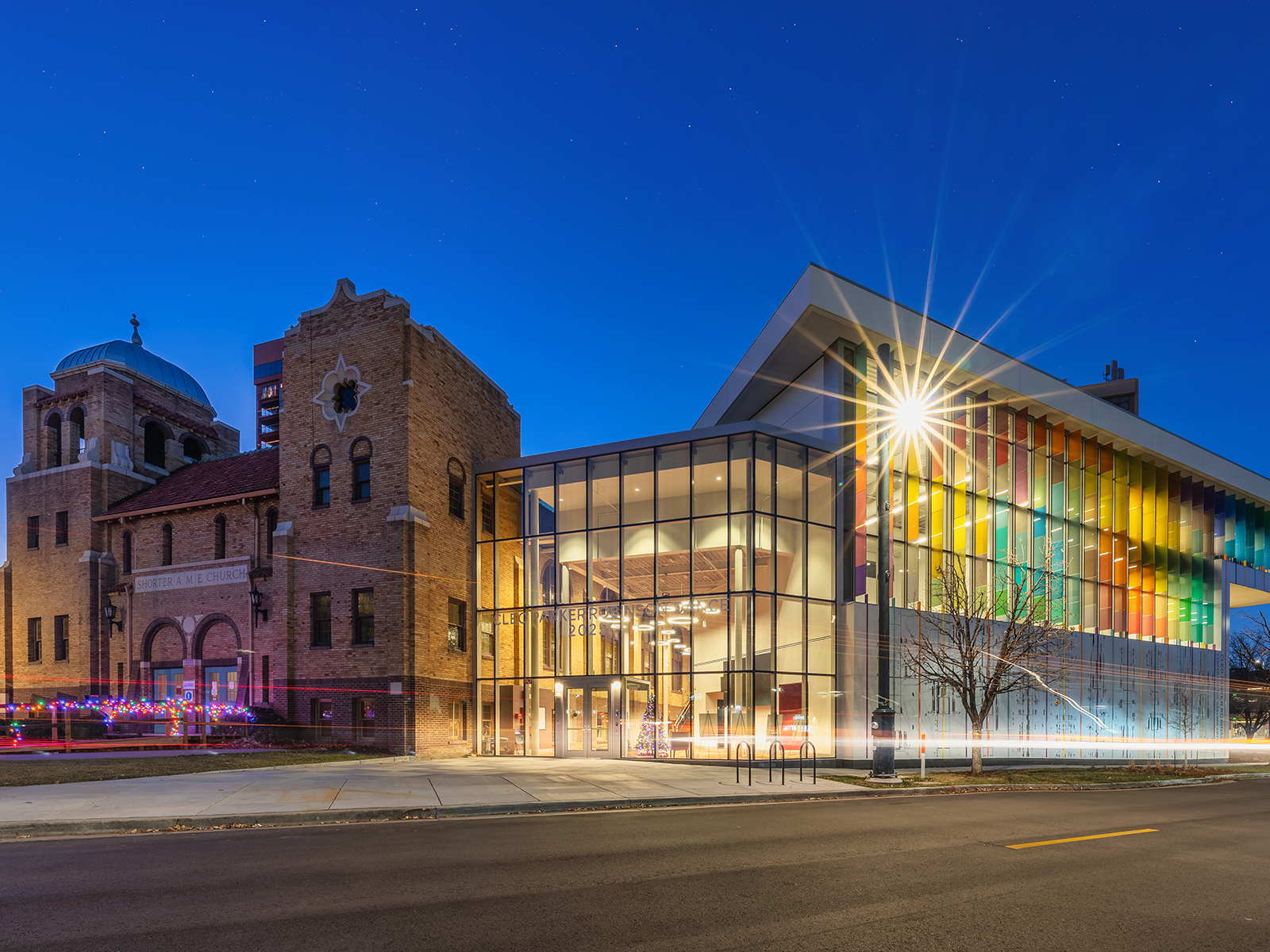
The soundproofing is one of the stranger perks of CPRD’s expansion—a 25,000-square-foot addition that nearly doubles the size of the 55-year-old dance company’s headquarters. Built adjacent to the historic Shorter AME Church, where CPRD has operated since 1988, the $25 million facility officially opened in January with four new dance studios, an underground theater with 240 retractable seats, a two-story glass atrium, and enough programming capacity that Malik, son of founder Cleo Parker Robinson, sometimes forgets how many events are running at once.
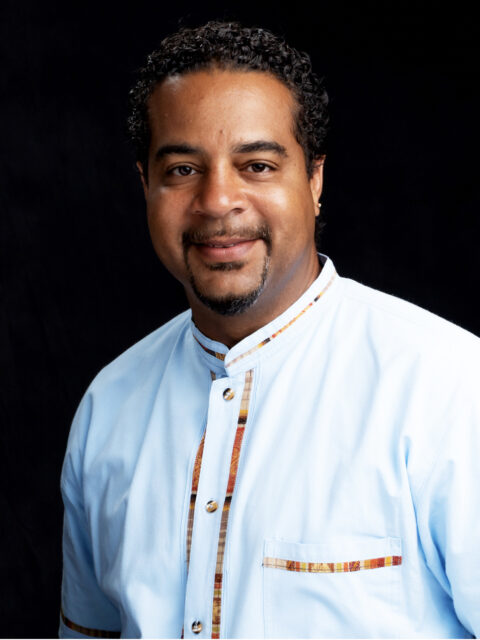
“We can have a luncheon in the lobby, we can have other companies working in the theater, we have classes going on in the studio spaces, and the ensemble rehearsing,” he says. “We have these things happening simultaneously, which is just not something we were able to do before.”
The building, designed by Denver-based Fentress Studios and constructed by Mortenson, opened debt-free after years of fundraising that included grants, tax credits, and private donations. It’s the kind of expansion that changes what an organization is capable of, and for CPRD, that means becoming less of a single-use dance venue and more of a community hub.
The expansion’s name—Cleo Parker Robinson Dance Center for the Healing Arts—reflects a philosophy that its founder has built into the organization’s mission since its inception. Cleo, who majored in education and psychology at Colorado Women’s College (which merged with University of Denver until its closure in 2020), spent much of her undergraduate studies researching the physical and psychological benefits of dance. The academic passion was ignited by her experience with kidney failure when she was 12, after which it was through dance that she was able to heal and move freely again.
After graduation, Cleo partnered with Metropolitan State University of Denver psychology professor Harvey Milkman to develop a therapy program for teens with addiction that blended dance and community.
“Project Self Discovery was a treatment service program that was rooted in the arts,” Malik says. “You had gang members from every part of the city coming to CPRD to participate in this multidisciplinary arts program that also had access to clinical therapists on site.”
The project ran for 11 years during Denver’s gang crisis in the 1990s and eventually earned a $10,000 Coming Up Taller award from the White House in 2000, but a lack of state funding caused the free program to collapse. Milkman later took the model to Iceland, where a version of it helped reduce teen substance abuse rates from 24 percent to under three percent. “But that was the start of doing this work at the intersection of art and mental health and wellness,” Malik says.
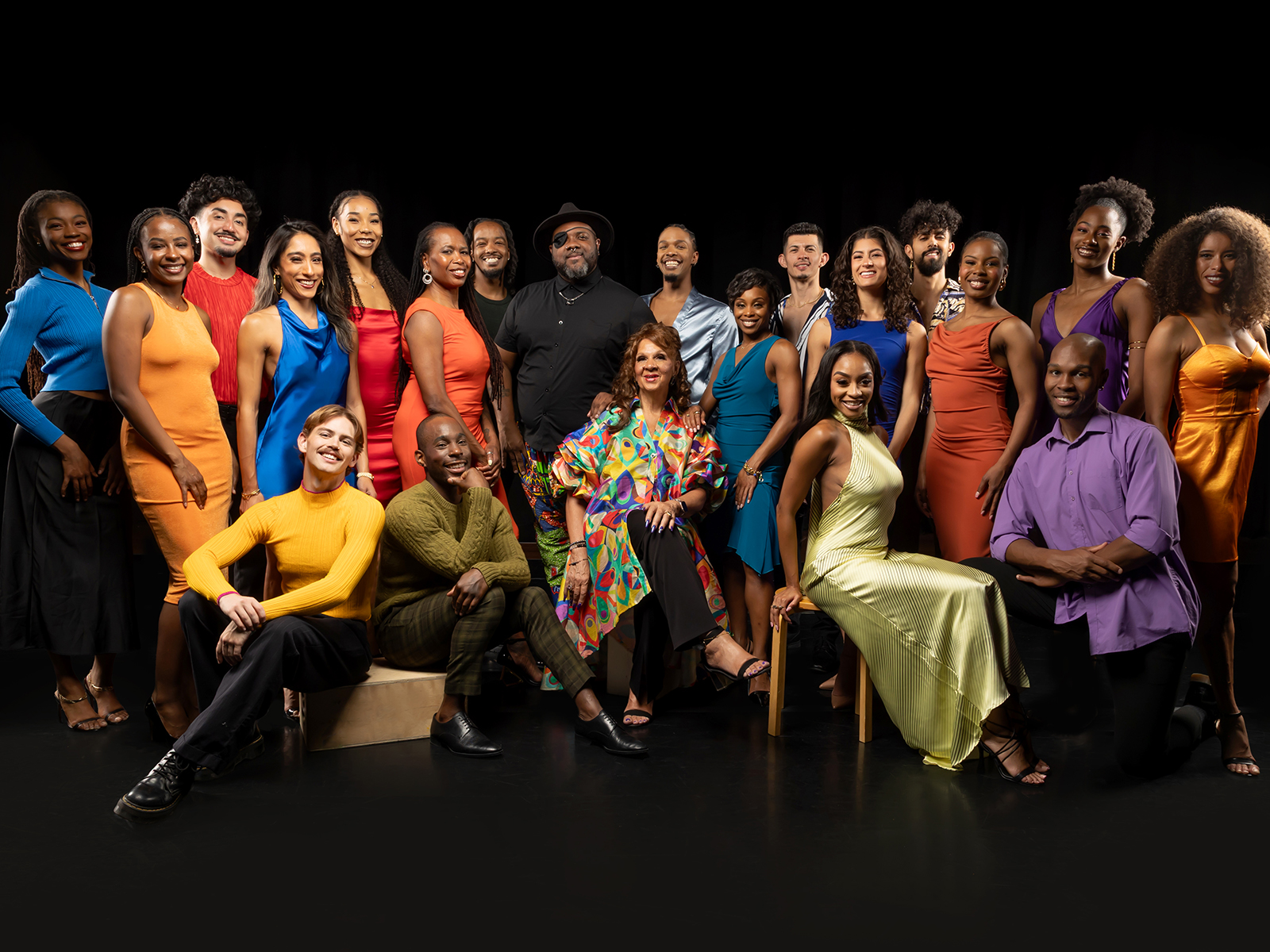
Today, “arts-in-wellbeing” is one of CPRD’s core pillars that carries that legacy forward through a trauma-informed youth internship program, financial literacy training, and civic engagement. In May, CPRD teens will host a gubernatorial primary debate inside the new center.
That kind of programming is made possible in part by the new facility’s larger footprint. One of the most drastic changes includes the Flex Space Theatre, a sublevel space that can be used for film screenings or aerial dance shows. Robinson describes it as intentionally designed to serve more than just CPRD’s company: Three outside dance organizations have already performed there, bringing nearly 2,000 audience members in just a few weeks.
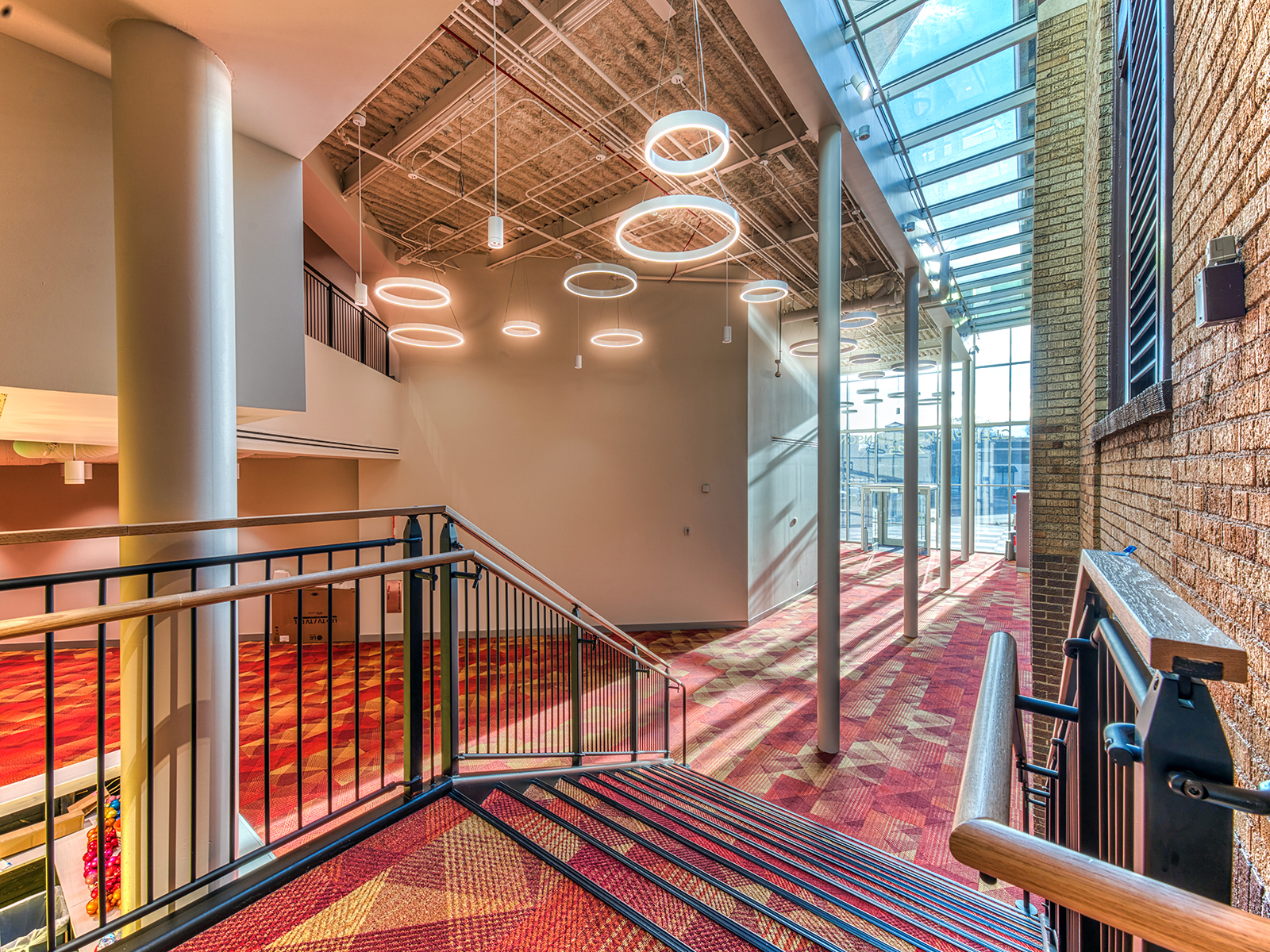
Of all of the center’s new spaces—the soaring, 28-foot-tall Marcelline Freeman Studio, the administrative floor with an outdoor terrace, the cafe—Robinson keeps coming back to the lobby. It’s the place where the century-old brick walls of the Shorter AME Church meet the glass and steel of the new building. The two structures are separate but connected by what Fentress architects call “the kiss,” a narrow gap bridged by skylights.
“When a person walks through the door, I hope they feel the powerful contrast of our ancestors’ energy from the historic Shorter AME Church and the beautiful design we have to grow our programs into the next 55 years,” Cleo says.
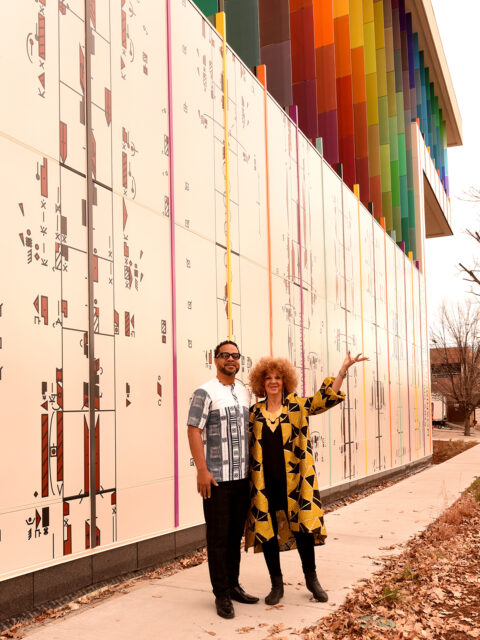
Outside, the east-facing wall tells another story. Inscribed with Labanotation, a choreographic system used to record human movement, the wall depicts Cleo’s masterwork performance Mary Don’t You Weep. The notation is layered onto solar panels that help power the new facility. “The notation itself blends social justice, healing, and dance,” Cleo says. The work, which represents the grief shared by Cleo, her mother, and her sister-in-law in the loss of her brother, parallels the Biblical story of the Virgin Mary, Mary Magdalene, and Mary of Clopas in mourning Jesus’ death.
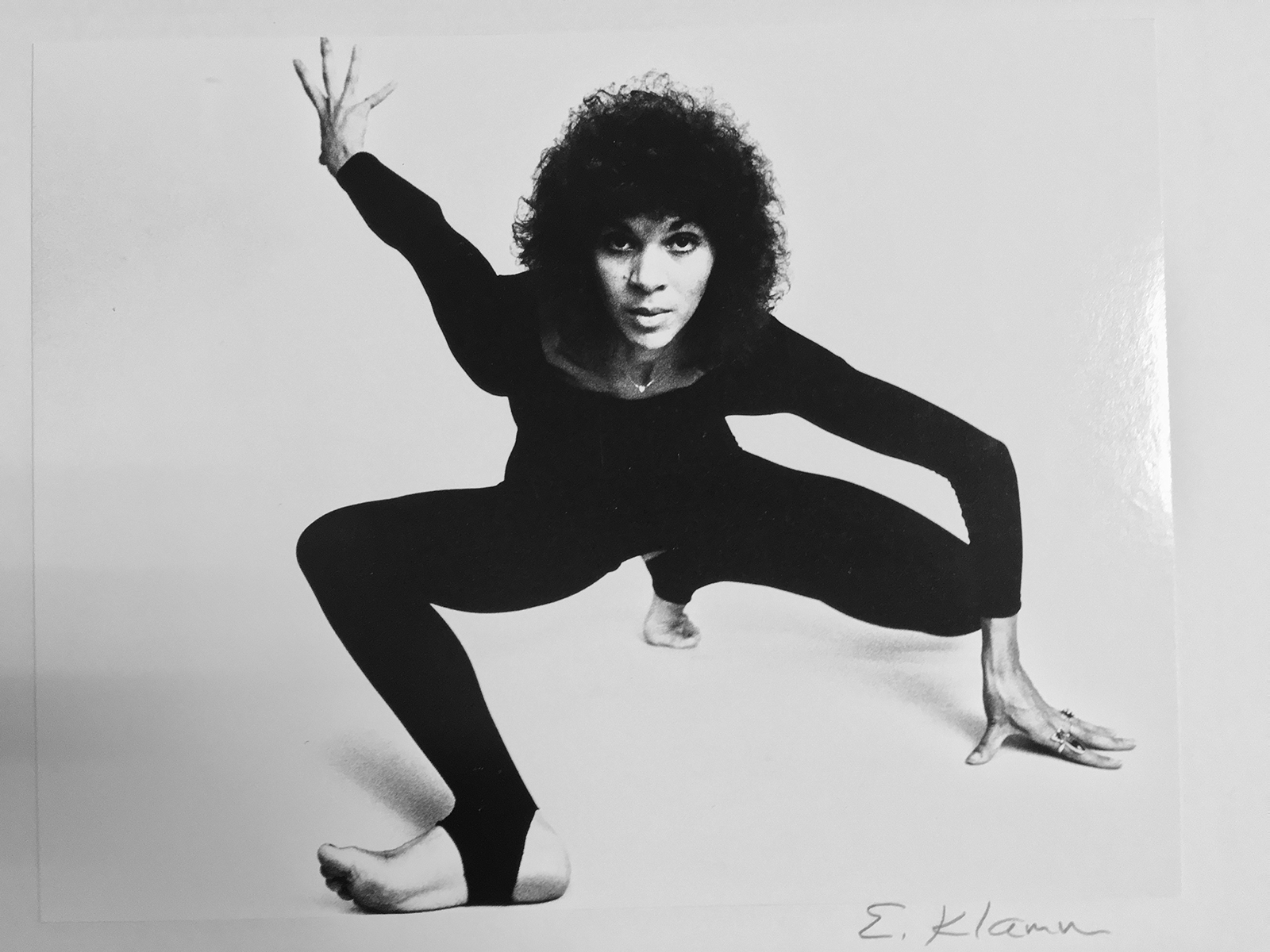
For Malik Robinson, the new building and its flashy perks represent more than just added square footage. The expansion is now ADA compliant, and CPRD has already held workshops for older adults. CPRD also collaborates with the Colorado Symphony to bring dance to 30,000 students in 240 schools. More than 1,000 students are enrolled in dance classes at the center, and Malik hopes the expansion causes that number to double.
“What continues across these decades—what hasn’t changed—is the human connection of dance in performance, in the magic we cultivate with an audience, and how dance and community continue to help individuals heal,” Cleo says. “I’m fascinated and joyful each time I learn how what seems simple in a dance class can change someone’s life.”