


The Local newsletter is your free, daily guide to life in Colorado. For locals, by locals.
If Nathan MacKinnon is looking speedier this season, if Aaron Judge breaks his home run record, and if Aaron Rodgers plays like he’s 28 again, it could all be thanks to one Boulder tech company.
Pro sports teams (including the Colorado Avalanche, New York Yankees, and Pittsburgh Steelers) are tapping into the power of palm cooling using the ROCC ($975), a device developed by Boulder’s NICE Recovery Systems that launched in late July. The company, which launched its first cold and compression wrap for injury recovery in late 2015, integrated its cooling-sans-ice science into the handheld ROCC, which athletes can use during their workouts to supposedly improve performance.

Now I may not be a Hart Memorial Trophy–winning athlete, but I am a consistent gym goer, so I wondered if using the ROCC (which stands for Rapid On-Demand Core Cooling) during my weekly workouts could help me lift heavier, knock out more reps, and potentially set off the lunk alarm at Planet Fitness. So, I decided to give it a go.
How Does the ROCC Work?
The ROCC’s job is to rapidly cool down your body’s core temperature so as to increase the amount of energy you can output. When mitochondria reach 104 degrees, the body’s enzyme responsible for converting glucose into ATP (that’s the energy currency of your cells, if your high school biology lessons are fuzzy) shuts down. This isn’t because the body is a lazy sack of crap; it’s actually a means of self-preservation. The automatic shut-off keeps cells from overheating so much that they self-destruct.
But if body temperature stays below 104 degrees, it can prevent the enzyme from powering off—and as a result, maintain its ATP production. That’s where the ROCC comes in. Although there are other palm-cooling devices on the market, NICE’s version is unique because it doesn’t require freezing any water. Instead, the ROCC uses a Peltier module to maintain a constant 57 degrees, says NICE Recovery Systems founder Michael Ross.
The Peltier module is made up of two ceramic plates connected by a semiconductor. When an electrical current passes through the semiconductor, electrons move from one plate to the other. The one they left becomes freezing while the other gets hot. But by adding a heat sink fan to the warm side, developers can remove the heat and achieve a specific temperature by powering the module on and off, Ross says. Don’t worry, you won’t be quizzed on this, but it is the reason why the ROCC gets so cold, so fast, without requiring any water.
The palms are a particularly powerful place to apply this cooling device because they’re home to special blood vessel networks close to the surface of the skin responsible for temperature management. Blood there is immediately pumped to your heart and then throughout your body—if you cool your hands, you will bring down your overall temperature fast.
Numerous studies have found palm-cooling to be an effective recovery tool during workouts. In a 2021 study, researchers found that intermittent palm-cooling helped rowers experience less fatigue during workouts by lowering their heart rates and blood lactate concentrations. When Stanford University researchers tested out their palm-cooling glove on a gym rat, he went from doing 180 total pull-ups during a session to 620 over the course of six weeks. Ross says ROCC users can expect the device to help them lift 20 to 30 percent more volume during their workouts.
“It’s hard to believe until you actually see it, until you use it yourself,” he says.
What It’s Like to Work Out With the ROCC
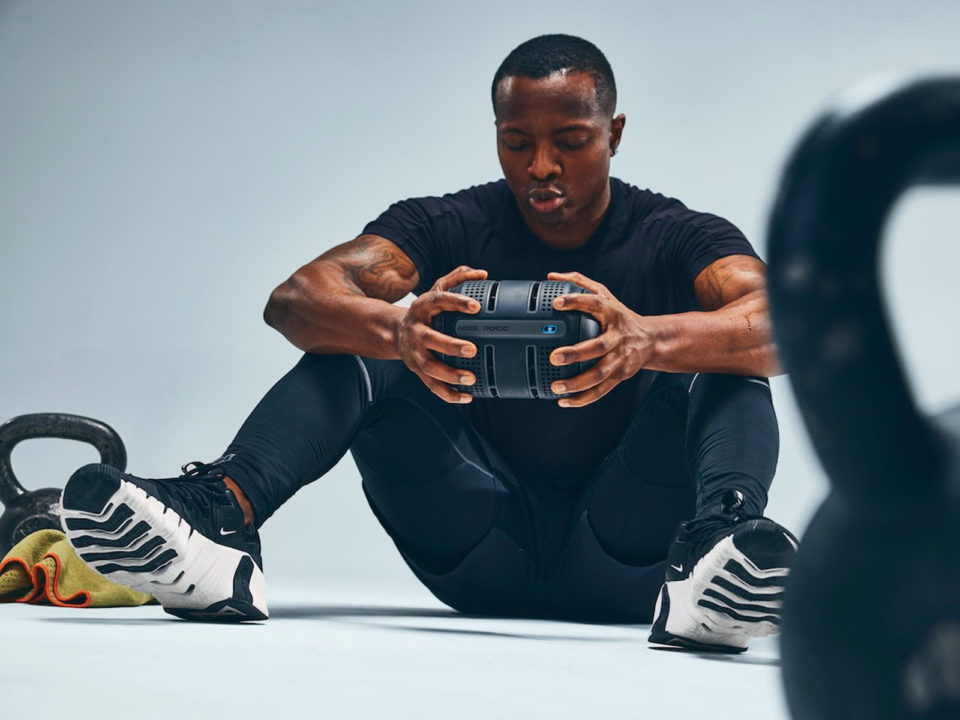
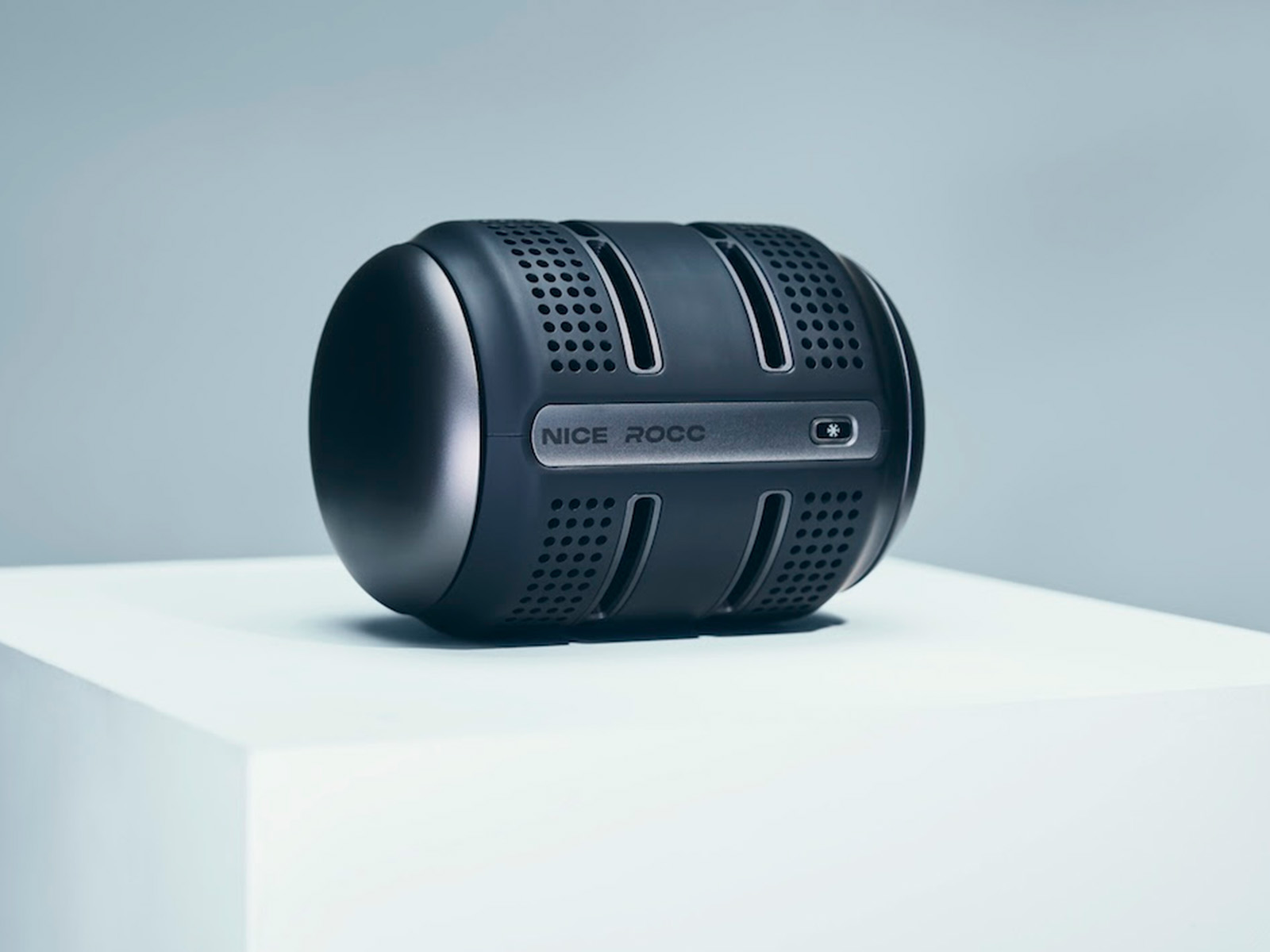
Considering I can’t do a single pull-up, I brought the ROCC along with me for leg day. The dense black device, which was designed by Porsche, sort of looks like a bluetooth speaker and weighs just over five pounds. I was also acutely aware of its nearly $1,000 price tag as I toted it around the gym like a newborn, terrified to drop it.
For optimum performance, the manual suggests using the ROCC in between each set, holding it between your palms for 1.5 to two minutes. So after a quick warm-up on the StairMaster and my first set of eight hip thrusts, I was eager to see what it could do. I grabbed the device, turned it on, and held it between my hands. Immediately, the plates on either end started to get cold, and I waited for the four vibrations that would alert me I was ready to get back at it.
The problem was, it never vibrated. After four minutes of nothing, I referenced the user guide and learned that you need to wait for the snowflake to turn blue before use—this indicates it’s reached the correct temperature. Then, to turn on the haptic timer, you have to press the snowflake button once.
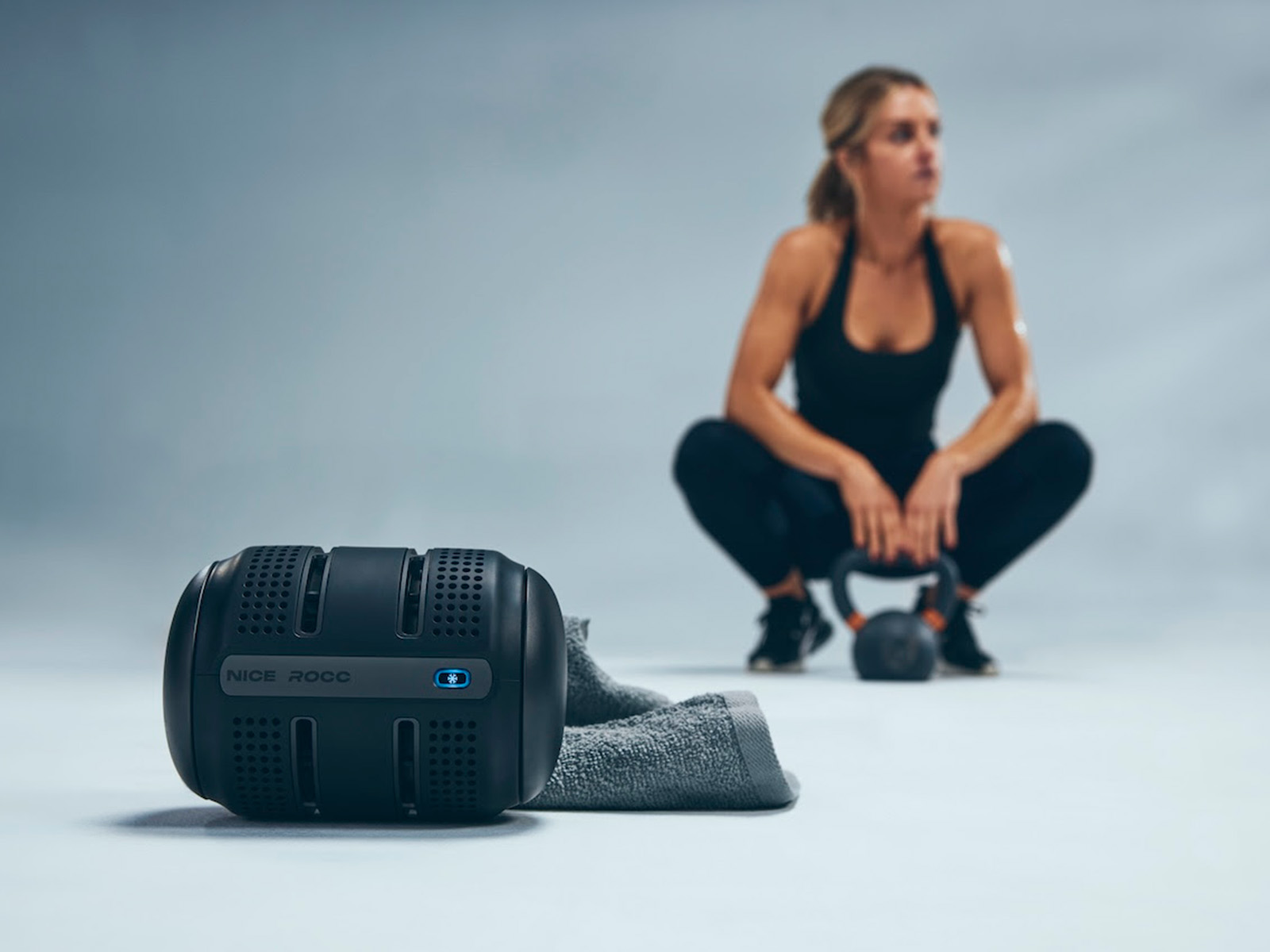
Having already wasted nearly five minutes, I completed my second set of hip thrusts and tried again. The snowflake quickly turned blue after I switched on the device, and the built-in timer buzzed every 30 seconds to let me know when the two minutes were up. I usually struggle early in my last set of hip thrusts, but this time, I didn’t feel my muscles fatigue until the sixth rep. Ever the skeptic, I wasn’t sure if my perceived easier effort was merely placebo or if this thing actually worked.
But any skepticism I had was erased during Romanian deadlifts. I put my usual, modest 10-pound plates on each side of the barbell and aimed for 10 reps. Surprisingly, the weight felt light. I took my two-minute rest with the ROCC and tried again, this time adding five more pounds on each side. I realized I could go even heavier. On my third set, I hit a personal best.
The ROCC even managed to make Bulgarian split squats less hellish. These are easily my most hated exercise, perhaps because they never feel like they get any easier. But on this day, I found myself moving more explosively, powering through the 10 reps faster than usual, and with better form.
The Final Verdict
Although I didn’t set off the lunk alarm, the ROCC certainly helped me lift heavier and with more power. The optimized recovery between each set allowed me to push myself harder than I normally would without sacrificing form and risking injury. If your athletic goals include progressive overload and hypertrophy, the ROCC could be a useful tool to help you reach them.
But everyday gymgoers will have to weigh the performance benefits with the inconvenience factor. It’s a fairly large, heavy device to bring with you to the gym and carry from one machine to the next. If you work out in a public space, you’ll want to keep an eye on the ROCC so no one nabs your pricey toy. The device is also only designed for use indoors, in rooms between 60 and 80 degrees, so don’t expect to use it for outdoor workouts.
If the ROCC isn’t in your budget but you’re curious about palm-cooling, Ross suggests trying out another Boulder-based company’s product: the Narwhals. Designed by Apex Cool Labs, these palm-cooling devices use water (rather than electricity), so they require more setup than the ROCC, but they’re also more affordable at $400 for a set of two.
Even if you aren’t interested in trying palm-cooling for yourself, perhaps this Boulder-made machine could pay off for all Coloradans in the form of another Avs Stanley Cup win.