


The Local newsletter is your free, daily guide to life in Colorado. For locals, by locals.
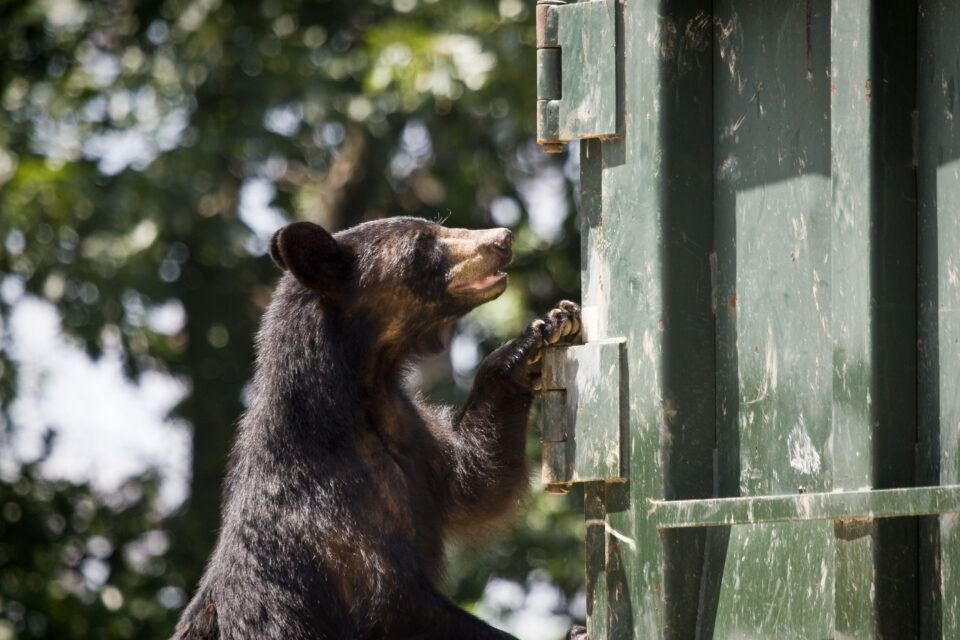
Across Colorado, at least 17,000 black bears are waking up from hibernation—and some of them are making mischief. In recent weeks, a bruin took a nap in a basement window well in Falcon, another was spotted raiding a bird feeder in Colorado Springs, and a third ambitious ursine invader took a stroll on the Manitou Incline. And that’s not to mention the bear that broke into a Boulder home last November, feasting on avocados and peas from the fridge.
While these stories are amusing, and they ended safely for bears and people, they are part of a troubling trend. Incidents like these are spiking: In the first quarter of this year, Colorado Parks and Wildlife logged 98 reports of bear activity in 22 counties. That’s already 77 percent of 2025’s year-end total. The likely culprit? A warm, dry winter that may have led bears to wake up earlier and roam farther in search of food.

“Drought has affected the entire state,” says Brenda Lee, founder and president of the Colorado Bear Coalition. “And that’s going to escalate bear conflict. The whole state needs to be careful. If we have fires this summer, that’s going to move bears as well.”
View this post on Instagram
When bears encounter humans, they’re almost always in greater danger than we are. It’s extremely rare for black bears (Colorado doesn’t have grizzlies) to attack humans. The state has recorded just five fatal bear attacks in the last century. One was at the Denver Zoo in 1934, while a second case involved a woman who lured bears to her home to feed them. But even though the risk is low, it’s not zero. And every time a bear scarfs a Big Mac from a dumpster or wanders into a neighborhood, it learns bad habits.
“The more time bears spend around us, the more potential there is for conflict,” says Joey Livingston, a spokesperson for Colorado Parks and Wildlife. “These are large animals with very large claws. They’re scared of us, and they mostly keep their distance, but the more time they spend around people, the less fearful they can become and the more likely to break into a home or get into a situation where they feel threatened. And they will defend themselves in those situations.”
Sadly, it’s not all that uncommon for these situations to end in the animal’s death. “A fed bear is a dead bear,” as the saying goes among wildlife experts, and CPW has a two-strike policy. When a bear breaks into a home, goes dumpster-diving, or otherwise prompts a call to wildlife officers, it’s tagged and relocated to a safer area. If the bear gets into trouble a second time, it’s euthanized. Only 25 percent of relocated Colorado bears become repeat offenders, according to a 2019 study that looked at 30 years of data and concluded the policy is working.
Relocating a bear, though, is mostly a temporary fix. “There’s a lot we can do to keep that relocation, that first strike, from ever happening,” Lee says.
To that end, her nonprofit has provided at least $80,000 worth of bear-resistant trash cans to the mountain town of Nederland, as well as other rural communities. Statewide volunteers have also helped install electric fencing around beehives and laid out unwelcome mats, which deliver a harmless but painful zap, outside homes. Every fall, volunteers fan out across Boulder County to pick excess plums and apples from fruit trees. “A third of the fruit is donated to the homeowner, a third goes to the volunteer, and a third gets donated to the local school system to make applesauce,” Lee says.
Still, the scope of the problem is enormous. Colorado bears damaged property a whopping 2,450 times in 2025, according to state data. Nearly 60 percent of those incidents involved trash cans, but bears also get into myriad other kinds of trouble. “For some reason, they really like hot tub covers,” Livingston says. “They are known to destroy and try to eat those.”
Lee once helped a homeowner whose swimming pool cover served as a trampoline for playful cubs. The Ring camera footage of the baby bears bouncing happily atop the cover was cute, she says, but less cute? “A few years ago, a cub got caught under a pool cover and drowned.” She now urges homeowners to secure pool covers so bears can’t crawl underneath.
The state is putting significant money into education. CPW will award $1 million in bear safety grants this year (applications close May 29). “We are always on the lookout for creative ideas for local communities, and we have volunteer crews that knock on doors and provide educational materials,” Livingston says. “It’s about spreading awareness and offering solutions.” Most of the tips on the agency’s Living with Bears website will be common sense to anyone who’s spent time in bear country (e.g., secure trash overnight, hang bird feeders at least 10 feet off the ground). Though, with more than 90 million tourists flocking to Colorado each year, as well as many seasonal residents who might not be in the habit of practicing bear safety year-round, these tips always bear (sorry) repeating.
Colorado politicians are also adding teeth and claws (ahem) to existing regulations meant to protect bears. Governor Jared Polis is all but certain to sign into law a new bear bill that passed last week. House Bill 1342 makes it easier to prosecute people who feed bears, as well as increasing the amount that offenders can be fined. If you are so reckless as to get caught feeding bears three times, you would be looking at a $5,000 ticket.
Lee and her team at the Colorado Bear Coalition advocated for that legislation and are celebrating its passage. Her message to Coloradans: If you live here or vacation here, you need to step up and help protect wildlife. “The bears don’t have a say, so it’s up to us,” she says.