

The Local newsletter is your free, daily guide to life in Colorado. For locals, by locals.
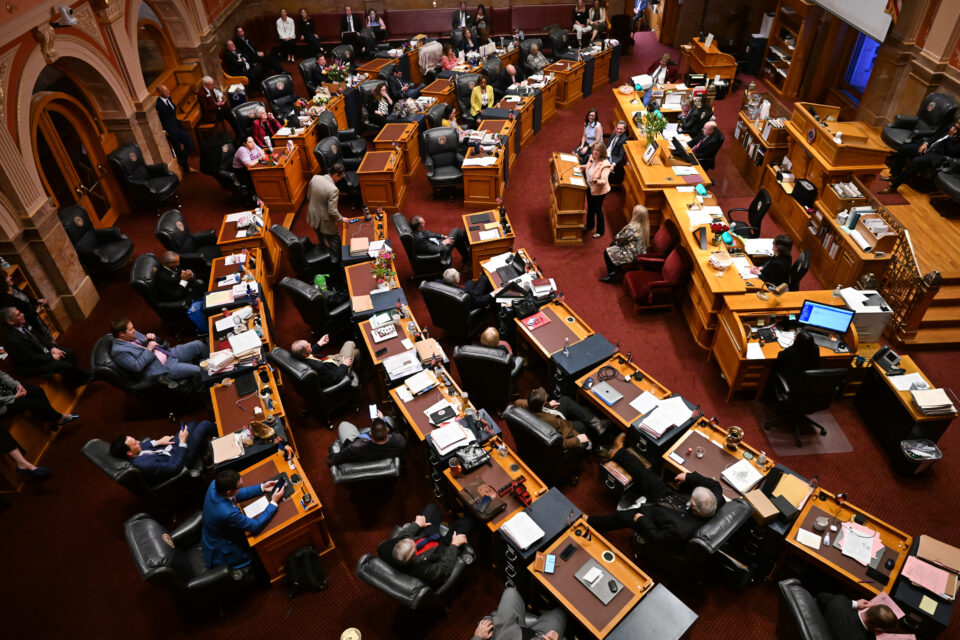
The power dynamics at the Colorado State Capitol have changed little in recent years. Democrats still hold majorities in both chambers of the Legislature, with a 23-12 advantage in the Senate and a 43-21 edge in the House of Representatives (with one vacancy looming).
That means Democrats set the agenda, and this year their focus is on housing affordability, the conduct of federal immigration agents, environmental issues, and artificial intelligence.

A month into the Colorado General Assembly 2026 session, we have a clearer idea of what legislation is likely to move forward, what could still be introduced—or amended—and what legislative priorities will ultimately find their way into the hundreds of bills that are expected to be signed by Governor Jared Polis later this year. Here, we take a look at 10 major bills and how likely they are to become law.
Jump Ahead:
Rights Violation in Immigration Enforcement Remedy (SB26-005)
What it is: If enacted, this bill would allow individuals to sue federal immigration agents for violating their constitutional rights during enforcement operations. Currently, qualified immunity protects government employees from personal liability in most situations. The law would close a gap that historically has not allowed federal agents to be sued in state courts.
Early outlook: The bill is among a package of legislation targeting U.S. Immigration and Customs Enforcement (ICE) conduct in Colorado. The other bills would prohibit ICE officers from wearing masks and mandate the publication of all subpoenas issued by the Department of Homeland Security. SB26-005 was approved in a committee hearing in early February on a party-line vote and is expected to proceed through the General Assembly without Republican support. Groups supporting the bill include Together Colorado, the Colorado Statewide Parent Coalition, and the ACLU of Colorado.
Housing Developments on Qualifying Properties (HB26-1001)

What it is: The alternatively named Housing Opportunities Made Easier (HOME) Act would make it easier for nonprofits, public schools, universities, and qualifying affordable housing developers to build homes on their land. The bill’s goal is to reduce bureaucratic hurdles to creating housing near transit corridors and local businesses.
Early outlook: With strong backing from Governor Jared Polis, the HOME Act passed the House on February 8 and now heads to the Senate. Some local control advocates—including those on the Boulder City Council—have taken issue with aspects of the bill, claiming it would curtail municipalities from regulating housing in their cities. Some are worried about “bad actors” taking advantage of the bill.
Transit Investment Area Act (HB26-1065)
What it is: This bill would allow local governments to create “transit investment areas,” with which they could use sales tax revenues for projects—like denser housing and mobility infrastructure—that would boost transit use. It would also help municipalities build affordable housing near transit stops and fund infrastructure like bike lanes and cross walks.
Early outlook: The bill is moving forward with broad support from Governor Polis and Democrats in both chambers of the legislature. It is also backed by groups including the Denver Metro Chamber of Commerce and the Colorado Municipal League. It has not yet received extensive opposition, but it could face resistance from local control advocates.
End-of-Life Management of Electric Vehicle Batteries (SB26-003)

What it is: If passed, this bill would require automakers to take responsibility for recycling the massive batteries that power electric vehicles. Vehicle manufacturers would have to recycle the batteries themselves or work with a partner organization—an effort to reduce the amount of mining it will take to create new batteries and make the electric vehicle industry greener in years to come.
Early outlook: The bill is slated for debate in the Senate Transportation and Energy Committee on February 18. No formal opposition has yet materialized, but the legislation could face scrutiny from the automotive industry concerned about compliance costs.
Consumer Protections to Promote Fair Market Pricing (HB26-1012)
What it is: Building off legislation passed last year prohibiting junk fees on goods, services, and housing, HB26-1012 would require services like DoorDash to post a comparison of what a product would cost if the buyer went directly to a store. The bill would also cap how much a delivery service can upcharge a “captive consumer”—someone who could not reasonably purchase the product elsewhere.
Early outlook: With four Democratic sponsors, the bill will be debated by the House Judiciary Committee on February 25. Already, the Denver Metro Chamber of Commerce has opposed it, releasing a statement that reads, in part: “The bill overly regulates how businesses price goods and services in places where customers might buy ancillary products, using broad and undefined standards to determine what constitutes ‘unreasonably excessive’ pricing.”
Energy Affordability (FARE Service) (SB26-002)
What it is: This bill would create a first allotment of residential electricity (FARE) service, meaning utility providers like Xcel Energy would have to provide low-income customers with a minimum level of electricity—enough for basic needs—at a marginal cost. In other words, utility providers would not be able to make a profit on the electricity provided.
Early outlook: The bill will be debated by the Senate Transportation and Energy Committee and is expected to have strong Democratic support. Groups like 350 Colorado support the legislation, while the Denver Metro Chamber of Commerce and some Republicans have come out in opposition, arguing it would create regulatory uncertainty.
Worker Protection Collective Bargaining (HB26-1005)
What it is: The Worker Protection Act is back this session with the same goal: to make it easier for unions to force all workers—regardless of whether they belong to the union—to pay representation fees. In Colorado, a union must hold a second vote and receive at least 75 percent support before it can negotiate with a business over union security; this bill would eliminate that second vote.
Early outlook: A near carbon copy of this bill was vetoed by Governor Polis last year, and he is likely to do the same this time around. He has been insistent that legislators, unions, and business groups come to a compromise on their own, rather than the state legislature making a decision. The bill has broad Democratic support, making it likely to pass both chambers (it already cleared the House Business Affairs and Labor Committee), and it is broadly supported by workers’ rights groups throughout the state.
Mandatory Lethality Assessment Act for Domestic Violence (HB26-1009)
What it is: With domestic violence fatalities on the rise in Colorado, this bipartisan legislation would establish Lethality Assessment Protocol—requiring all law enforcement agencies to ask the same questions and offer uniform resources—to determine if someone is at risk of being killed by their partner. Depending on a person’s response to the questions, they will be connected to support resources immediately.
Early outlook: The bill has broad support, including from Democrats, Republicans, and groups including Violence Free Colorado, one of the key backers for the legislation. It is set for debate in the House Judiciary Committee on February 18. It has not received any formal opposition at this point.
Artificial Intelligence Discrimination (SB24-205)
What it is: In 2024, the Colorado legislature passed a first-of-its-kind law aimed at regulating discrimination from artificial intelligence when the technology is used in decisions for hiring, loans, and housing. While Governor Polis signed the bill, it has been met with heavy resistance, delaying its implementation (now June 2026) so lawmakers can revise the law.
Early outlook: Revising this bill will be an uphill battle. Legislators failed to reach an agreement during last year’s regular session and abandoned a second attempt during a special session last August. Opposition to the law stems from its potential to stifle innovation (when Polis signed the law, he did so reluctantly) as well as increase both compliance cost and liability for technology companies. When new legislation is introduced, it is expected to be one of the session’s most contentious debates.
Data Center & Utility Modernization (HB26-1030)
What it is: As the race to build data centers explodes across the world, pro-business Democrats in Colorado want to incentivize tech companies to build them here. This bill would give data center developers a 20-year exemption from paying sales taxes if they comply with environmental and economic requirements—including plans to conserve water and create high-paying jobs.
Early outlook: This bill is poised to pit pro-business legislators and industry supporters against those who have environmental concerns. Similar legislation failed in recent years, and a coalition of environmental groups have come out in opposition of HB26-1030, saying it’s a corporate handout that strains the state’s precious water supply and exacerbates other environmental issues. A dueling bill is expected to be introduced that would require data center developers to offset their energy demands through renewable energy sources.