

The Local newsletter is your free, daily guide to life in Colorado. For locals, by locals.
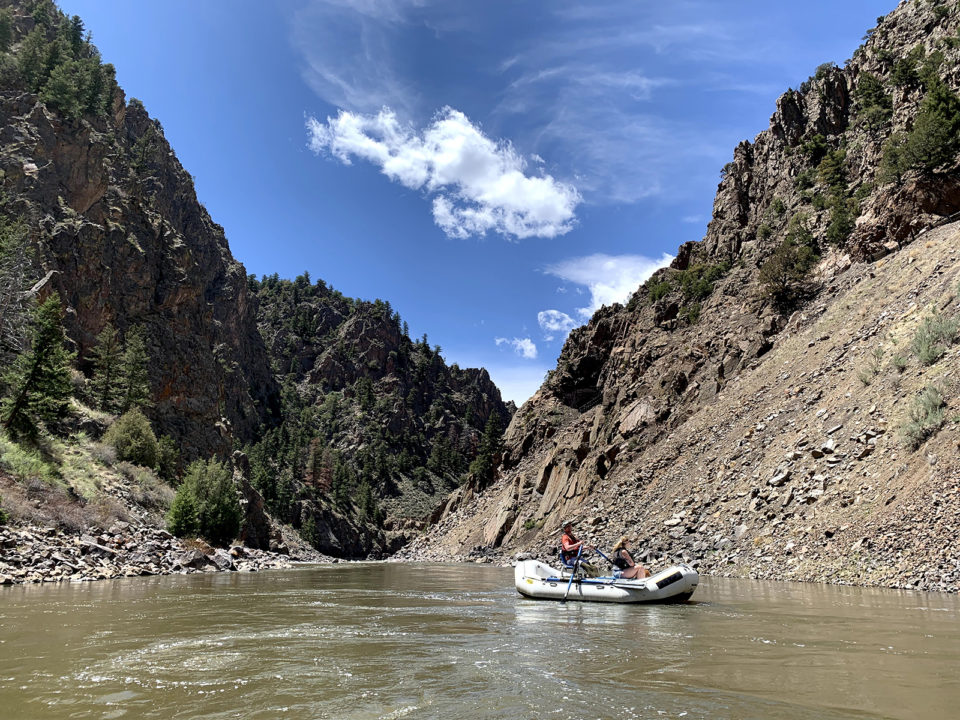
Big whitewater trickles off in July, but don’t let lower water levels kill your stoke. There are still plenty of fun stretches of river after peak season, and many of them are floatable well into September—if you’re willing to go a little slower.
Below, our nine favorite low-water and late-season rides, because in Colorado, we can keep our oars in the water till the snowflakes start to fall.

Jump Ahead:
- Arkansas River: Browns Canyon
- Arkansas River: Big Bend to Salida
- Arkansas River: Bighorn Sheep Canyon
- Upper Colorado River: Shoshone Power Plant
- Colorado River: Ruby Canyon to Horsethief Canyon
- Colorado River: Westwater to Rose Ranch
- Upper Colorado River: Cottonwood Island to Dotsero
- Upper Colorado River: Pumphouse to State Bridge
- Roaring Fork River: Black Bridge to Two Rivers Park
Arkansas River: Browns Canyon
- Nearest town: Buena Vista
- Put in: Fisherman’s Bridge
- Take out: Hecla Junction
- Class: III/IV
- Length: 9.5 miles
- Distance from Denver: 2.5-hour drive
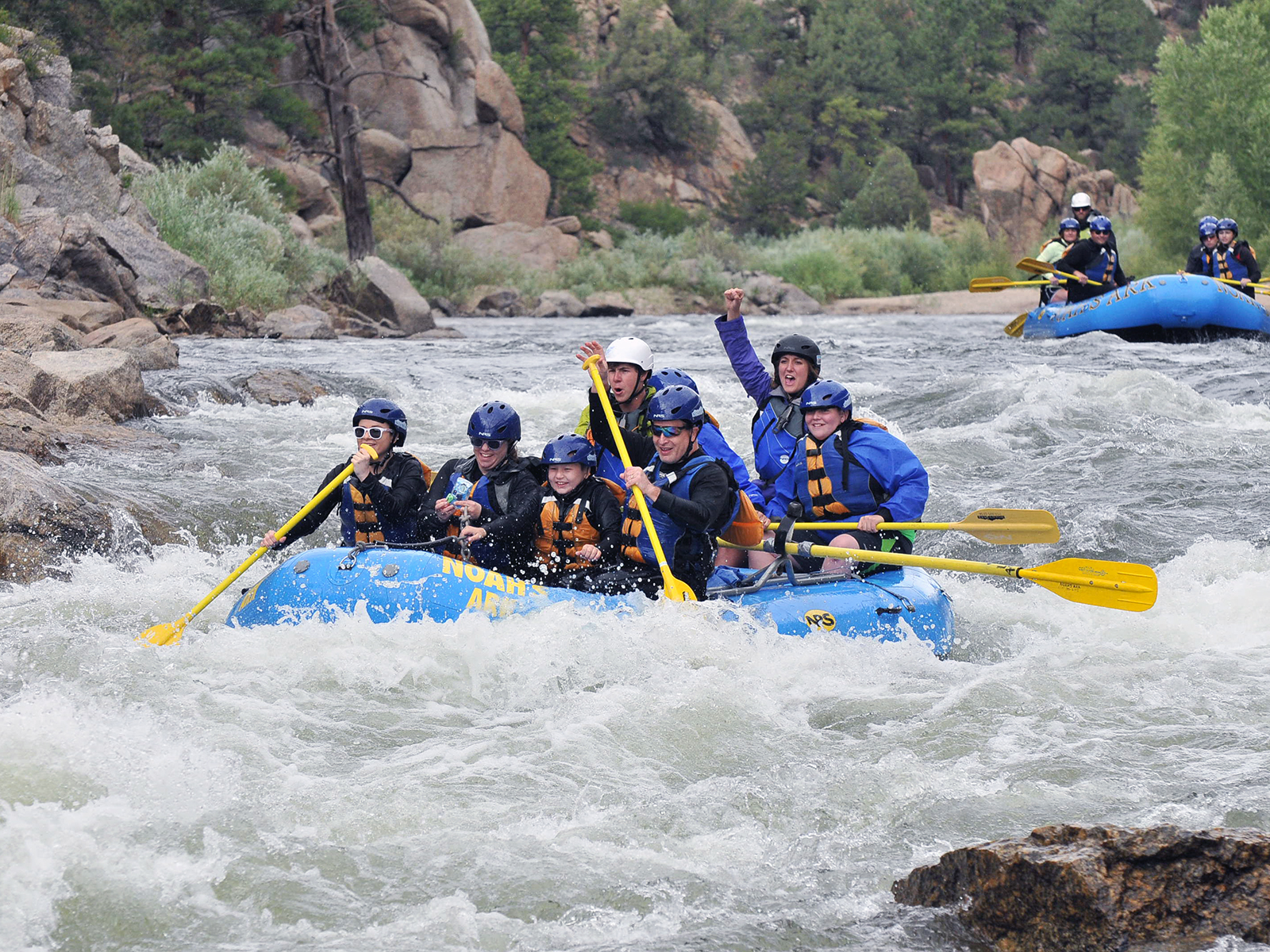
There’s no debate that Browns Canyon is the holy grail of Colorado whitewater. Twelve major rapids in less than 10 miles means there’s enough action for the whole family (including your pup), whether it’s high-water season or running lower. Besides other boaters (this one is popular, expect to make friends and always watch out for traffic before dropping into a rapid), you may not see too many signs of civilization on this stretch, save for a few houses and a railroad on your left-hand side. You will, however, get great views of Mt. Princeton before heading into the canyon.
If you want to extend your float even farther and hit two more rapids, tack on another 3.5 miles through Seidel’s Suckhole and Double Drop and take out at Stone Bridge. Day permits are required; find them at the Arkansas Headwaters Recreation Area (AHRA) website.
Arkansas River: Big Bend to Salida
- Nearest town: Salida
- Put in: Big Bend
- Take out: Salida East
- Class: II/III
- Length: 6 miles
- Distance from Denver: 3-hour drive
Looking for a shorter float than Browns Canyon? One that still includes a few exciting rapids? The Arkansas River’s stretch between the end of Browns Canyon and downtown Salida is a fun, laidback bit of Class II/III whitewater with views of the surrounding peaks. Hit the boat chute as you float closer to Salida, and T-up when you reach the Scout Wave coming into downtown.
Salida hosts the premiere kayaking festival, FIBArk, in this downtown section of river every summer featuring its best wave. Extend it out by putting in at Stone Bridge for an additional 3.5 miles on the water. Dogs are permitted with a leash, and we’d recommend a pup lifejacket, too. Day permits from Colorado State Parks are required, and can be found at the Arkansas Headwaters Recreation Area (AHRA) website.
Arkansas River: Bighorn Sheep Canyon

- Nearest town: Parkdale
- Put in: Pinnacle Rock
- Take out: Parkdale Recreation Center
- Class: III/IV
- Length: 9 miles
- Distance from Denver: 2.5-hour drive
If spunky waves sprinkled with a few technical rapids are just your speed, the Big Horn Sheep Canyon run brings the magic even after the summer crowds thin out. This stretch features two solid rapids with great scouting points—3 Rocks and Spikebuck. Take advantage of them, since the carnage can be YouTube gold. Passengers can spend their time searching for this run’s namesake rams, which tiptoe along rocky ledges above the water year-round. The rest of the trip features sporty read-and-run water that will make you appreciate your post-paddle pint more than usual.
Upper Colorado River: Shoshone Power Plant

- Nearest town: Glenwood Springs
- Put in: Shoshone Power Plant, Exit 123 (I-70)
- Take out: Grizzly Creek, Exit 121 (I-70)
- Class: II/III
- Length: 2 miles
- Distance from Denver: 2.5-hour drive
The Shoshone run is one of the few truly year-round stretches of raftable river in Colorado, and it’s just as enjoyable in September as it is in July—with fewer pushy waves. If you want a short, sassy trip at any level, this three-rapid stretch is just the ticket. Wave to the I-70 cruisers and leaf-peepers as you float, negotiating Maneater, Tombstone, and All Day Wave. Want to extend your river time? Float down about six more miles of Class II water and take out at Two Rivers Park in Glenwood Springs instead.
Colorado River: Ruby Canyon to Horsethief Canyon

- Nearest town: Fruita
- Put in: Loma Launch, Fruita, Colo.
- Take out: Westwater Boat Launch, Westwater, Utah
- Class: I/II
- Length: 25 miles
- Distance from Denver: 4-hour drive
- Additional information: Camping permits are required
If you missed out on a permit for the Big Ditch, take a flyer on the “Little Grand Canyon” this fall. This 25-mile, Class I/II float showcases lookalike orange sandstone, plus Vishnu schist—the same stuff that’s exposed in the Grand Canyon. Turn this Colorado rafting classic into an easy overnight for first-time rowers or a laidback three-day weekend by overnighting at any of the 33 campsites along the banks. (Build time into your itinerary for side hikes and exploration.) Reservation permits are required, and make sure you check in with a friendly neighborhood river ranger at the Loma launch.
Colorado River: Westwater to Rose Ranch
- Nearest town: Fruita
- Put in: Westwater Boat Launch, Westwater, Utah
- Take out: Cisco Boat Launch, Cisco, Utah
- Class: III/IV
- Length: 17.5 miles
- Distance from Denver: 5-hour drive
- Additional information: Camping permits are required.
Craving bigger rapids and more of a challenge? Keep floating past the Westwater take out and hold onto your paddles. This section of the Colorado River makes for a great overnight trip, or a long, happy day on the water surrounded by Grand Canyon–esque scenery. Score views for the first eight miles, with a few Class II rapids thrown in, before gearing up for the main event: nine rapids in two miles. Eight of these rapids are rated Class III, with names like Big Hummer, Sock It To Me, and Bowling Alley. The heavy hitting Class IV rapid is aptly named Skull Rapid, which, at low water, uses a sneaky river-right line nicknamed the Toaster Slot to avoid total carnage.
Ten camps dot the river’s edge, along with trails to pull over and explore the river banks at your leisure. Permits are required year-round, so don’t forget to check in at the Westwater launch’s ranger station.
Upper Colorado River: Cottonwood Island to Dotsero

- Nearest town: Gypsum
- Put in: Cottonwood Island
- Take out: Dotsero Landing
- Class: I/II
- Length: 5 miles
- Distance from Denver: 2.5-hour drive
Don’t let the easy classification of this float fool you into mistaking it for a snoozer. With A-plus fly-fishing, plenty of livestock poking around the riverbank, and a driftwood lean-to that’s bigger than some houses, there’s plenty to keep you occupied. Perfect for newer rowers, this shorter section serves up pretty reliable water, too. (You can make it a longer run by starting about 20 miles farther upriver at the Burns put-in.) Take advantage of sandy beaches for picnicking or a chance to stretch your legs, and drink in the first notes of Colorado’s high-country autumn color show. Bonus: Spy a driftwood lean-to on river left.
Upper Colorado River: Pumphouse to State Bridge

- Nearest town: Kremmling
- Put in: Pumphouse Recreation Site
- Take out: State Bridge Recreation Site
- Class: II/III
- Length: 15 miles
- Distance from Denver: 2-hour drive
Variety reigns supreme between the Pumphouse and State Bridge rec areas on this ribbon of water. A bazillion easy-access put-ins mean you can plan the perfect trip for your time and pace (or easily work with varying water levels). If you can swing it, run the whole 15 miles to catch rapids like Eye of the Needle and Yarmony, plus Radium Hot Springs, a bubbler big enough for the whole crew on river left. (Hot water mixes with the river to create a pleasant 80-degree soak.) If you can’t raft the entire length, take out at Rancho Del Rio or Yarmony Bridge and revel in the fact that you, my friend, still got in a great day on the water.
Roaring Fork River: Black Bridge to Two Rivers Park
- Nearest town: Glenwood Springs
- Put in: Black Bridge
- Take out: Two Rivers Park
- Class: II/III
- Length: 7 miles
- Distance from Denver: 3-hour drive
This splashy, zesty run in downtown Glenwood Springs offers a Class III rapid, named Cemetery Rapid, even in lower water. If you want to bring your kayaker friends along for a mellower run in their compact boats, this is your best bet: This stretch offers mostly Class II surf waves, play holes, and splat rocks for them to show off on, and fun riffles for those rowing the raft. At higher water, this run becomes almost non-stop Class III whitewater. Either way, the Roaring Fork is calling.