

The Local newsletter is your free, daily guide to life in Colorado. For locals, by locals.
A former certified public accountant, Peggy Haddad’s mathematical mind was a boon for her career pivot into interior design. “It’s so much more than being creative,” says Haddad, who started her Denver-based firm, Peggy Haddad Interiors, in 2019. “There’s a formula to designing residential interiors—as far as balancing texture and color and contrast and pattern—and I think my calculative brain helps make everything feel cohesive. Plus, you have to be able to talk to people about money and be a bit of a marriage counselor in that way.”
Haddad recently transformed the main floor of her neighbor’s 1985 home in the Ranch Country Club, a tight-knit golf course community in Westminster. “They originally wanted to take up the ceiling and create an addition on the house, but the cost was getting astronomical,” Haddad says. “So we decided to go in a different direction and just work with the existing footprint.” Here, Haddad provides a room-by-room rundown of how she curated a modern-rustic feel and an effortless flow—without any major construction.
Entryway
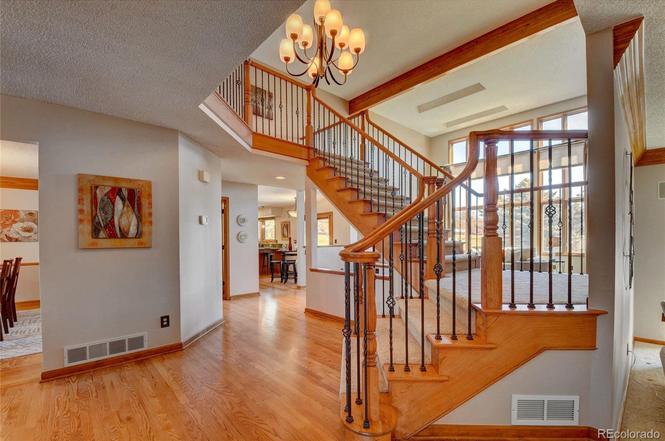
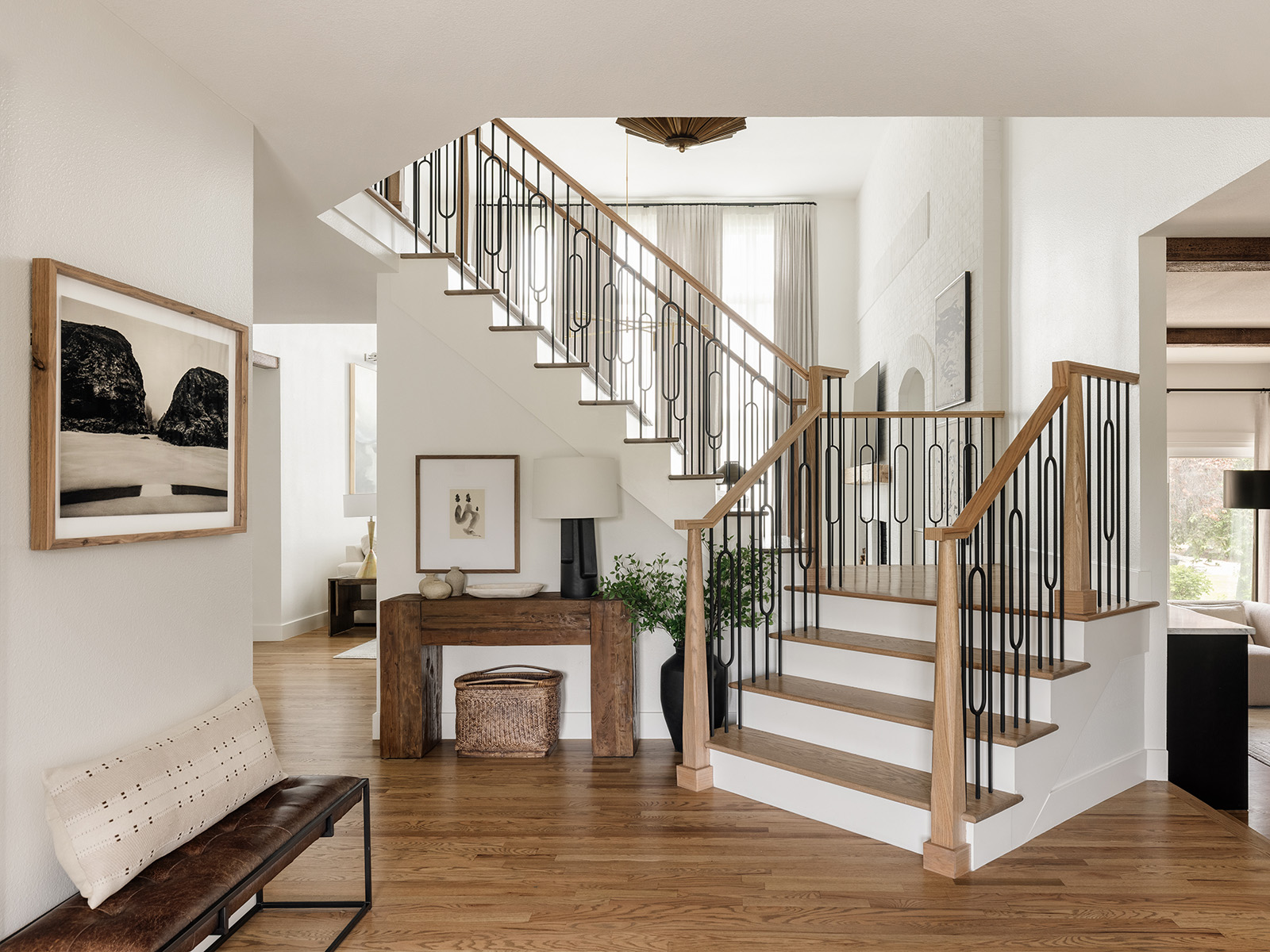
“Everything was super dated; there was ugly carpet and orangey oak everywhere,” Haddad says of the home’s stuck-in-the-’80s finishes. Instead of ripping out the existing wood flooring—a move that would have drained the renovation budget—Haddad had Longmont-based J.Ruff Co refinish them with her go-to staining process for neutralizing red-orange tones and adding medium-brown warmth. On the staircase, she swapped traditional handrails and ornate balusters for modern, clean-lined versions and traded carpeted stairs for white oak treads. By closing up an awkward triangular opening that looked into the living room, Haddad says she created “a little entryway vignette moment” with a natural wood console table and a sculptural lamp. But the designer’s favorite piece in this space is the tiered chandelier that draws the eye upward. “It looks like ruffled fabric, and I love that you just get a peek of it from the entry,” she says.
Lounge
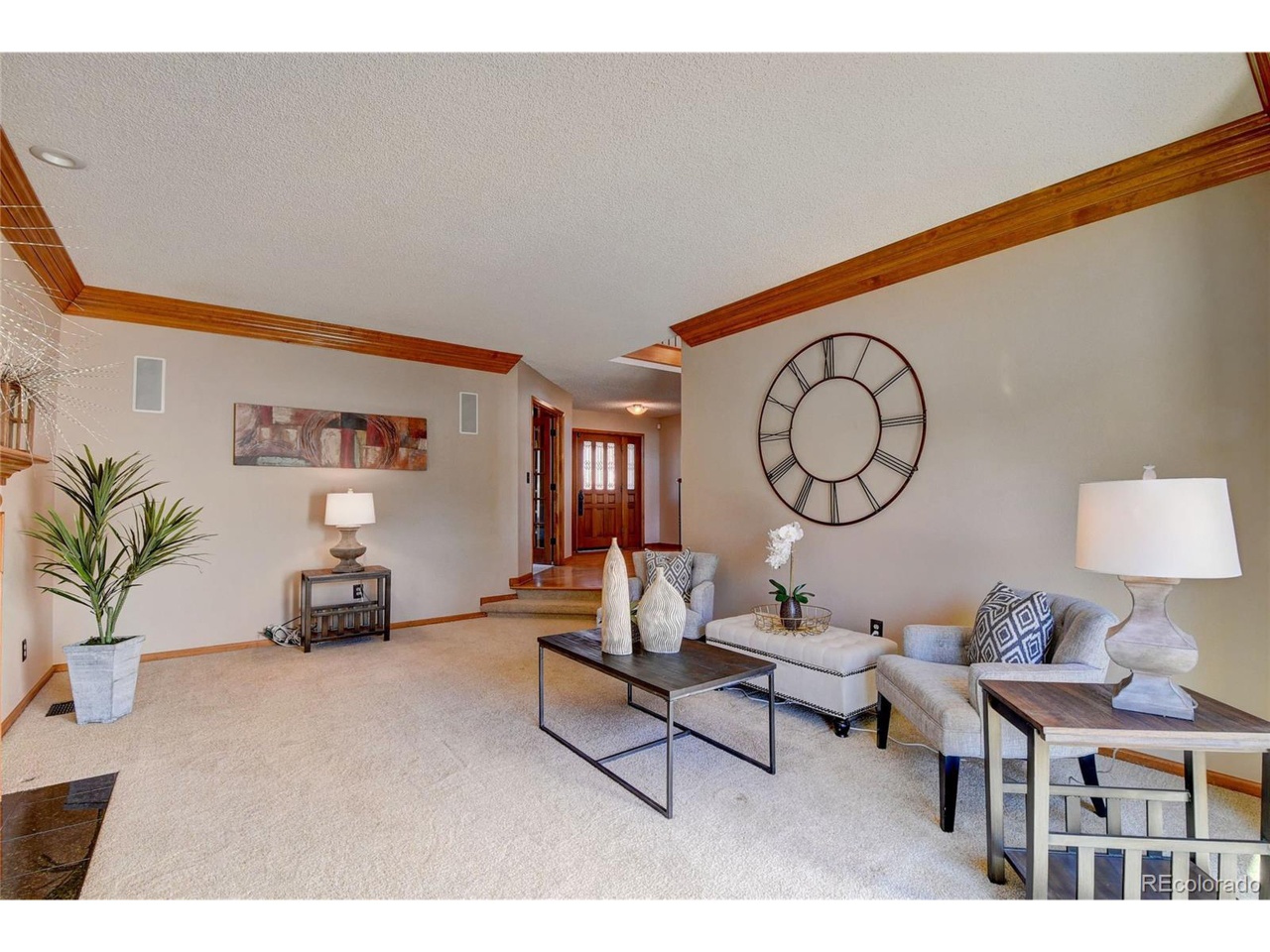
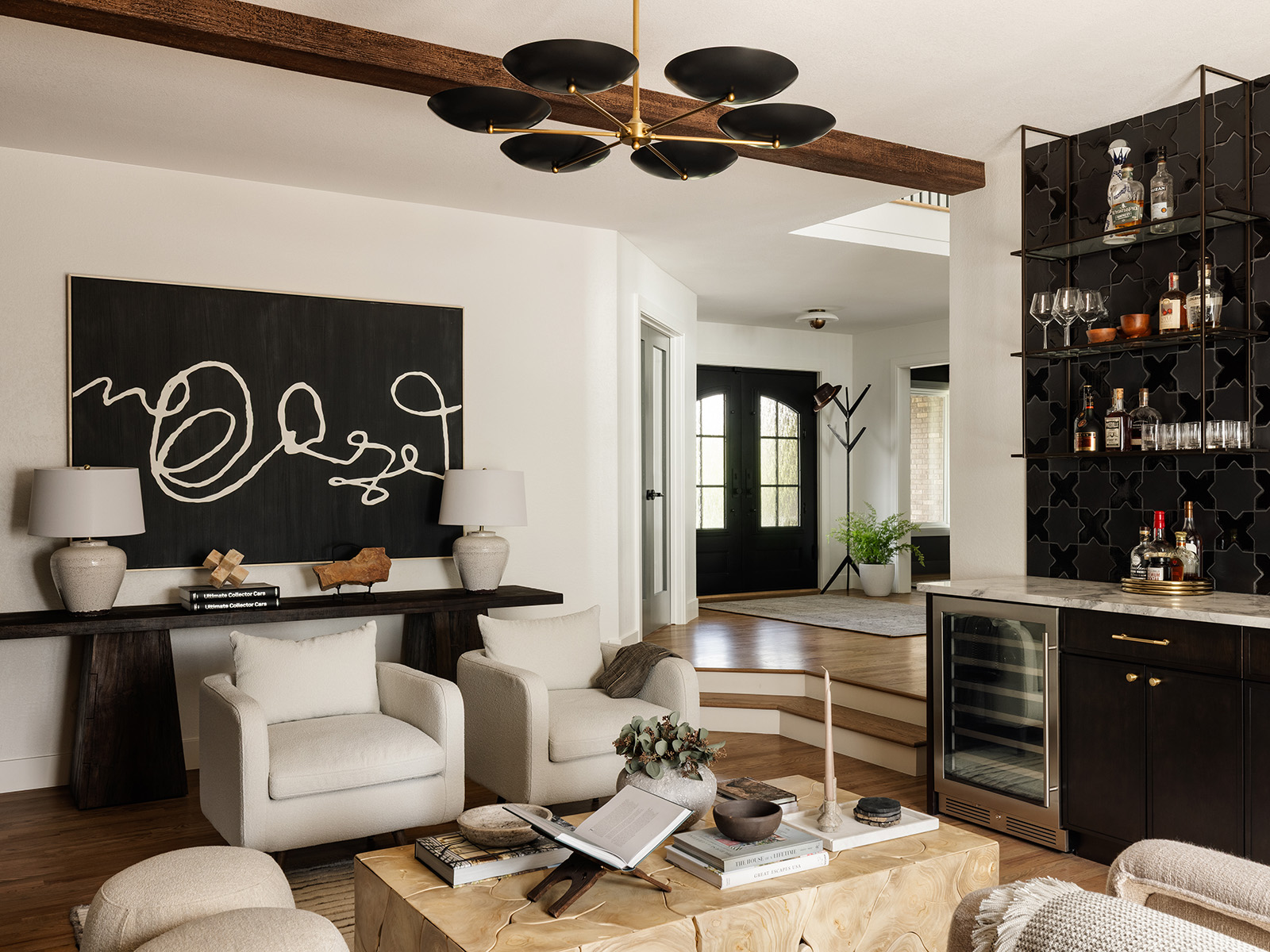
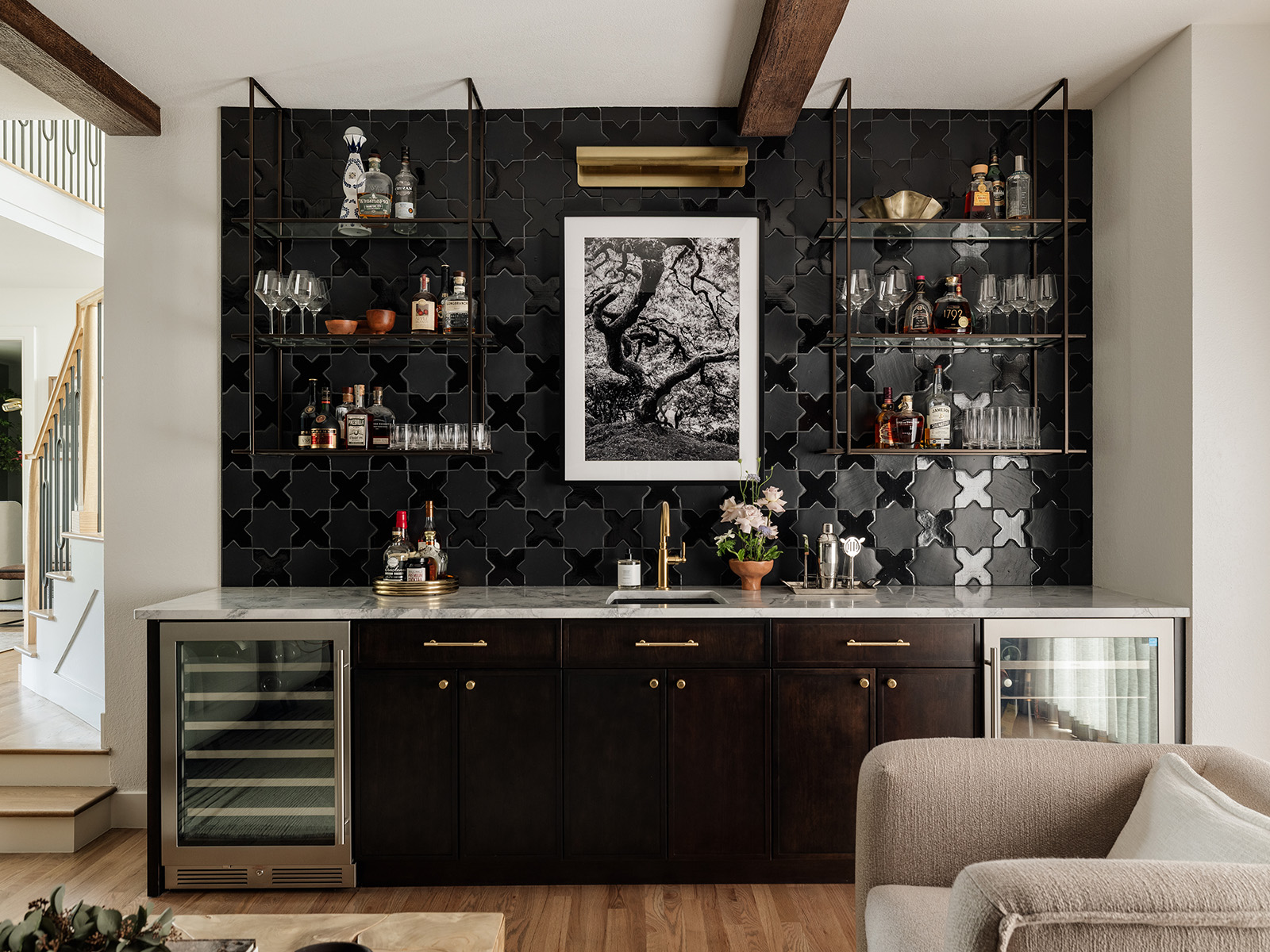
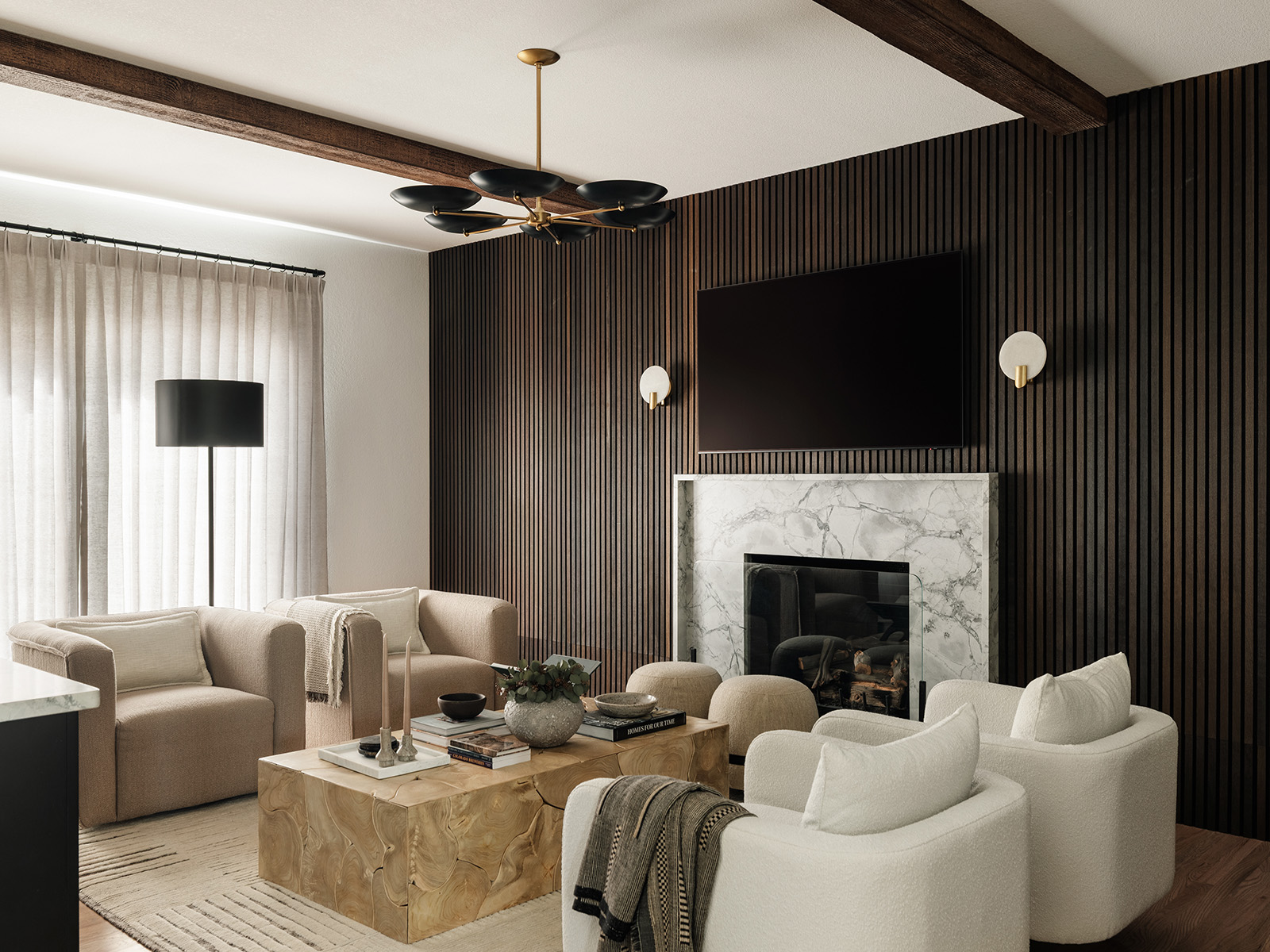
To set the tone for an intimate bar area, Haddad kept the step down into this space adjacent to the entry—but that was about all she preserved. She ditched the carpet for oak floors, a sleek marble fireplace surround replaced the old wooden one, and the ceiling’s dated popcorn texture was removed. The dark tones of the bar’s geometric tile and walnut-hued cabinetry are echoed by the fireplace wall’s wood-slat paneling. “I love the richness and moodiness of the wood,” Haddad says. “It makes the room feel a little seductive.”
Living Room
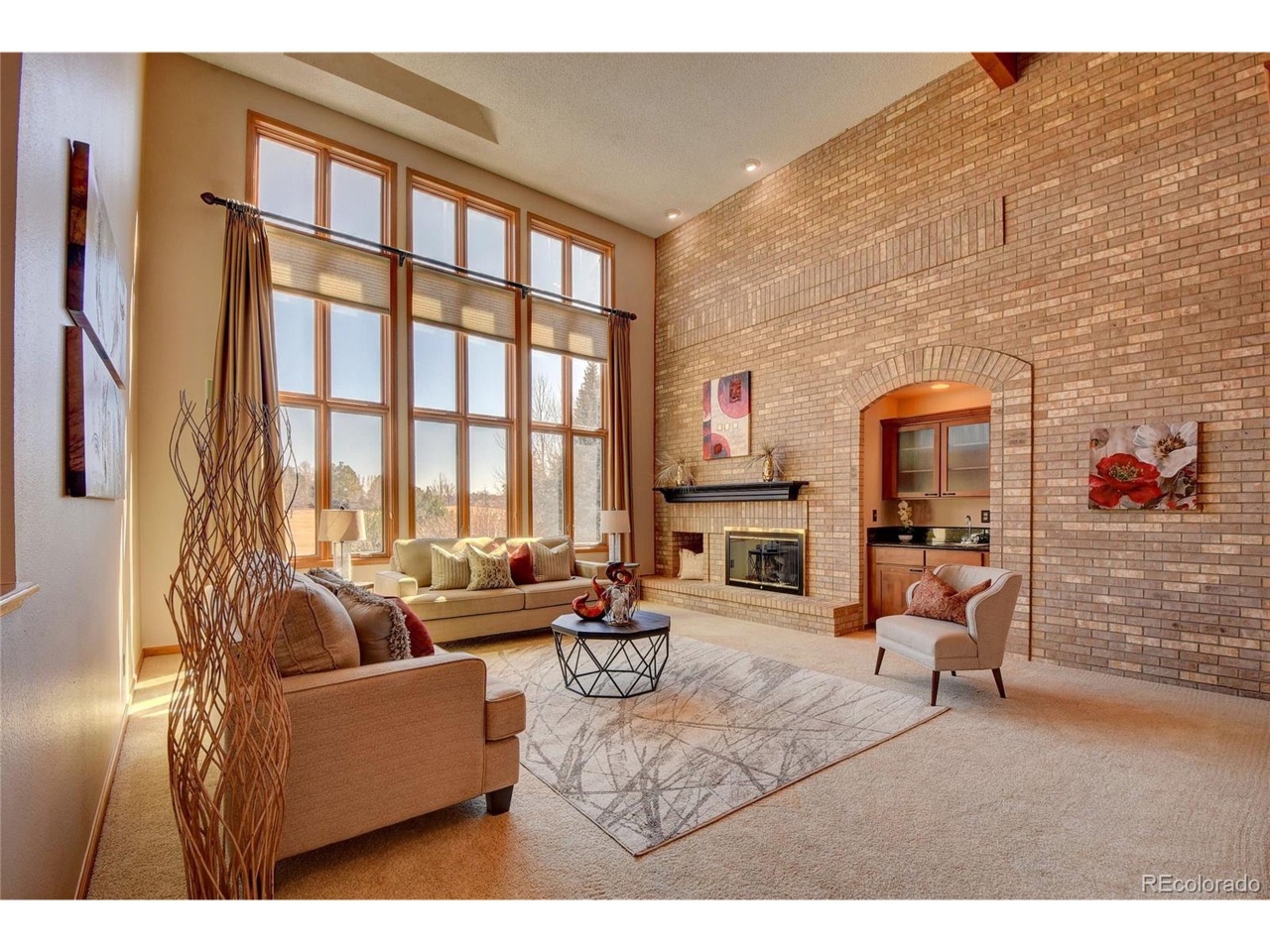
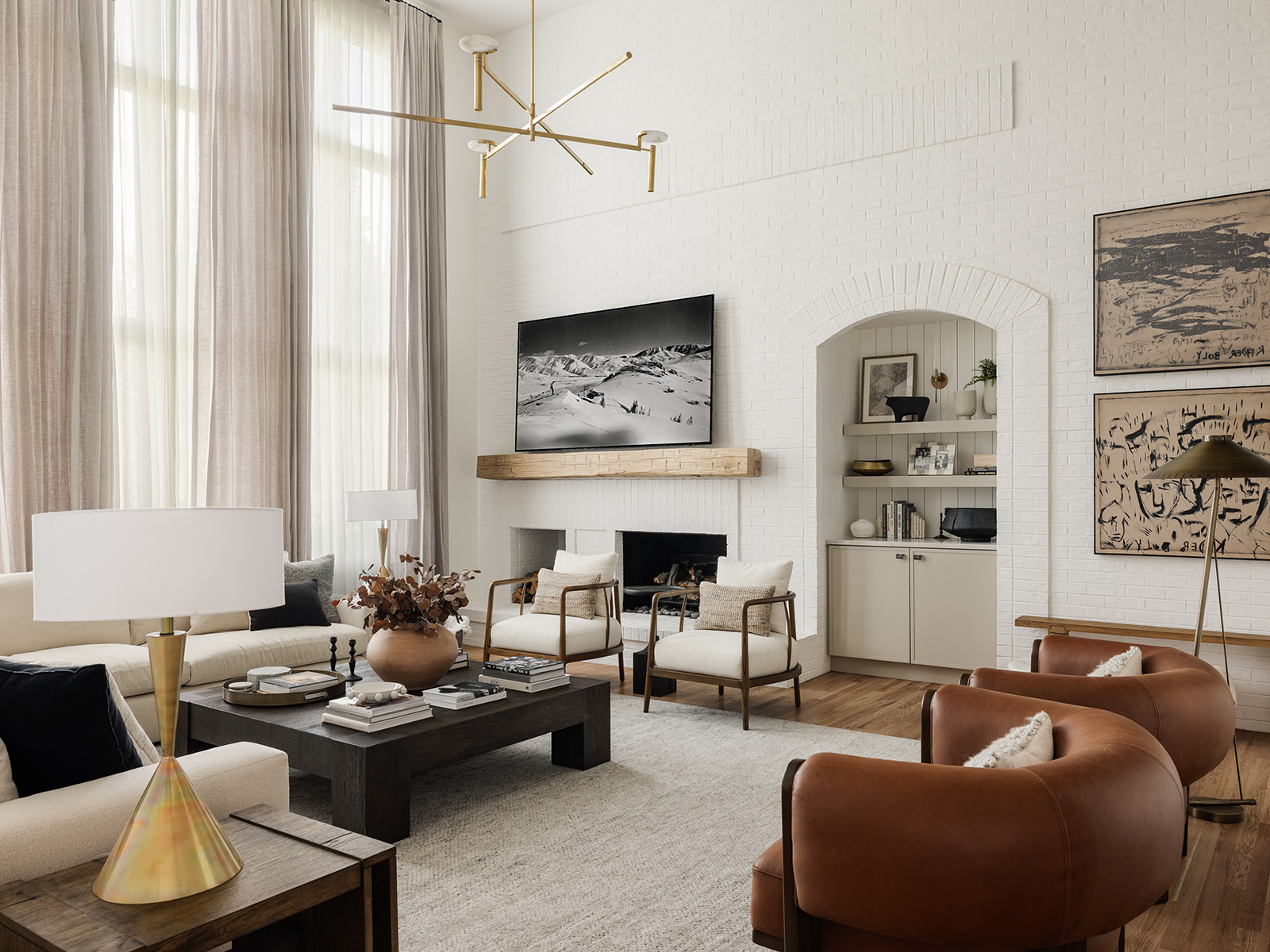
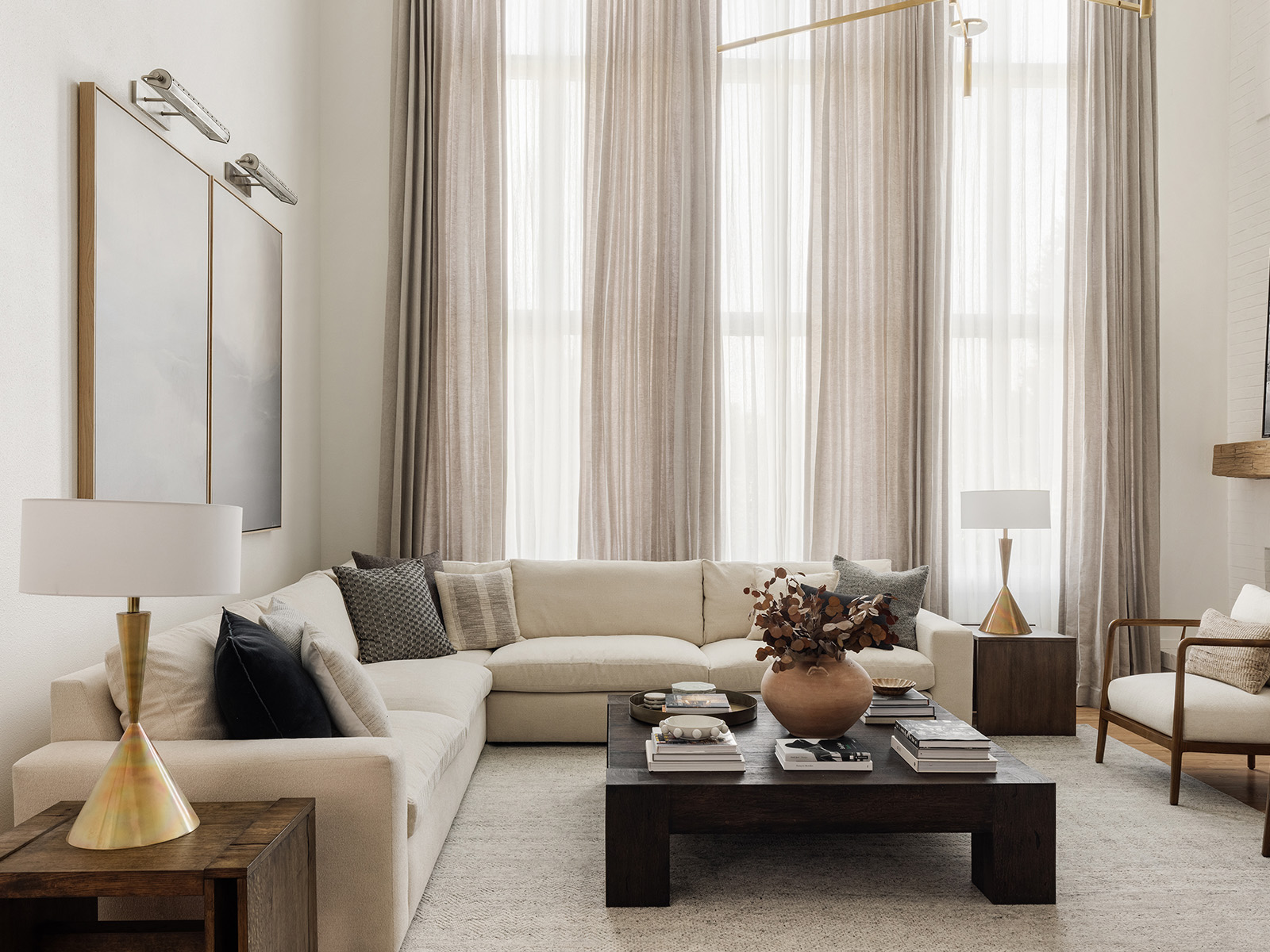
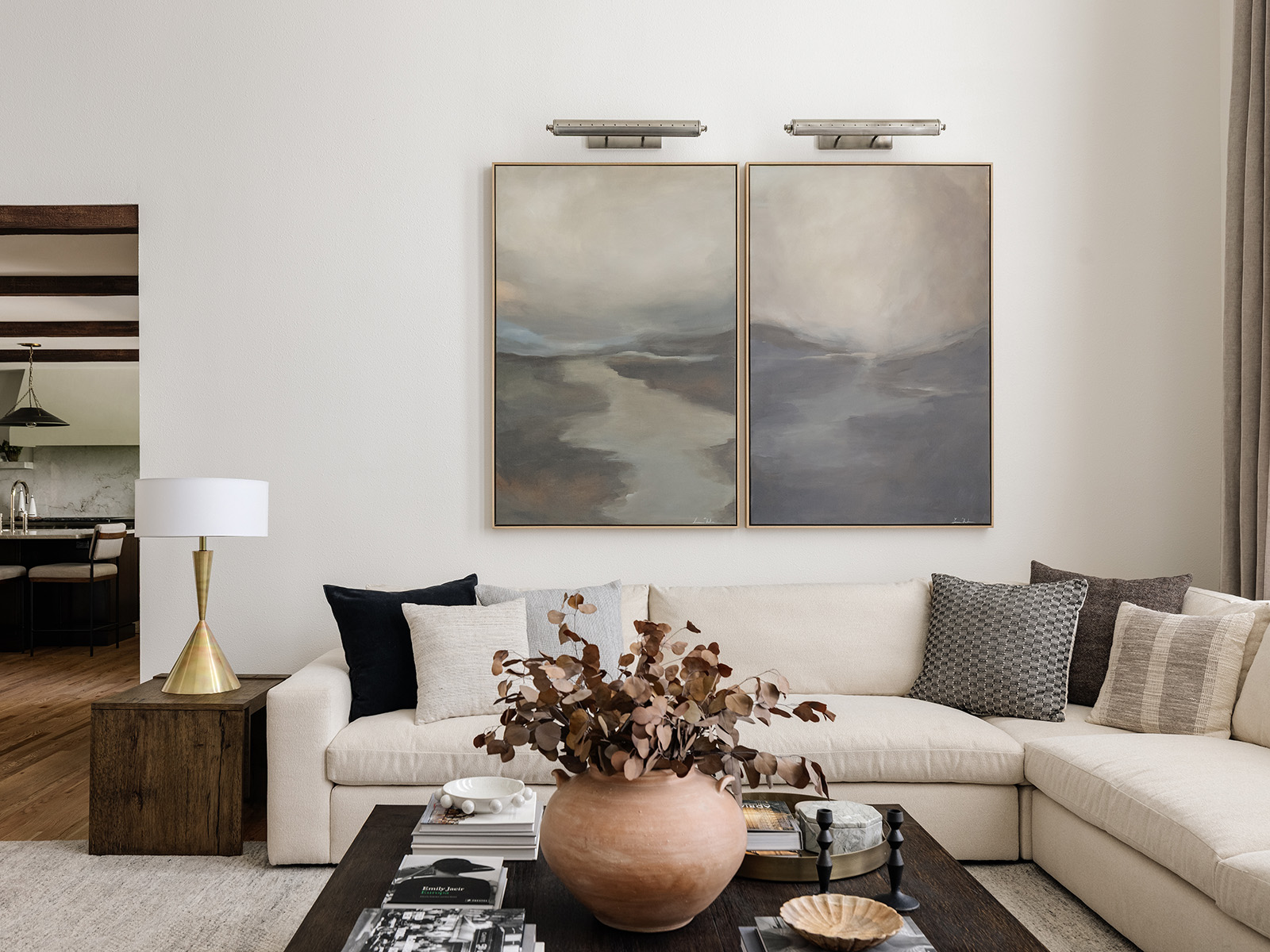
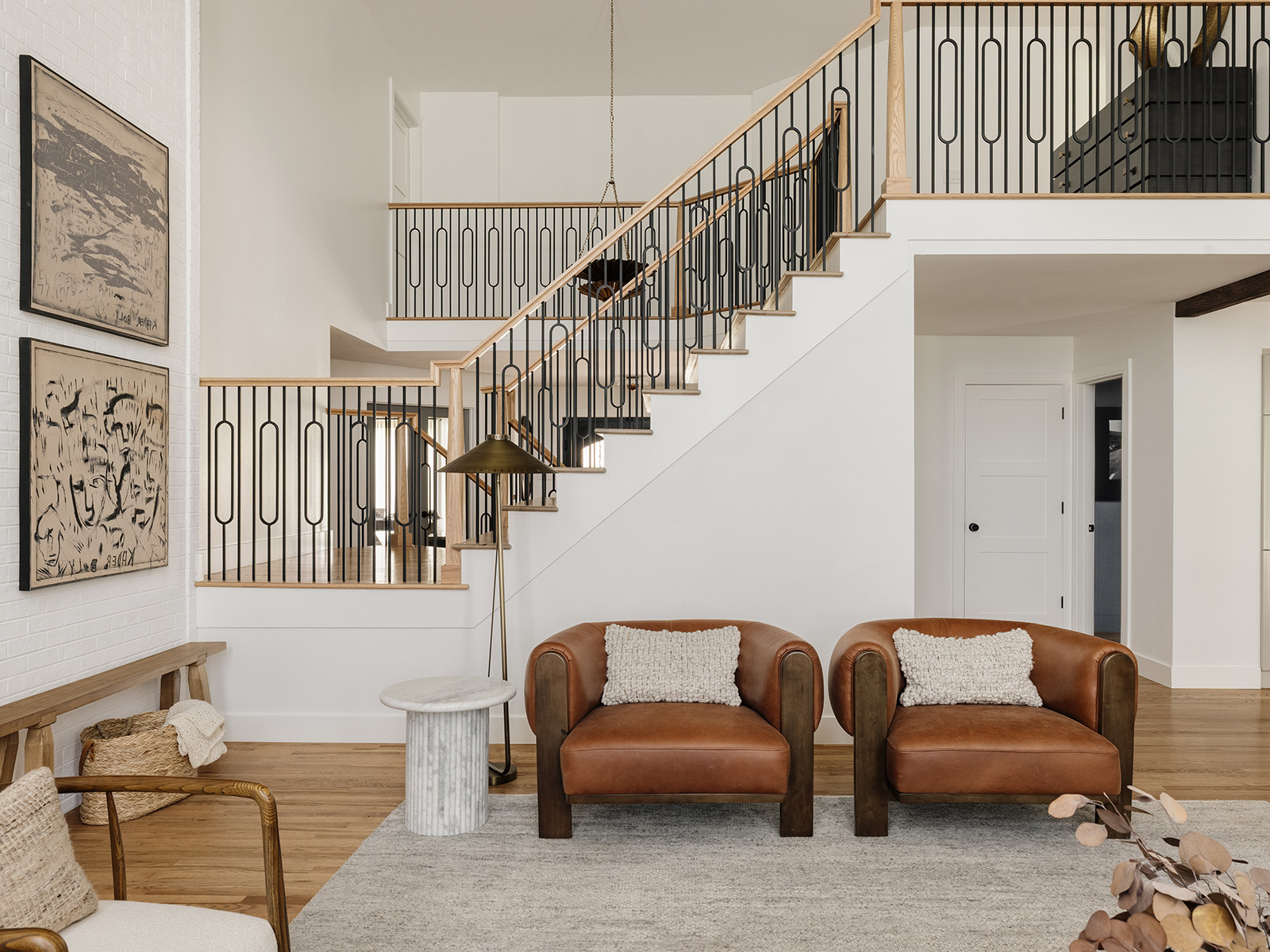
While most of the home has eight-foot ceilings, the living room soars nearly 17 feet high with east-facing windows that overlook the golf course. Haddad added two layers of curtains: one creamy white and sheer, the other gray and light filtering. “The sheers are really great for protecting their furniture from the intense sun and they can still see through them to the golf course, and the gray drapery adds a bit of privacy and drama,” she says. Haddad covered the brick wall with a lime slurry—essentially a thicker version of limewash with a slightly textured, sandy finish. “Sometimes brick is really beautiful, but in this case, I feel like it overwhelmed the space a bit,” she says. To make the voluminous room feel cozy, Haddad used oversized furniture to divide it into two seating areas: a corner sectional and a set of armchairs that sit in front of the TV and, off to the side, a duo of leather U-shaped barrel chairs for more private conversations. A lightweight wooden bench, which sits beneath two Kader Boly paintings, can also be pulled into the room when guests are over.
Dining Room
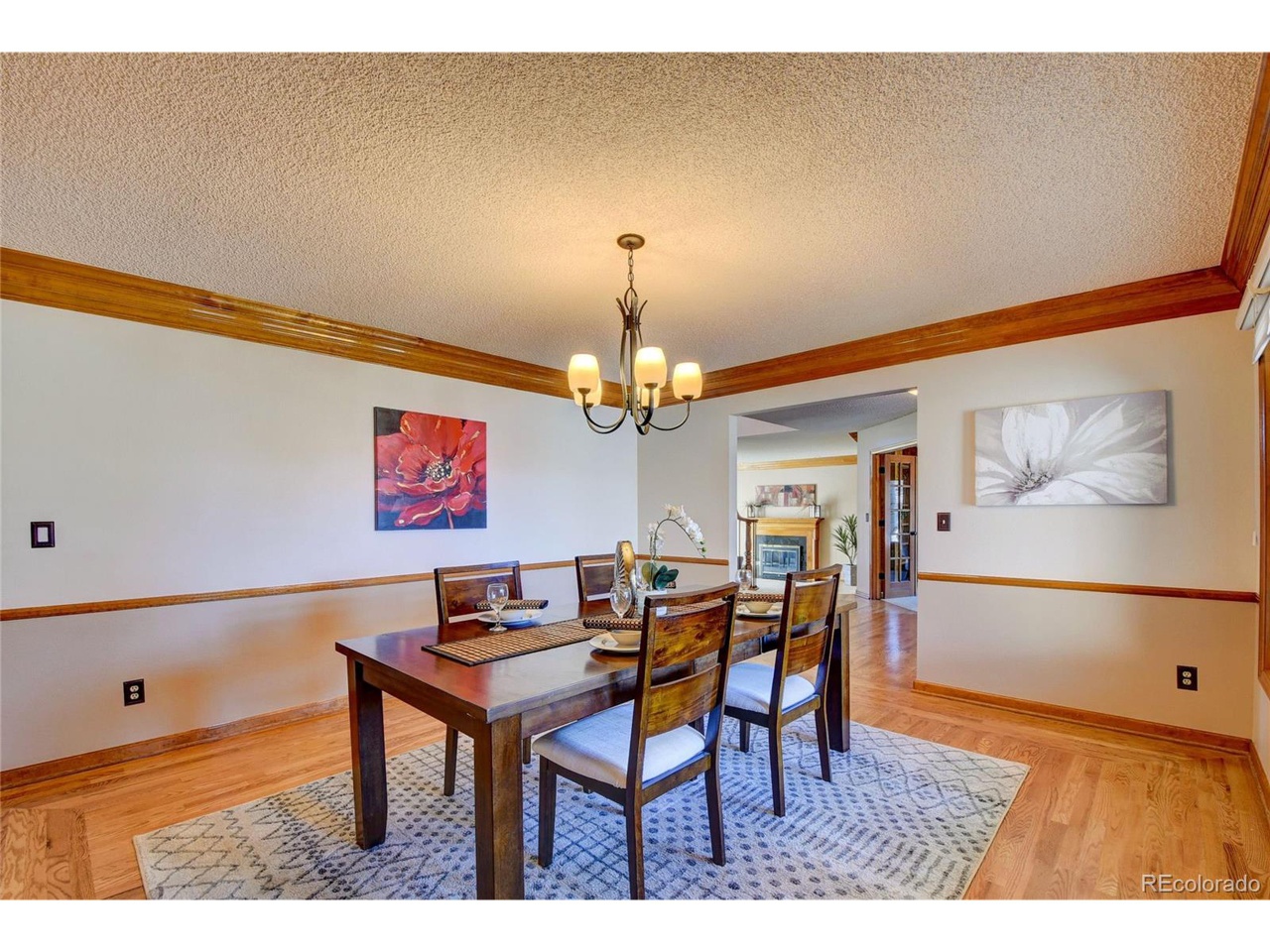
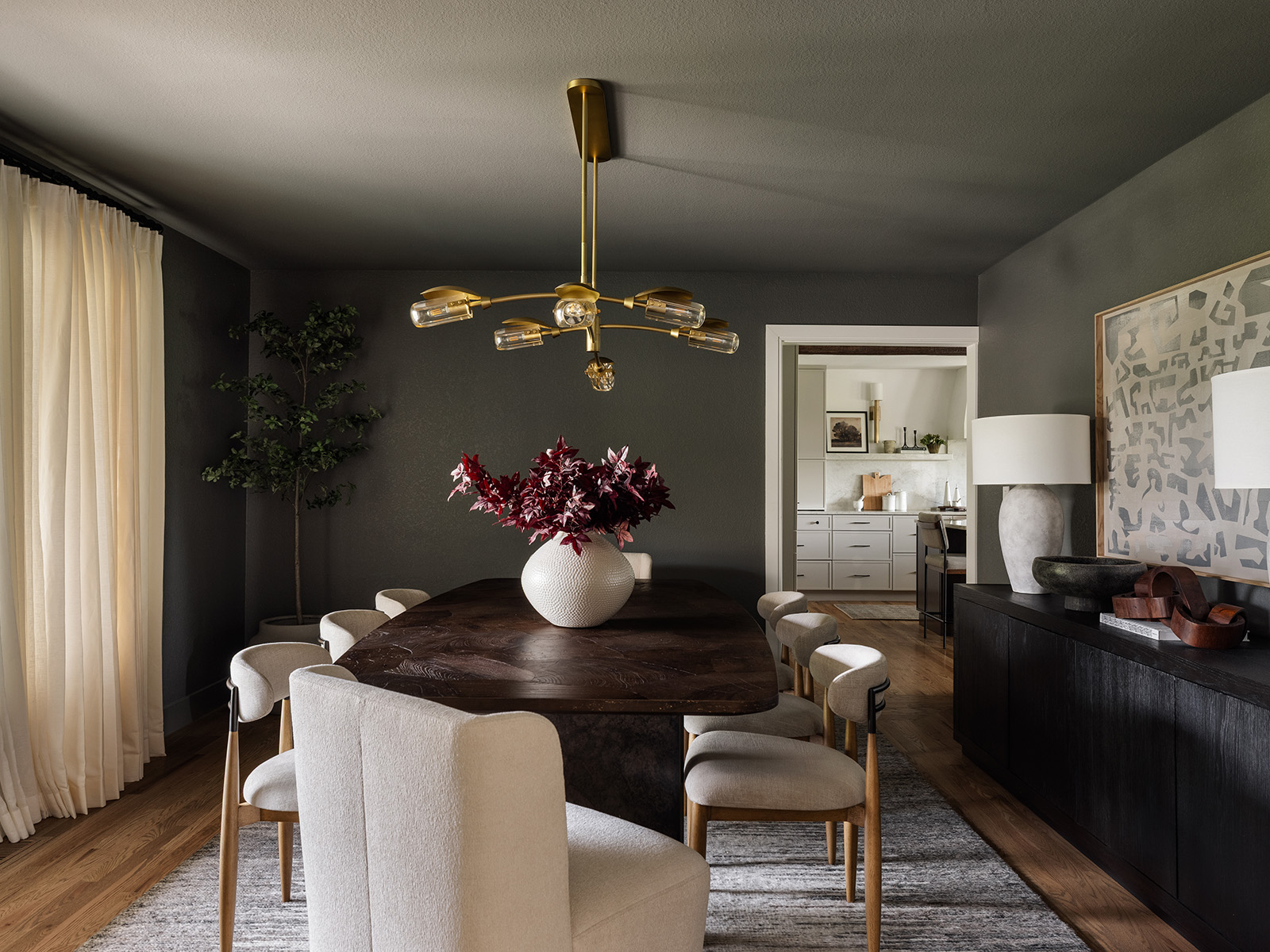
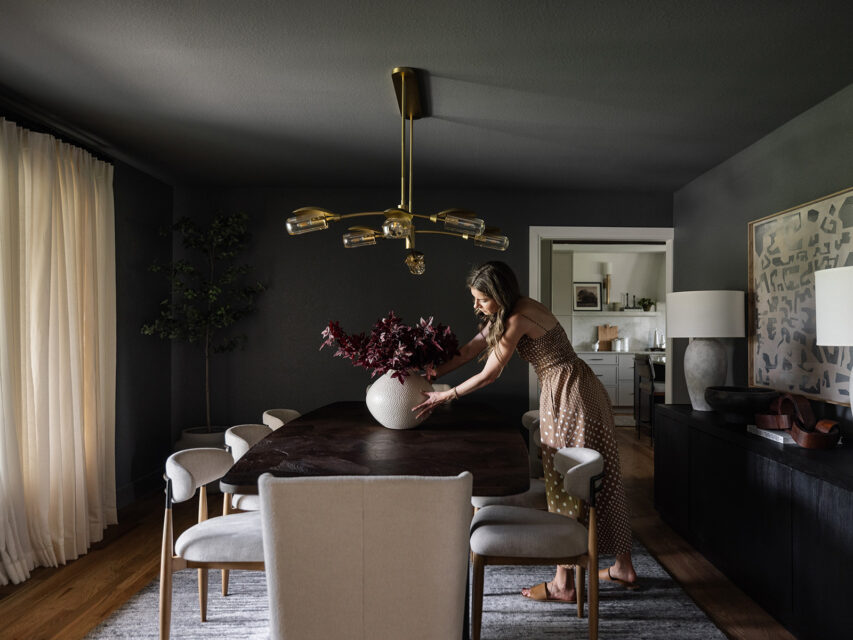
Open floor plans have become a staple of modern living, but Haddad embraced this home’s 1980s builder bones with walled-off spaces. “Instead of one giant great room, I love when each space has its own moment,” she says. Haddad created contrast with the rest of the white-walled home by color drenching the closed-off formal dining room in a charcoal hue. She then added cream-toned drapes and dining chairs and a jewelry-like chandelier—with each of its six lights meant to resemble dragonflies—to soften the moody tones.
Kitchen
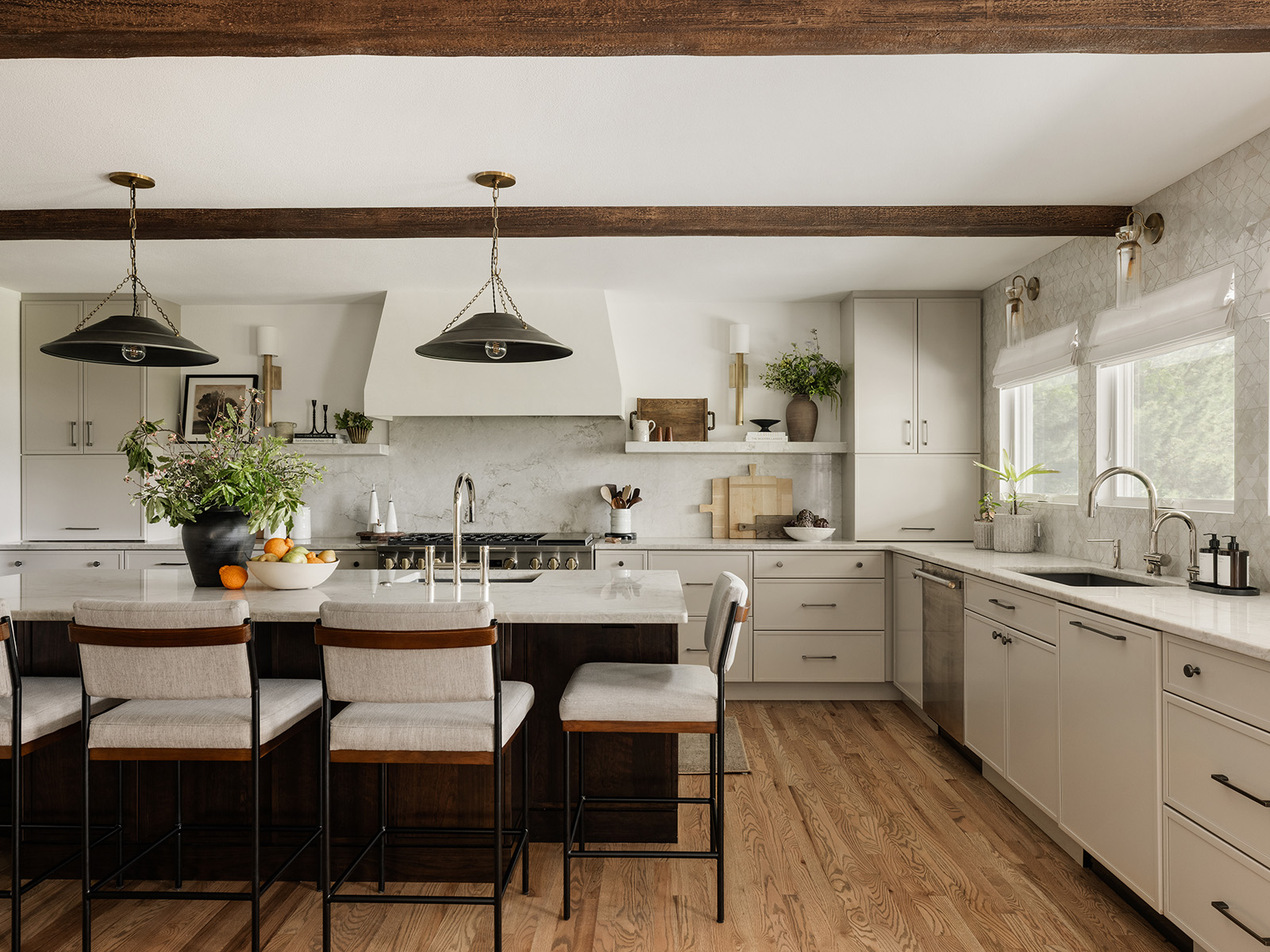
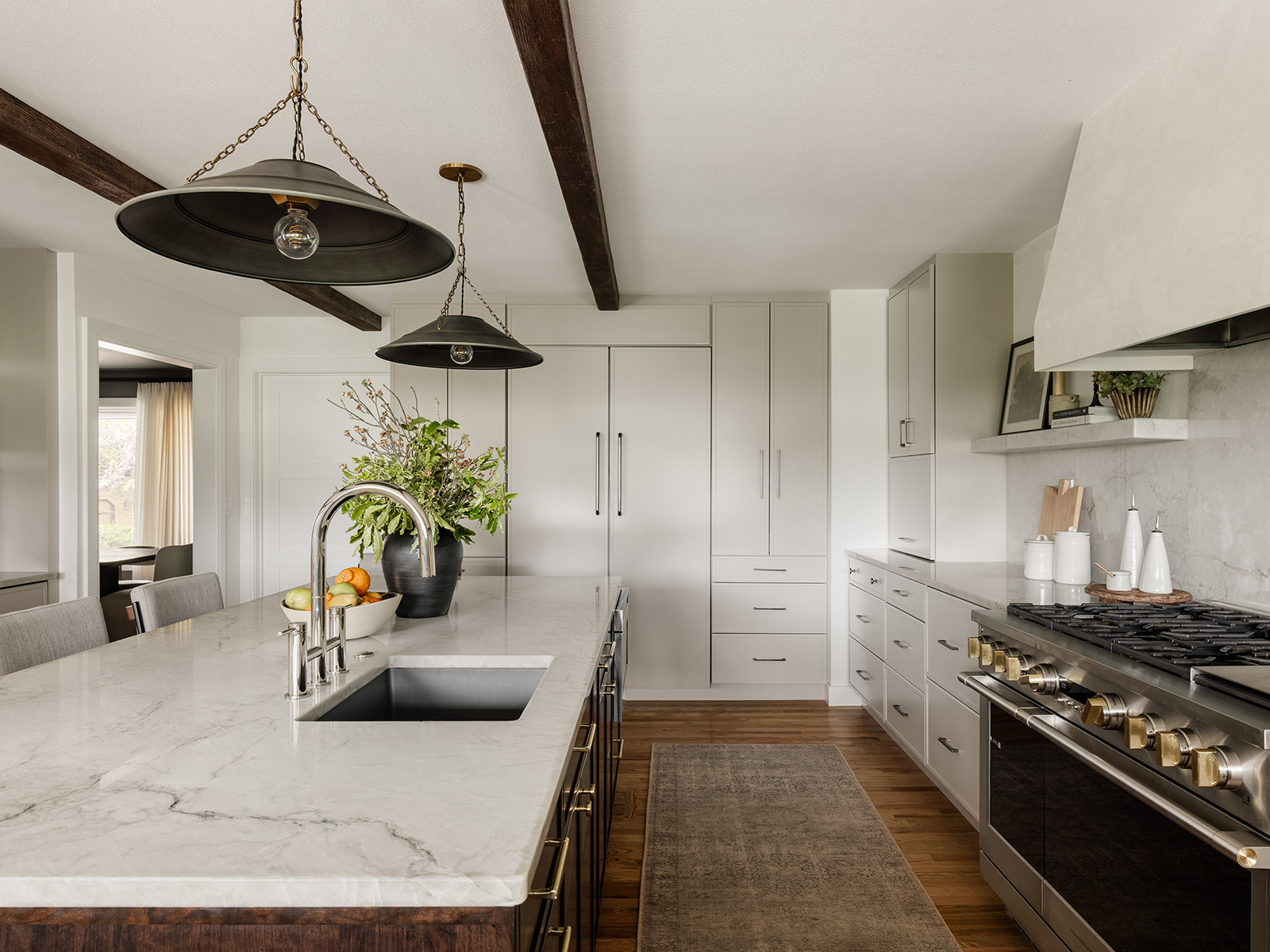
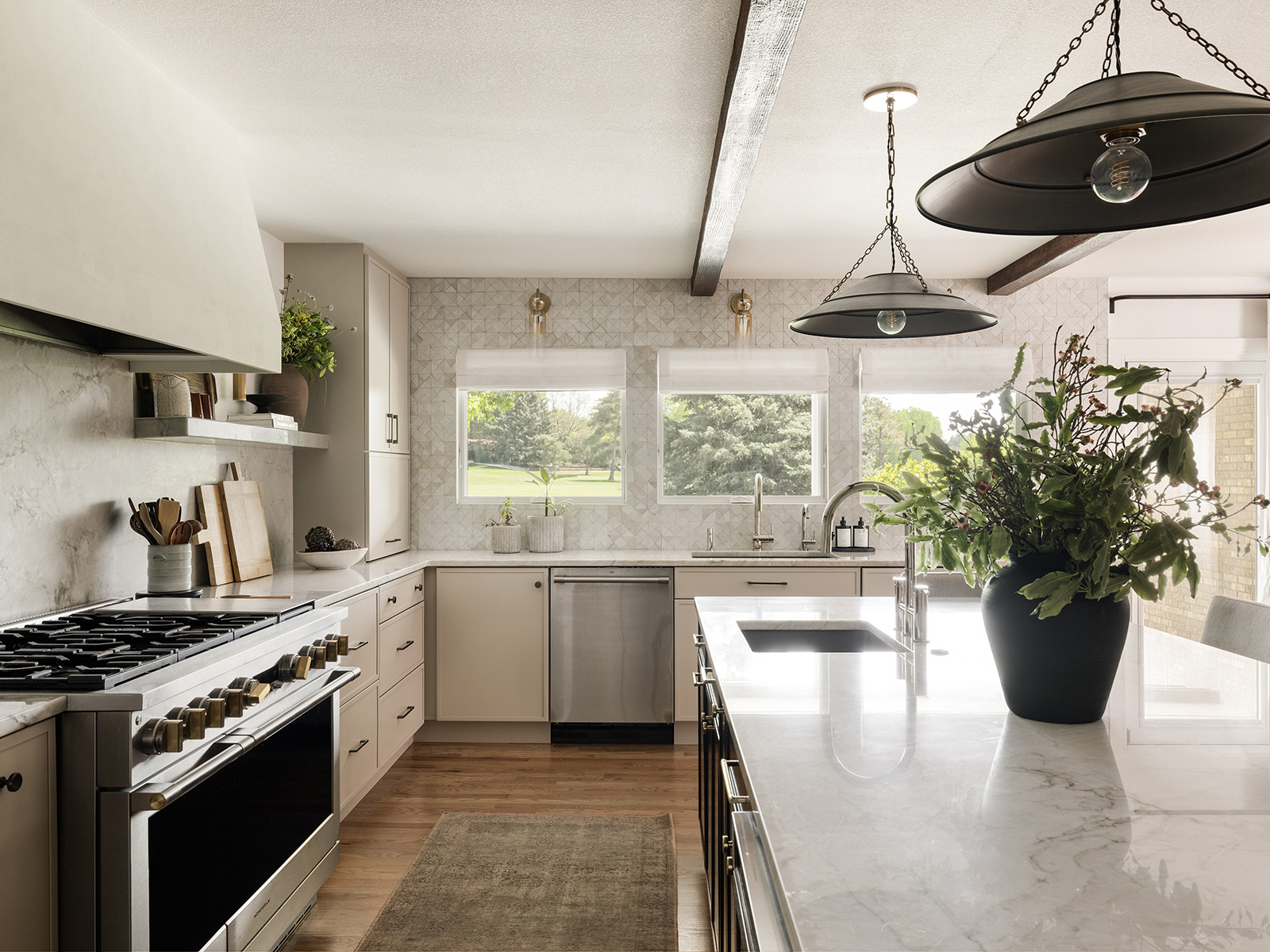
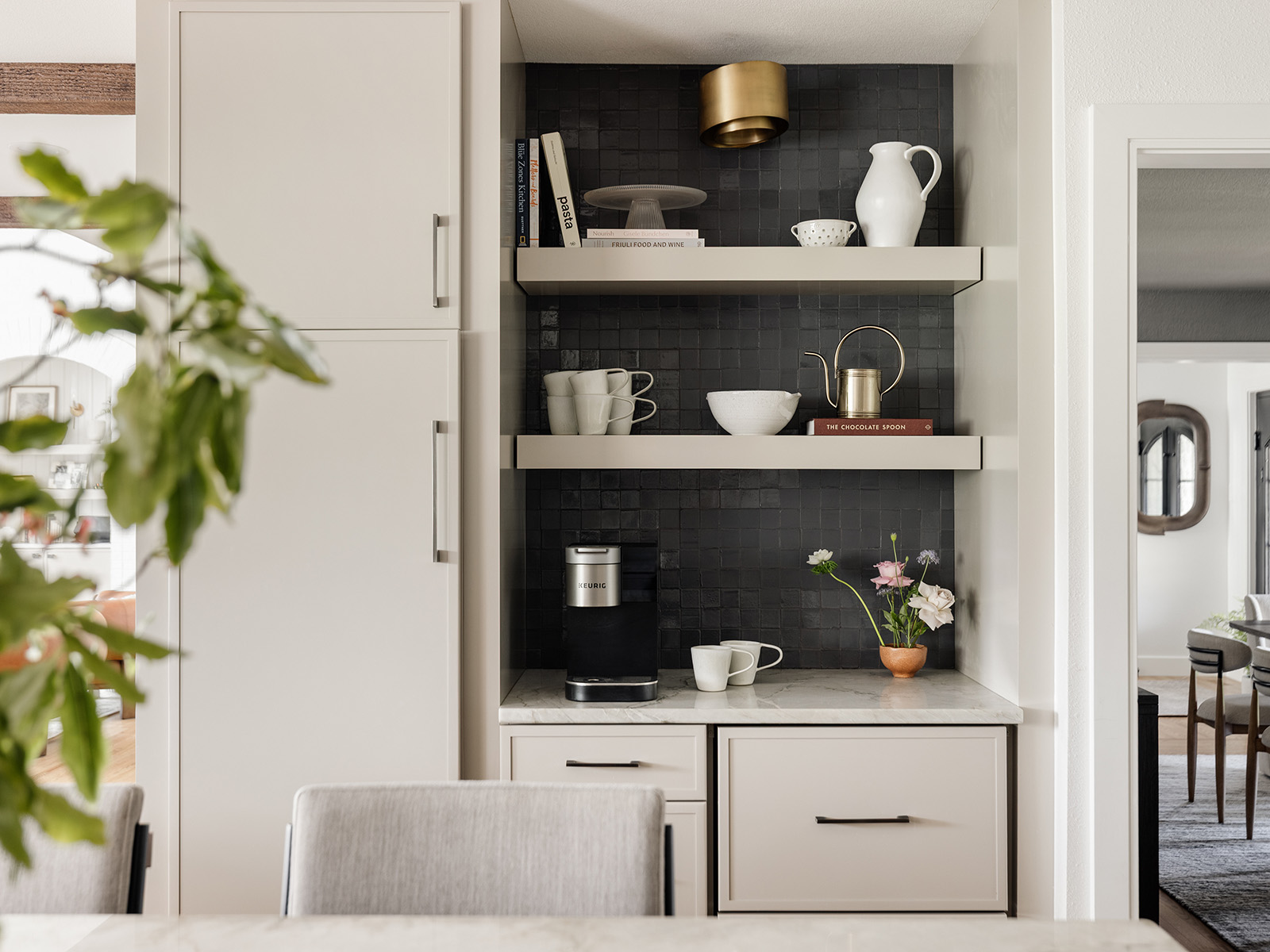
“My goal in the kitchen was to create a lot of symmetry,” Haddad says. The design team stole some square footage from the garage to expand the kitchen’s footprint, which made room for more cabinetry, counter space, and a standalone island. Haddad centered the range on the back wall and added a window to the sink wall for better visual balance and more natural light. To comfortably fit all five family members at the island, Haddad custom designed the base to accommodate inward-facing chairs. “It encourages more conversation rather than everyone sitting side-by-side,” she says. The quartzite surfaces have a subtle green veining that pays homage to the home’s original green countertops. On the sink wall, triangular zellige backsplash adds dimension, while the coffee station’s black square zellige tile echoes the wall behind the bar in the lounge for a cohesive feel.
Powder Bath
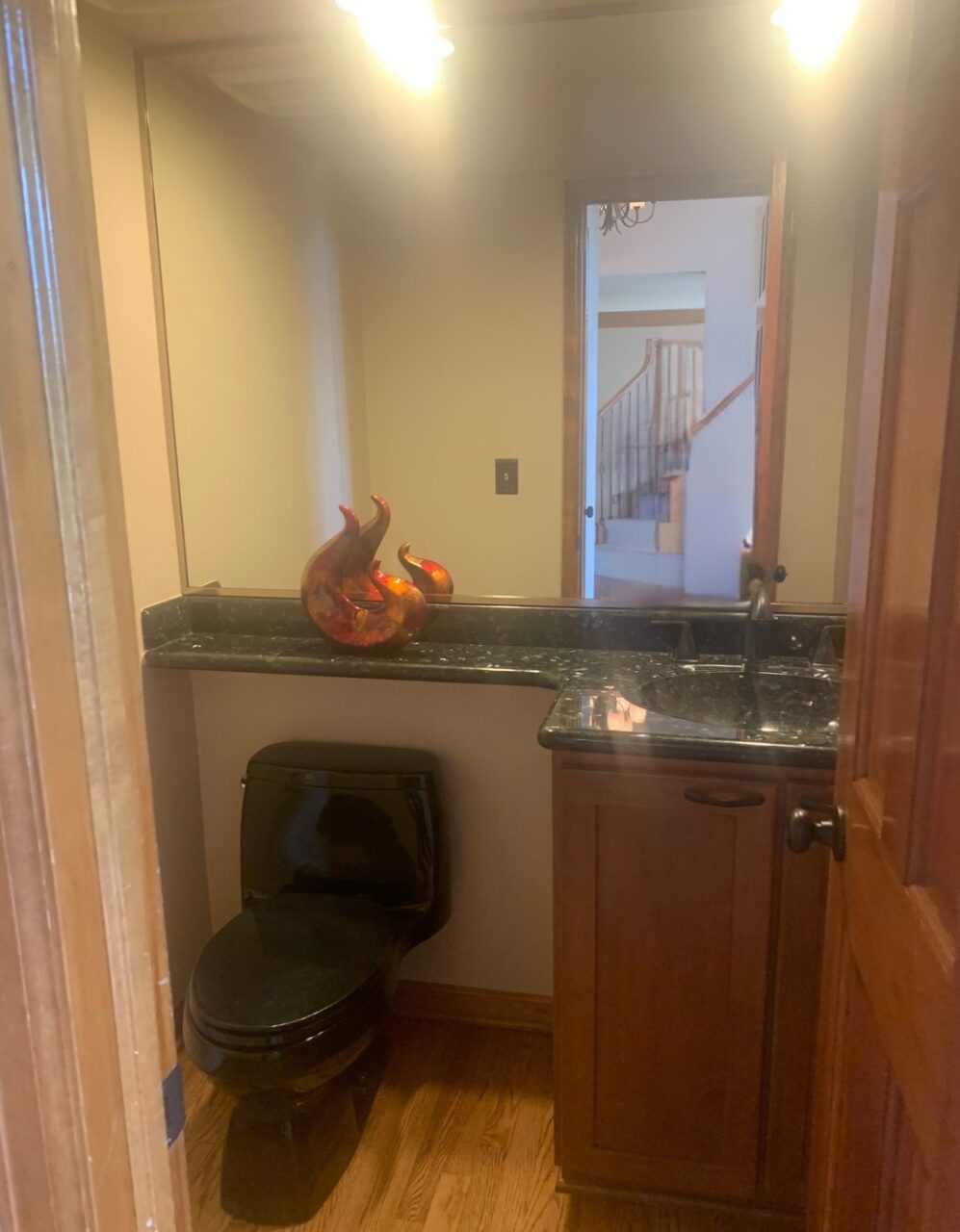
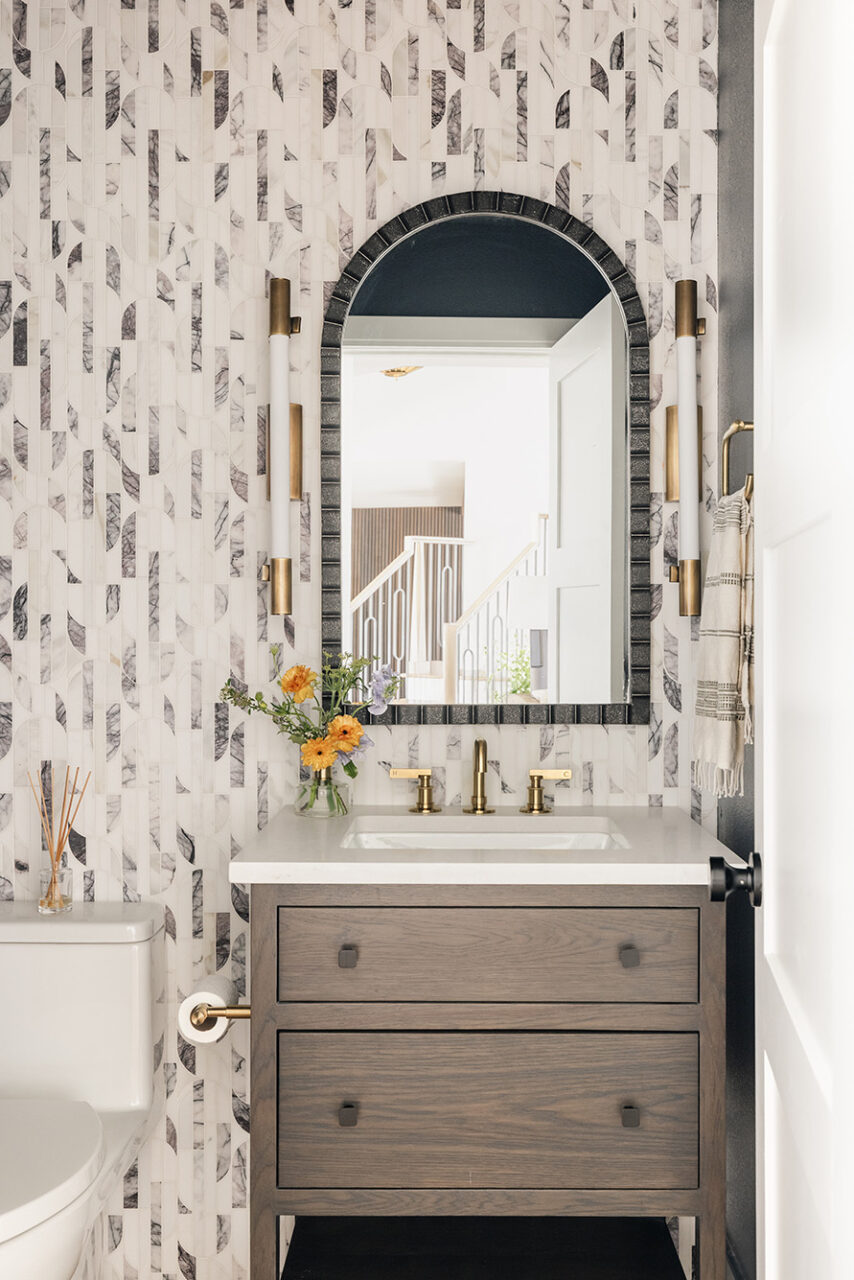
Haddad ditched the powder bathroom’s oversize mirror for a framed, arched version that feels more balanced with the standalone sink. But the real “wow” moment is the floor-to-ceiling Ann Sacks wall tile, which was worth the splurge. “My client wanted to make that space a jewel box and didn’t care how much it cost,” Haddad says. “She wanted a really luxurious moment for her guests.”