

The Local newsletter is your free, daily guide to life in Colorado. For locals, by locals.
When a 126-year-old Denver Square in the Clayton neighborhood went on the market in 2024, its listing included a caveat: “Home needs it all…the sky is the limit for someone with imagination.”
Local interior designer turned real estate developer Jordan Bagus was just that someone. Through her firm Larapin Design, Bagus buys, sells, and thoughtfully updates old—oftentimes neglected—houses. So instead of being deterred by this home’s crumbling front steps and peeling layers of wallpaper, she saw potential in its curved wood staircase, diamond lite windows, and sturdy pine floors. “I saw it as an opportunity to show that, even in the most extreme cases of neglect, old homes can almost always be saved,” Bagus says. “It was an architectural playground in a way.”
In August 2024, she bought the 3,000-square-foot property perched on a hilltop on Bruce Randolph Avenue for $509,000 and spent the next 10 months renovating it. “There was a lot of stress and sleepless nights,” Bagus says of her biggest project to date. “But [when it was completed] some of the neighbors came to an open house and told me how grateful they were, so that makes it all worth it.”
During a recent tour of the revived home, which is currently listed for $995,000, Bagus gave 5280 a room-by-room rundown of how she restored the property’s original beauty and modernized it for generations to come.
Exterior
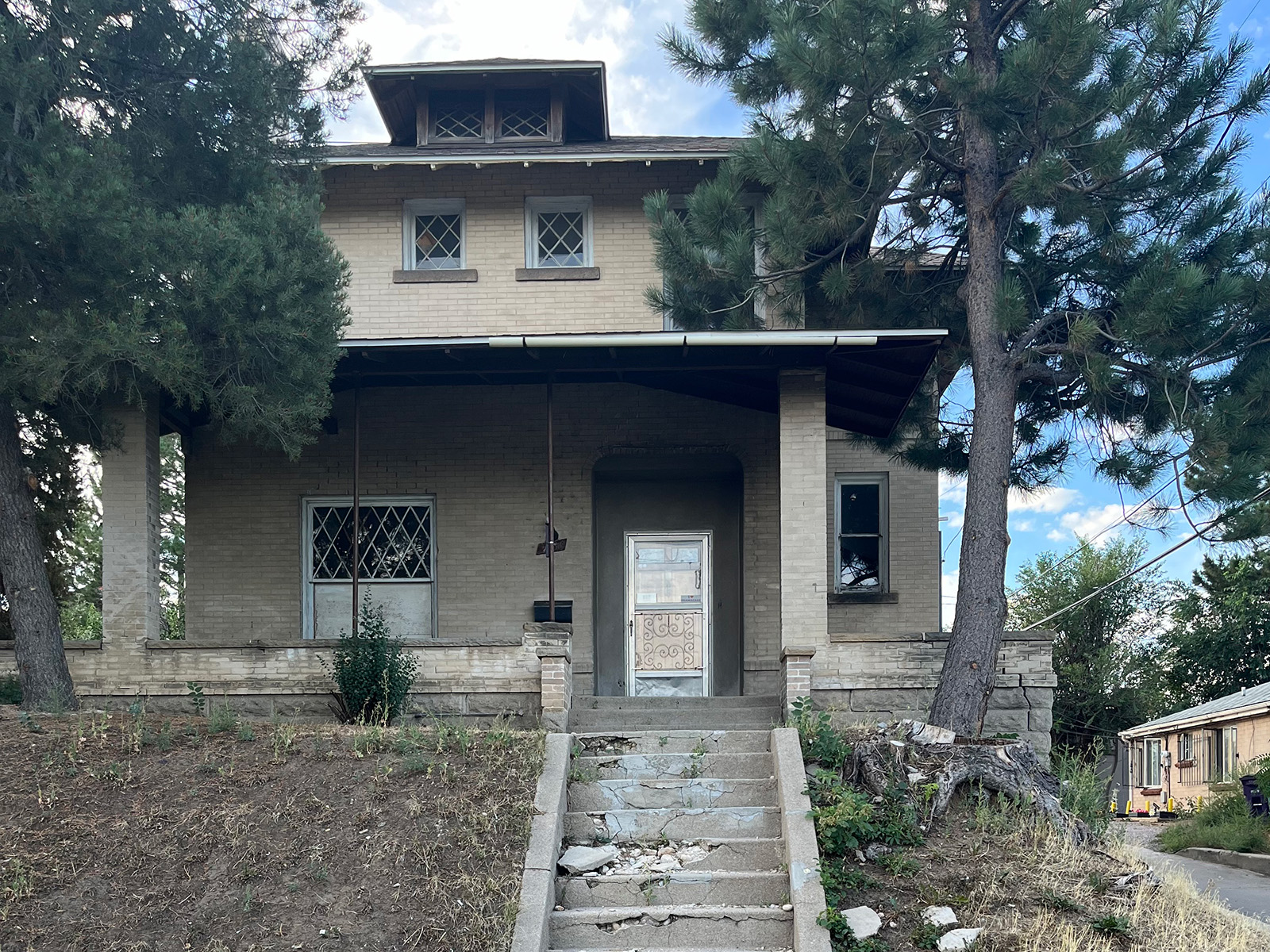
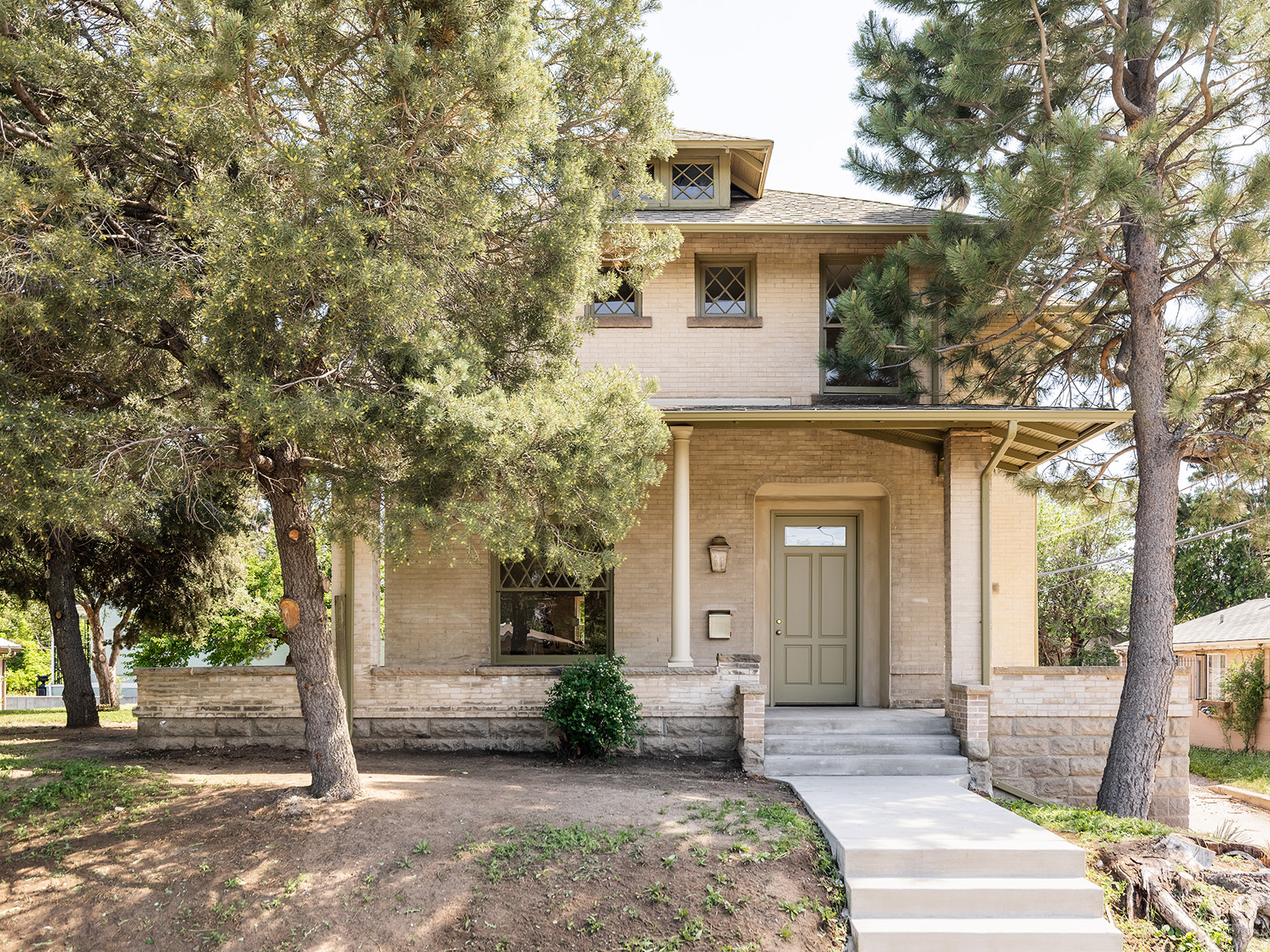
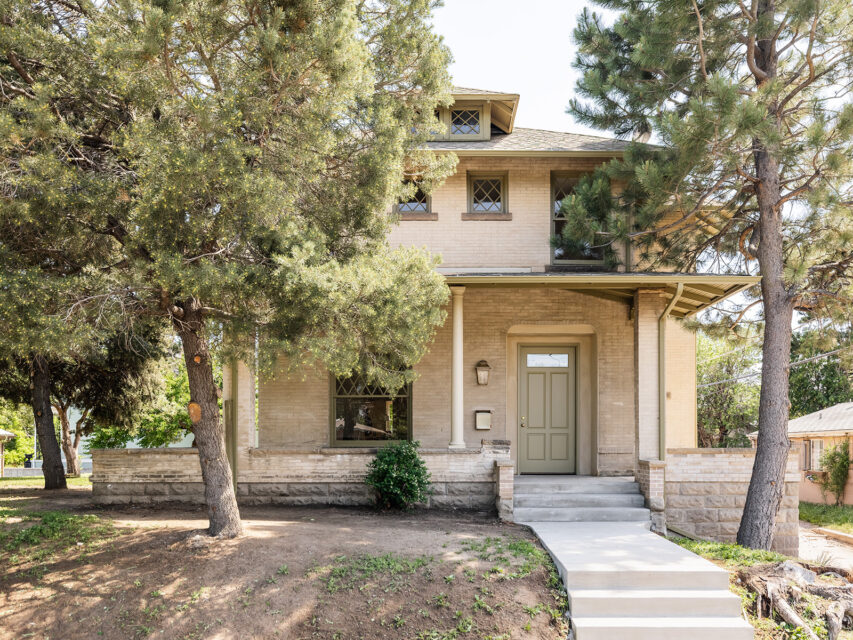
To boost the home’s curb appeal, Bagus and her team made a few small but significant changes: They replaced the crumbling, weather-worn concrete steps; swapped out a cheap front door for a bigger, solid-wood version; and restored and painted all the window frames a sage green. The home’s blonde brick facade received a facelift with tuck-pointing (repairing the mortar between bricks) and new gutters. Although Bagus didn’t have the budget for landscaping, she leveled the previously uneven yard so future owners can easily add a patio. “I see that as an opportunity to have a secret gardenlike space,” she says. “There are so many mature trees and shrubs to work with already.” In fact, the overgrown yard’s pine, Russian olive, and apple trees inspired the interior color palette’s warm, earthy tones.
Living Spaces
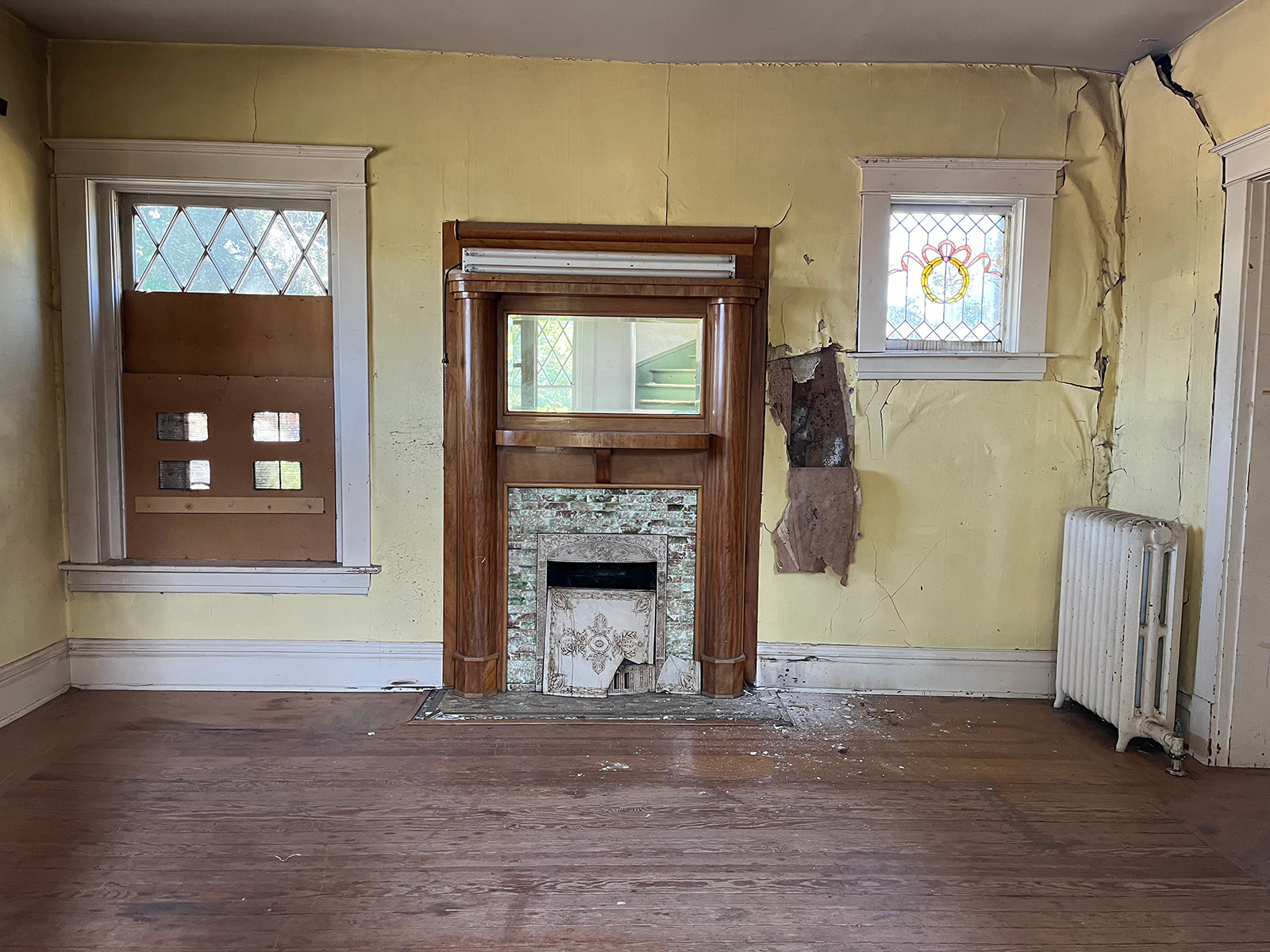
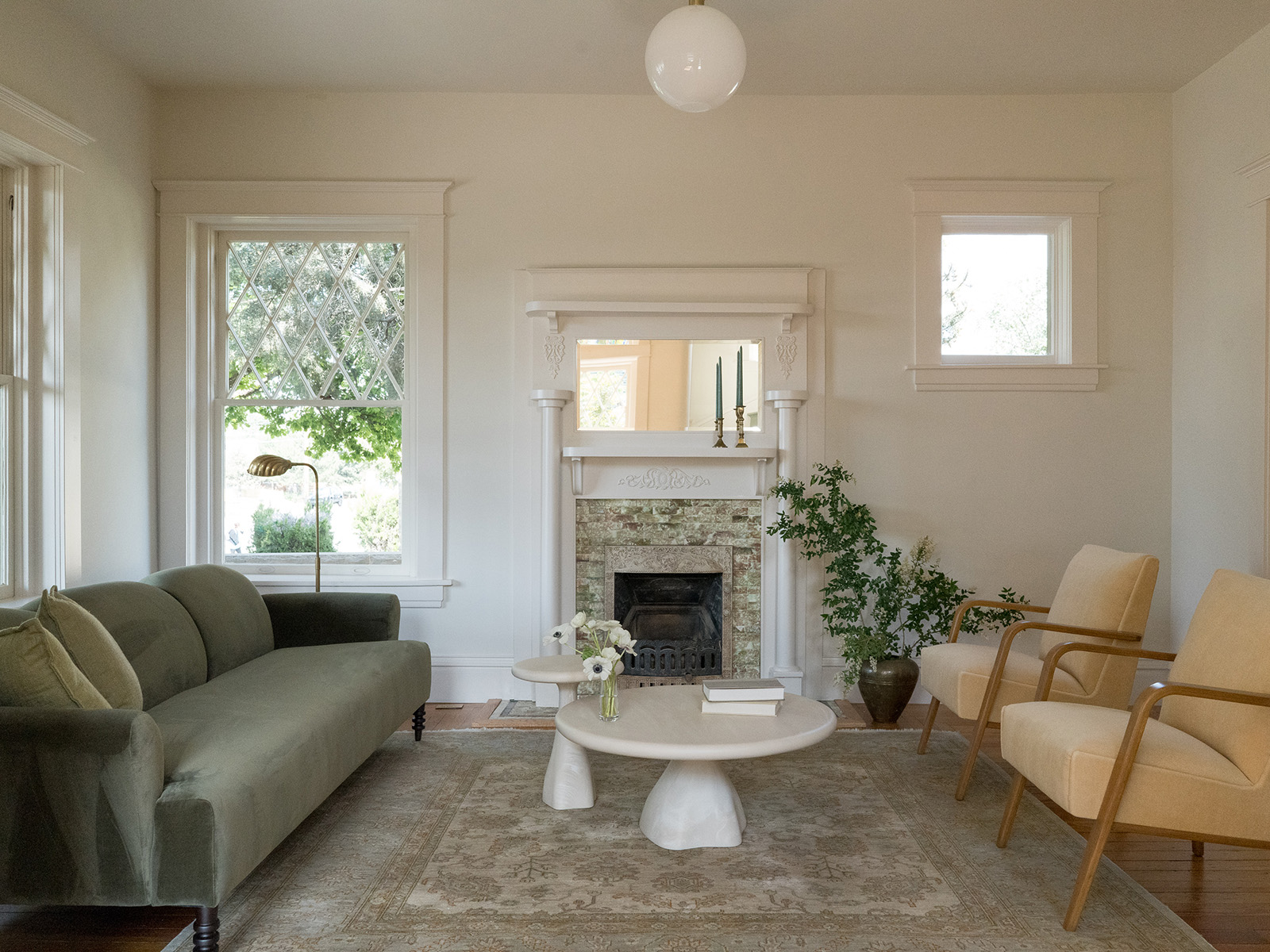
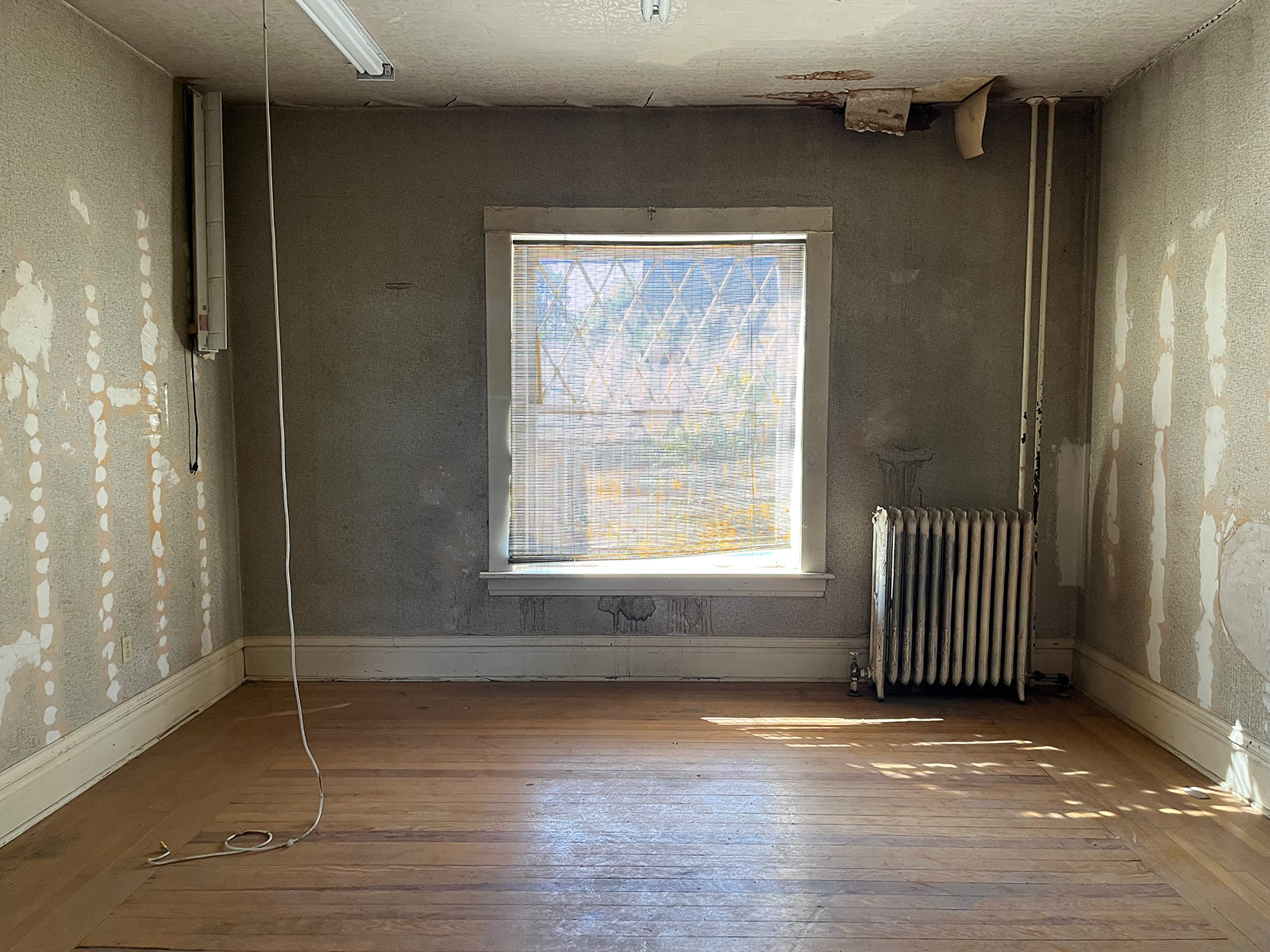
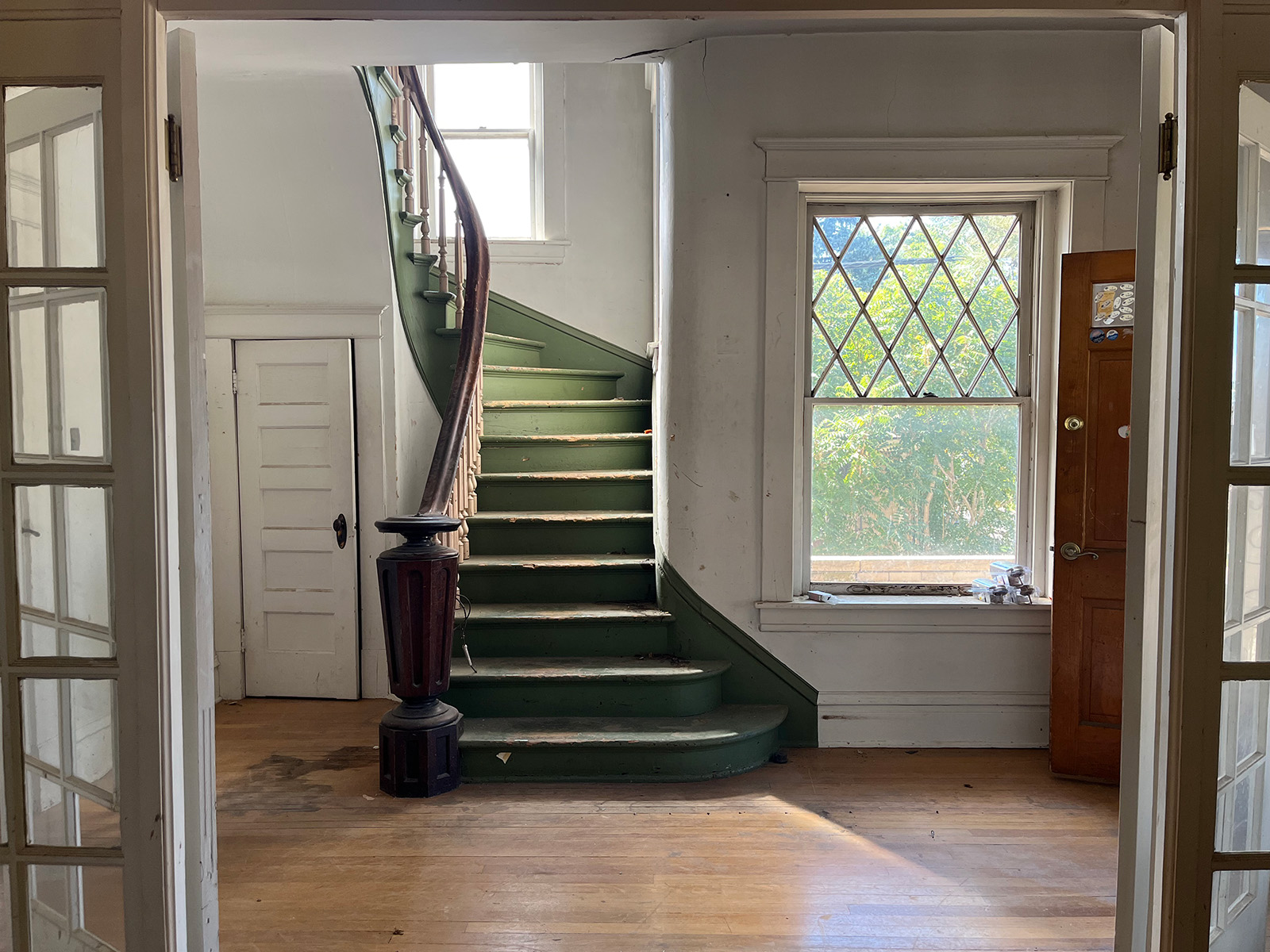
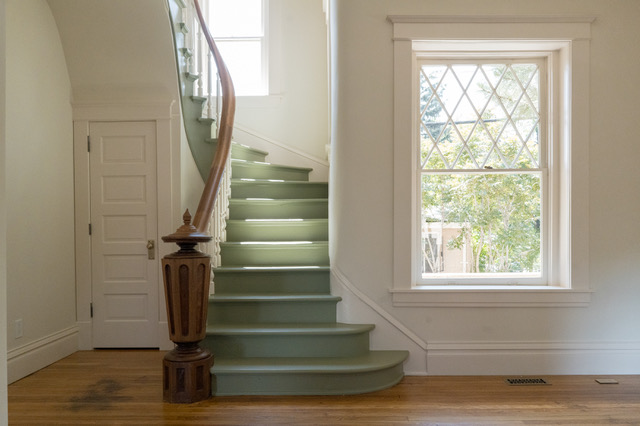
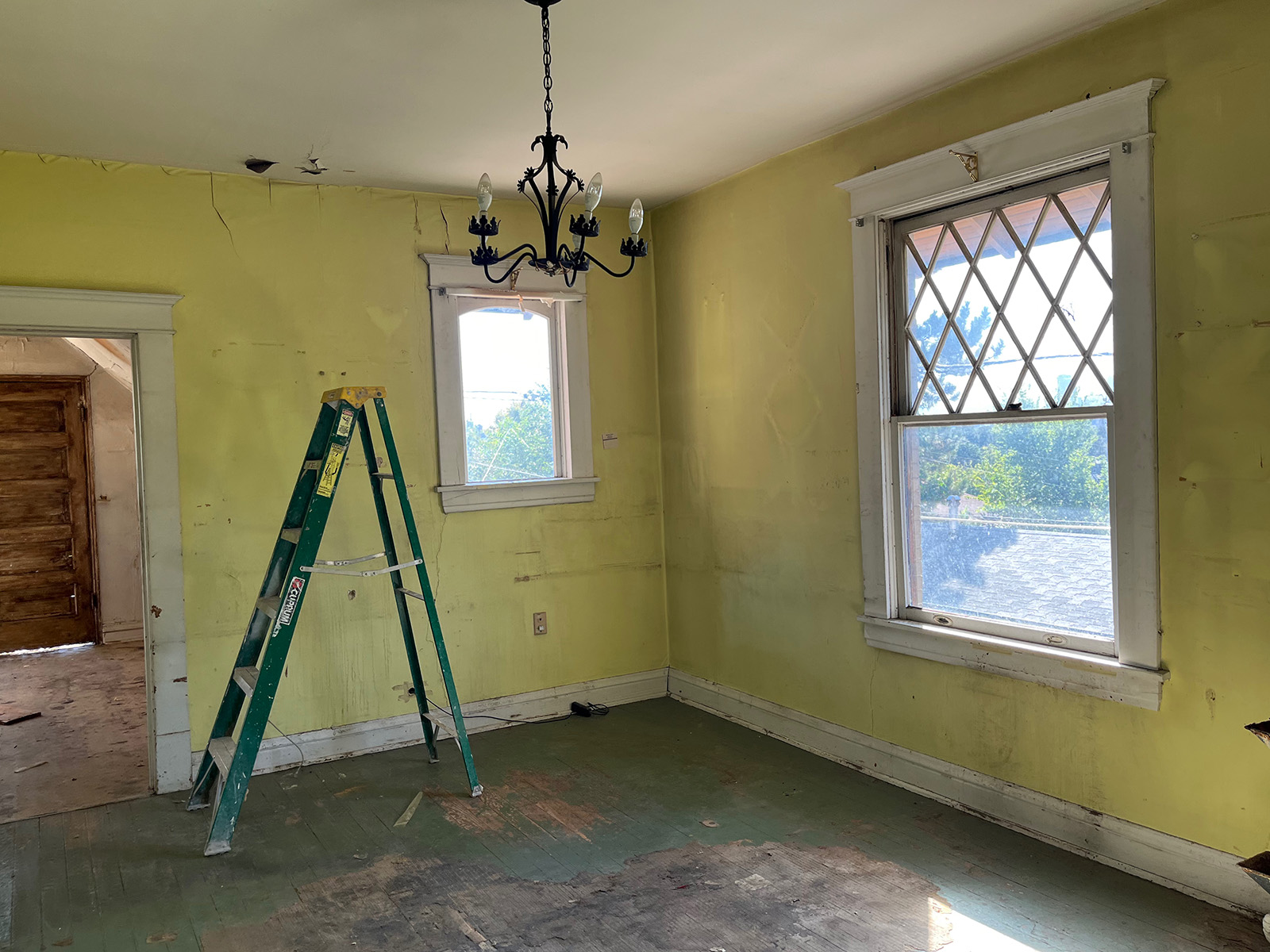
At first glance, some of the home’s walls looked like they were caving in. But the culprit was actually multiple layers of peeling, water-damaged wallpaper. “Steaming that off is impossible,” Bagus says, “so we put in all new drywall instead.” To maintain the home’s character, she saved the original molding and casings, restored them, and reattached them to the new walls. “I would say 70 percent of [the trim] you see in here is original and then the other 30 percent was purchased new to match,” Bagus says. In the front living room, she melded old and new on the fireplace surround by replacing broken pieces of the original green-and-pink tile with a near-identical modern version. And many of the rare diamond lite windows—some of which had 32 individual panes of glass—needed some TLC.
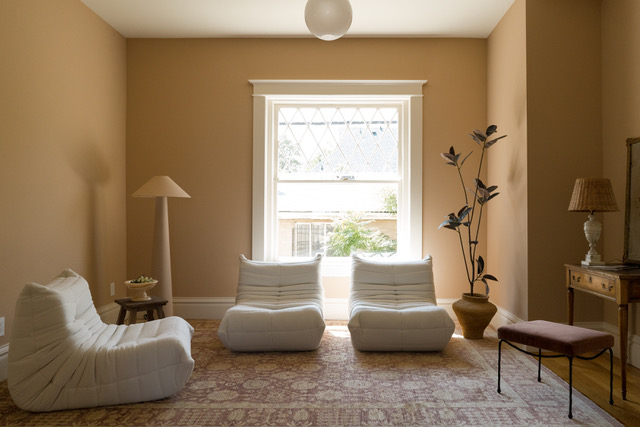
Bagus’ design eye didn’t stop at the hard finishes. “I was very clear in my vision for the furniture that I wanted to display in the home—an important final layer and really a continuation of the overall design,” she says. “I didn’t want clutter, or pieces that felt like filler, as you so often see in home staging.” She scored several pieces on Facebook Marketplace, including the living room’s set of Thonet armchairs, which she had reupholstered in an apricot mohair fabric. To source additional pieces with character, she worked with local real estate stager Dear Leroux Interiors and online vintage furniture vendor Refound Goods. (Like the plush white chairs seen in the peachy-hued sitting room? They, and several other items in the home, are now for sale on Refound Goods’ website.)
Dining Room
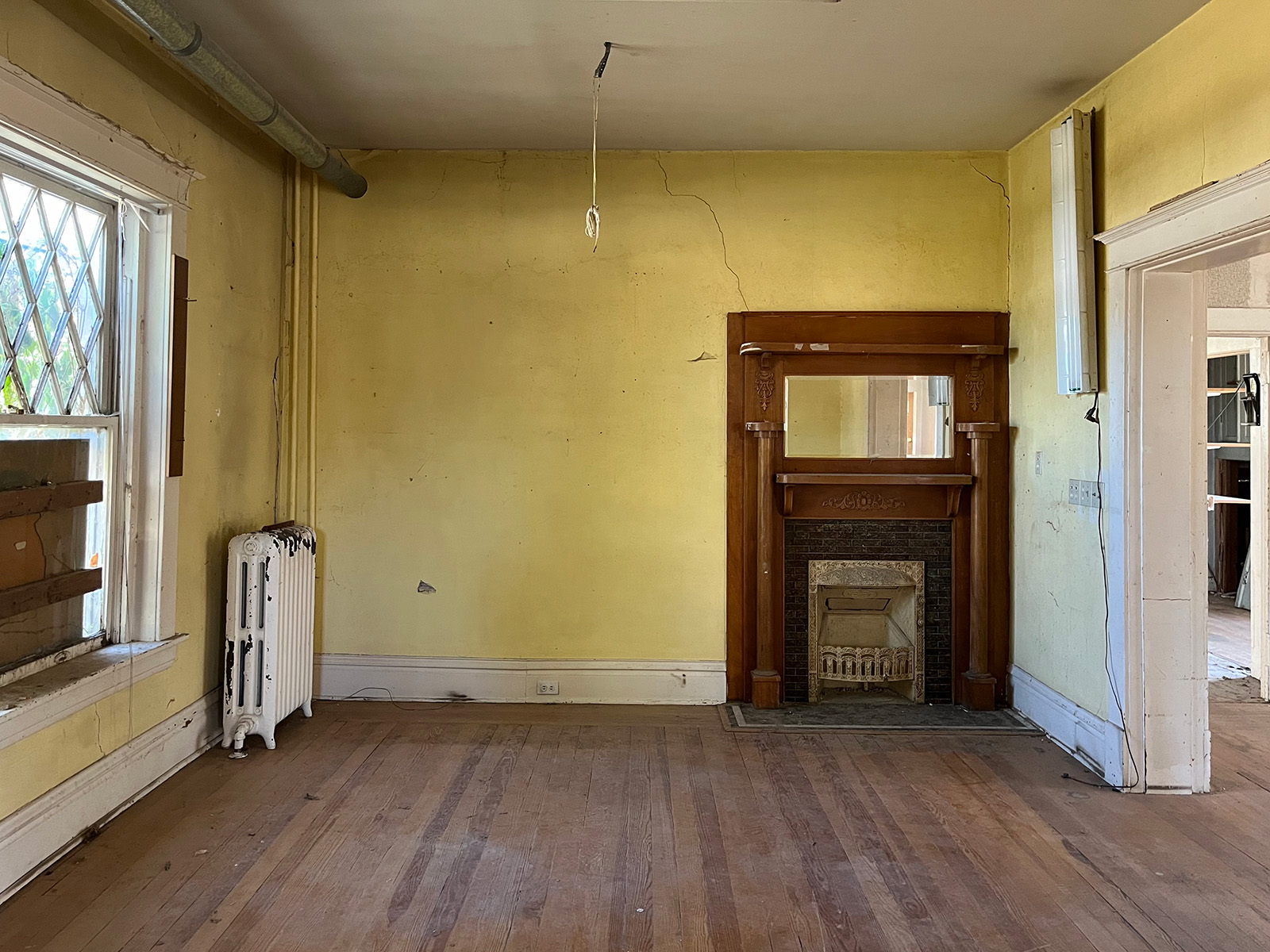
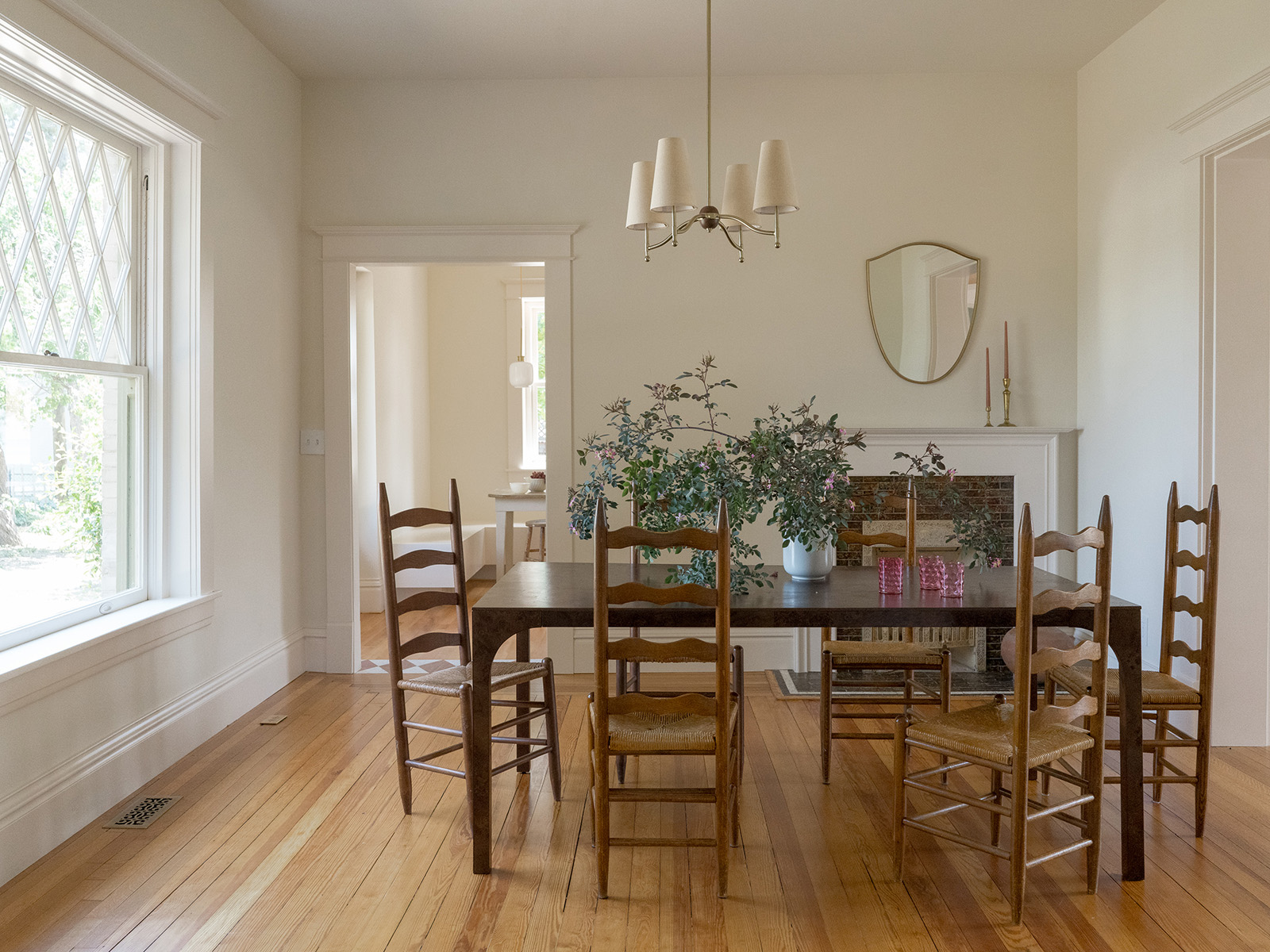
Like many of the home’s main living spaces, the formerly butter-yellow dining room was painted a creamy white hue. Bagus pared down the second fireplace by moving its mantle to the living room fireplace and reframing it with a simpler white surround. The home’s original pine and oak floors were refinished in every room except for the kitchen, where they needed to be replaced entirely. “When I saw the new floor meet the old floor, I really didn’t like it,” Bagus says about the transition from the kitchen to the dining room. Her fix? Using leftover tile from the downstairs powder room as a makeshift threshold between the two spaces.
Kitchen
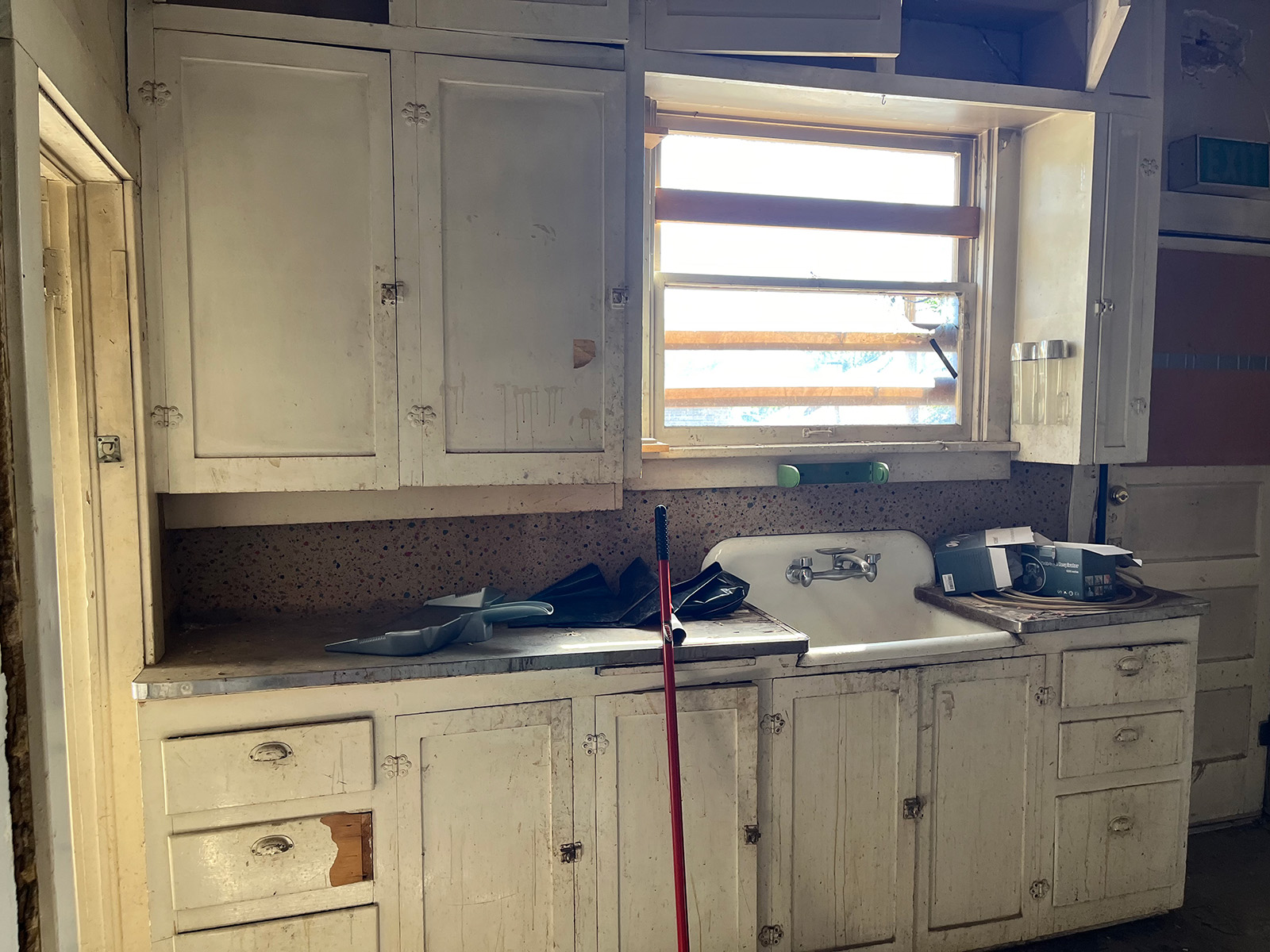
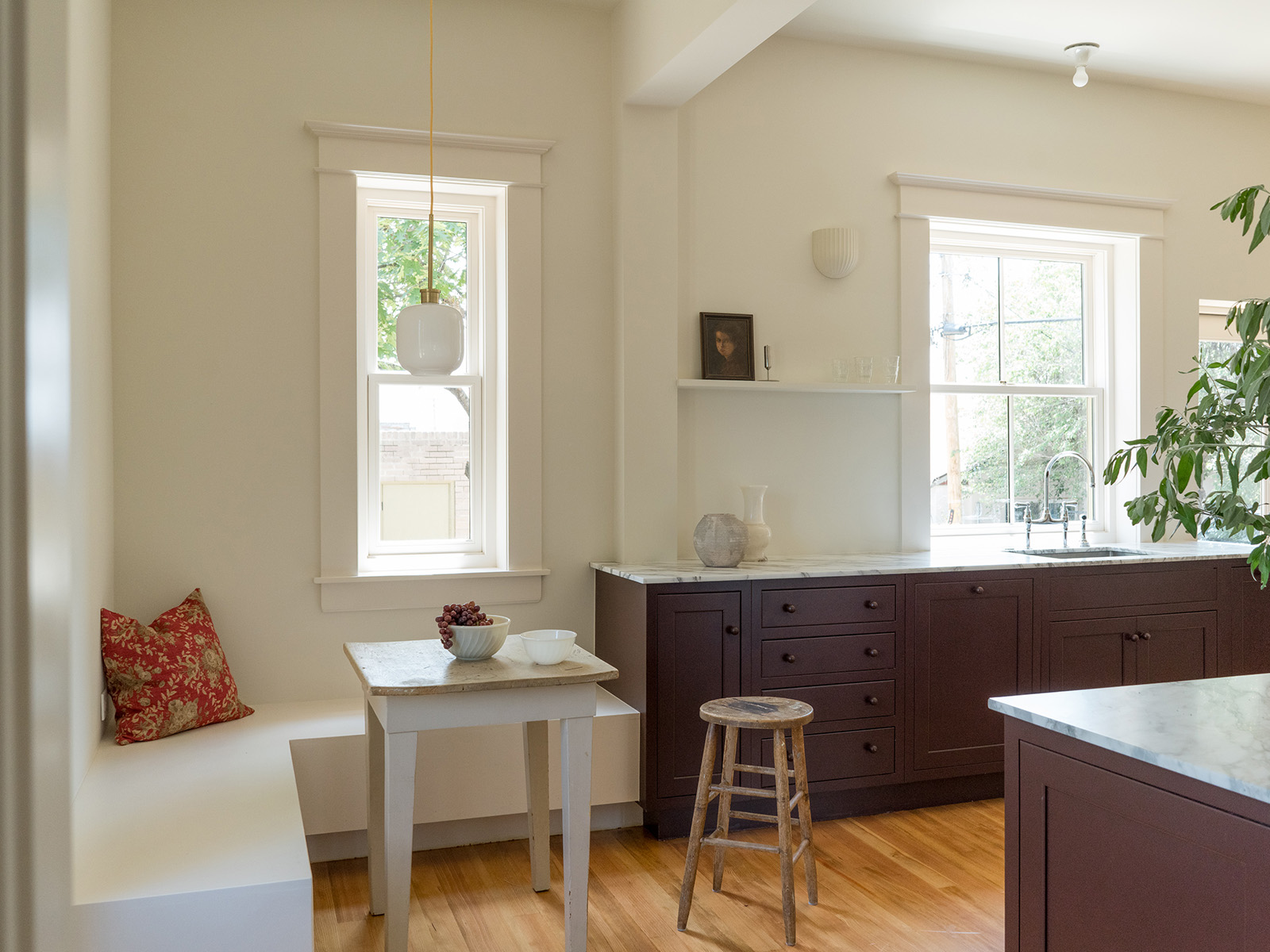
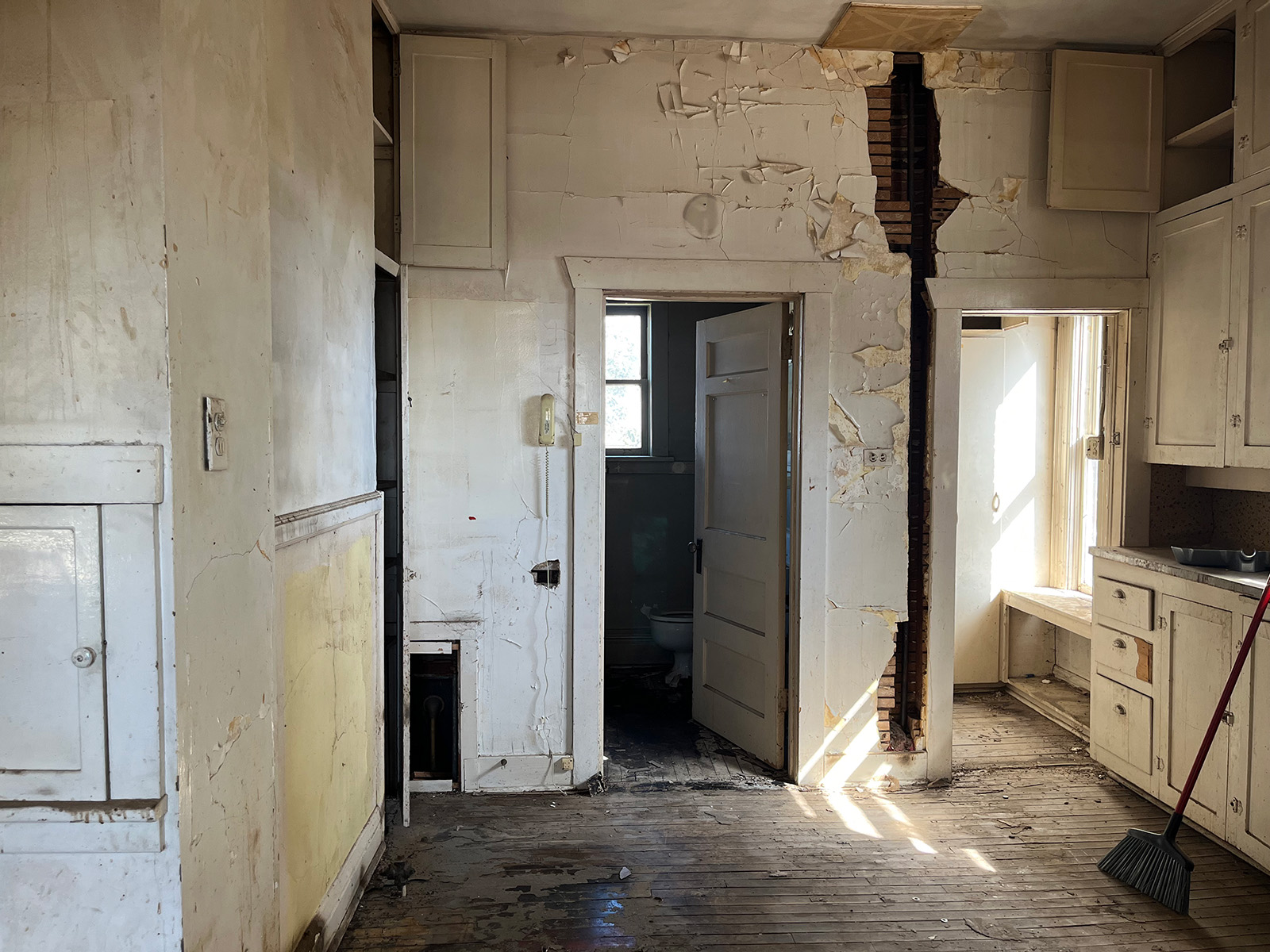
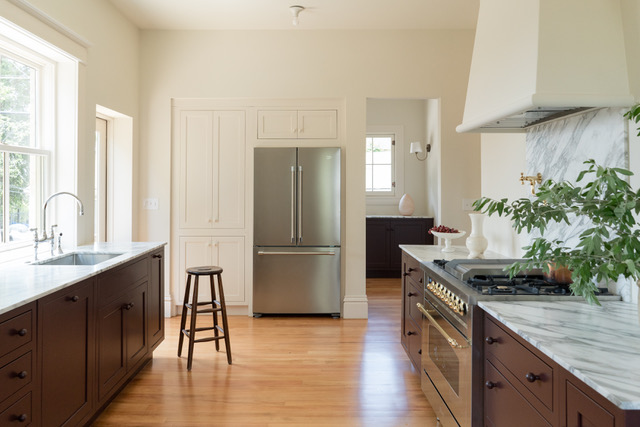
“This area probably received the most work, and there wasn’t much that was salvageable in here,” Bagus says. The cabinets, flooring, and an adjacent bathroom and closet were torn out to make room for Calacatta marble–topped cabinetry, an Ilve range with a custom hood enclosure, French doors that lead to the side yard and let in ample sunlight, and a breakfast nook with a built-in banquette. “I did not let any empty space exist, because what’s missing in these old houses is storage,” Bagus says. She finished the kitchen with several modern light fixtures, including a single milk-glass pendant that hangs above the eating nook. “I made the decision to go a little more contemporary with the lighting,” she says. “I’m not trying to create a museum; I’m not that much of a purist. I like the contrast of new and old in a home.”
Primary Suite
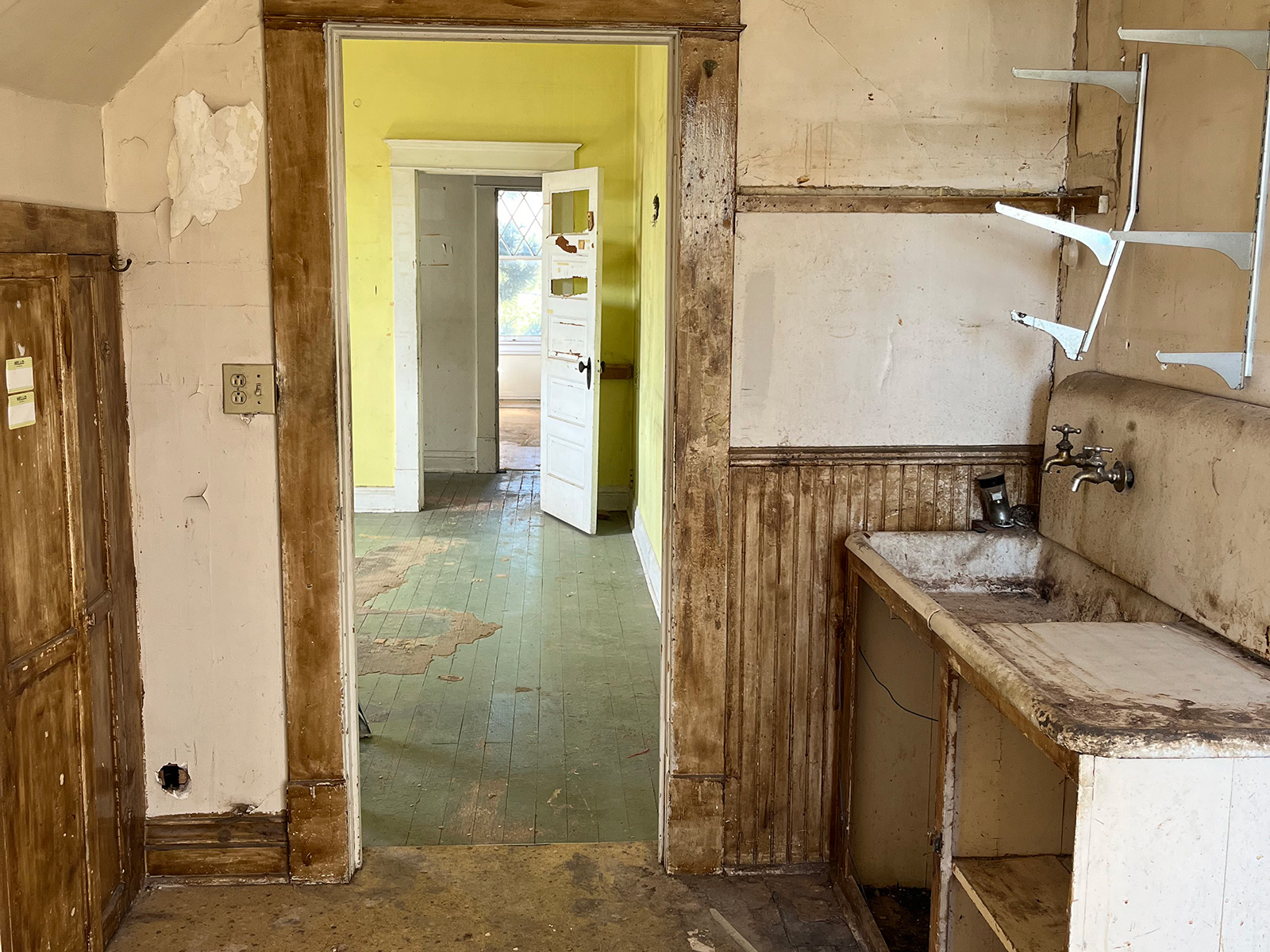
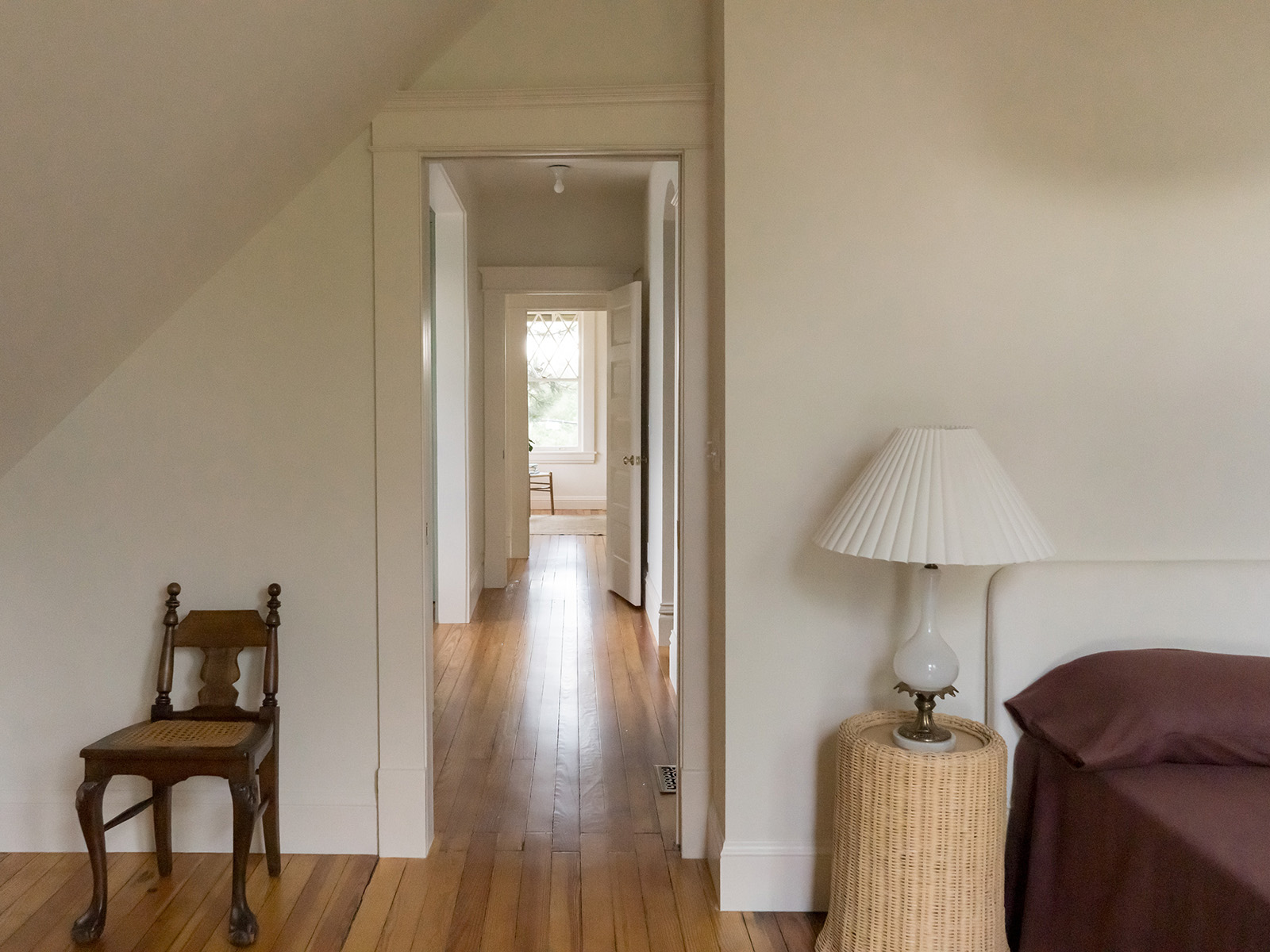
Up the winding staircase—which Bagus had restored and painted—are the home’s four bedrooms. During one of her initial visits, Bagus walked past the primary bedroom into an adjacent, closet-like room at the back of the house with a sink, two large windows, and a door that led to nowhere. “It was the first snow of the year, and I just watched it coming down out the windows and was like, ‘This has to be the bedroom,’” she says. So she opened up the low ceilings to reveal the pitched roofline, installed new windows, and took the door and sink to an architectural salvage.
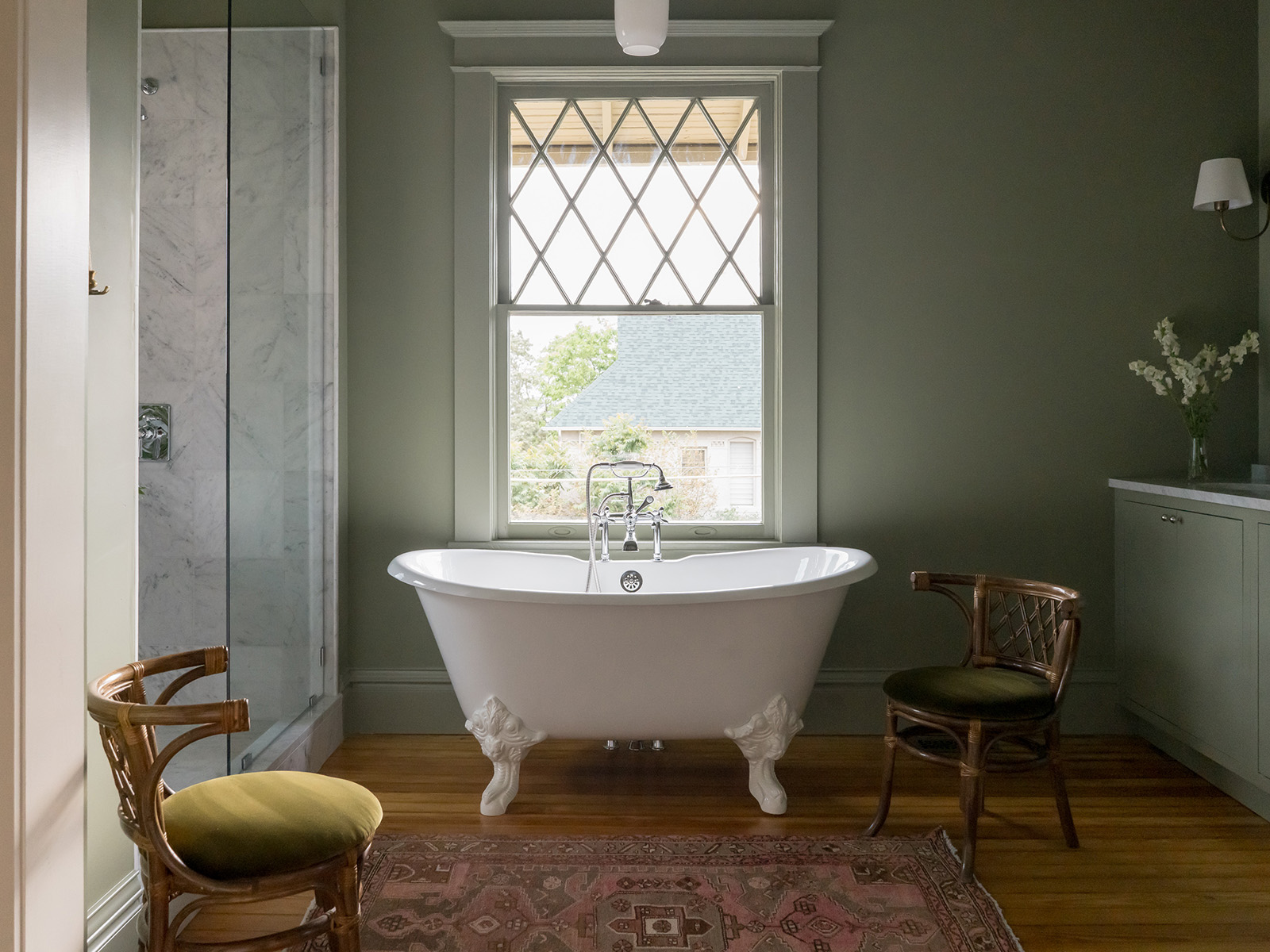
The former primary bedroom was transformed into a spacious bathroom with a rain shower and dual vanity. But the focal point is the clawfoot tub, which Bagus purposefully centered under a window that frames views of the Denver skyline and mountains beyond. “You can see the glowing Capitol building,” Bagus says. “It’s incredible.”