


The Local newsletter is your free, daily guide to life in Colorado. For locals, by locals.
When Birdie Johnson was training to become a doula, she found herself sitting in a Denver-area hospital as a nurse interviewed patients checking into the labor and delivery ward. “There was an Asian woman, a white woman, and a Black woman,” Johnson recalls. “And the nurse asked the Black woman, ‘Have you done any drugs or alcohol today?’ The other two patients didn’t get that question.” Johnson confronted the nurse, but the woman insisted she had treated all the patients equally. “She truly hadn’t realized,” Johnson says.
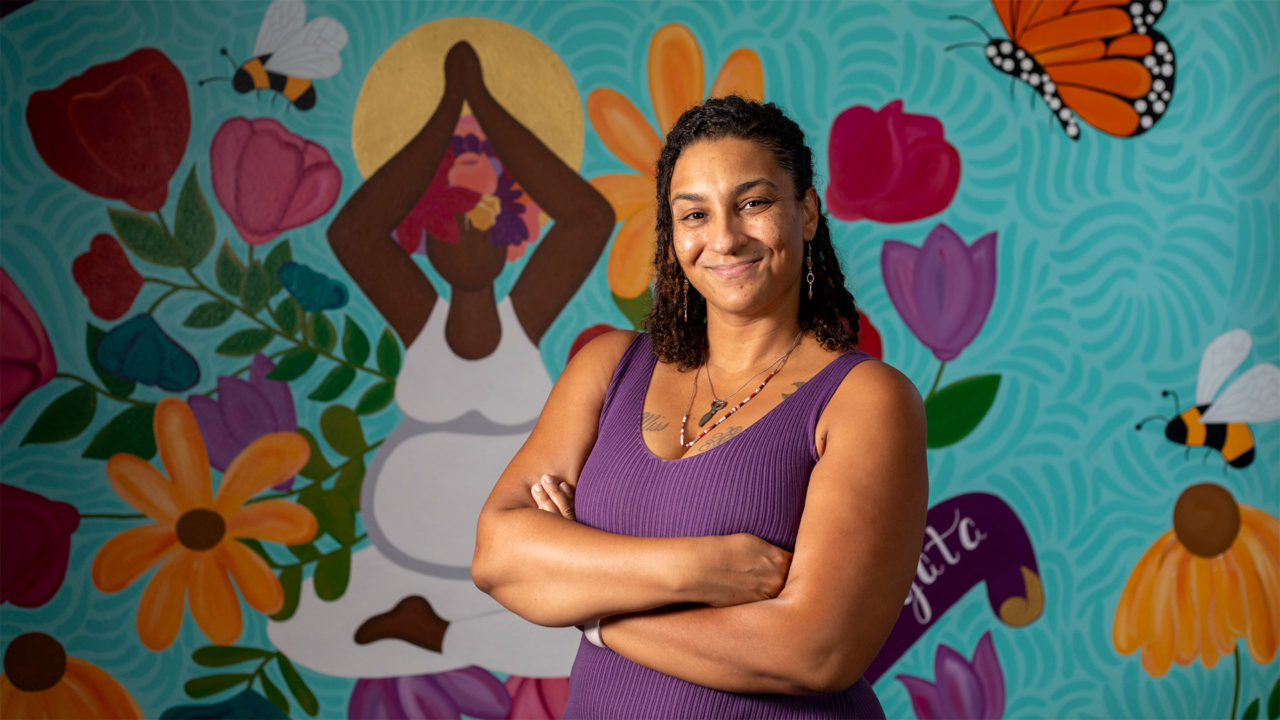
Moments like these led Johnson in 2021 to found Mama Bird, an Aurora-based nonprofit that provides doula services, support groups, and other resources for moms of color. The group, which has three full-time employees and a larger network of contractors and partners, provides low-cost or no-cost care to clients in need.

At Mama Bird, you can find a doula to work with you from prenatal through postpartum care; sign up for a back-to-work breastfeeding class; be referred to a nonwhite lactation consultant or pediatrician; or take a free yoga class. “I try to give women the resources I wish I’d had,” Johnson says.
Editor’s note: The following conversation has been edited for length and clarity.
5280: Why did you start Mama Bird?
Birdie Johnson: When I first became a doula, I was working with predominantly white clients, and I learned there were big differences in our birthing experiences. For example, one mom complained that her doctor was asking too many questions. That had not been my experience at all. Or the fears that birthing people express: White clients were usually worried about the pain or something being wrong with their child. Black women were worried they or their babies might die.
Then I started working with BIPOC women, who asked for resources led by people who looked like them. I didn’t yet know a lactation specialist of color or a midwife of color, but I was like, Maybe I can help find these resources. Also, many of these women couldn’t afford a doula, and I wanted them to have a better experience than I’d had.
How did the system fail you?
I almost lost my life, and I did lose my first child’s life. My health care providers gave very little patient support. No one told me what a bloody show [vaginal discharge that can be a sign labor is approaching] was, so when it happened, I was terrified.
I went into labor around 22 weeks, and when I arrived at the emergency room bleeding out, they just told me to have a seat. Eventually, another patron in the waiting room insisted they take me back, and I immediately delivered my baby and passed out. Later they told me that they took the baby and buried it.
And the provider, his first words to me weren’t, “I’m sorry.” They were, “What’s your plan for birth control?” It was traumatizing.
How can a doula help women have better experiences?
We can help you speak up and ask questions or push back. We often see women feeling pressured to make choices out of fear, like when a provider is saying you need an induction or you need a C-section. Well, let’s slow down and really have a conversation first. Sometimes there’s a code word between a doula and a client, for example, so that if a client really doesn’t like something, she says “pineapple.” That’s a way of calling for help and asking her doula to advocate for her.
A misconception about doulas is that they only help during birth, but they can also support people going through miscarriages, abortions, and postpartum, right?
Absolutely. There are doulas who work with people during infertility and during bereavement. Postpartum is big for us—we do home visits once a week for at least six to eight weeks after birth. Maybe that looks like taking the baby so they can shower or doing light chores or just listening while they process their birth. We can refer them to a therapist or a mom’s circle. It’s really about providing a soft landing into parenthood.
4 Organizations in Denver Providing Support for New (or Hopeful) Moms
1. NayaCare
This Denver company will send medical providers to your home for newborn visits so you don’t have to travel to a doctor’s office. The staff also includes a maternal mental health counselor and pelvic health physical therapist.
2. Nurse-Family Partnership
This nationwide nonprofit pairs low-income parents with a nurse who provides in-home support. Since 2000, it’s served more than 3,500 Colorado families.
3. Mile High Hope Support Group
Resolve, the national infertility nonprofit, hosts support groups where aspiring parents can discuss the challenges of fertility treatment and pregnancy loss. The Mile High Hope chapter in Aurora holds both in-person and virtual meetings monthly.
4. The Mom Walk Collective
Making fellow mom friends and fighting social isolation can be daunting. This group offers a simple solution: free monthly meetups to walk a trail, strollers and all, while chatting with other moms. Meetups are available in Denver, Westminster, Arvada, Greenwood Village, Centennial, Littleton, Parker, Thornton, and Boulder.
Read More: