

The Local newsletter is your free, daily guide to life in Colorado. For locals, by locals.
Whether it’s a lack of political ads on television or an absence of campaign signs plastered around the city, things are decidedly quieter in Denver ahead of this year’s election. Unlike in 2024, the presidency isn’t at stake, nor (thankfully) is there a lengthy state ballot. Coloradans are also still a year away from voting in the state’s gubernatorial and U.S. Senate elections, along with a series of U.S. House of Representatives races that will help determine which party holds a majority in that chamber.
But that doesn’t mean you should skip your civic duty this November. Voters across Colorado and in Denver County will weigh in on key issues this fall, including the state’s free school lunch program and the nearly $1 billion Vibrant Denver Bond.

To help you cast your vote with confidence, we’re breaking down every question that will appear on Colorado and, specifically, Denver County ballots.
Jump Ahead:
Colorado State Ballot Measures
Proposition LL: Retain Money for the Healthy School Meals for All Program

What you’ll see: “Without raising taxes, may the state keep and spend all revenue generated by the 2022 voter-approved state tax deduction limits on individuals with incomes of $300,000 or more and maintain these deduction limits in order to continue funding the healthy school meals for all program, which pays for public schools to offer free breakfast and lunch to all students in kindergarten through twelfth grade?”
What it means: The Healthy School Meals for All program, which was created in 2022 with the passage of Proposition FF, makes free breakfast and lunch available to all K–12 public school students in Colorado, regardless of their family’s income. The program was funded by limiting tax deductions for Colorado households earning at least $300,000 a year in federal adjusted gross income. Due to higher-than-expected inflation and student participation, the estimated tax revenue has not been enough to cover the cost of the program.
Under the Taxpayer’s Bill of Rights (TABOR) in the Colorado constitution, the state needs permission from voters to keep any money collected from the 2022 measure that exceeded the legislature’s original estimate; the excess is about $12.4 million. If the proposition passes, the state will spend that money on the Healthy School Meals for All program, and maintain the existing tax deductions. If it’s voted down, that $12.4 million will be returned to those (high-earning) households and they will pay lower taxes in 2026.
Early outlook: Proposition FF passed relatively easily in 2022 with about 57 percent of the vote. During the 2025 Colorado General Assembly session, the Healthy School Meals for All program was championed primarily by Democrats, with only one Republican between the House and Senate voting in favor of it.
Proposition MM: Increase State Taxes for School Meals and Food Assistance Programs
What you’ll see: “Shall state taxes be increased by $95 million annually…to support access to healthy food for Colorado kids and families, including the Healthy School Meals for All program, and, in connection therewith, increasing state taxable income only for individuals who have a federal taxable income of $300,000 or more by limiting itemized or standard state income tax deductions to $1,000 for single tax return filers and $2,000 for joint tax return filers for the purposes of fully funding the Healthy School Meals for All program to continue paying for public schools to offer free breakfast and lunch to all public school students while also increasing wages for employees who prepare and serve school meals, helping schools use basic, nutritious ingredients, instead of processed products, and ensuring that Colorado grown and raised products are part of school meals; supporting the Supplemental Nutrition Assistance Program (SNAP)…and allowing the state to retain and spend as a voter-approved revenue change all additional tax revenue generated by these tax deduction changes?”
What it means: Though they’re separate measures, Propositions LL and MM are both designed to boost funding for the Healthy School Meals for All program, but through different means. If passed, Proposition MM would raise state income taxes for households earning $300,000 or more annually, averaging $327 more for single filers and $574 more for joint filers. Analysts estimate the tax hike would affect six percent of Colorado households. Should the state bring in enough money to bankroll the meal program, the extra funds would be used to help with SNAP-related costs.
If the proposition doesn’t pass, existing state income tax levels would be unchanged. If both Propositions LL and MM fail, the Healthy School Meals for All program will end in January 2026 and only low-income students will have access to free breakfast and lunch.
Early outlook: As is the case with Proposition LL, the push to get the measure passed is overwhelmingly one-sided. Keep Kids Fed Colorado, the committee supporting both propositions, has raised $352,000 as of late September. Though the two initiatives aren’t popular with elected Republicans in the state, there doesn’t appear to be an organized effort opposing the propositions.
Vibrant Denver Bond
Ballot issues 2A through 2E all pertain to the Vibrant Denver Bond, with each Denver County ballot issue focusing on different projects within the initiative. If the whole package passes, the city would take on roughly $1 billion in debt, which it would pay off through property taxes over several decades. Property taxes can only be used to pay off general obligation debt, so it cannot be used to make up Denver’s budget shortfall.
Ballot Issue 2A
Cost: $441.42 million, which could accrue up to $464.58 million in interest for a maximum repayment cost of $906 million
What it will do: This ballot issue, which would fund transportation and mobility infrastructure, accounts for the largest chunk of the bond. Just shy of $140 million of it would go to repairing and rebuilding the 6th Avenue and 8th Avenue bridges near I-25, both of which are in the vicinity of the proposed new Denver Broncos stadium at Burnham Yard. The two viaducts carry nearly 80,000 vehicles combined per day.
Other improvements include building an underpass near the National Western Complex to connect Globeville and Elyria-Swansea ($75 million), wider sidewalks and refreshed public spaces in the Sante Fe Arts District ($29 million), and replacing the 6th Avenue and Lincoln Street bridges over Cherry Creek in downtown. You can see a full list of transportation projects on the city’s website.
Ballot Issue 2B

Cost: $174.75 million, which could accrue up to $182.25 million in interest for a maximum repayment cost of $357 million
What it will do: While 2A accounts for the vast stretches of concrete and blacktop that blanket the city, 2B focuses on Denver’s green spaces. The headliner of the plan is the $70 million renovation of Park Hill Golf Course, which would transform the former 155-acre links into the city’s fourth-largest urban park. Officials will hammer out the details of the new park following the design and public engagement process, but so far the plan includes irrigation, landscaping, parking lots, a playground, sports fields and courts, picnic areas, a water play area, and a dog park.
Beyond that, $20 million would go to acquiring land for a new recreation center in southeast Denver and building a skate park in the Kennedy neighborhood; $15 million would be used to rebuild the outdoor pool at Sunnyside’s Aztlan Recreation Center; and $7 million would be spent on reviving the city-owned Echo Lake Lodge in Idaho Springs, which has been closed since October 2022.
Ballot Issue 2C
Cost: $30.1 million, which could accrue up to $26.9 million in interest for a maximum repayment cost of $57 million
What it will do: Unlike the first two elements of the Vibrant Denver bond, 2C would fund only two projects: building a new Denver Health Westside Family Health Center ($20 million) and expanding the Denver Children’s Advocacy Center ($10 million). The new health center would increase the number of appointments available and add new patient services, including enhanced pediatric and adult primary care, dental care, OB-GYN services, physical and occupational therapy, and radiology. The advocacy center would help streamline care and justice for child abuse survivors by bringing medical evaluations, forensic interviews, mental health care, and victim advocacy under one roof.
Ballot Issue 2D
Cost: $244.43 million, which could accrue up to $240.57 million in interest for a maximum repayment cost of $485 million
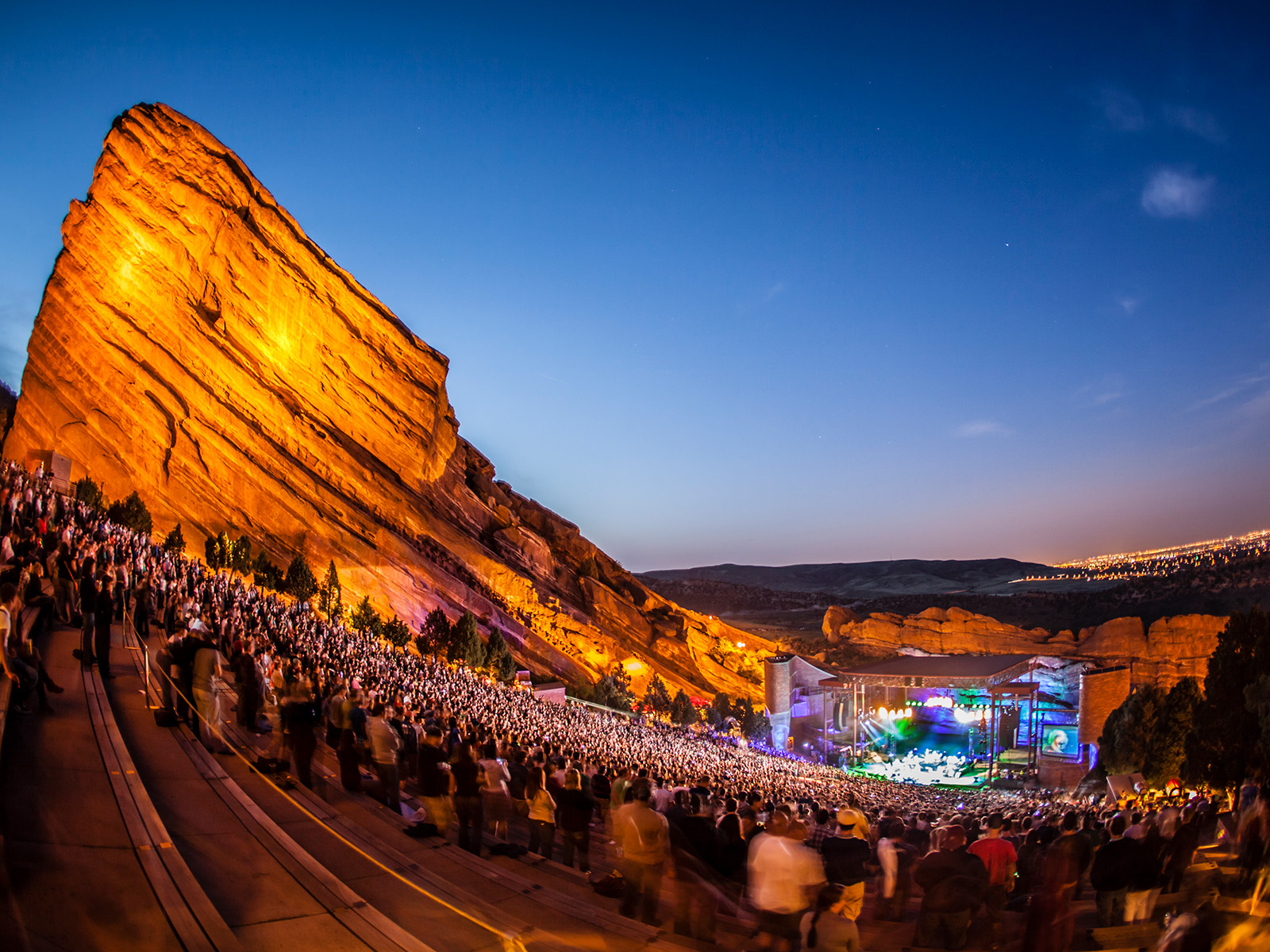
What it will do: The centerpiece of 2D is a single, $75 million training center for the Denver Sheriff, Fire, and Police departments, all of which now have separate facilities that need to be modernized and repaired. Red Rocks Amphitheatre would also receive a $35 million update to its backstage area to make it compliant with the Americans with Disabilities Act (ADA).
In addition, there are three $20 million projects included in 2D: renovating Boettcher Concert Hall and the Denver Animal Shelter, as well as building a new American Indian Cultural Embassy. See a full list of the projects on the city’s website.
Ballot Issue 2E
Cost: $59.3 million, which could accrue up to $34.7 million in interest for a maximum repayment cost of $94 million
What it will do: Much of 2E aims to address the need for affordable housing in Denver. Roughly three-quarters of the money allocated in 2E ($45 million) would go toward buying land for development or acquiring existing buildings to redevelop into affordable housing.
An additional $11.4 million would go to ADA-related improvements and maintenance at city-managed housing facilities, along with another $10 million for construction of a complex with a library and affordable housing at a yet-to-be-determined location in east Denver.
Early outlook: Although the five ballot issues are all part of the larger bond, they can pass individually—meaning that some projects may win the support of voters while others don’t. The Denver City Council voted unanimously in August to allow the bond proposal on the ballot. It’s the first time in four years a nine-figure bond package has been sent to Denver voters. In 2021, voters approved four of the five Rise Denver bond measures, totaling $260 million. The only one that didn’t pass was a $190 million project for a 10,000-seat arena and transforming a then-112-year-old building at the National Western Center into a public market.
Other Denver County Measures
Referred Question 2F: Change the name of the Department of Excise and Licenses
What you’ll see: “Shall the Charter of the City and County of Denver be amended to change the name of the Department of Excise and Licenses to the Department of Licensing and Consumer Protection, change the title of the Director of Excise and Licenses to the Manager of Licensing and Consumer Protection, add the Manager of Licensing and Consumer Protection to the Mayor’s cabinet, and update outdated language regarding licensing powers and duties?”
What it means: Good news, Denverites: This one is pretty straightforward. The measure would simply change the name of the Department of Excise and Licenses to the Department of Licensing and Consumer Protection. Department leaders requested the change to more accurately reflect the work they do. Among other services, this office issues business licenses, runs background checks on applicants for said licenses, and holds hearings on matters like liquor and cannabis license applications. The department does not handle excise taxes. The name change would come with no cost.
Referred Question 2G: Changes to at-large city council elections
What you’ll see: “Shall the Charter of the City and County of Denver be amended to change the method for electing the two at-large councilmembers by designating a Councilmember-at-large seat A and Councilmember-at-large seat B and requiring that a candidate for election to either seat be elected in the same manner as the Mayor, Auditor, and Clerk and Recorder?”
What it means: In addition to the 11 council members who represent their designated districts, the Denver City Council also has two at-large seats that represent the entire city. Currently, representatives for those spots are decided in a single election in which the top two vote recipients win. If 2G passes, it would create two separate at-large council races. It’s designed to address a common critique that candidates can win a seat in the existing system without receiving at least 50 percent of the vote, unlike their colleagues on the council who represent specific districts.
Early outlook: This question narrowly made it on the ballot: The Denver City Council passed it to voters with a 7-6 vote. Both of the council’s sitting at-large members, Sarah Parady and Serena Gonzales-Gutierrez, opposed it (both earned less than 25 percent of the vote to land their seats). The Denver Gazette editorial board has endorsed voting “yes” on the question to bring the at-large race in line with how the other council seats are elected.
Referendum 310: Keep or drop a ban on flavored tobacco products
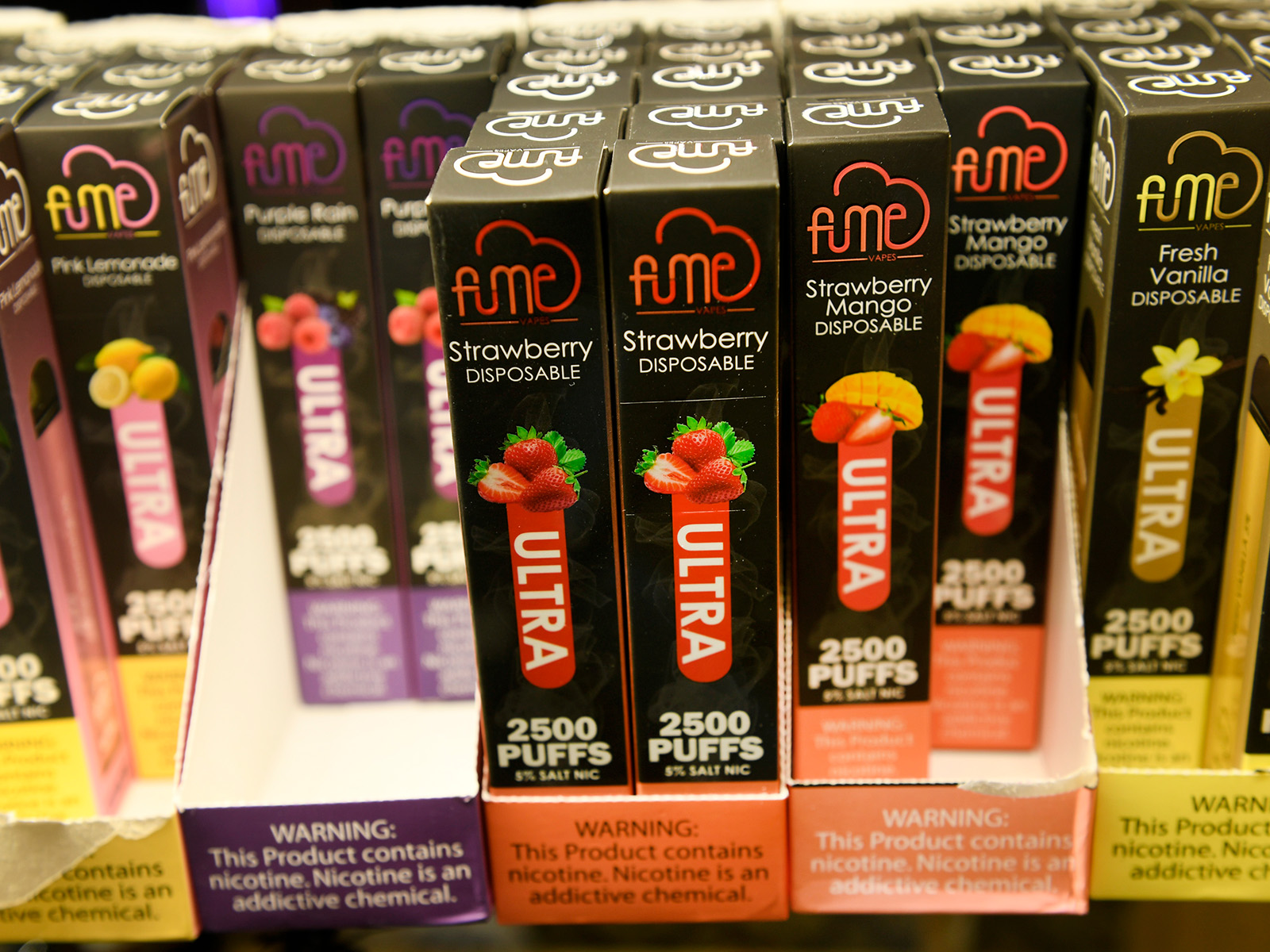
What you’ll see: “Shall the voters of the City and County of Denver retain ordinance number 24-1765, entitled ‘A bill for an ordinance amending Chapters 24 and 34 of the Denver Revised Municipal Code regarding the sale of tobacco products including flavored tobacco products,’ which prohibits the sale of flavored tobacco products by retail tobacco stores?”
What it means: If this referendum passes, the city will uphold its ban on the sale of flavored tobacco products (excluding hookah), which the Denver City Council approved in December. A petition drive challenging the ban successfully collected nearly 11,000 valid signatures and sent the fate of the ban to the ballot. Proponents of the ban argue it’s a necessary safeguard to prevent children from becoming addicted to tobacco products (such as in a vape) while opponents argue it hurts local businesses.
Early outlook: The Denver City Council voted overwhelmingly, 11-1, to approve the ban. In 2021, then-mayor Michael Hancock vetoed a similar prohibition and a proposed statewide ban the following year was voted down in a Senate appropriations committee. This is the first time Denverites will weigh in on the issue directly.